Softcover. NA, NA, 1st, NA, Book: Good, Dust Jacket: None, 51 pages. Softcover. No date or publication information. Library stamp at bottom left corner of front cover. Number stamped on reverse of title page. Text is clean, unmarked. Some light chipping to cover edges. The journal starts in 1848, with a voyage to Glasgow at fifteen years of age, for famine relief. Later voyages took Crockett to Paris, Russia, and Calcutta, Entertaining anecdotes about the passengers, his reading, and his wedding in Boston. The narrative is taken up later at his Golden Wedding. Entertaining and informative. Stapled in green wrappers.
Hardcover. Cambridge MA, MIT Press, 1st, 2001, Book: Very Good, Dust Jacket: Very Good, 406 pages, Hardcover with dust jacket. B&w illustrations. Clean, tight copy. How Le Corbusier's first trip to the United States shaped his critique of the country and affected both his work and the diffusion of his ideas. Le Corbusier's first trip to the United States in 1935 is generally considered a failure because it produced no commissions. The experience nevertheless had a profound effect on him, both personally and professionally. Sponsored by the Museum of Modern Art in New York, Le Corbusier promoted his ideas through a lecture tour, exhibition, and press conferences, as well as in meetings with industrialists, housing reformers, New Deal technocrats, and editors. His lectures were watershed events that advanced the cause of European modernism. Yet he returned to France empty-handed and published a bittersweet account, Quand les Cathedrales etaient blanches: Voyage au Pays des Timid Personnes (When the Cathedrals Were White: Journey to the Country of Timid People), which faulted America for lacking the courage to adopt his ideas.
Hardcover. New York, Robert M. McBride & Co., 5th pr., 1927, Book: Very Good, Dust Jacket: None, Hardcover, 173 pages. Illustrated with b&w plates. 12mo. Dark blue cloth, gilt titles on spine.
Hardcover. New Haven CT, Yale University Press, 2007, Book: Very Good, Dust Jacket: Very Good, Hardcover, 208 pages, color plates. Considered to be among the greatest early American modernists, the painter Marsden Hartley (1877-1943) traveled the United States and Europe in his search for a distinctive American aesthetic. His stay in New Mexico resulted in an extraordinary series of landscape paintings--created in New Mexico, New York, and Europe between 1918 and 1924--that show an evolution in style and thinking that is important for understanding both Hartley's oeuvre and American modernism in the postwar years. Marsden Hartley and the West examines this pivotal stage of the painter's career, drawing upon his writings and providing illustrations of rarely seen and previously unpublished works. The author considers Hartley's involvement with the Stieglitz circle and its "soil-and-spirit" philosophy, the Taos art colony, New York Dada, and the impact of historical events such as World War I. Within this setting she analyzes the pastels and oil paintings that suggest Hartley's increasingly ambivalent response to the land. Beginning with optimistic, naturalistic views, the New Mexico works grew progressively darker and more tumultuous, increasingly reflecting a sense of loss brought on by war. The paintings become a site where the landscapes of memory, self, and nation merge, while reflecting broader modernist debates about "American-ness" and a usable past.
Hardcover. Ostfildern GR, Hatje Cantz, 1st, 2010, Book: Very Good, Dust Jacket: None, Like new in publishers shrink-wrap. Dutch documentary photographer Martin Roemers decided to track down the remains of deserted atom bomb shelters of the Cold War period. For over ten years he traveled through formerly hostile countries on both sides of the line: through eastern and western Germany, England, Belgium, the Netherlands, Poland, Ukraine, and other former East Bloc nations. Hardcover, 144 pages, 73 color plates, essays by Roemers, H.J.A. Hofland, and Nadine Barth.
Hardcover. NY, Aperture, 1st, 2000, Book: Very Good, Dust Jacket: Very Good, Hardcover in a bright, unclipped dust jacket. In Migrations, Sebastiao Salgado turns his attention to the staggering phenomenon of mass migration. Photographs taken over seven years across more than 35 countries document the epic displacement of the world's people at the close of the twentieth century. Wars, natural disasters, environmental degradation, explosive population growth and the widening gap between rich and poor have resulted in over one hundred million international migrants, a number that has doubled in a decade. This demographic change, unparalleled in human history, presents profound challenges to the notions of nation, community, and citizenship. The first extensive pictorial survey of the current global flux of humanity, Migrations follows Latin Americans entering the United States, Jews leaving the former Soviet Union, Africans traveling into Europe, Kosovars fleeing into Albania and many others. Clean copy. DOMESTIC SHIPPING ONLY.
Hardcover. NY, Aperture, 1st, 2000, Book: Very Good, Dust Jacket: Very Good, Hardcover. In Migrations, Sebastiao Salgado turns his attention to the staggering phenomenon of mass migration. Photographs taken over seven years across more than 35 countries document the epic displacement of the world's people at the close of the twentieth century. Wars, natural disasters, environmental degradation, explosive population growth and the widening gap between rich and poor have resulted in over one hundred million international migrants, a number that has doubled in a decade. This demographic change, unparalleled in human history, presents profound challenges to the notions of nation, community, and citizenship. The first extensive pictorial survey of the current global flux of humanity, Migrations follows Latin Americans entering the United States, Jews leaving the former Soviet Union, Africans traveling into Europe, Kosovars fleeing into Albania and many others. The images address suffering while revealing the dignity and courage of the subjects. With his unique vision and empathy, Salgado gives us a picture of the enormous social and political transformations now occurring in a world divided between excess and need. This is a heavy and oversized book and will require extra shipping. International customers please ask for a shipping quote before purchasing.
Hardcover. NY, Jonathan Cape /Harrison Smith, 1st, 1929, Book: Very Good, Dust Jacket: None, Hardcover, 295 pages. Decorated cloth with black cloth spine, bright gilt lettering on spine. A French doctor's account of Chinese life & civilization, based on his twenty years of life, work & travel there; he was Director of the Imperial School of Medicine at Chengtufu. Typically patronizing and moralistic; the author credits China with having been great in the past, but now in the grip of a profound lassitude, only to be helped by Europeans. Translated from the French by Elsie Martin Jones. Previous owner's name, date on front fly leaf otherwise a clean, bright copy.
Hardcover. Princeton NJ, Princeton University Press, 1st, 2015, Book: Very Good, Dust Jacket: Very Good, Hardcover in a bright dust jacket, 354 pages. From the turn of the fifth century to the beginning of the eighteenth, Christian writers were fascinated and troubled by the "Problem of Paganism," which this book identifies and examines for the first time. How could the wisdom and virtue of the great thinkers of antiquity be reconciled with the fact that they were pagans and, many thought, damned? Related questions were raised by encounters with contemporary pagans in northern Europe, Mongolia, and, later, America and China. Pagans and Philosophers explores how writers-philosophers and theologians, but also poets such as Dante, Chaucer, and Langland, and travelers such as Las Casas and Ricci-tackled the Problem of Paganism. Augustine and Boethius set its terms, while Peter Abelard and John of Salisbury were important early advocates of pagan wisdom and virtue. University theologians such as Aquinas, Scotus, Ockham, and Bradwardine, and later thinkers such as Ficino, Valla, More, Bayle, and Leibniz, explored the difficulty in depth. Meanwhile, Albert the Great inspired Boethius of Dacia and others to create a relativist conception of scientific knowledge that allowed Christian teachers to remain faithful Aristotelians. At the same time, early anthropologists such as John of Piano Carpini, John Mandeville, and Montaigne developed other sorts of relativism in response to the issue. Clean copy.
Hardcover. New York, Flammarion, 1st English, 1997, Book: Very Good, Dust Jacket: Very Good, 263 pages, hardcover with dust jacket. Catalog of a traveling exhibition first held at the Museum of Fine Arts, Houston, Texas, subsequently held at various European museums. Translated from the French by Deke Dusinberre. Minor rubbing and fading to dust jacket, mostly to top edge. Slight bumping to corners. Unmarked. A clean and tight copy.
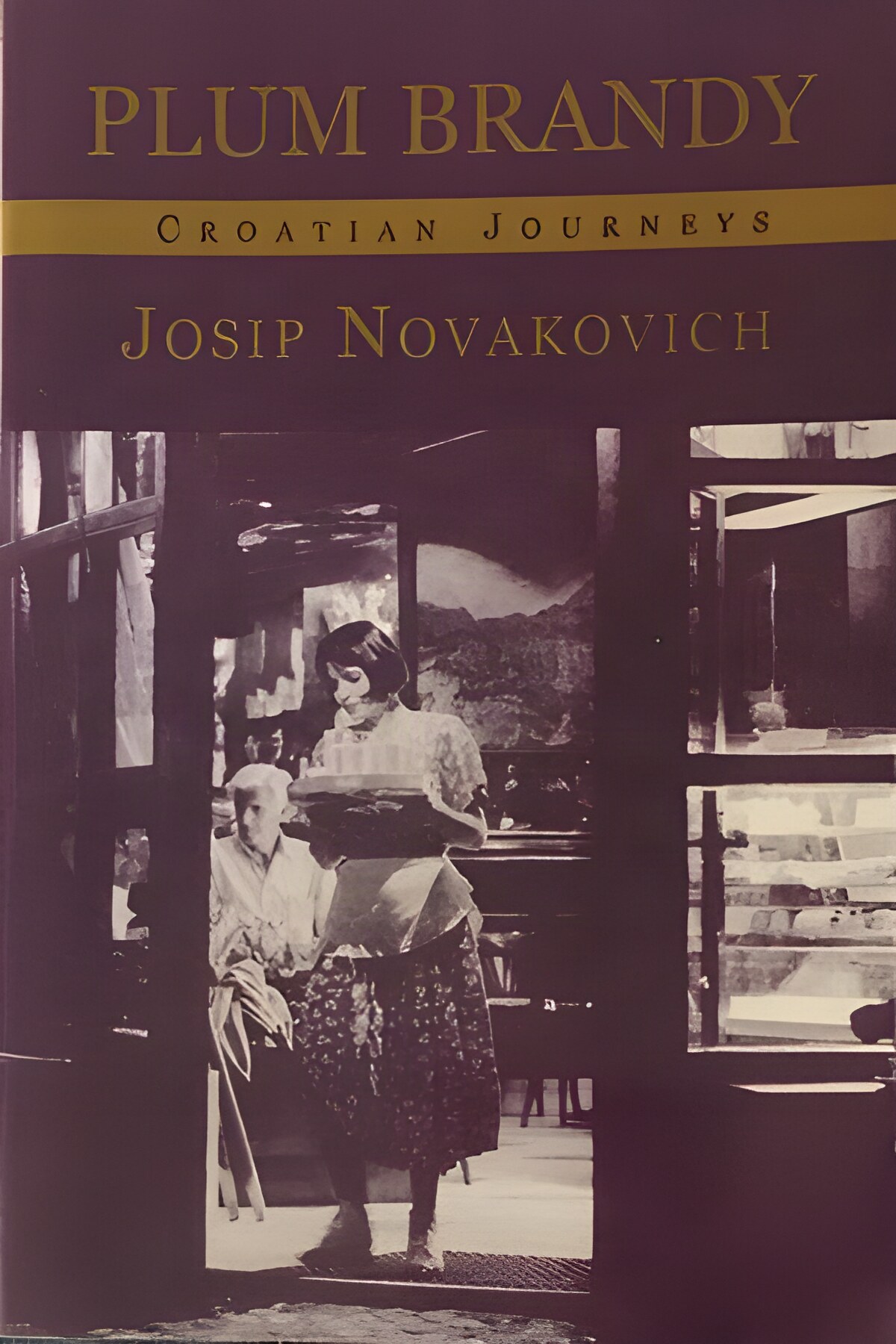
Softcover. Buffalo NY, White Pine Press, 1st, 2003, Book: Very Good, Dust Jacket: None, Softcover, 181 pages. INSCRIBED BY AUTHOR on the title page. Immigrant writer Novakovich records his journeys to find his roots, some to his native Croatia, some no farther than Cleveland, where he searches for the grave of his grandmother, who refused to return to Croatia with the rest of her family. This moving collection reflects the joys and the difficulties in returning to a homeland left behind. Clean copy.
Hardcover. New Haven CT, Yale University Press , 1st, 2002, Book: Very Good, Dust Jacket: Very Good, Hardcover, 184 pages. ARTnews, the oldest art magazine in America and the most widely circulated art magazine in the world, is celebrating its one-hundredth anniversary in 2002. This attractive book celebrates and commemorates this milestone event, presenting one hundred of the best photographic portraits commissioned by and reproduced in the magazine since its origin. These fascinating photographs chronicle the history of the magazine and present a "who's who" of people who have shaped the art world over the last century. Portrait of the Art World includes photographs of many of the great European and American artists of the twentieth century, including George Bellows, Francis Bacon, Pablo Picasso, Piet Mondrian, Jackson Pollock, Alexander Calder, and Alice Neel. The photographers-often as fascinating as their subjects-range from Zaida Ben-Yusuf, Alice Boughton (early members of Alfred Stieglitz's circle), and Jessie Tarbox Beals (perhaps the first woman photojournalist) to Stieglitz himself, Man Ray, and Cecil Beaton. Contemporary photographers featured in the book include Timothy Greenfield-Sanders, Arnold Newman, Richard Avedon, and Robert Mapplethorpe. The book also presents an essay by William F. Stapp exploring the historical context of portrait photography in ARTnews; an essay on the history of ARTnews by Pete Hamill; and an essay by Milton Esterow, the current editor and publisher of ARTnews, discussing his personal view of the magazine. This handsomely illustrated book is the catalogue for an exhibition at the New-York Historical Society from September 27, 2002, to January 5, 2003, which will then travel to Washington, Chicago, and San Francisco
Hardcover. Boston, Museum of Fine Arts, 1st, 2018, Book: Very Good, Dust Jacket: Very Good, Hardcover in a bright dust jacket. , 144 pages illustrated in color and b&w. During the global postcard craze that peaked around 1900 and continued for several decades thereafter, photographers in Africa grasped the opportunity to serve a lucrative market for images of the continent, both locally and worldwide. Their picture postcards now contribute to understanding political and cultural changes in Africa at the time, as the rise of the new medium coincided with the expansion and consolidation of colonial rule. They also provide a way to reconstruct the life and work of the photographers of European, African and other backgrounds who created these images-which often survive only in postcard form-and in some cases published them as well. The cards were produced for residents and travelers in Africa, as well as for buyers and collectors who had never set foot on the continent. Their depictions of colonial administrations and the exploitation of resources and peoples, as well as images inscribing tribal identities and racial classifications, often reflect the colonizers' worldview. Yet it is also possible to recover the authorship of some of the African women and men who participated in these photographic encounters. For instance, some cards show that members of Africa's elites recognized the power of photographic images to enhance their standing and present their own narratives.
Hardcover. NY, Knopf, 1st, 1980, Book: Very Good, Dust Jacket: Very Good, Hardcover in a bright dust jacket. 227 pages. Previous owner's signature on front fly leaf, else a clean, tight copy. Naipaul presents here four essays about the "half-made" societies, those still suffering from the profound deprivations of colonialism and prey to corruption." He examines the role of Eva Peron as the catalyst for violence in Argentina, with its yearning for a European culture and the physical, historical, cultural reality of the land in which the native Indians were wiped out and the colonialists took over. He writes of the infamous Michael X in Trinidad whose pretensions to power and destiny led to the man's insanity and execution following two pointless murders. Shorter essays address nihilism in the Congo and Naipaul's take on Joseph Conrad and the Heart of Darkness.
Hardcover. Boston, DeWolfe, Fiske & Co., 1st, Book: Very Good, Dust Jacket: None, Hardcover, pictorial boards with yellow cloth spine, 344 pages. Undated, circa 1900 with name and 1902 date on front fly leaf. Well kept copy generously illustrated throughout with black and white engravings. Mild edgewear to boards. Clean, tight copy.
Hardcover. Philadelphia, Carey and Hart, 1st, 1843-46, Book: Good, Dust Jacket: None, Five volumes bound into one, 537 total pages. Half leather with marbled boards, edgeworn. All first American editions. The final book's full title: The Military Operations at Cabul, Which Ended in the Retreat and Destruction of the British Army, January 1842. With a Journal of Imprisonment in Afghanistan. Condition good with some browning and foxing to paper. Front inner hinge repaired with tape.
Hardcover. NY, Aperture, 1st, 1998, Book: Very Good, Dust Jacket: Very Good, Hardcover, 168 pages. A native of Kazakhstan, Ljalja Kuznetsova traversed the expanses of the Central Asian steppe to photograph the gypsies, or Roma people, whose mysterious comings and goings have fascinated her since she was a child. Shaking the Dust of Ages: Gypsies and Wanderers of the Central Asian Steppe is the first book devoted to these pictures, for which Kuznetsova won the Mother Jones Leica Medal of Excellence and the Paris Grand Prix for Photography. Kuznetsova's photographs present rare, intimate portraits of gypsies-- whose freedom from the ties of civilization is reflected in the wild winds and unlimited vistas of the steppe landscape. As Kuznetsova traveled through Kazakhstan, Turkmenistan, Uzbekistan, and the Ukraine, the gypsies continually inspired her. She found in them a people without frontiers, living independent of politics, religious dispute, or social class. Though their presence on the steppe is becoming a thing of the past, Kuznetsova's cast of characters and their world seem timeless in these images.
Hardcover. NY, Overlook Press, 1st, 2003, Book: Very Good, Dust Jacket: Very Good, Hardcover, 180 pages. Jeff Gusky, a doctor of emergency medicine, decided at the age of 42 that he wanted to better confront the reality of modern Jewish history. A self-taught photographer who subsequently learned to make museum quality prints, he bought what he calls "a good, journalist-type camera and some lenses" and traveled to Poland-once the home of the largest concentration of Diaspora Jews. He read the instruction manuals on the plane en route. Over four trips, accompanied each time by a top Polish guide, Gusky traveled through the country, beyond the city ghettos and the sites of concentration camps, into remote villages where Jews had lived and worked for almost 1,000 years before the Holocaust-capturing on film the austere landscapes and the remains of a once thriving Jewish culture. The silence is deafening: here are Jewish cemeteries full of broken gravestones, ruined synagogues filled with trash and disfigured with graffiti, a Jewish home now used as a public toilet-"where people lived, walked, worshipped, and were, ultimately, exterminated," says Gusky. The doleful, understated clarity of what he saw and photographed captures a poignant sense of loss-making at the same time an indelible connection to the past.
Hardcover. NY, Hurd and Houghton, 2nd Ed., 1869, Book: Very Good, Dust Jacket: None, Hardcover, dark green pebbled cloth with a gilt-stamped title on the spine and bright gilt illustration of the author riding a donkey on the front cover. Second Edition (first: 1868) of the American illustrator's trip to England and the Continent undertaken in 1867-68. 192 pages, 88 plates & text illus. (incl. frontis.) engraved on wood by J. Augustus Bogert & James L.Langridge after drawings by the author. Darley's volume is composed of excerpts from letters written home concerning his travels around the states and Europe. His sketches illuminate the scenes described in his letters. The final page is a charming self-portrait in miniature, of Darley tipping his cap to the reader for their time. A whimsical collection of brief travel vignettes. Inscribed on the first blank page. Bright copy in exceptional condition.
Hardcover. John L Caulon, 1st, 1880, Book: Very Good, Dust Jacket: None, 87 pages, brown cloth covers with gilt lettering on front. Previous owner's signature on front fly leaf otherwise clean, bright copy.
Softcover. Philadelphia, University of Pennsylvania Press, 1st pbk, 1998, Book: Very Good, Softcover, 330 pages. Twelve literary scholars and historians investigate the ways in which space and place are politically, religiously, and culturally inflected. Exploring medieval texts as diverse as Icelandic sagas, Ptolemy's Geography, and Mandeville's Travels, the contributors illustrate the intimate connection between geographical conceptions and the mastery of land, the assertion of doctrine, and the performance of sexuality. Clean copy.
Hardcover. NY, Monacelli Press, 1st, 2023, Book: Very Good, Dust Jacket: None, Hardcover in pictorial boards, 267 pages in color. This lavishly illustrated and engaging book is the authoritative guide to the most exclusive Alpine destinations in Europe. Notable hotel expert and 84 Rooms Founder, Sebastian Schoellgen, presents a uniquely curated selection of 84 luxury and family-run boutique hotels in the five Alpine countries (France, Switzerland, Italy, Austria, Germany) in over 180 superb photographs with lively storytelling and practical information, too. Featured throughout are insider guides by the author and such tastemakers as hotelier Arnauld Zannier, who map out the most stylish and scenic places to shop, dine, stroll, and wind down after a long day on the slopes. Clean copy.
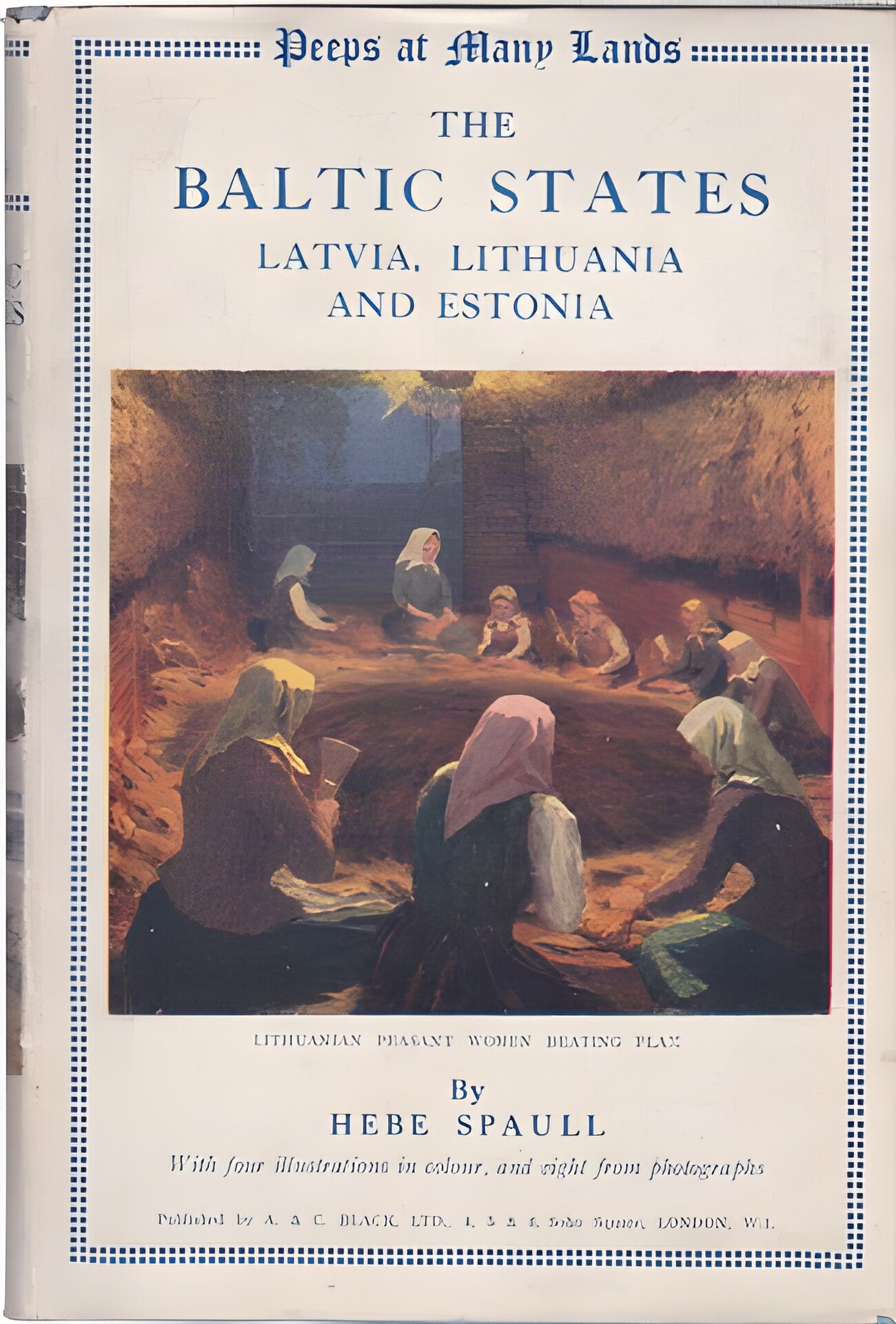
Hardcover. London, A & C Black, 1st, 1931, Book: Very Good, Dust Jacket: Very Good, Hardcover in a lightly worn dust Jacket, 81 pages. 4 color, 8 b&w illustrations. One in the "Peeps at Many Lands" series. Clean copy.
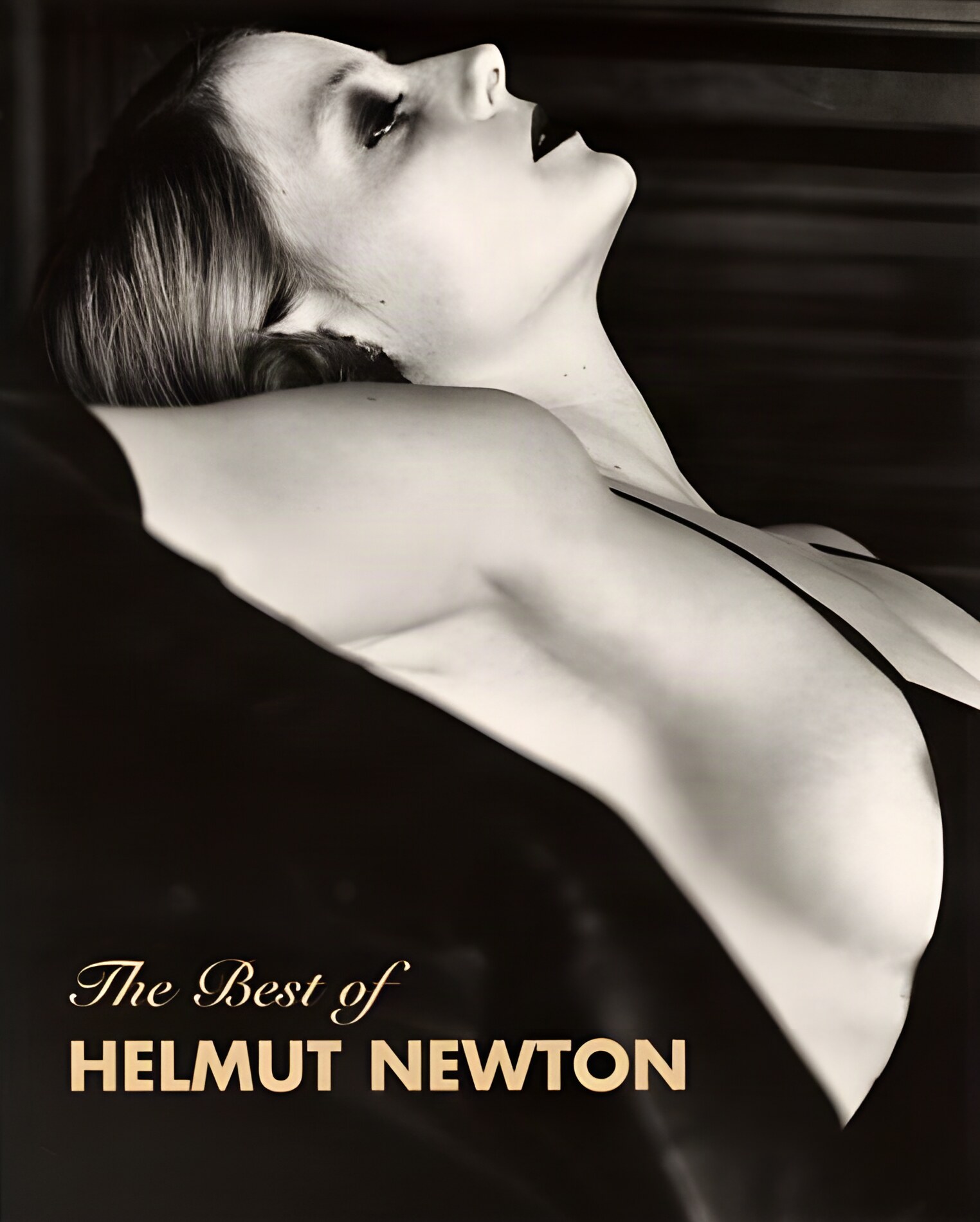
Softcover. NY, Thunders Mouth Press, 1sts thus, 1996, Book: Very Good, Dust Jacket: None, Softcover, 156 pages in color and b&w. Helmut Newton's best photographic work from the 1960's to the 1990's traveled around Europe in a major retrospective in 1993. This 1996 first printing collection contains all the icons of Newton's special fields of interest including fashion, nudes, portraits as well as works for which he became world famous: the sensational fashion photos for the British magazine Vogue, Liz Taylor with a parrot in a swimming pool, Helmut Berger naked at his fireplace, Helmut Kohl with a German oak, Salvador Dali on an IV drip, the "Big Nudes" and some of his later macabre wax figures. Clean copy.

 "Journal of Charles B. Crockett, Theby: Crockett, Charles B.")
 "Le Corbusier in America: Travels in the Land of the Timidby: Bacon, Mardges")
 "LURE OF THE RIVIERA, THEby: Gostling, Frances M.")
 "Marsden Hartley and the West: The Search for an American Modernism (Georgia O'Keefe Museum)by: Heather Hole and Barbara Buhler Lynes")
 "Martin Roemers: Relics of the Cold Warby: Hofland, H.J.A.")

 "Migrations: Humanity in Transitionby: Salgado, Sebastiao")
 "Modern Chinese Civilization by: Legendre, Dr. A.F. with Elsie Martin Jones (Translator)")

 "Picasso and Photography: The Dark Mirrorby: Baldassari, Anne")
 "Portrait of the Art World: A Century of ARTnews Photographsby: William F. Stapp")


 "Round About Europe: The Adventures of a Party of Young Americans in a Journey Through Europe to Constantinopleby: McCabe, James D.")

 "Shaking the Dust of Ages: Gypsies and Wanderers of the Central Asian Steppeby: Ljalja Kuznetsova , Inge Morath, et al.")
 "Silent Places: Landscapes of Jewish Life and Loss in Eastern Europeby: Gusky/Judith Miller, Jeffrey")



 "Text and Territory: Geographical Imagination in the European Middle Ages by: Tomasch, Sylvia; Gilles, Sealy (Editors)")