Softcover. Cambridge UK, Cambridge University Press, 1st, 1970, Book: Very Good, Dust Jacket: None, Softcover, 310 pages. One of the incidental consequences of the success of British arms in eighteenth-century India was the appearance of a number of publications which reflect the intense curiosity of contemporary Europeans about strange peoples, their manners and religions. Of the three principal religions of India, Hinduism attracted the most attention. European contact with Islam was several centuries old, while few travellers could identify Buddhism with any certainty. This book reprints some of the most significant English contributions to the early European understanding of Hinduism. Paper covers with light wear.
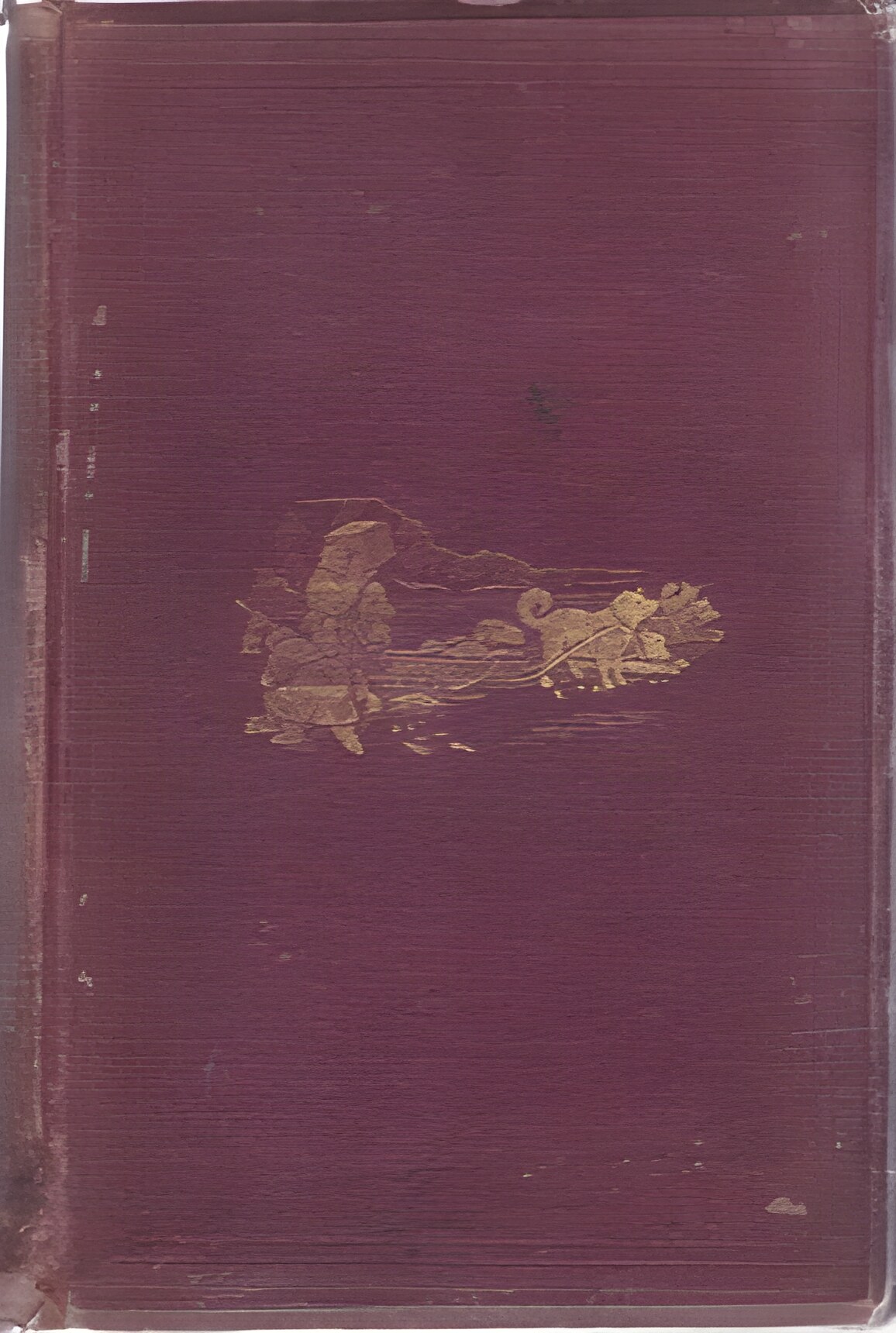
Hardcover. NY, Harper and Brothers, 1st, 1869, Book: Good, Dust Jacket: None, Hardcover, maroon cloth with beveled edges. Engraved frontispiece with tissue guard and profusely illustrated throughout with 163 wood-engravings. The author of several other scientific works here gives a description of the Arctic and Antarctic regions of the globe in both a popular and scientific way. He gives a succinct history of the several polar expeditions, American and European. Covers with edge wear and fraying to spine, gilt blindstamped scene of dog sled on front cover, gilt kayak scene and lettering on spine faded. Interior of book very good, no markings.
Hardcover. New Haven CT, Yale University Press, reprint, 1991, Book: Very Good, Dust Jacket: None, Hardcover in a dust jacket with fading to some areas, 338 pages. Margaret Fuller - journalist, critic, radical feminist, and political activist - traveled in Europe between 1846 and 1850 as a foreign correspondent for the New York Tribune. Her letters from England, France, and Italy, which began as engaging travel sketches, soon became moving accounts of the most widespread revolutionary upheaval within modern history. These dispatches are now reproduced in their entirety for the first time. Clean copy.
Softcover. Atlanta, High Museum of Art, 1st, 1992, Book: Very Good, Dust Jacket: None, Softcover. Like new in publisher's shrink-wrap. The catalogue of a traveling exhibition organized by the High Museum of Art, Atlanta, examining the significant interrelationships between sports, photography, and culture in the US, Europe, and Russia since the late 19th century. The 141 works featured (32 color, 109 duotone) by 120 photographers (including such masters as Stieglitz, Adams, Cartier-Bresson, and Arbus) are drawn from American and European public and private collections and the archives of Life and Sports Illustrated . Includes essays by Harvey Green, John M. Hoberman, and Peter Schjeldahl.
Softcover. Atlanta, High Museum of Art, 1st, 1992, Book: Very Good, Dust Jacket: None, Softcover. Like new in publisher's shrink-wrap. The catalogue of a traveling exhibition organized by the High Museum of Art, Atlanta, examining the significant interrelationships between sports, photography, and culture in the US, Europe, and Russia since the late 19th century. The 141 works featured (32 color, 109 duotone) by 120 photographers (including such masters as Stieglitz, Adams, Cartier-Bresson, and Arbus) are drawn from American and European public and private collections and the archives of Life and Sports Illustrated . Includes essays by Harvey Green, John M. Hoberman, and Peter Schjeldahl.
Hardcover. Baltimore MD, Johns Hopkins University Press , 1st, 1995, Book: Very Good, Dust Jacket: Very Good, Hardcover in a bright dust jacket. 219 pages, endpapers map. Describes Jefferson's European journeys during his time as minister to the court of Louis XVI between 1784 and 1789, and explores the significance of his travels to American culture. Illustrated with some 60 b&w images from the period, and drawing on Jefferson's account books and correspondence, shows how his experiences shaped his intellectual and aesthetic development. Clean copy.
Hardcover. New York, Michael Sullivan, 1st, 1886, Book: Good, Dust Jacket: None, Hardcover, 87 pages, in green cloth covers with black and gilt design. A brief first-hand account of a seven week trip to Europe, principally England, Ireland and Scotland. Uncommon. A bit worn with cracked hinges.
Hardcover. Hartford, Canfield and Robins, 1st, 1836, Book: Fair, Dust Jacket: None, 610 pages. Hardcover with brown leather covers. Heavy soil and wear to the leather. Moderate foxing throughout. Black and white illustrations/engraved plates. Iceland to New Zealand, including the Americas, Europe, Asia, and Africa. Water stain to first 40 pages, about one sixth of page. Previous owner's signature on front fly leaf. Sound binding.
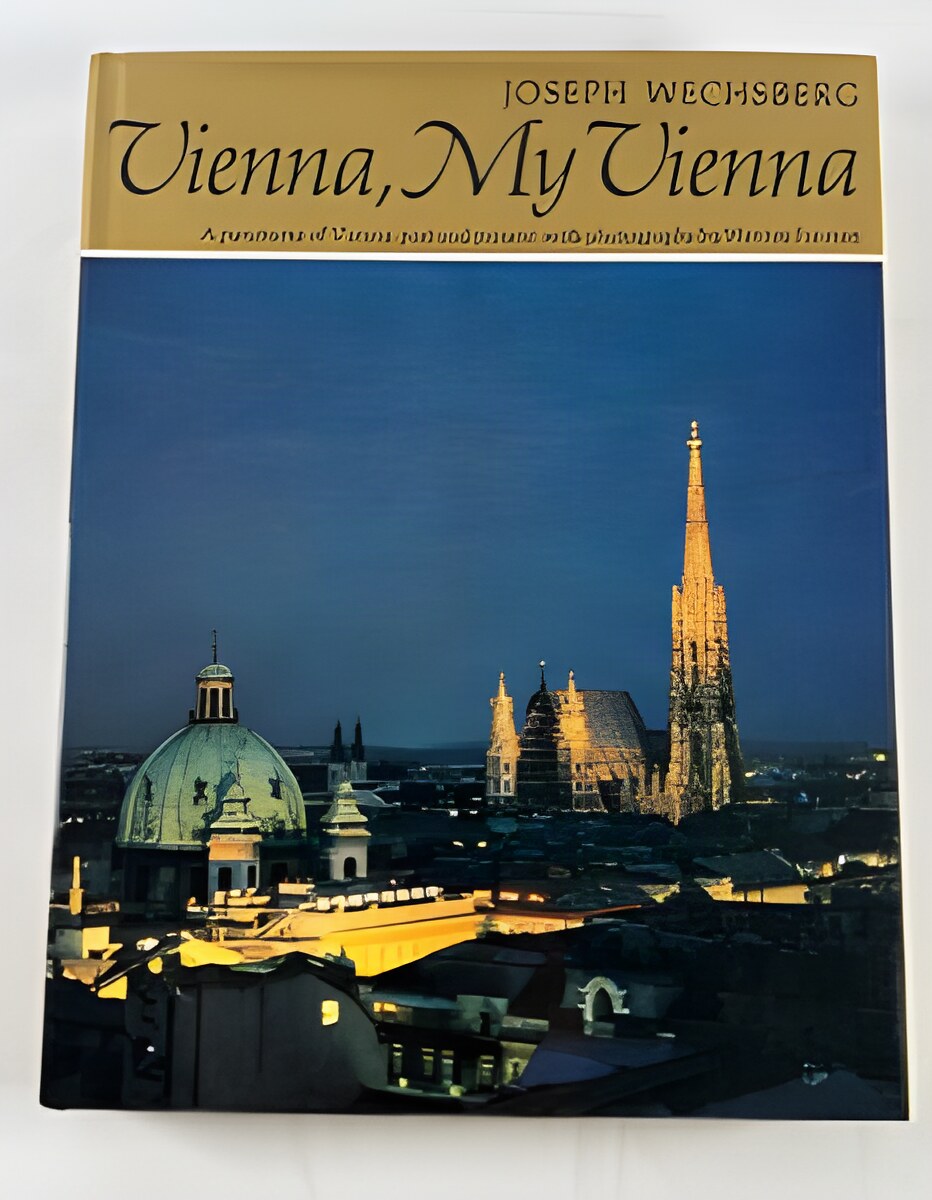
Hardcover. NY, Macmillan, 1st, 1968, Book: Very Good, Dust Jacket: Very Good, Hardcover in a bright, unclipped dust jacket. 300 pages, 136 b&w photographs by Werner Forman, 12 in color. "Vienna, as everyone knows, is the city of music, and Joseph Wechsberg's lively book evokes the music of the city, the popular music of the Strauss family and of the Heuringer-singers, the great music of the Classical masters, the soft sound of Viennese speech and the harmony of the baroque city set in the unspoiled beauty of the Vienna Woods...[Wechsberg] reveals the Vienna of the Viennese, not always glamorous, sometimes a little shabby, but a city of living people to whom the past is a reality, who have bred or entertained many of the greatest masters of European music and poetry." Clean copy.
Hardcover. New York, Alfred A. Knopf, 1st, 1956, Book: Very Good, Dust Jacket: Good, Hardcover, 178 pages. Dust jacket slightly worn and with short tears. Some foxing on endpages, top edge stained red.
Hardcover. NY, Bobbs-Merrill, 1st, 1949, Book: Very Good, Dust Jacket: None, Hardcover, blue cloth stamped in gilt. 192 pages, illustrated endpapers. Tarkington's letters written and illustrated with pen-and-ink sketches in 1903 and 1904 from Europe addressed to his three nephews. Clean copy, no dust jacket.
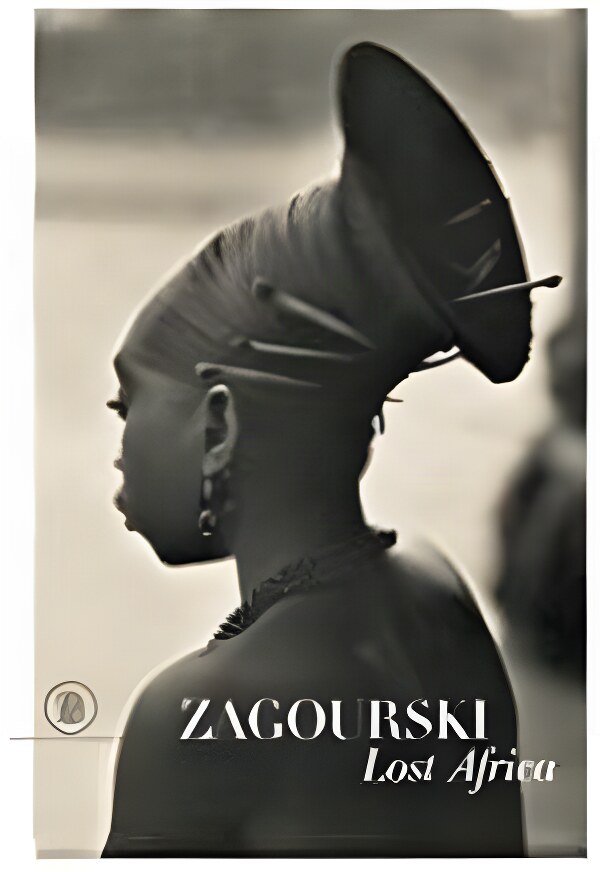
Hardcover. Milan, Skira, 1st, 2001, Book: Very Good, Dust Jacket: Very Good, Hardcover, 224 pages. An outstanding photographic monograph from the Twenties and Thirties brings back the memory of ways of living, ceremonies, adorned bodies of an Africa that be aptly defined as "lost". These extraordinary, unpublished pictures, taken with great technical skill and with a sense of great dignity of the people portrayed, constitute a monument to the African continent as it was. Kazimir Ostoja Zagourski (1880-1941) was born in Poland and moved to Congo in 1924. Zagourski was the first professional photographer to travel throughout the interior of Congo and visited also the neighboring countries, Tchad, Rwanda, Burundi, Uganda, Kenya, and South Africa. During his long stay in Africa he took hundred of pictures, 500 of which, divided in two extraordinary series on different tribes, build up to a unique historic and ethnographic survey. In a sense, Zagourski's work constitutes the first "non-European" look, devoid of the colonial overtones that characterize much contemporary work. His forays into the depths of the African continent took him into the most remote villages of Kuba, Mangbetu, Bwaka, Tutsi, Masai, etc. where he took unprecedented pictures of great ethnographic interest. he documented for example, ceremonies (initiation, circumcision, excision, masked dances, etc.), the great African creativity in body ornament (from scarification to hair dresses, from jewels to lip plugs), clothes and all utilitarian objects placed in their appropriate cultural context (musical instruments, shields, stools, knives, containers, etc.).



 "This Sporting Life, 1878-1991by: Dugan, Ellen")
 "This Sporting Life, 1878-1991by: Dugan, Ellen")
 "Thomas Jefferson's Travels in Europe, 1784-1789by: Shackelford, George Green")
 "Trials and Triumphs of a Summer Vacationby: K.A.M.")
 "Universal Traveller: Designed to introduce Readers at home to an Acquaintance with the Arts, Customs and Manners of the Principal Modern Nations on the Globe...by: Go")
 "Willa Cather in Europe; Her Own Story of the First Journeyby: Cather, Willa")
 "Your Amiable Uncle: Letters to This Nephews by: Booth Tarkington")