Hardcover. Taschen, 1st, 2023, Book: Very Good, Dust Jacket: None, Hardcover, 142 pages. In the late 1910s, in a Europe ravaged by World War I, Danish illustrator Kay Nielsen put the finishing touches on his illustrations of A Thousand and One Nights. The results are considered masterpieces of early 20th-century illustration: bursting with sumptuous colors of deep blues, reds, and gold leaf, and evoking all the magic of this legendary collection of Indo-Persian and Arabic folktales, compiled between the 8th and 13th centuries. However, publishers retreated from Nielsen's project in the financially strapped postwar climate, and the publication never happened. A rising star, Nielsen moved on to other work. This world heritage classic's spectacular pen, ink, and watercolor images remained under lock and key for 40 years. Published just once in the 1970s, the illustrations were rescued from oblivion after Nielsen's death in 1957 and are now held by the UCLA Grunwald Center for the Graphic Arts at the Hammer Museum in Los Angeles, the Art Institute of Chicago, and in two private collections. This publication is a unique compilation of fine art prints and stunning illustrations reproduced directly from Nielsen's original watercolors--the only complete set of his extraordinary drawings to have survived. The book features descriptions of all of the images and three generously illustrated essays on the making of this series, the origin of Nielsen's unique imagery, and a history of the tales. In addition, it shows many unpublished or rarely seen artworks by Nielsen and intricate black-and-white drawings Nielsen created for the original publication. Text in English, German and French. PLEASE NOTE: DUE TO WEIGHT, DOMESTIC SHIPPING ONLY.
Hardcover. London```, Konemann UK Ltd, Reprint, 1995, Book: Very Good, Dust Jacket: Very Good, 2 VOLUME SET. 920 pages. Oversize hardcovers. Both volumes very clean and unmarked. Only minor wear to dust jacket edges. In a unique collection of hundreds of photographs, 150 Years of Photo Journalism gives a visual record of the years 1850 - 1918, the last and greatest period of European dominance of the world in culture, science and weapons of destruction. VERY HEAVY- extra charges for overseas shippimg.
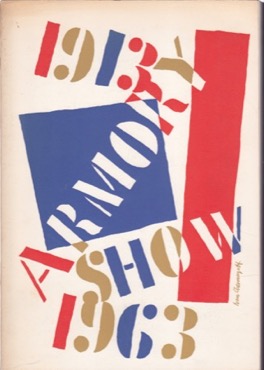
Softcover. Utica NY, Munson-Williams-Proctor Institute, Museum of Art, 1st, 1963, Book: Very Good, Dust Jacket: None, Softcover, 212 pages. Very good condition with thick card covers, printed with graphic design by Ivan Chermayeff. Contents includes information about the exhibit and The Henry Street Settlement Creative Arts Center, color reproductions of American and European works, and articles and memorabilia about the artists and the Armory shows. Related ephemera laid in. Owner's bookplate on inside front cover, otherwise clean.
Hardcover. London, Book Palace Books, 1st, 2022, Book: Very Good, Dust Jacket: None, Hardcover, pictorial boards, 160 pages. In August 1914 much of Europe was pitched into a war that would eclipse all others in terms of its industrial ferocity. In an era when photography and film recording were still in their infancy, much of the news was relayed through the work of reportage artists. Pre-eminent amongst such artists was Fortunino Matania who was The Sphere's artist-on-the-spot for events ranging from coronations to colliery disasters. Sent to a variety of Fronts to cover the conflict, his illustrations created a gripping and, at times, life-affirming testimony to those traumatic times, drawn from the personal visits he made and interviews he conducted with survivors. For the first time ever, this book collects those images in large format so that they can be viewed as they were intended. OVER 150 paintings and drawings on the World War 1 conflict, depicting all its horrors and special moments. His work inspired many contemporary artists: Annigoni and Russell Flint both visited his studio, and many comic strip artists collected his work including Al Williamson, Roy Krenkel, Frank Frazetta, John Bolton, Bernie Wrightson as well as film directors such as Cecil B DeMille and Alfred Hitchcock.
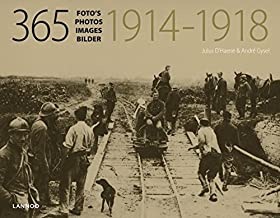
Hardcover. Lannoo, 1st, 2010, Book: Very Good, Dust Jacket: Very Good, Hardcover, 240 pages. 365 images at the western front of World War One give the reader a unique view on the battlefield and the daily life in and around the trenches.
Hardcover. NY, Harry N. Abrams, 1st, 2000, Book: Very Good, Dust Jacket: Very Good, Hardcover, 240 pages. This stylish book re-creates the charmed life of two American expatriates in France at the turn of the 20th century-the noted artist Walter Gay and his wife, Matilda, whose glittering social circle included John Singer Sargent, Edith Wharton, Henry James, and many other artists and aristocrats. Narrated by witty excerpts from Matilda Gay's recently discovered journal, and richly illustrated with Walter Gay's remarkable, sought-after paintings of the rooms in which they and their friends lived, in Paris, Fontainebleau, Venice, and elsewhere, A Charmed Couple offers an intimate glimpse of a long-gone social milieu whose hold on the popular imagination continues to this day. WILLIAM RIEDER is a curator in the Department of European Sculpture and Decorative Arts at the Metropolitan Museum of Art in New York. Author of numerous articles, most on European furniture, in such journals as Architectural Digest, Connoisseur, and Antiques, he lives in New York City. 128 illustrations, 55 in full color, 81/2 x 101/2".
Hardcover. NY, Harcourt Brace Jovanovich, 1st, 1992, Book: Very Good, Dust Jacket: Very Good, Hardcover in a bright, unclipped dust jacket. Translated from the Hungarian by Imre Goldstein. 394 pages. The rich, poetic story of a man, a family, and a country. David Kobra's enchanted childhood in a small town in the heart of Central Europe comes to an abrupt end. As the Jews of the town are being put on trains to concentration camps, young Kobra escapes to Budapest. He survives the war years in a 'protected house,' grows up with death and violence, witnesses Soviet liberation, lives under Soviet oppression. David Kobra is a writer; he remembers, and he creates. Sharp images of the past alternate with the confused present. Clean copy.
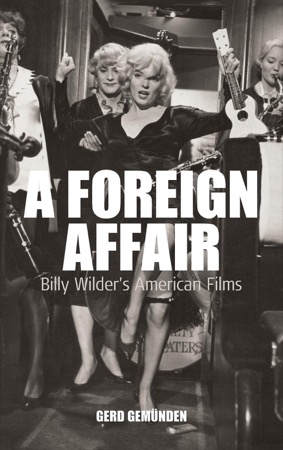
Hardcover. Berghahn Books, 1st, 2008, Book: Very Good, Dust Jacket: None, Hardcover, pictorial boards, 193 pages, b&w illustrations. With six Academy Awards, four entries on the American Film Institute's list of 100 greatest American movies, and more titles on the National Historic Register of classic films deemed worthy of preservation than any other director, Billy Wilder counts as one of the most accomplished filmmakers ever to work in Hollywood. Yet how American is Billy Wilder, the Jewish emigre from Central Europe? This book underscores this complex issue, unpacking underlying contradictions where previous commentators routinely smoothed them out. Wilder emerges as an artist with roots in sensationalist journalism and the world of entertainment as well as with an awareness of literary culture and the avant-garde, features that lead to productive and often highly original confrontations between high and low. Clean copy.
Hardcover. Boston, The Peabody Museum / Little Brown and Company, 1st, 1968, Book: Very Good, Dust Jacket: Very Good, Hardcover, 279 pages. 168 full-page black-and-white illustrations and 16 color plates. Light sun-fade to dust jacket spine and flaps, as well as minor chipping along edges and wear along spine. Otherwise, clean, tight copy. This handsome book is the first full study of American marine painting ever published. In it are drawn together representative works by more than sixty painters from Colonial times to the present, including such diverse figures as John Smibert, John Quidor, John Marin, Albert Bierstadt, Geroge Bellows, Thomas Chambers, and Andrew Wyeth. Mr. Wilmerding discusses the development of these artists' concern with marine subjects, the influences (both native and European) on their styles and approaches, and the meaning of their achievement for American art in general.
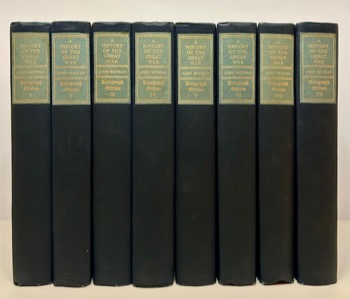
Hardcover. Boston, MA, Houghton Mifflin Company, 1st, 1922, Book: Very Good, Dust Jacket: None, Domestic shipping only. 8 Volumes. Hardcovers. Autograph edition is limited to five hundred signed and numbered copies printed at the Riverside Press, Cambridge, U.S.A. Number 187. SIGNED BY BUCHAN in volume 1, reverse of title page. 2268 total pages within 8 volumes: Color frontispieces in each volume and b/w illustrations throughout with tissue page guards and fold-out maps. Blue cover boards, navy blue quarter cloths with gilt title on blue paste downs on spines. Covers show very light shelf wear with some slight tanning and a touch of rubbing to bottom of spines (Vol. 3 has small spot on front cover board). Pages offset, some tanning to pages and edges from age. Binding very good. Spines straight. Pages and edges have a touch of tanning from age. Beautiful, historical set perfect for the WWI enthusiast.
Hardcover. Boston, Faber and Faber, 1st, 1994, Book: Very Good, Dust Jacket: Very Good, Hardcover in a bright, unclipped dust jacket, pages. "I write of peoples and of a struggle." So begins A New World, an ambitious and extraordinary book that challenges conventional historical narrative by presenting episodes in North America's history through the eyes and voices of the Europeans who established the first colonial outposts here. Beginning with the swaggering John Smith at Jamestown and ending with the beleaguered Montcalm at Quebec, Arthur Quinn allows towering historical figures to emerge from an often beautiful, sometimes forbidding early American landscape and speak. An elderly William Bradford looks back with growing despair at the early promise of the Pilgrim colony at Plymouth. Governor John Winthrop tries to administer a dose of practicality to the Puritans of Massachusetts. Jesuit missionaries bring Christianity and disaster to the Huron Confederacy. A blustering Peter Stuyvesant watches Manhattan slip from Dutch grasp. William Penn's Holy Experiment in Pennsylvania goes increasingly awry. And, finally, the British and the French fight history's first world war for supremacy in the New World. Telling each story using the literary conventions of the day, Quinn casts North America's colonial beginnings as a multicultural epic, gripping the reader throughout with his uncanny eye and storytelling skill. Clean copy.
Hardcover. Philadelphia, University of Pennsylvania Press, 1st, 1993, Hardcover in brown cloth, 170 pages. No dust jacket. Beginning as a series of scattered rural riots in late 1323, peasant insurrection escalated into a full-scale rebellion that dominated public affairs in Flanders for nearly five years. Following their own leaders, peasants defied the authority of the Count of Flanders by driving his officials and their aristocratic allies from the countryside. In A Plague of Insurrection, William H. TeBrake has written the first full-length account of the rebellion. Clean copy.
Hardcover. NY, Farrar, Straus, Giroux, 2nd pr., 1966, Book: Very Good, Dust Jacket: Very Good, Hardcover in a bright, unclipped dust jacket. Introduction by Edmund Wilson, translated from French by Derek Coltman. "When A Season in the Life of Emmanuel first appeared in 1966, it was hailed as a masterpiece both in North American and in Western Europe. Marie-Claire Blais's stunning accomplishment was to evoke rural Quebec with both the knowledge and the passion of a latter-day Zola." Clean copy.
Hardcover. Lexington, University Press of Kentucky, 1st, 2019, Book: Very Good, Dust Jacket: None, Hardcover, paper-covered boards, 172 pages. One of the most innovative films ever made, Sam Peckinpah's motion picture The Wild Bunch was released in 1969. From the outset, the film was considered controversial because of its powerful, graphic, and direct depiction of violence, but it was also praised for its lush photography, intricate camera work, and cutting-edge editing. Peckinpah's tale of an ill-fated, aging outlaw gang bound by a code of honor is often regarded as one of the most complex and impactful Westerns in American cinematic history. The issues dealt with in this groundbreaking film-violence, morality, friendship, and the legacy of American ambition and compromise-are just as relevant today as when the film first opened. To acknowledge the significance of The Wild Bunch, this collection brings together some of the leading Peckinpah scholars and critics to examine what many consider to be the director's greatest work. The book's nine essays cover an array of topics. Explored are the function of violence in the film and how its depiction is radically different from what is seen in other movies, the background of the film's production, the European response to the film's view of human nature, and the strong sense of the Texas/Mexico milieu surrounding the film's action. Clean copy.
Softcover. NY, Farrar, Straus and Giroux, reprint, 1986, Book: Very Good, Dust Jacket: None, Softcover, 192 pages. Roman Vishniac's A Vanished World is an extraordinary record of the lives of German and Eastern European Jews in the years immediately preceding the Holocaust. Vishniac, a Russian Jew, began to take photographs of village life during World War I, when Russian Jews who lived near the front were accused of being German spies and were deported to Siberia. He later moved to Germany, where he witnessed the horrible events of Kristallnacht and the anti-Jewish legislation that allowed Hitler to declare his enemies stateless and therefore unworthy of international protection. As we study Vishniac's photographs--a surviving fraction of the more than 16,000 he took--we are aware that we are seeing the faces of those soon to die, witnessing a world that has all but perished. Yet that world, of shops and schools, of busy streets and quiet farms, remains with us if only as a ghostly memory, thanks in part to Vishniac's compassionate eye.
Hardcover. NY, Atheneum, 1st, 1991, Book: Very Good, Dust Jacket: Very Good, Hardcover in a bright, unclipped dust jacket with edge wear, short closed tears. The first full-length biography--and likely the authoritative one for years to come--of the flamboyant black congressman who, as civil-rights gadfly and as libertine, exemplified the gap between our nation's ideals and practices that was given a name in Gunnar Myrdal's ``American Dilemma.'' Blessed with good looks, eloquence, and a bully pulpit (he succeeded his father as head of the Abyssinian Baptist Church, the nation's largest black congregation), Powell became ``Mr. Civil Rights'' in the pre-King era by combining agitation and electoral politics. As congressman from Harlem, Powell denounced racist southern colleagues and introduced the ``Powell Amendment'' to deny federal funds to projects or organizations that practiced discrimination. In 1960, he became chairman of the House Committee on Education and Labor, then the strongest position ever held by a black in the US government. Columbia Univ. political-science professor Hamilton also highlights how the Democratic politician became a thorn in the side of ally and foe alike. Powell was a maverick seldom bound by party (he endorsed Eisenhower for President), duty (a high absentee rate), or conventional morality. Inevitably, after an income-tax evasion trial, a suit filed by a Harlem resident he called a ``bag woman,'' and a European junket with two attractive female aides, Powell was stripped of his chairmanship by the House of Representatives despite his cry of double standards for white counterparts. Blending scholarship and ironic detachment, an admirably balanced treatment of a politician who provoked anything but objectivity during his Marion Barry-like career.
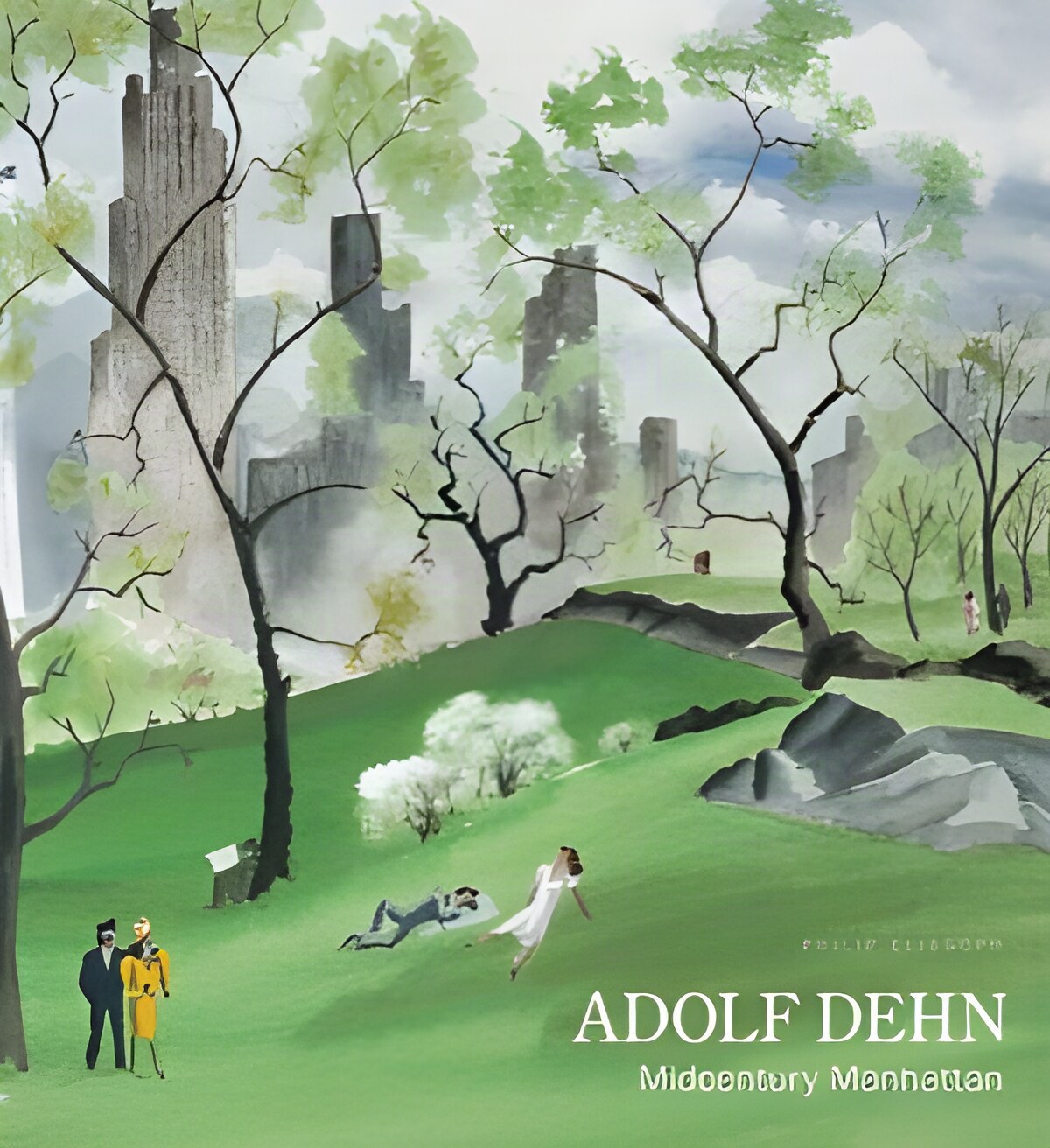
Hardcover. NY, The Artist Book Foundation, 1st, 2017, Book: Very Good, Dust Jacket: Very Good, Hardcover in a bright dust jacket. Adolf Dehn (1895-1968), an American lithographer and watercolorist, left his hometown in Minnesota after formal training at the Minneapolis Art Institute to study at the Art Students League in New York. In the early 1920s, he traveled to the cosmopolitan cities of Paris, Vienna, and Berlin, where he focused on lithography and printmaking, and soon found success as a magazine illustrator. As he toured Europe, Dehn quickly acclimated to the continental lifestyle and was adept at depicting its nuances and idiosyncrasies through his prolific lithographs and sketches. His critical and satirical renderings of the political movements, social conventions, and governmental policies in pre-World War II Europe gave the Midwestern artist ample material for his growing body of work. Returning to the United States in 1930, Dehn exhibited his prints in several solo shows at the Weyhe Gallery in New York, starting in 1935. As an artist during the era of the Great Depression, Dehn did commercial artwork and contributed to popular magazines such as The New Yorker, Vogue, and Vanity Fair. In fact, his clever drawings that reflected the culture and fashionable society during the Jazz Age, made Dehn a favourite of Frank Crowninshield, Vanity Fair's renowned editor. 182 pages, clean, still in publisher's shrinkwrap.
Softcover. NY, Scala Arts Publishers/Cornell, 1st, 2020, Book: Very Good, Dust Jacket: None, Softcover, 112 pages illustrated in color. Featuring African textiles, clothing, headwear, and jewelery, this book celebrates African dress as a product of global interactions, generational conflict and continuity, and expressions of gender. Featuring African textiles, clothing, headwear, and jewelery, this book celebrates African dress as a product of global interactions, generational conflict and continuity, and expressions of gender. The book highlights the strength and resilience of long-standing practices that characterize African dress; the wide variety of cultural, religious, and political motivations for adorning oneself; and the varying identities reflected in analyzing African material culture of the last century and a half. Textile selections include hand-woven and dyed examples alongside factory-woven and machine-printed cloth. Items of adornment include amber and silver jewelery from North Africa, beadwork-embellished clothing from South Africa, and various headdresses from across the continent, to name a few examples. From formal European colonization, to independence for African countries, to the liberalization of African economies, this book will demonstrate how dress practices reveal personal and group identities, cultural traditions, religious associations, political affiliations, and aspirations. Clean copy.
Softcover. Boston, Beacon Press, reprint, 2005, Book: Very Good, Dust Jacket: None, Softcover, 289 pages. For centuries, the story of the Atlantic slave trade has been filtered through the eyes and records of white Europeans. In this watershed book, historian Anne C. Bailey focuses on memories of the trade from the African perspective. African chiefs and other elders in an area of southeastern Ghana-once famously called 'the Old Slave Coast'-share stories that reveal that Africans were traders as well as victims of the trade. Bailey argues that, like victims of trauma, many African societies now experience a fragmented view of their past that partially explains the blanket of silence and shame around the slave trade. Clean copy.
Hardcover. New Haven/Atlanta, Yale/High Museum of Art, 1st, 2001, Book: Very Good, Dust Jacket: Very Good, Hardcover, 176 pages, color illustrated. Like new copy in a bright dust jacket. Expressing the anxieties of the late nineteenth century and the uncertainties of the modern world, Edvard Munch (1862-1944) often depicted in his works dangerously seductive fin de siecle women, sickly figures, and isolated characters in barren landscapes. These powerful, haunting paintings are widely recognized and revered, especially his iconic work The Scream (1893). Yet few admirers of Munch's early works realize that the artist lived well into the twentieth century and was enormously productive almost to the time of his death. This compelling book, focusing on more than sixty of Munch's later paintings, reveals the surprising, vibrant work of a fascinating man who never ceased to grow as an artist. Following decades of restless wandering among the capitals of Europe, Munch suffered a breakdown in Copenhagen in 1908 and retreated to his native Norway. In 1916 he purchased an estate near present-day Oslo where he lived and worked, mostly in his outdoor studio, for the next twenty years. Although Munch never abandoned a deeply introspective approach to image-making,
Hardcover. NY, Knopf, 1st, 2022, Book: Very Good, Dust Jacket: Very Good, Hardcover in a bright, unclipped dust jacket. A revelatory history of the transformational decade that followed World War II, when Germany raised itself put of the ashes of defeat, turned away from fascism, and reckoned with the corruption of its soul and the horrors of the Holocaust.
Hardcover. NY, Whitney Museum of Art/Abrams, 1st, 1992, Hardcover in a bright dust jacket, 187 pages. Published to accompany a 1992-93 exhibition held at the Whitney Museum of American Art, New York, this book deals with the full scope of Agnes Martin's art. It includes essays that place her work in the context of American and European 20th-century art and culture. Agnes Martin's paintings, constructions, and works on paper provide a link between the chromatic abstraction of artists such as Mark Rothko and Barnett Newman, her generational and ideological peers, and the Minimalist vocabulary of the 1960s. This book reproduces works made between 1957 and 1967, and better-known paintings and constructions created since 1974. A selection of Martin's writings reveals the spiritual philosophy that sustains her painting. Clean copy.
Hardcover. New Haven CT, Yale University Press, 1st, 2006, Book: Very Good, Dust Jacket: Very Good, Hardcover in a bright dust jacket, 190 pages, Includes chronology, footnotes, selected bibliography, list of exhibited works, index. Profusely illustrated with color and b&w prints. This beautifully illustrated book highlights the contrasts and correspondences in the lives and work of two of Modernism's greatest innovators, Josef Albers (1888-1976) and Laszlo Moholy-Nagy (1895-1947). Beginning in the 1930s, Albers and Moholy-Nagy each developed a rigorously abstract language that condensed art to its visual fundamentals: line, color, texture, light, and form. This language experienced a creative explosion during their Bauhaus years, when both artists moved freely between media and disciplines. Essays by leading scholars follow the artists' separate paths through to their emigration to the United States, where each continued to push tirelessly the conventions of artistic practice--Albers at Black Mountain College in North Carolina and then at Yale University, and Moholy-Nagy in Chicago at the New Bauhaus School and the Institute of Design. As highly influential teachers, Albers and Moholy-Nagy became important catalysts for the transmission of Modernist ideas from Europe to America.




 "150 Years of Photojournalism (2 Vol.) by: Yapp, Nick & Hopkinson, Amanda")
 "1914 - 1918 Through the eyes of Fortunino Mataniaby: Peter Richardson")


 "A Charmed Couple: The Art and Life of Walter and Matilda Gayby: Rieder, William")
 "A Feast in the Garden by: Konrad, George")




 "A Plague of Insurrection: Popular Politics and Peasant Revolt in Flanders, 1323-1328by: William H. TeBrake")
 "A Season in the Life of Emmanuel by: Blais, Marie Claire")


 "A Uniquely American Epic: Intimacy and Action, Tenderness and Violence in Sam Peckinpah's the Wild Bunchby: Michael Bliss, Garner Simmons, et al.")
 "A Vanished World by: Roman Vishniac (Author, Photographer), Elie Wiesel (Foreword)")
 "Adam Clayton Powell, Jr.: The Political Biography of an American Dilemmaby: Charles V. Hamilton")

 "African Voices of the Atlantic Slave Trade: Beyond the Silence and the Shameby: Bailey, Anne C.")
 "After the Scream: The Late Paintings of Edvard Munchby: Prelinger, Elizabeth")


 "Albers and Moholy-Nagy: From the Bauhaus to the New Worldby: Borchardt-Hume, Achim (Editor)")