Hardcover. New York, Holt Rinehart Winston, 1st, 1971, Book: Very Good, Dust Jacket: Good, Hardcover, 535 pages. Black & white illustrations. Dust jacket has edgewear.
Hardcover. Hartford, CT, American Publishing Company, 1st Edition, 1870, Book: Good, Dust Jacket: None, 651 pages plus publisher's ads. Hardcover. Front and back hinges cracked, binding tight otherwise. Frontispieces with tissue guard. Tanning to edges. Pages clean with just a touch of tanning. Spine straight. Cover boards bound in black cloth, gilt title on spine and design on front cover board. Borders and decoration blind-stamped to front and back cover boards. Some agewear to boards: fraying/chipping at top and bottom of spine and corners, rubbing. "Being some account of the steamship Quaker City's pleasure excursion to Europe and the Holy Land; with descriptions of countries, nations, incidents and adventures, as they appeared to the author." Perfect for any collector's bookshelf.
Softcover. Florence, Italy, Qua D'Arno, 1st, 1987, Book: Very Good, Dust Jacket: None, Softcover, 156 pages, bilingual texts in English and Spanish, b&w plates and text throughout. Illustrates and describes numerous torture devices including breast rippers, the ever popular rack and iron maiden, heretics fork and many more. Clean copy.
Hardcover. Lausanne, Clairefontaine, 1st , 1956, Book: Very Good, Dust Jacket: Very Good, Hardcover, 128 pages. Black & white photos by Schuh printed in gravure. Documentary images of people in the Cartier-Bresson style. FRENCH TEXT by Fouchet. Nice condition. Schuh's early work as freelance photojournalist for several magazines, including "Paris Match" and "Life," led him throughout Europe and as far as Indonesia. In this work, Schuh presents the realities of daily life through a selection of his early photographs, including his two most famous: "Enfant javanais jouant" (a boy stretched out playing a game), and "Danseuses sacrees de Bali" (temple dancer), both taken in Indonesia in 1938-39.
Hardcover. New York, Oceana Publications, 1st, 1953, Book: Very Good, Dust Jacket: None, 192 pages, salmon colored cloth, spine with light fading. One sentence in introduction with ink underlining, otherwise clean and tight.
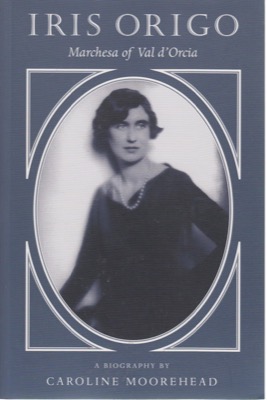
Softcover. Boston, David R. Godine, reprint, 2004, Book: Very Good, Dust Jacket: None, Softcover in pictorial wrappers, 368 pages. Eagerly exchanging an existence of idle privilege and social intrigue for one of hard work and literary distinction, Origo led a life characterized by vitality and commitment. Born in 1902 into a wealthy American family, she and her British mother permanently left the U.S. after the untimely death of her father in 1910. Traveling extensively throughout Europe, they eventually settled outside of Florence, becoming prominent members of the stuffy Anglo-Florentine community of expatriates. Asserting her trademark independence, she married Antonio Origo, the illegitimate son of a cavalry officer-sculptor. Together Antonio and Iris purchased and totally revitalized an arid Tuscan valley and renovated a crumbling estate. With virtually no experience and few practical skills, they transformed themselves into agrarian pioneers and their extensive acreage into a prosperous working community supporting more than 200 people. During the war years, they quietly supported the Allies, offering refuge to countless numbers of partisans and prisoners of war. In addition to these accomplishments, Iris also buried one child and raised two more, conducted several heart-wrenching extramarital affairs, and distinguished herself as both a biographer and a literary critic. Clean copy.
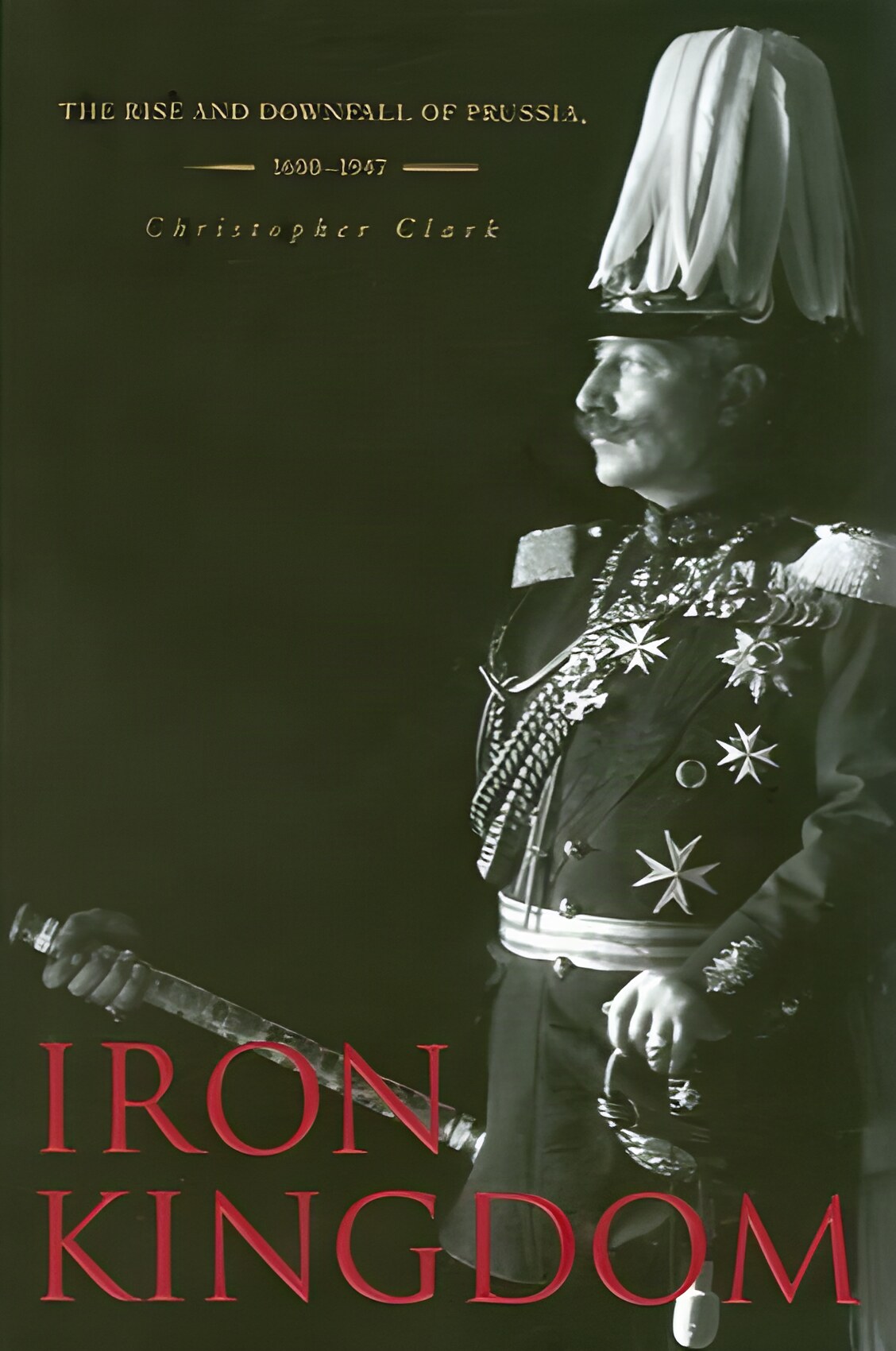
Softcover. Cambridge MA, Harvard University Press, reprint, 2008, Book: Very Good, Dust Jacket: None, Softcover, 776 pages. "Iron Kingdom, Christopher Clark's stately, authoritative history of Prussia from its humble beginnings to its ignominious end, presents a much more complicated and compelling picture of the German state, which is too often reduced to a caricature of spiked helmets and polished boots. Prussia and its army were inseparable, but Prussia was also renowned for its efficient, incorruptible civil service; its innovative system of social services; its religious tolerance; and its unrivaled education system, a model for the rest of Germany and the world. This too was Prussia-a tormented kingdom that, like a tragic hero, was brought down by the very qualities that raised it up. Mr. Clark, a senior lecturer in modern European history at Cambridge University, does an exemplary job. A lively writer, he organizes masses of material in orderly fashion, clearly establishing his main themes and pausing at crucial junctures to recapitulate and reconsider. Prussia, a self-invented artifact right down to its name, demands the kind of careful demythologizing that it receives from Mr. Clark, who gently but insistently exposes the flaws in most of the received wisdom about his subject. A result is an illuminating, profoundly satisfying work of history, brightened by vivid character sketches of the principals in his drama." Clean copy.
Hardcover. NY, G.P. Putman's Sons, 1st, 1989, Book: Very Good, Dust Jacket: Very Good, Hardcover in a nice, unclipped dust jacket, 447 pages. B&w photos. Although he aspired to Princeton, Irwin Gilbert Shamforoff (aka Shaw) had to settle for local Brooklyn College, where he seems to have enjoyed football more than his studies. From his mid-20s, however, Shaw (1913-1984) was a highly regarded New Yorker short story writer ("The Girls in Their Summer Dresses") and left-wing playwright ( Bury the Dead ), and later became a successful Hollywood script writer and novelist ( The Young Lions ; Rich Man, Poor Man ). This sympathetic, objective biography, by a Vanity Fair contributing editor, convincingly shows how Shaw's career, character and fiction, influenced more by Hemingway's lifestyle than by his writing, were marked by incongruities. Far from abating with age, his romantic and alcoholic appetites overwhelmed him. Years of high living in Europe, surrounded by adoring friends, softened his self-judgment, and he took to writing "fluffy essays for swells." The New Yorker dropped him, and "serious" critics panned his novels. Shnayerson capably contrasts Shaw's inclinations and personality with his subject matter and literary output, and is especially astute at explaining the complications of being a commercially successful midcentury American writer. Clean copy.
Hardcover. Leiden, The Netherlands, Brill, 1st edition, 2012, Book: Near Fine, Dust Jacket: None, 352 pages. Hardcover. Decorated cover boards, excellent. Very clean pages, edges. Biding tight. Spine straight. Like new. most remembered for his biblical criticism, Vossius played a central role in the early modern European world of learning.
Softcover. Philadelphia, Temple University Press, 1st pbk, 1993, Book: Very Good, Dust Jacket: None, Softcover, 379 pages. A collection of ten essays covering topics ranging from the expansion of Islamic civilization to gender issues in the Industrial Revolution and European global expansion. Each essay provides an overview of the problems and themes relating to critical processes and periods in global history. Clean copy.
Hardcover. Boston, Little Brown, 1st, 1985, Book: Very Good, Dust Jacket: None, Hardcover, 287 pages, 442 b&w illustrations. The famous photojournalist presents, among other events, the abdication of Edward VIII; the Anschluss; the Warsaw ghetto, before and after its destruction; Tito's guerrilla war against the Nazis; and Isr'l's battle for independence. He recorded the fall of Hungary to the Communists; he was with Churchill at Teheran; and with Khrushchev at Belgrade. There are also exotic parties given by Cecil Beaton and Lady Juliet Duff. Portraits of the last glories of the English aristocracy and the old French Bourgeoisie; the industrialists and artists who made Italy's miraculous postwar recovery possible. In 60,000 words of text he captures the extraordinary adventures and bizarre characters that together made up the author's life. The combination of words and pictures provides a rich, powerful portrait of a fascinating career. Missing dust jacket.
Hardcover. NY, Ten Speed Press, 1st, 2020, Book: Very Good, Dust Jacket: None, Hardcover in pictorial boards, no dust jacket issued, 201 pages. This sweeping, full-color comic book biography tells the complete life story of Jack Kirby, co-creator of some of the most enduring superheroes and villains of the twentieth century for Marvel Comics, DC Comics, and more. Critically acclaimed graphic novelist Tom Scioli breathes visual life into Kirby's life story--from his days growing up in New York during the Great Depression and discovering a love for science fiction and cartoons to his time on the frontlines in the European theatre of World War II where he experienced the type of action and adventure he'd later imbue his comic pages with, and on to his world-changing collaborations at Marvel with Stan Lee, where the pair redefined comics as a part of pop culture.
Hardcover. East Lothian, Scotland, Tuckwell Press , reprint, 1998, Book: Very Good, Dust Jacket: Very Good, Hardcover in a bright dust jacket. 339 pages, 18 figures on 12 b/w plates, map, end notes, appendix, bibliography, index. James IV is the best-known of all the late medieval Scottish rulers. Widely praised by his contemporaries, he combined the qualities of successful medieval monarch with a wide interest in the arts and sciences, while remaining acutely conscious of the need to enhance the prestige of his dynasty throughout Europe. This excellent study examines all aspects of James IV's sovereignty, explains his popularity and his highly successful kingship and assesses reasons for the disastrous end to the reign when the king and a large population of the Scottish nobility were eliminated in a single afternoon in 1513 at Flodden. Clean copy.
Bologna, Damiani, 1st, 2017, Book: Very Good, Dust Jacket: None, Hardcover, 280 pages. American fashion photographer James Moore (1936-2006) was an influential voice in mid-20th-century fashion photography, working for Harper's Bazaar during its 1960s heyday under the leadership of legendary editor Carmel Snow. Shooting languid mod gamines and luxe bohemians in arresting, often surreal or cinematic compositions, Moore helped shape the visual vocabulary of '60s fashion alongside better-known colleagues such as art director Alexey Brodovitch (under whom Moore studied). Moore also directed television commercials and contributed photographs to European magazines in the 1980s and 1990s, and taught photography at the School of Visual Arts, New York, and the Rochester Institute of Technology. Every Moore photograph is an intricate exploration of space and beauty, with an attention to detail that betrays the photographer's peerless eye. Something of a "photographer's photographer," Moore influenced the next generation of great fashion photographers but has been somewhat neglected in histories of 1960s fashion and culture--until now. James Moore: Photographs 1962-2006 collects a half century of extraordinary photographs by Moore, the first time his work has been collected in a single monograph. Including texts from the leading editors, models, photographers and designers of the day, this volume takes stock of James Moore's astounding career and an extraordinary cultural moment.
Bologna, Damiani, 1st, 2017, Book: Very Good, Dust Jacket: None, Hardcover, 280 pages. American fashion photographer James Moore (1936-2006) was an influential voice in mid-20th-century fashion photography, working for Harper's Bazaar during its 1960s heyday under the leadership of legendary editor Carmel Snow. Shooting languid mod gamines and luxe bohemians in arresting, often surreal or cinematic compositions, Moore helped shape the visual vocabulary of '60s fashion alongside better-known colleagues such as art director Alexey Brodovitch (under whom Moore studied). Moore also directed television commercials and contributed photographs to European magazines in the 1980s and 1990s, and taught photography at the School of Visual Arts, New York, and the Rochester Institute of Technology. Every Moore photograph is an intricate exploration of space and beauty, with an attention to detail that betrays the photographer's peerless eye. Something of a "photographer's photographer," Moore influenced the next generation of great fashion photographers but has been somewhat neglected in histories of 1960s fashion and culture--until now. James Moore: Photographs 1962-2006 collects a half century of extraordinary photographs by Moore, the first time his work has been collected in a single monograph. Including texts from the leading editors, models, photographers and designers of the day, this volume takes stock of James Moore's astounding career and an extraordinary cultural moment.
Hardcover. NY, Harry N Abrams, 1st, 1989, Book: Very Good, Dust Jacket: Very Good, Hardcover, 248 pages. B&w photos throughout. Jean Howard was a small part Hollywood actress in the late 30s/early 40s whose marriage to super agent Charles Feldman gave her an entry into the top circles of Hollywood away from the studios. She carried her camera with her everywhere and thus we get hundreds of photographs of Hollywood royalty at play right up until the Sixties both at home and mixing with high society in Europe. Although not especially gifted as a photographer her access to the stars was unprecedented and her candid snaps are fascinating for students of Tinseltown at play. Thus we get the likes of Tyrone Power playing croquet with Howard Hawks and Daryl Zanuck and Jennifer Jones leading a conga line of party guests fully clothed into Joseph Cotten's swimming pool. The photographs in this coffee table sized book are accompanied by short but informative comments identifying the participants and giving snippets of fascinating gossip. Recommended for fans of Hollywood's studio era.
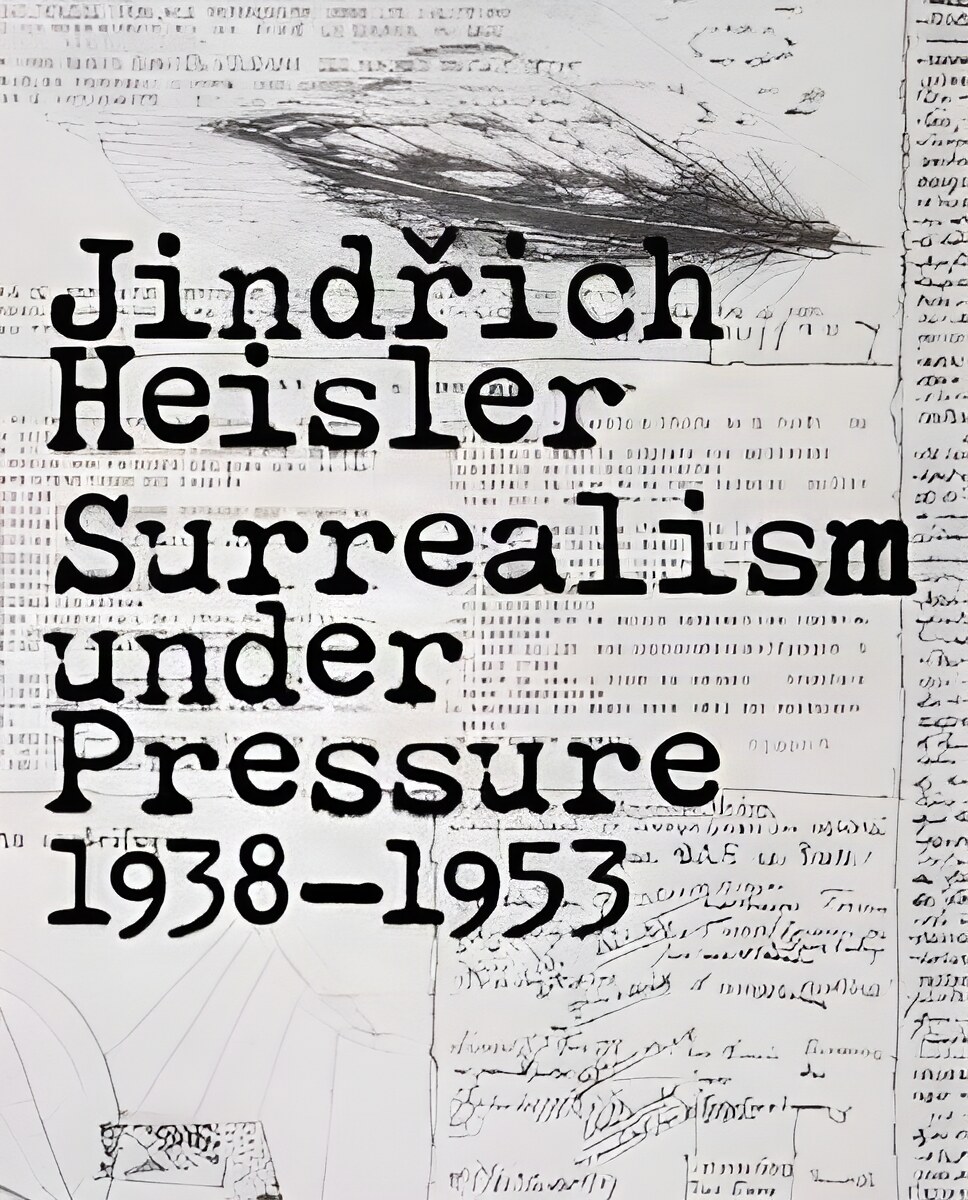
Hardcover. Chicago , Art Institute of Chicago ; New Haven, Conn. : Distributed by Yale University Press, 1st, 2012, Book: Very Good, Dust Jacket: Very Good, Hardcover with dust jacket. Like new in publisher's shrink-wrap. The story of Jindrich Heislter--a Jewish surrealist who remained in Czechoslovakia and continued to produce art during the Nazi occupation is fascinating. It's particularly worth comparing to many of the European surrealists, who fled to the safety of the United States for the duration. Heisler's art has moments of greatness, particularly his unique cliche-verres, but the vast majority of it is third-rate (if that) surrealist photo-tableaux, art school poetry, object assemblages, and horror vacui typography.
Hardcover. Boston/ New York , Bulfinch Press, 1st, 1993, Book: Very Good, Dust Jacket: Very Good, Hardcover, 533 pages, 431 works reproduced in color. Small remainder mark to bottom edge, otherwise a bright, clean copy in a similar dust jacket. The most comprehensive look at Miro's art available in book form. In honor of Miro's 100th birthday, 1993 has been designated Miro Year, which is being celebrated with great fanfare in Europe and the U.S. This book features full-color reproductions of the artist's work on canvas and paper, from his earliest sketch to his mature works of the 1980s.
Hardcover. Washington DC, Dumbarton Oaks Research Library, 1st, 1998, Book: Very Good, Dust Jacket: Very Good, Hardcover in a bright dust jacket, 310 pages. John Evelyn (1620-1706), an English virtuoso and writer, was a pivotal figure in seventeenth-century intellectual life in England. He left an immensely rich literary heritage, which is of great significance for scholars interested in garden history and the histories of intellectual life and architecture. Evelyn is perhaps best known for Sylva, a compilation of thoughts on practical estate management, gardening, and philosophy, and the first book published by the Royal Society in London. As one of the group of learned men who founded the Royal Society in 1660 to promote scientific research, discussion, and publications, John Evelyn was at the center of many of the vital intellectual currents of the time. "Elysium Britannicum," Evelyn's unpublished manuscript of almost a thousand pages of densely packed drafts, rewrites, and projects, was perhaps something of an enigma to his contemporaries, who nevertheless urged its publication. It remains for scholars today a treasure-trove of fascinating insights on Evelyn and his milieu. Clean copy.
Hardcover. Cambridge UK, Cambridge University Press, 1st, 2006, Book: Very Good, Dust Jacket: Very Good, Hardcover in a bright dust jacket, 767 pages. 'This book is a major new intellectual and cultural history of intolerance and toleration in early modern and early Enlightenment Europe. John Marshall offers an extensive study of late seventeenth-century practices of religious intolerance and toleration in England, Ireland, France, Piedmont and the Netherlands and of the arguments which John Locke and his associates made in defence of 'universal religious toleration'. He analyses early modern and early Enlightenment discussions of toleration; debates over toleration for Jews and Muslims as well as for Christians; the limits of toleration for the intolerant, atheists, 'libertines' and 'sodomites'; and the complex relationships between intolerance and resistance theories including Locke's own Treatises. This study is a significant contribution to the history of the 'republic of letters' of the 1680s and the development of early Enlightenment culture and will be essential reading for scholars of early modern European history, religion, political science, and philosophy.' Clean copy.
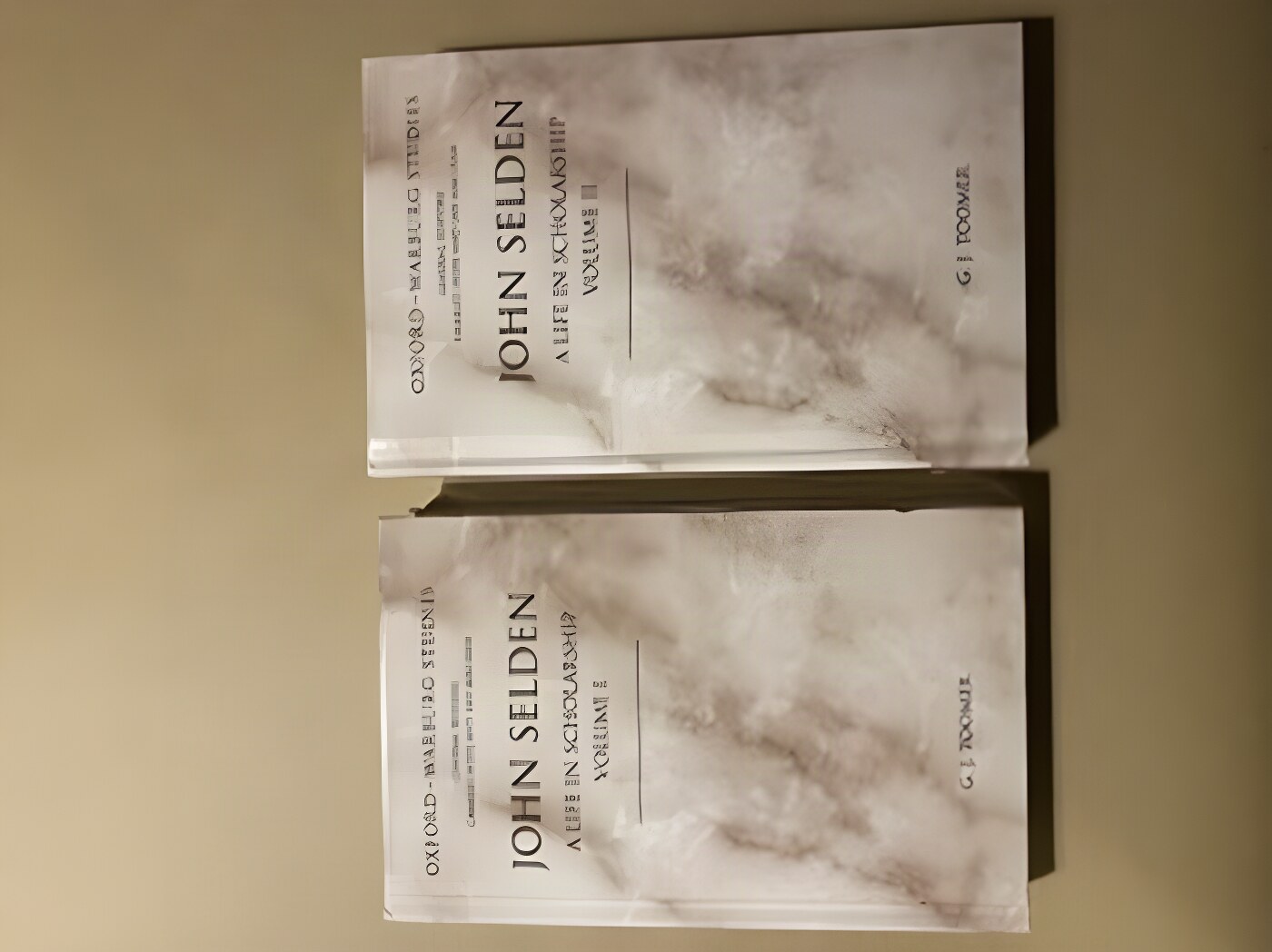
Hardcover. London, Oxford University Press, reprint, 2011, Book: Very Good, Dust Jacket: None, Two volume set complete, glossy boards, 977 pages in total. Professor Toomer's two-volume set is not only an indispensable reference work but also provides the first thorough treatment of the scholarship of John Selden, acknowledged as the most learned man of 17th-century England. All of his numerous published works, especially in the fields of history, law, and Hebraica, are critically examined and described in detail. The narrative also relates his writings to contemporary events, in the Civil War and the parliaments (including the Long Parliament) in which he played a prominent part, and to the work of other scholars in Europe (notably Scaliger and Grotius) and in Britain (including Camden and Ussher). Selden's involvement with the Universities, the support of libraries, and the promotion of scholarship is discussed. The work will be an essential resource, not only for the life of a major figure of his time, but also for the intellectual history of 17th-century England in general. No djs as issued, like new.
Hardcover. New Haven, CT, Yale University Press, 1st, 2014, Book: Very Good, Dust Jacket: Very Good, 240 pages. Hardcover with dust jacket. Very clean, like new in publishers shrink-wrap. A tight copy. The American realist artist John Sloan is best known for his portrayals of daily life in early 20th-century New York and as a member of The Eight and the Ashcan School, alongside peers like Robert Henri, Everett Shinn, and George Luks. Sloan's artistic approach was shaped by his experience as a commercial illustrator, a type of work that inaugurated his professional career-at newspapers like the Philadelphia Press and later for mass-market magazines-and which he pursued even after he turned his focus to painting. In John Sloan: Drawing on Illustration, Michael Lobel explores the impact of Sloan's illustrating on his wider output, including his paintings, his drawings for the radical journal The Masses, and his response to the watershed 1913 Armory Show. Illuminating the interaction between art and popular culture, this book provides an important new framework for understanding the modern genre of illustration, and in so doing touches on major 20th-century currents, including the rise and expansion of the mass media and the visual legacy of European modernism.

 "In the Twenties - The Diaries of Harry Kesslerby: Kessler, Harry")
 "Innocents Abroad, The: or the New Pilgrims' Progressby: Twain, Mark (Samuel Clemens)")


 "Instants Voles Instants Donnesby: Schuh, Gotthard and Max-Pox Fouchet")
 "Introduction to European Commercial Lawby: Wallach, Frederick")
 "Irwin Shaw: A Biographyby: Michael Shnayerson")
 "Isaac Vossius (1618-1689): Between Science and Scholarshipby: Jorink, Eric (Editor), Dirk Van Miert (Editor)")


 "It Happened In Our Lifetime: A Memoir In Words and Pictures by: Phillips, John")
 "Ivan Franko, The Poet of Western Ukraine: Selected Poems by: Ivan Franko, Editor: Clarence A. Manning, Translator: Percival Cundy")
 "Jack Kirby: The Epic Life of the King of Comicsby: Tom Scioli")
 "James IV (The Stewart Dynasty In Scotland)by: Macdougall, Norman")
 "James Moore: Photographs 1962-2006by: Martin Harrison (Author), Holly Brubach (Author), Nicolas Moore (Editor), James Moore (Photographer)")


 "James Moore: Photographs 1962-2006by: Martin Harrison (Author), Holly Brubach (Author), Nicolas Moore (Editor), James Moore (Photographer)")


 "Jean Howard's Hollywood: A Photo Memoirby: Howard, Jean/James Watters")
 "Joan Miro: 1893 - 1993by: Miro, Joan")

 "John Locke, Toleration and Early Enlightenment Culture (Cambridge Studies in Early Modern British History)by: Marshall, John")
 "John Sloan: Drawing on Illustrationby: Lobel, Michael")