Hardcover. New Haven, CT, Yale University Press, 1st, 2014, Book: Very Good, Dust Jacket: Very Good, 240 pages. Hardcover with dust jacket. Very clean, like new in publishers shrink-wrap. A tight copy. The American realist artist John Sloan is best known for his portrayals of daily life in early 20th-century New York and as a member of The Eight and the Ashcan School, alongside peers like Robert Henri, Everett Shinn, and George Luks. Sloan's artistic approach was shaped by his experience as a commercial illustrator, a type of work that inaugurated his professional career-at newspapers like the Philadelphia Press and later for mass-market magazines-and which he pursued even after he turned his focus to painting. In John Sloan: Drawing on Illustration, Michael Lobel explores the impact of Sloan's illustrating on his wider output, including his paintings, his drawings for the radical journal The Masses, and his response to the watershed 1913 Armory Show. Illuminating the interaction between art and popular culture, this book provides an important new framework for understanding the modern genre of illustration, and in so doing touches on major 20th-century currents, including the rise and expansion of the mass media and the visual legacy of European modernism.
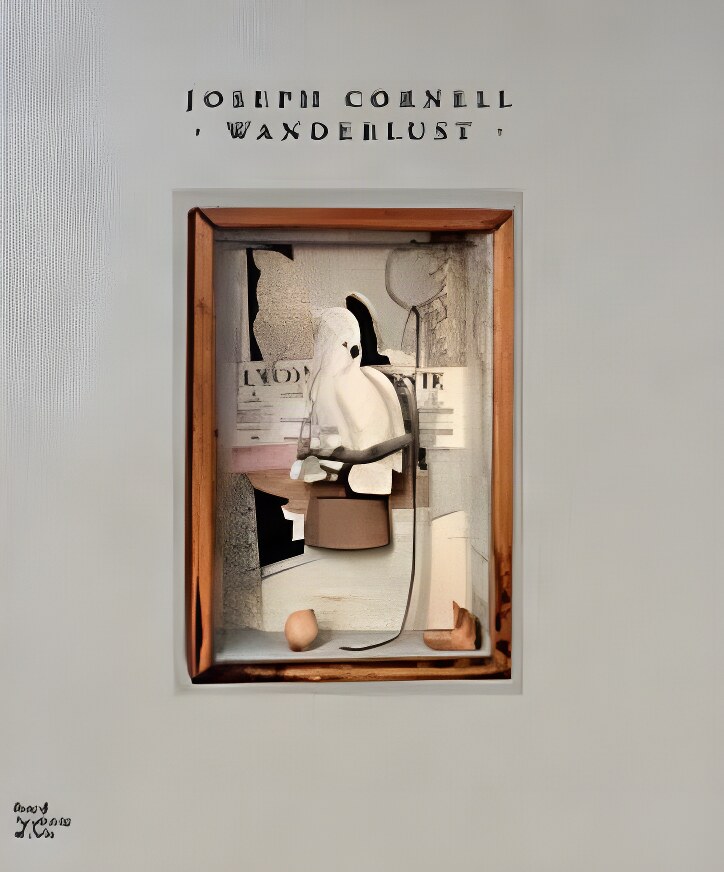
Hardcover. London , Royal Academy of Arts , 1st, 2015, Book: Very Good, Dust Jacket: None, Hardcover, 272 pages, without dust jacket. Like new in publisher's shrink-wrap. Joseph Cornell (1903-1972) was one of the 20th century's leading exponents of collage and assemblage. A connoisseur of an astonishing array of subjects, Cornell's captivation with bygone imagery encompassed astronomical charts and geographical maps, Italian and Spanish Old Master paintings, historical ballet, early film, literature, poetry and ornithology. Most iconic among his works are his box constructions-microcosmic curiosity cabinets-filled with once-precious fragments that he collected in thrift shops in his native New York. Joseph Cornell: Wanderlust is a landmark publication examining this remarkable work. It brings together some of Cornell's most compelling assemblages and box constructions (including Medici slot machines, soap-bubble sets and animal habitats). The contributors raise questions about Cornell's artistic processes while drawing parallels with historical modes of inquiry such as connoisseurship, exploration and classification.
Softcover. NA, NA, 1st, NA, Book: Good, Dust Jacket: None, 51 pages. Softcover. No date or publication information. Library stamp at bottom left corner of front cover. Number stamped on reverse of title page. Text is clean, unmarked. Some light chipping to cover edges. The journal starts in 1848, with a voyage to Glasgow at fifteen years of age, for famine relief. Later voyages took Crockett to Paris, Russia, and Calcutta, Entertaining anecdotes about the passengers, his reading, and his wedding in Boston. The narrative is taken up later at his Golden Wedding. Entertaining and informative. Stapled in green wrappers.
Hardcover. NY, Paragon House, 1st, 1991, Book: Very Good, Dust Jacket: Very Good, Hardcover in a bright dust jacket. 274 pages. Black cloth spine over brown boards. First published in 1925.
Hardcover. Hatje Cantz, 1st, 2008-08-01, Book: Very Good, Dust Jacket: Very Good, Hardcover, pages. Like new in publisher's shrink-wrap. In the early 1950s, Berlin-born photographer Jurgen Schadeberg captured Nelson Mandela, (then a young attorney), singer Miriam Makeba and the nightlife in Sophiatown, a dynamic black neighborhood in Johannesburg. Revealing the poverty endemic to the majority of South Africa's black population became Schadeberg's chief focus. He arrived there in 1950, at the advent of apartheid, to work for Drum, the first magazine for black readers. In 1964, when Drum was banned, Schadeberg left South Africa for Europe and the United States, creating a body of portraits unique in their ability to cut across race, class and social standing. In 1994, Schadeberg created an iconic image of Nelson Mandela, by then the first black President of South Africa, standing at the window of his former prison cell on Robben Island, where he had been detained on charges of conspiracy from 1964-1982. Schadeberg, whose work has been highly influential to younger artists, now lives and works near Paris. This substantial volume collects 250 images from across his career.
Hardcover. Cambridge MA, MIT Press, 1st, 1999, Book: Very Good, Dust Jacket: Very Good, 420 pages, illustrated with mostly b&w plates, 8 color pages. Small remainder stamp on bottom edge. "Tiege was at one and the same time both an agent provocateur and seismograph, at once provoking action and debate and yet simultaneously reacting with the utmost sensitivity to the shifting political spectrum of his time."--from the introduction by Kenneth FramptonKarel Teige (1900-1951), a leading figure of the avant-garde of the 1920s and 1930s, participated in every important argument and controversy of those turbulent years. He edited the most influential avant-garde journals on Czech and international cultural affairs and wrote profoundly original essays and books on the theory and criticism of art and architecture. He also produced paintings, collages, photomontages, film scripts, book covers, and typefaces and participated in theatrical performances.
Softcover. Amsterdam, Amsterdam Scheltema en Holkema's Boekhandel, First Edition, 1912, Book: Very Good, Dust Jacket: None, Hardcover, large folio size, in Dutch text. 40 pages text followed by 470 plates in black & white. Brown cloth covered boards with embossed illustration in black & gilt. Moderate rubbing, scuff marks to covers. Fraying to head & heel of spine. Gilt titles to cover & spine. Tender front board with crack to top quarter hinge. Toning to edges throughout. Striking, full page black & white illustrations detailing castles, gardens, mansions, intricate woodwork throughout. Previous owner's signature & stamp to front flyleaf. Otherwise clean & unmarked.
Hardcover. NY, W. W. Norton & Company, 1st, 2008, Book: Very Good, Dust Jacket: Very Good, Hardcover, 320 pages. Extraordinary photographs, along with extensive captions, document the transition from a barely explored paradise to a modern nation. This stunning collection of 720 photographs, many of them drawn from family archives and scrapbooks and all carefully restored, is one of the most important visual records of Africa in the late nineteenth and early twentieth centuries ever to have been published. The early photographers captured the beauty and dangerous allure of life on this spectacular frontier: the ceremonies and traditional attire of the native people, the fantastic machinery used in construction of the Uganda Railway, the gradual development of trade on the coast and in the country's interior, the hardships of the East African Campaign during World War I, and the pioneering spirit of early European settlers and farmers. Many of the most famous names and places connected with Africa appear in these pages, including Karen Blixen's farm and Ernest Hemingway and Theodore Roosevelt on safari.
Hardcover. OH, Kent State University Press, 1st, 2004, Book: Very Good, Dust Jacket: Very Good, Hardcover, 96 pages. "In 1941 Frank Kessler, a young accountant in Canton, Ohio, was drafted, assigned to an Army Signal Corps unit, and went away to photograph the war in Europe. In 1945, home again with his wife and children, he stored hundreds of those images of blood and battle in his attic. There they stayed until after his death. "Then Lee Kessler, Frank's estranged younger brother, sorted through boxes seeking to better know a brother he'd never known very well. A flier who had been shot down and held in a German POW camp, Lee saw Frank's photographs as images of a different side of war, one he never experienced. He was moved by what he saw and recognized their importance. He preserved them for all of us, carefully ordering them into albums and typing the information Frank had written on the backs of the photos. "When I saw Frank Kessler's photographs I was struck by how different they were from the movie-camera views I see on television. No public relations pictures here, intended to glorify battle and rally support. These were up-close snapshots of the dirty, damp, and disheveled men in the rifle companies and tank units. It was the war as they endured it, as they struggled through it from the beaches of France to the streets of Berlin until they finally won it."
Hardcover. London, SelfMadeHero, 1st, 2018, Book: Very Good, Dust Jacket: None, Hardcover, pictorial boards, 128 pages. In the mid-1970s, Klimowski's fearlessly original artwork caught the eye of leading Polish theatre and film companies, for whom he designed some of the period's most influential and iconic posters. The London-born artist, who moved to Poland at a time when many East Europeans dreamed of going West, went on to create posters for works by filmmakers and playwrights from Scorsese to Altman, Beckett to Brecht. Drawing on folk art, Polish Surrealism and the work of his mentor at the Warsaw Academy, Henryk Tomaszewski, Klimowski uses techniques including photomontage and linocut to create posters that are filled with metaphor, drama and originality. The Klimowski Poster Book compiles the best of his Polish work, while also tracing his career after his return to London, where he remains Emeritus Professor of Illustration at the Royal College of Art. Clean, bright copy.
Hardcover. New York, Harry N. Abrams, 1st, 1984, Book: Very Good, Dust Jacket: Very Good, Hardcover, 256 pages. 330 illustrations, including 150 plates in full color. Black cloth, gilt lettering to spine. Beautiful pictorial dust jacket. A very clean, tight and crisp copy. Like New.
Softcover. London, Reaktion Books,, 1st, 2004, Book: Very Good, Dust Jacket: None, Softcover, 223 pages, 144 illistrations, most in color. An exploration of the cult and celebration of death, loss and memory. Tracing the history and design of burial places throughout Europe and the USA, Ken Worpole ranges from village churchyards to tightly packed cities of the dead, such as the Jewish Cemetery in Prague and Pere Lachaise in Paris.
Hardcover. Cambridge MA, MIT Press, 1st, 2001, Book: Very Good, Dust Jacket: Very Good, 406 pages, Hardcover with dust jacket. B&w illustrations. Clean, tight copy. How Le Corbusier's first trip to the United States shaped his critique of the country and affected both his work and the diffusion of his ideas. Le Corbusier's first trip to the United States in 1935 is generally considered a failure because it produced no commissions. The experience nevertheless had a profound effect on him, both personally and professionally. Sponsored by the Museum of Modern Art in New York, Le Corbusier promoted his ideas through a lecture tour, exhibition, and press conferences, as well as in meetings with industrialists, housing reformers, New Deal technocrats, and editors. His lectures were watershed events that advanced the cause of European modernism. Yet he returned to France empty-handed and published a bittersweet account, Quand les Cathedrales etaient blanches: Voyage au Pays des Timid Personnes (When the Cathedrals Were White: Journey to the Country of Timid People), which faulted America for lacking the courage to adopt his ideas.
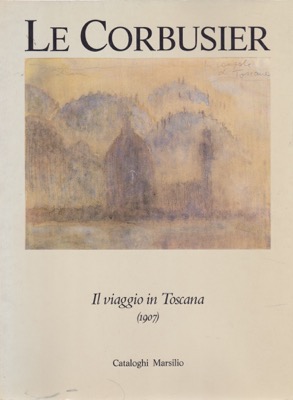
Softcover. Venice, Cataloghi Marsilio, 1st, 1987, Book: Very Good, Dust Jacket: None, Softcover, 140 pages. TEXT IN ITALIAN. A catalog of drawings and architectural watercolor sketches done by Le Corbusier on a trip to Italy in 1907. His career spanned five decades, with his buildings constructed throughout Europe, India, and America. He was a pioneer in studies of modern high design and was dedicated to providing better living conditions for the residents of crowded cities. (1907) - Catalogo della Mostra. Clean copy.
Hardcover. Paris, Editions Albert Morance, 1st, 1953, Book: Very Good, Dust Jacket: Fair, 320 pages. Hardcover. Text in French. Illustrated with black & white photographs and drawings of decorative cast iron. Previous owners name and date written on front interior hinge flap. Dust jacket worn with tape repair, chipping along edges - jacket now protected with clear plastic cover. Clean, tight copy.
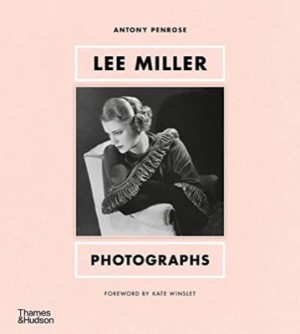
Hardcover. NY, Thames & Hudson, 1st, 2023, Book: Very Good, Dust Jacket: None, Hardcover, pale rose boards with photo label on front cover. Over one hundred of the most outstanding photographs taken by photographer, model, and surrealist muse Lee Miller, Introduced to photography at an early age, Lee Miller honed her craft in Paris, where she associated with the Surrealists and avant-garde artists including Jean Cocteau and Picasso. Together with Man Ray she accidentally discovered the distinctive technique of solarization to create mesmerizing halo effects. After establishing her own photographic studio in New York, where she became a prominent commercial photographer, she then moved to the Middle East and Europe before becoming the official war photographer for Vogue, a period during which she took many of her most iconic photographs. This evocative book collects Lee Miller's most famous documentary, fashion, and war works, as well as photographs of Miller, all carefully compiled by her son the photographer Antony Penrose, with a foreword by actress Kate Winslet, Cllean copy.
Softcover. NY, Archipelago Books, 1st transl. thus, 2004, Book: Very Good, Dust Jacket: None, Softcover in pictorial wrappers, 199 pages. This classic of German literature--often hailed as the inception of European modernist prose--follows the mental breakdown of an 18th-century schizophrenic playwright, Jakob Michael Reinhold Lenz. Published after Buchner's death, Lenz provides a taut case study of three weeks in the life of schizophrenic, perhaps the first third-person text ever to be written from the "inside" of insanity. An early experiment in docufiction, Buchner's textual montage draws on the diary of J.F. Oberlin, the Alsatian pastor who briefly took care of Lenz in 1778, while also refracting Goethe's memoir of his troubled friendship with the playwright. English versions of both these historical source texts here accompany Lenz for the first time in this bilingual presentation. Based on the best recent edition of the text, this fresh translation will allow readers to discover why Heiner Muller pronounced Lenz the inaugural example of "21st-century prose." Clean copy.
Softcover. Stanford CA, Stanford University Press, 1st transl., 1944, Book: Very Good, Dust Jacket: None, Softcover, 246 pages. Philosophical aesthetics has seen an amazing revival over the past decade, as a radical questioning of the very grounds of Western epistemology has revealed that some antinomies of aesthetic experience-and in particular of the limits of the aesthetical-can be viewed as a general, yet necessarily open model for human understanding. In this revival, no text in the classical corpus of Western philosophy has been more frequently discussed than the complex paragraphs modestly inserted into Kant's Critique of Judgment as sections 23-29: the Analytic of the Sublime. This book is a rigorous explication de texte, a close reading of these sections. First, Lyotard reconstitutes, following the letter of Kant's analysis, the philosophical context of his critical writings and of the European Enlightenment. Second, because the analytic of the sublime reveals the inability of aesthetic experience to bridge the separate realms of theoretical and practical reason, Lyotard can connect his reconstitution of Kant's critical project with today's debates about the very conditions-and limits-of presentation in general.
Hardcover. Baltimore MD, Johns Hopkins University Press, 1st, 1998, Book: Very Good, Dust Jacket: Very Good, Hardcover in a bright dust jacket, 356 pages, b&w illustrations. Starrs offers a detailed and comprehensive look at one of America's most enduring institutions. Richly illustrated with 130 photographs and maps, the book combines the authentic detail of an insider's view (Starrs spent six years working cattle on the high desert Great Basin range) with a scholar's keen eye for objective analysis. Tracing the geography and history of ranching in the United States, Starrs tells how Anglo settlers first encountered the open grasslands of the West - an environment alien to most of the European experience." Clean copy.
Hardcover. New York, Edita Lausanne/Universe Books, 1st U.S.A. Edition, 1973, Book: Very Good, Dust Jacket: Very Good, 345 pages. Hardcover in cardboard slipcase. Color and b/w illustrations throughout. Binding tight, spine straight. Pages and edges clean. Dust jacket price clipped, excellent otherwise, no rips or tears, glossy. Leather bound cover boards, gilt title and decoration on spine and front cover board. Thanks to slipcase in beautiful condition. A passport to our common heritage, which will illuminate and reveal the colorful pageantry of existence in medieval time. A book that links today with the past.
Hardcover. NY, The Macmillan Company,, 1st, 1948, Book: Very Good, Dust Jacket: Very Good, Three hardcover volumes in bright dust jackets, complete set. Blue cloth covers and gilt spine lettering. Volumes 1 & 2 are historical and cover the development of American literature from its European roots, and volume 3 is a comprehensive bibliography. This is a standard work in its field. Vol. 1: 636 pages, Vol.2: 639-1422; Vol. 3: 817 pages. The contents are clean and unmarked--there are no bookplates or ownership names. Dust jackets in protective mylar, no slipcase.
Hardcover. New York, Holt Rinehart Winston , 3rd pr., 1975, Book: Very Good, Dust Jacket: Very Good, Hardcover, 191 pages. In a bright, unclipped dust jacket. In a small European hotel in the late 1940s a bizarre group of characters, who all seem to be on the run from some past financial, personal or political horror, come together.
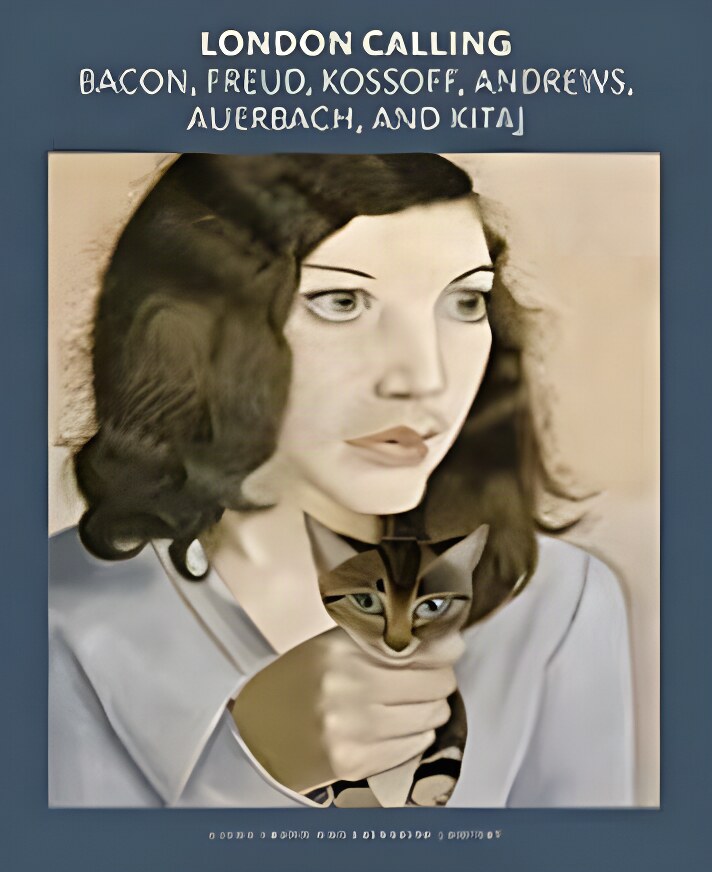
Hardcover. Loa Angeles, J. Paul Getty Museum, 1st, 2016, Book: Very Good, Dust Jacket: None, Hardcover, 136 pages. Offering a fresh account of developments that have since characterized postwar British painting, this catalogue focuses on Michael Andrews, Frank Auerbach, Francis Bacon, Lucian Freud, R. B. Kitaj, and Leon Kossoff-- artists who worked in close proximity as they were developing new forms of realism. If for many years their efforts seemed to clash with dominant tendencies, reassessment in recent decades has afforded their work a central position in a richer and more complex understanding of postwar British art and culture. Rigorous and gorgeously illustrated, the essays reflect on the parallel yet diverse trajectories of these artists, their friendships and mutual admiration, and the divergence of their practice from the discourse of high modernism. The authors seek to dispel the notion of their work as a uniquely British endeavor by highlighting the artists' international outlook and ongoing dialogue with contemporary European and American painters as well as masters from previous generations.

 "John Sloan: Drawing on Illustrationby: Lobel, Michael")
 "Journal of Charles B. Crockett, Theby: Crockett, Charles B.")

 "Jurgen Schadebergby: Schadeberg, Jurgen")
 "Karel Teige/1900-1951: L'Enfant Terrible of the Czech Modernist Avant-Gardeby: Dluhosch (Ed.), Eric and Rostislav Svacha")
 "Kasteelen Buitenplaatsen Tuinen en Parken van Nederland (Dutch Text)by: Jongsma, H.")


 "Kenya: A Country in the Making, 1880-1940by: Pavitt, Nigel")
 "Kilroy Was There: A GI's War in Photographsby: Tony Hillerman and Frank Kessler")

 "Lacquer: An International History and Illustrated Surveyby: Scott, Rosemary, ET AL")
 "Last Landscapes: The Architecture of the Cemetery in the West by: Worpole, Ken")
 "Le Corbusier in America: Travels in the Land of the Timidby: Bacon, Mardges")
 "Le Fer Forge - Documents Artistiques de Ferronnerie Ancienne - Du Moyen-Age a la Fin du XVIII Siecleby: Clouzot, Henri")

 "Les Reports des Cases en Ley Que furent argues en temps Du Roy Edward le Quartby: Brook & Fitzherbert")
 "Lessons on the Analytic of the Sublimeby: Jean-Francois Lyotard")
 "Let the Cowboy Ride: Cattle Ranching in the American Westby: Paul F. Starrs")
 "Life in the Middle Agesby: Delort, Robert, Robert Allen (Translation)")
 "Literary History of the United States (3 volumes)by: Robert E.Spiller, Willard Thorp, Thomas H. Johnson, Henry Seidel Canby (editors)")
 "Little Hotel, Theby: Stead, Christina")