Hardcover. Rome, Salvatore Ferragamo, 1st, 2006, Book: Very Good, Dust Jacket: Very Good, Hardcover, 144 pages, illustrated with 80 color photographs of the innovative designer's stylish shoes. Four essays on his art and place in fashion history.
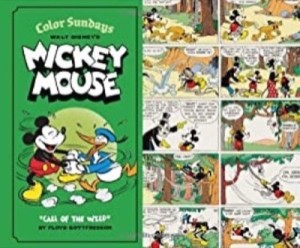
Hardcover. Seattle, Fantagraphics, 1st, 2013, Book: Very Good, Dust Jacket: None, Hardcover, 280 pages. The burgeoning popularity of Mickey Mouse on the screen and in the daily newspaper comics made the 1932 addition of a full-color Sunday strip inevitable. The first surprise in this collection of the initial four years of Sunday installments is that in this early color incarnation, Mickey's face was pink rather than white! But, more significantly, each Sunday strip comprised about a dozen panels, not the measly four panels of the dailies, permitting a different pace: gags could be extended longer, and story lines unwound at their leisure. Unlike the dailies, which featured stories that went on for weeks, the Sundays mixed serialized adventures--in this volume, Mickey visits the Wild West, fights a giant in a fairy tale he tells his nephews, and scales a mountain to win a $1,000 prize--with single-episode gag strips, all drawn in a charmingly old-fashioned style. The high-spirited, adventure-seeking mouse in these vintage strips--a far cry from today's bland, domesticated version--makes it clear why Mickey captivated Depression-era America.
Hardcover. Zurich, Edition Stemmle, 1st, 2001, Book: Very Good, Dust Jacket: Very Good, Hardcover, 192 pages. 130 of Chin's striking fashion and celebrity portraits in color and b&w. In a bright, unclipped dust jacket.
Hardcover. New York, Glitterati, 1st, 2006, Book: Very Good, Dust Jacket: Very Good, 176 pages illustrated in color and b&w. A visual survey of Black style from the 1940s through the 1970s. In publisher's shrinkwrap. Featuring snapshots of over 150 black men and women's most unforgettable "style moments", the book includes personal photographs taken from the author's own family and circle of friends including Oprah Winfrey, James Baldwin, Iman, Naomi Campbell, Tyra Banks, Tracy Reese, Patrick Kelly, Kimora Lee, Bobby Short, Bethann Hardison, and Portia LaBeija, among countless others. This is the 2006 first printing with a different cover than the later reprint.
Hardcover. New York, Glitterati, 1st, 2006, Book: Very Good, Dust Jacket: Very Good, Hardcover, 176 pages. illustrated in color and b&w. A visual survey of Black style from the 1940s through the 1970s. In publisher's shrinkwrap. This is the 2006 first printing with a different cover than the later reprint.
Hardcover. New York, Rizzoli, reprint, 2011, Book: Very Good, Dust Jacket: Good, Hardcover, 248 pages. Extensive color photography throughout. Some shelf wear and minor tear to printed acetate dust jacket. Slight rubbing to top corner. Otherwise clean, tight copy. "This book showcases a wide range of styles by such fashion luminaries as Cassini, Chanel, Dior, Armani, and McQueen, among others. The beautiful fashions, photographed by such notable photographers as Patrick Demarchelier, Benno Graziani, Horst, Arthur Elgort, Milton Greene, David LaChapelle, and Irving Penn capture the effervescent spirit that is associated with the wedding dress. The Wedding Dress begins with an overview of the sumptuous wedding gown, chronicling its history from royal weddings to today's celebrities."
Hardcover. NY, Harper, 1st, 2020, Book: Very Good, Dust Jacket: Very Good, Hardcover in a bright dust jacket, 672 pages. 16 pages of photos. What Becomes a Legend Most is the first definitive biography of this luminary--an intensely driven man who endured personal and professional prejudice, struggled with deep insecurities, and mounted an existential lifelong battle to be recognized as an artist. Philip Gefter builds on archival research and exclusive interviews with those closest to Avedon to chronicle his story, beginning with Avedon's coming-of-age in New York between the world wars, when cultural prejudices forced him to make decisions that shaped the course of his life. Compounding his private battles, Avedon fought to be taken seriously in a medium that itself struggled to be respected within the art world. Gefter reveals how the 1950s and 1960s informed Avedon's life and work as much as he informed the period. He counted as close friends a profoundly influential group of artists--Leonard Bernstein, Truman Capote, James Baldwin, Harold Brodkey, Renata Adler, Sidney Lumet, and Mike Nichols--who shaped the cultural life of the American twentieth century. It wasn't until Avedon's fashion work was exhibited at the Metropolitan Museum of Art in the late 1970s that he became a household name. Balancing glamour with the gravitas of an artist's genuine reach for worldy achievement--and not a little gossip--plus sixteen pages of photographs, What Becomes a Legend Most is an intimate window into Avedon's fascinating world. Dramatic, visionary, and remarkable, it pays tribute to Avedon's role in the history of photography and fashion--and his legacy as one of the most consequential artists of his time.
Hardcover. NY, Harper, 1st, 2020, Book: Very Good, Dust Jacket: Very Good, Hardcover in a bright dust jacket, 672 pages. 16 pages of photos. What Becomes a Legend Most is the first definitive biography of this luminary--an intensely driven man who endured personal and professional prejudice, struggled with deep insecurities, and mounted an existential lifelong battle to be recognized as an artist. Philip Gefter builds on archival research and exclusive interviews with those closest to Avedon to chronicle his story, beginning with Avedon's coming-of-age in New York between the world wars, when cultural prejudices forced him to make decisions that shaped the course of his life. Compounding his private battles, Avedon fought to be taken seriously in a medium that itself struggled to be respected within the art world. Gefter reveals how the 1950s and 1960s informed Avedon's life and work as much as he informed the period. He counted as close friends a profoundly influential group of artists--Leonard Bernstein, Truman Capote, James Baldwin, Harold Brodkey, Renata Adler, Sidney Lumet, and Mike Nichols--who shaped the cultural life of the American twentieth century. It wasn't until Avedon's fashion work was exhibited at the Metropolitan Museum of Art in the late 1970s that he became a household name. Balancing glamour with the gravitas of an artist's genuine reach for worldy achievement--and not a little gossip--plus sixteen pages of photographs, What Becomes a Legend Most is an intimate window into Avedon's fascinating world. Dramatic, visionary, and remarkable, it pays tribute to Avedon's role in the history of photography and fashion--and his legacy as one of the most consequential artists of his time.
Hardcover. New York, Greenwillow Books, 1st, 2005, Book: Very Good, Dust Jacket: Very Good, Non-Paginated. Hardcover in a bright, unclipped dust jacket.. Full color illustrations by Nancy Winslow Parker. Clean, tight copy. Preparing for a Halloween party, a little girl pulls together various articles of clothing to come up with a suitable costume. Each item is depicted in rebus fashion in cumulative lines of verse. She ends up with two different costumes using the same garments, but, in the end, she receives a ready-made witch's outfit from Grandma.
Softcover. NY, Oxford University Press, 1st, 2011, Book: Very Good, Dust Jacket: None, Softcover, 433 pages. Punishment, like all complex human institutions, tends to change as ways of thinking go in and out of fashion. Normative, political, social, psychological, and legal ideas concerning punishment have changed drastically over time, and especially in recent decades. Why Punish? How Much? collects essays from classical philosophers and contemporary theorists to examine these shifts. Michael Tonry has gathered a comprehensive set of readings ranging from Kant, Hegel, and Bentham to recent writings on developments in the behavioral and medical sciences. Together they cover foundations of punishment theory such as consequentialism, retributivism, and functionalism, new approaches like restorative, communitarian, and therapeutic justice, and mixed approaches that attempt to link theory and policy. This volume includes an accessible introduction that chronicles the development of punishment systems and theorizing over the course of the last two centuries. Clean copy.
Hardcover. NY, Alfred A. Knopf, 1st, 1992, Book: Very Good, Dust Jacket: None, Hardcover, pictorial glossy boards. In this witty, fast-paced sequel to Getting Even, seventh-grader Iris Bloom can handle anything, whether it's a fashion crisis or the despicable Corky Newton. What's more, she is certain she doesn't need a baby-sitter. But when a visit alone to the mall ends in a frightening near-assault, she changes her mind.
Hardcover. New York, NY, Thames & Hudson, 1st, 2014, Book: Very Good, Dust Jacket: Very Good, 223 pages, hardcover. Extensive color photography throughout. Illustrated frontispiece. Slight rubbing to corners, reminder dot to bottom edge. Bump to bottom corner.Otherwise clean, tight copy. William Helburn was the go-to photographer for many of the top advertising agencies in New York in the 1950s and 1960s. Shock value and an unrelenting hunger for success helped Helburn to a pioneer's share in the revolutionary era of advertising and his work would also appear on the editorial pages and covers of major magazines. As well as cars and cosmetics, Helburn shot Coca-Cola, Canada Dry, whiskeys, clothing lines, airlines, jewelry, cigars and cigarettes, and any number of other products. He worked with the top models of the day, from Dovima and Dorian Leigh to Jean Patchett and Barbara Mullen to Jean Shrimpton and Lauren Hutton. William Helburn: Seventh and Madison is the first book to survey the photographic work of William Helburn and gives viewers a delicious taste of the vivid reality that the television series Mad Men seeks to evoke. Most of these images have not been seen since they were first published decades ago. In addition to the photographs, Robert Lilly contributes a biographical account of Helburn's life and work, and former colleagues Jerry Schatzberg, George Lois, Sunny Griffin, and Ali McGraw offer insights into the lusty, creative spirit of William Helburn. 200 illustrations, 80 in color
Hardcover. New York, NY, Thames & Hudson, 1st, 2014, Book: Very Good, Dust Jacket: Very Good, 223 pages, hardcover in a bright dust jacket. Extensive color photography throughout. Illustrated frontispiece. Slight rubbing to corners, reminder dot to text edge. Otherwise clean, tight copy. William Helburn was the go-to photographer for many of the top advertising agencies in New York in the 1950s and 1960s. Shock value and an unrelenting hunger for success helped Helburn to a pioneer's share in the revolutionary era of advertising and his work would also appear on the editorial pages and covers of major magazines. As well as cars and cosmetics, Helburn shot Coca-Cola, Canada Dry, whiskeys, clothing lines, airlines, jewelry, cigars and cigarettes, and any number of other products. He worked with the top models of the day, from Dovima and Dorian Leigh to Jean Patchett and Barbara Mullen to Jean Shrimpton and Lauren Hutton. William Helburn: Seventh and Madison is the first book to survey the photographic work of William Helburn and gives viewers a delicious taste of the vivid reality that the television series Mad Men seeks to evoke. Most of these images have not been seen since they were first published decades ago. In addition to the photographs, Robert Lilly contributes a biographical account of Helburn's life and work, and former colleagues Jerry Schatzberg, George Lois, Sunny Griffin, and Ali McGraw offer insights into the lusty, creative spirit of William Helburn. 200 illustrations, 80 in color.
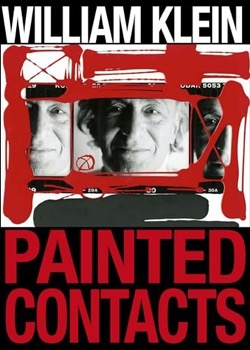
Hardcover. Prestel, 1st, 2021, Book: Very Good, Dust Jacket: None, Hardcover, pictorial boards. Working at the nexus of painting and photography, William Klein conceived this original series when he was in the process of reviewing other photographers' contact sheets for a film he was making. Referencing the age of film photography, when photographers selected images by circling individual negatives on a contact sheet with brightly colored grease pencils, Klein's works invent a new kind of art object that organically marries painting and photography. The resulting pieces are enormous mural-sized works in which bold, kinetic color frames and reframes enlarged black-and-white images from throughout his career. Klein's iconic fashion and street photography, always gritty and bold, is given a new immediacy and relevance in this second life. In his foreword to this edition, Klein describes these works as "all brush strokes and jubilation. The jubilation of painting recall[s] the celebration of taking the photo." 140 pages, b&w and color. Still in publisher's shrinkwrap.
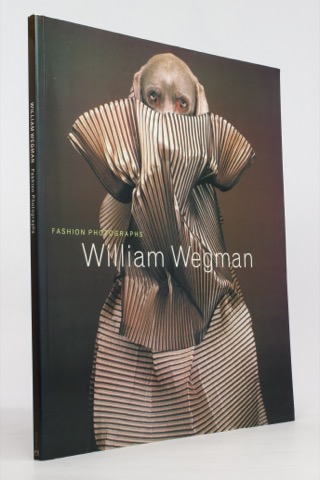
Softcover. NY, Abrams, 1st, 1999, Book: Very Good, Dust Jacket: None, Softcover, 88 pages. Full page color photographs. William Wegman is an American artist best known for creating series of compositions involving dogs, primarily his own Weimaraners in various costumes and poses. See Fay in all the big shot designer clothes of the day in color. Folio sized. Clean.
Hardcover. Milan IT, Edizioni L'archivolto (Acc), 1st, 2008, Book: Very Good, Hardcover, 187 pages, illustrated throughout in color. Clean, unmarked copy with only minor wear to dust jacket. Although relatively short-lived, store window displays are a vital constituent of the daily scenery of today's cities, and offer an important outlet for disciplinary cross-pollination. Store-window design always involves defining a specific message that is conveyed using an array of means, including architecture and set-design, advertising and graphics, multimedia, and at times fine art, with the aim of firing the buyer's imagination while also transmitting a clear brand identity.
Hardcover. US, Conran, 2009, Book: Very Good, Dust Jacket: Very Good, Like new hardcover in publisher's shrink-wrap. 336 pages. In this endlessly provocative volume, Stephen Bayley, design authority and cultural critic, takes on the female body, analyzing each crook and every curve as a sign, a symbol, and as a designed object. From Aphrodite to the industrialization of the breast, and from pin-ups to the future of sex, WOMAN AS DESIGN is a fascinating mix of design, cultural history, erotica, fashion, and fetishism.
Hardcover. New York, Simon & Schuster, 1st, 2014, Book: Very Good, Dust Jacket: Very Good, 239 pages. Hardcover. (SIGNED BY AUTHOR) Color illustrations throughout. White cover boards, gilt title on spine and design on front cover. Dust jacket unclipped, excellent, has previous bookstore's label on back cover.
Hardcover. New York, Abrams, 1st, 2005, Book: Very Good, Dust Jacket: Very Good, 248 pages, illustrated with 10 color and 125 tritone plates. A collection of the photographer's portraits of women, 1945-2004. Essay by Anne Hollander. This volume includes photos of Elton John, Brigitte Bardot, Marilyn Monroe, Janis Joplin, Maria Callas, Isak Dinesen, Suzy Parker, Twiggy, Kate Moss, Tina Turner and many more.. Remainder dot to top edge otherwise very good in similar dust jacket.
Hardcover. New York, Harper, 1st, 2012, Book: Very Good, Dust Jacket: Very Good, Hardcover, 284 pages. Clean, unmarked copy with only minor wear to dust jacket. Rachelle Bergstein brings readers along on a unique and delightful romp through the history of shoes, the women who wear them, and the profound impact they have on our lives. Women from the Ankle Down includes interviews and cameos with influential figures ranging from Lisa Mayock of Vena Cava to Oscar Award-winning costume designer Patrizia van Brandenstein, from Doc Martens historian Martin Roach to Fashion Institute of Technology museum director Valerie Steele; from Marilyn Monroe and Jane Fonda to Salvador Ferragamo and Christian Dior; from Judy Garland to Wonder Woman.
Hardcover. London, Hardie Grant, 1st, 2015, Book: Very Good, Dust Jacket: None, 272 pages. Hardcover with no dust jacket. Clean, unmarked copy with only minor wear to boards. Color pictures throughout. Photographer, art director and fashion enthusiast Giuseppe Santamaria takes us to the streets of six incredible cities to showcase the unique and stylish women that inhabit these towns. From classic elegance to menswear-inspired casual, a woman's dress style speaks volumes about her personality - and the city she inhabits. Featuring interviews with the everyday women whose distinctive styles cut a fine figure in the world of women's fashion, this striking photographic collection will take you on a global sartorial adventure.
Hardcover. NY, Rizzoli, 1st, 2010, Book: Very Good, Dust Jacket: Very Good, 208 pages, color and b&w illustrations. Hardcover with dust jacket. Like new in publisher's shrink-wrap. A collection of rarely seen black-and-white photographs taken of women in the 1950s and 1960s, captured by the renowned New York City fashion photographer and filmmaker. Designed by Ruth Ansel, this elegantly produced volume captures the romance and glamour of women in the 1950s and 1960s. A mix of fashion and portraiture, it includes intimate and striking portraits of Nico, Faye Dunaway, Edie Sedgwick, Sharon Tate, and Catherine Deneuve. Jerry Schatzberg's moody snapshots of a more innocent and whimsical New York on the brink of the important societal changes of the sixties form a compellingly nostalgic portrait of a stylish moment. Images of jetsetters at an airport terminal, lovers embracing in Central Park, and a woman waltzing in the street in the Financial District portray a time as well as a style. A New York City native, Schatzberg documented the period with the insider's sensibility of Woody Allen or Martin Scorsese, but with the high-fashion style of Irving Penn and Richard Avedon. With a keen eye for the magic of the in-between moment, Schatzberg stealthily captured the elegance and beauty of a woman as her role was redefined in the sixties, while at the same time retaining an element of humor and surprise.
Hardcover. NY, Da Capo, 2021, Book: Very Good, Dust Jacket: Very Good, Hardcover in a bright dust jacket, 512 pages. Over the course of her career, Nico was an ever-evolving myth: art film house actress, highly coveted fashion model, Dietrich of Punk, Femme Fatale, Chelsea Girl, Garbo of Goth, The Last Bohemian, Heroin Junkie. Lester Bangs described her as 'a true enigma.' At age 27, Nico became Andy Warhol's newest Superstar, featuring in his one commercial break out hit film Chelsea Girls and garnering the position of chanteuse for the Velvet Underground. It wasn't Nico's musical chops which got her the gig; it was her striking beauty. Her seeming otherworldly and unattainable presence was further amplified by her reputation for dating rock stars (Brian Jones, Bob Dylan, Jim Morrison, among others). She became famous for being Nico.
Hardcover. San Francisco, Chronicle Books , 1st, 2005, Book: Very Good, Dust Jacket: Very Good, Handcover, 96 pages. Being a bridesmaid is one of the greatest honors a dear friend can bestow. But actually wearing the dress the bride picks out? That's the true test of friendship. You Can Wear It Again pays loving tribute to fifty years of bridesmaids' dresses, as featured in real-life weddings. The product of both fashion trends and the bride's whims, bridesmaids' dresses may take the form of medieval costume, complete with wimple; slip dresses with real feathered wings to transform maids into true angels; or the ruffled peach taffeta with puff sleeves that so dominated the 1980s. Whatever the look, you can be sure it's been in and out of fashion more than once.

 "Walking Dreams: Salvatore Ferragamo 1898-1960by: Ferragamo, Salvatore")
 "Walter Chin: Work In Progressby: Chin, Walter; Truman James; Sozzani Franca")
 "Way We Wore, The: Black Style Thenby: McCollom (Ed.), Michael")
 "Way We Wore, The: Black Style Thenby: McCollom (Ed.), Michael")
 "Wedding Dress, The by: Cassini, Oleg")
 "What Becomes a Legend Most: A Biography of Richard Avedonby: Philip Gefter")


 "What Becomes a Legend Most: A Biography of Richard Avedonby: Philip Gefter")


 "Who Will I Be? - A Halloween Rebus Storyby: Neitzel, Shirley/Nancy Winslow Parker")




 "Window Displays/ Vetrine: Zoom Seriesby: Pietro, Silvio San")
 "Woman As Design: Before, Behind, Between, Above, Belowby: Bayley, Stephen")


 "Woman in the Mirror, Theby: Avedon, Richard")
 "Women from the Ankle Down: The Story of Shoes and How They Define Usby: Bergstein, Rachelle")
 "Women In This Town: New York, Paris, Melbourne, Tokyo, Madrid and Londonby: Santamaria, Giuseppe")
 "Women Then: Photographs 1954-1969by: Morton, Julia and Jerry Schatzberg")

 "You Can Wear It Again: A Celebration of Bridesmaids' Dressesby: MEG MATEO ILASCO")