Hardcover. GR, Steidl, 1st, 2007, Book: Very Good, Dust Jacket: Very Good, Hardcover, 232 pages. When celebrated photographer Arnold Newman began his career in 1938 in chain portrait studios in Philadelphia, Baltimore and West Palm Beach, he also immediately began to make abstract and documentary photography on his own, studying people and places impoverished by the Depression. In June of 1941, Beaumont Newhall of The Museum of Modern Art, New York, and Alfred Stieglitz "discovered" him, and he was given an exhibit with Ben Rose at the A.D. Gallery that September. There Newman began to combine his independent work with the portraiture that had been his bread-and-butter, developing the approach for which he is best known, which came to be called "environmental portraiture," and which is so widely influential today that it might be the new standard practice. This style made Newman a distinctive contributor to publications like Life, Vanity Fair, and the New York Times Magazine, brought him into the collections of museums around the world, including The Museum of Modern Art, The Metropolitan Museum of Art, and the International Center of Photography in New York, and led to his recognition in photography histories and with awards including France's Commander of the Order of Arts and Letters. The photographs collected here were made before Newman achieved recognition as a pioneering portraitist, during the formative years from 1938 to 1942. They highlight the early stirrings of a great photographic master.
Hardcover. NY, E.P. Dutton, 1st, 1919, Book: Very Good, Dust Jacket: None, Hardcover, 288 pages. 100 plates (3 tipped-in color plates), including 37 examples by American artists. Survey of the art of the First World War by Allied artists from the United States, Canada, Great Britain, France and the Netherlands, including paintings, drawings, sculpture, lithographs, and posters. Works by Maxfield Parrish, George Luks, George Bellows, Harvey Dunn, Paul Manship, Mahonri Young, William Orpen, C.R.W. Nevinson, James McBey, Paul Nash, G. Spencer Pryse, Edmund Dulac, Wyndham Lewis, Frank Brangwyn, Th.A. Steinlen, and others. Bibliography, p. 285-288. Handsome production, with decorations designed by Frederick W. Goudy and printed by William E. Rudge. Dark green boards with black cloth spine, bright gilt lettering on cover and spine. Previous owner's bookplate inside front cover, light corner wear, mild bump to top of rear board.
Softcover. Paris, Books & Co., 1st, 1999, Book: Very Good, Dust Jacket: None, Softcover, 169 pages. A volume on French Art Nouveau design, architecture and interior decoration. Features designs by Emile Galle, Alphonse Mucha, Paul Signac and others. Color illustrations throughout.
Hardcover. New York, The Vendome Press, Reprint, 1980, Book: Very Good, Dust Jacket: Very Good, 204 pages. Hardcover. Purple covers with gilt titles to black cloth spine, gilt vase design to cover. Full page, full color and bw illustrations throughout. Dust jacket with light marginal wear to edges. Clean & unmarked pages throughout. Glass from the turn of the 19th - 20th century; the "Belle Epoque" era. Features many glass artists, including Philippe-Joseph Brocard, Auguste Jean, Ernest-Baptiste Leveille, Emile Galle, Les Freres Daum, Henri Cros, Albert Dammouse, Francois Decorchemont, and several others.
Hardcover. Los Angeles, CA, Getty Research Institute, 1st, 2009, Book: Very Good, Dust Jacket: None, 416 pages. Hardcover with no dust jacket. Very clean, unmarked copy still in publishers shrink-wrap. Art of the Defeat provides an unflinching look at the art scene in France during the German occupation. Black and white photographs throughout.
Hardcover. Cambridge MA, The MIT Press, 1sr, Book: Very Good, Dust Jacket: Very Good, Hardcover in a bright gold foil dust wrapper, 476 pages. The artist Francis Picabia -- notorious dandy, bon vivant, painter, poet, filmmaker, and polemicist -- has emerged as the Dadaist with postmodern appeal, and one of the most enigmatic forces behind the enigma that was Dada. In this first book in English to focus on Picabia's work in Paris during the Dada years, art historian and critic George Baker reimagines Dada through Picabia's eyes. Such reimagining involves a new account of the readymade -- Marcel Duchamp's anti-art invention, which opened fine art to mass culture and the commodity. But in Picabia's hands, Baker argues, the Dada readymade aimed to reinvent art rather than destroy it. Picabia's readymade opened art not just to the commodity, but to the larger world from which the commodity stems: the fluid sea of capital and money that transforms all objects and experiences in its wake. The book thus tells the story of a set of newly transformed artistic practices, claiming them for art history -- and naming them -- for the first time: Dada Drawing, Dada Painting, Dada Photography, Dada Abstraction, Dada Cinema, Dada Montage.Along the way, Baker describes a series of nearly forgotten objects and events, from the almost lunatic range of the Paris Dada "manifestations" to Picabia's polemical writings. Clean copy.
Softcover. University of Toronto Press , 1st pbk, 2020, Book: Very Good, Dust Jacket: None, Softcover in pictorial wrappers, 312 pages. During the night of 25 July 1941, assassins planted a time bomb in the bed of the former French Interior Minister, Marx Dormoy. The explosion on the following morning launched a two-year investigation that traced Dormoy's murder to the highest echelons of the Vichy regime. Dormoy, who had led a 1937 investigation into the "Cagoule," a violent right-wing terrorist organization, was the victim of a captivating revenge plot. Based on the meticulous examination of thousands of documents, Assassination in Vichy tells the story of Dormoy's murder and the investigation that followed. At the heart of this book lies a true crime that was sensational in its day. A micro-history that tells a larger and more significant story about the development of far-right political movements, domestic terrorism, and the importance of courage, Assassination in Vichy explores the impact of France's deep political divisions, wartime choices, and post-war memory. Clean copy.
Hardcover. Annapolis MD, Naval Institute Press, 1st, 2005, Book: Very Good, Dust Jacket: Very Good, Hardcover in a bright dust jacket, 126 pages, b&w illustrations. Princeton grad Erasmus Kloman was undergoing Army training at Fort Bragg in 1943 when, due to his passing knowledge of French, he was interviewed for potential involvement in "a highly confidential activity." The interview culminated in the question, "Would you be willing to volunteer for hazardous duty behind enemy lines?" He signed up for duty with the newly formed Office of Strategic Services (OSS) and after an intensive period of training in various aspects of espionage, found himself on assignment in wartime Cairo, Algiers, and then Caserta. At age 24 with the title of OSS Acting Chief of Operations in the Mediterranean Theater of Operations, he helped organize and coordinate the actions of Operational Groups (OGs) , which infiltrated Italy and occupied France on daring sabotage missions. Clean copy.
Hardcover. Frances Lincoln Children's Books, 1st, 2020, Book: Very Good, Dust Jacket: None, Hardcover, pictorial boards with a black cloth spine. Part of the Little People, Big Dreams series, the author tells the inspiring story of the Swedish author and creator of Pippi Longstocking, Astrid Lindgren. Color illustrations by Linzie Hunter. Clean copy.
Hardcover. Boston, Houghton Mifflin , 1st, 1931, Book: Good, Dust Jacket: None, Hardcover, 256 pages, illustrated with 4 color plates, many b&w drawings by Margaret Freeman. Blue cloth covers with red design, spine faded. Previous owner's bookplate on inside front cover, otherwise clean, very good internally.
Hardcover. Charlottesville VA, University Press of Virginia, 1st, 1977, Book: Very Good, Dust Jacket: Very Good, Hardcover, 553 pages, 348 full-page portraits in b&w. Includes a catalogue of 3,800 silhouettes by the artist. Very good in a crisp, unclipped dust jacket. Auguste Edouart was the most prolific silhouettist ever to work in this country. Arriving from France in 1839, he traveled throughout the United States contracting enough projects in six years to fill over fifty albums; at the same time he created a biographical record of the most famous Americans of the period. This volume contains the most, and the best, of Edouard's silhouettes every to appear under a single cover.
Hardcover. Wilmington, DE, Scholarly Resources Inc., 1st, 1984, Book: Very Good, Dust Jacket: Very Good, 298 pages. Hardcover. Dust jacket unclipped. Cover boards bound in blue, gilt title on spine and front cover. Dust jacket has a touch of agewear, A little foxing on top edge. Clean inside, binding tight, in great shape.
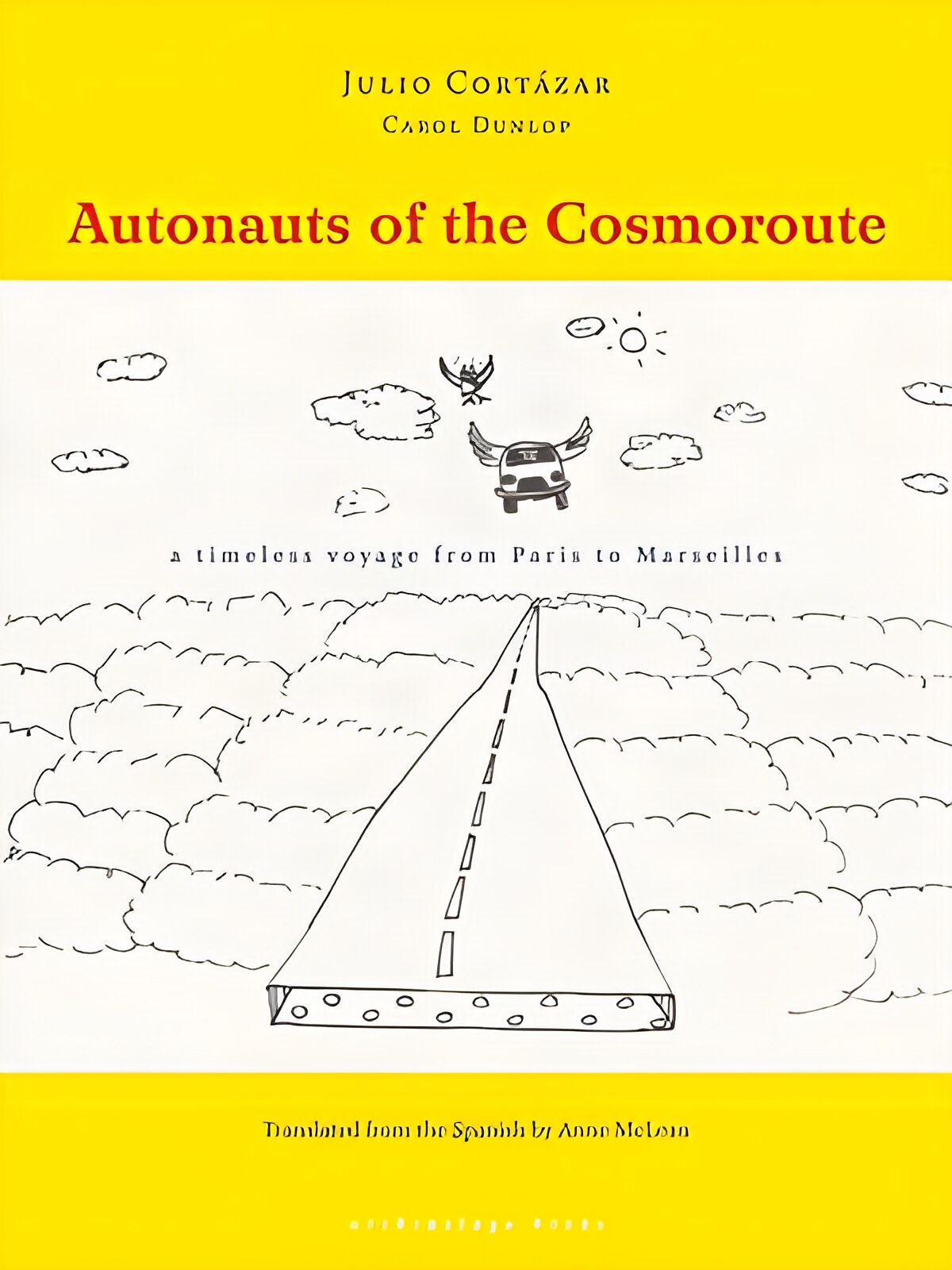
Softcover. NY, Archipelago Books, 3rd pr., 2019, Book: Very Good, Dust Jacket: None, Softcover in pictorial wrappers, 354 pages, b&w photos. Autonauts of the Cosmoroute is a travelogue, a love story, an irreverent collection of visual and verbal snapshots. In May 1982, Julio Cortazar and Carol Dunlop climbed aboard Fafner, their VW camper van, and embarked on an exploration of the uncharted territory of the Paris-Marseilles freeway. It was a route they had covered before, usually in about ten hours, but his time they loaded up with supplies and prepared for an ardous voyage of thirty-three days without leaving the autoroute. Along the way they would uncover the hidden side of the freeway and record The trip's vital minutiae with light-hearted abandon. At roadside rest areas, armed with typewriters, cameras, and mutual affection, the authors composed this book. Clean copy.
Hardcover. NY, Random House, 1st US, 1949, Book: Good, Dust Jacket: None, Blue cloth spine, illust. boards 10 x 14-1/2". Top of spine bumped, front hinge cracked, otherwise VG. Clean with bright colors on heavy linen-like paper. Printed in France (stated on last page).
Hardcover. NY, Harcourt, Brace and World, 1st, 1961, Book: Good, Dust Jacket: None, Hardcover, gray cloth with a drawing of baby elephant on front cover. Illustrated in blue and black by Leonard Weisgard. Baby Elephant & his mother imagine traveling to France where he uses lots of new French words that he has learned. Text includes many French words/phrases. Covers show wear and soil. Inside front cover with an inscription, otherwise interior is bright and clean.
Hardcover. New York, Harper & Row , 1st, 1964, Book: Very Good, Dust Jacket: None, Non-Paginated. Hardcover, pictorial boards with black cloth spine. Color illustrations by Lillian Hoban. Covers with light rubbing, dime size area of darkening on front cover. No dust jacket. Clean, unmarked pages.
Hardcover. Paris, Les Belles Lettres , 1st, 1996, Book: Very Good, Dust Jacket: Very Good, 211 pages. Hardcover with dust jacket. A very clean, unmarked copy with only minor wear to dust jacket edges. A tight copy. Color illustrations throughout. FRENCH TEXT.
Hardcover. New York, Alfred A. Knopf, 1st, 1949, Book: Very Good, Dust Jacket: Good, 374 pages. Hardcover. Dust jacket with short tape repaired tears along edges, fading to spine. Clean, unmarked pages.
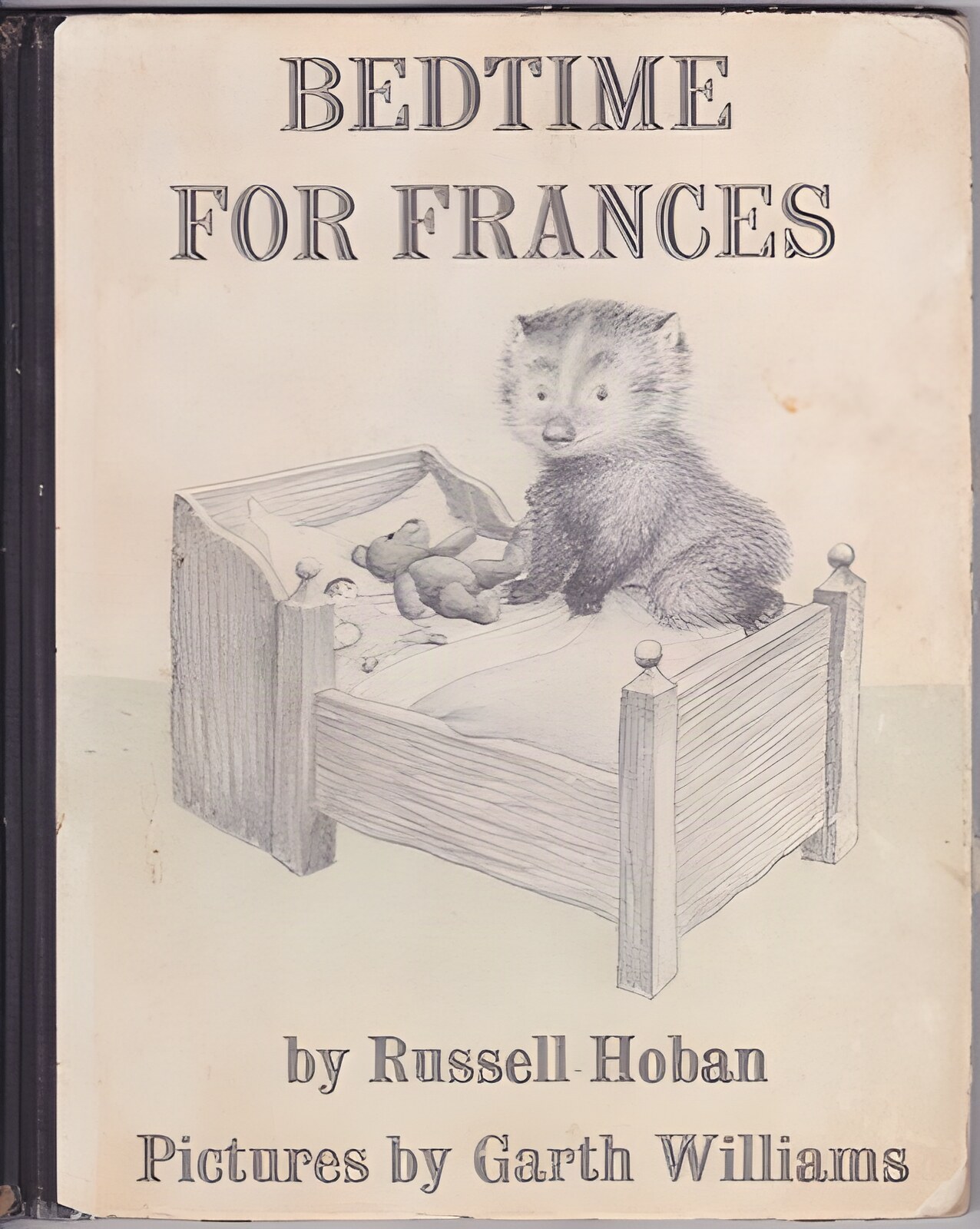
Hardcover. New York, Harper & Row, reprint, 1963, Book: Very Good, Dust Jacket: None, Hardcover, illustrated boards with black cloth spine. Color illustrations by Garth Williams. Early but not a first. Previous owner's name on end paper, otherwise clean, very good. Lacks dust jacket.
Hardcover. New York, Harper Brothers, 1st, 1960, Book: Good, Dust Jacket: None, Unpaginated. Hardcover with no dust jacket. Moderate soil on cover boards. Fraying and edgewear to spine cloth. Gutter is loose, but not cracked. Overall, a moderately worn copy.
Hardcover. NY, Harper and Row, reprint, circa 1963, Book: Very Good, Dust Jacket: Good, Hardcover in a lightly worn dust jacket. Illustrated boards with black cloth spine. Charming illustrations by Garth Williams in b&w and pastel green. An early reprint ($3.95 on dj flap). Originally published in 1960 this is probably a mid-sixties reprint. No date given. Dust jacket with mild wrinkle. Clean.
Hardcover. Cambridge MA, MIT Press, 1st, 1979, Book: Very Good, Dust Jacket: Very Good, Hardcover in a mildly worn dust jacket. 361 pages, index, b&w illustrations. Benjamin Thompson, later Count Rumford, was one of the most fascinating and complex men of his period (1753~1814). Soldier of fortune, spy, womanizer, brilliant scientist, intriguer, autocrat, inventor, adventurer, an American expatriated to England who did his most productive scientific work in Munich and who died in France, a man devoted to relieving the suffering of the poor, Rumford was all this and more, and Sanborn Brown's biography makes clear that all these aspects merge into a whole human being. The man who conducted experiments on the caloric theory of heat and the ladies' man are one and the same. Clean copy

 "Arnold Newman: The Early Workby: Philip Brookman , Arnold Newman")
 "Art and the Great War: With One Hundred Illustrationsby: Gallatin, Albert Eugene")
 "Art Nouveau In Franceby: Jean-Paul Midant")
 "Art of French Glass, The - 1860 - 1914by: Bloch-Dermant, Janine")
 "Art of the Defeat, France 1940-1944by: Dorleac, Laurence")
 "Art of the French Illustrated Book, 1700-1914, The/Two Volumes Bound As Oneby: Gordon, N. Ray")
 "Artwork Caught by the Tail:Francis Picabia and Dada in Parisby: Baker, George")
 "Assassination in Vichy: Marx Dormoy and the Struggle for the Soul of Franceby: Brunelle, Gayle/ Finley-Croswhite, Stephanie Annette")
 "Assignment Algiers: With the OSS in the Mediterranean Theater by: Erasmus H. Kloman")

 "At the Inn of the Guardian Angelby: Pendelton, Amena and Madame la Comtesse De Segur")
 "Auguste Edouart's Silhouettes of Eminent Americans 1839-1844by: Oliver, Andrew")
 "Autobiography of Du Pont de Nemours, Theby: Du Pont, Pierre Samuel, Elizabeth Fox-Genovese (Translator and Introduction)")
 "Babar's Picnicby: de Brunhoff, Laurent")
 "Baby Elephant's Trunkby: Sesyle Joslin/Leonard Weisgard")


 "Baby Sister for Frances, Aby: Hoban, Russell/Lillian Hoban")
 "Bacon - Portraits et autoportraits: Francis Bacon, le visage en viscEresby: Kundera, Milan")
 "Beaumarchaisby: Lemaitre, Georges")
 "Bedtime for Francesby: Hoban, Russell")
 "Bedtime for Francesby: Russell Hoban/Garth Williams")

 "Benjamin Thompson, Count Rumfordby: Brown, Sanborn C.")