Hardcover. Germany, Steidl, 1st, 2014, Book: Very Good, Dust Jacket: None, 76 pages. Hardcover with no dust jacket. Very clean, unmarked copy still in publishers shrink wrap. When Sam Taylor-Johnson climbed the famous mirrored staircase of Chanel's headquarters at 31 rue Cambon, Paris, she did not quite know what to expect. Her destination was Coco Chanel's private apartment on the second floor; her mission, to photograph it.
Hardcover. Germany, Steidl, 1st, 2014, Book: Very Good, Dust Jacket: None, When Sam Taylor-Johnson (born 1967) climbed the famous mirrored staircase of Chanel's headquarters at 31 rue Cambon, Paris, she did not quite know what to expect. Her destination was Coco Chanel's private apartment on the second floor; her mission, to photograph it.
Softcover. Cambridge MA, Belknap Press / Harvard, reprint, 1996, Book: Very Good, Dust Jacket: None, Softcover, 760 pages. Representing ten years of research into the history of the managerial business system, this book concentrates on patterns of growth and competitiveness in the United States, Germany, and Great Britain, tracing the evolution of large firms into multinational giants and orienting the late twentieth century's most important developments. Clean,bright copy.
Hardcover. New Haven CT, Yale University Press, 3rd pr., 1979, Book: Very Good, Dust Jacket: Very Good, Hardcover in a bright dust jacket, 287 pages. The treatment of German physicists under the Nazi regime had far-reaching consequences both for the outcome of the Second World War and for the course of science for decades thereafter. Although this fact has been known from a few famous episodes, it has not been dealt with thoroughly by scholars because it involves two very different disciplines. Political historians have cautiously left it to historians of science, who in turn have shied away from it out of ignorance of the political intricacies. Alan D. Beyerchen here examines this history in detail, basing his research on archival materials in Germany and the United States and on tape-recorded interviews with leading physicists. At least twenty-five percent of Germany's academic physicists who were working in 1933 lost their positions during the Nazi period. The victims -- Jews and other "politically unreliable" persons -- included some of Germany's finest scientists. Those who remained faced opposition not only from Nazi officials but also from certain members of their own community, notably the Nobel laureates Philipp Lenard and Johannes Stark. Beyerchen describes the mechanisms of prejudice, the reaction to the dismissals, and the impact of the "Aryan physics" movement which ultimately failed. Clean copy.
Hardcover. NY, Abrams, 1st, 2005, Book: Very Good, Dust Jacket: Very Good, Hardcover, 192 pages. Shadows of War presents an astonishing collection of previously unpublished, unknown photographs of life at the front lines in the German war machine during World War II, taken by a common foot soldier. The work of a gifted amateur, Willi Rose's images present a powerful vision of a largely suppressed aspect of the war. These fractured glimpses of the world at war, from quotidian tasks and moments of leisure to scenes of death and destruction, reveal one man's experience of the epic flow of history. A miller in the years before World War II, Rose was drafted into the German army in October 1939 and served as a motorbike messenger on the front, first in France and then in Russia. He was wounded twice and was later captured by the Polish army, eventually returning home in June 1946. Throughout his military service, Rose sent home photographs that he took of the action, mostly along the Eastern Front. Discovered by his widow after his death, these images form a unique photographic document of one soldier's war.
Hardcover. NY, Thames & Hudson, 1st, 2013, Book: Very Good, Dust Jacket: Very Good, Hardcover in a bright dust jacket, still in publisher's shrink wrap. Celebrates the height of Weimar cinema through images and commentaries on more than seventy of its finest films Between the First and Second World Wars, Germany under the Weimar Republic was the scene of one of the most creative periods in film history. Through the silent era to the early years of sound, the visual flair and technical innovation of its filmmakers set an international standard for the powerful possibilities of cinema as an art form, with movies such as The Cabinet of Dr. Caligari, Nosferatu, Metropolis, and M building a legacy that shaped the world of film. Here is a showcase of more than seventy films, selected to give a wide-ranging overview of Weimar cinema at its finest. Every genre is represented, from escapist comedies and musicals to gritty depictions of contemporary city life, from period dramas to fantastical visions of the future, with themes such as sexuality and social issues tackled by iconic stars like Marlene Dietrich and Louise Brooks. A wealth of film stills captures the bold vision of great directors like Fritz Lang and Ernst Lubitsch, while the text sets the historical scene and gives intriguing insights into what the films meant to the society that created them.
Hardcover. NY, Knopf, 1st, 2012, Book: Very Good, Dust Jacket: Very Good, Hardcover in a bright, unclipped dust jacket. 418 pages, b&w illustrations. From the author of the best-selling One Minute to Midnight, a riveting account of the pivotal six-month period spanning the end of World War II, the dawn of the nuclear age, and the beginning of the Cold War. When Roosevelt, Stalin, and Churchill met in Yalta in February 1945, Hitler's armies were on the run and victory was imminent. The Big Three wanted to draft a blueprint for a lasting peace--but instead set the stage for a forty-four-year division of Europe into Soviet and western spheres of influence. After fighting side by side for nearly four years, their political alliance was rapidly fracturing. By the time the leaders met again in Potsdam in July 1945, Russians and Americans were squabbling over the future of Germany and Churchill was warning about an "iron curtain" being drawn down over the Continent. These six months witnessed some of the most dramatic moments of the twentieth century: the cataclysmic battle for Berlin, the death of Franklin Roosevelt, the discovery of the Nazi concentration camps, Churchill's electoral defeat, and the dropping of atomic bombs on Japan. While their armies linked up in the heart of Europe, the political leaders maneuvered for leverage: Stalin using his nation's wartime sacrifices to claim spoils, Churchill doing his best to halt Britain's waning influence, FDR trying to charm Stalin, Truman determined to stand up to an increasingly assertive Soviet superpower.
Softcover. New York, Harry N. Abrams, Inc., 1st, 1997, Book: Very Good, Dust Jacket: None, 336 pages. Softcover. Color and b/w illustrations throughout. Covers in excellent condition. Touch of foxing to top edge. Pages clean and bright. The ever-rapacious Nazis looted staggering quantities of great art and antiques from the nations they occupied. Much of it found its way back to Germany, and following the Allied victory, many thousands of rare (and some priceless) pieces were identified, and returned to the countries from which they had been taken. But not all of the paintings, statues, and archaeological treasures were recovered: Some were taken by Soviet troops and disappeared into Russia. Still others slipped into the black market in western Europe, and were snapped up by wealthy (if unprincipled) collectors. A 1995 symposium at the Bard Graduate Center for Studies in the Decorative Arts brought together European and American investigators and historians to discuss both the the Nazi thefts and the current state of knowledge of the whereabouts of the many still missing treasures. Those papers are reprinted here. While the pieces are detailed, dry, and likely to be of most interest to specialists, there are some extraordinary stories, most prominently the description of the recent rediscovery of ``Priam's treasure,'' excavated by Schliemann at Troy and hidden since WW II in a Russian museum. (123 illustrations, 25 in color).
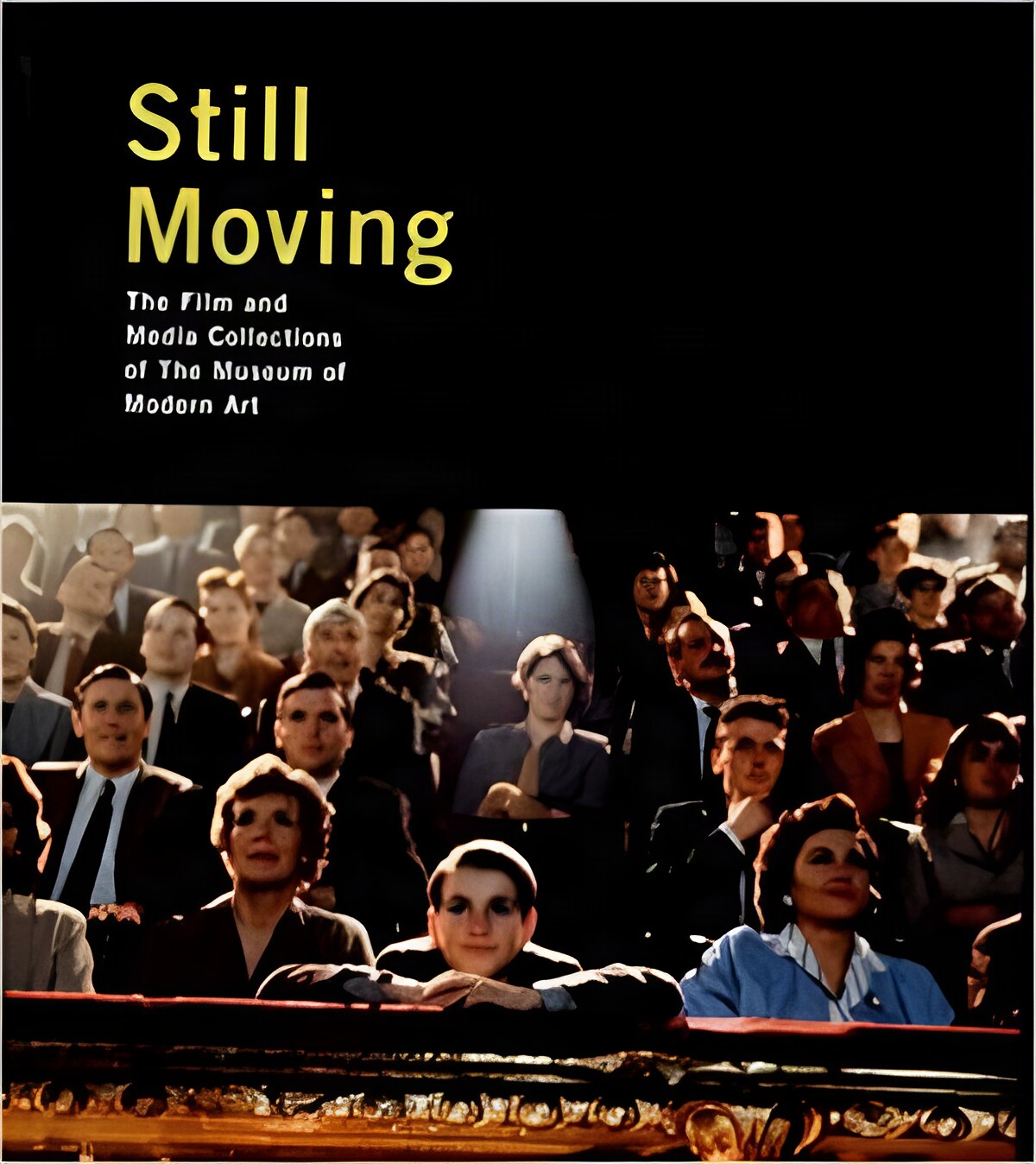
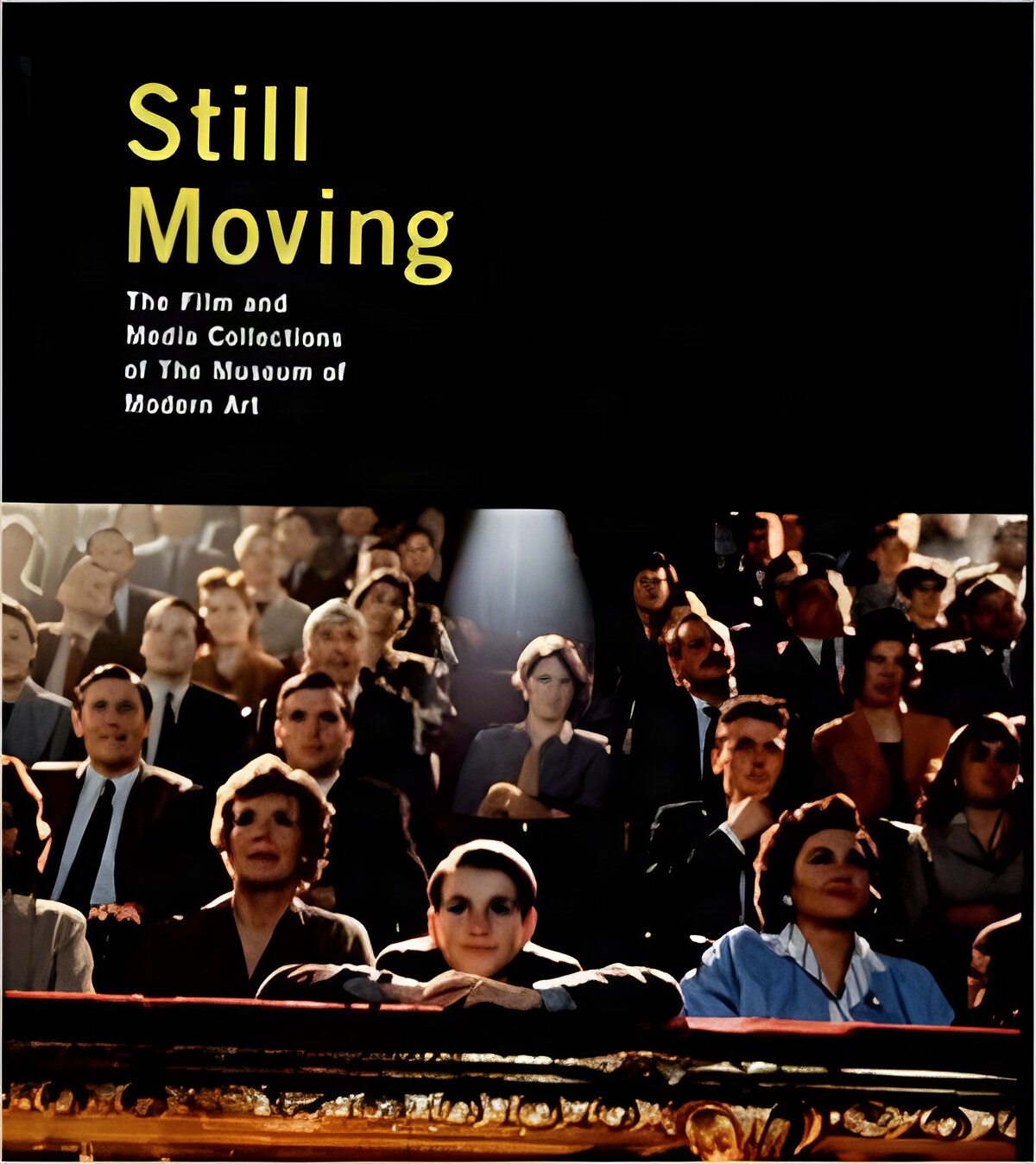
Hardcover. New York, The Museum of Modern Art, 1st, 2006, Book: Very Good, Dust Jacket: None, Hardcover, 375 pages, illustrated throughout in color and b&w. Clean, unmarked copy in excellent condition. 507 illustrations (108 in color, 399 in duotone). Founded in 1935, The Museum of Modern Art's Department of Film and Media is home to one of the most important moving-image archives in the world. Still Moving: The Film and Media Collections of The Museum of Modern Art marks the first time that MoMA has published a volume dedicated exclusively to these holdings. Drawn primarily from the Museum's vast library of film stills, the nearly 500 images in this book represent just a fraction of the department's renowned archive, including one of the world's most important collections of international silent cinema; classic early sound films from the United States, Great Britain, France, Germany, Italy, Russia, and Japan; extensive holdings of documentary and animation shorts and feature films; significant examples of Hollywood filmmaking from studios such as Warner Brothers, RKO, MGM, Twentieth Century-Fox, and Paramount; and more recent works by leading independent and avant-garde film and media artists.
Hardcover. New York, The Museum of Modern Art, New York, 1st, 2006, Book: Very Good, Dust Jacket: None, Hardcover, 375 pages, illustrated throughout in color and b&w. Clean, unmarked copy in excellent condition. 507 illustrations (108 in color, 399 in duotone). Founded in 1935, The Museum of Modern Art's Department of Film and Media is home to one of the most important moving-image archives in the world. Still Moving: The Film and Media Collections of The Museum of Modern Art marks the first time that MoMA has published a volume dedicated exclusively to these holdings. Drawn primarily from the Museum's vast library of film stills, the nearly 500 images in this book represent just a fraction of the department's renowned archive, including one of the world's most important collections of international silent cinema; classic early sound films from the United States, Great Britain, France, Germany, Italy, Russia, and Japan; extensive holdings of documentary and animation shorts and feature films; significant examples of Hollywood filmmaking from studios such as Warner Brothers, RKO, MGM, Twentieth Century-Fox, and Paramount; and more recent works by leading independent and avant-garde film and media artists.
Hardcover. Baltimore, The John Hopkins Press, 3rd pr., 1969, Book: Very Good, Dust Jacket: None, Hardcover, turquoise cloth with gilt lettering on spine. No dust jacket, clean copy.
Hardcover. Germany, PPVMedien, 1st, 2003, Book: Very Good, Dust Jacket: Very Good, Hardcover in a bright, lightly worn dust jacket, 220 pages profusely illustrated in color. The story of Taylor Guitars from small San Diego company to a company producing over 70000 quality guitars a year. Showcases many rare guitars, including instruments made by Bob Taylor before the company's founding, standard production models and custom built instruments. Clean copy.
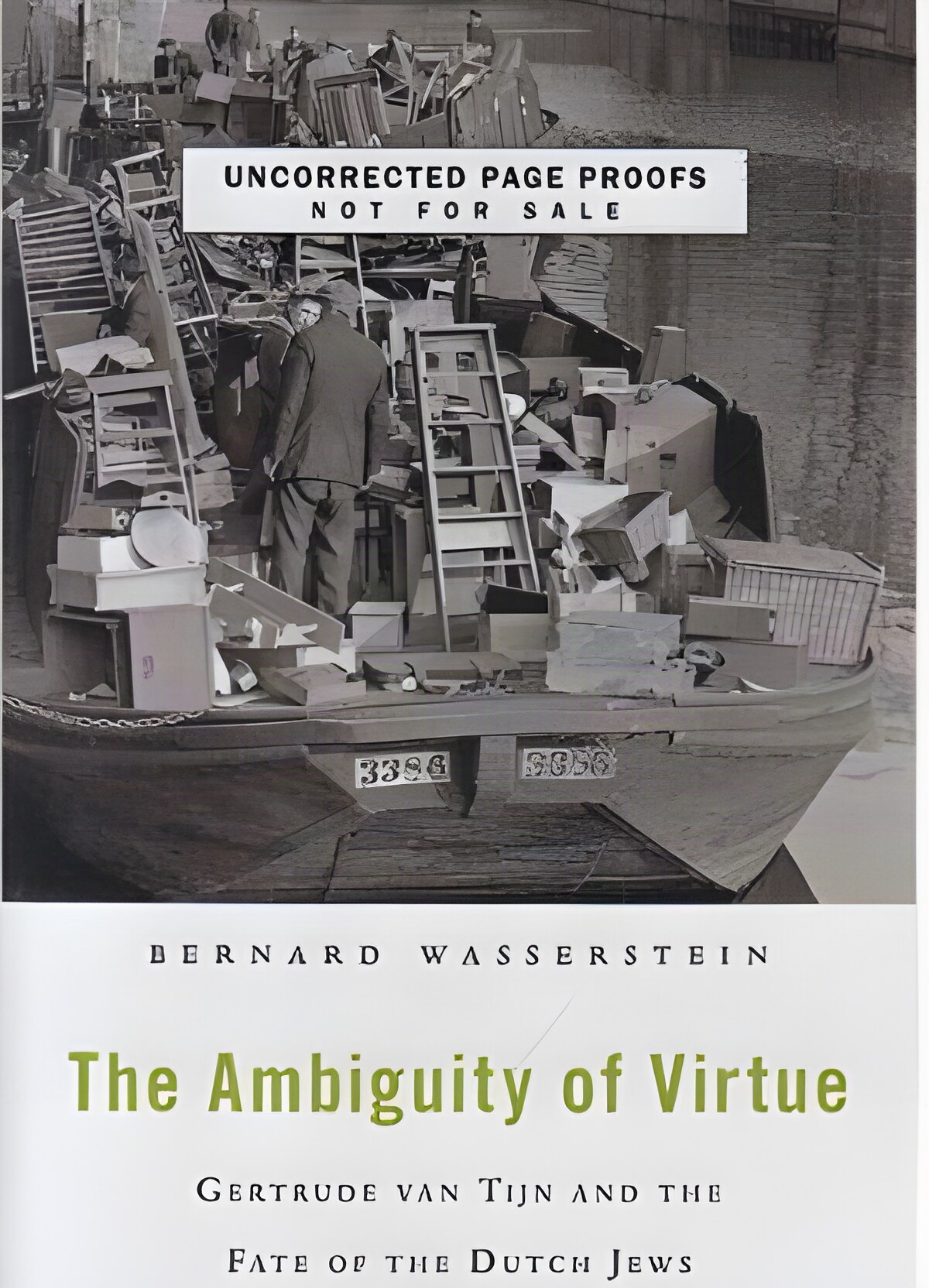
Hardcover. Cambridge MA, Harvard University Press, 1st, 2014, Book: Very Good, Dust Jacket: Very Good, Hardcover in a bright dust jacket, 334 pages, b&w photos. In May 1941, Gertrude van Tijn arrived in Lisbon on a mission of mercy from German-occupied Amsterdam. She came with Nazi approval to the capital of neutral Portugal to negotiate the departure from Hitler's Europe of thousands of German and Dutch Jews. Was this middle-aged Jewish woman, burdened with such a terrible responsibility, merely a pawn of the Nazis, or was her journey a genuine opportunity to save large numbers of Jews from the gas chambers? In such impossible circumstances, what is just action, and what is complicity? A moving account of courage and of all-too-human failings in the face of extraordinary moral challenges, The Ambiguity of Virtue tells the story of Van Tijn's work on behalf of her fellow Jews as the avenues that might save them were closed off. Between 1933 and 1940 Van Tijn helped organize Jewish emigration from Germany. After the Germans occupied Holland, she worked for the Nazi-appointed Jewish Council in Amsterdam and enabled many Jews to escape. Some later called her a heroine for the choices she made; others denounced her as a collaborator. Clean copy.
Hardcover. NY, Farrar & Rinehart, 1st US, 1939, Book: Good, Hardcover, blue cloth with dark blue lettering, 251 pages. Endpapers tanned and soiled at edges. Name on front fly leaf, otherwise clean.
Softcover. Stanford CA, Stanford University Press, 1st pbk, 2004, Book: Very Good, Dust Jacket: None, Softcover, 271 pages, b&w illustrations. The Cult of Art in Nazi Germany presents a new interpretation of National Socialism, arguing that art in the Third Reich was not simply an instrument of the regime, but actually became a source of the racist politics upon which its ideology was founded. Through the myth of the "Aryan race," a race pronounced superior because it alone creates culture, Nazism asserted art as the sole raison d'etre of a regime defined by Hitler as the "dictatorship of genius." Michaud shows the important link between the religious nature of Nazi art and the political movement, revealing that in Nazi Germany art was considered to be less a witness of history than a force capable of producing future, the actor capable of accelerating the coming of a reality immanent to art itself. Light sticker residue to rear cover otherwise clean, very good.
Hardcover. Chicago, University of Chicago Press, 1st thus, 2004, Book: Very Good, Dust Jacket: Very Good, Hardcover in a bright, unclipped dust jacket. 87 pages. Foreword, black and white photographs, and colophon. A description of the Allied bombing campaign from the perspective of the German survivors.
Hardcover. NY, Penguin Press, 3rd pr., 2011, Book: Very Good, Dust Jacket: Very Good, Hardcover in a bright, unclipped dust jacket. 564 pages. From the preeminent Hitler biographer, a fascinating and original exploration of how the Third Reich was willing and able to fight to the bitter end of World War II. As Kershaw shows, the structure of Hitler's "charismatic rule" created a powerful negative bond between him and the Nazi leadership- they had no future without him, and so their fates were inextricably tied. Terror also helped the Third Reich maintain its grip on power as the regime began to wage war not only on its ideologically defined enemies but also on the German people themselves. Yet even as each month brought fresh horrors for civilians, popular support for the regime remained linked to a patriotic support of Germany and a terrible fear of the enemy closing in. Based on prodigious new research, Kershaw's The End is a harrowing yet enthralling portrait of the Third Reich in its last desperate gasps. B&w illustrations. Clean copy.
Hardcover. August Paul Wooster and Sons, 1967, Book: Very Good, Dust Jacket: None, Hardcover, dark green boards with gilt lettering and decoration. Unpaginated, but approx. 200 pages. Numerous b&w and color illustrations of uniforms, dress, weapons, insignias, etc, appear to be assembled from German pictorial sources. Clean, bright copy. Self-published.
Softcover. Berkeley CA, California University Press, reprint, 2018, Book: Very Good, Dust Jacket: None, Softcover, 308 pages. The German Enlightenment and the Rise of Historicism traces the thought of a large and neglected group of German thinkers and their encounter with the ideas and ideal of the Enlightenment from 1740 to 1790. Concentrating on the nature of their historical consciousness, Peter Hanns Reill addresses two basic issues in the interpretation of the Enlightenment: to what degree can one speak of the unity of the Enlightenment and to what extent can the Enlightenment be characterized as "modern"? Reill attempts to revise the traditional interpretation of the Enlightenment as an age insensitive to the postulates of modern historical thought and to dissolve the alleged opposition of the Enlightenment to later intellectual developments such as Idealism. He argues that German Enlightened thinkers generated the general presuppositions upon which modern historical thought is founded. Bright, clean copy.
Hardcover. NY, Pantheon, 1st US, 1999, Book: Very Good, Dust Jacket: Very Good, Hardcover in a bright, unclipped dust jacket. A magisterial achievement: part biography, part history, part moral meditation on the resurrection of torture as an instrument of political power in the twentieth century, The Good Listener tells the story of Helen Bamber, a good but complex woman now in her seventies, who has spent her life battling to bring the dark side of history into the light. In almost every situation in our century where mankind has demonstrated its capacity to intensify evil--during the Nazi Holocaust, in Algeria, Chile, Africa, the USSR, and Israel, as well as in postwar Britain and Germany--Bamber has served as a witness, an expert, or a reproach, as well as a repository of our collective memory of debasement. Her father, a Polish Jew, had been so obsessed by the Fascist threat that he would read to Helen from Goebbels' speeches, teaching her how corrupting and manipulative language can be. She went to Bergen-Belsen after World War II had ended, and upon her return to London she dedicated herself to caring for the young survivors of the camp. So began Bamber's brave devotion to the grim and dangerous task of undoing the work of the torturer--culminating, after her participation as a central force in Amnesty International, in her establishment in England of the Foundation for the Care of Victims of Torture. Because Bamber's uncanny openness to others has been one of her great skills, Clean copy.
Hardcover. NY, Random House, 1st, 1974, Book: Very Good, Dust Jacket: Good, Hardcover, 373 pages. Color and b&w photographs. Water stain on back cover. Dust jacket has some small tears. A pictorial record, with accompanying text, of German society, culture, and politics, from the Weimar Republic to Hitler's last public appearence, detailing the rise of Nazism and Hitler's public and private lives.
Hardcover. NY, Knopf, 1st, 1997, Book: Very Good, Dust Jacket: Very Good, Hardcover in a bright, unclipped dust jacket. Since 1945 there have been more than one hundred biographies of Hitler, and countless other books on him and the Third Reich. What happens when so many people reinterpret the life of a single individual? Dangerously, the cumulative portrait that begins to emerge can suggest the face of a mythic antihero whose crimes and errors blur behind an aura of power and conquest. By reversing the process, by making Hitler's biographers--rather than Hitler himself--the subject of inquiry, Lukacs reveals the contradictions that take us back to the true Hitler of history. Like an attorney, Lukacs puts the biographies on trial. He gives a masterly account of all the major works and of the personalities, methods, and careers of the biographers (one cannot separate the historian from his history, particularly in this arena); he looks at what is still not known (and probably never will be) about Hitler; he considers various crucial aspects of the real Hitler; and he shows how different biographers have either advanced our understanding or gone off track. By singling out those who have been involved in, or co-opted into, an implicit "rehabilitation of Hitler," Lukacs draws powerful conclusions about Hitler's essential differences from other monsters of history, such as Napoleon, Mussolini, and Stalin, and--equally important--about Hitler's place in the history of this century and of the world.
Softcover. Urbana, University of Illinois Press, 1st, 2005, Book: Very Good, Dust Jacket: None, Softcover, 277 pages. Starting in the 1980s, anti-immigrant discourse shifted away from the "color" of immigrants to their religion and culture. It focused in particular on newcomers from Muslim countries--people feared both as terrorists and as products of tribal societies with values opposed to those of secular Western Europe. Leo Lucassen tackles the question of whether the integration process of these recent immigrants will fundamentally differ in the long run (over multiple generations) from the experiences of similar immigrant groups in the past. For comparison, Lucassen focuses on "large and problematic groups" from Western Europe's past (the Irish in the United Kingdom, the Poles in Germany, and the Italians in France) and demonstrates a number of structural similarities in the way migrants and their descendants integrated into these nation states. Lucassen emphasizes that the geographic sources of the "threat" have changed and that contemporaries tend to overemphasize the threat of each successive wave of immigrants, in part because the successfully incorporated immigrants of the past have become invisible in national histories. Clean copy.
Hardcover. Boston, Little, Brown and Company, 1st, 1957, Book: Very Good, Dust Jacket: None, Hardcover, blue cloth with gilt lettering on spine. Volume XI in The History of United States Naval Operations in World War II. 360 pages, illustrated with maps (one fold-out) and b&w photos. Gilt on spine with light fading, lacks dust jacket, dj flap copy pasted inside front cover, otherwise clean, tight copy.

 "Sam Taylor-Johnson: Second Floorby: Taylor-Johnson, Sam (Photographer)")
 "Sam Taylor-Johnson: Second Floorby: Taylor-Johnson, Sam (Photographer)")
 "Scale and Scope: The Dynamics of Industrial Capitalismby: Alfred DuPont Chandler Jr.")

 "Shadows of War: A German Soldier's Lost Photographs of World War IIby: Petra Bopp, Willi Rose , et al.")
 "Sirens & Sinners: A Visual History of Weimar Film 1918-1933by: Hans Helmut Prinzler")
 "Six Months in 1945: FDR, Stalin, Churchill, and Truman--from World War to Cold Warby: Michael Dobbs")

 "Stresemann and the Rearmament of Germanyby: Hans W. Gatzke")
 "Taylor Guitars: 30 Years of a New American Classicby: Simmons, Michael John")


![The End: Hamburg 1943by: Nossack, Hans Erich; Andres, Erich [Photographer]; Agee, Joel [Translator]](javascript:largeIMTop('https://www.browsingisarousing.com/shop/images/The-End-Hamburg-1943_by_Nossack-Hans-Erich-Andres-Erich-Photographer-Agee-Joel-Translator372848-395803.jpg','https://www.browsingisarousing.com/shop/images/The-End-Hamburg-1943_by_Nossack-Hans-Erich-Andres-Erich-Photographer-Agee-Joel-Translator372848-395803.jpg',0,'372848',0,'') "The End: Hamburg 1943by: Nossack, Hans Erich; Andres, Erich [Photographer]; Agee, Joel [Translator]")


 "The German Enlightenment and the Rise of Historicism by: Peter H. Reill")

 "The Hitler File: A Social History of Germany and the Nazis, 1918-45by: Frederic V. Grunfeld")
 "The Hitler of History by: John Lukacs")
 "The Immigrant Threat: The Integration of Old and New Migrants in Western Europe since 1850 by: Leo Lucassen")
 "The Invasion of France and Germany, 1944-1945: History of United States Naval Operations in World War II, Volume 11 by: Morison, Samuel Eliot")