Hardcover. NY, Viking, 1st, 1999, Book: Very Good, Dust Jacket: Very Good, Hardcover in a bright, unclipped dust jacket, 430 pages. In this book, backed by a wealth of new research, the author tells for the first time the story of the career of Eugenio Pacelli, the man who as Pius XII was Pope during the Second World War and arguably the most powerful churchman in modern history. Adding to the continuing debate about collective guilt and the Holocaust this is an extraordinary and explosive history. In the first decade of the century, as a brilliant young lawyer, Pacelli helped shape an ideology of unprecedented papal power; during the 1920s he employed cunning and moral blackmail to impose that power in Germany. In 1933 Hitler became his perfect negotiating partner and a concordat was established that granted religious and educational advantages to the Catholic Church in exchange for Catholic withdrawal from social and political action. This 'voluntary' abdication of political Catholicism imposed from Rome facilitated the rise of Nazism. Clean copy.
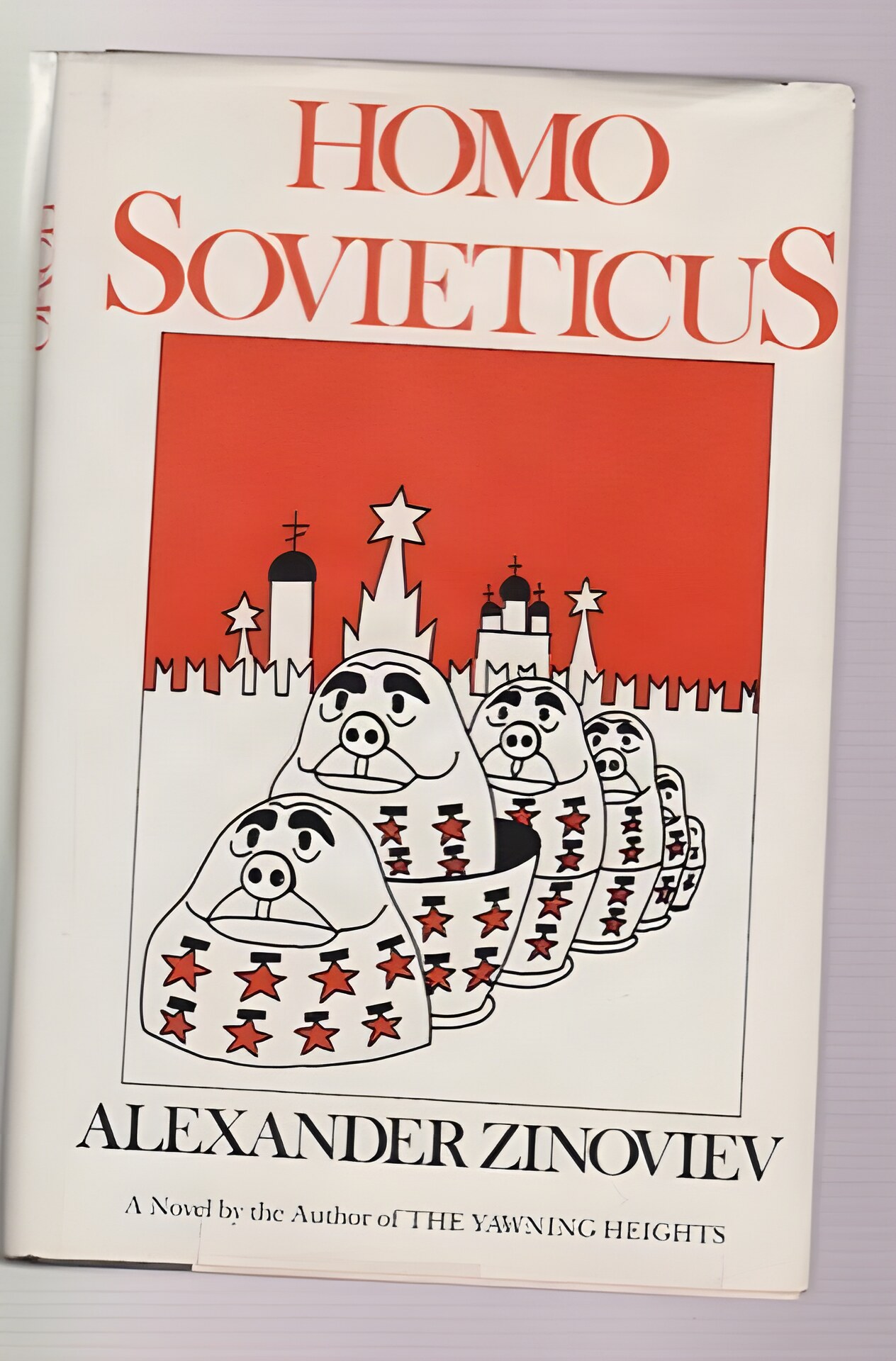
Hardcover. NY, Atlantic Monthly Press, 1st US, 1986, Book: Very Good, Dust Jacket: Very Good, Hardcover in a bright, unclipped dust jacket, 206 pages. Exploring the nature of a new people created by Soviet communal society, this novel centers on a group of Soviet emigres living in a boarding house in Germany, each seeking to establish a niche in the West. Dripping venom, the narrator ranges in systematic fashion through the actions of the communist regime from 1917 to the present, excoriating Soviet history. Seen through the cold eye of the observer, the System is duplicitous, corrupt, inefficient and boring, when it is not simply maddening. This furious, outraged, highly theatrical monologue documenting the emergence of the New Man, Homo sovieticus, will seem a definitive portrait to those familiar with the ways of the Kremlin. Clean copy.
Hardcover. New York, Harper & Brothers, 1st, 1888, Book: Very Good, Dust Jacket: None, 176 pages. Illustrated with drawings by R. F. Zogbaum celebrating military life in France, Germany, Great Britain, and United States. Title in gilt on cover with drum and rifle illustration. Cloth missing from top 3/8" of spine. Corners of front and back covers bumped and rubbed. Previous owners name on front endpaper. Clean, tight copy.
Hardcover. Wilby UK, Michael Russell Publishing, 1st UK, 1997, Book: Very Good, Dust Jacket: Very Good, Hardcover in a bright dust jacket. 391 pages, b&w illustrations, translated from the German by G.T. Waddington. An insider's account of the turbulent rise and fall of Hitler's "Thousand Year Reich". Clean copy.
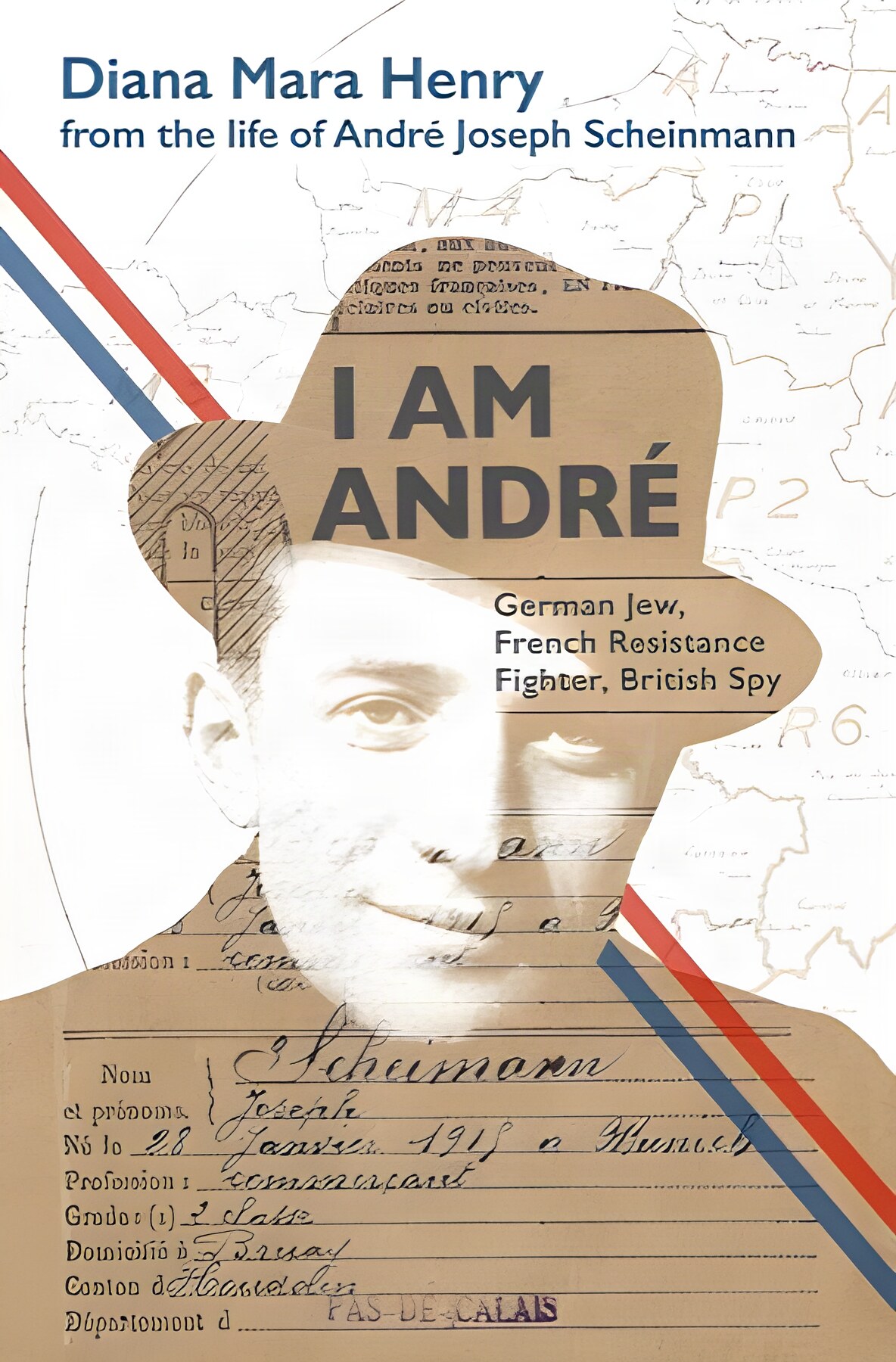
Hardcover. Chiselbury, 1st, 2024, Book: Very Good, Dust Jacket: None, Hardcover in glossy pictorial boards, 356 pages. An amazing real-life story of espionage, of courage and resistance, and of friendship and love. It pulls back the veil on the hidden history of the struggle for the identity of the Resistance in France. The life of 'André' Joseph Scheinmann is more intriguing and compelling than any work of fiction. His true-life story of derring-do starts as a Jewish youth in Munich, whose family moves to France in 1933 to escape the Nazi tide. He joins the French army at the outbreak of WW2 and escapes from a prisoner-of war camp after the bitterly brief fight for France in the summer of 1940. André becomes a spy and saboteur for the British and Free French whilst working undercover as translator and liaison with the German high command at the Brittany headquarters of the French National Railroads. Summoned by the British, he clandestinely crosses the Channel for initiation and training as an MI6 agent in England. His network betrayed during his absence, he is arrested on his return to France. André then begins an even more perilous journey with interrogation in Gestapo prisons and the little-known Natzweiler concentration camp in Alsace, before being transferred to Dachau and Allach, ahead of the advancing Allies. Illustrated with over 120 vintage and color photographs and letters. Clean copy.
Softcover. Germany, Gert and Mareidi , 1st, 1980, Book: Very Good, Dust Jacket: None, 300 pages, Softcover with paper wrappers. 170 b/w and 12 color photographs. Front wrapper APPEARS to be removed from spine, lacking publisher glue. Text block tight. Previous owner's signature on front wrapper.
Hardcover. Chicago, Henry Regnery Company, 1st, 1950, Book: Very Good, Dust Jacket: Fair, Hardcover in a worn, chipped dust jacket. Map endpapers, 176 pages, b&w photos. The first book by a German general published in America after the war, a German account of the D-Day & Normandy 'invasion' by Allied forces; the author was Rommel's Chief-of-Staff and therefore had an inside view of Rommel's efforts to get Hitler to negotiate a peace in the face of overwhelming Allied superiority. Speidel was a career military officer and trained historian; a German nationalist, he disagreed with racist Nazi policies, was involved in the 20 July plot to kill Hitler, and was important in rebuilding Germany's army after the war. Clean copy.
Hardcover. NY, Crown, 1st, 1993, Book: Very Good, Dust Jacket: Very Good, Hardcover, 305 pages, in a bright, unclipped dust jacket. In A.D. 71, the Emperor Vespasian sends his reluctant agent Marcus Didius Falco to Germany to bring a rebel chieftain into line and to find a missing legate whose battle-worn legion had surrendered him to a druidic sorceress.
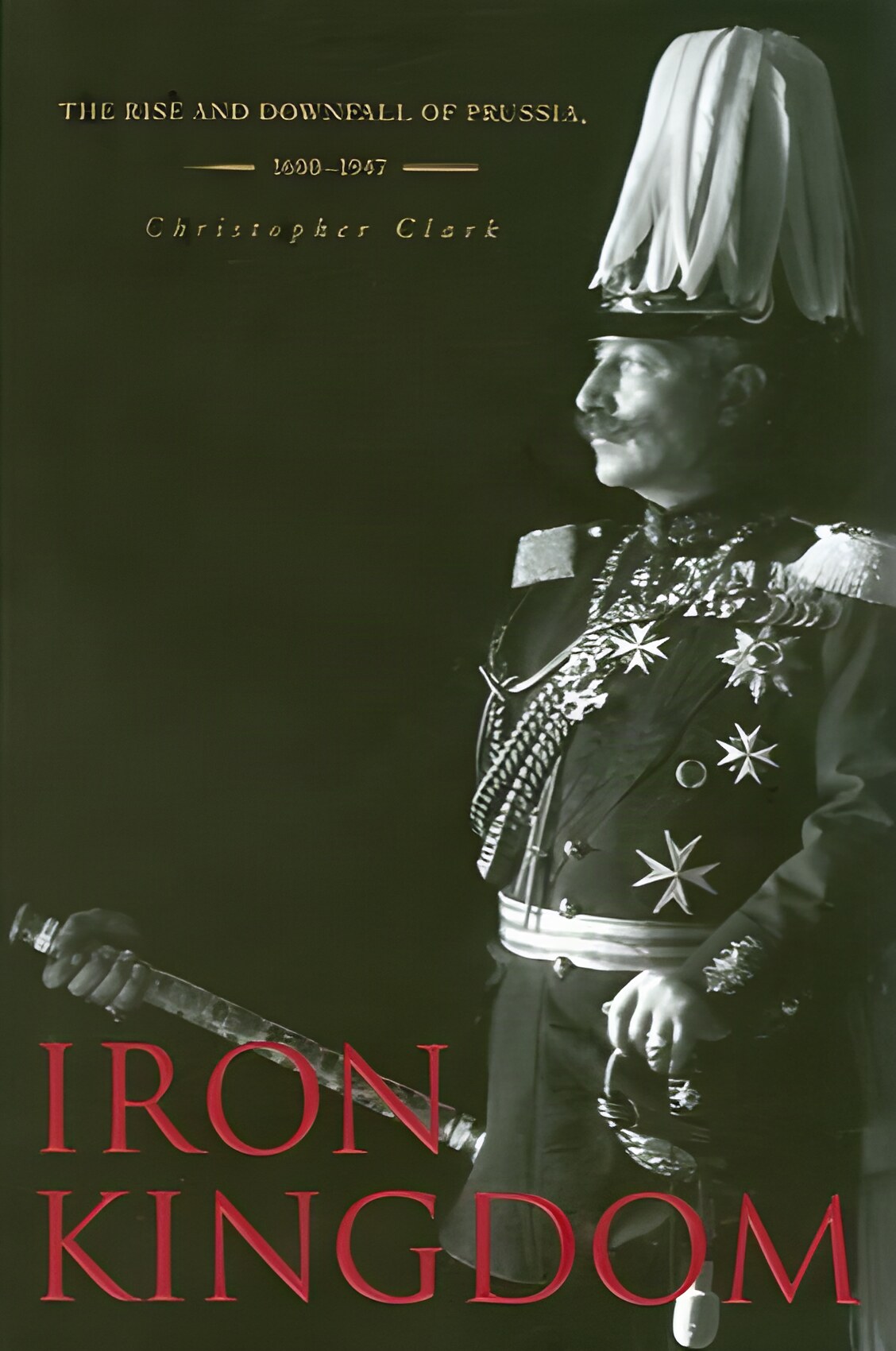
Softcover. Cambridge MA, Harvard University Press, reprint, 2008, Book: Very Good, Dust Jacket: None, Softcover, 776 pages. "Iron Kingdom, Christopher Clark's stately, authoritative history of Prussia from its humble beginnings to its ignominious end, presents a much more complicated and compelling picture of the German state, which is too often reduced to a caricature of spiked helmets and polished boots. Prussia and its army were inseparable, but Prussia was also renowned for its efficient, incorruptible civil service; its innovative system of social services; its religious tolerance; and its unrivaled education system, a model for the rest of Germany and the world. This too was Prussia-a tormented kingdom that, like a tragic hero, was brought down by the very qualities that raised it up. Mr. Clark, a senior lecturer in modern European history at Cambridge University, does an exemplary job. A lively writer, he organizes masses of material in orderly fashion, clearly establishing his main themes and pausing at crucial junctures to recapitulate and reconsider. Prussia, a self-invented artifact right down to its name, demands the kind of careful demythologizing that it receives from Mr. Clark, who gently but insistently exposes the flaws in most of the received wisdom about his subject. A result is an illuminating, profoundly satisfying work of history, brightened by vivid character sketches of the principals in his drama." Clean copy.
Hardcover. Germany, Hatje Cantz, 1st, 2006, Book: Very Good, Dust Jacket: None, Hardcover, 80 pages, photos in color. Minor shelf-wear to boards, else a clean, tight copy. This book documents the two most recent works by the critically acclaimed British artist and filmmaker, Isaac Julien, both of which continue his investigation of issues of race and global politics. True North, shot in the spectacular landscapes of Iceland and Northern Sweden, is conceived around the expedition writings of the African-American explorer Matthew Henson, one of the key members of Robert E. Peary's 1909 Arctic expedition, and arguably the first person to reach the North Pole. True North's diametric counterpart, Fantome Afrique, weaves cinematic and architectural references through the rich imagery of urban Ouagadougou, Africa's cinematic center, and the arid spaces of rural Burkina Faso. The film is punctuated by archival footage from early colonial expeditions and landmark moments in African history.
Hardcover. Germany, Hatje Cantz, 1st, 2006, Book: Very Good, Dust Jacket: None, Hardcover, 80 pages, photos in color. Minor shelf-wear to boards, else a clean, tight copy. This book documents the two most recent works by the critically acclaimed British artist and filmmaker, Isaac Julien, both of which continue his investigation of issues of race and global politics. True North, shot in the spectacular landscapes of Iceland and Northern Sweden, is conceived around the expedition writings of the African-American explorer Matthew Henson, one of the key members of Robert E. Peary's 1909 Arctic expedition, and arguably the first person to reach the North Pole. True North's diametric counterpart, Fantome Afrique, weaves cinematic and architectural references through the rich imagery of urban Ouagadougou, Africa's cinematic center, and the arid spaces of rural Burkina Faso. The film is punctuated by archival footage from early colonial expeditions and landmark moments in African history.
Softcover. San Francisco, Chronicle Books, 1st, 1993, Book: Very Good, Dust Jacket: None, Softcover, 133 pages illustrated in color. This lavishly illustrated volume offers a unique survey of Italian commercial graphic design during a period of both creative artistic vitality and extreme political turmoil. The first English-language book to showcase the bold typography and streamlined imagery of modern Italian design motifs on commercial products of the day, this fascinating and important resource for designers, history buffs, and collectors includes a discussion of the Futurist influence on the Italian Art Deco style and the success of such individualized expression despite a ruthless Fascist regime. Clean copy.
Hardcover. Germany, Hatje Cantz, reprint, 2009, Book: Very Good, Dust Jacket: Very Good, 480 pages. Hardcover with dust jacket with slip case. Clean, unmarked copy with only minor wear to dust jacket. Color/ Black and white pictures throughout. Coinciding with renewed interest in James Ensor, this catalogue raisonne comes as an essential and definitive volume for Ensor buffs and all serious libraries of modern art. A legend in his own lifetime, Ensor (1860-1949) was--alongside Vincent van Gogh and Edvard Munch--a fearless independent whose work led directly to the development of German Expressionism and French Surrealism. Ensor achieved fame as the "painter of masks," and for his bizarre still lifes and grotesque carnival scenes, in harsh, contrasting, brilliant colors, evolving out of the traditional Flemish dance of death. Now, the reader can explore the Belgian painter's oeuvre thoroughly, in this opulently illustrated, full-color, slipcased catalogue raisonne. A comprehensive illustrated chronology offers additional details about the artist's life and work, and forms an integral part of this splendid, highly valuable contribution to art historical research, ensuring the legacy of a great artist who continues to inspire contemporary art.
Hardcover. Germany, Prestel, 1st, 2015, Book: Very Good, Dust Jacket: None, 208 pages. Hardcover with no dust jacket. Very clean, unmarked copy with only minor edgewear. A thematic presentation of the groundbreaking and provocative art of Jean-Michel Basquiat, this volume offers a new appreciation of his tragic but highly influential career. From his early years spray painting the walls of lower Manhattan to his first solo show in 1982 and his untimely death at the age of 27 in 1988, Jean-Michel Basquiat has become a symbol of the 1980s New York art scene.
Hardcover. Chapel Hill, University of North Carolina Press., 1st, 1981, Book: Very Good, Dust Jacket: Very Good, Hardcover in a lightly worn dust jacket, 364 pages, b&w illustrations. As the most learned and eminent public lawyer in Germany, a busy administrator, and a prolific writer, Moser (1701-85) lived and breathed the political order. His correspondence, memoranda, and manuscript autobiography reflect the intricate day-to-day operations of the empire, and his fascinating life is a microcosm of the life and style of the empire itself. The biography provided a comprehensive picture of the empire between the Thirty Years War and the revolutionary era. Dust jacket spine faded otherwise very good, clean.
Hardcover. New Haven CT, Yale University Press;, 1st, 2009, Book: Very Good, Dust Jacket: Very Good, Hardcover, 180 pages. John Gutmann (1905-1998) was one of America's most distinctive photographers. Born in Germany where he trained as an artist and art teacher, he fled the Nazis in 1933 and settled in San Francisco, reinventing himself as a photo-reporter. Gutmann captured images of American culture, celebrating signs of a vibrant democracy, however imperfect. His own status as an outsider--a Jew in Germany, a naturalized citizen in the United States--informed his focus on individuals from the Asian-American, African-American, and gay communities, as well as his photography in India, Burma, and China during World War II. This handsome book acknowledges Gutmann's place in the history of photography. Drawing on his archive of photographs and papers at the Center for Creative Photography, it presents both unfamiliar works and little-known contexts for his imagery, linking his photography to his passionate interest in painting and filmmaking, his collections of non-Western art and artifacts, and his pedagogy. In addition to a major essay by Sally Stein, the volume includes an introduction by Douglas R. Nickel, and an overview of the Gutmann archive by Amy Rule.
Hardcover. New Haven CT, Yale University Press;, 1st, 2009, Book: Very Good, Dust Jacket: Very Good, Hardcover, 180 pages. John Gutmann (1905-1998) was one of America's most distinctive photographers. Born in Germany where he trained as an artist and art teacher, he fled the Nazis in 1933 and settled in San Francisco, reinventing himself as a photo-reporter. Gutmann captured images of American culture, celebrating signs of a vibrant democracy, however imperfect. His own status as an outsider--a Jew in Germany, a naturalized citizen in the United States--informed his focus on individuals from the Asian-American, African-American, and gay communities, as well as his photography in India, Burma, and China during World War II. This handsome book acknowledges Gutmann's place in the history of photography. Drawing on his archive of photographs and papers at the Center for Creative Photography, it presents both unfamiliar works and little-known contexts for his imagery, linking his photography to his passionate interest in painting and filmmaking, his collections of non-Western art and artifacts, and his pedagogy. In addition to a major essay by Sally Stein, the volume includes an introduction by Douglas R. Nickel, and an overview of the Gutmann archive by Amy Rule.
Hardcover. Ostfildern GR, Hatje Cantz, 1st, 2008, Book: Very Good, Dust Jacket: Very Good, Hardcover, 288 pages 231 illustrations 60 in color with 274 plans and drawings. Biography. Like new in publisher's shrink-wrap. Josef Paul Kleihues (1933-2004) was one of the most prolific architects of postwar Germany, famous both as the Director of the International Building Exhibition Berlin in 1987 and for his design for the Museum of Contemporary Art in Chicago. He was also known for his sensitive interventions into older buildings, an instance of which is the former Hamburger Bahnhof--now the Museum fur Gegenwart--in Berlin, where Kleihues intermixed glass walls and light installations by the American Minimalist Dan Flavin with the building's original nineteenth-century Neoclassical design. (His reconstruction was widely deemed to rival or even surpass Gae Aulenti's overhaul of the interior of the Musee d'Orsay in Paris.) This first volume of a three-part monograph presents projects up to 1980, including the highly acclaimed Berlin Sanitation Department and the Neukolln Hospital. Even in these early works, Kleihues' practical, problem-solving approach is already evident, indicating his readiness to reflect on the traditional approaches of Modern architecture and his capacity to expand them in interesting ways. This very generously illustrated volume was designed by Kleihues himself, just before his death in 2004.
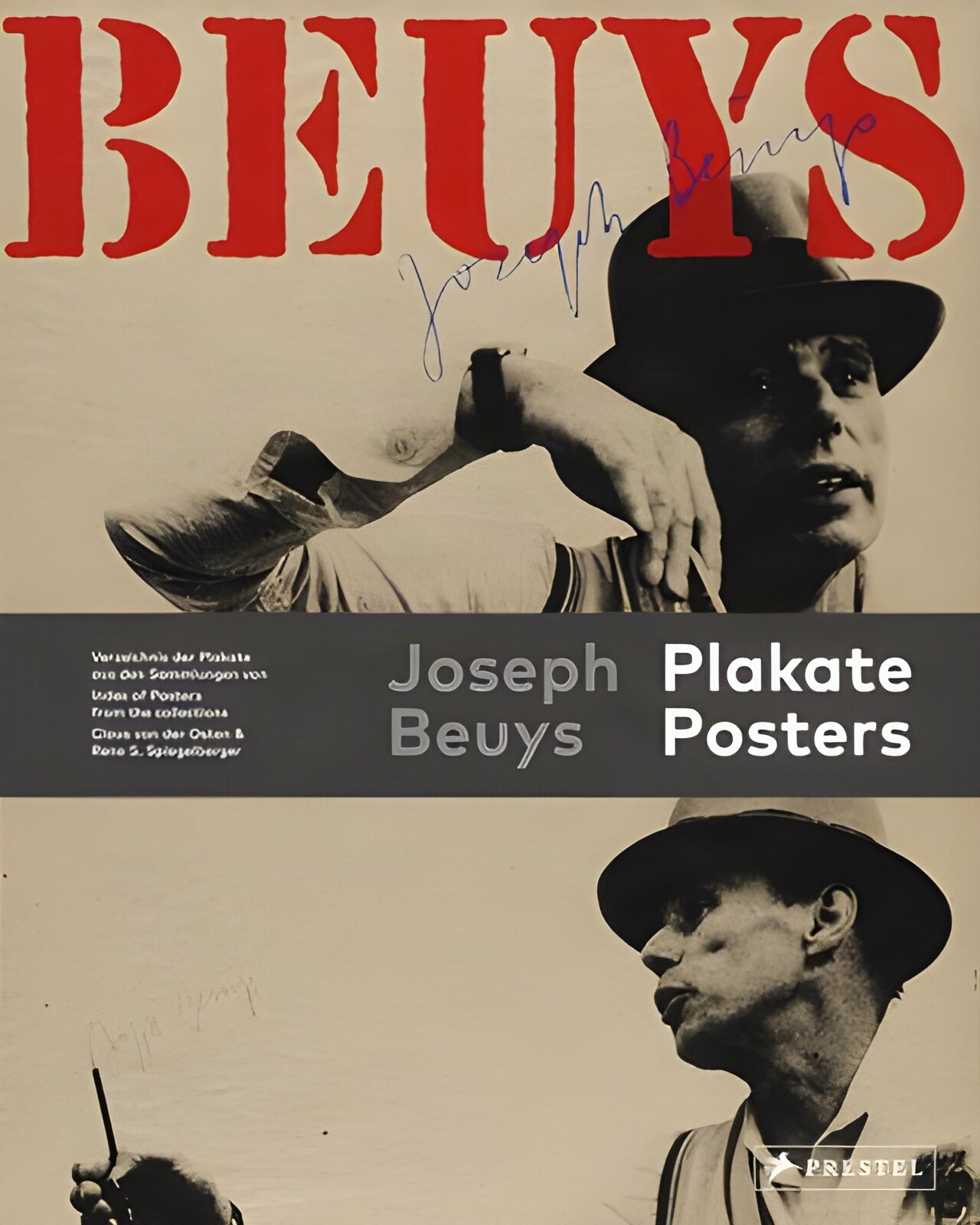
Hardcover. Munich/NJ, Prestel, 1st, 2021, Book: Very Good, Dust Jacket: Very Good, Hardcover in a bright dust jacket, 256 pages. One of the most important German postwar artists, Joseph Beuys is known for his drawings, performance art, activism, and teaching, influencing a generation of younger artists and expanding the concept of what art is. He had an ambitious goal for his art: to transform western culture into a more peaceful, democratic, and creative place. He also considered everyone to be an artist and that art and life should not be viewed separately. This book pulls together all of the avant-garde artist's posters from his entire oeuvre. His earliest posters often announced exhibitions of his own performance art, while later posters expressed his philosophical and political opinions, such as those for Germany's Green Party, which he was a founding member of. This book includes full page illustrations of Beuys' most important posters, essays about Beuys' influence, an extensive biography of the artist and a complete catalogue of all posters created under his guidance. Text in English and German. Still in publisher's shrinkwrap.
Hardcover. Leipzig, Germany, Kurt Wolff Verlag, 1st, 1915, Book: Very Good, Dust Jacket: None, Hardcover, 338 pages, plus postscript in rear, GERMAN TEXT. Purple cloth cover with Art Deco motif. Light edge wear, otherwise, very clean and tight copy.
Hardcover. Philadelphia, University of Pennsylvania Press, 1st, 2012, Book: Very Good, Dust Jacket: None, Hardcover, blue cloth with gilt lettering on spine, 266 pages. Ex-lib with a small stamp to title page and top edge, label on spine. Otherwise a clean, bright copy. After Franz Kafka died in 1924, his novels and short stories were published in ways that downplayed both their author's roots in Prague and his engagement with Jewish tradition and language, so as to secure their place in the German literary canon. Now, nearly a century after Kafka began to create his fictions, Germany, Israel, and the Czech Republic lay claim to his legacy. Kafka's Jewish Languages brings Kafka's stature as a specifically Jewish writer into focus. David Suchoff explores the Yiddish and modern Hebrew that inspired Kafka's vision of tradition. Citing the Jewish sources crucial to the development of Kafka's style, the book demonstrates the intimate relationship between the author's Jewish modes of expression and the larger literary significance of his works. No dust jacket.
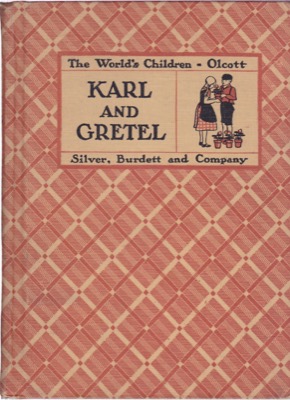
Hardcover. NY, Silver,Burdett and Company, 1st, 1932, Book: Very Good, Dust Jacket: None, Hardcover, decorated cloth, 160 pages plus vocabulary. Illustrated in color and b&w by Constance Whittemore. Children's reader to introduce children to Germany through a trip with Karl and Gretel. Clean, bright copy.
Hardcover. Cambridge MA, The MIT Press, 1st, 2001, Book: Very Good, Dust Jacket: Very Good, 144 pages. Hardcover with dust jacket. Clean, tight copy in publisher's shrinkwrap. Karl Blossfeldt (1865-1932) achieved overnight fame in the late 1920s with the first publication of his photographs of plants. Those photographs, which revealed the inner structures of the organic forms, immediately made him a pioneer of New Objectivity-an innovative movement in art and photography of the 1920s and 1930s. Blossfeldt, however, was neither a trained photographer nor a botanist. He was a sculptor and art professor who did his photographic work to generate teaching material for his students.The publication of this book is the result of an extraordinary event-the 1997 discovery in Blossfeldt's estate of sixty-one previously unknown collages, in virtually mint condition, of photographic contact prints arranged on large cardboard sheets. Blossfeldt apparently used these to study the relation and similarity of the photographs and to compare them graphically and aesthetically. On some, Blossfeldt had made marks or handwritten notations. Others show lines for cropping. The collages, published here for the first time, unveil a hidden treasure of modern photography and cast fresh light on the systematic approach Blossfeldt used in his photographic studies. All collages are reproduced in four colors. Introducing the book is an essay by Swiss art historian Ulrike Meyer-Stump, a Lecturer at the Zurich University of the Arts. Not for sale in France, Germany, Switzerland, Belgium, and Austria


 "Horse, Foot, and Dragoons - Sketches of Army Life at Home and Abroadby: Zogbaum, Rufus Fairchild")

 "Ibejiby: Stoll, Mareidi und Gert")


 "Iron Hand of Mars: A Marcus Didius Falco Mysteryby: Davis, Lindsey")
 "Isaac Julien: True North Fantome Afriqueby: Anthony Appiah, Eveline Bernasconi, Lisa Bloom, Mark Nash, Cristina Albu, Isaac Julien, Veit Gorner (Foreword)")
![Isaac Julien: True North Fantome Afriqueby: Appiah, Anthony; Bernasconi, Eveline; Bloom, Lisa; Nash, Mark; Albu, Cristina; Julien, Isaac; Gorner, Veit [Foreword]](javascript:largeIMTop('https://www.browsingisarousing.com/shop/images/Isaac-Julien-True-North-Fantome-Afrique_by_Appiah-Anthony-Bernasconi-Eveline-Bloom-Lisa-Nash-Mark-Al350324-408463.jpg','https://www.browsingisarousing.com/shop/images/Isaac-Julien-True-North-Fantome-Afrique_by_Appiah-Anthony-Bernasconi-Eveline-Bloom-Lisa-Nash-Mark-Al350324-408463.jpg',0,'350324',0,'') "Isaac Julien: True North Fantome Afriqueby: Appiah, Anthony; Bernasconi, Eveline; Bloom, Lisa; Nash, Mark; Albu, Cristina; Julien, Isaac; Gorner, Veit [Foreword]")
 "Italian Art Deco: Graphic Design between the Warsby: Heller, Steven / Fili, Louise")
 "James Ensor: The Complete Paintingsby: Tricot, Xavier")
 "Jean-Michel Basquiat: Now's the Timeby: Buchhart, Dieter")

 "John Gutmann: The Photographer at Workby: Sally Stein , Douglas R. Nickel, et al.")
 "John Gutmann: The Photographer at Workby: Sally Stein , Douglas R. Nickel, et al.")
 "Josef Paul Kleihuesby: Kleihues, Josef Paul, Andrea Mesecke and Thorsten Scheer")
 "Joseph Beuys: Life and Worksby: Beuys, Joseph")


 "Judinnen (GERMAN ED.)by: Brod, Max")



 "Karl Blossfeldt: Working Collagesby: Wilde , Ann and Jurgen")