Hardcover. NY, Penguin Press, 3rd pr., 2011, Book: Very Good, Dust Jacket: Very Good, Hardcover in a bright, unclipped dust jacket. 564 pages. From the preeminent Hitler biographer, a fascinating and original exploration of how the Third Reich was willing and able to fight to the bitter end of World War II. As Kershaw shows, the structure of Hitler's "charismatic rule" created a powerful negative bond between him and the Nazi leadership- they had no future without him, and so their fates were inextricably tied. Terror also helped the Third Reich maintain its grip on power as the regime began to wage war not only on its ideologically defined enemies but also on the German people themselves. Yet even as each month brought fresh horrors for civilians, popular support for the regime remained linked to a patriotic support of Germany and a terrible fear of the enemy closing in. Based on prodigious new research, Kershaw's The End is a harrowing yet enthralling portrait of the Third Reich in its last desperate gasps. B&w illustrations. Clean copy.
Softcover. Germany, Steidl, 1st, 2015, Book: Very Good, Dust Jacket: None, 96 pages. Softcover. Very clean, unmarked copy still in publishers shrink-wrap. Color photographs throughout. This combination of portraiture, still-life and landscape photography mirrors the eclectic influences and materials which Ghesquiere synthesizes in his collections a bold, unconventional flow whereby innovation unceasingly rejuvenates tradition.
Softcover. Germany, Steidl, 1st, 2015, Book: Very Good, Dust Jacket: None, 96 pages. Softcover. Very clean, unmarked copy still in publishers shrink-wrap. Color photographs throughout. This combination of portraiture, still-life and landscape photography mirrors the eclectic influences and materials which Ghesquiere synthesizes in his collections a bold, unconventional flow whereby innovation unceasingly rejuvenates tradition.
Hardcover. August Paul Wooster and Sons, 1967, Book: Very Good, Dust Jacket: None, Hardcover, dark green boards with gilt lettering and decoration. Unpaginated, but approx. 200 pages. Numerous b&w and color illustrations of uniforms, dress, weapons, insignias, etc, appear to be assembled from German pictorial sources. Clean, bright copy. Self-published.
Softcover. Berkeley CA, California University Press, reprint, 2018, Book: Very Good, Dust Jacket: None, Softcover, 308 pages. The German Enlightenment and the Rise of Historicism traces the thought of a large and neglected group of German thinkers and their encounter with the ideas and ideal of the Enlightenment from 1740 to 1790. Concentrating on the nature of their historical consciousness, Peter Hanns Reill addresses two basic issues in the interpretation of the Enlightenment: to what degree can one speak of the unity of the Enlightenment and to what extent can the Enlightenment be characterized as "modern"? Reill attempts to revise the traditional interpretation of the Enlightenment as an age insensitive to the postulates of modern historical thought and to dissolve the alleged opposition of the Enlightenment to later intellectual developments such as Idealism. He argues that German Enlightened thinkers generated the general presuppositions upon which modern historical thought is founded. Bright, clean copy.
Hardcover. NY, Seymour Lawrence/Delacorte, 1st US, 1967, Book: Very Good, Dust Jacket: Good, Hardcover in a lightly worn dust jacket with closed tears. Illustrated in color by Balet. ist published in Germany in 1966.
Hardcover. NY, Pantheon, 1st US, 1999, Book: Very Good, Dust Jacket: Very Good, Hardcover in a bright, unclipped dust jacket. A magisterial achievement: part biography, part history, part moral meditation on the resurrection of torture as an instrument of political power in the twentieth century, The Good Listener tells the story of Helen Bamber, a good but complex woman now in her seventies, who has spent her life battling to bring the dark side of history into the light. In almost every situation in our century where mankind has demonstrated its capacity to intensify evil--during the Nazi Holocaust, in Algeria, Chile, Africa, the USSR, and Israel, as well as in postwar Britain and Germany--Bamber has served as a witness, an expert, or a reproach, as well as a repository of our collective memory of debasement. Her father, a Polish Jew, had been so obsessed by the Fascist threat that he would read to Helen from Goebbels' speeches, teaching her how corrupting and manipulative language can be. She went to Bergen-Belsen after World War II had ended, and upon her return to London she dedicated herself to caring for the young survivors of the camp. So began Bamber's brave devotion to the grim and dangerous task of undoing the work of the torturer--culminating, after her participation as a central force in Amnesty International, in her establishment in England of the Foundation for the Care of Victims of Torture. Because Bamber's uncanny openness to others has been one of her great skills, Clean copy.
Hardcover. NY, Random House, 1st, 1974, Book: Very Good, Dust Jacket: Good, Hardcover, 373 pages. Color and b&w photographs. Water stain on back cover. Dust jacket has some small tears. A pictorial record, with accompanying text, of German society, culture, and politics, from the Weimar Republic to Hitler's last public appearence, detailing the rise of Nazism and Hitler's public and private lives.
Hardcover. NY, Knopf, 1st, 1997, Book: Very Good, Dust Jacket: Very Good, Hardcover in a bright, unclipped dust jacket. Since 1945 there have been more than one hundred biographies of Hitler, and countless other books on him and the Third Reich. What happens when so many people reinterpret the life of a single individual? Dangerously, the cumulative portrait that begins to emerge can suggest the face of a mythic antihero whose crimes and errors blur behind an aura of power and conquest. By reversing the process, by making Hitler's biographers--rather than Hitler himself--the subject of inquiry, Lukacs reveals the contradictions that take us back to the true Hitler of history. Like an attorney, Lukacs puts the biographies on trial. He gives a masterly account of all the major works and of the personalities, methods, and careers of the biographers (one cannot separate the historian from his history, particularly in this arena); he looks at what is still not known (and probably never will be) about Hitler; he considers various crucial aspects of the real Hitler; and he shows how different biographers have either advanced our understanding or gone off track. By singling out those who have been involved in, or co-opted into, an implicit "rehabilitation of Hitler," Lukacs draws powerful conclusions about Hitler's essential differences from other monsters of history, such as Napoleon, Mussolini, and Stalin, and--equally important--about Hitler's place in the history of this century and of the world.
Softcover. Urbana, University of Illinois Press, 1st, 2005, Book: Very Good, Dust Jacket: None, Softcover, 277 pages. Starting in the 1980s, anti-immigrant discourse shifted away from the "color" of immigrants to their religion and culture. It focused in particular on newcomers from Muslim countries--people feared both as terrorists and as products of tribal societies with values opposed to those of secular Western Europe. Leo Lucassen tackles the question of whether the integration process of these recent immigrants will fundamentally differ in the long run (over multiple generations) from the experiences of similar immigrant groups in the past. For comparison, Lucassen focuses on "large and problematic groups" from Western Europe's past (the Irish in the United Kingdom, the Poles in Germany, and the Italians in France) and demonstrates a number of structural similarities in the way migrants and their descendants integrated into these nation states. Lucassen emphasizes that the geographic sources of the "threat" have changed and that contemporaries tend to overemphasize the threat of each successive wave of immigrants, in part because the successfully incorporated immigrants of the past have become invisible in national histories. Clean copy.
Hardcover. Boston, Little, Brown and Company, 1st, 1957, Book: Very Good, Dust Jacket: None, Hardcover, blue cloth with gilt lettering on spine. Volume XI in The History of United States Naval Operations in World War II. 360 pages, illustrated with maps (one fold-out) and b&w photos. Gilt on spine with light fading, lacks dust jacket, dj flap copy pasted inside front cover, otherwise clean, tight copy.
Hardcover. Cambridge MA, privately printed, 1st, 1936, Book: Very Good, Dust Jacket: None, Hardcover, brown boards with gilt lettering, black cloth spine. INSCRIBED BY AUTHOR WHITE on the front fly leaf, dated 1966. Joseph Frank Currier (1843-1909) was an American artist who spent most of his career working in Germany. Illustrated with 62 black and white plates. Clean copy.
Hardcover. NY, Farrar, Straus and Giroux, 2nd pr, 2021, Book: Very Good, Dust Jacket: Very Good, Hardcover in a bright, unclipped dust jacket. 312 pages, color and b&w illustrations. A bristling and brilliant memoir of the mid-twentieth-century New York School of painters and their times by the renowned artist and critic Edith Schloss, who, from the early years, was a member of the group that shifted the center of the art world from Paris to New York. Schloss was born in Germany and moved to New York City during World War II. She became part of a thriving community of artists and intellectuals that included Elaine and Willem de Kooning, Larry Rivers, John Cage, and Frank O'Hara. She married the photographer and filmmaker Rudy Burckhardt. She was both a working artist and an incisive critic, and was a candid and gimlet-eyed witness of the close-knit community that was redefining the world of art. In Italy she spent time with Giorgio Morandi, Cy Twombly, Meret Oppenheim, and Francesca Woodman. Remainder dot to top edge otherwise clean.
Hardcover. Princeton Architectural Press , 1st, 2004, Book: Very Good, Dust Jacket: Very Good, Hardcover, 144 pages. With photos taken in the mid 1980s the author takes us on a pictorial trip along the former Iron Curtain from the Baltic sea coast at Travemunde (West-East Germany) to the Adriatic sea coast at Trieste (Italy-Yugolsalvia [today Slovenia]); with a separate chapter on the Berlin Wall. They are superb photos full of (sad) atmosphere, poignancy and historical importance.
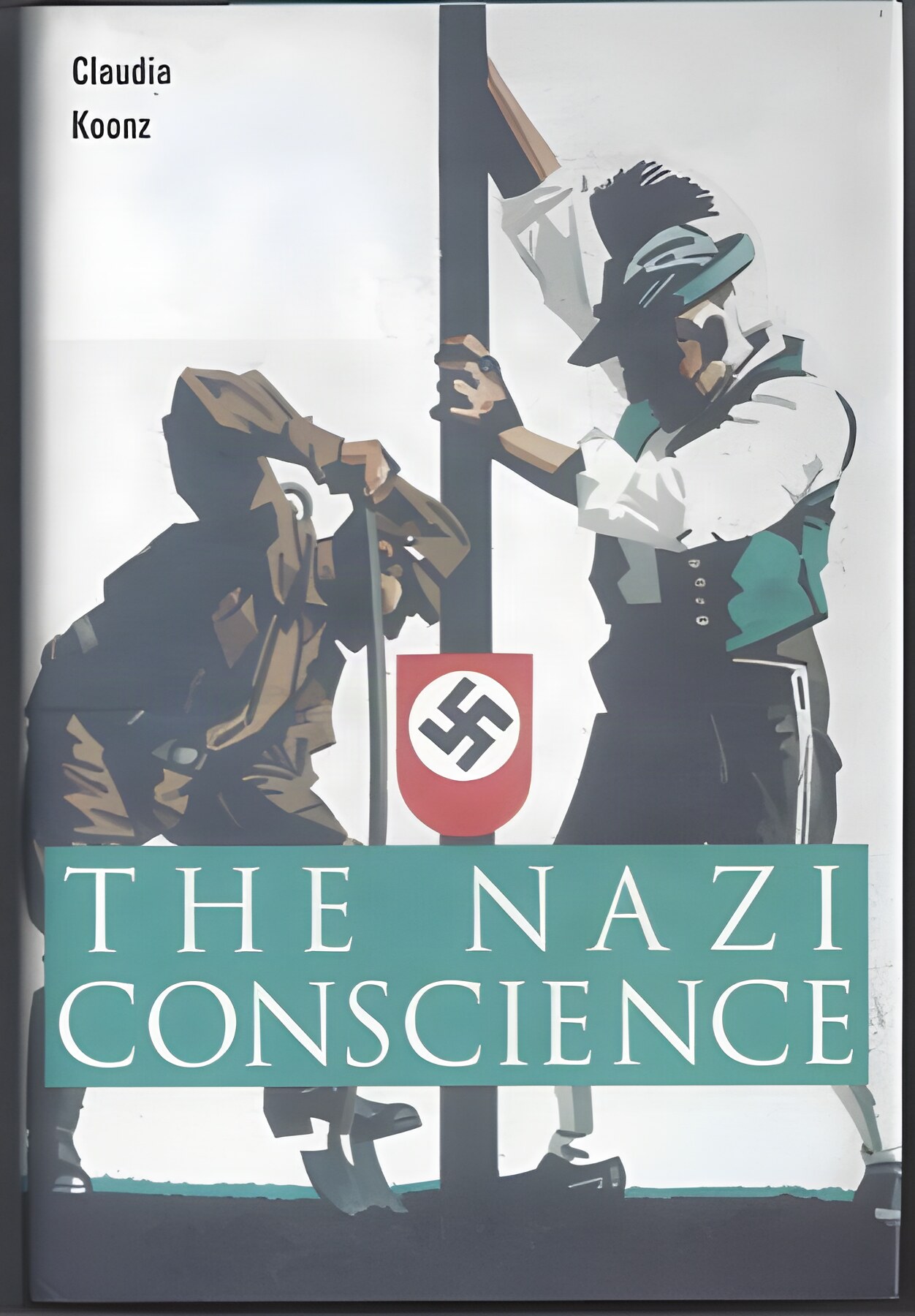
Hardcover. Cambridge MA, Harvard University Press, 1st, 2003, Book: Very Good, Dust Jacket: Very Good, Hardcover in a bright dust jacket, 362 pages. Hitler, Koonz says, understood the German people's need for a sense of coherence in the wake of what many saw as the degeneracy of the Weimar Republic--and 'he promised to rescue old-fashioned values of honor and dignity' by offering a secular faith to replace lost religious certainties. Koonz explores the promotion of these beliefs in German culture and law, and how they led to the catastrophe of the Holocaust, adding much to our understanding of how a civilized society could reach such infamous levels of violence. Clean copy.
Hardcover. NY, Verso, 1st, 2009, Hardcover in a bright, unclipped dust jacket, 561 pages. The New Old World looks at the history of the European Union, the core continental countries within it, and the issue of its further expansion into Asia. It opens with a consideration of the origins and outcomes of European integration since the Second World War, and how today's EU has been theorized across a range of contemporary disciplines. It then moves to more detailed accounts of political and cultural developments in the three principal states of the original Common Market-France, Germany and Italy. A third section explores the interrelated histories of Cyprus and Turkey that pose a leading geopolitical challenge to the Community. The book ends by tracing ideas of European unity from the Enlightenment to the present, and their bearing on the future of the Union. The New Old World offers a critical portrait of a continent now increasingly hailed as a moral and political example to the world at large. Clean copy.
Hardcover. Boston, Little, Brown and Company, 1st US, 1954, Book: Very Good, Dust Jacket: None, Hardcover, 242 pages. Gray cloth cover with minor bumping to corners and edges. Residue from small sticker on front flyleaf. Inside is bright and clean. A nice copy. A series of short stories based around the Nazi regime during it's tenure in Germany and Europe.
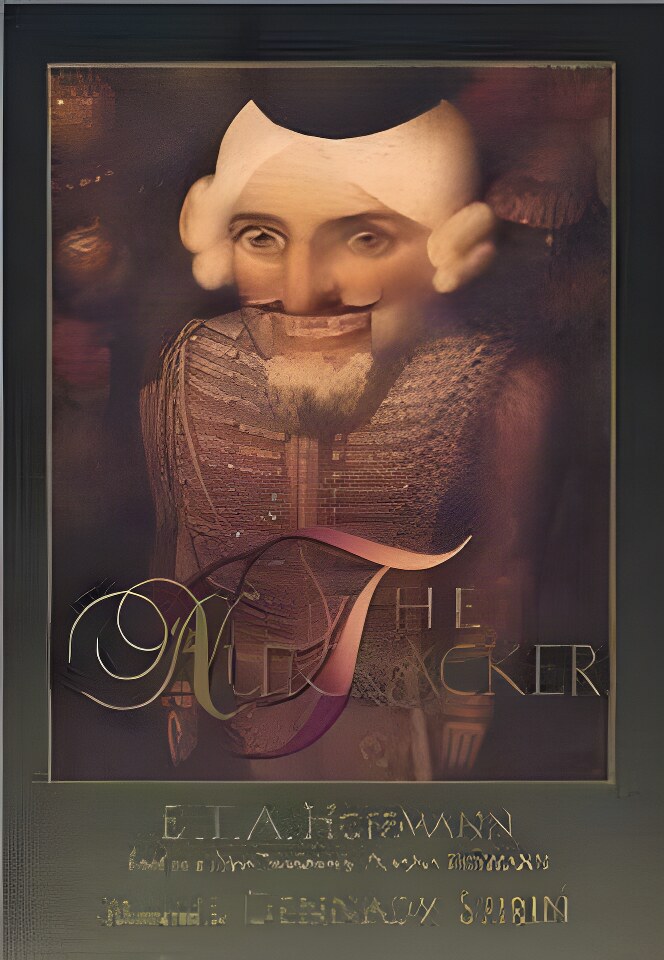
Hardcover. NY, Stewart, Tabori & Chang, 1st, 1996, Book: Very Good, Dust Jacket: Very Good, Hardcover in a bright dust jacket, 99 pages, illustrated throughout in color by Gennady Spirin. Pages without illustrations are decorated with elegant and delicate borders. Faux marbled endpapers. Translator Brodmann has been celebrated in her native Germany for her work with juvenile literature. Stated first printing. Clean, bright copy.
Hardcover. NY, Norton, 1st US, 1985, Book: Very Good, Dust Jacket: Very Good, Hardcover in a bright dust jacket, 192 pages. The photos are breathtaking not necessarily for their quality - many are washed out and most of the subject matter is routine day to day military stuff - but for their rarity. While the Germans seem to have been at least as far advanced in the use of color photography as the Americans, there is still a paucity of color photography in the public record. That is being addressed by the various nations who took large amounts of color film in an official capacity, including the US, UK, Germany and Canada. The book's captions are adequate to the task, and there are good historical sections, as well as an introduction by Max Hastings as well as commentary by an actual German war correspondent. The strength of the book is in its ability to bring the participants of the subject campaign - the German invasion of Russia up to and including Stalingrad - to life. The use of a large format allows one to note small details of the photos, and relate to the subject matter on a personal level. Despite the lack of "action" shots, there is much to see in facial expressions, uniform details, and especially geography as the Russian steppe is shown in summer and winter, as well as the famous Russian mud (Rasputitsa) about which so much has been written.
Hardcover. London, Routledge & Kegan Paul, reprint, 1965, Book: Very Good, Dust Jacket: Good, Hardcover in a lightly worn dust jacket, 368 pages. Hans Vaihinger (1852-1933) was an important and fascinating figure in German philosophy in the early twentieth century, founding the well-known journal Kantstudien. Yet he was overshadowed by the burgeoning movements of phenomenology and analytical philosophy, as well as hostility towards his work because of his defense of Jewish scholars in a Germany controlled by Nazism. However, it is widely acknowledged today that The Philosophy of 'As If' is a philosophical masterwork. Vaihinger argues that in face of an overwhelmingly complex world, we produce a simpler set of ideas, or idealizations, that help us negotiate it. When cast as fictions, such ideas provide an easier and more useful way to think about certain subjects, from mathematics and physics to law and morality, than would the truth in all its complexity. Even in science, he wrote, we must proceed "as if" a material world exists independently of perceiving subjects; in behavior, we must act "as if" ethical certainty were possible; in religion, we must believe "as if" there were a God. He also explores the role of fictions in the history of philosophy, going back to the ancient Greeks and the work of Leibniz, Adam Smith and Bentham. Name on front fly leaf, otherwise clean.
Hardcover. NY, Metropolitan Books, 1st, 2002, Book: Very Good, Dust Jacket: Very Good, Hardcover in a bright, unclipped dust jacket, 446 pages, b&w illustrations. In this important work of historical restoration, Amos Elon shows how a persecuted clan of cattle dealers and wandering peddlers was transformed into a stunningly successful community of writers, philosophers, scientists, tycoons, and activists. In engaging, brilliantly etched portraits of Moses Mendelssohn, Heinrich Heine, Karl Marx, Hannah Arendt, and many others, Elon traces how a small minority came to be perceived as a deadly threat to German national integrity. Clean copy.
Hardcover. NY, Metropolitan Books, 1st, 2002, Book: Very Good, Dust Jacket: Very Good, Hardcover in a bright, unclipped dust jacket, 446 pages. As it's usually told, the story of the German Jews starts at the end, with their tragic demise in Hitler's Third Reich. Now, in this important work of historical restoration, Amos Elon takes us back to the beginning, chronicling a period of achievement and integration that at its peak produced a golden age second only to the Renaissance. Elon traces how this minority - never more than one percent of the population - came to be perceived as a deadly threat to national integrity, and he movingly demonstrates that this devastating outcome was uncertain almost until the end. A collective biography, full of depth and compassion,
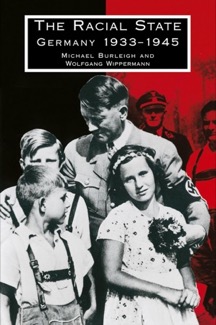
Softcover. Cambridge University Press, reprint, 1992, Book: Very Good, Dust Jacket: None, Softcover, 386 pages, b&w illustrations. Between 1933 and 1945 the Nazi regime in Germany tried to restructure a "class" society along racial lines. This book deals with the ideas and institutions that underpinned this mission, and shows how Nazi policy affected various groups of people, both victims and beneficiaries. The book begins with a serious discussion of the origins of Nazi racial ideology, and then demonstrates the way in which this was translated into official policy. It deals with the systematic persecution not only of the Jews, but also with the fate of lesser-known groups such as Sinti and Roma, the mentally handicapped, the "asocial," and homosexuals. Clean copy.
Hardcover. NY, Alliance Book Corporation, 14th pr., 1939, Book: Very Good, Dust Jacket: None, Hardcover, light putty cloth with red lettering on spine, 300 pages. Anti-Nazi book written by ex-Nazi. Translated from German by E.W. Dickes. Front fly leaf with top inch cut out, other wise clean, tight copy.


 "The Flow: Louis Vuitton, Spring-Summer 2015by: Teller, Juergen (Photographer)")
 "The Flow: Louis Vuitton, Spring-Summer 2015by: Teller, Juergen (Photographer)")

 "The German Enlightenment and the Rise of Historicism by: Peter H. Reill")
 "The Gift: A Portuguese Christmas Taleby: Balet Jan")

 "The Hitler File: A Social History of Germany and the Nazis, 1918-45by: Frederic V. Grunfeld")
 "The Hitler of History by: John Lukacs")
 "The Immigrant Threat: The Integration of Old and New Migrants in Western Europe since 1850 by: Leo Lucassen")
 "The Invasion of France and Germany, 1944-1945: History of United States Naval Operations in World War II, Volume 11 by: Morison, Samuel Eliot")

 "The Loft Generation: From the de Koonings to Twombly: Portraits and Sketches 1942 2011 by: Schloss, Edith")
 "The Lost Border: The Landscape of the Iron Curtainby: Brian Geoffrey Rose")

 "The Nightmareby: Forester, C.S.")
 "The Onslaught: The German Drive to Stalingrad : Documented in 150 Unpublished Colour Photographs by: Heinrich Von Einsiedel")
 "The Philosophy of 'As If' : A System of the Theoretical, Practical and Religious Fiction of Mankind. by: Hans Vaihinger")