Hardcover. Berlin GR, Nicolai, 1st, 1998, Book: Very Good, Dust Jacket: Very Good, Hardcover, 125 pages, b&w duotone photos throughout. Documents life in post-war Berlin. Essays by Edzard Reuter and Janos Frecot. GERMAN TEXT. Clean in a bright dust jacket.
Hardcover. US, Schirmer/Mosel, 1st, 2010-02-15, Book: Very Good, Dust Jacket: Very Good, Like new in publishers shrink-wrap. Text in German. English language booklet included. Text by Kurt Forster. Color photos of Berlin's unseen corners.
Hardcover. Koln GR, Walther Konig, 1st, 2007, Book: Very Good, Dust Jacket: None, Text in German and English. 96 pages, illustrated in color and b&w. Light shelf-wear to illustrated boards. No dust jacket. Clean, tight copy.
Hardcover. Cambridge MA, Harvard University Press, 1st US, 1996, Book: Very Good, Dust Jacket: Very Good, Hardcover in a bright dust jacket with minor edgewear, 468 pages. Biologists under Hitler combines exhaustive research with capsule biographies of key scientists to overturn certain assumptions about science under the Nazi regime. Biological research, for instance, was neither neglected nor underfunded during World War II; funding by the German Research Association (DFG) in fact increased tenfold between 1933 and 1938, and genetic research in particular flourished. Deichmann shows that the forced emigration of Jews had a less significant impact in biology than in other fields. Furthermore, she reveals that the widely observed decline in German biology after 1945 was not caused primarily by the Third Reich's science policy or by the expulsion of biologists but was due to the international isolation of German scientists as part of the legacy of National Socialism. Her book also provides overwhelming evidence of German scientists' conscious misrepresentation after the war of their wartime activities. In this regard, Deichmann's capsule biography of Konrad Lorenz is particularly telling. Clean copy.
Hardcover. London, Frederick Muller Limited, 1st, 1963, Book: Very Good, Dust Jacket: Good, 256 pages. Hardcover. B/w illustrations throughout. Gilt title on spine. Dust jacket unclipped, shows a little age wear, but in good condition. Covers bound in black, excellent. Pages unmarked and clean. Top edge dyed. In very good condition.
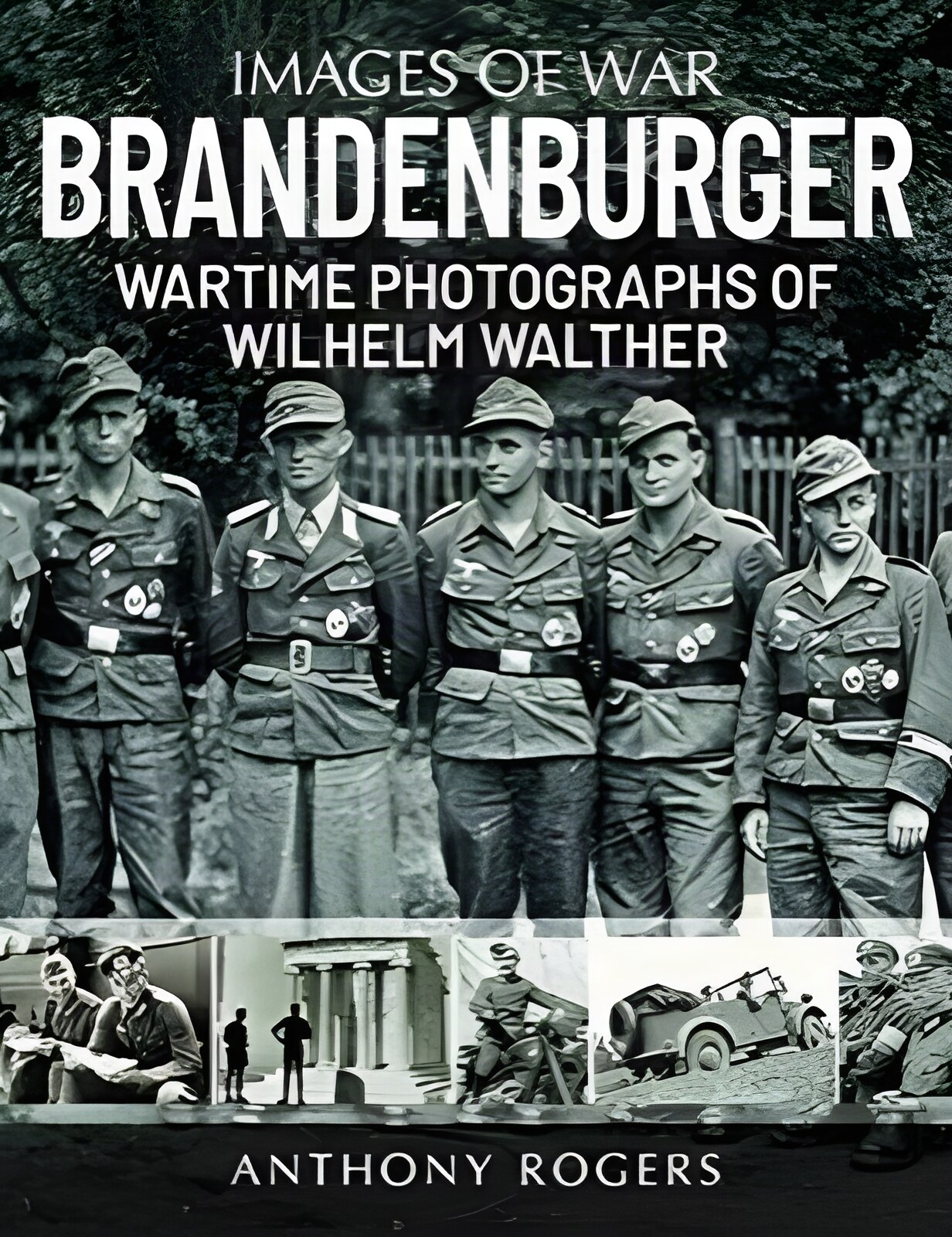
Softcover. London, Greenhill Books, 1st, 2022, Book: Very Good, Dust Jacket: None, Softcover, 159 pages. More than 200 images, together with the original German captions and English translations, portray the life and times of a career officer, from the German annexation of the Sudetenland in 1938, to operations in Russia, Greece and the Balkans during 1941-44. In comparison with other units of the Second World War, relatively little has been published about Germany's commando forces. This unique collection of rare images was sourced from the photograph album of Wilhelm Walther.
Hardcover. Berlin, Brasch & Rothenstein, 1st, 1892, Book: Very Good, Dust Jacket: None, 206 pages. Hardcover. Includes 2 of 3 fold-out maps. Note: Rear fold-out map is missing. Previous owners name in pencil at top of title page. Light wear. Clean, tight copy.
Softcover. US, Block Museum/Northwestern Univ., 1st, 1988-01-01, Book: Very Good, Dust Jacket: None, Softcover, 321 pages, illustrated throughout in color and b&w. Contains works by Erich Heckel, Ernst Ludwig Kirchner, Otto Mueller, Emil Nolde, Max Pechstein, and Karl Schmidt-Rottluff. Light edgewear to wrappers, faint foxing to top edge, else a clean, tight copy.
Hardcover. New Haven CT, Yale University Press, 1st, 2001, Book: Very Good, Dust Jacket: Very Good, Hardcover, 487 pages. First full-length biography of Walter in English. Black boards, gray cloth spine with silver titles, illustrated dust jacket, 32 pages of b&w photographic plates on glossy paper. Slight rubbing to dust jacket, clean boards, pages crisp and unmarked; a very clean, tight copy.
Hardcover. New York, Thames and Hudson, 1st, 2000, Book: Very Good, Dust Jacket: Very Good, Hardcover, 299 pages, 193 illustrations, 150 in color. Clean copy in a bright dust jacket with a mild crease to the dust jacket. Werner Hofmann vividly demonstrates Caspar David Friedrich's extraordinary ability to reproduce the natural world in faithful detail, while at the same time imbuing it with spiritual and religious significance. Caught between the near and the distant, the finite and the infinite, his human figures find a space in which to engage in the thoughtful contemplation of nature and the divine. Carefully placing the artist in a wider context, Hofmann examines contemporary judgments and influences on Friedrich's work. The beautiful illustrations include many of Friedrich's drawings and watercolors as well as over ninety of his works in oils.
Hardcover. Germany, Hatje Cantz, 1st, 2008, Book: Very Good, Dust Jacket: Very Good, 288 pages. Hardcover with matching dust jacket. Still in publisher's shrink wrap, however piece of shrink-wrap is torn exposing top front where light markings appear on the white dust jacket, otherwise clean, unmarked copy in excellent condition.
Hardcover. Berkeey, University of California, 1st, 1997, Book: Very Good, Dust Jacket: Very Good, Hardcover, 305 pages, nearly 150 b&w photos accompany the text. A survey of photography in East Germany; from 1945 to 1989. In a very good dust jacket with light fade to spine. "Behind the Iron Curtain, against all odds, photography flourished as an art in the German Democratic Republic. The many images in this volume amply demonstrate that fact while also providing an illustrated social history of people 'caught' in the conflicting dictates of ideology, artistic oppression, a troubled national past, and basic human desires."
Softcover. Baltimore, Johns Hopkins University Press, 1st, 1994, Book: Very Good, Dust Jacket: None, Softcover, 295 pages. The infamous Nuremberg Doctors' Trials of 1946-47 revealed horrifying crimes --ranging from grotesque medical experiments on humans to mass murder--committed by physicians and other health care workers in Nazi Germany. But far more common, argue the authors of Cleansing the Fatherland, were the doctors who profited professionally and financially from the killings but were never called to task--and, indeed, were actively shielded by colleagues in postwar German medical organizations. The authors examine the role of German physicians in such infamous operations as the "T 4" euthanasia program (code-named for the Berlin address of its headquarters at Number 4 Tiergartenstrasse). They also reveal details of countless lesser known killings--all ordered by doctors and all in the name of public health. Maladjusted adolescents, the handicapped, foreign laborers too illto work, even German civilians who suffered mental breakdowns after air raids were "selected for treatment." (One physician who persisted in speaking of "killings" was officially reprimanded for his "negative attitude.") The book also includes original documents--never before published in English--that give unique and chilling insight into the everyday workings of Nazi medicine. Clean copy.
Hardcover. University of Missouri, 1st, 2007, Book: Very Good, Dust Jacket: Very Good, Hardcover, 288 pages. A "shooter" for the Associated Press for thirty-three years, Burroughs was assigned to the Washington bureau, and his photos appeared frequently in newspapers around the world, as well as on the covers of Life and other magazines. Close-ups of History is both an eyewitness account of history and a stirring professional memoir--a book that brings special moments into the viewfinder as Burroughs turns his trained photographer's eye to reflect his highly cultivated sense of news. These dramatic photographs testify to an incredible career launched at the end of World War II, and Burroughs's work in postwar Germany is especially poignant. He documented the remains of Hitler's office, ruined cities and displaced persons, and the Nuremberg trials. He also captured the beginning of the Cold War as the Soviets tried to take over Berlin and the German people struggled to hold the city for the West.
Softcover. Hirmer Verlag Gmbh, 1st, 2011, Book: Very Good, Dust Jacket: None, Softcover, 174 pages, illustrated throughout in color and b&w. Text in German. Clean, unmarked copy with only minor wear to wrappers.
Hardcover. Leipzig, E.A. Seemann, 1st, 1976, Book: Very Good, Dust Jacket: Very Good, Hardcover in a bright dust jacket. 132 pages of German text followed by 264 b&w plates. A catalog of nature studies by the artist, mostly botanical. Cclean copy.
Hardcover. New York, Algonquin Books, 1st, 1990, Book: Very Good, Dust Jacket: Very Good, 183 pages. Hardcover with dust jacket. A very clean, unmarked copy with only minor wear to dust jacket edges. A tight copy.
Hardcover. New Haven CT, Yale University Press, 1st, 1993, Book: Very Good, Dust Jacket: Very Good, Hardcover, in a bright dust jacket, 278 pages. An important pioneer of the artform that became known as photomontage. Hoch (November 1, 1889 to May 31, 1978) was a German Dada artist. She is best known for her work of the Weimar period, when she was one of the originators of photomontage. Hoch was the lone woman among the Berlin Dada group, however she was dismayed to the Dadaists lip service to women's emancipation and her work echos her feelings that there were difference between women in media and reality. Marriage did not escape her criticism. She depicted brides as mannequins and children, reflecting the idea that women are not seen as complete people and have little control over their lives. A long-time German resident, her work fell out of favor after WWII although she continued to produce her photomontages and exhibit them internationally until her death in 1978.
Hardcover. Heidelberg, Universitatsverlag Winter , 1st, 2004, Book: Very Good, Dust Jacket: None, Hardcover, pictorial boards, 505 pages, GERMAN TEXT. Correspondence from the author and family laid in. Clean copy.
Hardcover. Munchen GR%, C. Bertelsmann, 1st, 1995, Book: Very Good, Dust Jacket: Very Good, Hardcover, 255 pages, profusely illustrated with b&w photographs. GERMAN TEXT.
Hardcover. Berlin, Argon, 1st, 1993, Book: Very Good, Dust Jacket: Very Good, 151 pages. Hardcover with dust jacket. Black and white photos throughout. GERMAN TEXT. Clean, tight copy.
Hardcover. Berlin GR, Nicolai Publishing, 1st, 1997, Book: Very Good, Dust Jacket: Very Good, Hardcover in a bright dust jacket. GERMAN TEXT. The history of Berlin's grand hotel. The Adlon opened on October 23, 1907, with the Kaiser, his wife, and many other notables in attendance. It quickly became the social center of Berlin. As the rooms in the Stadtschloss were cold and drafty, the Kaiser paid an annual retainer to keep suites available for his guests.[2] Likewise the Foreign Office used the Adlon for accommodation during state visits, with guests including Tsar Nicholas II of Russia and Maharaja Bhupinder Singh of Patiala. Notable guests of the early years included industrialists such as Thomas Edison, Henry Ford, and John D. Rockefeller, as well as politicians like Walter Rathenau, Gustav Stresemann and the French prime minister Aristide Briand. Many wealthy Berliners lived for extended periods of time in the hotel, while its ballrooms hosted official government functions and society events. Many photos. Clean copy.
Hardcover. Amsterdam, Schetern & Giltay, 1st, 1915, Book: Very Good, Dust Jacket: None, Hardcover, color illustrated boards, 190 pages. A collection of b&w (a few 2-color) political cartoons preceding WW I. Dutch text. Scarce.

 "BERLIN: PHOTOGRAPHIEN 1946-1949 (GERMAN EDITION)by: Ries, Henry")
 "Berlin: The City of Eternal Becomingby: Chiaramonte, Giovanni")
 "Bettina Pousttchi: Departureby: Pousttchi, Bettina (Photographer)")

 "Bombing of Germany, Theby: Rumpf, Hans, Edward Fitzgerald (Translator)")
 "Brasch & Rothenstein's Guide of Berlin and Environs - An Index and Guide to Institutions, Places of Amusements, the Principal Public and Business Houses in and about the German Capital - New, Enlarged and Revised Edition")
 "Brucke German Expressionist Printsby: Heller, Reinhold")
 "Bruno Walter: A World Elsewhereby: Ryding, Erik and Rebecca Pechefsky")
 "Caspar David Friedrichby: Hofmann, Werner")
 "Catherine Opie: American Photographerby: Guggenheim, Solomon R. (Editor)")
 "Caught - The Art of Photography in the German Democratic Republicby: Kuehn, Karl Gernot")


 "Close-Ups of History: Three Decades through the Lens of an AP Photographerby: Henry Burroughs and Margaret Wohlgemuth Burroughs")

 "Corpus der Goethezeichnungen. Band VB. Nr. 1-264. Die naturwissenschaftlichen Zeichnungen mit Ausnahme der Farbenlehre. by: Goethe -- Femmel, Gerhard; Kuhn, Dorothea;")
 "Countdown! 35 Daylight Missions Against Nazi Germanyby: Koger, Fred")
 "Cut with the Kitchen Knife : The Weimar Photomontages of Hannah Hochby: Maud Lavin/Hannah Hoch")
 "Décadence in Deutschland: Studien zu einem versunkenen Diskurs der 90er Jahre des 19. Jahrhundertsby: Dieter Kafitz")
 "Das Ende 1945 Der verdammte Kriegby: Guido Knopp")
 "Das Grosse Berlin: Photographien 1899-1935by: Missmann, Max")

 "De Oorlog In Prent / Karikaturen Uit De Versehillende Landenby: Feith, Jan")