Softcover. Los Angeles, Hennessey & Ingalls, 1st US, 2000, Book: Very Good, Dust Jacket: None, Softcover, 130 pages, b&w and color photographs. A pictorial study of dead factories, rail-yards, harbors, and aircraft boneyards, originally published in Germany in 1981. Clean copy.
Hardcover. Cambridge, Mass., Harvard University Press, 1st thus, 1951, Book: Very Good, Dust Jacket: None, 4 volume set of Geldner's German translation from the original Sanskrit, GERMAN TEXT, Volumes 33-36 of the Harvard Oriental Series edited by Charles Rockwell Lanman. Volume 4 has publication date of 1957. Previous owner's signature on front fly leaf, otherwise, unmarked, bright, and crisp copies. The Rigveda or Rig Veda is an ancient Indian collection of Vedic Sanskrit hymns (suktas). It is one of the four sacred canonical Hindu texts (sruti) known as the Vedas. DOMESTIC SHIPPING ONLY.
Hardcover. Hamburg, Cigaretten Bilderdienst, 1st, 1933, Book: Good, Dust Jacket: None, Hardcover, tan cloth with embossed gilt design on front cover. 150 pages with 225 mounted black and white and color images. German text. There is a frontispiece portrait of Hitler and a few other similar panels. A monumental propaganda work on Herr Hitler, Der Fuhrer, 9" x 12", The quality of the photographs is excellent, but one giant picture at the end, which opens out to 6 solid pages all joined together showing "Standartenweihe im Luitpoldhain1933" A vast sea of Hitler's armed forces in a giant arena. All photographs were taken and carefully selected by Heinrich Hoffmann, Adolf Hitler's official photographer. Hoffmann's photography was used. A chilling piece of German history and a fascinating example of the NSDAP's propaganda machine. Volume shows some shelf wear, name on half-title page, good plus overall.
Hardcover. Germany, Taschen, 1st, 2013, Book: Very Good, Dust Jacket: Very Good, 3-vol set in slip case. Hardcovers. Like new in publisher's shrink-wrap. Editor Dian Hanson traces the fascinating development of the genre from 1900 to 1969 in three compact, informative volumes. In Volume 1 you'll learn about the first magazines that appeared around 1900 in France, Germany, and the U.S., and follow the development of the genre through the First and Second World Wars. Covered are men's magazines masquerading as movie magazines, humor magazines, art magazines, nudist magazines, and "spicy" fiction. Volume 2 documents the proliferation of pin-up magazines following World War II, most notably a little item called Playboy that debuted in December 1953 and spawned dozens of imitators. This volume also charts the emergence of English men's magazines, fetish magazines, and the top five covergirls of the 1950s. Volume 3 begins with an explosion of new American pin-up magazines following the loosening of U.S. obscenity laws, and continues with French titles in decline, England going pervy; nudists going hippy, and Germany going pervy, hippy and political.
Hardcover. Oxford UK, Basil Blackwell, 1st thus, 1990, Book: Very Good, Dust Jacket: Very Good, Hardcover, 283 pages. "These intimately revealing diaries, now translated into English for the first time, date mainly from the 1880s and 1890s, when Wedekind was leading a bohemian life in Berlin, Munich and Paris, savoring the artistic and erotic delights of a 'decadent' environment." In a bright dust jacket.
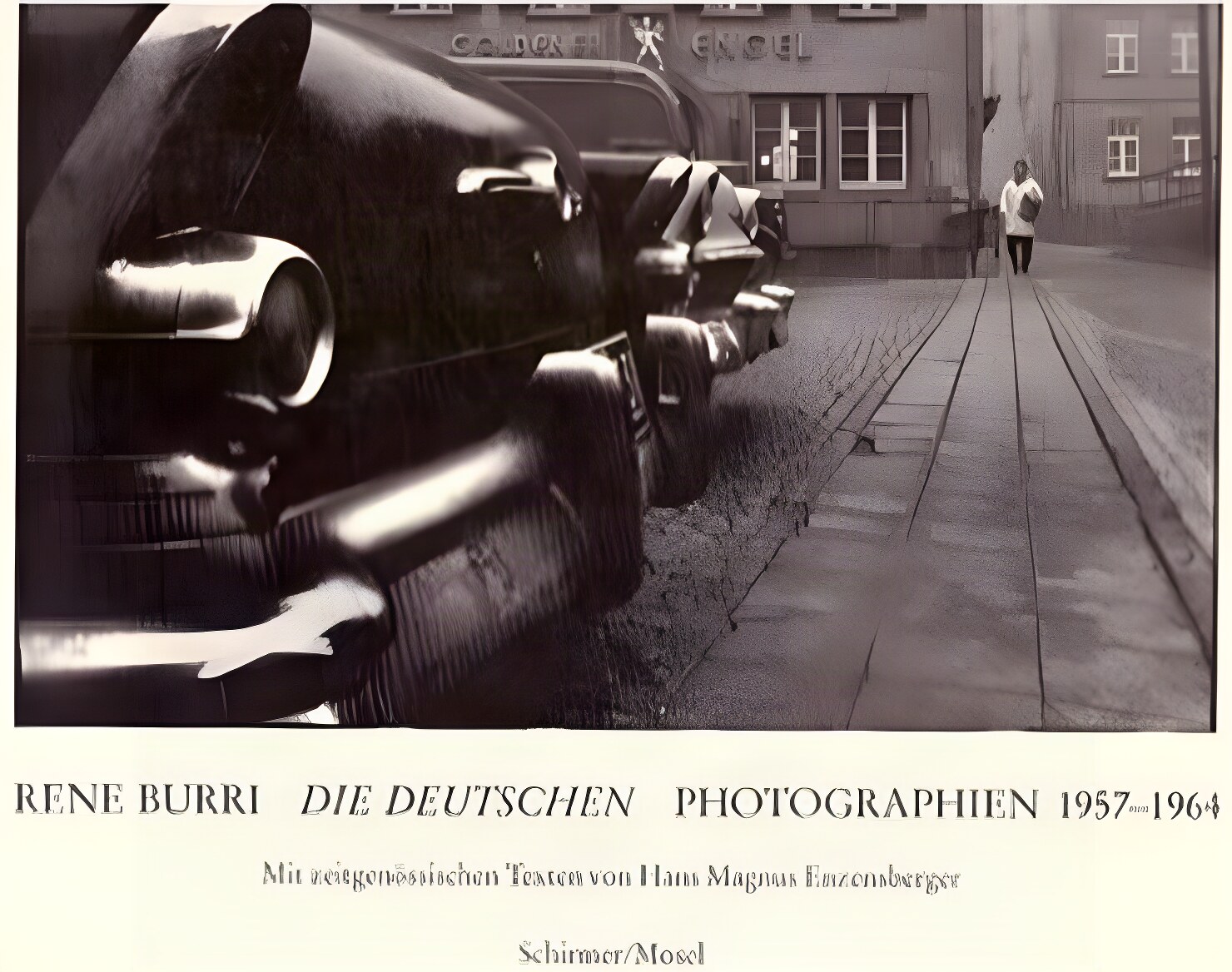
Hardcover. Munich, Schirmer/Mosel, 1st, 1986, Book: Very Good, Dust Jacket: Very Good, Hardcover in a bright dust jacket. 205 pages. Hardback with jacket. 88 black and white photographs. Texts by Hans Magnus Enzensberger. Clean, bright copy. DOMESTIC SHIPPING ONLY.
Hardcover. Cigaretten-Bilderdienst, Herausgegeben Vom, 1st, 1936, Book: Good, Dust Jacket: None, 2 volumes. Text in German. Approx. 300 pages. B&W tipped in photographs. Dark blue cloth with gilt pictorial bell to cover. Spine cocked. Edges soiled. Inscription in German on front flyleaf of second volume. Overall, a nice set.
Hardcover. Braunschweig GR, Vieweg und Sohn, 1st, 1900-01, Book: Good, Dust Jacket: None, Two volumes, 506 and 527 pages. Ex-library bound in 3/4 leather and marbled boards. The usual stamping, end paper residue, sticker to bottom of spines. Previous owner's signature. Light wear to covers, internally crisp and clean. GERMAN TEXT. DUE TO WEIGHT, DOMESTIC SHIPPING ONLY.
Softcover. Nordlingen, Greno, 1st, 1987, Book: Very Good, Dust Jacket: None, Softcover, 82 pages, b&w portraits. GERMAN TEXT. Contemporary (1980s) photographic portraits of people from the St.Pauli district of Hamburg. Clean copy.
Softcover. Nordlingen, Greno, 1st, 1987, Book: Very Good, Dust Jacket: None, Softcover, 82 pages, b&w portraits. GERMAN TEXT. Contemporary (1980s) photographic portraits of people from the St.Pauli district of Hamburg.
Hardcover. Leipzig, K.F. Koehler, 1st, 1931, Book: Very Good, Dust Jacket: None, Hardcover, blue cloth with gilt title block on spine and a gilt design of a naval battlship on the front cover. 166 pages. b&w plates, GERMAN TEXT. Inscription in German on front fly leaf dated 1934. Copyright states 1920. Clean copy.
Hardcover. Leiden/NY, E.J. Brill, 1st, 1996, Book: Very Good, Dust Jacket: Very Good, Hardcover in a bright dust jacket, 376 pages. This volume consists of 21 papers delivered at an international Spinoza conference on Disguised and Overt Spinozism around 1700, held at the Erasmus University (Rotterdam) in October 1994. In these papers, scholars from Italy, France, Germany, Great Britain, the Netherlands and the United States examine the impact of Spinoza's philosophy on the European Republic of Letters, one generation after the death, in 1677, of the greatest philosopher in the history of the Netherlands. Clean copy.
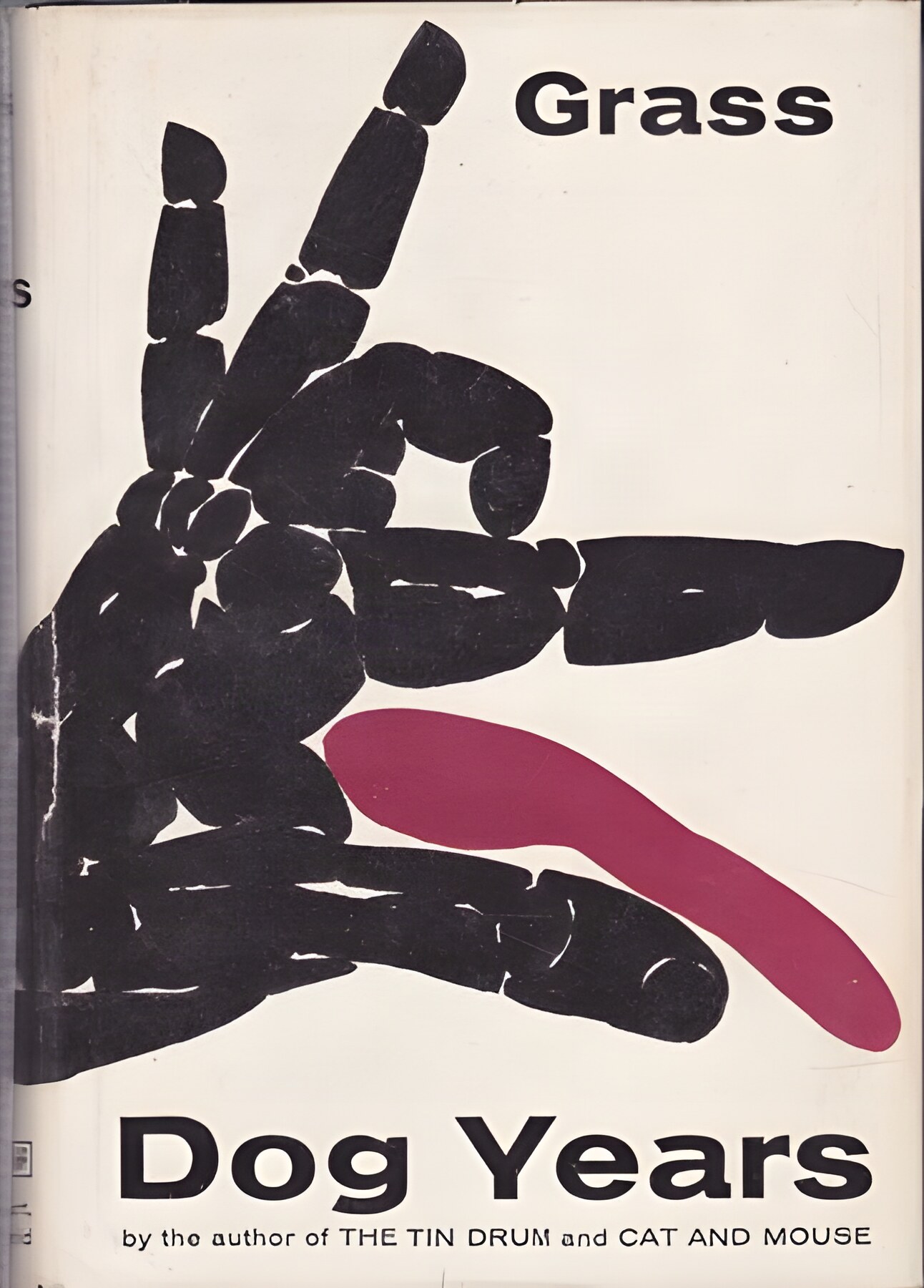
Hardcover. NY, Harcourt Brace and World, 1st US, 1965, Book: Very Good, Dust Jacket: Very Good, Hardcover in a bright, unclipped dust jacket with light wear. Translated by Ralph Manheim. Originally published in Germany as *Hundejahre*. This is the third and last volume of Grass's Danzig trilogy (the others are The Tin Drum and Cat and Mouse). It consists of three chronological parts from the 1920s to the 1950s. Grass's syntax often parodies Martin Heidegger's philosophical syntax in 'Being and Time' which one of the teenage protagonists mocks. Clean copy.
Hardcover. Taschen, 1st, 2008, Book: Very Good, Dust Jacket: Very Good, Hardcover, 580 pages. 1940-1949: Destruction and Reconstruction. This volume covers the 1940s, when fascism came to a climax and World War II led to the extensive destruction of Europe. But the second half of this decade was also a time of reconstruction, democratization, and the related search for new social values. Unlike in Nazi Germany, in fascist Italy Modernism was able to advance in architecture and design - as proved impressively by the buildings and designs by Carlo Mollino, Gian Luigi Banfi, Franco Albini, and Giuseppe Terragni that are documented herein. After the war, Organic Design emerged alongside the International style. This edition reflects upon the economic, social, and cultural problems of the time, but also shows how the force of the avant-garde continued to thrive in Italy, Switzerland, Scandinavia and the USA. Reports and features on modern industrial design and furniture, as well as domestic and business interiors stand side by side with articles about novel prefabricated houses. In publisher's shrink wrap. Due to size and weight, DOMESTIC SHIPPING ONLY.
Softcover. Princeton NJ, Princeton University Press, reprint, 1996, Book: Very Good, Dust Jacket: None, Softcover, 521 pages. The fourth volume in Frank's monumental five part biography of the great Russian writer. Covers the six most remarkably productive years in the novelist's entire career. It was in this short span of time that Dostoevsky produced three of his greatest novels--Crime and Punishment, The Idiot, and The Devils--and two of his best novellas, The Gambler and The Eternal Husband. All these masterpieces were written in the midst of harrowing practical and economic circumstances, as Dostoevsky moved from place to place, frequently giving way to his passion for roulette. Having remarried and fled from Russia to escape importuning creditors and grasping dependents, he could not return for fear of being thrown into debtor's prison. He and his young bride, who twice made him a father, lived obscurely and penuriously in Switzerland, Germany, and Italy, as he toiled away at his writing, their only source of income. Clean copy.
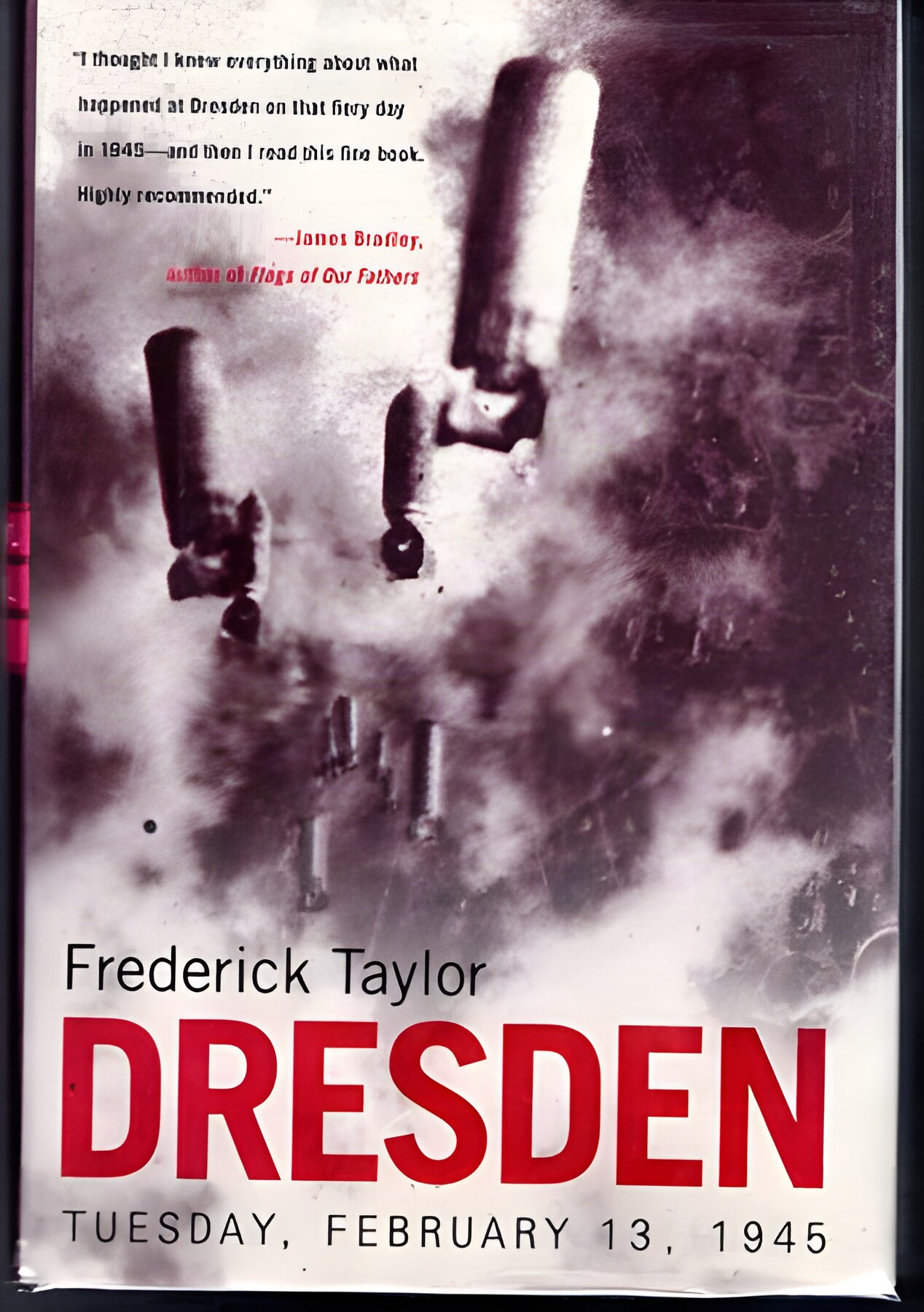
Hardcover. NY, HarperCollins, 1st, 2004, Book: Very Good, Dust Jacket: Very Good, Hardcover in a bright dust jacket, 518 pages with index. B&w illustrations. The allied bombing of Dresden created a massive fire that swept the city center, killing thousands of people and destroying its medieval heart. Debate began almost immediately: Was the destruction of this seemingly civilian city necessary militarily, or was it, some asked, equivalent to a war crime? Not just another in an endless parade of books on Dresden, Taylor's account may go a long way toward putting such questions to rest. It opens with the start, by British bombers, of the nighttime attack, and immediately turns to the past, meandering through several centuries of Dresden history, from its founding in the Middle Ages to the 20th century and the rise of the Nazis. Taylor, translator of The Goebbels Diaries, also covers the history of aerial bombardment and its international laws; gives glimpses of life under the Nazi regime; details the Allied bombing campaign against Germany; and, most excitingly, puts forth new information concerning Dresden's part in the German war effort, which turns out to be much greater than postwar information generally portrays. Clean copy.
Hardcover. NY, Metropolitan Books, 1st, 2010, Book: Very Good, Dust Jacket: Very Good, Hardcover in a bright, unclipped dust jacket, 542 pages with index. In 1894, Alfred Dreyfus, a Jewish officer in the French army, was wrongfully convicted of being a spy for Germany and imprisoned on Devil's Island. Over the following years, attempts to correct this injustice tore France apart, inflicting wounds on the society which have never fully healed. But how did a fairly obscure miscarriage of justice come to break up families in bitterness, set off anti-Semitic riots across the French empire, and nearly trigger a coup d'etat? Drawing upon thousands of previously unread and unconsidered sources, prizewinning historian Ruth Harris goes beyond the conventional narrative of truth loving democrats uniting against proto-fascists. Instead, she offers the first in-depth history of both sides in the Affair, showing how complex interlocking influences--tensions within the military, the clashing demands of justice and nationalism, and a tangled web of friendships and family connections--shaped both the coalition working to free Dreyfus and the formidable alliances seeking to protect the reputation of the army that had convicted him. Clean copy.
Hardcover. Princeton NJ, Princeton University Press, 1st, 1994, Book: Very Good, Dust Jacket: Very Good, Hardcover in a bright dust jacket, 268 pages. The question of what it takes "to be a man" comes under scrutiny in this sharp, often playful, cultural critique of the German duel--the deadliest type of one-on-one combat in fin-de-siecle Europe. At a time when dueling was generally restricted to swords or had been abolished altogether in other nations, the custom of fighting to the death with pistols flourished among Germany's upper-class males, who took perverse comfort in defying their country's weakly enforced laws. From initial provocation to final death agony, Kevin McAleer describes with ironic humor the complex protocol of the German duel, inviting his reader into the disturbing mindset of its practitioners and the society that valued this socially important but ultimately absurd pastime. Clean copy.
Hardcover. New York , Arts, Inc., 1st, 1961, Book: Very Good, Dust Jacket: Very Good, Hardcover, 164 pages, 128 illustrations, 57 in color, including many tipped-in. Bright dust jacket with price-clipped flap. Previous owner's signature on front fly leaf otherwise clean, very good.
Hardcover. Gottingen GR, Steidl, 1st, 2015, Book: Very Good, Dust Jacket: Very Good, Hardcover, 237 pages, b&w plates throughout. Hoppe traveled throughout Germany between 1925 and 1938, photographing movie stars, workers and peasants, the birth of the Autobahn, and the explosion of industrial building. This collection includes parts of his 1930 book "Deutsche Arbeit" and many photos never previously seen. Clean copy in a dust jacket.
Hardcover. Cambridge MA, Harvard University Press, 1st, 1969, Book: Very Good, Dust Jacket: Very Good, Hardcover in a bright dust jacket, 556 pages. Clean copy.
Softcover. Berkeley, University of California Press, reprint, 1978, Book: Very Good, Softcover, 640 pages. Max Weber's "Economy and Society" is the greatest sociological treatise written in this century. Published posthumously in Germany in the early 1920's, it has become a constitutive part of the modern sociological imagination. "Economy and Society" was the first strictly empirical comparison of social structures and normative orders in world-historical depth, containing the famous chapters on social action, religion, law, bureaucracy, charisma, the city, and the political community with its dimensions of class, status and power. "Economy and Society" is Weber's only major treatise for an educated general public. It was meant to be a broad introduction, but in its own way it is the most demanding textbook yet written by a sociologist. Clean copy.
Hardcover. NY, W. W. Norton, 1st, 1967, Book: Very Good, Dust Jacket: Very Good, Hardcover in a worn, chipped dust jacket, 119 pages, maps, index. As WWII ground to a close, whose forces would be the first to reach Berlin? General Dwight David Eisenhower, supreme commander of the British and American armies, chose to halt at the Elbe River and leave Berlin to the Red Army. Could he have beaten the Russians to Berlin? If so, why didn't he? If he had, would the Berlin question have arisen? Would Germany have been divided as it was? Name on front fly leaf, otherwise clean.



 "Deutschland erwacht Werden, Kampf und Sieg der NSDAPby: Bade, Wilfrid")
 "Dian Hanson's History of Pin-up Magazines Vol. 1-3by: Hanson, Dian (editor)")


 "Diary of an Erotic Lifeby: Frank Wedekind; Translator William E. Yuill")
 "Die Olympischien Spiele 1936. The Olympic Games 1936by: n/a")
 "Die Partiellen Differential Gleichungen der Mathematischen Physik: Nach Reimann's Vorlesungen (2 Volumes)by: Weber, Heinrich")

 "Die Wurde dieser Menschen : St. Pauli-Portraitsby: Meier, Jorg")
 "Die zwei weissen Volker! Kiel und Skagerrak. Deutsch-englische Erinnerungen eines deutschen Seeoffiziers(The two white peoples! Kiel and Skagerrak. German-English memories of a German naval officer)b")
 "Disguised and Overt Spinozism around 1700: Papers presented at the international colloquium held at Rotterdam 5-8 October 1994by: Bunge, Wiep van & Wim Klever (Ed.)")

 "Dostoevsky: The Miraculous Years, 1865-1871by: Joseph Frank")


 "Durer - The Artist and His Drawingsby: White, Christopher")
 "E. L. Kirchnerby: Grohmann, Will")
 "E.O. Hoppe: The German Work: 1925-1938by: Phillip, Prodger")