Hardcover. Yardley PA, Westholme Publishing, BC Ed., 2011, Book: Very Good, Dust Jacket: Very Good, Hardcover in a bright dust jacket, 337 pages. The opening years of the French and Indian War were disastrous for the British. In 1755 General Braddock's troops were routed at the Battle of Monongahela and by the middle of 1756 Fort Oswego on Lake Ontario had fallen. Hindered by quarrelsome provincial councils, incompetent generals, and the redcoats' inability to adapt to wilderness warfare, Britain was losing the war. In 1757 the 35th Regiment of Foot stepped into the breach. A poorly trained assortment of conscripts, old soldiers, and convicted criminals led by Lieutenant Colonel George Monro, the regiment was destined to take center stage in the most controversial event of the war. Fort William Henry on the southern shore of New York's Lake George was a key fortification supporting British interests along the frontier with French America. Clean copy.
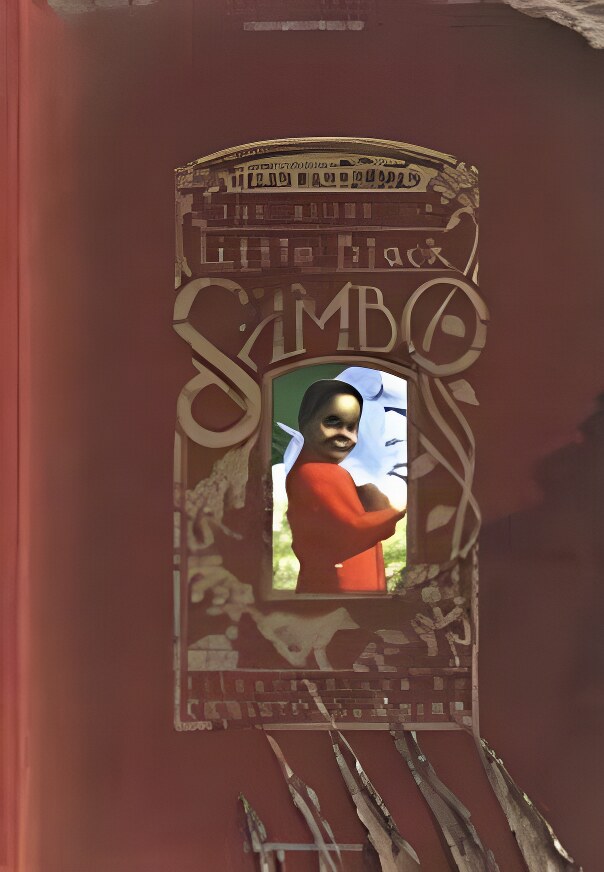
Hardcover. San Francisco, Chronicle Books, 1st thus, 2003, Book: Very Good, Hardcover, illustrated in color by Christopher Bing. A remarkable celebration from the Caldecott Honor-winning artist! A clever young boy outwits a band of voracious tigers and returns home in triumph to a splendid feast of a yard-high stack of pancakes. The story, penned by Helen Brodie Bannerman for her two daughters in 1889, has captured the imagination of readers around the world and across many generations. But the pictures which accompanied her text were crudely stereotypical and hurtful to many. Caldecott Honor-winning artist Christopher Bing has spent almost fifteen years rediscovering the joy and energy of the original story. He respects that Bannerman was writing in an Indian setting and with Indian animals-after all, there are no tigers in Africa-and faithfully adheres to the original text. However, recognizing that the image of Sambo has been used as a symbol of repression of Africans and African-Americans, Christopher Bing celebrates Sambo as proudly African, a child of beauty and joy, wit and resourcefulness.
Hardcover. Boston, Atlantic-Little, Brown Company, 5th pr., 1960, Book: Very Good, Dust Jacket: Very Good, Hardcover in a bright, price-clipped dust jacket. SIGNED BY MORISON on the front fly leaf. 81 pages, b&w illustrations. Chapters include "The Indians," "The European Discovery," "Mount Desert as a Landmark," "The New England Settlement Begins," "The People of Mount Desert," "The Rusticators," "Yachting," etc. Clean copy.
Hardcover. Indianapolis, Bobbs-Merrill, 1st, 1972, Book: Very Good, Dust Jacket: Very Good, Hardcover in a bright, unclipped dust jacket. All about the motivation and planning for the Wars in Laos (1959-62), Vietnam (from 1954) and Cambodia. Peter Dale Scott examines the many ways in which war policy has been driven by "accidents" and other events in the field, in some cases despite moves toward peace that were directed by presidents. Name on front fly leaf, light rubbing to dj, otherwise clean.
Hardcover. NY, Harper and Row, BC Ed., 1988, Book: Very Good, Dust Jacket: Very Good, Hardcover in a bright dust jacket with light edgewear. The dramatic true story of one of the great adventures of our nation's earliest years - the Lewis and Clark expedition 1803-6 to explore the American continent to the Pacific and return. This book includes in-depth profiles of the expedition's members and recounts the varying reactions of the Indians, from helpful to hostile and even violent. It provides compelling accounts of each leg of the journey. An engrossing reexamination of the expedition written by a master of narrative history. 444 pages. Clean copy.
Softcover. Indianapolis, Hackett Publishing, reprint, 1989, Book: Very Good, Dust Jacket: None, Softcover, 358 pages. This volume includes Whewell's seminal studies of the logic of induction (with his critique of Mill's theory), arguments for his realist view that science discovers necessary truths about nature, and exercises in the epistemology and ontology of science. The book sets forth a coherent statement of a historically important philosophy of science whose influence has never been greater: every one of Whewell's fundamental ideas about the philosophy of science is presented here. Clean, bright copy.
Hardcover. Glendale CA, Arthur H. Clark Co., 1st, 1951, Book: Very Good, Dust Jacket: None, Hardcover, dark blue cloth with gilt lettering on the spine, 340 pages. A biography of Thomas Pownall (1757 - 1760) who was governor of the Massachusetts Bay colony during the French and Indian War and later a member of Parliament (1767 - 1780). Pownall had sympathies for the colonial grievances and institutions. This biography is based on a study of widely scattered documentary materials and provides insight into a man of complex and contradictory ideas and actions during the pre-Revolutionary period. Includes bibliography and index. Stamping to endpapers, from an academic library.
Hardcover. NY, Oxford University Press, 1st, 2008, Book: Very Good, Dust Jacket: Very Good, Hardcover in a bright dust jacket, 323 pages. Although Buddhism is often depicted as a religion of meditators and philosophers, some of the earliest writings extant in India offer a very different portrait of the Buddhist practitioner. In Indian Buddhist narratives from the early centuries of the Common Era, most lay religious practice consists not of reading, praying, or meditating, but of visually engaging with certain kinds of objects. These visual practices, moreover, are represented as the primary means of cultivating faith, a necessary precondition for proceeding along the Buddhist spiritual path. In Thus Have I Seen: Visualizing Faith in Early Indian Buddhism, Andy Rotman examines these visual practices and how they function as a kind of skeleton key for opening up Buddhist conceptualizations about the world and the ways it should be navigated. Clean copy.
Softcover. Berkeley CA, University of California Press, 1st pbk., 1990, Book: Very Good, Dust Jacket: None, Softcover, 273 pages, b&w illustrations. The first in-depth analysis of the rich spiritual and artistic traditions of the Carib-speaking Yekuana Indians of Venezuela, who live in the dense rain forest of the upper Orinoco. Within their homeland of Ihuruna, the Yekuana have succeeded in maintaining the integrity and unity of their culture, resisting the devastating effects of acculturation that have befallen so many neighboring groups. Yet their success must be attributed to more than natural barriers of rapids and waterfalls, to more than lack of "contact" with our "modern" world. The ethnographic history recounted here includes not only the Spanish discovery of the Yekuana but detailed indigenous accounts of the entire history of Yekuana contact with Western culture, revealing an adaptive technique of mythopoesis by which the symbols of a new and hostile European ideology have been consistently defused through their incorporation into traditional indigenous structures. Clean copy.
Softcover. NJ, Rutgers University Press, 1st, 2003, Book: Very Good, Dust Jacket: None, Softcover, 244 pages. The story of westering Americans in the late nineteenth and early twentieth centuries has been told most notably through photographs of American Indians. Unlike this vast archive, produced primarily by male photographers, which depicted American Indians as either vanishing or domesticated, the lesser-known images by the women featured in Trading Gazes provide new ways of seeing the intersecting histories of colonial expansion and indigenous resistance. Four unconventional women-Jane Gay, who documented land allotment to the Nez Perces; Kate Cory, an artist who lived for years in a Hopi community; Grace Nicholson, who purchased cultural items from the Karuk and other northern California tribes; and Mary Schaffer, who traveled among the Stoney and Metis of Alberta, Canada-used cameras to document their cross-cultural encounters. Trading Gazes reconstructs the rich biographical and historical contexts explaining these women's presence in different Native communities of the North American West. Their photographs not only record the unprecedented opportunities available for Euro-American women eager to shed gender restrictions, but also reveal how women's newfound mobility depended on the increasing restrictions placed on Native Americans in this era.
Hardcover. NY, Harper and Brothers , 1st, 1910, Book: Very Good, Dust Jacket: None, Hardcover, red cloth covers stamped with brown decoration and lettering. "Selected from The Works of Mark Twain by C.N. Kendall, Superintendent of Schools in Indianapolis, and Arranged for Home and Supplementary Reading in the Sixth, Seventh, and Eighth Grades." - from the title page. Eight b&w plates. Scarce Twain title. Clean copy.
Softcover. UK, Cambridge University Press, reprint, 2005, Book: Very Good, Dust Jacket: None, Softcover, 299 pages, b&w illustrations. Brooke Larson's interpretive analysis of the history of Andean peasants reveals the challenges of nation making in the republics of Colombia, Ecuador, Peru, and Bolivia during the volatile nineteenth century. Nowhere in Latin America were postcolonial transitions more turbulent than in the Andes, where communal indigenous roots grew deep and where the "Indian problem" seemed so discouraging to liberalizing states. The analysis raises broader issues about the interplay of liberalism, racism, and ethnicity in the formation of exclusionary "republics without citizens" over the nineteenth century.
Hardcover. Indianapolis, State of Indiana, 1st, 1870, Book: Good, Dust Jacket: None, Hardcover, green cloth covers with blind-stamp design, gilt title on spine. 432 pages interspersed with dozens of b&w detailed engravings of farm machinery from the period. Light foxing throughout.
Softcover. Lincoln NE, Bison Books, reprint, 2004, Book: Very Good, Dust Jacket: None, Softcover, 368 pages. Documents the generations of Native peoples who for twelve millennia have moved through and eventually settled along the rocky coast, rivers, lakes, valleys, and mountains of a region now known as Maine. Arriving first to this area were Paleo-Indian peoples, followed by maritime hunters, more immigrants, then a revival of maritime cultures. Beginning in the sixteenth century, Native peoples in northern New England became tangled in the far-reaching affairs of European explorers and colonists. Twelve Thousand Years reveals how Penobscots, Abenakis, Passamaquoddies, Maliseets, Micmacs, and other Native communities both strategically accommodated and overtly resisted European and American encroachments. Clean copy.
Hardcover. NY, Forest & Stream Publishing, 5th Ed., 1891, Book: Very Good, Dust Jacket: None, Hardcover, pictorial gray cloth stamped in black and gold. 187 pages, floral decorative endpapers. Tales of Vermont life back in the day. Chapter headings include: The School Meeting in District 13; Uncle Lisha's Spring Gun; Concerning Owls, Uncle Lisha's Courting; A Rainy Day in the Shop; The Turkey Shoot at Hamner's; Sam Lovel's Bee-Hunting; In the Shop Again; The Fox Hunt; The Coon Hunt; In the Sugar Camp; Indians in Danvis; The Boy out West; Breaking Up; The Departure; The Wild Bees' Swarm, etc. Robinson (1833-1900) was a noted Quaker author from a well-respected and artistic Vermont family whose writings and art captured the dialect, culture and time of pre-Civil War Vermont, set in the imaginary town of Danvis, largely drawing from his the inhabitants and experiences of Ferrisburgh, VT. Name and date on a blank prelim page. Otherwise clean, tight copy.
Hardcover. Bloomington, Indiana University Press, 1st, 1978, Book: Very Good, Dust Jacket: Good, Hardcover, 237 pages, b&w illustrations. Small tears to the edges of several pages. Dust jacket w/rubbing, light edgewear. Else clean and tight.
Softcover. Los Angeles, The Augustan Reprint Society, reprint, 1981, Book: Very Good, Dust Jacket: None, Softcover. Facsimile reprinting of various 17th and 18th century editions, 70 total pages. Pamphlets that extolled the virtues of the Indian people as opposed to the English stereotyping of a heathen race. Clean copy.
Hardcover. India, Mapin Publishing Gp Pty Ltd, 1st, 2008, Book: Very Good, Dust Jacket: Very Good, Hardcover. Like new in publishers shrink-wrap. Indian Heritage in the Photographs of Jean Philippe Vogel, 1901-1913. 191 pages, b&w photographs. Frontis, 1 color map, profuse b/w photos. The early twentieth century proved to be a highly innovate period for Indian historical archaeology and heritage care. This highlights Vogel's contribution to early twentieth-century archaeology, documenting his explorations and excavations.
Hardcover. NY, Knopf, 1st, 2024, Book: Very Good, Dust Jacket: Very Good, Hardcover in a bright, unclipped dust jacket. Tommy Orange traces the legacies of the Sand Creek Massacre of 1864 and the Carlisle Indian Industrial School through three generations of a family in a story that is by turns shattering and wondrous. Star, a young survivor of the Sand Creek Massacre, is brought to the Fort Marion prison castle, where he is forced to learn English and practice Christianity by Richard Henry Pratt, an evangelical prison guard who will go on to found the Carlisle Indian Industrial School, an institution dedicated to the eradication of Native history, culture, and identity. A generation later, Stars son, Charles, is sent to the school, where he is brutalized by the man who was once his fathers jailer. Clean copy.
Hardcover. New York , Thames & Hudson, 1st, 1990, Book: Very Good, Dust Jacket: Very Good, 255 pages, clean hardcover in a bright, unclipped dust jacket. B&w photographs throughout by Bischof. His images were influenced by the major photo-movements of his time: the formal concepts of Das Neues Sehen (New Vision), the surrealism of Man Ray, and the documentary tradition of photojournalism. From the 1940s through the early 1950s, he covered World War II, the bombing of Hiroshima, and the Korean War for Life , Paris-Match , and other publications; his most famous series, "Famine in India," appeared in Life in 1951. This first major compilation of Bischof's work is nicely complemented by the text, a joint effort by son Marco and Swiss art historian Magnaguagno that vividly integrates biography and history. Dust jacket with minor edgewear, short closed tear to rear panel.
Hardcover. New York , Thames & Hudson, 1st, 1990, Book: Very Good, Dust Jacket: Very Good, 255 pages, clean hardcover in a bright, unclipped dust jacket. B&w photographs throughout by Bischof. His images were influenced by the major photo-movements of his time: the formal concepts of Das Neues Sehen (New Vision), the surrealism of Man Ray, and the documentary tradition of photojournalism. From the 1940s through the early 1950s, he covered World War II, the bombing of Hiroshima, and the Korean War for Life , Paris-Match , and other publications; his most famous series, "Famine in India," appeared in Life in 1951. This first major compilation of Bischof's work is nicely complemented by the text, a joint effort by son Marco and Swiss art historian Magnaguagno that vividly integrates biography and history.
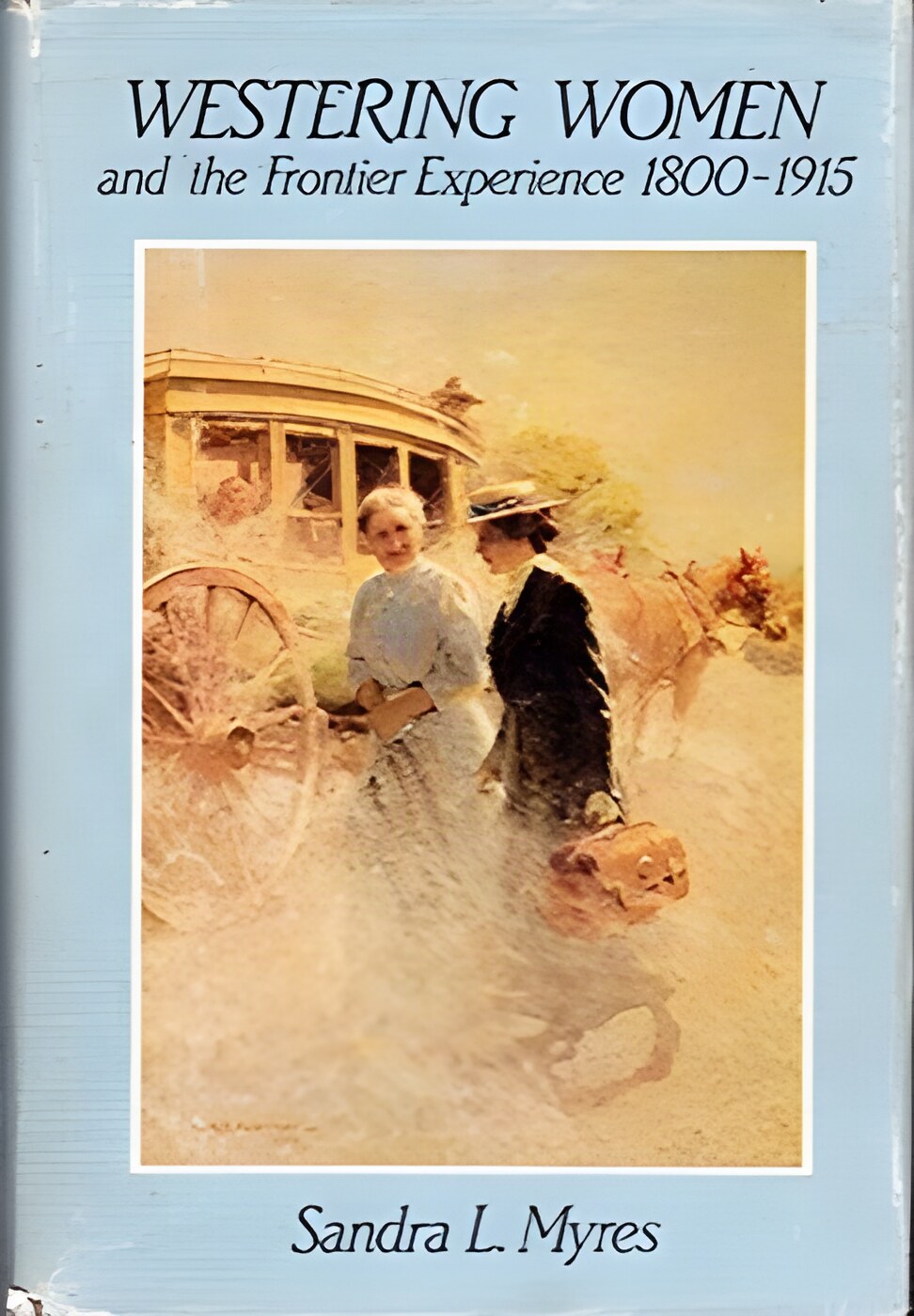
Softcover. Albuquerque NM, University of New Mexico Press, reprint, 1993, Book: Very Good, Dust Jacket: None, Softcover, 365 pages, b&w illustrations. Professor Myres gives frontier women a voice they never had. She uses extensive source material by and about women ( letters, journals, and reminiscences from over 400 collections ) to study the impact of the frontier on women's lives and the role of women in the West. She offers a major reinterpretation of the experience of pioneer women, including that of Indian, Mexican, French, black, and Anglo-American women. The account recreates in detail the frontier experience of all these women, beginning with their physical and intellectual responses to the trek West, and concluding with their struggle for political suffrage and economic opportunity. Clean copy.
Hardcover. Newtown CT, The Taunton Press, 1st, 2006, Book: Very Good, Dust Jacket: Very Good, Hardcover in a bright dust jacket, 266 pages. The past has left behind only scattered clues that, on their own, provide little insight into how the people of early America lived and the details of their daily lives. The photographs in this book, the deeply informed narrative that accompanies them, and the eyewitness accounts of daily life that the author weaves throughout, provide a fresh perspective on our early American ancestors and the places they called home. This book is about how their houses and their life in them, from the wealthy to the impoverished, from New York City to the small farms and plantations of the South, from coastal fishing towns to the Western frontier of Indiana and Kentucky. The stories focus on the remarkably vivid differences from one part of the country to the next, class and culture, and the realities of everyday life for American families. These stories twine around a wide selection of HABS photographs of early houses, covering the variety and evolutions of house styles -- not by labeling the style but by explaining the style in the context of everyday life. Richly illustrated with handsome black-and-white photography of old houses from the Library of Congress Historic American Building Survey (HABS) collection and supplemented with period woodcuts, engravings, drawings, paintings, artifacts, and maps, the book is printed on a 4-color press for a depth of tone. Sidebar excerpts from diaries, journals, and letters inject graphic eyewitness descriptions, adding an additional layer of insight. The book also includes sidebars called Still Standing that traces the history of specific houses, from their origins to the present and includes information on the original family, how the house has evolved over the centuries, and how it's used today.




 "The Way to the Western Sea: Lewis and Clark Across the Continent by: Lavender, David")


 "Thus Have I Seen: Visualizing Faith in Early Indian Buddhismby: Andy Rotman")
 "To Image and to See: Crow Indian Photographs by Edward S. Curtis and Richard Throssel 1905-1910 by: Northern Tamara; Brown Wendi Starr")




 "Twelfth Annual Report of the Indiana State Board of Agricultureby: Cox, Prof. E.T.")
 "Twelve Thousand Years: American Indians in Maine by: Bruce J. Bourque")

 "Underwater Warfare in the Age of Sailby: Roland, Alex")

 "Vision of Splendour, A: Indian Heritage in the Photographs of Jean Philippe Vogel, 1901-1913by: Boer, Gerda Theuns-de")
 "Wandering Stars by: Orange, Tommy")
 "Werner Bischof. 1916 - 1954. His Life and Work. Introduction by Hugo Loetscher. Text by Marco Bischof and Guido Magnaguagno. by: Bischof, Marco and Ren")