Hardcover. Oxford, Clarendon Press, First Edition, 2006, Book: Very Good, Dust Jacket: Very Good, 356 pages. Hardcover with illustrated endpapers. Black cloth covered boards with gilt titles to spine. Dust jacket with light sunfade to bottom edge. Illustrations in bw throughout. Clean & unmarked copy.
Hardcover. Cambridge UK, Cambridge University Press, 1st, 2010, Book: Very Good, Dust Jacket: Very Good, Hardcover in a bright dust jacket, 187 pages. Examines Rousseau's contribution as a constitutionalist and builder of institutions, relating his major ideas to twenty-first century debates. Rubber stamp on copyright page, otherwise clean.
Hardcover. New York, Harper & Brothers, 1st, 1887, Book: Very Good, Dust Jacket: None, Hardcover, 310 pages. Brown cloth, gilt lettering to spine. Light wear and rubbing to covers and edges of spine. Clean, tight copy.
Hardcover. Baltimore, Johns Hopkins, 1st, 1981, Book: Very Good, Dust Jacket: Very Good, Hardcover in a bright dust jacket, 184 pages. Saving the Text cuts through Jacques Derrida's complex blend of philosophy, commentary, and elaborate wordplay to ascertain his place in the history of criticism and the significance of Glas as a literary event. Distinguished critic and scholar Geoffrey Hartman explores the usefulness of Derrida's style of close reading for English and American scholarship and establishes its relevance to the division that has arisen between European and Anglo-American critical approaches.
Springer, Book: Very Good, Dust Jacket: None, Hardcover, glazed boards, 381 pages. This groundbreaking publication is the first comprehensive assessment of the extent to which scepticism featured in evolving Enlightenment philosophy, with expert commentary on a range of thinkers including less well known, but nonetheless influential figures.
Softcover. Indianapolis IN, Hackett Publishing, reprint, 1996, Book: Very Good, Dust Jacket: None, Softcover, 368 pages. This collection of more than two hundred of Nietzsche's letters offers a representative body of correspondence on subjects of main concern to him--philosophy, history, morals, music and literature. Also included are letters of biographical interest which, in Middleton's words, mark the stresses and turnings of his life. Among the addressees are Richard Wagner, Erwin Rohde, Jacob Burkhardt, Lou Salome, his mother, and his sister Elisabeth. The annihilating split in Nietzsche's personality that has been associated with his collapse on a street in Turin in 1889 is described in a moving letter from Franz Overbeck which forms the Epilogue. Index. Light cease to front cover, otherwise clean, bright copy.
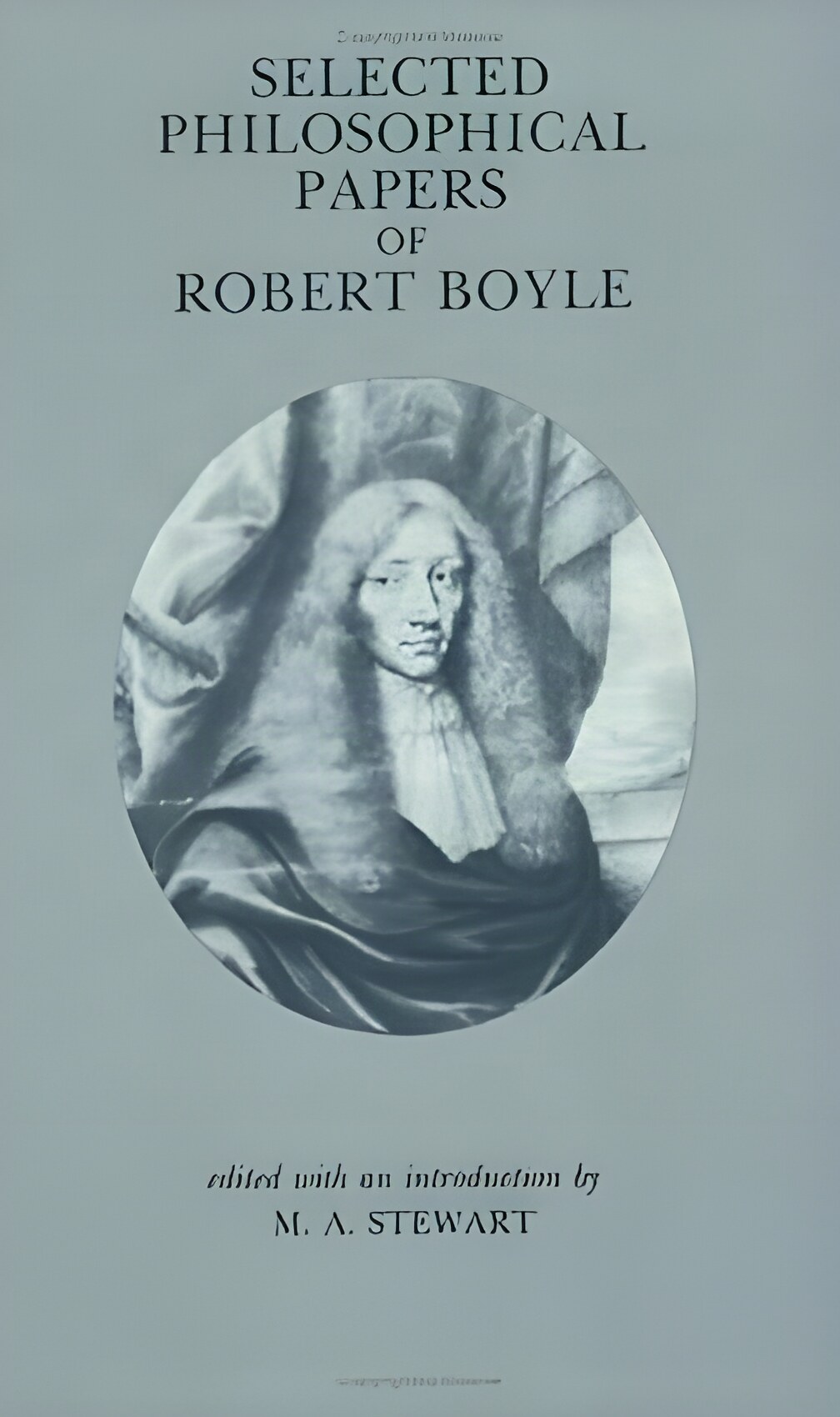
Softcover. Indianapolis, Hackett Publishing, 2nd pr., 1991, Book: Very Good, Dust Jacket: None, Softcover, 256 pages. "The availability of a paperback version of Boyle's philosophical writings selected by M. A. Stewart will be a real service to teachers, students, and scholars with seventeenth-century interests. The editor has shown excellent judgment in bringing together many of the most important works and printing them, for the most part, in unabridged form. The texts have been edited responsibly with emphasis on readability. . . . Of special interest in connection with Locke and with the reception of Descarte's Corpuscularianism, to students of the Scientific Revolution and of the history of mechanical philosophy, and to those interested in the relations among science, philosophy, and religion. In fact, given the imperfections in and unavailability of the eighteenth-century editions of Boyle's works, this collection will benefit a wide variety of seventeenth-century scholars."
Hardcover. Athens GA, University of Georgia Press, 1st, 2001, Book: Very Good, Dust Jacket: Very Good, Hardcover in a bright dust jacket, 168 pages. This work tells how the first generation of Protestant fundamentalists embraced the modern business and entertainment techniques of marketing, advertising, drama, film, radio, and publishing to spread the gospel. Clean copy.
Softcover. Kessinger Publishing, reprint, Book: Very Good, Dust Jacket: None, Softcover, 457 pages. A photocopied facsimile reprint of the 1685 volume. FRENCH TEXT. Clean copy.
Softcover. Spain, Editorial Escudo de Oro. S.A., 1st, 1995, Book: Very Good, Dust Jacket: None, 93 pages. Softcover. Mild soiling throughout. An otherwise unmarked copy with only minor edgewear. Color photographs throughout.
Softcover. Cambridge UK, Cambridge University Press, 1st, 1996, Book: Very Good, Dust Jacket: None, Softcover, 216 pages. This remarkable expression of republican thought has never before been published. Algernon Sidney was among the most unrelenting republican partisans of the seventeenth century, and was executed for his opposition to Charles II. Written during Sidney's continental exile, the vivid Court Maxims was only recently rediscovered. The work presents a lively discussion about the principles of government and the practice of politics, articulating a vital tradition of republicanism in an absolutist age.
Hardcover. Oxford UK, Oxford University Press, 1st, 2015, Book: Very Good, Dust Jacket: Very Good, Hardcover in a bright dust jacket, 184 pages. Alexander X. Douglas offers a new understanding of Spinoza's philosophy by situating it in its immediate historical context. He defends a thesis about Spinoza's philosophical motivations and then bases an interpretation of his major works upon it. The thesis is that much of Spinoza's philosophy was conceived with the express purpose of rebutting a claim about the limitations of philosophy made by some of his contemporaries. They held that philosophy is intrinsically incapable of revealing anything of any relevance to theology, or in fact to any study of direct practical relevance to human life. Spinoza did not. He believed that philosophy reveals the true nature of God, and that God is nothing like what the majority of theologians, or indeed of religious believers in general, think he is. The practical implications of this change in the concept of God were profound and radical. As Douglas shows, many of Spinoza's theories were directed towards showing how the separation his opponents endeavored to maintain between philosophical and non-philosophical (particularly theological) thought was logically untenable.
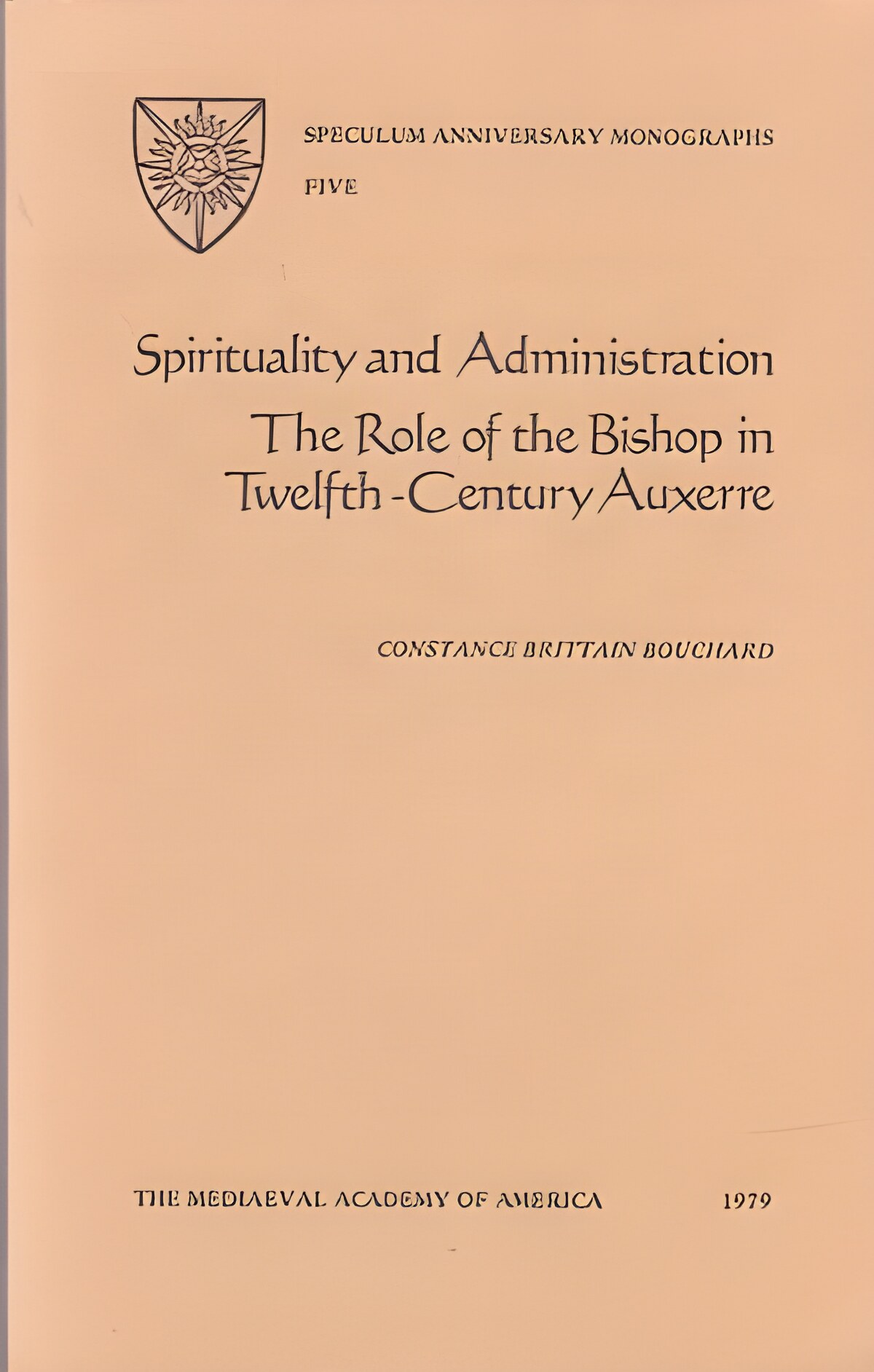
Softcover. Cambridge MA, Medieval Academy of America, 1st, 1979, Book: Very Good, Dust Jacket: None, Softcover, 152 pages. Bouchard's work is erudite and provides a picture of the development of the shifting relationship between the pastoral demands placed on the prelates and those of the secular administrative. Some coped with the phenomenal increase of secular administration over the century better than others. Some coped with the machinations of local counts and even kings who would seize property almost at a whim better than others. One even defied the Pope until threatened with excommunication if he did not accept his 'promotion'. Clean copy.
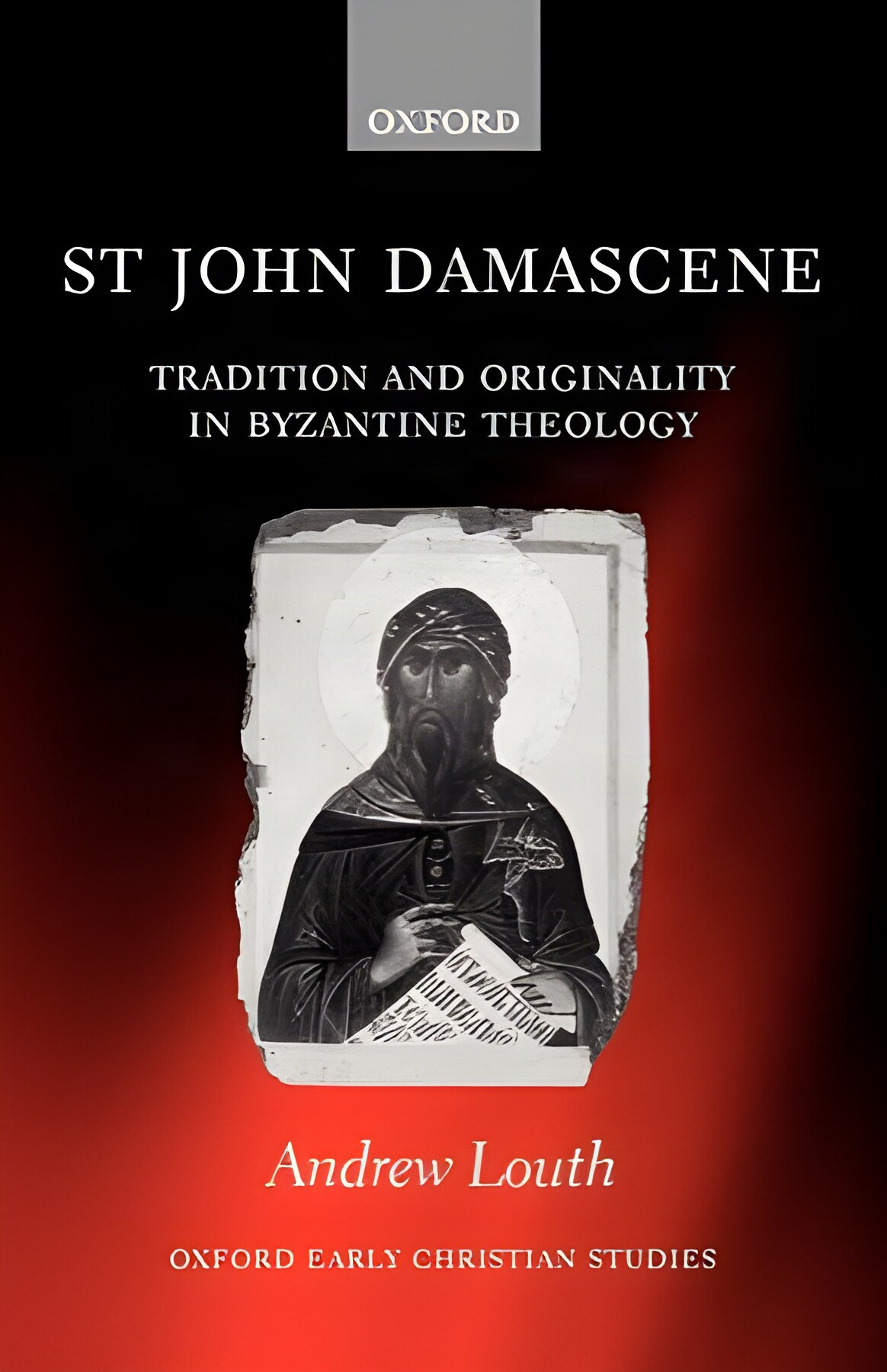
Hardcover. UK, Oxford University Press, 2nd pr., 2002, Book: Very Good, Dust Jacket: Very Good, Hardcover in a bright dust jacket, 327 pages. John Damascene, a monk near Jerusalem in the early 700s, never set foot in the Byzantine Empire, yet he had a great influence on Byzantine theology. This book, the first to present an overall account of John's life and work, sets him in the context of the early synods of the Church that took place in the Palestinian monasteries during the first century of Arab rule.
Hardcover. UK, Oxford University Press, reprint, 1968, Book: Very Good, Dust Jacket: Very Good, Hardcover in a bright dust jacket, 196 pages. Translated with an Introduction and Philosophical Commentary by M. J. Charlesworth. This is the work in which Anselm (a medieval church father) presents his ontological argument for the existence of God. It's one of the most debated philosophical arguments for the existence of God in history. Clean copy.
Hardcover. NY, Cambridge University Press, 1st, 2005, Book: Very Good, Dust Jacket: None, Hardcover, maroon cloth covers with gilt lettering on spine, 320 pages, b&w illustrations. St. Peter's in the Vatican has a long and turbulent history. First constructed in the fourth century to honor the tomb of St. Peter, the Early Christian edifice was gradually torn down and replaced by the current structure. The history of the design and construction of this new building spans several centuries and involved several of the most brilliant architects, including Bramante, Michelangelo and Bernini, of the early modern period. This volume presents an overview of St. Peter's history from the late antique period to the twentieth century. Lacks dust jacket, clean, bright copy.
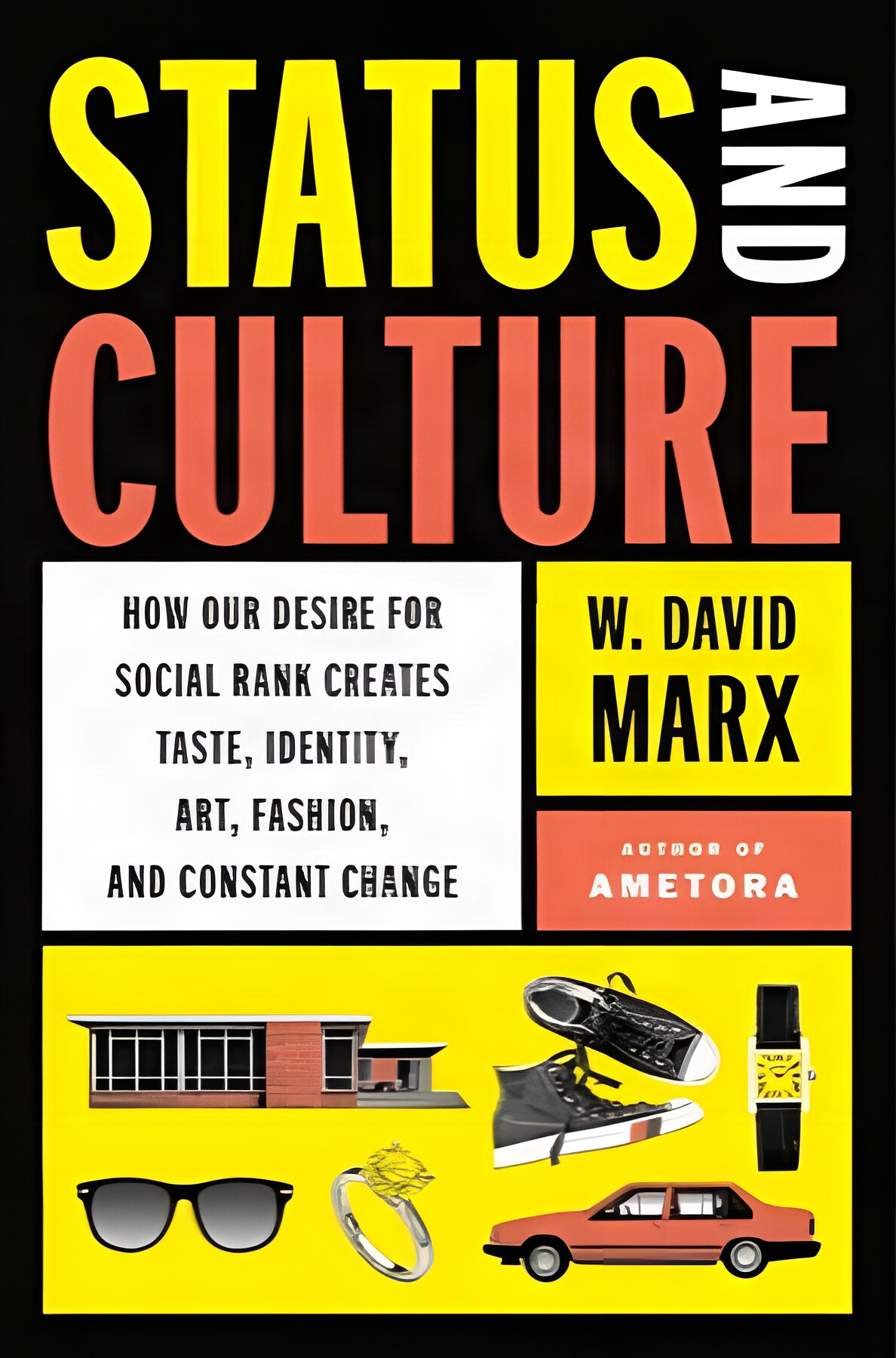
Hardcover. NY, Viking, 1st, 2022, Book: Very Good, Dust Jacket: Very Good, Hardcover in a bright dust jacket, 346 pages. In Status and Culture, W. David Marx weaves together the wisdom from history, psychology, sociology, anthropology, economics, philosophy, linguistics, semiotics, cultural theory, literary theory, art history, media studies, and neuroscience to demonstrate exactly how individual status seeking creates our cultural ecosystem. Marx examines three fundamental questions: Why do individuals cluster around arbitrary behaviors and take deep meaning from them? How do distinct styles, conventions, and sensibilities emerge? Why do we change behaviors over time and why do some behaviors stick around? The answers then provide new perspectives for understanding the seeming "weightlessness" of internet culture. Clean copy.
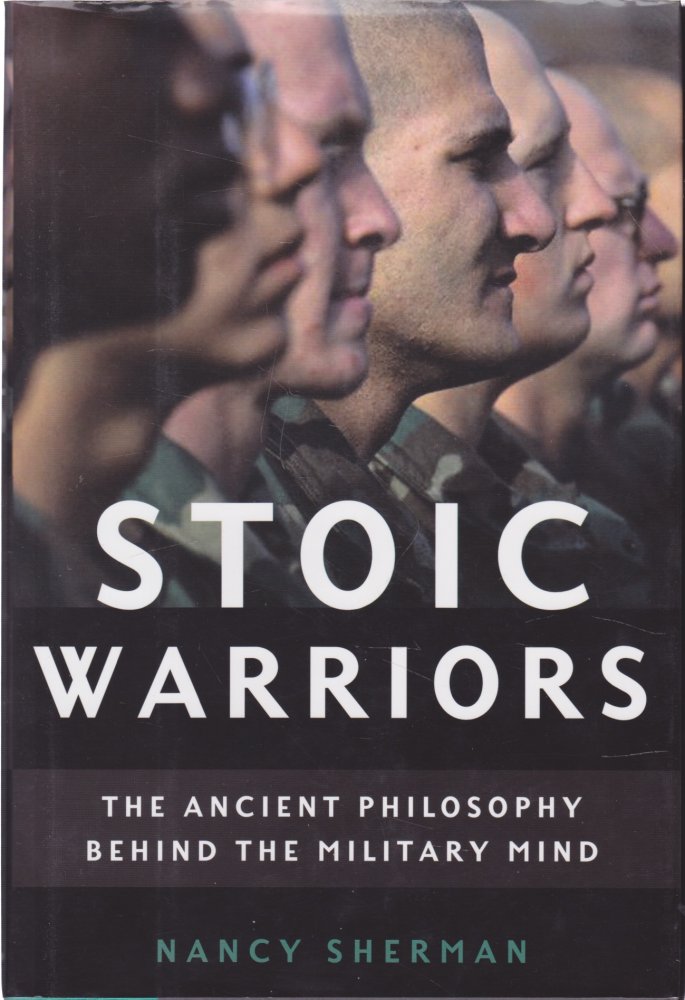
Hardcover. NY, Oxford University Press, 1st, 2005, Book: Very Good, Dust Jacket: Very Good, Hardcover in a bright dust jacket, 242 pages. While few soldiers may have read the works of Epictetus or Marcus Aurelius, it is undoubtedly true that the ancient philosophy known as Stoicism guides the actions of many in the military. Soldiers and seamen learn early in their training "to suck it up," to endure, to put aside their feelings and to get on with the mission. Stoic Warriors is the first book to delve deeply into the ancient legacy of this relationship, exploring what the Stoic philosophy actually is, the role it plays in the character of the military (both ancient and modern), and its powerful value as a philosophy of life. Marshalling anecdotes from military history--ranging from ancient Greek wars to World War II, Vietnam, and Iraq--Nancy Sherman illuminates the military mind and uses it as a window on the virtues of the Stoic philosophy, which are far richer and more interesting than our popularized notions. Clean copy.
Hardcover. Cambridge UK, Cambridge University Press, 1st, 2004, Book: Very Good, Dust Jacket: Very Good, Hardcover in a bright dust jacket with mild edgewear. 295 pages. Stoicism is now widely recognized as one of the most important philosophical schools of ancient Greece and Rome. But how did it influence Western thought after Greek and Roman antiquity? The contributors recruited for this volume include leading international scholars of Stoicism as well as experts in later periods of philosophy. They trace the impact of Stoicism and Stoic ideas from late antiquity through the medieval and modern periods. Name on front fly leaf otherwise clean.
Hardcover. London, Reaktion Books, 2013, 2013, Book: Very Good, Dust Jacket: Very Good, 336 pages. Hardcover with dust jacket. Profusely illustrated in full color & black & white throughout. Clean, tight copy.
Softcover. Sanbornton, Sant Bani Press, First Edition, 1984, Book: Very Good, Dust Jacket: None, 333 pages. Softcover. Full page, full color illustrations and a few in bw. Interviews & reflections with Kirpal Singh, Baba Sawan & Sant Ajaib. Light wear to spine edges, light sunfading to lower spine. Discolored smudge to top edge. Previous owner's signature to preliminary pages. Otherwise, clean & unmarked copy.
Softcover. Cambridge UK, Cambridge University Press, reprint, 2010, Book: Very Good, Dust Jacket: None, Softcover, 449 pages. Thomas Hobbes is widely acknowledged as the most important political philosopher to have written in English. Originally published in 2007, Taming the Leviathan is a wide-ranging study of the English reception of Hobbes's ideas. In the first book-length treatment of the topic for over forty years, Jon Parkin follows the fate of Hobbes's texts (particularly Leviathan) and the development of his controversial reputation during the seventeenth century, revealing the stakes in the critical discussion of the philosopher and his ideas. Revising the traditional view that Hobbes was simply rejected by his contemporaries, Parkin demonstrates that Hobbes's work was too useful for them to ignore, but too radical to leave unchallenged. His texts therefore had to be controlled, their lessons absorbed and their author discredited. In other words the Leviathan had to be tamed. Taming the Leviathan significantly revised our understanding of the role of Hobbes and Hobbism in seventeenth-century England. Clean copy.
Hardcover. New Haven CONNECTICUT, Yale University Press, 1st, 1978, Book: Very Good, Dust Jacket: Very Good, Hardcover, 317 pages, b&w illustrations, red cloth with gilt lettering on spine. Bright dust jacket with price-clip.

 "Rise of Modern Philosophy, Theby: Kenny, Anthony")
 "Ruin of The Ancient Civilization and The Triumph of Christianity, Theby: Ferrero, Guglielmo")
 "Russian Church and Russian Dissent, The: Comprising Orthodoxy, Dissent, and Erratic Sectsby: Heard, Albert F.")
 "Saving the Text: Literature/Derrida/Philosophyby: Geoffrey H. Hartman")
 "Selling the Old-Time Religion: American Fundamentalists and Mass Culture, 1920-1940 by: Douglas Carl Abrams")
 "Sentimens de Quelques Theologiens de Hollande Sur La Acentsacentsa A Acentsa Acentshistoire Critique Du Vieux Testament (1685 )by: Simon, Richard")
 "Sevilla Cathedral by: Delgado. Francisco Gil (Editor)")

 "Spinoza and Dutch Cartesianism: Philosophy and Theology by: Douglas, Alexander X.")
 "St. Anselm's Proslogion with A Reply on Behalf of the Fool by Guanilo and The Author's Reply to Gauniloby: Charlesworth, M.J. (trans.)")

 "Story of Black, Theby: Harvey, John")
 "Support of the Shaken Sangat - Personal Recollections of Three Great Mastersby: Oberoi, A. S.")


 "Taming the Leviathan: The Reception of the Political and Religious Ideas of Thomas Hobbes in England 1640??\"1700 (Ideas in Contextby: Parkin, Jon")
 "Teachings of Taoist Master Chuang, Theby: Saso, Michael")