Hardcover. College Station, Texas A&M University , 1st, 1994, Book: Very Good, Dust Jacket: Very Good, Hardcover in a bright dust jacket, 318 pages. In their own vivid words, the women members of the Soviet air force recount their dramatic efforts against the German forces in World War II. These brave women, the first ever to fly in combat, proved that women could be among the best of warriors, withstanding the rigors of combat and downing the enemy. B&w illustrations. Clean copy.
Hardcover. New York, Thomas Y. Crowell, 1st, 1886, Book: Very Good, Dust Jacket: None, 462 pages. Hardcover with no dust jacket. Gilt lettering on front and spine. Previous owner's name on front and rear end papers. Gutter crack throughout.
Hardcover. NY, Basic Books, 1st, 2004, Book: Very Good, Dust Jacket: Very Good, Hardcover in a bright, unclipped dust jacket, 364 pages. Dmitrii Mendeleev: It's a name we recognize, but only as the disheveled scientist pictured in our high school chemistry textbook, the creator of the periodic table of elements. Until now little has been known about the man, but A Well-Ordered Thing draws a portrait of this chemist in three full dimensions. Historian Michael Gordin also details Mendeleev's complex relationship with the Russian Empire that was his home. From his attack on Spiritualism to his humiliation at the hands of the Petersburg Academy of Sciences, from his near-mythical hot-air balloon trip to his failed voyage to the Arctic, this is the story of an extraordinary man deeply invested in the good of his country. And the ideals that shaped his work in politics and culture were the same ones that led a young chemistry professor to start putting elements in order. Mendeleev was a loyal subject of the Tsar, but he was also a maverick who thought that only an outsider could perfect a modern Russia. Clean copy.
Hardcover. NY, First Second, 1st, 2022, Book: Very Good, Dust Jacket: Very Good, Hardcover in a bright, unclipped dust jacket. This riveting graphic novel biography chronicles Vladimir Putin's rise from a mid-level KGB officer to the autocratic leader of Russia and reveals the truth behind the strongman persona he has spent his career cultivating. In the West's collective imagination, Vladimir Putin is a devious cartoon villain, constantly plotting and scheming to destroy his enemies around the globe and in Ukraine. But how did an undistinguished mid-level KGB officer become one of the most powerful leaders in Russian history? And how much of Putin's tough-guy persona is a calculated performance? Two-color art throughout by Brian "Box" Brown. Clean copy.
Hardcover. London, Heinemann, 1st, 1975, Book: Very Good, Dust Jacket: Very Good, Hardcover in a bright, unclipped dust jacket. 24 illustrations. Genealogical chart of Queen Victoria and Prince Albert of Saxe-Coburg and Gotha. These letters were only discovered in the 1970's at Broadlands, the home of Princess Victoria's younger son, the Earl Mountbatten of Burma. These letters bring new light to bear on major world and minor domestic events, from the crisis with the Prussian court in 1888 to the Queen's agonized concern for her haemophilic children and grandchildren, from the assassination of the Tsar of Russia to her stalwart but fruitless efforts to persuade Princess's Victoria's sister to marry the eldest son of the Prince of Wales. Lord Mountbatten's elder daughter, Lady Brabourne, has provided a fascinating introduction. Clean copy.
Hardcover. Norman OK, University of Oklahoma Press, 2nd pr., 1952, Book: Very Good, Dust Jacket: Very Good, Hardcover in a lightly worn dust jacket, 350 pages, b&w illustrations. Terra-cotta cloth with gilt on spine. This book traces the history of Alaska from the explorations of Bering up to 1945. Beginning with a chapter on "The Land", the author devotes the next 11 of 19 chapters to the Russian period of Alaska's history. The remaining 7 concern the American period. The book covers Russian exploration and settlement along the shores of northwestern America, of the Russian -American company and its great general manager, Baranov. A whole chapter on the attempt of Russia to establish a monopoly of the north Pacific in the face of increasing encroachment by British and American traders. Clean copy.
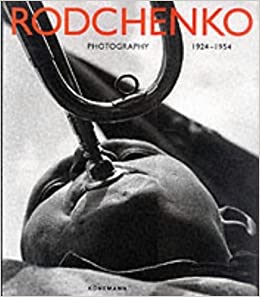
Hardcover. Konemann, 1st US, 1996, Book: Very Good, Dust Jacket: Very Good, Hardcover, large format, 344 pages. Profusely illustrated with black & white photographs by Alexander Rodchenko. Dust jacket shows light rubbing to back cover. Large, heavy book. Clean, tight copy. This is the most complete volume published outside of Russia to capture the photographic work of Alexander Rodchenko, one of the former Soviet Union's greatest artists
Hardcover. Edison, Knickerbocker Press, 1st US, 1996, Book: Very Good, Dust Jacket: Very Good, Hardcover, large format, 344 pages. Profusely illustrated with black & white photographs by Alexander Rodchenko. Dust jacket shows light rubbing to back cover. Large, heavy book. Clean, tight copy. DUE TO WEIGHT, DOMESTIC SHIPPING ONLY.
Hardcover. Moscow, Progress Publishers, 1966, Book: Good, Dust Jacket: Very Good, Hardcover in a lightly worn dust jacket with faded spine. Anthology of writings by American journalist, poet and Communist activist. Includes portions of "Insurgent Mexico" and "Ten Days That Shook the World,"as well as stories, articles, documents, poetry and drama. Illustrated with photos. Text in English with introductory section in Russian. 299 pages, b&w illustrations. No date but indicates "2.6.66" Clean copy.
Hardcover. Baltimore, Johns Hopkins University, 1st, 2002, Book: Very Good, Dust Jacket: None, An extraordinary work, unparalleled in its breadth and depth of detail, this three-volume set offers the first comprehensive history of architecture and town planning throughout colonial North America, from Russian Alaska to French Quebec, to Spanish Florida and California, to British, Dutch, and other settlements on the East Coast. Across this vast terrain, James Kornwolf conjures the outlines of the constructed environment as it emerged in settlements and communities, in structures and sites, and in the flourishes and idiosyncrasies of the families and individuals who erected and inhabited colonial buildings and towns. Here as never before readers can observe the impulses and principles of colonial design and planning as they are implemented in the buildings and streets, harbors and squares, gardens and landscapes of the New World. Incorporating more than 3,000 illustrations, Kornwolf's massive work conveys the full range of the colonial encounter with the continent's geography, from the high forms of architecture through formal landscape design and town planning. From these pages emerge the fine arts of environmental design, an understanding of the political and economic events that helped to determine settlement in North America, an appreciation of the various architectural and landscape forms that the settlers created, and an awareness of the diversity of the continent's geography and its peoples. Considering the humblest buildings along with the mansions of the wealthy and powerful, public buildings, forts, and churches, Kornwolf captures the true dynamism and diversity of colonial communities-their rivalries and frictions, their outlooks and attitudes-as they extended their hold on the land. His work conveys for the first time the full scale, from intimate to grand, of their enduring transformation of the natural landscape of North America. NOTE: DOMESTIC SHIPPING ONLY.
Softcover. Chicago, University of Chicago Press, reprint, 1982, Book: Very Good, Dust Jacket: None, Red card cover, with pages and covers in pristine condition. Like new, in shrinkwrap. Rosenberg's essays cover art's relationship with the media, pop art, art as thinking; Pollock's methods; Josph Cornell's boxes; Russian constructivism; big paintings; the artist's hand; action painting, Dada etc etc. First published in 1969.
Hardcover. NY, The Overlook Press, 2nd pr., 1978, Book: Very Good, Dust Jacket: Very Good, Hardcover in a bright, unclipped dust jacket, 203 pages. A pictorial survey with over 300 rare b&w photos. Clean copy.
Hardcover. Stanford CA, Stanford University Press, 1st, 2006, Book: Very Good, Dust Jacket: Very Good, Hardcover in a bright, unclipped dust jacket, 559 pages. "Behind the Bamboo Curtain is an important collection of essays on Sino-Vietnamese relations during the Cold War An excellent contribution from a Vietnamese historian and well-documented chapters on Soviet and French policy further augment the importance of the volume. The contributors make extensive use of primary documents from the United States, the People's Republic of China, Vietnam, and Russia and offer authoritative analyses." -- The Journal of Cold War Studies. Claen, unread copy.
Hardcover. New Haven CT, Yale University Press, 1st, 2016, Book: Very Good, Dust Jacket: Very Good, Hardcover in a bright dust jacket, 360 pages. Charles Clover, award-winning journalist and former Moscow bureau chief for the Financial Times, here analyzes the idea of "Eurasianism," a theory of Russian national identity based on ethnicity and geography. Clover traces Eurasianism's origins in the writings of white Russian exiles in 1920s Europe, through Siberia's Gulag archipelago in the 1950s, the dissolution of the Soviet Union in the early 1990s, and up to its steady infiltration of the governing elite around Vladimir Putin. This eye-opening analysis pieces together the evidence for Eurasianism's place at the heart of Kremlin thinking today and explores its impact on recent events, the annexation of Crimea, and the rise in Russia of anti-Western paranoia and imperialist rhetoric, as well as Putin's sometimes perplexing political actions and ambitions. Clean copy.
Softcover. New Haven, Yale University Press, 3rd, 1988, Book: Very Good, Dust Jacket: None, 152 pages, illustrations in color and b&w. Previous owner's signature scribbled over on front end paper, light wear to edges and spine, else a clean, tight copy.
Hardcover. NY, Charles Scribner's Sons, 1st US, 1973, Book: Very Good, Dust Jacket: Very Good, Hardcover in a bright, unclipped dust jacket. 188 pages, b&w illustrations, endpapers map. Rear of dj with 2"X1" piece missing from bottom edge. Otherwise very good.
Hardcover. New Haven CT, Yale University Press, 1st, 1998, Book: Very Good, Dust Jacket: Very Good, Hardcover in a bright dust jacket, 436 pages, b&w illustrations. The humiliation of Russia by separatist rebels in the Chechen War marked a key moment in Russian - and perhaps world - history. In this new analysis Anatol Lieven offers a riveting account of the war as a means to explore the painful fate of the post-Soviet state. Lieven looks into the long, troubled history of Russian-Chechen relations, noting that each side despised the other for largely cultural reasons (the Chechens have long been involved in organized crime in major Russian cities, whereas Russians have long tried to strip Chechnya of its resources). He notes that Chechen society has historically been militarized (one Armenian said to Lieven, "The men are always fighting and the women are cooking for them, nursing their wounds, and bringing up their children"), making the mountain people a formidable foe. In the meanwhile, writes Lieven, the Russian military suffered from low morale and from corruption of various kinds: Russian field soldiers sold their guns to Chechen guerrillas for vodka and currency, while Russian officers stole their soldiers' pay and Russian politicians skimmed off the top. This is an extraordinary look at a little-known conflict. Clean copy.
Hardcover. NY, Hill and Wang, 1st, 1973, Book: Very Good, Dust Jacket: Very Good, Hardcover, 208 pages, b&w photos. Translated & with additional material by David Robinson. Very good, clean. In a bright, unclipped dust jacket.
New York, Van Nostrand Reinhold, 1st, 1981, Book: Very Good, Dust Jacket: Very Good, Hardcover in a bright dust jacket, 196 pages. Black & white photography. Reveals the war with Russia, the first war to be extensively recorded by photography. Here are 85 photos and commentary. Many of the photos were taken by two Englishmen, Roger Fenton and William Robertson.
Hardcover. Munchen GR%, C. Bertelsmann, 1st, 1995, Book: Very Good, Dust Jacket: Very Good, Hardcover, 255 pages, profusely illustrated with b&w photographs. GERMAN TEXT.
Hardcover. Berlin GR, Nicolai Publishing, 1st, 1997, Book: Very Good, Dust Jacket: Very Good, Hardcover in a bright dust jacket. GERMAN TEXT. The history of Berlin's grand hotel. The Adlon opened on October 23, 1907, with the Kaiser, his wife, and many other notables in attendance. It quickly became the social center of Berlin. As the rooms in the Stadtschloss were cold and drafty, the Kaiser paid an annual retainer to keep suites available for his guests.[2] Likewise the Foreign Office used the Adlon for accommodation during state visits, with guests including Tsar Nicholas II of Russia and Maharaja Bhupinder Singh of Patiala. Notable guests of the early years included industrialists such as Thomas Edison, Henry Ford, and John D. Rockefeller, as well as politicians like Walter Rathenau, Gustav Stresemann and the French prime minister Aristide Briand. Many wealthy Berliners lived for extended periods of time in the hotel, while its ballrooms hosted official government functions and society events. Many photos. Clean copy.
Softcover. London, IB Tauris, 1st pbk, 2000, Book: Very Good, Dust Jacket: None, Softcover, 314 pages, color and b&w illustrations. In this first biography of Alexander Griboyedov in English, Laurence Kelly paints a vivid picture of a man of remarkable literary talent and diplomatic gifts that were nevertheless overshadowed by ill-fortune. Involved in the 1825 Decembrist plot to overthrow the Tsarist state and the mission to further Russia's expansionist agenda in the Caucasus, the famous writer was eventually murdered by zealous mobs in Tehran. This book makes an invaluable contribution to the diplomatic history of Russia, the Caucasus and Iran at the same time illuminating the life and works of a writer who was among nineteenth-century Russia's most respected and prominent writers. Clean copy.


 "A Well-ordered Thing: Dmitrii Mendeleev And The Shadow Of The Periodic Table by: Michael D. Gordin")
 "Accidental Czar: The Life and Lies of Vladimir Putinby: Andrew S. Weiss / Box Brown (artist)")

 "Alaska: Promyshlennik and Sourdoughby: Stuart Ramsay Tompkins")
 "Alexander Rodchenko - Photography 1924-1954by: Lavrentiev, Alexander")

 "Architecture and Town Planning in Colonial North America (3 Vol. Set)by: James D. Kornwolf and Georgiana W. Kornwolf")

 "Before the Revolution: Russia and Its People Under the Czarby: Kyril Fitzlyon, Tatiana Browning")
 "Behind the Bamboo Curtain: China, Vietnam, and the World beyond Asia (Cold War International History Project)by: Priscilla Roberts (Ed.)")
 "Bolshevik Poster, The by: White, Stephen")

 "British Documents on Foreign Affairs: Reports and Papers from the Foreign Office Confidential Print - Part 1 - From the Mid-Nineteenth Century to the First World War - Series A - Russia, 1859-1914 - Volume 4 - Russia, 1906-1907")
 "Chechnya: Tombstone of Russian Powerby: Anatol Lieven")
 "Cinema in Revolution: The Heroic Era of the Soviet Filmby: Schnitzer, Luda & Jean; Marcel Martin (Eds.)")
 "Crimea - The War With Russia from Contemporary Photographs 1854-56by: James, Lawrence")
 "Das Ende 1945 Der verdammte Kriegby: Guido Knopp")
 "Das Hotel Adlonby: Demps, Laurenz/Paeschke, Carl-Ludwig")
 "Diplomacy and Murder in Tehran: Alexander Griboyedov and Imperial Russia's Mission to the Shah of Persiaby: Laurence Kelly")