Hardcover. Cambridge UK, Cambridge University Press, 1st, 1983, Book: Very Good, Dust Jacket: Very Good, Hardcover, 414 pages. Translation by Richard Taylor. Dust jacket spine faded. Previous price sticker on dust jacket front flap. Else a clean, tight copy.
Hardcover. New York, Aperture, 1st, 2003, Book: Near Fine, Dust Jacket: Near Fine, 220 pages, 155 b&w photographs by Casasola. Edited by Pablo Ortiz Monasterio, essay by Pete Hamill. Agustin Victor Casasola photographed everyone of consequence in Mexico at the time of the revolution, from Francisco (Pancho) Villa, Emiliano Zapata and the exiled Russian leader Leon Trotsky to artists Diego Rivera and Frida Kahlo. For this splendid collection of Casasola's work, the noted American author Pete Hamill has written a rich essay on the photographer and the Mexico he pictured so well.
Hardcover. Ann Arbor, MI, Ardis, 1st English, 1981, Book: Very Good, Dust Jacket: Good, Hardcover, 565 pages. B/w illustrations throughout. Gilt title on spine. Decorated endpapers. Dust Jacket shows some wear due to age: yellowing, fraying and chipping to edges of front, spine and back, but still in tact. Cover boards clean, covered in teal fabric and in good shape. Pages clean, edges slightly yellowed. From the front flap: "...a landmark work in Russian theater scholarship, this study reveals Meyerhold in the context of his time, as seen by friends and enemies, actors and critics, and analyzes the development of his remarkable career as Russia's most celebrated and influential experimental director."
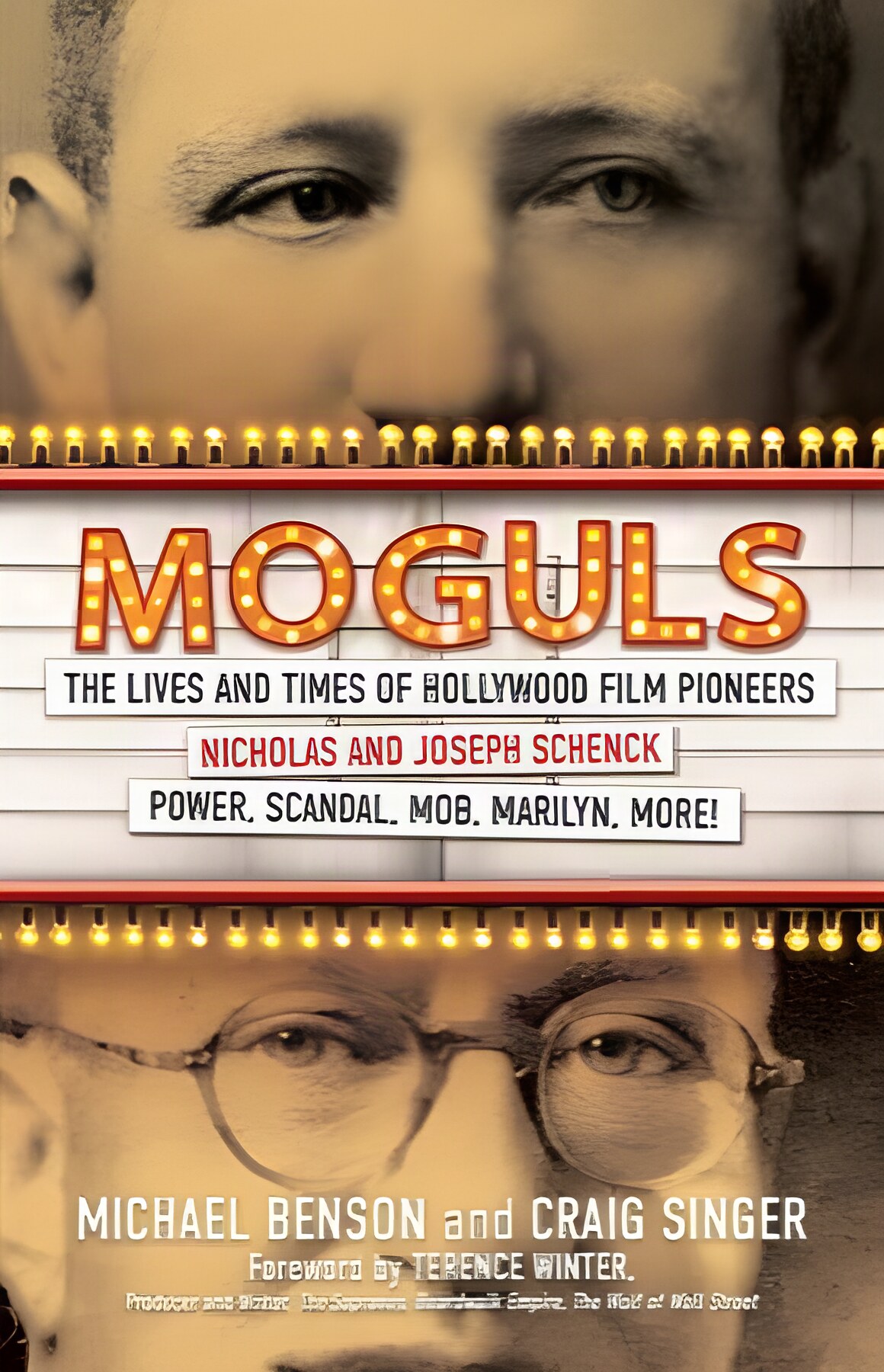
Hardcover. NY, Citadel Press, 1st, 2024, Book: Very Good, Dust Jacket: Very Good, Hardcover in a bright dust jacket, 294 pages, b&w illustrations. They were the Godfathers of the Movies. Groundbreaking pioneers of the Hollywood Dream Factory, Joseph and Nicholas Schenck may not have been household names like the Warner brothers or Louis B. Mayer, but they were infinitely more powerful, influential--and ruthless. A pair of Russian immigrants with giant ambitions, the Schencks turned their small nickelodeon business in New York's Bowery into a partnership with Loew's movie theaters and a controlling interest in three major studios: MGM, Twentieth Century-Fox, and United Artists. They painted the silver screen silver, laid the foundations for the all-powerful studio system, and ruled a global movie empire from their Gatsby-sized mansions on the East and West Coasts. Clean copy.
Hardcover. Stanford CA, Stanford University Press, 1st, 1982, Book: Very Good, Dust Jacket: Very Good, Hardcover, 308 pages, map endpapers. Light edge wear to dust jacket, small sticker on front cover. Else a very clean, tight copy.
Softcover. Washington DC, National Geographic Society, 1st, 1917, Book: Very Good, Dust Jacket: None, Original magazines January - June 1917, in a maroon pebbled hardcover binding. Magazines are dated and paged, with photographs and maps, but do not have covers, advertisements, etc. Several pages of color plates. Light chipping to spine labels otherwise a bright, clean volume. The half year dominated by America's entrance into World War I. Articles by Newton D. Baker, Secretary of War, America's Duty; Stand by the Soldier, by General John J. Pershing; President Wilson's Proclamation; Bind the Wounds of France, by Herbert Hoover; articles by the ambassadors of Britain and France; Russian Situation and its Significance to America and Russia's Democrats; War, Patriotism, and the Food Supply.
Softcover. Washington DC, National Geographic Society, 1st, 1917, Book: Very Good, Dust Jacket: None, Softcover, illustrated with b&w photos, maps, advertisements. Original yellow and black wrappers, spine with light wear, good to very good. Articles include: The Food Armies of Liberty, The Geography of Medicines, A Few Glimpses into Russia, Conserving the Nation's Man Power.
Hardcover. NY, Cambridge University Press, 1st, 1994, Book: Very Good, Dust Jacket: Very Good, Hardcover in a bright dust jacket. This pioneering study documents the extent and diversity of the impact of Nietzschean ideas on Soviet literature and culture. It shows for the first time how these ideas, unacknowledged and reworked, entered and shaped that culture and stimulated the imagination of both supporters and detractors of the regime. 421 pages, a bright, clean copy.
Softcover. Cambridge MA, MIT Press, 1st, 1978, Book: Very Good, Softcover, 128 pages. INSCRIBED BY BOTH EDITORS on the front endpapers. Contributors include Dziga Vertov ('The Factory of Facts and Other Writings'), Alfred H. Barr, Jr. ('Russian Diary 1927-28', along with Jere Abbott, John E. Bowlt, and Elizabeth Jones), A. V. Lunacharsky ('Gogol-Meyerhold's "The Inspector-General"'), Paul Schmidt (on Meyerhold), Margit Rowell (on Vladimir Tatlin), and Michelson. Related ephemera laid in.
Hardcover. NY, Bloomsbury USA, 1st, 2013, Book: Very Good, Dust Jacket: Very Good, Hardcover in a bright, unclipped dust jacket, 509 pages. The relationship between man and horse on the Eurasian steppe gave rise to a succession of rich nomadic cultures. Among them were the Mongols of the thirteenth century - a small tribe, which, under the charismatic leadership of Genghis Khan, created the largest contiguous land empire in history. Inspired by the extraordinary life nomads lead, Tim Cope embarked on a journey that hadn't been successfully completed since those times: to travel on horseback across the entire length of the Eurasian steppe, from Karakorum, the ancient capital of Mongolia, through Kazakhstan, Russia, Crimea and the Ukraine to the Danube River in Hungary. From horse-riding novice to spending months in the saddle, he learnt to fend off wolves and would-be horse-thieves, and grapple with the haunting extremes of the steppe as he crossed sub-zero plateaux, the scorching deserts of Kazakhstan and the high-mountain passes of the Carpathians. As he travelled he formed a close bond with his horses and especially his dog Tigon, and encountered essential hospitality - the linchpin of human survival on the steppe - from those he met along the way. Cope bears witness to how the traditional ways hang in the balance in the post-Soviet world - an era that has brought new-found freedom, but also the perils of corruption and alcoholism, and left a world bereft of both the Communist system upon which it once relied, and the traditional knowledge of the nomadic forefathers.
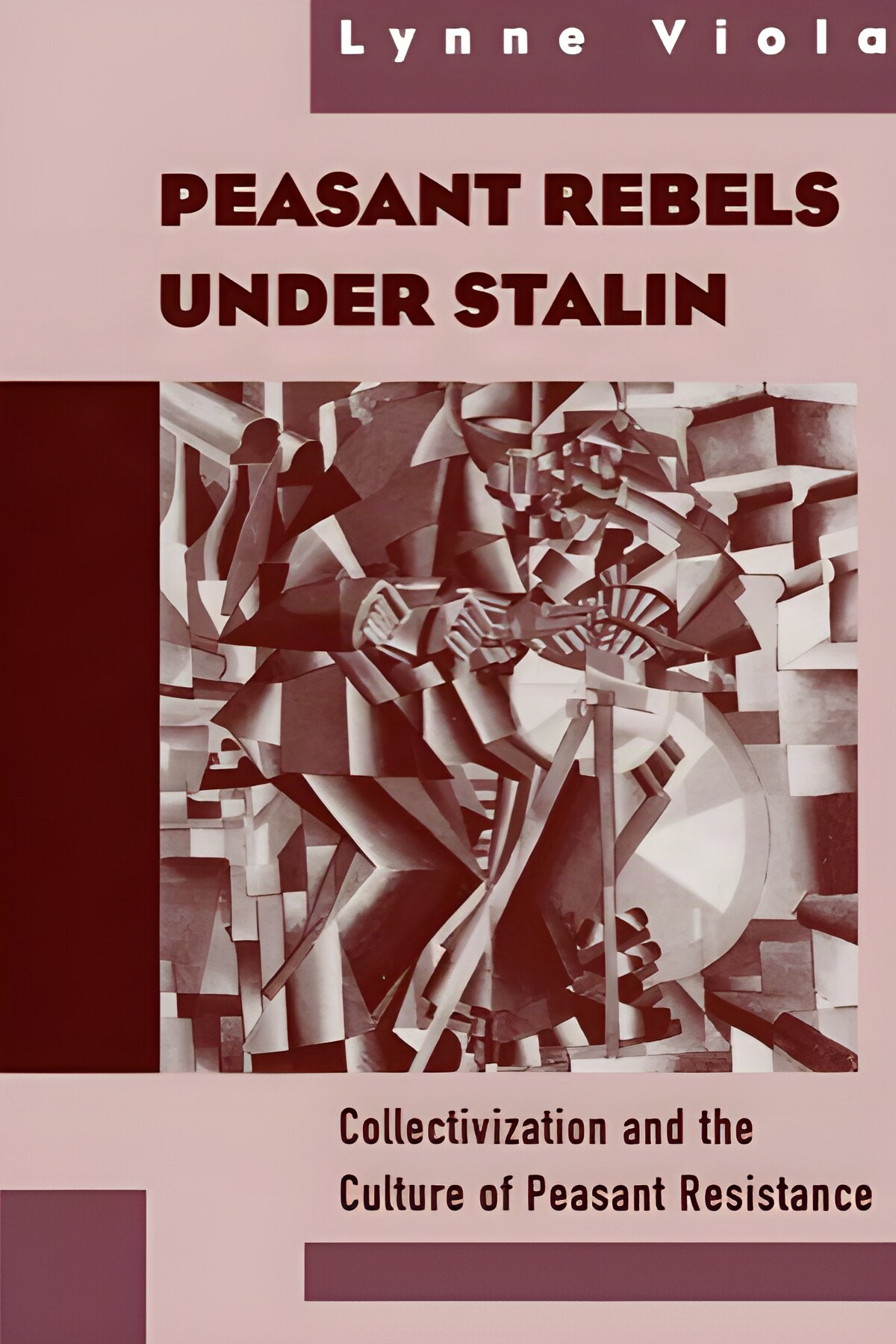
Hardcover. NY, Oxford University Press, 1st, 1996, Book: Very Good, Dust Jacket: Very Good, Hardcover in a bright dust jacket, 312 pages. The first book to document the peasant rebellion against Soviet collectivization, Peasant Rebels Under Stalin retrieves a crucial lost chapter from the history of Stalinist Russia. The peasant revolt against collectivization, as reconstructed by author Lynne Viola, was the most violent and sustained resistance to the Soviet state after the Russian Civil War. Conservative estimates suggest that over the course of the 1920s and early 1930s, more than 1,100 people were assassinated, more than 13,000 villages rioted, and over 2.5 million people participated in this active struggle of resistance. This book is about the men and women who tried to preserve their families, communities, and beliefs from the depredations of Stalinism. Their acts were often heroic, but these heroes were homespun, ordinary people who were driven to acts of desperation by cruel and brutal state policies. Clean copy.
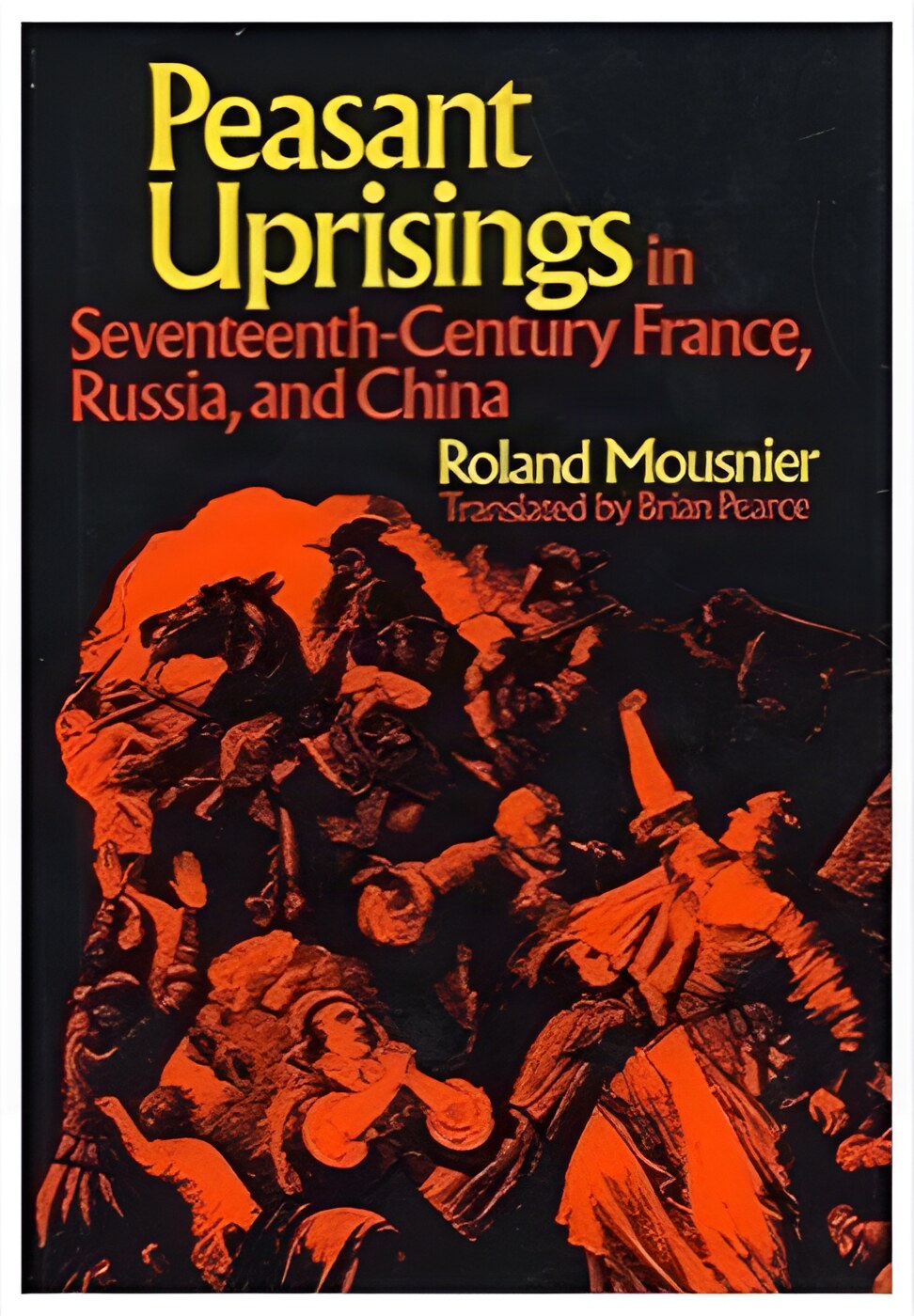
Hardcover. NY, Harper & Row, 1st US, 1970, Book: Very Good, Dust Jacket: Very Good, Hardcover in a lightly worn, price-clipped dust jacket, 358 pages. A close analysis of some of the typical peasant uprisings of the seventeenth century. The goal of the movements in France and China was a return to an older and more traditional society, rather than a profound transformation of the social structure. In Russia, however, the peasants attempted to overturn the rigid order of a two-class structure and replace it with a more democratic society. Clean copy.
Hardcover. London, B. T. Batsford Ltd., 1st, 1949, Book: Very Good, Dust Jacket: Good, 169 pages. Hardcover. Red cloth edition. Top edge stained red. Illustrated with 126 black & white photographs and a few in color. Previous owners name embossed at top of rear interior dust jacket flap. Dust jacket with darkening to spine, minor smudges at upper left corner - jacket now protected with clear plastic cover. Clean, tight copy.
Hardcover. NY, Four Winds Press, 1st, 1986, Book: Very Good, Dust Jacket: Very Good, 32 pages. hardcover with dust jacket. Illust. in color by Stanley. Dust jacket with chip, light soil to rear. Tight copy.
Hardcover. Manchester UK, Manchester University Press, 1st, 1985, Book: Very Good, Dust Jacket: Very Good, Hardcover in a bright, unclipped dust jacket. 312 pages. Clean, tight copy.
Hardcover. London, Thames and Hudson, 1st, 1989, Book: Very Good, Dust Jacket: Very Good, Hardcover in a bright dust jacket, green cloth, gilt lettering, 144 pages. Discovered in Paris in 1987, these 80 color and 30 b&w photographs, taken about 1910-14, are artistic studies of the expressionist Russian writer, his family and friends, his home, and the countryside around St. Petersburg. Includes a biographical essay and a review of the Lumiere autochrome photographic process. Mild wear to top of dj spine, otherwise a clean, tight copy.
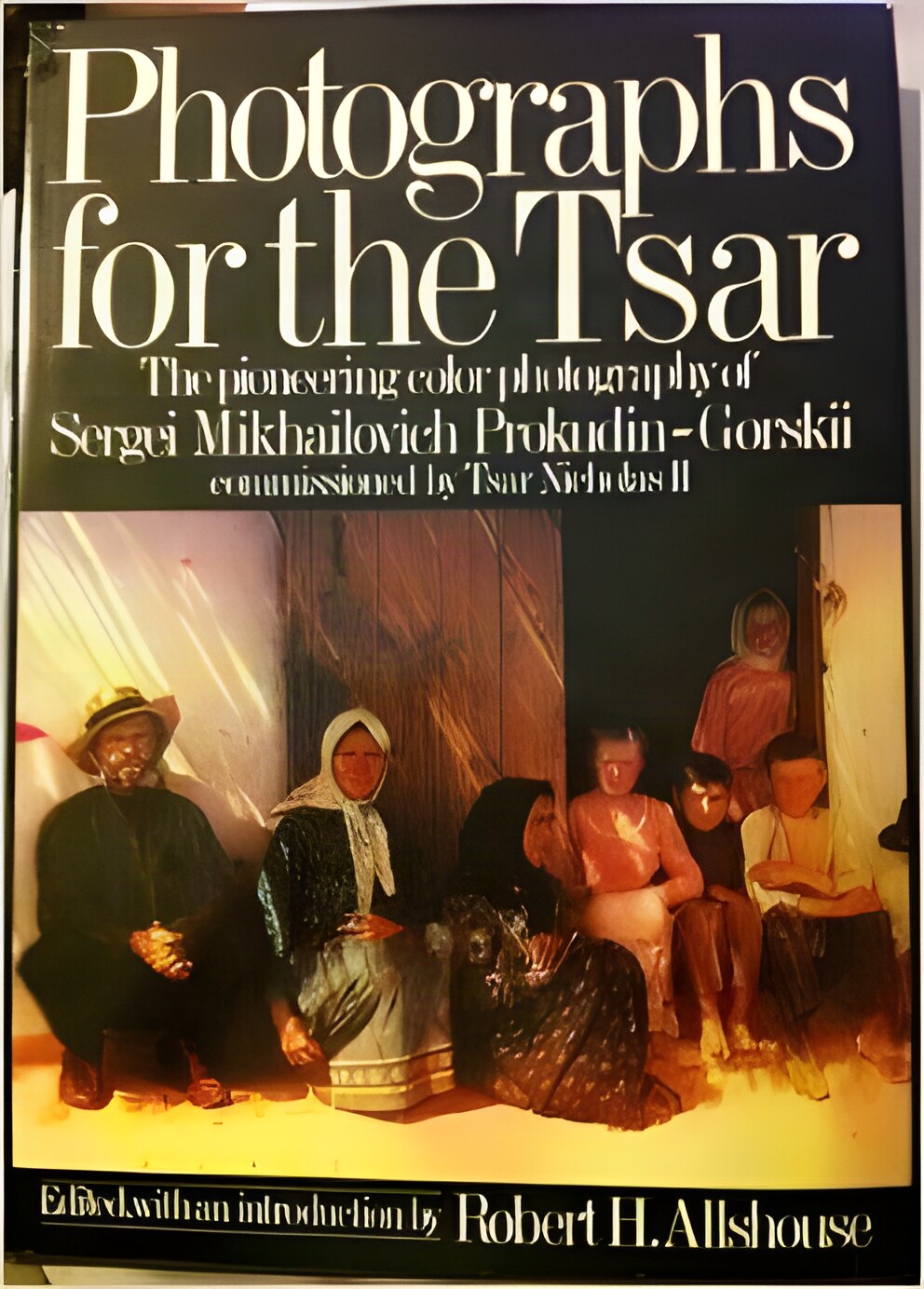
Hardcover. Dial Press, 1st, 1980, Book: Very Good, Dust Jacket: Very Good, 216 pages. Hardcover. Color photographs. Clean, unmarked copy in excellent condition with minor wear to dust jacket. Sergei Prokudin-Gorskii was a chemist and photographer commissioned by Tzar Nicholas II to photograph as much of the Russian Empre as possible in color. Prokudin-Gorskii used three color separations for his photos and as a result some pictures are astoundingly sharp and brilliantly colored, and some the colors are out of register slightly. That's irrelevant, because the photos are spectacular and show the Russian Empire from end to end on the eve of its collapse.
Hardcover. NY, William Edwin Rudge, 1st, 1930, Book: Good, Dust Jacket: None, Hardcover, red cloth, 46 pages + 51 b&w plates (color frontispiece). Russian artist and diplomatic secretary Paul or Pavel Svinin (1787-1839) toured the northeastern United States in the early 1800s. Here are excerpts of his notes, details about the time and his trip, and 51 BW reproductions of landscapes he rendered along the way. Most of the paintings show scenes from Pennsylvania, New York, New Jersey, Virginia and Maryland. Of interest to both cultural and art historians. With an introduction by R.T.H. Halsey. One of 1000 copies. Ex-lib with stamping, residue to endpapers, gilt lettering on spine faded, otherwise clean.
Hardcover. New York, McGraw-Hill, 2nd, 1986, Book: Very Good, Dust Jacket: Very Good, 298 pages. Hardcover with dust jacket. Clean, unmarked copy with only minor wear to dust jacket. Black and white pictures throughout. ames Oberg (Red Star in Orbit, Mission to Mars, etc.) is a spaceflight engineer at Houston Mission Control; Alcestis Oberg is the author of Spacefarers of the 80s and 90s. Here they offer an engrossing and vivid account of what life is like in an earth-orbiting spacecraft. Because relatively few American space-travelers have published tales of their experiences, the Obergs lean heavily on the diaries and memoirspublished in Russia and little known hereof pioneering Soviet astronauts, notably veterans of long-term Salyut missions like Ryumin and Berezovoy. Here is the human side of life in orbit. Few readers can fail to be grippedand occasionally amusedby revelations of the immediate problems (how astronauts contend with toilets, hygiene, sleeping), their technical perils (e.g., air contamination) and the psychological hazards they face, from crewmate incompatibility to depression and homesickness for Earth. Photos.
Hardcover. New Haven CT, Yale University Press, 1st, 2015, Book: Very Good, Dust Jacket: None, Hardcover, 238 pages. Like new in publisher's shrink-wrap. Covering the period from the Revolution to the beginning of World War II, this book considers Soviet avant-garde photography and film in the context of political history and culture. Three essays trace this generation of artists, their experiments with new media, and their pursuit of a new political order. A wealth of stunning photographs, film stills, and film posters, as well as magazine and book designs, demonstrate that their output encompassed a spectacular range of style, content, and perspective, and an extraordinary sense of the power of the photograph to change the world.
Hardcover. Cambridge, Cambridge University Press, 1st UK, 1995, Book: Very Good, Dust Jacket: Very Good, Hardcover in a bright, unclipped dust jacket, 269 pages. Clean, bright copy. This is the first scholarly account by a Western historian of the Time of Troubles, the period of civil war and foreign invasion in early-seventeenth-century Russia. The author focuses on the various pretenders or royal imposters who appeared at this time; she traces their careers and offers explanations for their success. Her analysis of the phenomenon of pretense illuminates popular perceptions of the monarchy in early modern Russia, and demonstrates how social protest could take the form of support for imposters claiming to be the "true tsar".
Softcover. NY, Oxford University Press, reprint, 1992, Book: Very Good, Dust Jacket: None, Softcover in pictorial wraps, 184 pages, coloe illustrations. From before the days of Moses up through the 1960s, slavery was a fact of life in the Middle East. Pagans, Jews, Christians, and Muslims bought and sold at the slave markets for millennia, trading the human plunder of wars and slave raids that reached from the Russian steppes to the African jungles. But if the Middle East was one of the last regions to renounce slavery, how do we account for its--and especially Islam's--image of racial harmony? How did these long years of slavery affect racial relations? In Race and Slavery in the Middle East, Bernard Lewis explores these questions and others, examining the history of slavery in law, social thought, and practice over the last two millennia. Bright, clean copy.
Hardcover. Princeton, N.J., Kingston Press, Incorporated, The, 1st, 1984, Book: Very Good, Dust Jacket: Very Good, SIGNED BY AUTHOR. 227 pages. Light foxing to top and fore-edge. Minor wear to dust jacket; spine slightly faded. Else a very clean, tight copy.

 "Marxism in Russia: Key Documents 1879-1906by: Harding, Neil (Editor)")
 "Mexico: The Revolution and Beyond - Photographs by Agustin Victor Casasola 1900-1940by: Casasola, Agustin Victor")
 "Meyerhold the Directorby: Rudnitsky, Konstantin")
 "Moscow, 1905: Working-Class Organization and Political Conflictby: Engelstein, Laura")
 "National Geographic Magazine - Vol. XXXI January - June 1917 (Six Issues)by: National Geographic Society")
 "National Geographic Magazine - Vol. XXXII No. 3 September 1917by: National Geographic Society")
 "Nietzsche and Soviet Culture: Ally and Adversaryby: Bernice Glatzer Rosenthal (Ed.)")

 "On the Trail of Genghis Khan: An Epic Journey Through the Land of the Nomads by: Tim Cope")
 "Peasant Russia Civil War: The Volga Countryside in Revolution 1917-1921by: Figes, Orlando")
 "Peter Carl Faberge - Goldsmith and Jeweller to the Russian Imperial Court and the Principal Crowned Heads of Europe - An Illustrated Record and Review of his Life and Work, A.D. 1846-1920by:")
 "Peter the Greatby: Stanley, Diane")
 "Petrashevtsy, The: - A Study of the Russian Revolutionaries of 1848by: Seddon, J. H.")


 "Picturesque United States of America 1811 1812 1813 being a Memoir on Paul Svinin Russian Diplimatic Officer Artist and Author Containing Copious Excerpts from His Account of His Travels in America with Fifty two Reproductions of Wat")
 "Pioneering Space: Living on the Next Frontierby: Oberg, James E. and Alcestis R.")
 "Power of Pictures, The: Early Soviet Photography, Early Soviet Filmby: Goodman, Susan Tumarkin")
 "Pretenders and Popular Monarchism in Early Modern Russia - The False Tsars of the Time of Troublesby: Perrie, Maureen")

