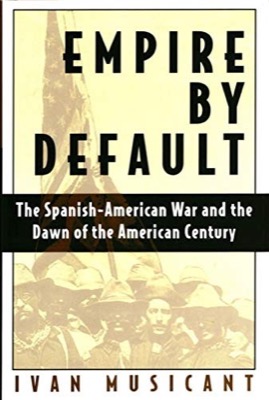
Hardcover. NY, Henry Holt , 1st, 1998, Book: Very Good, Dust Jacket: Very Good, Hardcover in a bright, unclipped dust jacket, 740 pages. Historian Musicant offers a detailed examination of the American war that catapulted the nation to imperial status. Musicant offers a portrait of a nation increasingly torn between the desire for isolation and the yearning for a place on the international stage. That conflict was at first fought out in the nation's newspapers, which managed to gradually sway public opinion toward involvements abroad. The sinking of the American warship Maine in the harbor of Havana pushed America over the edge, and McKinley was compelled to declare war on Spain. The war itself lasted less than a year and featured only a few large-scale battles, but Musicant is able to wring considerable drama from this thorough narrative of events. Clean copy.
Hardcover. NY, Overlook Press, 1st US, 2013, Book: Very Good, Dust Jacket: Very Good, Hardcover in a bright, unclipped dust jacket. Against the background of the Cold War, and the looming spectre of Soviet-sponsored subversion in Britain's dwindling colonial possessions, the imperial intelligence service MI5 played a crucial but top secret role in passing power to newly independent national states across the globe. Walton reveals this `missing link' in Britain's post-war history. He sheds light on everything from violent counter-insurgencies fought by British forces in the jungles of Malaya and Kenya, to urban warfare campaigns conducted in Palestine and the Arabian Peninsula. Draws on (among other sources) records from the Foreign Office's secret archive at Hanslope Park, which contains some of the darkest and most shameful secrets from the last days of Britain's empire. 411 pages, b&w illustrations. Clean copy.
Hardcover. NY, W. W. Norton & Company, 1st, 1976, Book: Very Good, Dust Jacket: Very Good, Hardcover in a lightly worn dust jacket, 332 pages, b&w illustrations. Clean, tight copy.
Hardcover. Chicago, University of Chicago Library, 1st, 2014, Book: Very Good, Dust Jacket: None, Hardcover, 144 pages. Like new in publisher's shrink-wrap. With 2014 marking the one-hundredth anniversary of the commencement of World War I, En Guerre offers a fresh, thought-provoking exploration of the impact of the Great War as viewed through the lens of French graphic illustration of the period. Published in conjunction with an exhibition of these illustrations at the University of Chicago Library's Special Collections Research Center, this catalog draws from illustrated books, magazines, and prints to present a wide range of perspectives on themes essential to a deeper understanding of the war in France: patriotism, nationalism, propaganda, and the soldier's experience, as well as the mobilization of the French national home front as seen through fashion, music, humor, and children's literature. With a text by noted historians Neil Harris and Teri J. Edelstein and featuring more than one hundred reproductions of the vivid and colorful work of French illustrators, En Guerre reaffirms the persuasive role that art can play in the service of political and military power.
Hardcover. NY, W. W. Norton , 2nd pr., 1970, Book: Very Good, Dust Jacket: Very Good, Hardcover in a lightly worn, price-clipped dust jacket, 209 pages. Many b&w photos, some color. The author and S. Oughterson and Shields Warren, as part of the United States Atomic Bomb Causality Commission, were sent immediately (September 1945) to survey Hiroshima and Nagasaki, Japan after the bombing and surrender of Japan to study the devastation and the subsequent irradiation sickness.
Hardcover. London, Routledge, 1st, 1989, Book: Very Good, Dust Jacket: Very Good, Hardcover in a bright dust jacket, 210 pages, b&w illustrations. Beard examines the English country house life, its gentry, and the changes they undertook through the century in order to survive. The author shows how after World War Two, their political power had eroded and they began to run their estates as businesses, instead of paternalistic rural communities. Clean copy.
Hardcover. Boston, Dayton and Wentworth, 1st, 1853, Book: Fair, Dust Jacket: None, 428 pages. Hardcover with heavy wear and soil on cover boards. Gutter cracked in several areas. Loose hinge and loose pages. Foxing on pages.
Softcover. Cambridge MA, Harvard University Press, reprint, 1985, Book: Very Good, Dust Jacket: None, Softcover, 291 pages with index. A social history of Europe in all its aspects: economic, political, diplomatic military, colonial-expansionist. Crisply and succinctly written, it describes Europe not through a history of individual countries, but in a common context during the three quarters of a century between the death of Louis XIV and the industrial revolution in England and the social and political revolution in France. It presents the development of government, institutions, cities, economies, wars, and the circulation of ideas in terms of social pressures and needs, and stresses growth, interrelationships, and conflict of social classes as agents of historical change, paying particular attention to the role of popular, as well as upper- and middle-class, protest as a factor in that change. Clean, bright copy.
Hardcover. Chicago, Quadrangle Books, 1st, 1972, Book: Very Good, Dust Jacket: Good, Hardcover in a rubbed, worn dust jacket, 277 pages. Name on front fly leaf, otherwise clean.
Softcover. West Lafayette IN, Purdue University Press , 1st, 2020, Book: Very Good, Dust Jacket: None, Softcover, 529 pages, b&w illustrations. Eva and Otto is a true story about German opposition and resistance to Hitler as revealed through the early lives of Eva Lewinski Pfister (1910-1991) and Otto Pfister (1900-1985). It is an intimate and epic account of two Germans-Eva born Jewish, Otto born Catholic-who worked with a little-known German political group that resisted and fought against Hitler in Germany before 1933 and then in exile in Paris before the German invasion of France in May 1940. After their improbable escapes from separate internment and imprisonment in Europe, Eva obtained refuge in America in October 1940 where she worked to rescue other endangered political refugees, including Otto, with the help of Eleanor Roosevelt. As revealed in recently declassified records, Eva and Otto later engaged in different secret assignments with the US Office of Strategic Services (OSS) in support of the Allied war effort. Despite their vastly different backgrounds, Eva and Otto gave each other hope and strength as they acted upon what they understood to be an ethical duty to help others threatened by fascism. The book provides a sobering insight into the personal risks and costs of a commitment to that duty. Their unusually beautiful writing-directed to each other in diaries and correspondence during two long periods of wartime separation-also reveals an unlikely and inspiring love story.
Hardcover. Reno, Center for Basque Studies, 1st, 2012, Book: Very Good, Dust Jacket: None, 333 pages, b&w photos. Black illustrated boards, no dust jacket. Light bumping to corners, else a clean, tight copy. his story--that of the government-in-exile of Lehendakari Jose Antonio Agirre and the multitudes of other Basques who were forced by war and oppression to flee their homeland--has not been written in English before and is rather unknown to the Basque, Spanish, and French historiography. Drawing on primary sources; archival documentation; and interviews with many Basque political exiles, resistance members, and former prisoners of labor camps Professor Xabier Irujo tells a gripping story of the Basque autonomous government, conceived during the beginnings of a bloody civil war, forced to organize a mass exile and then overtaken by necessity to feed and clothe its exiled population. Following this initial period, the exiled Basques were then confronted by World War and forced again into flight, this time mainly to the Americas. Never giving up their opposition to the dictatorship of Francisco Franco, the government continued its struggle during forty long years of existence, through wars hot and cold as well as countless political developments. While tracing the history of Lehendakari Agirre, this book is more the story of all of the Basques who were forced into exile, and it serves as a testimony to their unwavering determination to return to their homeland. In addition, the book contains an extensive biographical index of many of the heretofore unknown exile activists: writers, politicians, soldiers, intellectuals, but even more so, Basque patriots.
Hardcover. New York, The Macmillan Company, reprint, 1958, Book: Very Good, Dust Jacket: None, Hardcover, dark blue cloth, 179 pagees, with illustrations by Mudge-Marriatt. Minor corner and spine edge wear, otherwise, in very good condition. The "extraordinary seaman" was Captain Lord Cochrane, tenth Earl of Dondonald; the author of this book was an M.P., and contributor of the Parliamentary Report to the weekly New Statesman. "Captain Cochrane went to sea in the Royal Navy's greatest period. He became one of the finest sea fighters Britain has ever known. His scientific ingenuity and imaginative genius made him a pioneer of combat methods which were only fully developed nearly one hundred and fifty years later in the second world war."
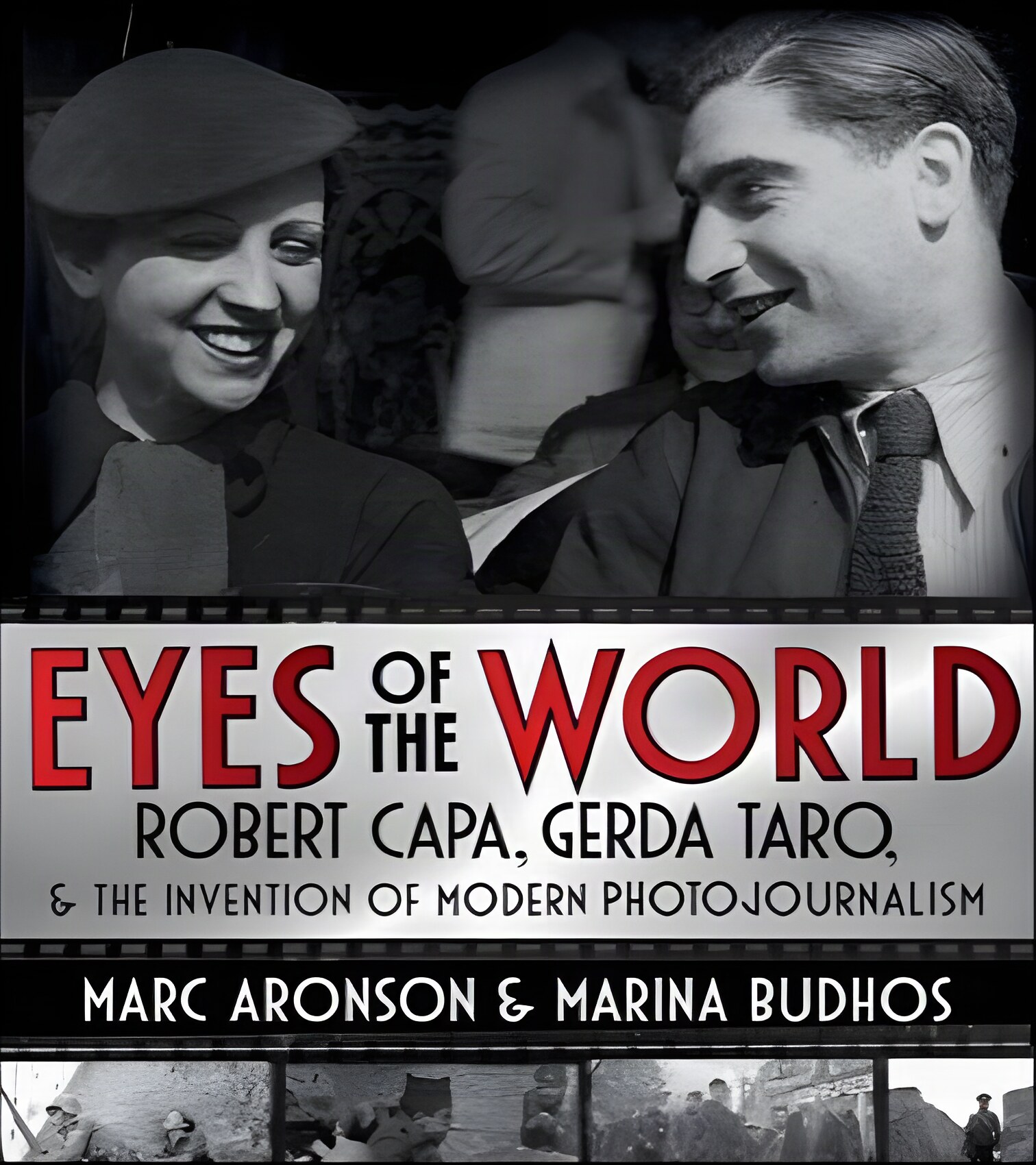
Hardcover. NY, Henry Holt and Co., 1st, 2017, Book: Very Good, Dust Jacket: Very Good, Hardcover in a bright dust jacket, 294 pages. Robert Capa and Gerda Taro were young Jewish refugees, idealistic and in love. As photographers in the 1930s, they set off to capture their generation's most important struggle-the fight against fascism. Among the first to depict modern warfare, Capa, Taro, and their friend Chim took powerful photographs of the Spanish Civil War that went straight from the action to news magazines. They brought a human face to war with their iconic shots of a loving couple resting, a wary orphan, and, always, more and more refugees-people driven from their homes by bombs, guns, and planes. Today, our screens are flooded with images from around the world. But Capa and Taro were pioneers, bringing home the crises and dramas of their time-and helping give birth to the idea of bearing witness through technology. With a cast of characters ranging from Langston Hughes and George Orwell to Pablo Picasso and Ernest Hemingway, and packed with dramatic photos, posters, and cinematic magazine layouts, here is Capa and Taro's riveting, tragic, and ultimately inspiring story. Clean copy.
Softcover. London/NY, Bloomsbury, 1st, 2016, Book: Very Good, Dust Jacket: None, Softcover, 346 pages. This volume makes the key essays of 19th century French philosopher Felix Ravaisson available in English for the first time. In recent years, Ravaisson has emerged as an extremely important and influential figure in the history of modern European philosophy. The volume contains the classic 1838 dissertation Of Habit, studies of Pascal, Stoicism and the wider history of philosophy together with the Philosophical Testament that he left unfinished when he died in 1900. The volume also features Ravaisson's work in archaeology, the history of religions and art-theory, and his essay on the Venus de Milo, which occupied him over a period of twenty years after he noticed, when hiding the statue behind a false wall in a dingy Parisian basement during the Franco-Prussian war, that it had previously been presented in a way that deformed its original bearing and meaning. Clean copy.
Hardcover. NY, NYU Press , 1st, 2014, Book: Very Good, Dust Jacket: None, Hardcover, illustrated boards, no dust jacket issued, 272 pages. Returning Vietnam veterans had every reason to expect that the government would take care of their readjustment needs in the same way it had done for veterans of both World War II and Korea. But the Vietnam generation soon discovered that their G.I. Bills fell well short of what many of them believed they had earned. Mark Boulton's groundbreaking study provides the first analysis of the legislative debates surrounding the education benefits offered under the Vietnam-era G.I. Bills. Specifically, the book explores why legislators from both ends of the political spectrum failed to provide Vietnam veterans the same generous compensation offered to veterans of previous wars. Clean copy.
Hardcover. Boston , MFA Publications, 1st, 2006, Book: Very Good, Dust Jacket: Very Good, Hardcover, 223 pages, Like new in publisher's shrink-wrap. 145 illustrations. Both a historical overview and an up-to-the-minute spectacular, "Fashion Show" explores the ever-fascinating world of Paris couture-the history of the Paris fashion industry from its beginnings through the mid-twentieth century.
Softcover. NY, Oxford University Press, reprint, 2012, Book: Very Good, Dust Jacket: None, Softcover, 592 pages. Two-time Lincoln Prize-winning historian Allen C. Guelzo offers a marvelous portrait of the Civil War and its era, covering not only the major figures and epic battles, but also politics, religion, gender, race, diplomacy, and technology. And unlike other surveys of the Civil War era, it extends the reader's vista to include the postwar Reconstruction period and discusses the modern-day legacy of the Civil War in American literature and popular culture. Guelzo also puts the conflict in a global perspective, underscoring Americans' acute sense of the vulnerability of their republic in a world of monarchies. He examines the strategy, the tactics, and especially the logistics of the Civil War and brings the most recent historical thinking to bear on emancipation, the presidency and the war powers, the blockade and international law, and the role of intellectuals, North and South. Clean copy.
Softcover. New York, Aperture, 1st, 2005, Book: Very Good, Dust Jacket: Very Good, Softcover, b&w photo wraps, 84 pages. The photographs illustrate what war has done to the America's soul as it waged war in Iraq, both at home and on the front via television images. Contains a chronology of the history of the war from May 1, 2003, to January 1, 2004. Clean, bright copy
Hardcover. NY, Da Capo Press, 1st, 2012, Book: Very Good, Dust Jacket: Very Good, Hardcover in a bright, unclipped dust jacket. When the wartime 1944 presidential election campaign geared up late that spring, Franklin D. Roosevelt had already occupied the White House years longer than any other president. Sensing likely weakness, the Republicans mounted an energetic and expensive campaign, hitting hard at FDR's liberal domestic policies and the war's ongoing cost. Despite gravely deteriorating health, FDR and his feisty running mate, the unexpected Harry Truman, campaigned vigorously against young governor Thomas E. Dewey of New York and old-line Ohio governor John Bricker. Roosevelt's charm and wit, as well as the military successes in Europe and the Pacific, contributed to his sweeping electoral victory. But the hard-fought campaign would soon take its toll on America's only four-term president. Preeminent historian and biographer Stanley Weintraub recaptures FDR's striking "last campaign" and the year's momentous events, from the rainy city streets where Roosevelt, his legs paralyzed by polio since 1922, rode in an open car, to the battlefronts where the commander-in-chief's forces were closing in on Hitler and Hirohito.
Hardcover. Boston / New York, Houghton Mifflin Company, 1st US, 1920, Book: Very Good, Dust Jacket: None, TWO VOLUMES. Volume I, 621 pages. Volume II, 581 pages. In depth history of WWI. In very good condition, some wear to maroon boards and soiled edges of pages. Otherwise clean and well-bound. Pages unmarked.




 "Ethan Allen and the Green-Mountain Heroes of '76by: De Puy, Henry W.")


 "Everlasting Glory: Vermont Soldiers who were Awarded The Congressional Medal of Honor For Service During The Civil War 1861-1865by: Phil S. Rogers (Ed.)")


 "Extraordinary Seamanby: Mallalieu, J. P. W.")


 "First World War N/R UKby: Gilbert, M")
 "First World War, The : 1914-1918 - Personal Experiences of Lieut. Col. C.A. Court Repington (2 Volumes)by: Repington, Colonel")