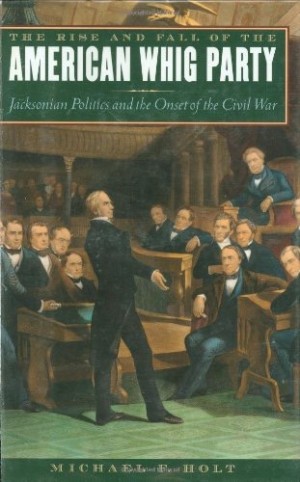
Hardcover. NY, Oxford University Press, 1st, 1999, Book: Very Good, Dust Jacket: Very Good, Hardcover in a bright dust jacket, 1248 pages, illustations. The political home of Henry Clay, Daniel Webster, Horace Greeley, and the young Abraham Lincoln, the American Whig Party was involved at every level of American politics--local, state, and federal--in the years before the Civil War, and controlled the White House for eight of the twenty-two years that it existed. Now, in The Rise and Fall of the American Whig Party, Michael F. Holt gives us the only comprehensive history of the Whigs ever written--a monumental history covering in rich detail the American political landscape from the Age of Jackson to impending disunion. In Michael Holt's hands, the history of the Whig Party becomes a political history of the United States during the tumultuous Antebellum period. He offers a panoramic account of a time when a welter of parties (Whig, Democratic, Anti-Mason, Know Nothing, Free Soil, Republican) and many extraordinary political statesmen (including Andrew Jackson, John C. Calhoun, William Seward, Daniel Webster, Martin Van Buren, and Henry Clay) struggled to control the national agenda as the U.S. inched towards secession. It was an era when Americans were passionately involved in politics, when local concerns drove national policy, and when momentous political events rocked the country, including the Nullification Controversy, the Panic of 1837, the Annexation of Texas, the Compromise of 1850, and the Kansas-Nebraska Act. Holt captures all of this as he shows that, amid this contentious political activity, the Whig Party continuously strove to unite North and South, repeatedly trying to find a compromise position. Indeed, the Whig Party emerges as the nation's last great hope to prevent secession and civil war.
Hardcover. Boston, Little, Brown and Company, reprint, 1950, Book: Very Good, Dust Jacket: None, Hardcover, blue cloth with gilt lettering on spine. Volume III in The History of United States Naval Operations in World War II. 411 pages, illustrated with maps and b&w photos. Gilt on spine with light fading, lacks dust jacket, otherwise clean, tight copy.
Hardcover. NY, Free Press, 1st, 1995, Book: Very Good, Dust Jacket: Very Good, Hardcover in a bright, unclipped dust jacket. 368 pages, b&w illustrations. Neufeld, the curator of World War II history at the National Air and Space Museum in Washington, D.C., provides a well-written, comprehensively researched analysis of Nazi Germany's missile program and its antecedents. The German army became interested in rocket technology during the 1930s at the urging of Karl Becker, an engineer who believed a radical new weapon could deliver a psychological blow to an enemy. The construction of Peenemunde in 1936-37 provided a focal point for research and development that made guided missiles a reality despite Germany's limited material and scientific resources. Neufeld shows that while the rocket program was not Nazi in origin, its leaders readily compromised themselves by accepting National Socialism, especially in agreeing to the widespread use of slave labor. A more ambiguous legacy of Peenemunde is its rocket technology, which decisively shaped the second half of the 20th century. Clean copy.
Hardcover. Ithaca NY, Cornell University Press, 2nd pr., 2005, Book: Very Good, Dust Jacket: Very Good, Hardcover in a bright dust jacket, 261 pages, previous owner's signature on front fly leaf. "Evil is the most serious of our moral problems. All over the world cruelty, greed, prejudice, and fanaticism ruin the lives of countless victims. Outrage provokes outrage. Millions nurture seething hatred of real or imagined enemies, revealing savage and destructive tendencies in human nature. Understanding this challenges our optimistic illusions about the effectiveness of reason and morality in bettering human lives. But abandoning these illusions is vitally important because they are obstacles to countering the threat of evil. The aim of this book is to explain why people act in these ways and what can be done about it." The first part of this book is a detailed discussion of six horrible cases of evil: the Albigensian Crusade of about 1210; Robespierre's Terror of 1793?94; Franz Stangl, who commanded a Nazi death camp in 1943?44; the 1969 murders committed by Charles Manson and his "family"; the "dirty war" conducted by the Argentinean military dictatorship of the late 1970s; and the activities of a psychopath named John Allen, who recorded reminiscences in 1975. John Kekes includes these examples not out of sensationalism, but rather to underline the need to hold vividly in our minds just what evil is. The second part shows why, in Kekes's view, explanations of evil inspired by Christianity and the Enlightenment fail to account for these cases and then provides an original explanation of evil in general and of these instances of it in particular.
Hardcover. Leicester University Press, 1st, 1983, Book: Very Good, Dust Jacket: Very Good, Hardcover in a bright dust jacket, 262 pages, b&w photographs. Minor shelf wear to dust jacket. Else a very clean, tight copy.
Softcover. Montpelier VT, St. Michael's High School, 1940-1950, Book: Good, Dust Jacket: None, Nine stapled softcover booklets, 44-60 pages each, b&w photos. A history of this Vermont high school during WW2 and the post-war years. A few with ink name on cover, otherwise clean.
Hardcover. NY, Quadrangle Books/New York Times, 2nd pr., 1976, Book: Very Good, Dust Jacket: Very Good, Hardcover in a lightly worn, rubbed dust jacket. Translated by Ruth Geyra Stern and Sol Stern. The events preceding the Yom Kippur War in October 1973. Name on front fly leaf, otherwise clean.
Hardcover. NY, Harper & Row, 1st US, 1972, Book: Very Good, Dust Jacket: Very Good, Hardcover in lightly worn dust jacket, 416 pages including index, bibliography and abbreviations. "The first adequately comprehensive history of the Resistance in Europe during Hitler's war to be published in any language." Name on frontfly leaf, otherwise clean.
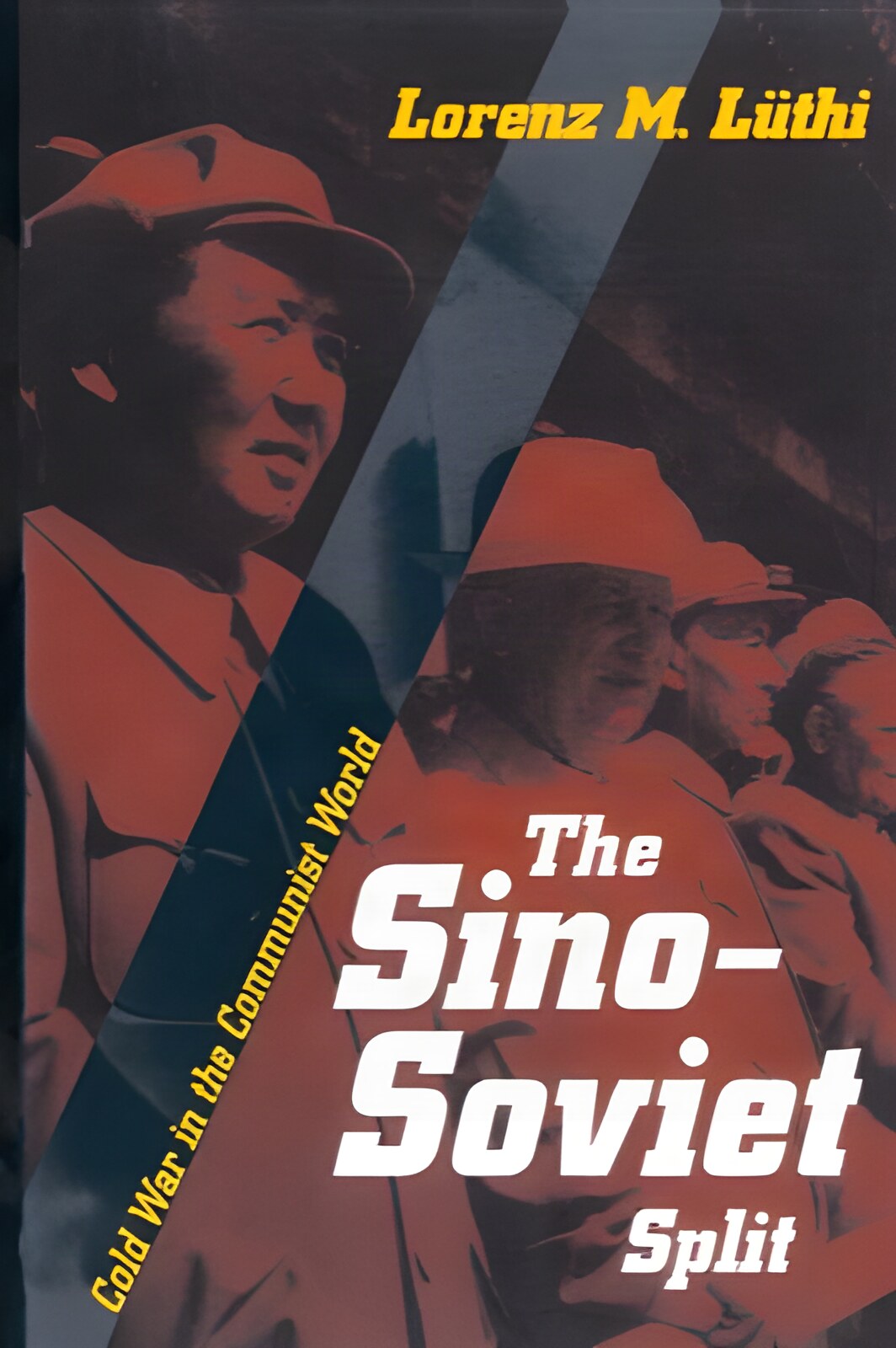
Softcover. Princeton NJ, Princeton University Press, 3rd pr., 2008, Book: Very Good, Dust Jacket: None, Softcover in pictorial wraps, 375 pages, maps. A decade after the Soviet Union and the People's Republic of China established their formidable alliance in 1950, escalating public disagreements between them broke the international communist movement apart. In The Sino-Soviet Split, Lorenz Luthi tells the story of this rupture, which became one of the defining events of the Cold War. Identifying the primary role of disputes over Marxist-Leninist ideology, Luthi traces their devastating impact in sowing conflict between the two nations in the areas of economic development, party relations, and foreign policy. The source of this estrangement was Mao Zedong's ideological radicalization at a time when Soviet leaders, mainly Nikita Khrushchev, became committed to more pragmatic domestic and foreign policies. Using a wide array of archival and documentary sources from three continents, Luthi presents a richly detailed account of Sino-Soviet political relations in the 1950s and 1960s. He explores how Sino-Soviet relations were linked to Chinese domestic politics and to Mao's struggles with internal political rivals. Furthermore, Luthi argues, the Sino-Soviet split had far-reaching consequences for the socialist camp and its connections to the nonaligned movement, the global Cold War, and the Vietnam War. Clean copy.
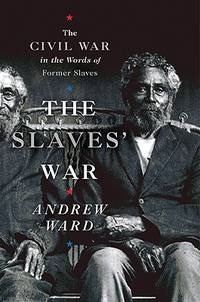
Hardcover. Boston, Houghton Mifflin, 1st, 2008, Book: Very Good, Dust Jacket: Very Good, Hardcover in a bright dust jacket, 386 pages. The first narrative history of the Civil War told by the very people it freed. Groundbreaking, compelling, and poignant, The Slaves' War delivers an unprecedented vision of the nation's bloodiest conflict. An acclaimed historian of nineteenth-century and African-American history, Andrew Ward gives us the first narrative of the Civil War told from the perspective of those whose destiny it decided. Woven together from hundreds of interviews, diaries, letters, and memoirs, here is the Civil War as seen from not only battlefields, capitals, and camps, but also slave quarters, kitchens, roadsides, farms, towns, and swamps. Speaking in a quintessentially American language of wit, candor, and biblical power, army cooks and launderers, runaways, teamsters, and gravediggers bring the war to vivid life. From slaves' theories about the causes of the war to their frank assessments of such major figures as Lincoln, Davis, Lee, and Grant; from their searing memories of the carnage of battle to their often startling attitudes toward masters and liberators alike; and from their initial jubilation at the Yankee invasion of the slave South to the crushing disappointment of freedom's promise unfulfilled, The Slaves' War is a transformative and engrossing vision of America's Second Revolution. Clean copy.
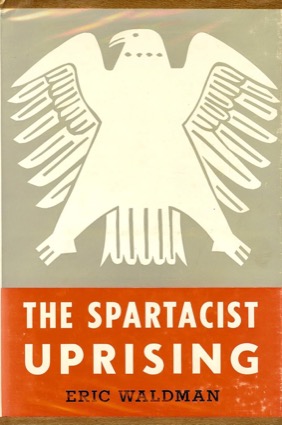
Hardcover. Milwaukee WI, Marquette University, 1st, 1958, Book: Very Good, Dust Jacket: Good, Hardcover in a bright dust jacket with a chip to the top front corner, 248 pages. This book explores the crisis of the German Socialist movement and its growth in intensity from the time of the open split of the Social Democratic Party during World War 1 until its climax in the bloody fighting between the radical left and the socialists during the so-called Spartacist Uprising of January 1919. Clean copy.
Hardcover. London, George Allen & Unwin Ltd, 2nd Ed., 1955, Book: Very Good, Dust Jacket: Good, Hardcover in a worn, chipped dust jacket. 664 pages with index. Volume 2 ONLY. Masaryk was the president of Czechoslovakia after World War I. Long a student of Russia this book was first published in 1913. Clean copy.
Softcover. Newprt VT, Tony O'Connor Civil War Enterprises, reprint, Book: Very Good, Dust Jacket: None, Softcover in stapled wrappers, 60 pages, b&w illustrations. Second Edition. Originally published in 1891 this is a modern reprint. Libby Prison was a Confederate prison at Richmond, Virginia, during the American Civil War. It gained an infamous reputation for the overcrowded and harsh conditions under which officer prisoners from the Union Army were kept. Prisoners suffered from disease, malnutrition and a high mortality rate. Clean copy.
Hardcover. Boston, Little, Brown and Company, reprint, 1950, Book: Very Good, Dust Jacket: None, Hardcover, blue cloth with gilt lettering on spine. Volume V in The History of United States Naval Operations in World War II. 389 pages, illustrated with maps (one fold-out) and b&w photos. Gilt on spine with light fading, lacks dust jacket, otherwise clean, tight copy.
Softcover. Other Press, reprint, 2021, Softcover, 550 pages, b&w illustrations. The little-known story of screenwriter Salka Viertel, whose salons in 1930s and 40s Hollywood created a refuge for a multitude of famous figures who had escaped the horrors of World War ll. Hollywood was created by its "others"; that is, by women, Jews, and immigrants. Salka Viertel was all three and so much more. She was the screenwriter for five of Greta Garbo's movies and also her most intimate friend. At one point during the Irving Thalberg years, Viertel was the highest-paid writer on the MGM lot. Meanwhile, at her house in Santa Monica she opened her door on Sunday afternoons to scores of European emigres who had fled from Hitler--such as Thomas Mann, Bertolt Brecht, and Arnold Schoenberg--along with every kind of Hollywood star, from Charlie Chaplin to Shelley Winters. In Viertel's living room (the only one in town with comfortable armchairs, said one Hollywood insider), countless cinematic, theatrical, and musical partnerships were born. Clean copy.
Hardcover. Los Angeles, Ward Ritchie Press , 1st, 1965, Book: Very Good, Dust Jacket: Very Good, Hardcover, 224 pages, b&w illustrations. Story of a real sailor, Capt. Barney Burnett, aboard the four-masted bark Astral. The ship is smashed and dismasted. at Cape Horn. The crew laboriously clear away the wreckage, rerig the shattered masts, and sail on to San Francisco through the teeth of the gale. Much related ephemeral material laid-in, including correspondence by Burnett.
Hardcover. NY, Farrar Straus & Giroux, 1st, 2006, Book: Very Good, Dust Jacket: Very Good, Hardcover in a bright, unclipped dust jacket. 441 pages, index, notes, glossary, chronology, b&w illustrations. A dramatic new interpretation of the French Revolution that draws troubling parallels with today's politic and religious fundamentalism.
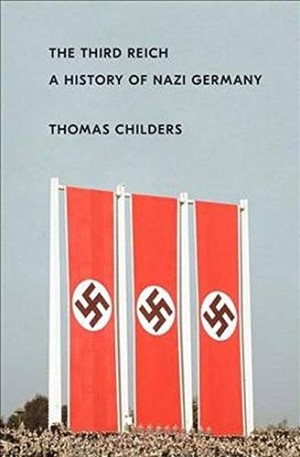
Hardcover. NY, Simon & Schuster, 1st, 2017, Book: Very Good, Dust Jacket: Very Good, Hardcover in a bright, unclipped dust jacket. In The Third Reich, Thomas Childers shows how the young Hitler became passionately political and anti-Semitic as he lived on the margins of society. Fueled by outrage at the punitive terms of the Versailles Treaty that ended the Great War, he found his voice and drew a following. As his views developed, Hitler attracted like-minded colleagues who formed the nucleus of the nascent Nazi party. The failed Munich putsch of 1923 and subsequent trial gave Hitler a platform for his views, which he skillfully exploited. Clean copy.
Softcover. Cambridge MA, Harvard University Press, reprint, 2011, Book: Very Good, Dust Jacket: None, Softcover, 997 pages, color and b&w illustrations. A deadly continental struggle, the Thirty Years War devastated seventeenth-century Europe, killing nearly a quarter of all Germans and laying waste to towns and countryside alike. Peter Wilson offers the first new history in a generation of a horrifying conflict that transformed the map of the modern world. When defiant Bohemians tossed the Habsburg emperor's envoys from the castle windows in Prague in 1618, the Holy Roman Empire struck back with a vengeance. Bohemia was ravaged by mercenary troops in the first battle of a conflagration that would engulf Europe from Spain to Sweden. The sweeping narrative encompasses dramatic events and unforgettable individuals-the sack of Magdeburg; the Dutch revolt; the Swedish militant king Gustavus Adolphus; the imperial generals, opportunistic Wallenstein and pious Tilly; and crafty diplomat Cardinal Richelieu. In a major reassessment, Wilson argues that religion was not the catalyst, but one element in a lethal stew of political, social, and dynastic forces that fed the conflict. By war's end a recognizably modern Europe had been created, but at what price? The Thirty Years War condemned the Germans to two centuries of internal division and international impotence and became a benchmark of brutality for centuries. As late as the 1960s, Germans placed it ahead of both world wars and the Black Death as their country's greatest disaster. Clean, bright copy.
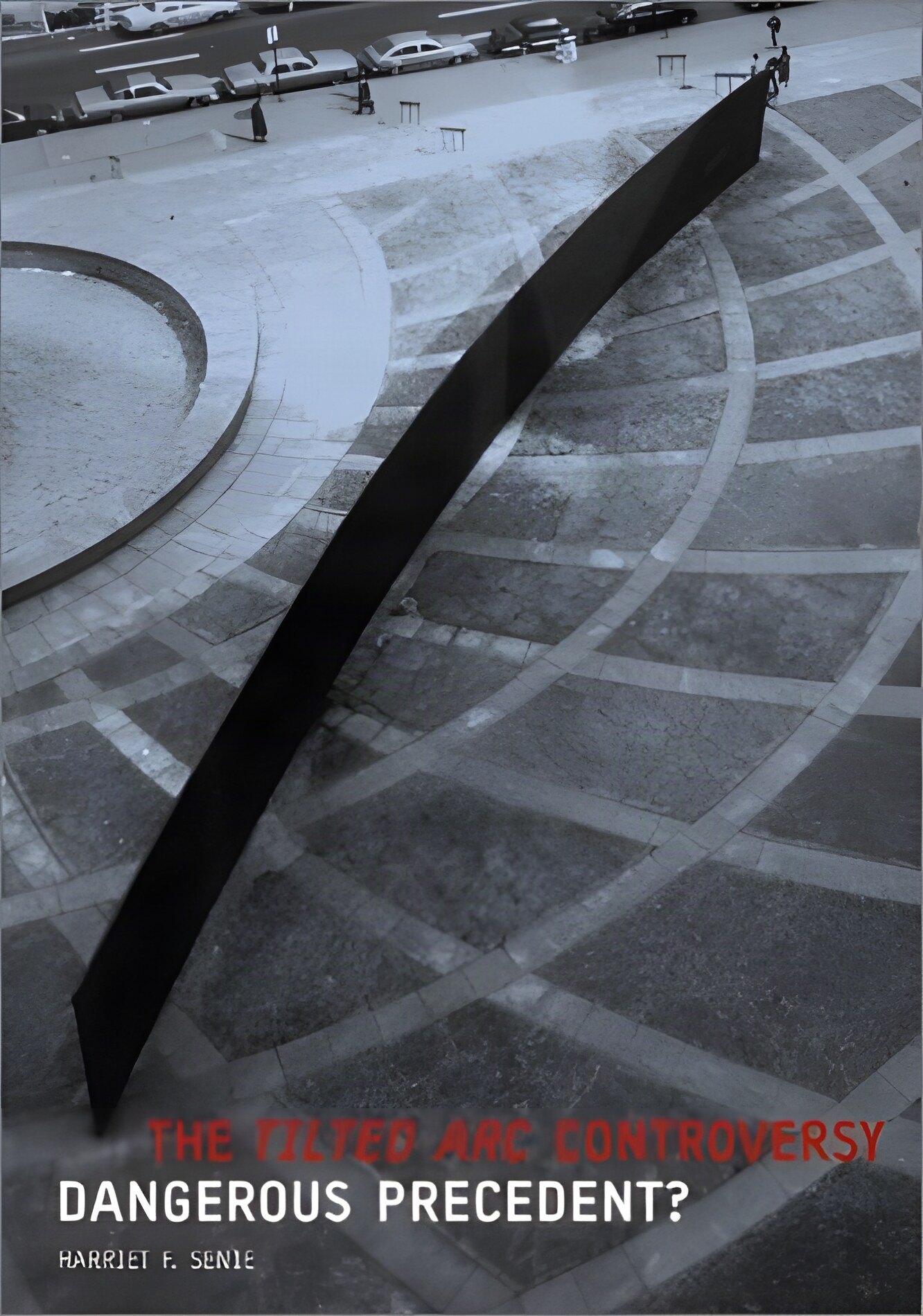
Softcover. Minneapolis, University of Minnesota Press, 1st, 2001, Book: Very Good, Dust Jacket: None, Softcover, 205 pages, b&w illustrations. A comprehensive look at a controversy that continues to fuel debates about the role of public art in America. Since its installation at and subsequent removal from New York City's Federal Plaza, noted sculptor Richard Serra's Tilted Arc has been a touchstone for debates over the role of public art. Installed in 1981, the 10-foot-high, 120-foot-long curved wall of Cor-Ten self-rusting steel instantly became a magnet for criticism. Art critics in the New York Times and the Village Voice labeled it the city's worst public sculpture, and many denounced it as an example of the elitism associated with art and as an obstacle to the use and enjoyment of the plaza. Harriet F. Senie explores the history of Tilted Arc, including its 1979 commission and the heated public hearings that eventually led to its removal in 1989 (it was dismantled and is currently stored in a government warehouse in Maryland). Analyzing the archive of popular opinion, Senie shows how the sculpture was caught in an avalanche of shifting local and national discussions about public funding for the arts. Clean copy.
Hardcover. Berkeley, University of California Press, 1st, 2006, Book: Very Good, Dust Jacket: Very Good, Hardcover in a bright, unclipped dust jacket, 385 pages, b&w illustrations. In this highly original history of the world's most famous bicycle race, Christopher S. Thompson, mining previously neglected sources and writing with infectious enthusiasm for his subject, tells the compelling story of the Tour de France from its creation in 1903 to the present. Weaving the words of racers, politicians, Tour organizers, and a host of other commentators together with a wide-ranging analysis of the culture surrounding the event including posters, songs, novels, films, and media coverage Thompson links the history of the Tour to key moments and themes in French history. He argues persuasively that this hugely popular sporting event has been instrumental in French attempts to grapple with the great challenges they have confronted during their tumultuous twentieth century from World Wars, political divisions, and class conflict to economic modernization, women's emancipation, and threats to public health. Name on half title page, otherwise clean.
Hardcover. NP, Somogy Art Publishers, 1st, 2006, Book: Very Good, Dust Jacket: Very Good, Hardcover, 96 pages. This fascinating collection of photographs documents a relatively unknown episode of Jewish history in Eastern Europe. Illustrating how the 1920s and 1930s saw the creation and development of "Jewish agricultural colonies" in the Soviet Union, Lithuania, Latvia, Poland, and Romania, this history shows that the aim was to "normalize" Jews by teaching them "productive" professional skills. These recently discovered photographs offer a unique and moving insight into the Jewish experience in central and Eastern Europe before World War II. This edition includes English, French, and Yiddish.
Hardcover. NY, E. P. Dutton, reprint, 1977, Book: Very Good, Dust Jacket: Very Good, Hardcover in a bright dust jacket. David Irving's The Trail of the Fox is the best work on Rommel ever written. The circumstances around Rommel's involvement with the attempt on Hitler's life, which is the most speculated aspect of Rommel's life, and how the Gestapo came to believe Rommel was involved, have not been made clear in most of the historiography on Rommel. Irving pieces together what really happened most effectively. There are so many strengths of this book, of which the greatest is probably the fact Irving had access to Rommel's dairy and many of his letters, which he got permission from the family to view. Other items he found in collections in the United States, England, and Germany. Since he worked on this in the 1970's he also was able to interview a number of German officers who were still alive that knew and served with Rommel. The whole work is the way historical research should be done; totally reliant on primary source material, and ignores secondary sources that often use conjecture or just repeat incorrect narratives from earlier books. Every source is from people who fought the war; Germans, Italians, British, French and American officers who were in these campaigns and had either first hand observation of Rommel or were major participants like Eisenhower, Churchill, Goebbels, etc. Clean copy.
Hardcover. London, Secker & Warburg, reprint, 1955, Book: Very Good, Dust Jacket: Fair, Hardcover in a very worn, chipped dust jacket, 255 pages, fold-out chart in rear. A blow by blow account of the Mau Mau leader's trial that lasted for over 100 days, "one of the most dramatic and important this century". In 1952, Kenyatta was arrested in Kenya by the British colonial authorities and charged with masterminding the anti-colonial Mau Mau Uprising. Although protesting his innocence, a view shared by later historians, he was convicted. He remained imprisoned at Lokitaung until 1959 and was then exiled to Lodwar until 1961. Appears to be a book club edition. Overall clean copy but cheap paper is tanning.

 "The Rising Sun in Pacific, 1931-April 1942: History of United States Naval Operations in World War II, Volume 3 by: Morison, Samuel Eliot")
 "The Rocket and the Reich: Peenemunde and the Coming of the Ballistic Missile Eraby: Michael J. Neufeld")





 "The Struggle for Guadalcanal: August 1942-February 1943 (History of United States Naval Operations in World War Ii, Volume 5) by: Morison, Samuel Eliot")

 "The Tall Voyagers: The Story of Barney Burnett by: Rankin Claire")


 "The Tour de France: A Cultural History by: Thompson, Christopher S.")
 "The Tradesmen and the Farmers of Yiddishland: 1921-1938by: Pollack, Emmanuelle (Editor)")