Softcover. Washington DC, National Gallery of Art, 1st, 2010, Book: Very Good, Dust Jacket: None, Softcover, pictorial wrappers, 430 pages. This volume of essays reexamines the establishment and early history of the Accademia di San Luca in Rome, one of the most important centers of governance, education, and theory in the arts for the early modern period and the model for all subsequent academies of art worldwide. It is the most comprehensive history of the Accademia to be published in more than forty years, and the first in nearly two hundred years to be based almost entirely on new primary and documentary material. In reconstructing the early history of the institution, the volume also provides a new basis for tracking the careers of painters, sculptors, and architects working in Rome in the early 16th century, and for understanding the artistic and professional issues that engaged them.
Hardcover. NY, Pantheon, 1st, 2005, Book: Very Good, Dust Jacket: None, Hardcover, 108 pages in color. With all his literary accolades and awards, it's easy to forget Ware (Jimmy Corrigan) is one of the warmest, funniest cartoonists in America. The Acme Novelty Library collects a few issues of Ware's comic book series by the same name and adds plenty of new pages and visual delights. It is, like all of his work, an utterly immersive experience. You're not just reading his comics, you're inhabiting his world: from fake ads to diagrams for paper models to a lengthy and very funny fictional history of the Acme Novelty Company. These strips combine complex and beautiful visuals with the humor of hapless, often sad characters in ridiculous predicaments. "Rusty Brown", a series of strips based around an obsessive collector who will be the subject of Ware's next graphic novel, is particularly strong. These comics showcase Ware's unusual sensitivity towards his characters, building an incisive, multi-dimensional portrait of Brown and his friend Chalky White. On top of all of these riches there is Ware's own personal "history of art" in cartoon form, and a multi-page story about a naked superhero. Combining surreal humor, cutting satire, stunning visuals, and empathic characters, Ware's latest is a wondrous journey into the universe of a master cartoonist in peak form.
Hardcover. NY, Pantheon, 1st, 2005, Book: Very Good, Dust Jacket: None, Hardcover, 108 pages in color. With all his literary accolades and awards, it's easy to forget Ware (Jimmy Corrigan) is one of the warmest, funniest cartoonists in America. The Acme Novelty Library collects a few issues of Ware's comic book series by the same name and adds plenty of new pages and visual delights. It is, like all of his work, an utterly immersive experience. You're not just reading his comics, you're inhabiting his world: from fake ads to diagrams for paper models to a lengthy and very funny fictional history of the Acme Novelty Company. These strips combine complex and beautiful visuals with the humor of hapless, often sad characters in ridiculous predicaments. "Rusty Brown", a series of strips based around an obsessive collector who will be the subject of Ware's next graphic novel, is particularly strong. These comics showcase Ware's unusual sensitivity towards his characters, building an incisive, multi-dimensional portrait of Brown and his friend Chalky White. On top of all of these riches there is Ware's own personal "history of art" in cartoon form, and a multi-page story about a naked superhero. Combining surreal humor, cutting satire, stunning visuals, and empathic characters, Ware's latest is a wondrous journey into the universe of a master cartoonist in peak form.
Softcover. NY, New York Review Books, 1st US., 2005, Book: Very Good, Dust Jacket: None, Softcover, 488 pages. In the seventeenth and eighteenth centuries, between the reign of Louis XIII and the Revolution, French aristocratic society developed an art of living based on a refined code of good manners. Conversation, which began as a way of passing time, eventually became the central ritual of social life. In the salons, freed from the rigidity of court life, it was women who dictated the rules and presided over exchanges among socialites, writers, theologians, and statesmen. They contributed decisively to the development of the modern French language, new literary forms, and debates over philosophical and scientific ideas. With a cast of characters both famous and unknown, ranging from the Marquise de Rambouillet to Madame De Stael was a, and including figures like Ninon de Lenclos, the Marquise de Sevigne, and Madame de Lafayette, as well as Pascal, La Rochefoucauld, Diderot, and Voltaire, Benedetta Craveri traces the history of this worldly society that carried the art of sociability to its supreme perfection-and ultimately helped bring on the Revolution that swept it all away. Clean copy.
Hardcover. NY, Doubleday, 1st, 2002, Book: Very Good, Dust Jacket: Very Good, Hardcover in a bright, unclipped dust jacket. The discovery of gold by a team of Mormon mill workers in 1848 sparked a frenzy that shook the world. People swarmed to California from as far as China and Australia. They came from England and France, from Ireland and Chile, leaving behind their families and everything they owned in the hope of making their fortunes in the new world. They came by ship and overland, braving Tierra del Fuego and the pestilences of Panama, lured by the promise of gold. In a spellbinding narrative that spans several continents, Brands brings the fervour and excitement of the gold rush vividly to life. The Age of Gold is narrative history at its best -- the astonishing tale of one of the most extraordinary speculative frenzies in history, told by a master historian. 547 pages, clean copy.
Hardcover. Princeton NJ, Princeton University Press, 1st, 2011, Book: Very Good, Dust Jacket: Very Good, Hardcover in a bright, unclipped dust jacket, 543 pages. This is the history of how two countries on the northern edge of Europe built societies in the twentieth century that became objects of inspiration and envy around the world. Francis Sejersted, one of Scandinavia's leading historians, tells how Norway and Sweden achieved a rare feat by realizing grand visions of societies that combine stability, prosperity, and social welfare. It is a history that holds many valuable lessons today, at a time of renewed interest in the Scandinavian model. The book tells the story of social democracy from the separation of Norway and Sweden in 1905 through the end of the century, tracing its development from revolutionary beginnings through postwar triumph, as it became a hegemonic social order that left its stamp on every sector of society, the economy, welfare, culture, education, and family. The book also tells how in the 1980s, partly in reaction to the strong state, a freedom and rights revolution led to a partial erosion of social democracy. Yet despite the fracturing of consensus and the many economic and social challenges facing Norway and Sweden today, the achievement of their welfare states remains largely intact.
Softcover. UK, Faber & Faber, reprint, 1988, Book: Very Good, Dust Jacket: None, Softcover, 271 pages. In the twelfth century, Languedoc, in the far south, was among the most beautiful parts of France, far away from the world of the feudal north. However, it was in this rich region that a heresy of Eastern origin took hold, forcing the Catholic Church to confront a rival whose teachings questioned the foundations of Christian thought. These heretics, called Cathars, held a profoundly pessimistic view of the world that was based on the duality of all things, including good and evil: according to one heretic, "The one, the good God, made the invisible world, while the other, the evil God, made the visible one." Jonathan Sumption's acclaimed history examines the roots of this heresy as well as of the crusade the Church undertook in 1208 to stamp out the infidels, who ultimately were conquered by the Catholic armies. But this book does more than simply describe this terrible war; it reconstructs a lost world of great cultural richness, one that saw the creation in Languedoc of the troubadour tradition as well as the magnificent castles at Cabaret and Carcassonne. Clean copy.
Hardcover. Boston, Thomas & Andrews , 6th Ed., 1812, Book: Good, Dust Jacket: None, Hardcover in contemporary calf, with gilt letting on red leather spine label and sound and bright internally with 3 fold-out maps (Africa, Asia/Arabia and Europe). Covers worn, bottom of spine has a small chunk gone from bottom, about a square inch. Interior clean, minor foxing. VOLUME 2 ONLY.
Hardcover. NY, Doubleday & Company, reprint, 1963, Book: Very Good, Dust Jacket: Good, Hardcover in a lightly worn, price-clipped dust jacket with fading to spine. 408 pages with b&w illustrations. Classic work by the famed science fiction author and engineer, providing a fascinating account of pyramids, aqueducts, catapults, fortifications, ships, and technology from the ancient world to the Renaissance. No First Edition indicated on copyright page so assumed early reprint.
Softcover. Atlantic Highlands NJ, Humanities Press, 1st, 1981, Book: Very Good, Dust Jacket: None, Softcover, 329 pages. A Marxian perspective on anthropology. Sections are pre-capitalist societies with hunter-gatherers, pastoralists, lineage-based societies and the Asiatic mode of production; and recent Marxian studies, rethinking traditional aspects of anthropology, including phenomenological anthropology, the history of the social sciences, world-systems theory, the nature of peripheral societies, and feminist perspectives.
Hardcover. NY, MacMillan Company, 1st US, 1971, Book: Very Good, Dust Jacket: Very Good, Hardcover in a bright, unclipped dust jacket, 312 pages. Includes footnotes, bibliography, and index. Foreword by Stephen Spender. A narrative study of the troubling phenomenon why many European intellectuals and artists were drawn to and embraced Fascism during the period between the world wars. This conundrum may find expression today. Clean copy.
Hardcover. New York, Universe Publishing, 2nd printing, 2009, Book: Very Good, Dust Jacket: None, Non paginated. Hardcover. Six pages of pop-ups in excellent condition, each page has several smaller pop-ups laid in. Bright cover boards & bright illustrations throughout by illustrator, Anton Radevsky. A magnificent journey through the history of architecture. Featuring amazing three-dimensional replications of famous buildings from ancient to modern times, The Architecture Pop-Up Book showcases artwork, photographs, pop-ups, and detailed text of the ancient Egyptian pyramids; the great constructions of Greece and Rome, such as the Parthenon and the Colosseum; majestic Asian wonders, including the Taj Mahal; Gothic and Neoclassical masterpieces, such as Notre Dame and the Florence Duomo; and the work of such important modern architects as Gaudi, Frank Lloyd Wright, and Frank Gehry. From a brilliantly elaborate Gothic cathedral nave to a telescoping Chrysler Building skyscraper, the talent and imagination of architects and builders from all eras and from all over the world are displayed and compared here.Clean, unmarked & tight copy.
Hardcover. NY, VIking, 1st, 2010, Book: Very Good, Dust Jacket: Very Good, Hardcover in a bright, unclipped dust jacket, 261 pages, illustrations. Philip Mould takes a wonderfully interesting look at how art restoration works. But, in looking at restoration of existing paintings, he also delves into how he, as a gallery owner, along with his team, find work that has remained under-valued or unvalued for centuries. And then how that piece, now restored by Mould's experts, ventures back into the art world in renewed glory. Mould takes five or so examples of "found" paintings - one from his "Antique Roadshow" - and writes how instinct and education about a painter, his other work, the painting's subject's history, and other "intangables' go into Mould and his staff taking on an often dirty and undistinguished painting on the chance that the painting is "the real thing" - a real Rembrandt, a real Homer Winslow, etc. Probably the most interesting story was that of a Norman Rockwell painting on display at the Rockwell Museum in Massachusetts that...wasn't. Wasn't the "real" Rockwell painting, but rather one done by a disciple of Rockwell, who copied the original for reasons sort of murky, and donated to the museum. The "real" Rockwell was found by the copier's sons after his death and turned over to the museum. Clean copy.
Hardcover. NY, Abrams, 1st, 2024, Book: Very Good, Dust Jacket: None, Hardcover, slipcase edition. Celebrate 30 years of DreamWorks Animation's visually rich worlds with this luxurious edition of the studio's artistic achievements in both film and television Brimming with rare concept art, preproduction designs, and character sketches, this comprehensive collection offers behind-the-scenes access to the DreamWorks archives. Featuring a foreword from Cameron Diaz, along with insider anecdotes and perspectives from actors, directors, producers, and artists, 571 pages in color. Over the past 30 years, the premier studio has produced some of the most groundbreaking and illustrious animated movies of all time, such as Shrek, Trolls, Kung Fu Panda, How to Train Your Dragon, The Bad Guys, Madagascar, and the newest addition, The Wild Robot, as well as acclaimed TV shows, such as Gabby's Dollhouse, Jurassic World: Camp Cretaceous, Trollhunters, and Spirit Riding Freeamong many others. Like new, in publisher's shrinkwrap. Due to size and weight, DOMESTIC SHIPPING ONLY.
Hardcover. Hermes Press, 1st, 2024, Book: Very Good, Dust Jacket: None, Hardcover, pictorial boards, 190 pages. When cartoonist Elzie Segar created Popeye, as a minor character ten years into the run of the Thimble Theatre strip in 1929, little did he know that the world's most famous sailor would still be around over ninety years later and still being offered as a Sunday feature. To celebrate Popeye, the character, the comic strip and his universe, a feature cartoonist Charles M. Schulz described as "perfect... consistent in drawing and humor," Hermes Press is publishing the definitive art monograph on the subject. This book features a comprehensive essay written by pop culture historian R.C. Harvey accompanied by over 350 illustrations of original strip and comic book art, animation art, illustrations, advertising art, products, the Robert Altman film, and everything Popeye. Every aspect of Popeye is explored, from Olive Oyl and Eugene the Jeep to Wimpy and Bluto. Clean, bright copy.
Softcover. Washington DC, National Gallery of Art , 2nd pr., 203, Book: Very Good, Dust Jacket: None, Softcover, 334 pages illustrated with 224 color plates, 86 black & white. One of America's most innovative artists, Romare Bearden (1911-1988) made colorful and passionate images that reflected his life in a time of creative ferment. His influences ranged from the old masters to African art, as well as the world around him: popular religion and ritual, jazz clubs and brothels, the history and literature of his time, and the places he lived (the rural South, Pittsburgh and Harlem, the Caribbean island of St. Martin). The resulting images are fresh and evocative, filled with quirky details and rhythmic forms. This authoritative and beautiful book, which accompanies a major retrospective opening at the National Gallery of Art in Washington, D.C., provides a provocative and absorbing look at a beloved artist. The Art of Romare Bearden showcases compelling examples of his pioneering work: complex collages and photostats; watercolors, gouaches, and oils; little-known landscapes; his only known sculpture; costume designs; and book illustrations. Mildwear to corners otherwise very good, clean copy.
Hardcover. Chicago, University of Chicago Press, 1st, 2016, Hardcover in a bright dust jacket, still in publisher's shrinkwrap. This stunning book charts the rich history of the blues, through the dazzling array of posters, album covers, and advertisements that have shaped its identity over the past hundred years. The blues have been one of the most ubiquitous but diverse elements of American popular music at large, and the visual art associated with this unique sound has been just as varied and dynamic. There is no better guide to this fascinating graphical world than Bill Dahl--a longtime music journalist and historian who has written liner notes for countless reissues of classic blues, soul, R&B, and rock albums. With his deep knowledge and incisive commentary--complementing more than three hundred and fifty lavishly reproduced images--the history of the blues comes musically and visually to life.
Softcover. Baltimore, Johns Hopkins University Press, 1st, 2007, Book: Very Good, Dust Jacket: None, Softcover, 155 pages. Thomas Dennis emigrated to America from England in 1663, settling in Ipswich, a Massachusetts village a long day's sail north of Boston. He had apprenticed in joinery, the most common method of making furniture in sixteenth- and seventeenth-century Britain, and he became Ipswich's second joiner, setting up shop in the heart of the village. During his lifetime, Dennis won wide renown as an artisan. Today, connoisseurs judge his elaborately carved furniture as among the best produced in seventeenth-century America. Robert Tarule, historian and accomplished craftsman, brilliantly recreates Dennis's world in recounting how he created a single oak chest. Writing as a woodworker himself, Tarule vividly portrays Dennis walking through the woods looking for the right trees; sawing and splitting the wood on site; and working in his shop on the chest-planing, joining, and carving. Dennis inherited a knowledge of wood and woodworking that dated back centuries before he was born, and Tarule traces this tradition from Old World to New. He also depicts the natural and social landscape in which Dennis operated, from the sights, sounds, and smells of colonial Ipswich and its surrounding countryside to the laws that governed his use of trees and his network of personal and professional relationships. Clean copy.
Softcover. NY, Shapolsky Publishers, 2nd Ed., 1988, Book: Very Good, Dust Jacket: None, Softcover, 196 pages, b&w photos throughout. Introduction by Thomas Hess. Fred McDarrah (1926-2007) was a photojournalist, author, and staff photographer for the Village Voice known for documenting the Beat Generation and the New York art world. The present work is a vital document of an exuberant moment in cultural history. Clean copy.
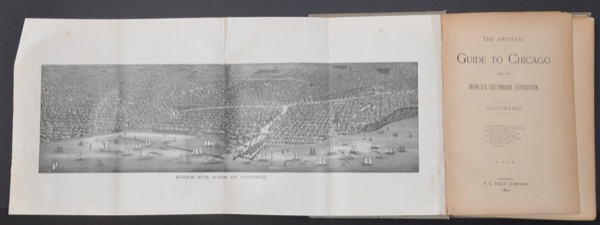
Hardcover. Columbian Art Company, 1st, 1892, Book: Very Good, Dust Jacket: None, Hardcover, bound in gray cloth with black and gilt titles and black embossed images to front. Illustrated with a fold-out frontispiece and with several full-page black and white illustrations, styled as plates, all illustrations in black and white. First published by R.S. Peale Co. the year before. A lovely overview of tourist spots in Chicago that World's Fair attendees could visit while enjoying the fair.
Hardcover. Boston, Little, Brown and Company, reprint, 1957, Book: Very Good, Dust Jacket: None, Hardcover, blue cloth with gilt lettering on spine. Volume X in The History of United States Naval Operations in World War II. 399 pages, illustrated with maps (one fold-out) and b&w photos. Gilt on spine with light fading, lacks dust jacket, dj flap copy pasted inside front cover, otherwise clean, tight copy.
Hardcover. Westport CT, Greenwood Press, 1st, 2003, Book: Very Good, Dust Jacket: None, Hardcover, glazed pictorial boards, 177 pages. Postma draws on primary sources and current historical scholarship to offer secondary readers and researchers a comprehensive and well-written history. He covers the entire Atlantic slave trade era, from the 1400s to the final abolition of chattel slavery in the New World in 1888. The focus is on Africa and the entire New World. While he describes the many horrors of the Middle Passage, he also examines how the slave trade contributed to the development of the modern international economy. The last chapters discuss the efforts to abolish the slave trade and its legacy. Throughout, Postma documents the sources that support his discussion and conclusions. Chapter notes are supplemented by an extensive annotated bibliography that includes books, articles, films, and electronic resources. The volume concludes with biographical sketches of important people and excerpts from primary documents written by enslaved Africans and white officials. The black-and-white reproductions of period illustrations add little to the text. Clean copy.
Hardcover. NY, Oxford University Press, 1st, 1998, Book: Very Good, Dust Jacket: Very Good, Hardcover in a very good dust jacket with fading to spine, 403 pages. The concept of the atom is very near scientific bedrock, touching first causes, fundamental principles, our conception of the nature of reality. This book is a translation from the French of a history of atomic thought and theory, from ancient Greece to the present day. Pullman grounds his coverage of scientific theory always in the religious and philosophical context of the times, covering the whole period of Western civilization, including in passing the major scientific philosophies of the Muslim world and India. The transition of atomism from a philosophical position to an experimental science, in the mid-19th century, is well handled, and the coverage is nicely rounded out by a treatment of the first visual proof of atoms' material existence by direct microscopic imaging of individual atoms about 10 years ago. Name on front fly leaf otherwise clean.
Hardcover. Cambridge MA, Barefoot Books, 1st, 2004, Book: Very Good, Dust Jacket: Very Good, Hardcover in a bright, unclipped dust jacket, 96 pages. SIGNED BY BOTH AUTHORS on a tipped-in bookplate on the front fly leaf. Lovely color illustrations by Rebecca Guay. Let yourself be drawn into the magical world of the dance with this sumptuous anthology. Love, laughter, betrayal, adventure and tragedy intertwine to create stories that will reach deep into the heart and dreams of the reader. The story of "The Sleeping Beauty" will whisk you away to the thorny castle where Princess Aurora awaits her prince; the comedy and confusion of "Coppelia" will delight you, and the magical adventures of Clara in "The Nutcracker" will entrance you. Featuring a brief history of classical ballet, as well as historical details of each dance, composition, choreography and early performances, this book will captivate anyone with a love of this awe-inspiring art.