Softcover. Annapolis MD, Naval Institute Press, reprint, 2007, Book: Very Good, Dust Jacket: None, Softcover, 509 pages, b&w illustrations. Based on twenty years of research in formerly secret archives, this book reveals for the first time the full significance of War Plan Orange -- the U.S. Navy's strategy to defeat Japan, formulated over the forty years prior to World War II. The author does a good job of describing how the plan changed over time regarding possible objectives (rescuing Philippines, capturing Truk, making Guam into the "Gibraltar of the Pacific) as well as the different groups who pushed for their vision on how to best execute the plan from the gung-ho thrusters to the cautionaries to name the major approaches. The book also details the interplay between the navy and the army as they worked together to create a global plan of war as the world became more dangerous in the 1930's (the Rainbow Plans). The work concludes with an analysis of just how successful all the effort that went into creating Plan Orange was to the waging of the Pacific War in 1941-45. Clean copy.
Hardcover. Mechanicsburg PA, Stackpole Books, 1st, 2010, Book: Very Good, Dust Jacket: Very Good, Hardcover, 227 pages, b&w photos. Light scratching to dust jacket front cover. Clean, tight copy. They shot some of the most iconic footage of World War II while risking their lives, yet the stories--and sheer guts--of the U.S. Marine Corps combat cameramen have been overshadowed by the heroism of the men with the rifles. War Shots brings these photographers into sharp focus through the career of Norm Hatch, a true American character whose skill with a camera and knack for being in the right place at the right time thrust him to the fore of the effort to record the Marines at war in the Pacific.
Hardcover. Mechanicsburg PA, Stackpole Books, 1st, 2010, Book: Very Good, Dust Jacket: Very Good, Hardcover, 227 pages, b&w photos. Light scratching to dust jacket front cover. Clean, tight copy. They shot some of the most iconic footage of World War II while risking their lives, yet the stories--and sheer guts--of the U.S. Marine Corps combat cameramen have been overshadowed by the heroism of the men with the rifles. War Shots brings these photographers into sharp focus through the career of Norm Hatch, a true American character whose skill with a camera and knack for being in the right place at the right time thrust him to the fore of the effort to record the Marines at war in the Pacific.
Hardcover. New York, HarperCollins Publishers, First Edition, 2008, Book: Very Good, Dust Jacket: Very Good, 845 pages. Hardcover SIGNED BY AUTHOR to title page. Brown cloth covers with orange titles to spine. Black & white illustrations throughout. Bright dust jacket with only marginal wear. Clean & unmarked. A nice copy.
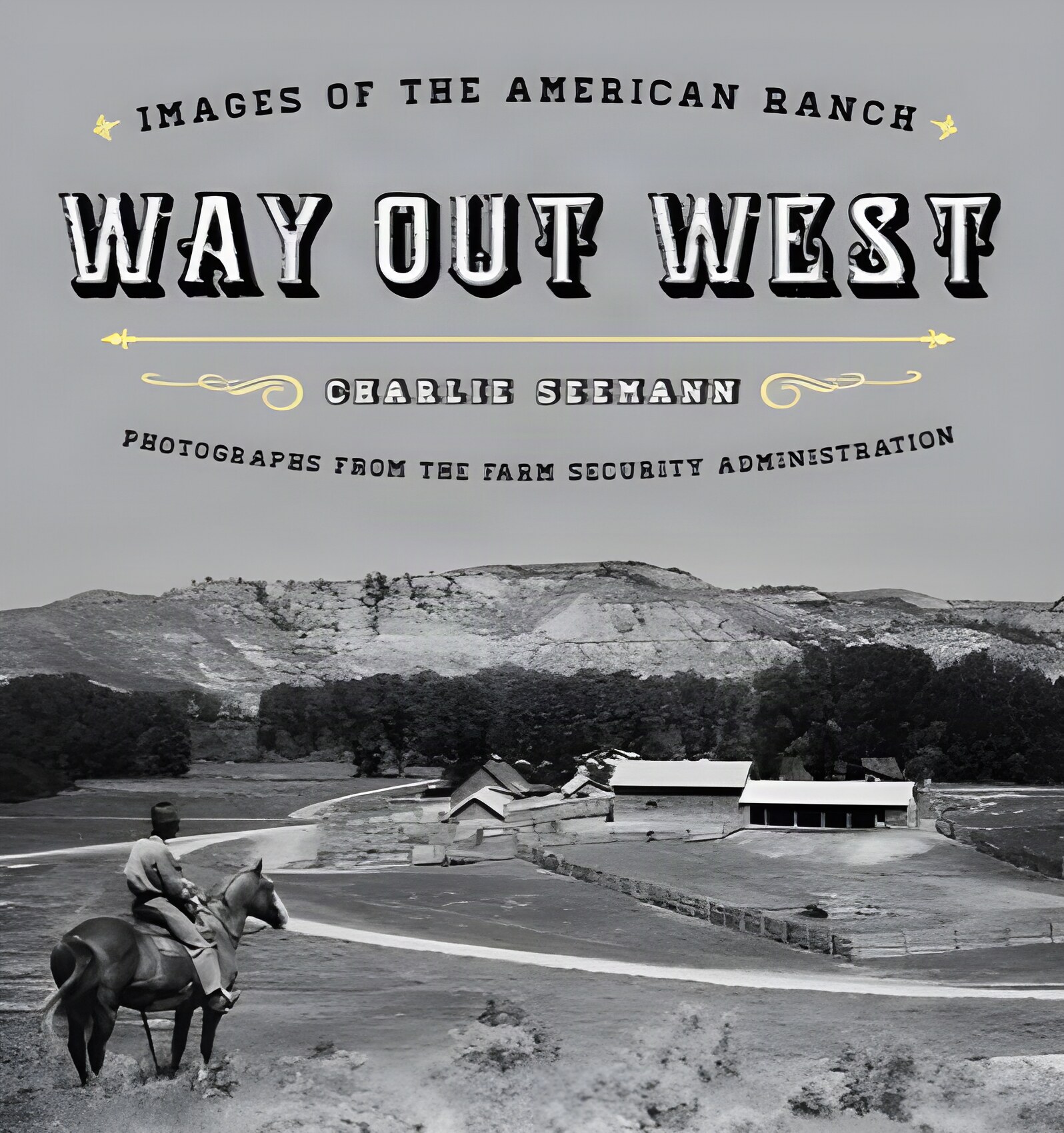
Hardcover. Guilford CT, TwoDot, 1st, Book: Very Good, Dust Jacket: None, Hardcover, pictorial boards, 159 pages, b&w photos throughout. Classic Photographs from the Farm Security Administration 1936-1943. Featuring images by such renowned photographers as Dorothea Lange, Arthur Rothstein, Russell Lee, and several others, this book documents ranching culture in western states during the Great Depression and leading up to World War II. This was a period of great change in the ranching West that included the introduction of the automobile, electricity, radio, the telephone, and other technologies that drastically transformed the lives and work of ranching people, and some of the best documentation exists in the powerful documentary photographs by this remarkable group of photographers. Clean copy.
Hardcover. Burlington VT, Overlake Publishing, 1st, 2003, Book: Very Good, Dust Jacket: Very Good, Hardcover, 215 pages. INSCRIBED BY AUTHOR on title page. "Joe Corbett's remarkable experiences as a salvage officer in the US Navy during World War II are recollected here in tranquility and with great admiration for those with whom he served." Light edgewear to dust jacket, else a clean, tight copy.
Hardcover. Overlake Publishing, 1ST, 2003, Book: Very Good, Dust Jacket: Very Good, Hardcover, 215 pages. SIGNED BY AUTHOR on title page. Light edgewear to dust jacket, else a clean, tight copy.
Hardcover. NY, Simon & Schuster, 1st, 2008, Book: Very Good, Dust Jacket: Very Good, Hardcover in a bright, unclipped dust jacket. 327 pages, b&w illustrations. This engaging collection of 11 interviews with some of baseball's best players from the 1950s and 1960s, whose salaries were often less than $10,000, might have been better subtitled, "And, Come to Think of It, We Did" (play for nothing, that is). But those guys could play. Former baseball commissioner Fay Vincent just starts the tape and lets them talk. There's Ralph Branca, alternately bitter and philosophical about the Shot Heard 'Round the World that Bobby Thompson hit off him in 1951; Harmon Killebrew downplaying the monster homers he hit off everybody; Whitey Ford (236-106 lifetime) sharing great Yankee stories; and Brooks Robinson marveling more at his great peers than at his own illustrious career. Other interviewees include Bill Rigney, Duke Snider, Robin Roberts, Carl Erskine, Lew Burdette, Frank Robinson, and Billy Williams. Clean copy.
Softcover. New York, Abbeville Press, 1st US, 1984, Book: Very Good, Dust Jacket: None, 160 pages, illustrated throughout in b&w. Previous owner's sticker on front end paper, light edgewear and soil to wrappers. Clean, tight copy. The pictures assembled here show how this artistic culture originated in the aftermath of the First World War and the unsettled early years of the Weimar Republic, uneasily balanced between revolutionary pretensions and the desire for order. The montage of images--photographs, paintings, drawings, collages, books, and film stills--evokes the period with shocking vividness.
Hardcover. New York , Thames & Hudson, 1st, 1990, Book: Very Good, Dust Jacket: Very Good, 255 pages, clean hardcover in a bright, unclipped dust jacket. B&w photographs throughout by Bischof. His images were influenced by the major photo-movements of his time: the formal concepts of Das Neues Sehen (New Vision), the surrealism of Man Ray, and the documentary tradition of photojournalism. From the 1940s through the early 1950s, he covered World War II, the bombing of Hiroshima, and the Korean War for Life , Paris-Match , and other publications; his most famous series, "Famine in India," appeared in Life in 1951. This first major compilation of Bischof's work is nicely complemented by the text, a joint effort by son Marco and Swiss art historian Magnaguagno that vividly integrates biography and history. Dust jacket with minor edgewear, short closed tear to rear panel.
Hardcover. New York , Thames & Hudson, 1st, 1990, Book: Very Good, Dust Jacket: Very Good, 255 pages, clean hardcover in a bright, unclipped dust jacket. B&w photographs throughout by Bischof. His images were influenced by the major photo-movements of his time: the formal concepts of Das Neues Sehen (New Vision), the surrealism of Man Ray, and the documentary tradition of photojournalism. From the 1940s through the early 1950s, he covered World War II, the bombing of Hiroshima, and the Korean War for Life , Paris-Match , and other publications; his most famous series, "Famine in India," appeared in Life in 1951. This first major compilation of Bischof's work is nicely complemented by the text, a joint effort by son Marco and Swiss art historian Magnaguagno that vividly integrates biography and history.
Hardcover. NY, Harper, 1st, 2020, Book: Very Good, Dust Jacket: Very Good, Hardcover in a bright dust jacket, 672 pages. 16 pages of photos. What Becomes a Legend Most is the first definitive biography of this luminary--an intensely driven man who endured personal and professional prejudice, struggled with deep insecurities, and mounted an existential lifelong battle to be recognized as an artist. Philip Gefter builds on archival research and exclusive interviews with those closest to Avedon to chronicle his story, beginning with Avedon's coming-of-age in New York between the world wars, when cultural prejudices forced him to make decisions that shaped the course of his life. Compounding his private battles, Avedon fought to be taken seriously in a medium that itself struggled to be respected within the art world. Gefter reveals how the 1950s and 1960s informed Avedon's life and work as much as he informed the period. He counted as close friends a profoundly influential group of artists--Leonard Bernstein, Truman Capote, James Baldwin, Harold Brodkey, Renata Adler, Sidney Lumet, and Mike Nichols--who shaped the cultural life of the American twentieth century. It wasn't until Avedon's fashion work was exhibited at the Metropolitan Museum of Art in the late 1970s that he became a household name. Balancing glamour with the gravitas of an artist's genuine reach for worldy achievement--and not a little gossip--plus sixteen pages of photographs, What Becomes a Legend Most is an intimate window into Avedon's fascinating world. Dramatic, visionary, and remarkable, it pays tribute to Avedon's role in the history of photography and fashion--and his legacy as one of the most consequential artists of his time.
Hardcover. NY, Harper, 1st, 2020, Book: Very Good, Dust Jacket: Very Good, Hardcover in a bright dust jacket, 672 pages. 16 pages of photos. What Becomes a Legend Most is the first definitive biography of this luminary--an intensely driven man who endured personal and professional prejudice, struggled with deep insecurities, and mounted an existential lifelong battle to be recognized as an artist. Philip Gefter builds on archival research and exclusive interviews with those closest to Avedon to chronicle his story, beginning with Avedon's coming-of-age in New York between the world wars, when cultural prejudices forced him to make decisions that shaped the course of his life. Compounding his private battles, Avedon fought to be taken seriously in a medium that itself struggled to be respected within the art world. Gefter reveals how the 1950s and 1960s informed Avedon's life and work as much as he informed the period. He counted as close friends a profoundly influential group of artists--Leonard Bernstein, Truman Capote, James Baldwin, Harold Brodkey, Renata Adler, Sidney Lumet, and Mike Nichols--who shaped the cultural life of the American twentieth century. It wasn't until Avedon's fashion work was exhibited at the Metropolitan Museum of Art in the late 1970s that he became a household name. Balancing glamour with the gravitas of an artist's genuine reach for worldy achievement--and not a little gossip--plus sixteen pages of photographs, What Becomes a Legend Most is an intimate window into Avedon's fascinating world. Dramatic, visionary, and remarkable, it pays tribute to Avedon's role in the history of photography and fashion--and his legacy as one of the most consequential artists of his time.
Art Intitute of Chicago/Yale University Press, 1st, 2021, Book: Very Good, Dust Jacket: None, Hardcover, pictorial cloth, 251 pages illustrated in color. The extraordinary life of a captivating American artist, beautifully illustrated with his dreamlike drawings Much of Joseph Elmer Yoakum's story comes from the artist himself--and is almost too fantastic to believe. At a young age, Yoakum (1891-1972) traveled the globe with numerous circuses; he later served in a segregated noncombat regiment during World War I before settling in Chicago. There, inspired by a dream, he began his artistic career at age seventy-one, producing some two thousand drawings over a decade. How did Yoakum gain representation in major museum collections in Chicago and New York? What fueled his process, which he described as a "spiritual unfoldment"? This volume delves into the friendships Yoakum forged with the Chicago Imagists that secured his place in art history, explores the religious outlook that may have helped him cope with a racially fractured city, and examines his complicated relationship to African American and Native American identities. With hundreds of beautiful color reproductions of his dreamlike drawings, it offers the most comprehensive study of the artist's work, illuminating his vivid and imaginative creativity and giving definition and dimension to his remarkable biography. Clean copy. NOTE: DUE TO WEIGHT, DOMESTIC SHIPPING ONLY.
Hardcover. Zurich, Scheidegger and Spiess, 1st, 2016, Book: Very Good, Dust Jacket: None, Hardcover in pictorial cloth, 210 pages, 164 color and 76 b/w illustrations. Le Corbusier (1887-1965) is one the most influential architects of the twentieth century. In the Scandinavian countries, his influence is arguably most pronounced in the writings and art of the Danish experimentalist Asger Jorn (1914-1973). Their collaboration on Le Corbusier's pavilion for the 1937 Paris World Exhibition sparked Jorn's lifelong fascination with the great architect and with architecture more broadly as an inherently public form of art. At the same time, Le Corbusier started working in the visual arts and began to move from a rational, technological approach to architecture towards a more poetic, materialist approach. Published in collaboration with the Museum Jorn, Silkeborg, What Moves Us? focuses specifically on the reception of Le Corbusier in Scandinavia, with the relationship between Jorn and Le Corbusier as a thematic thread. The book first highlights the architect's change of direction and subsequently takes readers through his influence on the young artist. The book's distinguished contributors explore the relationships that emerged among their artistic theories and practices, including Jorn's later critique of Le Corbusier. Essays also explore the wider influence of Le Corbusier on Scandinavian architecture and urbanization and consider Le Corbusier alongside the Danish architect Jorn Oberg Utzon and the Aarhus Brutalism movement.
Hardcover. NY, Prentice-Hall, 1st, 1978, Book: Very Good, Dust Jacket: Good, Hardcover in a lightly worn, unclipped dust jacket, 263 pages. A Seattle sports reporter follows the Seattle Supersonics through the tumultuous 1978-77 season, A team full of superstars, Bill Russell as coach and championship hopes, all go sour. Clean copy.
Hardcover. NY, William Morrow , 1st, 2006, Book: Very Good, Dust Jacket: Very Good, Hardcover in a bright, unclipped dust jacket. In 1906 the baseball world saw something that had never been done. Two teams from the same city squared off against each other in a World Series that pitted the heavily favored Cubs of the National League against the hardscrabble American League champion White Sox. Now, more than a century later, noted historian Bernard A. Weisberger tells the tale of a unique time in baseball, a unique time in America, and a time when Chicago was at the center of it all. 213 pages, b&w photos. Clean copy.
Hardcover. NY, Metro Books, 1st, 1998, Book: Very Good, Dust Jacket: Very Good, Hardcover in a bright dust jacket. The late nineteenth century brought a transportation explosion in North America and Europe, much of it produced by the steam engine, which by that time had become strong and versatile enough to power ocean-crossing vessels and large freight trains. Where Rails Meet the Sea tells the exciting story of how the transportation industry was revolutionized by steam power and how the industry in turn changed the face of the world. Written by an expert in the history of ships and trains and heavily illustrated throughout in color and b&w.
Hardcover. NY, Bobbs-Merrill , 1st, 1975, Book: Very Good, Dust Jacket: Very Good, Hardcover in a bright, lightly worn dust jacket, 226 pages, b&w photos. An expose' of the World Football League: "The story of the men who manipulated bodies to make or prevent touchdowns and the men who manipulated the dream of owning a professional football team to make fortunes for themselves." It all ended with lies, financial sleights-of-hand, and bounced checks. Rare and informative look at "the complexities of creating a major sports empire." Dust with short closed tear, wrinkle to front flap. Name on front fly leaf, otherwise clean.
Hardcover. Lawrence KS, University Press of Kansas , 1st, 2011, Book: Very Good, Dust Jacket: Very Good, Hardcover in a bright dust jacket, 386 pages, b&w illustrations. Inept leadership, inefficient campaigning, and enormous losses would seem to spell military disaster. Yet despite these factors, the Soviet Union won its war against Nazi Germany thanks to what Roger Reese calls its military effectiveness: its ability to put troops in the field even after previous forces had been decimated. Reese probes the human dimension of the Red Army in World War II through a close analysis of soldiers' experiences and attitudes concerning mobilization, motivation, and morale. In doing so, he illuminates the Soviets' remarkable ability to recruit and retain soldiers, revealing why so many were willing to fight in the service of a repressive regime--and how that service was crucial to the army's military effectiveness. He examines the various forms of voluntarism and motivations to serve-including the influences of patriotism and Soviet ideology-and shows that many fought simply out of loyalty to the idea of historic Russia and hatred for the invading Germans. He also considers the role of political officers within the ranks, the importance of commanders who could inspire their troops, the bonds of allegiance forged within small units, and persistent fears of Stalin's secret police. Clean copy.
Hardcover. London, S.O. Beeton, 1st, 1862, Book: Very Good, Dust Jacket: None, Hardcover, 3/4 leather tooled binding with raised decorated bands on spine. 426 pages. Illustrated with woodcuts by Harden Melville and William Harvey. 10 color illustrations from water-color drawings by J.R. Zweker, Harrison Webb, and Harden Melville. Six fold-out maps. Marbled edges. Endpapers with light foxing. Rubbing wear to spine edges, small scuff mark to front leather edge. Corners bumped, worn. A fascinating work of hunting and natural history by journalist and novelist James Greenwood discusses the history, habits and physiology of a number of species of big game, including tigers, elephants, hippos and leopards. The work also offers information regarding the methods of their hunting including weaponry and tactical movements. The work is particularly noted for its discussion regarding deer hunting, with anecdotal evidence regarding the capacity of the white tail deer to heal from extremely serious wounds.
Hardcover. NY, HarperCollins, 1st, 1999, Book: Very Good, Dust Jacket: Very Good, Hardcover in a bright, unclipped dust jacket. 48 pages illustrated in color by Aliki. With her characteristically sprightly words and pictures, Aliki brings Shakespeare's life, times, and legacy to life in this highly acclaimed information-packed treasury that is truly for readers of all ages. This nonfiction picture book is an excellent choice to share during homeschooling, in particular for children ages 6 to 8. It's a fun way to learn to read and as a supplement for activity books for children From Hamlet to Romeo and Juliet to A Midsummer Night's Dream, Shakespeare's celebrated works have touched people around the world. Aliki combines literature, history, biography, archaeology, and architecture in this richly detailed and meticulously researched introduction to Shakespeare's world-his life in Elizabethan times, the theater world, and the Globe, for which he wrote his plays. Then she brings history full circle to the present-day reconstruction of the Globe theater.
Hardcover. NY, Dutton Caliber, 1st, 2022, Book: Very Good, Dust Jacket: Very Good, Hardcover in a bright dust jacket, 324 pages, b&w illustrations. When the P-51 Mustang began tearing across European skies in early 1944, the Allies had been losing the air war for years. Staggering numbers of bomber crews, both British and American, had been shot down and killed thanks to the Luftwaffe's superior fighter force. Not only did the air war appear grim, but any landing of troops in France was impossible while German fighters hunted overhead. But behind the scenes, a team of visionaries had begun to design a bold new type of airplane, one that could outrun and outmaneuver Germany's best. Wings of War is the incredible true story of the P-51 Mustang fighter and the unlikely crew of designers, engineers, test pilots, and army officers who brought it from the drafting table to the skies over World War II. This is hardly a straightforward tale of building an airplane--for years, the team was stymied by corruption within the defense industry and stonewalled by the Army Air Forces, who failed to understand the Mustang's potential. But when squadrons of Mustangs were finally unleashed over Hitler's empire, the Luftwaffe was decimated within months, clearing the skies for D-Day. Clean copy.
Hardcover. NY, Ballantine Books , 1st, 2008, Book: Very Good, Dust Jacket: Very Good, Hardcover in a bright, unclipped dust jacket, 368 pages illustrated in color. For thirty-five years, bestselling author and accomplished musician Jonathan Kellerman has been, as he puts it in his Introduction to this lavishly illustrated, endlessly fascinating volume, "chasing fabulous sound." The result of that quest is a world-class collection of guitars, mandolins, and other stringed instruments that number more than 120 . . . and counting. Whether writing about household names such as Fender, Gibson, Martin, and Dobro or about marques revered by aficionados-D'Angelico, Hauser, Stromberg, and Torres-Kellerman brings to bear the same sure storytelling instincts and keen attention to detail that characterize his bestselling fiction, making each entry a sparkling mini-essay as much to be savored as the sensual photographs that follow.


 "War Shots: Norm Hatch and the U.S. Marine Corps Combat Cameramen of World War IIby: Jones, Charles")
 "War Shots: Norm Hatch and the U.S. Marine Corps Combat Cameramen of World War IIby: Jones, Charles")
 "Warlord - A Life of Winston Churchill at War - 1874 - 1945 (SIGNED BY AUTHOR)by: D'Este, Carol")


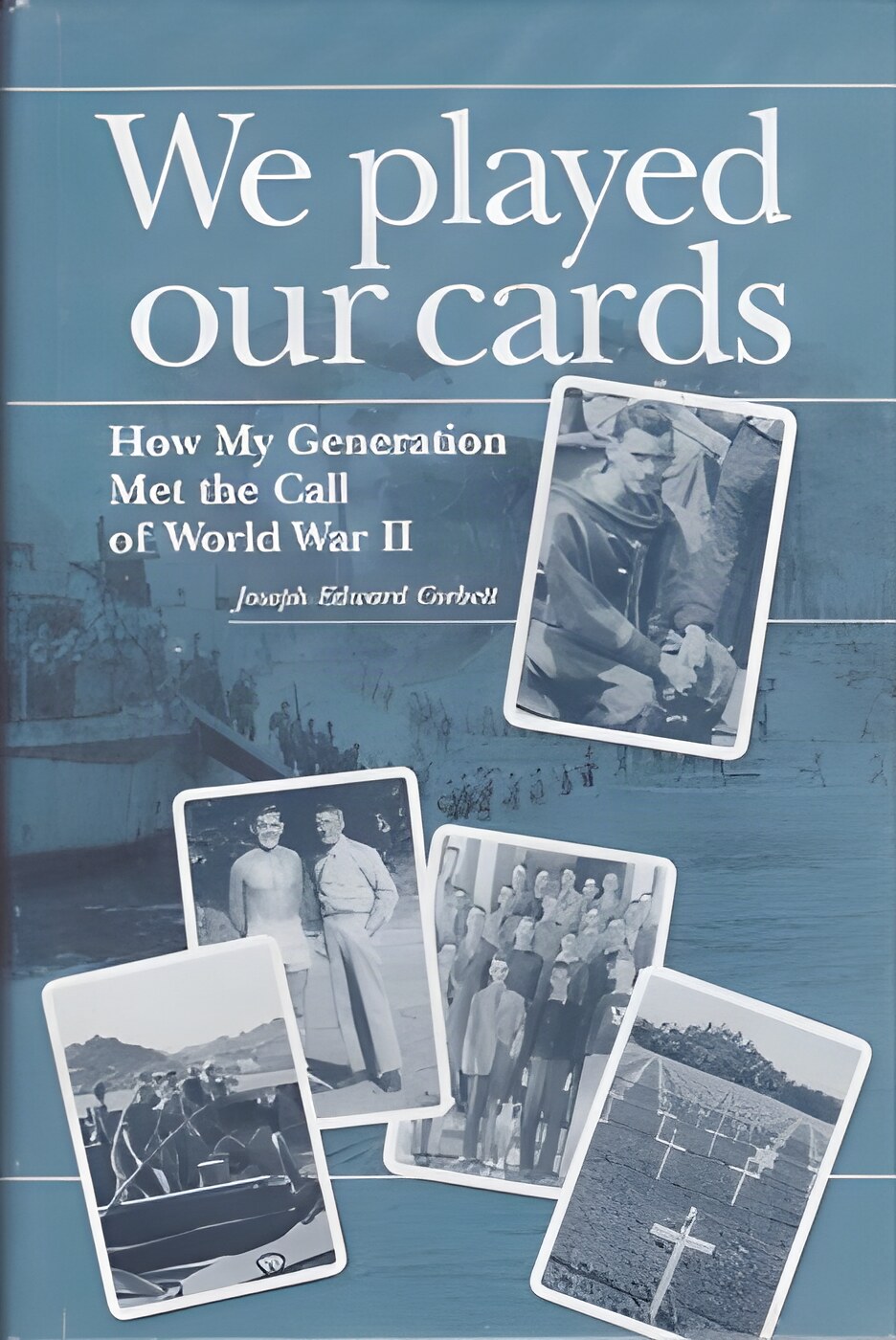
 "We Played Our Cards: How My Generation Met the Call of World War II (SIGNED COPY)by: Corbett, Joseph Edward")

 "Weimar Years, The : A Culture Cut Shortby: Willett, John")
 "Werner Bischof. 1916 - 1954. His Life and Work. Introduction by Hugo Loetscher. Text by Marco Bischof and Guido Magnaguagno. by: Bischof, Marco and Ren")
 "What Becomes a Legend Most: A Biography of Richard Avedonby: Philip Gefter")


 "What Becomes a Legend Most: A Biography of Richard Avedonby: Philip Gefter")




 "Where Rails Meet the Sea: America's Connections Between Ships & Trains by: Krieger, Michael")

 "Why Stalin's Soldiers Fought: the Red Army's Military Effectiveness in World War IIby: Roger R. Reese")
 "Wild Sports of the World: a Boy's Book of Natural History and Adventureby: Greenwood, James")


 "William Shakespeare And The Globe by: Aliki")

 "With Strings Attached: The Art and Beauty of Vintage Guitars by: Jonathan Kellerman")