Hardcover. NY, Orion/Crown, 1st, 1989, Book: Very Good, Dust Jacket: Very Good, Hardcover, 272 pages. Recaptures the World War II bombing raid over Tokyo under the command of Lt. Col. "Jimmy" Doolittle and the incredible seek-and-destroy mission that he and other American pilots endured after the bombing.
Softcover. Luminare Press, 1st, 2016, Book: Very Good, Dust Jacket: None, Softcover, pictorial wrappers, 138 pages. This memoir immerses the reader in post-World War II rural Oregon where logging trucks laden with timber rumbled along gravel roads and moonshine was secreted in nearby shadows. Here a man's measure was taken not by his wealth or success but by his toil, and a woman was assessed not by her virtues but by her virtue. Rivers and reputations rose and fell swiftly. Electricity came to this rural area almost to the day the girl and her family arrived at the farm. Lowell and Fall Creek were charged for change. Even though families of pioneers and newcomers together celebrated in 1948 the centennial of the Oregon Territory, the landscape flush with virgin forests and rivers in very short time changed exponentially. Clean copy.
Softcover. Luminare Press, 1st, 2016, Book: Very Good, Dust Jacket: None, Softcover, pictorial wrappers, 138 pages. This memoir immerses the reader in post-World War II rural Oregon where logging trucks laden with timber rumbled along gravel roads and moonshine was secreted in nearby shadows. Here a man's measure was taken not by his wealth or success but by his toil, and a woman was assessed not by her virtues but by her virtue. Rivers and reputations rose and fell swiftly. Electricity came to this rural area almost to the day the girl and her family arrived at the farm. Lowell and Fall Creek were charged for change. Even though families of pioneers and newcomers together celebrated in 1948 the centennial of the Oregon Territory, the landscape flush with virgin forests and rivers in very short time changed exponentially. Clean copy.
Hardcover. Walburg Pers, 1st, 2003, Book: Very Good, Dust Jacket: Very Good, Hardcover in a bright dust jacket, 192 pages illustrated in color and b&w. A study about the development of a company founded in Amsterdam in the Dutch Golden Age. The VOC, as it was called, was a joint venture company of the Dutch in controlling trade in the world. This scientific paper is one of the main references in terms of research on VOC History. Clean copy.
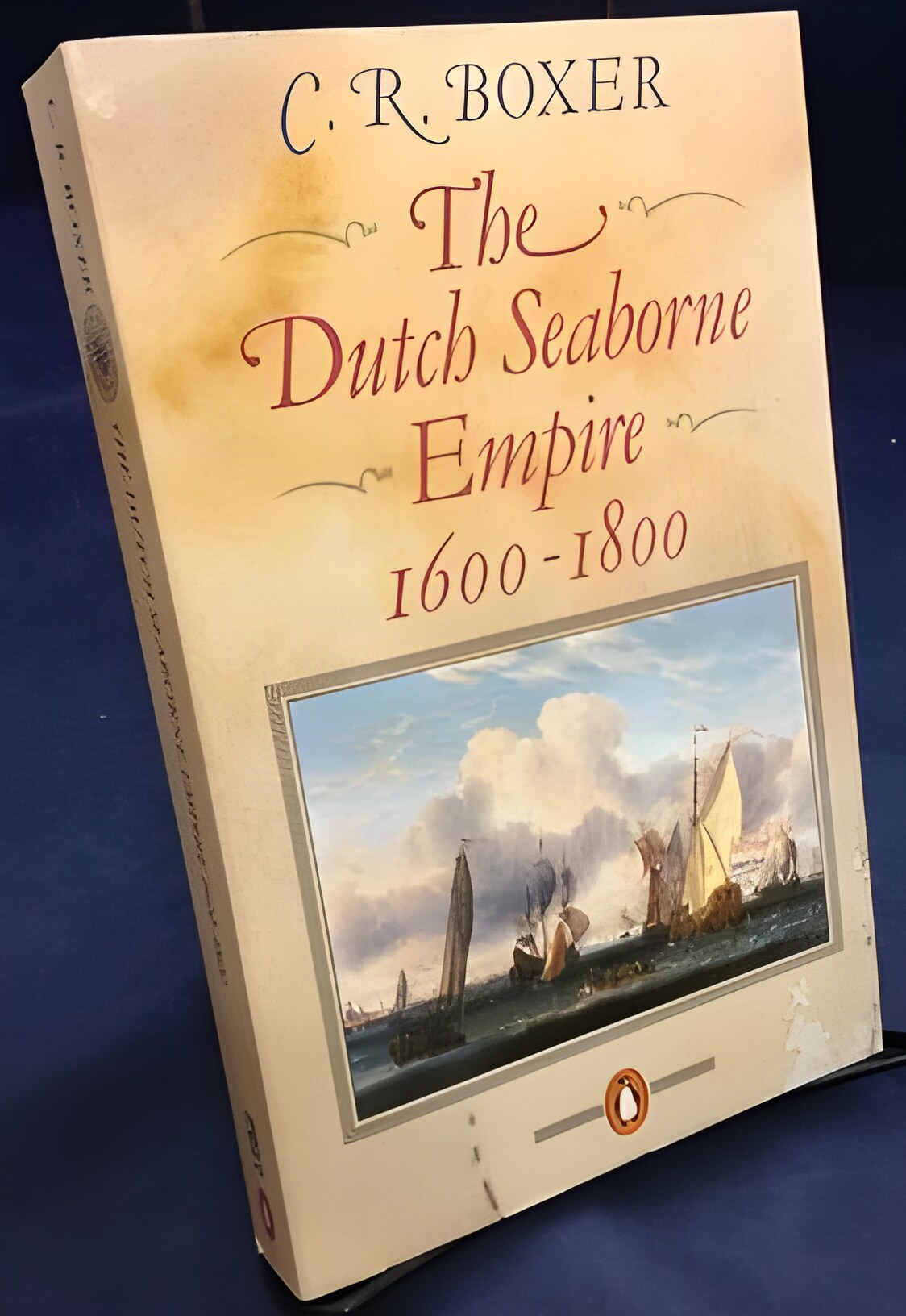
Softcover. NY, Penguin Books, reprint, 1990, Book: Very Good, Dust Jacket: None, Softcover, 363 pages. Despite ceaseless conflict between different classes and cities, Holland's rise to power was almost miraculously rapid. In a few short years a tiny country gained control of territory from Indonesia to the West Indies, from South Africa to South America. In this marvelously evocative book Professor Boxer recaptures the scenes of adventure and dissipation in the four corners of the earth , the up surge in the arts and sciences, and the sad decoines from the ' Golden Century' to the 'Periwig Period'. Few stories could be as rich and colorful, yet it was largely inspired by the ' grave and sober people of Holland', the Calvinist merchants of Amsterdam who forged a nation based on ' gain and godliness'. Such were the people whom Rembrandt painted, who debated policies of apartheid or assimilation, who founded factories and forts. The Dutch Seaborne empire offers a portrait of them all, as they made their spectacular entrance into the modern world. Clean copy.
Softcover. Notre Dame IN, Theatre Historical Society, 1st, 1986, Book: Very Good, Dust Jacket: None, Softcover, stapled wrappers, 40 pages. Profusely illustrated in b&w. A visual history of the design and building of the Earle Theatre in Philadelphia. Some of the world's biggest stars performed there in it's heyday. Old price sticker on rear cover, otherwise clean, very good.
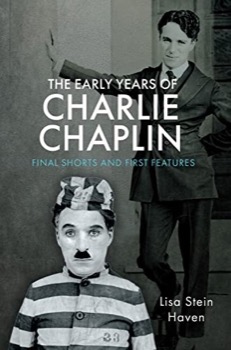
Hardcover. UK, White Owl/Pen & Sword, 20231st, Book: Very Good, Dust Jacket: Very Good, Hardcover in a bright dust jacket, 191 pages, b&w photos. Charlie Chaplin's career has been described, critiqued, and scrutinized. There are book-length studies on Chaplin's music hall career, his career at Keystone Studios and the Mutual Studios. Somehow, his tenure with First National studios, however, has been largely neglected, even though it was during this several-year contractual time period that Chaplin built and occupied his own studio for the first time, that he attempted and succeeded in filming a comedy feature (The Kid) and that he helped to set up United Artists, an organization that protected the salaries and creative freedom of actors in Hollywood. This period in Chaplin's story is especially interesting because such landmark moments are accompanied by Chaplin's first marriage and divorce, the death of his first child, his friendship with French silent film comedian Max Linder, World War I and the role he would play in it, and the production and release of several unsuccessful films that marked Chaplin's first creative blockage - one that threatened his future career. Clean copy.
Hardcover. NY, Columbia University Press, 1st, 2003, Book: Very Good, Dust Jacket: Very Good, Hardcover in a bright, unclipped dust jacket, 562 pages. During John Dewey's lifetime (1859-1952), one public opinion poll after another revealed that he was esteemed to be one of the ten most important thinkers in American history. His body of thought, conventionally identified by the shorthand word "Pragmatism," has been the distinctive American philosophy of the last fifty years. His work on education is famous worldwide and is still influential today, anticipating as it did the ascendance in contemporary American pedagogy of multiculturalism and independent thinking. His University of Chicago Laboratory School (founded in 1896) thrives still and is a model for schools worldwide, especially in emerging democracies. But how was this lifetime of thought enmeshed in Dewey's emotional experience, in his joys and sorrows as son and brother, husband and father, and in his political activism and spirituality? Acclaimed biographer Jay Martin recaptures the unity of Dewey's life and work, tracing important themes through the philosopher's childhood years, family history, religious experience, and influential friendships. Clean copy.
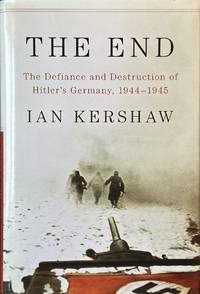
Hardcover. NY, Penguin Press, 3rd pr., 2011, Book: Very Good, Dust Jacket: Very Good, Hardcover in a bright, unclipped dust jacket. 564 pages. From the preeminent Hitler biographer, a fascinating and original exploration of how the Third Reich was willing and able to fight to the bitter end of World War II. As Kershaw shows, the structure of Hitler's "charismatic rule" created a powerful negative bond between him and the Nazi leadership- they had no future without him, and so their fates were inextricably tied. Terror also helped the Third Reich maintain its grip on power as the regime began to wage war not only on its ideologically defined enemies but also on the German people themselves. Yet even as each month brought fresh horrors for civilians, popular support for the regime remained linked to a patriotic support of Germany and a terrible fear of the enemy closing in. Based on prodigious new research, Kershaw's The End is a harrowing yet enthralling portrait of the Third Reich in its last desperate gasps. B&w illustrations. Clean copy.
Hardcover. NY, Weybright and Talley, 1st, 1975, Book: Very Good, Dust Jacket: Very Good, Hardcover in a bright dust jacket, 363 pages. A comprehensive survey of the geological and natural histories of the Arctic and Antarctic, their importance in myth, legend, and human history.
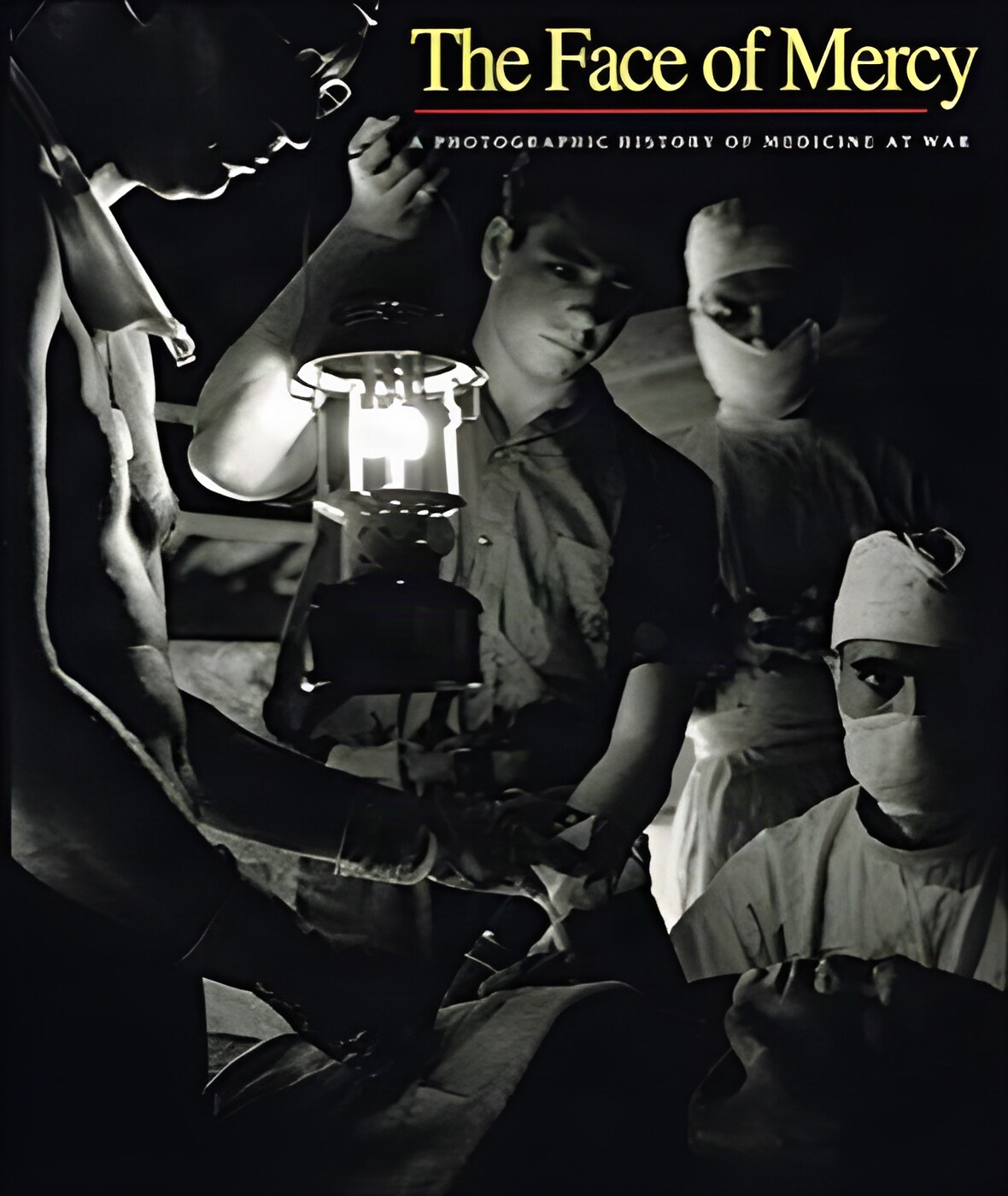
Hardcover. NY, Epicenter Communications / Random House, 1st, 1993, Book: Very Good, Dust Jacket: Very Good, Hardcover in a bright dust jacket, 272 pages. "contains over 230 of the most compelling photographs and images of healers in the battlefield, many of them in color, culled from over one hundred archives in more than a dozen countries... Beginning with Matthew Brady's photographs of surgery at Antietam during the Civil War... through two world wars, to Vietnam, the Gulf War, and regional struggles ongoing today." Clean copy. DOMESTIC SHIPPING ONLY.
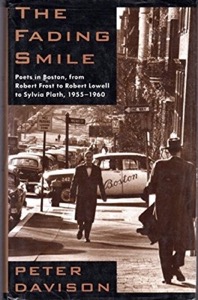
Hardcover. NY, Knopf, 1st, 1994, Book: Very Good, Dust Jacket: Very Good, Hardcover in a bright, unclipped dust jacket, 346 pages. An intimately perceptive account, by a poet who knew them all, of the brilliant circle of poets who lived and worked in Boston through the half-decade beginning in 1955. That was the year Peter Davison, coming to Boston as a book editor. was swept up in a world -- in a tumult -- of poetry. He rediscovered his father's old friend Robert Frost. He briefly squired Sylvia Plath. He came to know Robert Lowell (whose poems and private disasters dominated the period) and Adrienne Rich, Stanley Kunitz, Richard Wilbur. Anne Sexton, W. S. Merwin, and others who, closely bound together in friendship or rivalry or both, defined the shape of American poetry at mid-century Through their eves as well as his own, and often in their words, Davison presents a sharply fresh vision of the shift from confidence to a troubled questioning that overtook America -- a transformation that was, in a sense, foreshadowed in the sensibilities, in the writings, sometimes in the lives, of some of our finest poets. Clean copy.
Hardcover. Weldon Owen , 1st, 2012, Book: Very Good, Dust Jacket: Very Good, Hardcover, 320 pages. In 2012 Disney celebrated the 75th anniversary of the Snow White movie, a beloved classic and an important milestone in film history. This book, created with the Walt Disney Family Foundation, run by Walt's daughter, is an exploration of the making of the film that includes never-before-published facts and art. This book is the first to reconstruct that process in exacting detail, with the loving attention it deserves from an internationally noted film scholar. Author J.B. Kaufman spent years researching the film's history, interviewing participants, and studying the marvelous archival art that appears in these pages. The result is a work that can be appreciated equally as a piece of film history and as a collectable art book, a joy for anyone who loves film, animation, and the magical world that Walt Disney created.
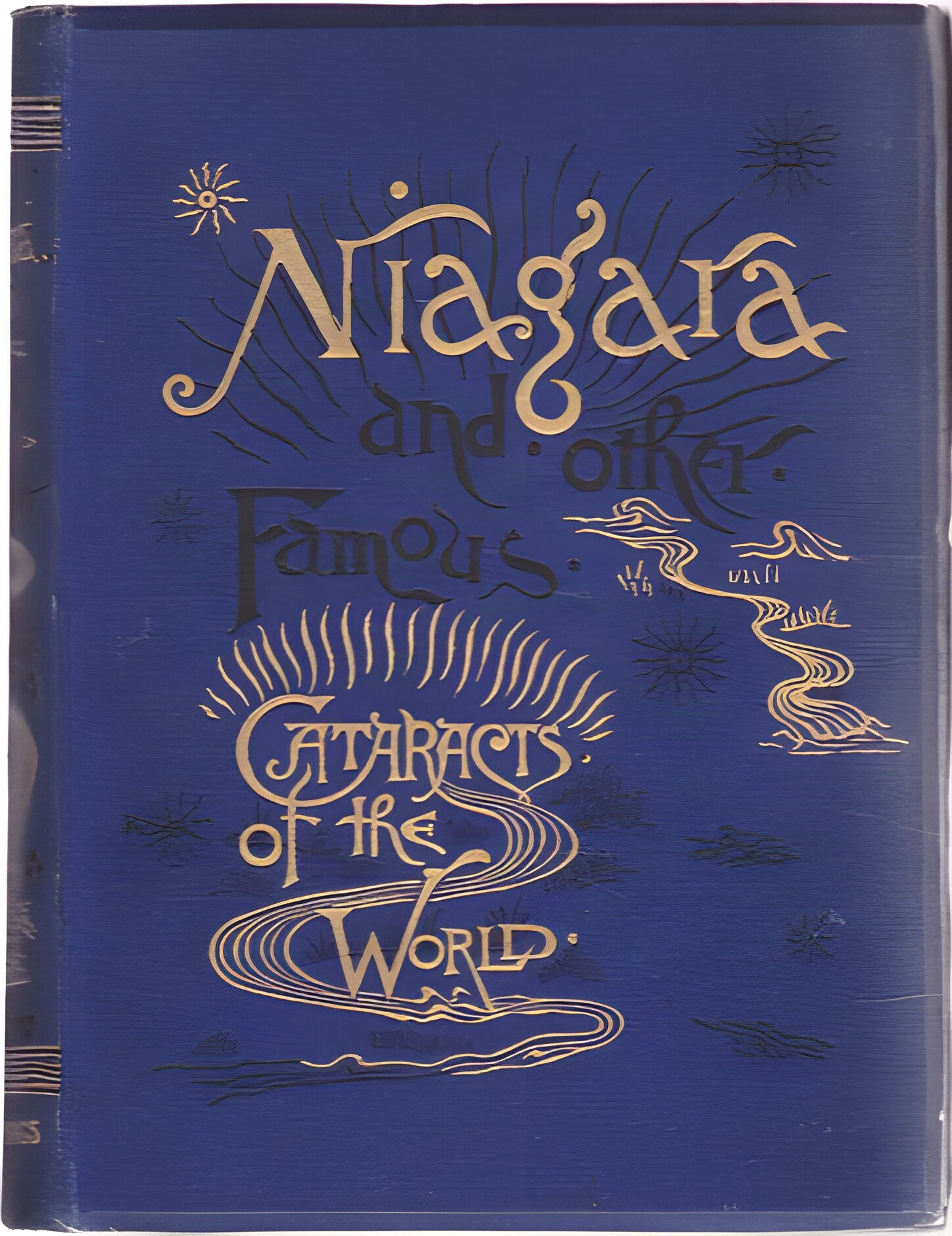
Hardcover. NY, A. C. Armstrong & Son, 1st, 1883, Book: Very Good, Dust Jacket: None, Hardcover, blue cloth, stamped in gilt and black, beveled edges, all edges gilt. 29 plates and one map, a very sound and bright copy. including Yosemite Falls of Yellowstone, upper Falls of Yellowstone, and the map of the Niagara region.
Hardcover. NY, Henry Holt and Co., 1st, 1997, Book: Very Good, Dust Jacket: Very Good, Hardcover in a bright, unclipped dust jacket. Rikki Ducornet's boldest imaginative act yet-a brilliant novel about the Marquis de Sade that will forever change the way we regard one of history's most notorious men. Picture a dramatic courtroom scene: during the French Revolution a fan-maker is on trial because of a manuscript seized in her rooms and her friendship with the Marquis de Sade, the notorious author of Justine, who has already been condemned and imprisoned by the same court for his sexual transgressions. Not only has she made exquisite and sexually provocative fans for her friend, but she has also coauthored with the Marquis a book about the infamous Spanish missionary, Bishop Landa, accusing him of massacres and other hideous abuses against the native population of the New World. The men of the court are so consumed with punishing the authors of this scandalous book that they are blinded to the folly of their own accusations against the Marquis. 212 pages, clean copy.
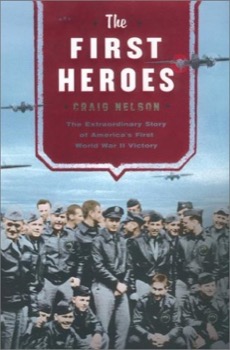
Hardcover. NY, Viking Press, 2nd pr., 2002, Book: Very Good, Dust Jacket: Very Good, Hardcover in a bright, unclipped dust jacket, 430 pages. Immediately after Japan's attack on Pearl Harbor, President Franklin D. Roosevelt sought to restore the honor of the United States with a dramatic act of a retaliatory bombing raid on Tokyo. On April 18, 1942, eighty brave young men, led by the famous daredevil Jimmy Doolittle, took off from a navy carrier in the mid-Pacific on what everyone regarded as a suicide mission but instead became a resounding American victory and helped turn the tide of the war. The First Heroes is the story of that mission. Meticulously researched and based on interviews with twenty of the surviving Tokyo Raiders, this is a true account that almost defies belief, a tremendous human drama of great personal courage, and a powerful reminder that ordinary people, when faced with extraordinary circumstances, can rise to the challenge of history. Clean copy.
Hardcover. NY, Farrar, Straus and Giroux, 1st, 2012, Book: Very Good, Dust Jacket: Very Good, Hardcover in a bright dust jacket, 270 pages. When Samuel Zemurray arrived in America in 1891, he was tall, gangly, and penniless. When he died in the grandest house in New Orleans sixty-nine years later, he was among the richest, most powerful men in the world. In between, he worked as a fruit peddler, a banana hauler, a dockside hustler, and a plantation owner. He battled and conquered the United Fruit Company, becoming a symbol of the best and worst of the United States: proof that America is the land of opportunity, but also a classic example of the corporate pirate who treats foreign nations as the backdrop for his adventures. Rich Cohen's brilliant historical profile unveils Zemurray as a hidden kingmaker and capitalist revolutionary, driven by an indomitable will to succeed. Clean copy.
Hardcover. NY, Random House, 1st, 1954, Book: Very Good, Dust Jacket: Good, 403 pages. Hardcover. 65 illustrations, 40 in full color. Price clipped dust jacket worn with tape repairs, fading - jacket now protected with clear plastic cover. "An account of the life and death of an art, of the men who made it and of the lusty age in which they flourished. 65 illustrations, including 40 in full color." Index, glossary, bibliography, appendices, artist biographies, chronology. Clean, tight copy.
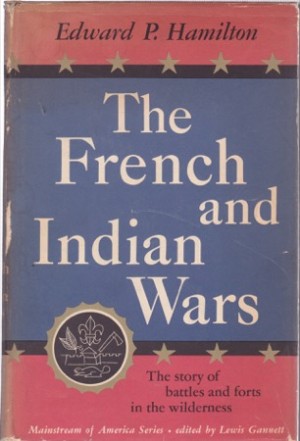
Hardcover. NY, Doubleday & Co., 1st, 1962, Book: Very Good, Dust Jacket: Fair, Hardcover in a worn and chipped dust jacket. A volume in the Mainstream of Americas Series, edited by Lewis Gannett. Between the period of settlements in colonial America and the time of the Revolutionary War, English and French interests clashed in a struggle to determine who would rule the New World. It was a time from which a great deal of fiction draws inspiration, an exciting and dramatic period well~salted with the Washingtons, Johnsons, Frontenacs, Amhersts, Wolfes, and Montcalms who so greatly influenced the early growth of our land. Edward Hamilton has reconstructed this absorbing story of wilderness, forts, and weapons with a scholarly respect for minute detail. Name on half-title page, otherwise clean copy.
Softcover. New Haven CT, Yale University Press, reprint, 1999, Book: Very Good, Dust Jacket: None, Softcover, 436 pages, b&w illustrations. Eighteenth-century women have long been presented as the heroines of traditional biographies, or as the faceless victims of vast historical processes, but rarely have they been deemed worthy of historical inquiry. "The Gentleman's Daughter" provides an account of the lives of genteel women - the daughters of merchants, the wives of lawyers and the sisters of gentlemen. Based on a study of the letters, diaries and account books of over 100 women from commercial, professional and gentry families, mainly in provincial England, "The Gentleman's Daughter" challenges the view that the period witnessed a new division of the everyday worlds of privileged men and women into the separate spheres of home and work. Amanda Vickery invokes the women's own accounts of their lives to argue that in the course of the 18th and early 19th centuries the scope of female experience did not diminish - in fact, quite the reverse. Contrary to orthodoxy, in the 18th century there was neither a loss of female freedoms, nor a novel retreat into the home. In their own writing, genteel women throughout the Georgian era singled out their social and their emotional roles: kinswoman, wife, mother, housekeeper, consumer, hostess and member of polite society. Clean copy.
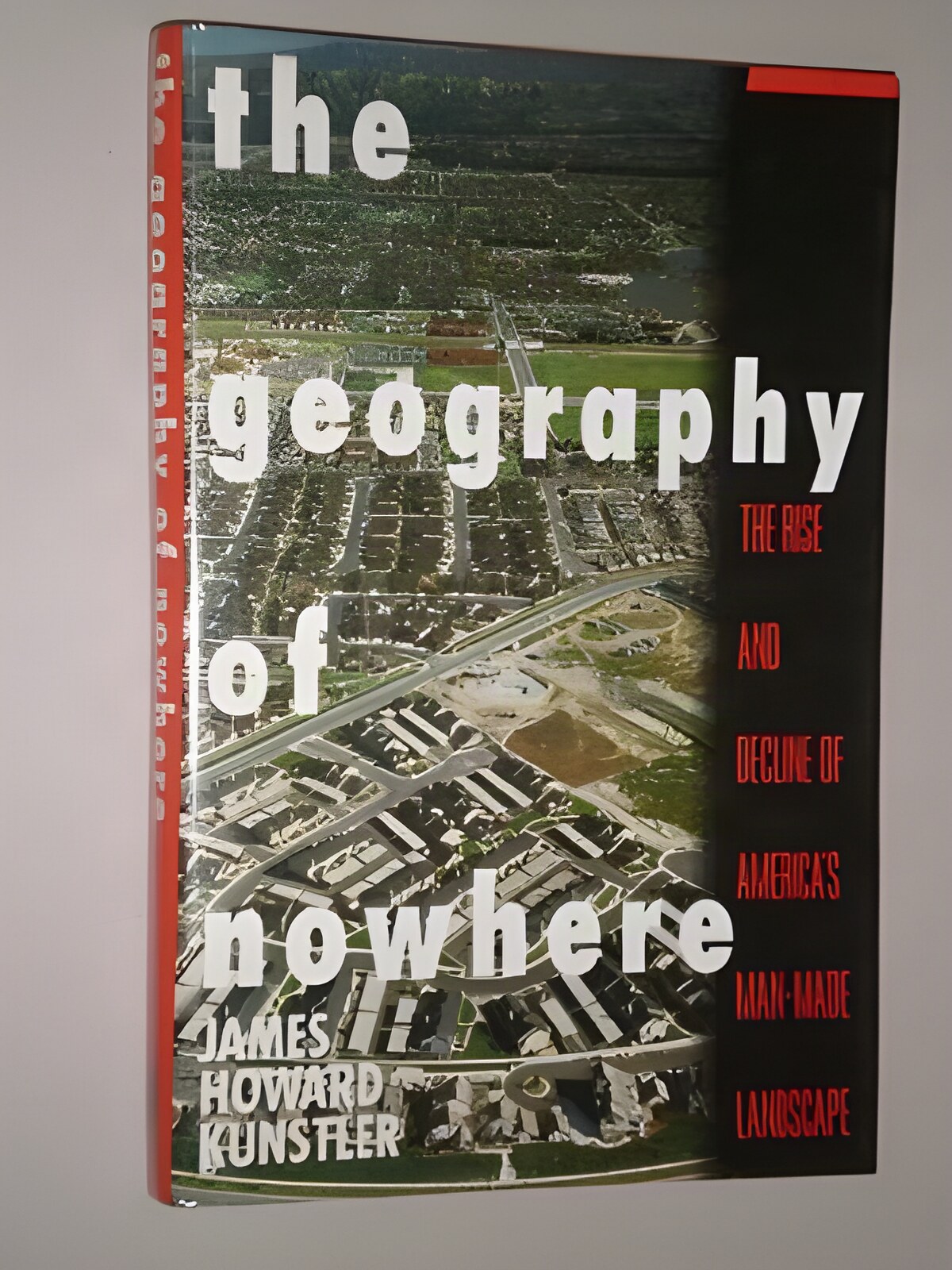
Hardcover. NY, Simon & Schuster, 1st, 1993, Book: Very Good, Dust Jacket: Very Good, Hardcover in a bright, unclipped dust jacket, 303 pages. Eighty percent of everything ever built in America has been built since the end of World War II. This tragic landscape of highway strips, parking lots, housing tracts, mega-malls, junked cities, and ravaged countryside is not simply an expression of our economic predicament, but in large part a cause. It is the everyday environment where most Americans live and work, and it represents a gathering calamity whose effects we have hardly begun to measure. In The Geography of Nowhere, James Howard Kunstler traces America's evolution from a nation of Main Streets and coherent communities to a land where everyplace is like noplace in particular, where the city is a dead zone and the countryside a wasteland of cars and blacktop. Now that the great suburban build-out is over, Kunstler argues, we are stuck with the consequences: a national living arrangement that destroys civic life while imposing enormous social costs and economic burdens. Kunstler explains how our present zoning laws impoverish the life of our communities, and how all our efforts to make automobiles happy have resulted in making human beings miserable. Name on front fly leaf, otherwise like new.
Hardcover. NY, New York University Press, 1st, 2002, Book: Very Good, Dust Jacket: Very Good, Hardcover in a bright dust jacket, pages. The GI War Against Japan recounts the harrowing experiences of American soldiers in Asia and the Pacific. Based on countless diaries and letters, it sweeps across the battlefields, from the early desperate stand at Guadalcanal to the tragic sinking of the U.S.S. Indianapolis at war's very end. From the daunting spaces of the China-India theater to the fortress islands of Iwo Jima and Okinawa, Schrijvers brings to life the GIs' struggle with suffocating wilderness, devastating diseases, and Japanese soldiers who preferred death over life. Amidst the frustration and despair of this war, American soldiers abandoned themselves to an escalating rage that presaged Hiroshima and Nagasaki.
Hardcover. NY, Pantheon, 1st US, 1999, Book: Very Good, Dust Jacket: Very Good, Hardcover in a bright, unclipped dust jacket. A magisterial achievement: part biography, part history, part moral meditation on the resurrection of torture as an instrument of political power in the twentieth century, The Good Listener tells the story of Helen Bamber, a good but complex woman now in her seventies, who has spent her life battling to bring the dark side of history into the light. In almost every situation in our century where mankind has demonstrated its capacity to intensify evil--during the Nazi Holocaust, in Algeria, Chile, Africa, the USSR, and Israel, as well as in postwar Britain and Germany--Bamber has served as a witness, an expert, or a reproach, as well as a repository of our collective memory of debasement. Her father, a Polish Jew, had been so obsessed by the Fascist threat that he would read to Helen from Goebbels' speeches, teaching her how corrupting and manipulative language can be. She went to Bergen-Belsen after World War II had ended, and upon her return to London she dedicated herself to caring for the young survivors of the camp. So began Bamber's brave devotion to the grim and dangerous task of undoing the work of the torturer--culminating, after her participation as a central force in Amnesty International, in her establishment in England of the Foundation for the Care of Victims of Torture. Because Bamber's uncanny openness to others has been one of her great skills, Clean copy.
Hardcover. San Francisco, Encounter Books, 1st, 2002, Book: Very Good, Dust Jacket: Very Good, Hardcover in a bright dust jacket, 222 pages. SIGNED BY AUTHOR ON HALF TITLE PAGE. Clean, unmarked copy. Black and white pictures in center. Goodyear was an entrepreneur who actually made good on the ever-popular claim that his company would change the world. Korman, senior editor of Engineering News-Record, dryly traces the life of the rubber pioneer and American industrial legend in this part scientific history lesson and part American business story. Goodyear (1800-1860) became an inventor not out of any great scientific thirst; he was self-taught and wanted to make money. He earned success, but endured continual patent monopoly battles and numerous trips to debtors' prison as he steadfastly and compulsively held onto his dream of using rubber to change just about every aspect of life. (According to Korman, Goodyear frequently wore a coat made of rubber in his early inventing days to underscore the versatility of his product.) Korman waxes scientific at times, offering in-depth descriptions of how Goodyear cooked rubber and sulfur compounds, yet his technical discourses are not so esoteric that they will turn away amateurs. His book is also valuable for its accurate portrayal of factory life in the 1830s and '40s; his accounts of the aproned men who chopped rubber with axes and knives and the machines that ground it are lively examples of industrial age America. Clean copy.

 "The Doolittle Raid: America's daring first strike against Japanby: Carroll V. Glines")
 "The Dusky Afternoon: An Oregon Childhood by: Sara Jeanne Duncan Widness")
 "The Dusky Afternoon: An Oregon Childhood by: Sara Jeanne Duncan Widness")



 "The EARLE THEATRE, Philadelphia, Penna., Hoffman & Henon, Architects, Opened: March 24, 1924. Theatre Historical Society Annual for 1986by: Irvin R. Glazer")


 "The Education of John Dewey: A Biographyby: Jay Martin")
 "The Ends of the Earth: The Polar Regions of the Worldby: Isaac Asimov")

 "The Fan-Maker's Inquisition: A Novel of the Marquis De Sadeby: Rikki Ducornet")


 "The Gentleman's Daughter: Women's Lives in Georgian England by: Vickery, Amanda")