Hardcover. NY, Farrar, Straus and Giroux, 1st, 2007, Book: Very Good, Dust Jacket: Very Good, Hardcover in a bright, unclipped dust jacket, 194 pages. The Jordan Rift Valley, stretching from the Red Sea to Lebanon, was ripped open millions of years ago by vast forces within the earth. This geological object has also been a part of human history ever since early humans used it as a path in their journey out of Africa. And for a quarter of a century it has been part of the biography of Haim Watzman, an Israeli journalist. In the autumn of 2004, as his country was riven by a fierce debate over its borders, Watzman took a two-week journey up the valley. Along the way he met scientists who try to understand the rift through the evidence lying on its surface--an archaeologist who reconstructs the fallen altars of a long-forgotten people, a zoologist whose study of bird societies has produced a theory of why organisms cooperate, and a geologist who thinks that the valley will some day be an ocean. He encountered people whose life and work on the shores of the Dead Sea and Jordan River have led them to dream of paradise and to seek to build Gardens of Eden on earth--a booster for a chemical factory, the director of a tourist site, and an aging socialist farmer who curates a museum of idols. And he discovered that the geography's instability is mirrored in the volatility of the tales that people tell about the Sea of Galilee.
Hardcover. St. Paul MN, Graywolf Press, 1st, 1990, Book: Very Good, Dust Jacket: Very Good, Hardcover in a bright, price-clipped dust jacket, 242 pages. The Arab poet's story, from her childhood in Nablus, on the West Bank of the Jordan, between the world wars to the occupation by the Israelis in 1967. A rare glimpse of Arab culture from a woman's perspective. Includes a selection of her poetry. Clean copy.
Softcover. Lanham, University Press of America, 1st, 1983, Book: Good, Dust Jacket: None, Softcover, 311 pages. INSCRIBED BY AUTHOR ON FRONT ENDPAPER. Light foxing to edges and covers. Clean, unmarked copy.
Hardcover. NY, Harcourt, 1st, 2004, Book: Very Good, Dust Jacket: Very Good, Hardcover in a bright, unclipped dust jacket. Tragic, comic, and utterly honest, this extraordinary memoir is at once a great family saga and a magical self-portrait of a writer who witnessed the birth of a nation and lived through its turbulent history. It is the story of a boy growing up in the war-torn Jerusalem of the forties and fifties, in a small apartment crowded with books in twelve languages and relatives speaking nearly as many. His mother and father, both wonderful people, were ill-suited to each other. When Oz was twelve and a half years old, his mother committed suicide, a tragedy that was to change his life. He leaves the constraints of the family and the community of dreamers, scholars, and failed businessmen and joins a kibbutz, changes his name, marries, has children, and finally becomes a writer as well as an active participant in the political life of Israel. Clean copy.
Hardcover. Amsterdam / NY, N. Israel / Da Capo Press, reprint, 1971, Book: Very Good, Dust Jacket: None, Two matching hardcover volumes, 482 and 546 pages. High quality facsimile of the 1845 John Murray edition published in London. Illustrated with a black-and-white folding map. Mylar covers without dust jackets as issued. "With Some Account of the Beginning of the British Colonization of the Islands". Wakefield went to New Zealand with the first settlers in the Tory in 1839 and remained there until 1844, keeping his diary about the proceedings of the settlers. One of the most important works on the early settlement of New Zealand. Clean, bright copies. DOMESTIC SHIPPING ONLY.
Hardcover. London, Verso Books, 1st, 2020, Book: Very Good, Dust Jacket: Very Good, Hardcover in a bright dust jacket, 425 pages. The Israeli army, officially named the Israel Defence Forces (IDF), was established in 1948 by David Ben-Gurion, Israel's first prime minister, who believed that 'the whole nation is the army'. In his mind, the IDF was to be an army like no other. It was the instrument that might transform a diverse population into a new people. Since the foundation of Israel, therefore, the IDF has been the largest, richest and most influential institution in Israel's Jewish society and is the nursery of its social, economic and political ruling class. In this fascinating history, Bresheeth charts the evolution of the IDF from the Nakba to wars in Egypt, Lebanon, Iraq and the continued assaults upon Gaza, and shows that the state of Israel has been formed out of its wars. He also gives an account of his own experiences as a young conscript during the 1967 war. Clean copy.
Hardcover. New York, Random House, 1st, 1995, Book: Very Good, Dust Jacket: Very Good, 350 pages. SIGNED AND INSCRIBED BY AUTHOR. Gilt title on spine and design on front cover board. B/w illustrations throughout. Front flaps very lightly yellowed at top, otherwise clean inside and out. previous bookseller tag on back. From the dust jacket front flap: "As we follow Peres from his ancestral home in Poland to Israel, from the youth village of BenShemon to Kibbutz Alumot, from the youth movement leader to prime minister, we are introduced both to a man and to a nation."
Hardcover. Israel/New York, Steimatzky/LeonAmiel, 1st, 1983, Book: Very Good, Dust Jacket: Very Good, Hardcover, 191 pages, 50 color and 40 b&w plates. Includes color lithograph at front of book. Blue cloth covers, gilt lettering on spine, bright dust jacket.
Hardcover. Boston, Bulfinch Press, 1st, 1996, Book: Very Good, Dust Jacket: Very Good, 192 pages, illustrated throughout in b&w. Clean, unmarked copy with only minor wear to dust jacket. The first comprehensive retrospective of Chim's work includes many never before published images. He chronicled many of the turbulent events of the twentieth century, from France's Front Populaire and the Spanish civil war to the devastating aftermath of World War II and the birth of Israel. One of the founders of Magnum, he was killed in the Suez war. Edited by Catherine Chermayeff, Kathy McCarver Mnuchin and Nan Richardson. Includes a biographical chronology and a bibliography.
Hardcover. Oxford, England, Oxford University Press, 1st, 2010, Book: Very Good, Dust Jacket: Very Good, 328 pages. Hardcover. B/w illustrations throughout. Previous owner's name on front flyleaf. Black cover boards, gilt title on spine. Binding tight. Spine straight. Pages clean, unmarked, bright. Dust jacket unclipped, excellent, glossy. Assesses the comexity and fluidity of Christian identity from the reign of Elizabeth I and the early Stuart kings through the English Revolution, and into the Restoration, which the English Church and monarchy were restored.
Hardcover. NY, Henry Holt, 1st, 2007, Book: Very Good, Dust Jacket: Very Good, Hardcover in a bright, unclipped dust jacket. 16 plates, 13 text maps, bibliography, index; An insightful history of Churchill's lifelong commitment-both public and private-to the Jews and Zionism, and of his outspoken opposition to anti-SemitismWinston Churchill's commitment to Jewish rights, to Zionism, and ultimately to the State of Israel never wavered. In 1922, he established on the bedrock of international law the right of Jews to emigrate to Palestine. During his meeting with David Ben-Gurion in 1960, Churchill presented the Israeli prime minister with an article he had written about Moses, praising the patriarch. In between these events he fought harder and more effectively for the Jewish people than the world has ever realized.
Softcover. NY, Columbia University Press, 2nd pr., 2009, Book: Very Good, Dust Jacket: None, Softcover, 496 pages. During the second half of the twentieth century, the Arab intellectual and political scene polarized between a search for totalizing doctrines-nationalist, Marxist, and religious-and radical critique. Arab thinkers were reacting to the disenchanting experience of post-independence Arab states, as well as to authoritarianism, intolerance, and failed development. They were also responding to successive defeats by Israel, humiliation, and injustice. The first book to take stock of these critical responses, this volume illuminates the relationship between cultural and political critique in the work of major Arab thinkers, and it connects Arab debates on cultural malaise, identity, and authenticity to the postcolonial issues of Latin America and Africa, revealing the shared struggles of different regions and various Arab concerns. Clean copy.
Hardcover. Boston, Houghton Mifflin, 1st, 1974, Book: Very Good, Dust Jacket: Very Good, Hardcover in a lightly worn dust jacket. Dust jacket art and b&w drawings by Marvin Friedman. A young girl's difficulties with her family and her religion result in a consciousness-raising trip to Israel. Joanne reads the Torah to escape from her nonreligious Jewish family,who prefer her younger sister's company. She decides to go to Israel for a year and is waylaid by a horrible terrorist incident, which helps her to see her life freshly. Clean copy.
Softcover. Millerton NY, Aperture/MOMA, 1st pbk, 1972, Book: Very Good, Dust Jacket: None, Softcover, (Twins on the cover). No additional printing stated indicating first softcover edition. 80 b&w plates by Arbus. Does contain the "Two girls in identical raincoats" photograph that was struck from all but a few copies due to legal controversy. Published posthumously, the year after her suicide, and in conjunction with a retrospective show at MOMA, the book was edited and designed by Arbus's daughter Doon and Marvin Israel. Diane Arbus left behind her career as a top fashion photographer and turned her attention to society's oddities and outsiders - twins, dwarves, giants, transvestites, the elderly and lonely. Her accent on these people was in no way mocking; rather, these portraits reveal her fascination with life's tragedies as destinies. Mild soil to wrappers.
Hardcover. NY, Oxford University Press, 1st, 1994, Book: Very Good, Dust Jacket: Very Good, Hardcover in a bright, unclipped dust jacket. Pais turns his attention to the great physicist's life outside of science, with an informal, almost kalaidoscopic portrait of Einstein--his personal life and his public persona ("my mythical namesake who has made my life so burdensome"), his scientific contributions, and his thoughts on religion, philosophy, and politics, on Israel and Zionism, on the rise of Nazism and McCarthyism, and on much more. Pais offers a candid look at Einstein's troubled personal life--his two failed marriages, his first child Lieserl, who was born out of wedlock (and of whom all trace has vanished), his estranged son Hans Albert, also a scientist, who felt his father had abandoned the family, and his son Eduard, who gradually descended into madness. Of course, any book on Einstein must touch upon science, and Pais includes several illuminating chapters, one of which offers general readers an accessible explanation of relativity, and another traces the long road to Einstein's Nobel Prize (after being nominated almost every year from 1909 to 1920, he finally won in 1921--not for relativity, but for his work on the photoelectric effect). On the lighter side, Pais includes samples from Einstein's "curiosity file," in which he kept crank letters, marriage proposals, hate mail (one began "You are the prince of idiocy, the count of imbecility, the duke of cretinism, the baron of morons"), and the like. But the heart of the book is the final section, where Pais traces Einstein's life as seen through the media. Here we not only meet Einstein the living legend--receiving the keys to New York City from flamboyant Mayor Jimmy Walker, attending the Hollywood premier of City Lights with Charlie Chaplin--but also witness his extensive involvement in the issues of his day.
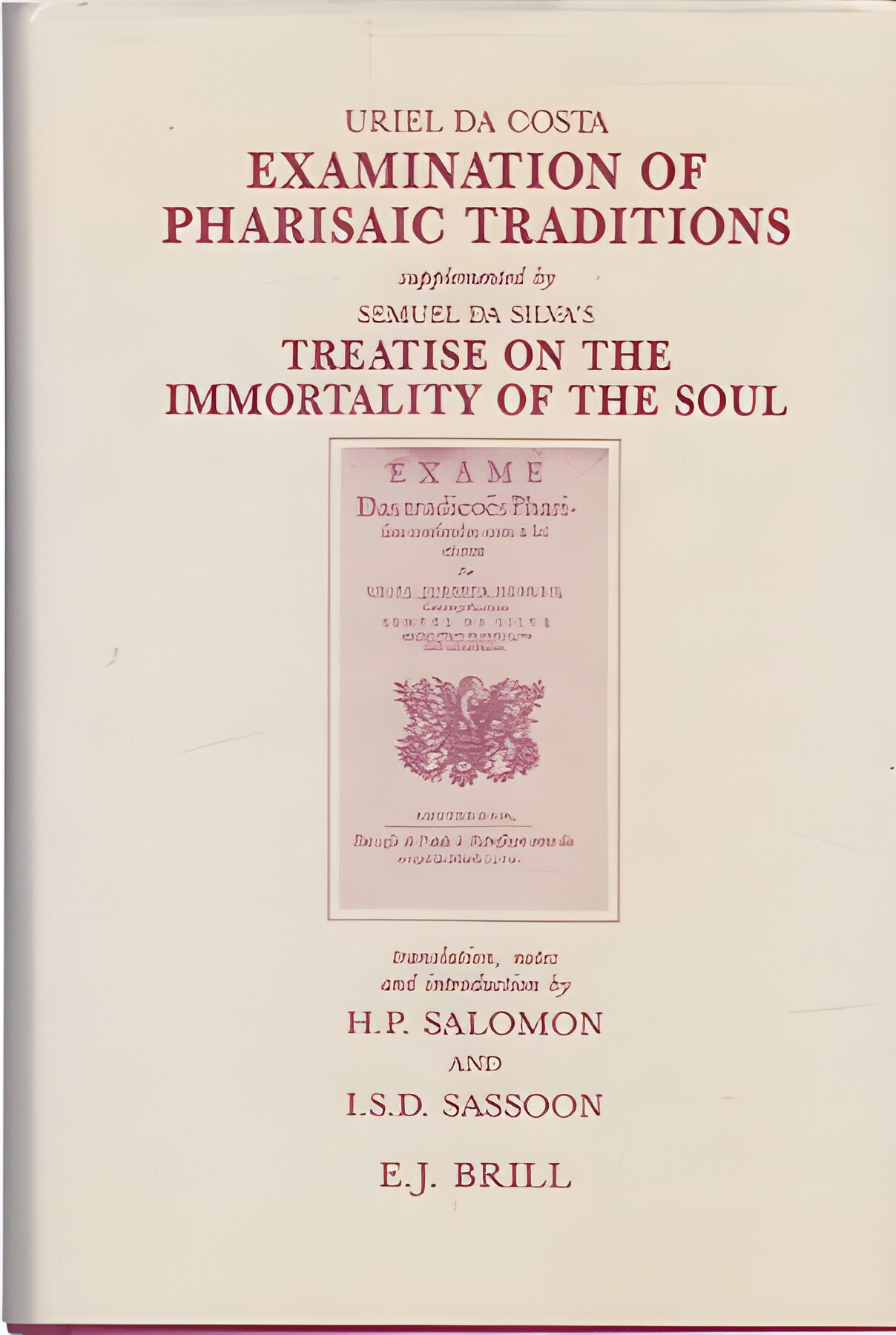
Hardcover. NY, E.J. Brill, 1st, 1993, Book: Very Good, Dust Jacket: Very Good, Hardcover in a bright dust jacket, 578 pages plus charts, b&w photos in rear. Translation and notes by H.P. Salomon and I.S.D. Sassoon. Da Costa's long-lost book rejects the divine origin of the rabbinic tradition. His insight was that what he calls Pharisaism is irreconcilable with the religion of the Pentateuch and therefore cannot derive from the same source. He claims, for example, that the Law of Moses does not allow for a belief in an afterlife for individual human beings. Concomitantly he denied the Mosaic origin of the notion of eternal punishment. The rabbinic reading of the Mosaic Law appeared to him almost as great a falsification as the Christian one. Yet there could be no reversion to Christianity and despite his deep rift with the synagogue he still believed in ultimate redemption for the Jewish people. As he so dramatically declares in his closing sonnet, Israel's rehabilitation depends on its shedding man-made doctrines, and holding fast to the Law in its purity.
Hardcover. Boston, Houghton Mifflin, 1st, 1994, Book: Very Good, Dust Jacket: Very Good, Hardcover on a lightly worn dust jacket, 641 pages, b&w illustrations. This is the first full-length biography of the man historian Michael Beschloss calls the keystone figure in the history of American intelligence. Allen Dulles (1893-1969) served in the Office of Strategic Services in Europe during WWII and was named director of the Central Intelligence Agency in 1953, serving under Eisenhower and Kennedy. In an overlong, sometimes tedious narrative, Grose (Israel in the Mind of America) describes how Dulles oversaw the firm establishment of the CIA in the Washington power structure during the Eisenhower years (his older brother, John Foster Dulles, was then the Secretary of State), only to be forced out after the CIA's failure in the 1961 Bay of Pigs invasion. Later appointed to the Warren Commission to investigate the assassination of President Kennedy, Dulles became its most diligent member, according to Grose, and a supporter of the view that Lee Harvey Oswald acted alone. Other controversial issues explored include Dulles's exploitation of ex-Nazi Reinhard Gehler's spy network in the early years of the Cold War, and whether JFK authorized, or even knew about, CIA attempts to liquidate Castro. Grose delves unenlighteningly into Dulles's shortcomings as husband and father; he kept a mistress or two and spent little time at home.
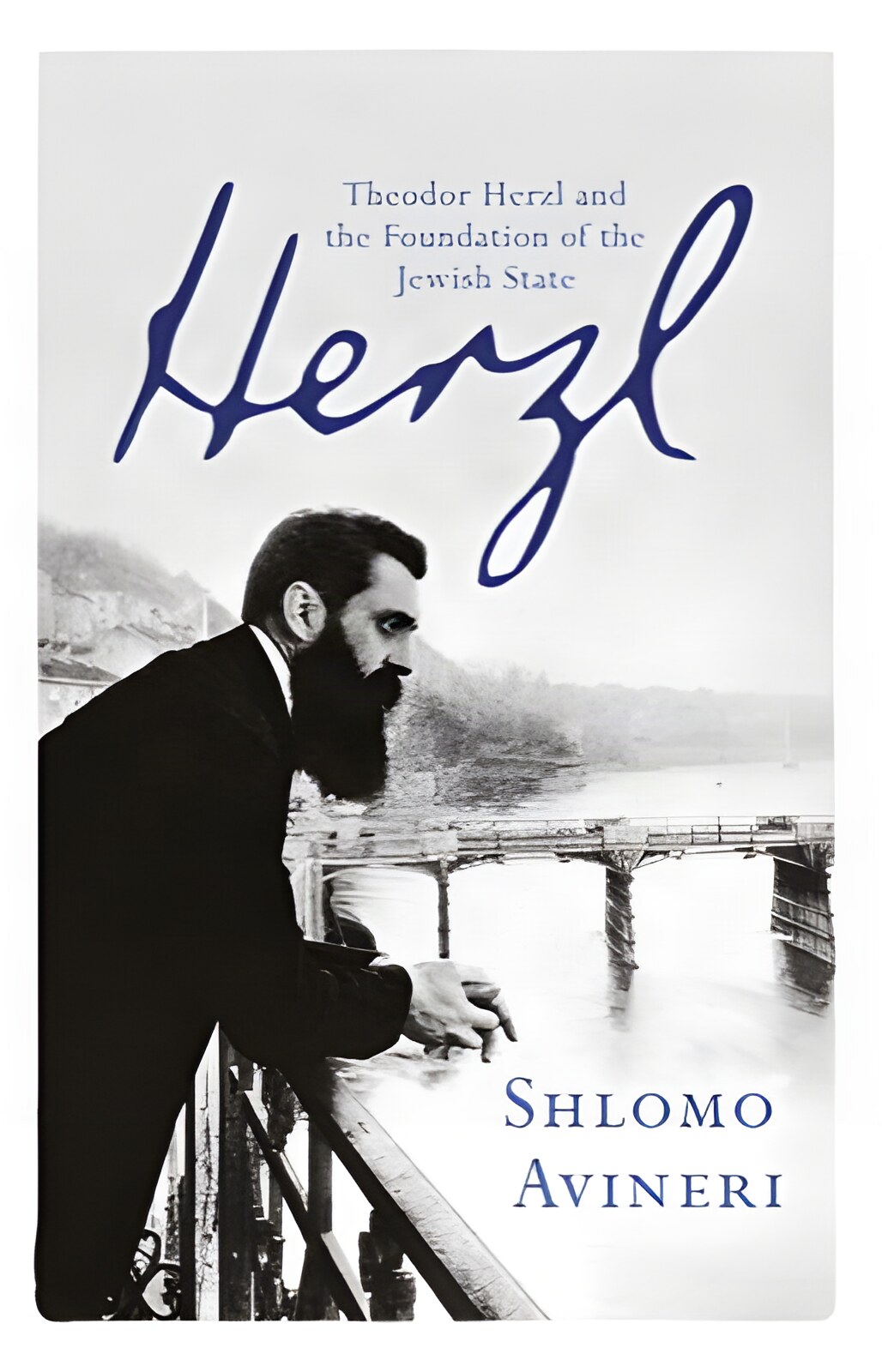
Hardcover. London, Weidenfeld & Nicolson, 1st UK, 2013, Book: Very Good, Dust Jacket: Very Good, Hardcover in a bright, unclipped dust jacket. Drawing extensively on his diaries as well as his published works, this intellectual biographical follows Herzl's transformation from a private person into the founder and leader of a political movement which made the quest for a Jewish state into a player in international politics. Contrary to the conventional view which saw the Dreyfus affair as the trigger for Herzl's loss of belief in the promise of Jewish emancipation, Avineri shows how it was the political crisis of the Austro-Hungarian Habsburg Empire, torn apart by contending national movements, which convinced Herzl of the need for a Jewish polity. In response to the wide resonance for his 1896 The Jewish State, Herzl convened the first Zionist Congress in Basel in 1897, which established the World Zionist Organization with its representative and elected institutions; this in turn became the foundation for Israel's democratic political system. In his efforts to gain international support for a Jewish state, Herzl met with the Ottoman Sultan, the German Emperor Wilhelm II, Pope Pius X, British, Russian and German ministers, as well as an enormous number of other government and public opinion leaders of most European countries. By the time of his early death in 1904 at the age of 44, Herzl succeeded in putting Zionism on the map of world politics, no longer an esoteric idea held by a small group of Jewish intellectuals in Eastern Europe. Clean copy.
Hardcover. New York, George Braziller Incorporated, 1st, 1988, Book: Very Good, Dust Jacket: Good, 192 pages. Hardcover with dust jacket. Heavy damage on 2 inches of bottom right corner. Otherwise, tight copy. Color pictures throughout. Endlessly experimenting with design, composition, and color, Hiroshige captured in these paintings, as no where else in his work, his poetic and idyllic sense of nature.
Hardcover. New York, George Braziller/ Rhode Island School of Design, 1st, 1988, Book: Very Good, Dust Jacket: Very Good, Hardcover, 192 pages, 91 large format color plates. Introduction by Cynthea J. Bogel, poetry translated by Alfred H. Marks.
Hardcover. NY, Oxford University Press, 1st, 2012, Book: Very Good, Dust Jacket: Very Good, Hardcover in a bright dust jacket, 365 pages. Holy war, sanctioned or even commanded by God, is a common and recurring theme in the Hebrew Bible. Rabbinic Judaism, however, largely avoided discussion of holy war in the Talmud and related literatures for the simple reason that it became dangerous and self-destructive. Reuven Firestone's Holy War in Judaism is the first book to consider how the concept of ''holy war'' disappeared from Jewish thought for almost 2000 years, only to reemerge with renewed vigor in modern times. The revival of the holy war idea occurred with the rise of Zionism. As the necessity of organized Jewish engagement in military actions developed, Orthodox Jews faced a dilemma. There was great need for all to engage in combat for the survival of the infant state of Israel, but the Talmudic rabbis had virtually eliminated divine authorization for Jews to fight in Jewish armies. Once the notion of divinely sanctioned warring was revived, it became available to Jews who considered that the historical context justified more aggressive forms of warring.
Hardcover. NY, Thomas Y. Crowell, 1st, 1968, Book: Very Good, Dust Jacket: Very Good, Hardcover in a bright, price-clipped dust jacket. B&w illustrations by Symeon Shimin. Light edgewear and rubbing to dust jacket. Sticker residue on front of dust jacket. Clean copy.
Hardcover. New Haven CT, Yale University Press, 1st, 2012, Book: Very Good, Dust Jacket: Very Good, Hardcover in a bright dust jacket, 232 pages. Political theorist Michael Walzer reports his findings after decades of thinking about the politics of the Hebrew Bible. Attentive to nuance while engagingly straightforward, Walzer examines the laws, the histories, the prophecies, and the wisdom of the ancient biblical writers and discusses their views on such central political questions as justice, hierarchy, war, the authority of kings and priests, and the experience of exile. Because there are many biblical writers with differing views, pluralism is a central feature of biblical politics. Yet pluralism, Walzer observes, is never explicitly defended in the Bible; indeed, it couldn't be defended since God's word had to be as singular as God himself. Yet different political regimes are described in the biblical texts, and there are conflicting political arguments--and also a recurrent anti-political argument: if you have faith in God, you have no need for strong institutions, prudent leaders, or reformist policies. At the same time, however, in the books of law and prophecy, the people of Israel are called upon to overcome oppression and "let justice well up like water, righteousness like an unfailing stream." Name on front fly leaf, light pencil marking to pages.
Hardcover. New York , Albert & Charles Boni, reprint, 1924, Book: Good, Dust Jacket: None, Hardcover, 274 pages, from the Pequod Uniform Edition. Melville's autograph has been cut out of an unknown document and pasted on the title page. This book came from the library of Alvah Bessie, one of the Hollywood 10 blacklisted in the 1950s. Another volume from this same set has Bessie's ownership signature (dated 1926) and is offered here with the title above. Pictures available. Books show light wear and gilt titles on spine have faded.


 "A Mountainous Journey: A Poet's Autobiographyby: Fadwa Tuqan; Translated from the Arabic by Olive Kenny; Poetry Translated from the Arabic by Naomi Shihab Nye")
 "A Philosophy of the Religions of Ancient Greeks and Israelites(SIGNED COPY)by: Kimpel, Ben")



 "Battling For Peace: A Memoir (SIGNED AND INSCRIBED BY AUTHOR)by: Peres, Shimon")
 "Chagall in Jerusalemby: Amiel, Leon")
 "Chim: The Photographs of David Seymourby: Seymour, David")



 "Churchill and the Jews: A Lifelong Friendshipby: Gilbert, Martin")

 "Dance Around the Fire by: Cone, Molly, Illustrator: Friedman, Marvin")

 "Einstein Lived Hereby: Abraham Pais")
 "Gentleman Spy: The Life of Allen Dullesby: Peter Grose")
 "Hiroshige : Birds and Flowersby: Hiroshige, Ando; Israel Goldman; Cynthea J. Bogel")


 "House In The Tree, The - A Story Of Israelby: Molly Cone / Symeon Shimin")
 "In God's Shadow: Politics in the Hebrew Bibleby: Walzer, Michael")
 "Israel Potter: His Fifty Years of Exile (WITH MELVILLE'S INK SIGNATURE PASTED ONTO TITLE PAGE)by: Melviile, Herman")