Hardcover. London, George Allen, 5th Ed., 1900, Book: Very Good, Dust Jacket: None, Hardcover, flexible black cloth with red and gilt stamping, edges stained red. 343 pages with a 10 page catalogue of Hare's other titles in rear. With 22 illustrations and a double page color map. Detailed information on the history and landmarks of Florence. Clean, bright copy of this vintage travel guide.
Hardcover. US, Bulfinch , 1st, 1993, Book: Very Good, Dust Jacket: Very Good, Hardcover, 264 pages includes index. Clean, unmarked copy with only minor wear to dust jacket. A graceful, lively memoir by photography's first historian, with accounts of his friendships with many of the century's great photographers, from Alfred Stieglitz to Ansel Adams, Edward Weston, and Henri Cartier-Bresson. Newhall (1908-93) wrote the now-standard History of Photography (1937) and founded the photo collection at the Museum of Modern Art; as much as anyone, he helped photography gain acceptance as art. This memoir, finished shortly before his death, includes an account of his boyhood in Lynn, Massachusetts; of his training in art history at Harvard; the important early exhibits he organized at the MOMA; and the contributions of his wife, Nancy, to both the field and his own accomplishments. A long section describing his work as a photoreconnaisance expert in Egypt and Italy during WW II, though not closely related to his career, is also highly interesting. In addition, Newhall offers detailed accounts of various important photographers' working methods, as well as of discussions carried on among them about their work.
Softcover. Philadelphia, Paul Dry Books, 1st US, 2002, Book: Very Good, Dust Jacket: None, Softcover, 326 pages. In an extraordinary literary debut, Aldo Zargani reconstructs the lost world of his Jewish childhood during the perilous years 1938-45 when he and his family fled from Fascists and Nazis in northern Italy. His haunting memoir acquires a cinematic intensity as he crosscuts from the blood-red stone spires of Basel, where his father failed to find refuge for his family in 1939, to fiery scenes of the Allied bombing of Turin in 1942, to the freezing winter of 1943-44, which Zargani and his brother spent hidden in a Catholic boarding school deep in the countryside.
Softcover. West LafayetteIN, Bordighera, 1st, 1999, Book: Very Good, Dust Jacket: None, Softcover, 224 pages, b&w illustrations. The biography of an Italian actress, playwright, and lecturer. Clean copy.
Hardcover. Bethlehem, Lehigh Univ. Press, 1st , 1992, Book: Very Good, Dust Jacket: Very Good, Hardcover in a very good dust jacket. Black & white illustrations, 298 pages. This work presents Di Giorgio's codex of machine and fort drawings for the Duke of Urbino, his sketchbook of machines, and archeological sketches in the Uffizi.
Softcover. Rome, Bulzoni Editore, 1st, 2008, Book: Very Good, Dust Jacket: None, Softcover, 700 pages, Color plates in rear section. Very good condition. Card wraps. Appendices appear to have original text from letters in Italian. Previous owner's inscription on front fly leaf, otherwise clean.
Hardcover. Bologna, Italy, Damiani, 1st, 2012, Book: Very Good, Dust Jacket: None, 204 pages. Hardcover no dust jacket. Like new in publisher's shrink-wrap. Rocking Fornarina celebrates the past ten years of Fornarina's "street couture" shoewear and apparel through the photographs of Francesco Musati and Valentina Aimone, who together have developed the brand's identity into a sexy, sassy and artful visual style. Founded in 1947 by Gianfranco Fornari, and now led by his son Lino, Fornarina has galvanized the women's shoe and apparel industry with its fresh take on urban style, emphasizing strong color, bold contours, humor and mischievous, tongue-in-cheek glamour, in styles ranging from sandals and sabots to boots and pumps. Rocking Fornarina includes a selection of previously unpublished photos by Musati and Aimone (who have been photographing for the company for more than 20 years), and a style gallery with portraits of Fornarina's celebrity fans, such as Lindsay Lohan and Martina Stella.
hardcover. New Haven, CT, Yale University Press, 1st, 2013, Book: Very Good, Dust Jacket: Very Good, 246 pages. Hardcover with dust jacket. Very clean, unmarked copy with only minor wear to dust jacket edges. 194 color plates and 13 black and white illustrations. Tight copy.
Softcover. US, Detroit Institute of Arts, 1st, 2017, Book: Very Good, Dust Jacket: None, 224 pages. Softcover with publisher's shrinkwrap. Like new. Frederic Church (1826-1900), one of the leading painters of 19th-century America and the Hudson River School, also journeyed around the globe to find fresh inspiration for his highly detailed compositions. Among Church's lesser-known masterpieces are his paintings of the Middle East, Italy, and Greece, produced in the late 1860s through late 1870s, which explore themes of human history and achievement. Taking a closer look at this geographical and thematic shift in Church's practice, this handsome book brings together the artist's major paintings of Athens, Rome, Jerusalem, and the surrounding region. The essays concentrate on a set of six major paintings of architectural and archaeological marvels; one essay also spotlights Olana, Church's home in New York State, which reflects the influence of Middle Eastern design. This impressive volume stands apart in its new approach to the artist's work and its quest to determine why and how this quintessentially American figure was drawn to scenery and themes from the other side of the globe.
Hardcover. NY, Library Press, 2nd pr., 1971, Hardcover in a lightly worn dust jacket, 335 pages. Described by Melvin Lasky as "one of the great journalists of our time," Luigi Barzini was also one of the great cultural historians of modern Italy. From Caesar to the Mafia brings together his finest essays, roughly half of them never before published in the English language. Whether discussing the deep Italian roots of Julius Caesar, Casanova's contribution to the art of living big, or Camillo Cavour's contribution to a democratic as well as integrated nation, Barzini makes Italian culture come alive. Whether he is dealing with heroes or villains, he never loses sight of how Italy became a distinct nation. From Caesar to the Mafia is not only about people, but also focuses on places and problems. When Barzini discusses the Sicilians, the Isle of Capri, or his birthplace of Milan, he has the distinct capacity to capture what is universal as well as what is intimate in each place. Clean copy.
Hardcover. NY, Alfred A. Knopf, 1st, 2013, Book: Very Good, Dust Jacket: Very Good, 589 pages. Hardcover with dust jacket. Remainder mark on bottom text block. Tight copy. Light rubbing to dust jacket.
Softcover. Italy, Instituto E Museo Di Storia Della Scienza, 1st, 1970, Book: Good, Dust Jacket: None, 54 pages. Softcover. Color and b/w illustrations throughout. Foxing on edges and preliminary/back pages. Does not affect text or illustrations. Wrapper in good condition.
Softcover. London, Phoenix Press, reprint, 2001, Book: Very Good, Dust Jacket: None, Softcover, 718 pages. One of history's greatest reformers, Garibaldi won his first battle against Aegean Pirates, his last battle against German Dragoons. He went to jail in Russia and led Brazilian rebels in the field. He was twice an admiral and seven times a general, a high government official in at least five countries, became Commander in Chief of the Uruguayan Army, Dictator of Sicily and Freeman of the City of London.
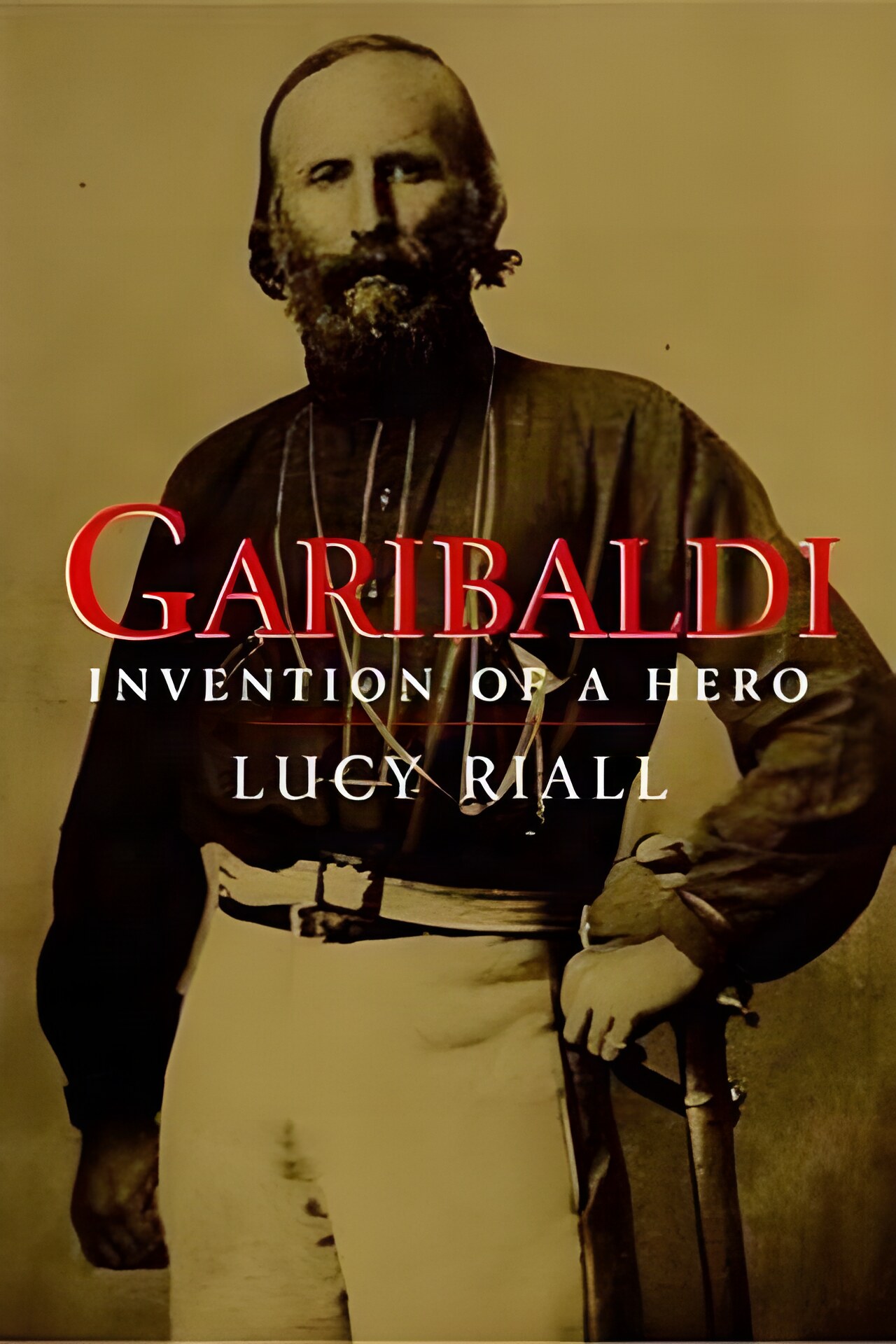
Hardcover. New Haven CT, Yale University Press, 1st, 2007, Book: Very Good, Dust Jacket: Very Good, Hardcover in a bright dust jacket, 482 pages with index. The first sustained analysis of the cult of the legendary Italian hero Giuseppe Garibaldi, the Italian revolutionary leader and popular hero, was among the best-known figures of the nineteenth century. This book seeks to examine his life and the making of his cult, to assess its impact, and understand its surprising success. For thirty years Garibaldi was involved in every combative event in Italy. His greatest moment came in 1860, when he defended a revolution in Sicily and provoked the collapse of the Bourbon monarchy, the overthrow of papal power in central Italy, and the creation of the Italian nation state. It made him a global icon, representing strength, bravery, manliness, saintliness, and a spirit of adventure. Handsome, flamboyant, and sexually attractive, he was worshiped in life and became a cult figure after his death in 1882. Lucy Riall shows that the emerging cult of Garibaldi was initially conceived by revolutionaries intent on overthrowing the status quo, that it was also the result of a collaborative effort involving writers, artists, actors, and publishers, and that it became genuinely and enduringly popular among a broad public. 33 b&w illustrations.
Softcover. US, Yale University Press, 1st, 2011, Book: Very Good, Dust Jacket: None, Softcover, 60 pages. Like new in publishers shrink-wrap. A canonical figure in American painting, George Inness (1825-1894) is widely admired as the pioneer of the landscape aesthetic known as Tonalism, which is distinguished by soft focus and diaphanous layers of paint. This is the first book about the artist's two Italian sojourns (1851-52 and 1870-74) and their formative impact on his work. Italy--its art and its landscape--offered Inness a font of inspiration as he developed his unique artistic vision. This handsome book presents ten oil paintings surveying Inness's Italian subjects dating from 1850 to 1879, including the Philadelphia Museum of Art's recently restored Twilight on the Campagna, which has not been on view since 1952. This was the first of Inness's works completed in Italy, and its reemergence offers a unique opportunity to reconsider the career of a leading American artist.
Hardcover. Houston, Rice University, 1st, 1991, Book: Very Good, Dust Jacket: Very Good, Hardcover, 142 pages. Illustrated with black & white photographs by George Krause. Clean, bright copy. For the past 45 years, George Krause has worked on four distinct series of photographs, each represented in this volume. "The Street" is an oblique journal of places, including Mexico, Spain, Italy, and Philadelphia, where the artist has lived and worked. The objects photographed in "Qui Riposa" are tombstones and cemetery monuments; in "Saints and Martyrs," religious statuary; and in "I Nudi," naked human models. From these common objects arise pictures of great beauty and mystery.
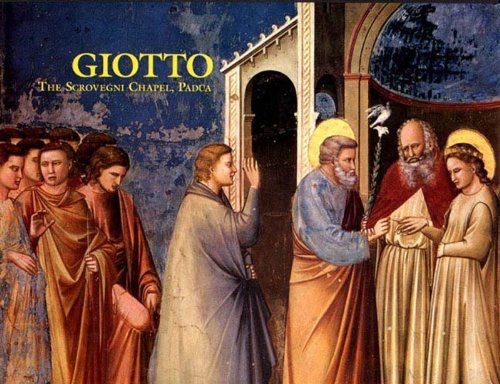
Hardcover. NY, George Braziller, 1st, 1993, Book: Very Good, Dust Jacket: Very Good, Hardcover in a bright dust jacket. Illustrated with b/w and color images throughout. 119 pages. Oblong format. The Scrovegno Chapel is reknown for a fresco cycle by Giotto, completed around 1305 and an important masterpiece of Western art. In 2021, the chapel was declared part of the UNESCO World Heritage Site of 14th-century fresco cycles composed of 8 historical buildings in Padua city centre.The Scrovegni Chapel contains the most important frescoes that marked the beginning of a revolution in mural painting and influenced fresco technique, style, and content for a whole century. Short inscription on front fly leaf, dj with minor wear, clean copy.
Hardcover. NY, George Braziller, 1st, 1993, Book: Very Good, Dust Jacket: Very Good, Hardcover in a bright dust jacket. Illustrated with b/w and color images throughout. 119 pages. Oblong format. The Scrovegno Chapel is reknown for a fresco cycle by Giotto, completed around 1305 and an important masterpiece of Western art. In 2021, the chapel was declared part of the UNESCO World Heritage Site of 14th-century fresco cycles composed of 8 historical buildings in Padua city centre. The Scrovegni Chapel contains the most important frescoes that marked the beginning of a revolution in mural painting and influenced fresco technique, style, and content for a whole century. Short inscription on front fly leaf. Dust jacket with minor wear. Clean copy.
Softcover. NY, The Metropolitan Museum of Art, 1st, 1988, Book: Very Good, Dust Jacket: None, Softcover, 48 pages illustrated in color and b&w. Clean copy.
Hardcover. New York, Weybright and Talley, 1st US, 1969, Book: Very Good, Dust Jacket: Very Good, 248 pages. Hardcover. Illustrated with 370 black & white plates and a color frontispiece. Introduction by Henry Moore. Photographs by Ilario Bessi in collaboration with Henry Moore. Brown canvas, spine lettered in gilt, upper cover blocked in gilt with publishers' device, Dust jacket with light surface wear to back cover. Clean, tight copy.
Hardcover. Princeton Architectural Press, 1st, 2006, Book: Very Good, Dust Jacket: Very Good, Hardcover, 256 pages. The Breakers, the Waldorf, the Biltmore, the Sherry, the Pierre--these landmark hotels are synonymous with grand luxury and style. When they were built, in the 1920s, their refined elegance and grandeur set the bar for hotels and resorts the world over. Responsible for creating these and countless other hotels throughout the United States, were the partners of a single architectural firm: Schultze & Weaver. Together, this duo--an architect and an engineer--virtually invented the glamorous lifestyle made famous in films like Grand Hotel. Catering to the social elite of which they were themselves a part, Schultze & Weaver synthesized the Old World style of Renaissance Italy, Moorish Spain, and Georgian England with all of the modern amenities that made hotel living luxurious. This book presents portfolios of fifteen of the firm's most spectacular hotels, culminating in the Art Moderne masterpiece of the Waldorf-Astoria. Over two hundred period photographs and hand-colored architectural renderings chart the ascent of the American hotel in all its glory and glamour, before the Great Depression forever changed the lifestyles of America's rich and famous. Essays address the cultural and technological developments that underpin the creation of resort and residential hotels, including the elemental role played by Schultze & Weaver.
Softcover. New York, Farrar Straus Giroux, 1st, 2000, Book: Very Good, Dust Jacket: None, Softcover, 137 pages, light blue wrappers. An uncorrected proof. The subtle portrait of a great but difficult man and a legendary island. When friends die, one's own credentials change: one becomes a survivor. Graham Greene has already had biographers, one of whom has served him mightily. Yet I hope that there is room for the remembrance of a friend who knew him-not wisely, perhaps, but fairly well-on an island that was "not his kind of place," but where he came season after season, year after year; and where he, too, will be subsumed into the capacious story.
Hardcover. NY, Doubleday, 1st, 1994, Book: Very Good, Dust Jacket: Very Good, Hardcover in a bright, unclipped dust jacket. Color illustrations, map by Letizia Galli. A beautiful gown forms the focus of activity for the zany characters that introduce young readers to the Commedia del l'arte and the history of comic theater, along with a map, a list of stock characters, and historical notes.
Hardcover. NY, Macmillan Company, 1st, 1932, Book: Very Good, Dust Jacket: None, Hardcover, brick-red cloth with bright gilt lettering on cover and spine. Illustrated with 56 reproductions of etchings, aquatints, and drawings by John Taylor Arms, each with a captioned tissue-guard.. A delightful travelogue with exquisite artwork of John Taylor Arms. He specialized in portraying the gothic architecture of France and Italy. Traveling the back roads and visiting the then out-of-the-way towns of northern Italy by car, he visually captures the look and feel as his wife provides a charming travelog. Clean, bright copy.


 "Francesco di Giorgio: Checklist and History of Manuscripts and Drawings in Autographs and Copies from ca.1470-1687 and Renewed Copies, (1764-1839by: Scaglia, Gustina")
 "Francesco II Gonzaga: The soldier-prince as patronby: Bourne, Molly")
 "Francesco Musati & Valentina Aimone: Rocking Fornarinaby: Musati, Francesco (Artist)")
 "Francesco Vanni: Art in Late Renaissance Sienaby: Marciari, John J.")
 "Frederic Church A Painter's Pilgrimageby: Myers, Kenneth")

 "Galileo's Florentine Residencesby: Bonelli, Maria Luisa Righini, William R. Shea")
 "Garibaldi by: Ridley, Jasper")
 "George Inness in Italyby: Mitchell, Mark D.")
 "George Krause: A Retrospectiveby: Tucker, Anne W.")
 "Giovanni Pisano Sculptorby: Ayrton, Michael/Henry Moore/Ilario Bessi")
 "Grand Hotels of the Jazz Age: The Architecture of Schultze & Weaverby: Marianne Lamonaca")
 "Greene on Capri: A Memoirby: Hazzard, Shirley")
 "Harlequin and the Green Dressby: Fischetto, Laura")
 "Hill Towns and Cities of Northern Italy by: Arms Dorothy Noyes /John Taylor Arms")