Softcover. Tokyo, University of Tokyo Press, 1st pb, 1979, Book: Very Good, Dust Jacket: None, Softcover. Japan Foundation Translation Series. 266 pages. Translated to English by Dennis Keene. Pictorial stiff wrappers. Minor wear to covers, else a very nice, tight, clean copy of this scarce title.
Hardcover. Kyoto, Japan, Shibunkaku , 1st, 2003, Book: Very Good, Dust Jacket: Very Good, Hardcover with a dust jacket, yellow cloth covers with gilt title in Japanese on the spine. 212 pages, 113 rare books and manuscripts listed, many color plates, main text in Japanese. There is a separate 15-page section IN ENGLISH, which describes all the items. Foreword in English by Shoichi Watanabe, Professor at Sophia University. Bottom front corner has been bumped causing mild damage to the cloth and dust jacket. Otherwise clean, bright copy.
Hardcover. NY, Columbia University, 1st, 1980, Book: Very Good, Dust Jacket: Very Good, Hardcover in a bright, lightly worn dust jacket, 300 pages. Book from 1980, being one of the most influential works of Japanese history and political theory. With its glorification of Japan's system of imperial succession, the author's 14th century tract became the catechism of loyalty to the throne for generations of Japanese. Beginning with recounting of Japan's divine origins, it tells of the early deities who ruled before heaven and earth were separated. Then the lives of the human sovereigns are chronicled who ruled over Japan in the 21 centuries following the founding of the empire in the year 606 BC. This first complete English translation of this landmark work gives an extensive introduction placing the chronicle in the context of 14th century Japan and exploring its powerful legacy of Japan before the Tokugawa period. Name on front fly leaf, otherwise clean.
Hardcover. Saxonville, Mass., Simon & Schuster Children's Publishing, reprint, 1992, Book: Very Good, Dust Jacket: Very Good, Hardcover. SIGNED BY ILLUSTRATOR YOSHI on title page. Book is printed back to front. Light edgewear to dust jacket. Overall, a tight clean copy.
Hardcover. Washington DC, Potomac Books, 1st, 2010, Book: Very Good, Dust Jacket: Very Good, Hardcover in a bright dust jacket, 166 pages. The attack on Pearl Harbor is one of the most perplexing cases in living memory of a weaker power seeming to believe that it could vanquish a clearly superior force. On closer inspection, however, Record finds that Japan did not believe it could win; yet, the Japanese imperial command decided to attack the United States anyway. Conventional explanations that Japan's leaders were criminally stupid, wildly deluded, or just plumb crazy don't fully answer all our questions, Record finds. Instead, he argues, the Japanese were driven by an insatiable appetite for national glory and economic security via the conquest of East Asia. The scope of their ambitions and their fear of economic destruction overwhelmed their knowledge that the likelihood of winning was slim and propelled them into a war they were always going to lose. Clean copy.
Hardcover. Tokyo, University of Tokyo Press, 1st US, 1984, Book: Very Good, Dust Jacket: Very Good, 251 pages, beige cloth covers with dark brown lettering on spine. Scholarly, but accessible to a wider intellectual audience. Nakayama lucidly describes the similarities and differences between "Eastern" and "Western" science from Aristotle to the twentieth century.
Hardcover. San Francisco, Chronicle Books, 1st, 1992, Book: Very Good, Dust Jacket: None, Hardcover. Accordion-fold folio. Wrap-around band torn and wrinkled but present. Minor rubbing to edges. Clean, tight copy. Foreword and Interview By Masahiko Yanagi. Photographs By Wolfgang Volz.
Softcover. Annapolis MD, Naval Institute Press, 1st, 1998, Book: Very Good, Dust Jacket: None, Softcover, 343 pages, b&w illustrations. This remarkable memoir tells the compelling story of the near-mythic British district officer who helped shape the first great Allied counteroffensive. Scottish-born and Cambridge-educated, Martin Clemens managed to survive months behind Japanese lines in one of the most unfriendly climates and terrains in the world. Clean, bright copy.
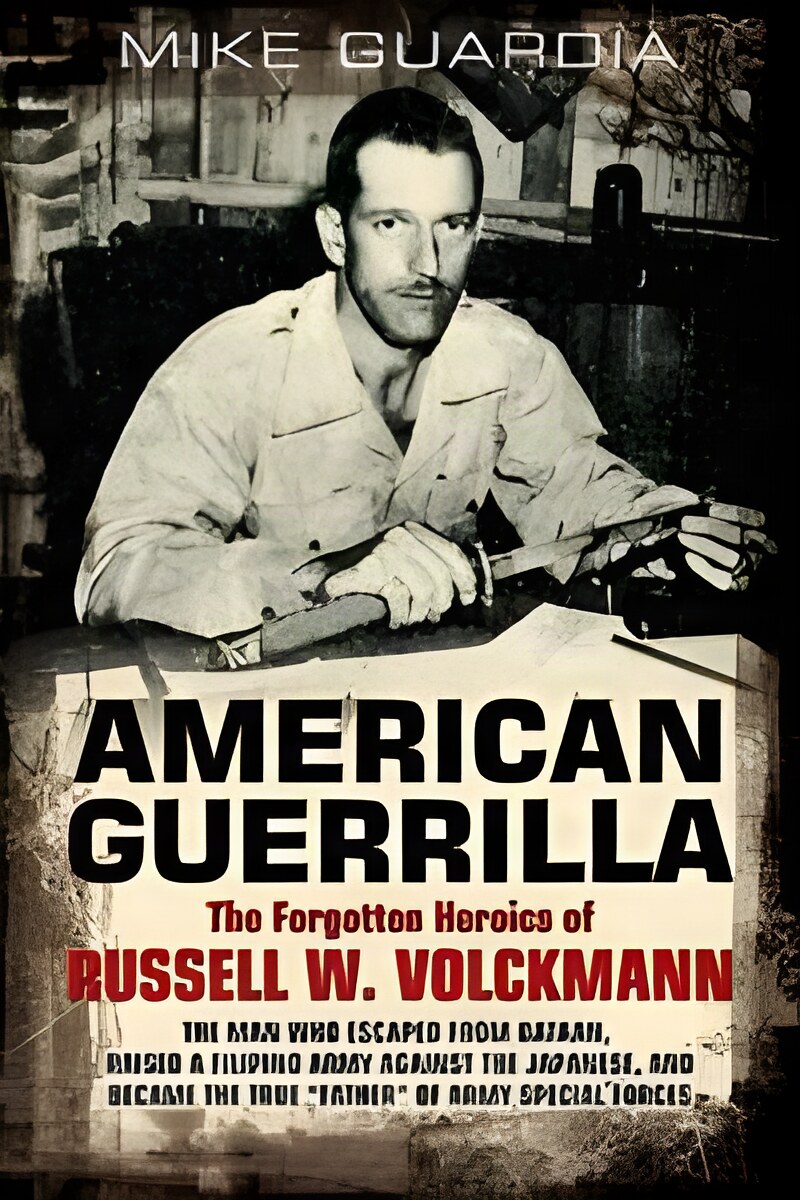
Softcover. Philadelphia, Casemate Publishers, reprint, 2012, Book: Very Good, Dust Jacket: None, Softcover, 226 pages, b&w illustrations. With his parting words "I shall return", General Douglas MacArthur sealed the fate of the last American forces on Bataan. Yet one young Army Captain named Russell Volckmann refused to surrender. He disappeared into the jungles of north Luzon where he raised a Filipino army of over 22,000 men. For the next three years he led a guerrilla war against the Japanese, killing over 50,000 enemy soldiers. At the same time he established radio contact with MacArthur?s HQ in Australia and directed Allied forces to key enemy positions. When General Yamashita finally surrendered, he made his initial overtures not to MacArthur, but to Volckmann. This book establishes how Volckmann's leadership was critical to the outcome of the war in the Philippines. Clean, bright copy.
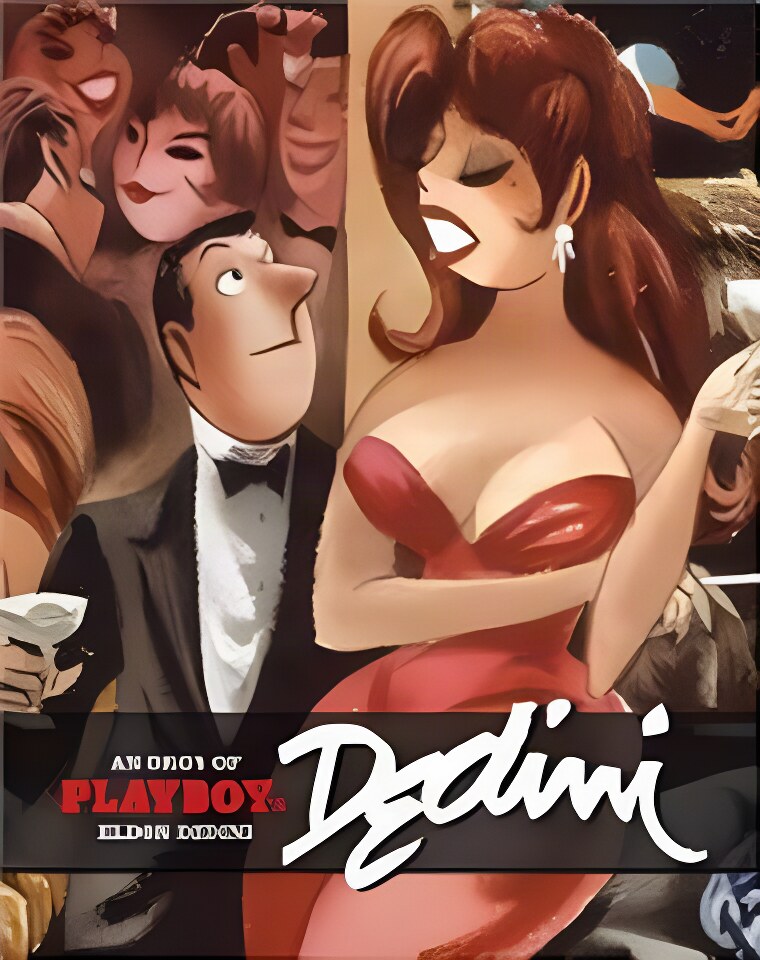
Hardcover. Seattle, Fantagraphics, 1st, 2006, Book: Very Good, Dust Jacket: Very Good, Hardcover in a bright, unclipped dust jacket. Eldon Dedini has been one of Playboy's most recognizable full-page gag cartoonists. With a masterful watercolor technique that burlesques a broad range of subjects, from East and West Coast urban and suburban adult-hipster to classical Japanese erotic prints, Dedini's most personal cartoons rely on mythology and legend. They evoke a bucolic sexually-liberated paradise that leaves his readers lingering over the imagery long after the gag registers. The Art of Playboy's Eldon Dedini is the first retrospective collection of his work, and gathers in one volume the most sophisticated, elegant, and funny gag panels of the past six decades.
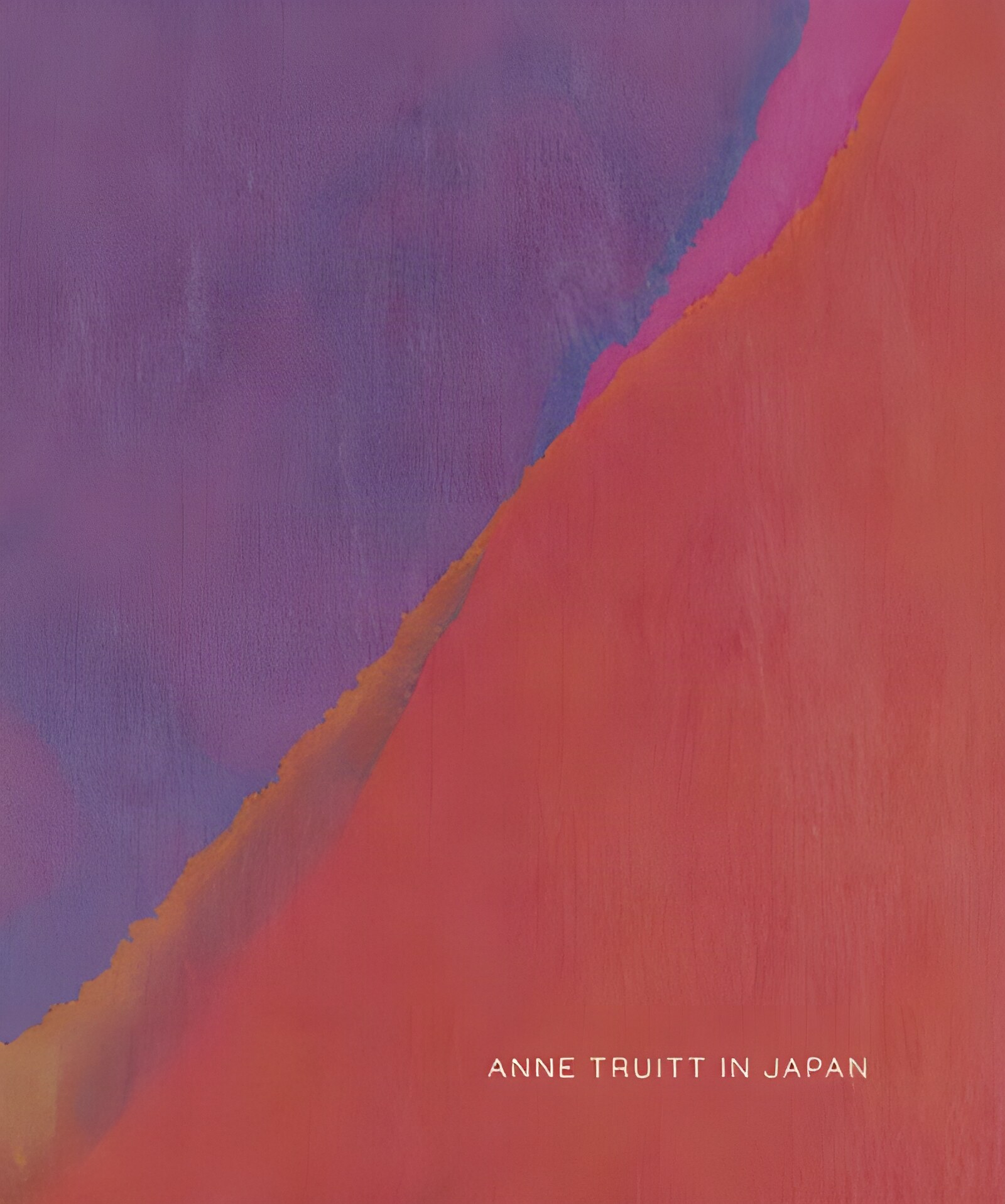
Hardcover. NY, Matthew Marks Gallery, 1st, 2015, Book: Very Good, Dust Jacket: Very Good, Hardcover in a bright dust jacket, brown-grey boards with white lettering; 139 pages, richly illustrated, in color. Created on the occasion of an exhibition held at the Matthew Marks Gallery in New York from September 11th through October 23, 2015. This catalogue focuses on the formative drawings that Anne Truitt (1921-2004) made while living in Tokyo from 1964 to 1967, a pivotal moment for her, both artistically and intellectually. Though she later destroyed the sculptures she produced there (all in aluminum, a material she ultimately found unsuited to her intentions), this process of discovery was essential to the clarification of her sculptural vision. The innovations she developed in Japan, many in the form of drawings, would profoundly inform her lifelong practice. Clean copy.
Softcover. Millerton, Aperture Magazine, 1st, 1983, Book: Very Good, Dust Jacket: None, 80 pages. Magazine. Illustrated with black & white photographs. Features articles: 'People and Ideas', 'Real Pictures for just 25 cents', 'The Arctic Voyage of William Bradford', 'Views of Japan', 'Photographer without Photographs', Passion for Genius', 'The Peasant Miners of Morococha'. Light wear. Clean, unmarked.
Softcover. NY, Aperture Foundation, 2003, Book: Very Good, Dust Jacket: None, Softcover, 80 pages. A large, beautifully designed photography publication with many full page photographs in black and white and color. Glossy wraps. Don McCullin on Aids in Africa / Japanese Photography in Houston / Baryshnikov on the Light Fantastic / Cold War Relics / John Coffer's Tintypes / Russian Pictorialism
Hardcover. Berkeley CA, University of California Press, 1st, 1980, Book: Very Good, Dust Jacket: Very Good, 288 pages. Hardcover with dust jacket. Light soil on dust jacket covers. Clean, tight copy. Pictures throughout.
Hardcover. North Clarendon, VT, Tuttle Publishing, 1st, 2019, Book: Very Good, Dust Jacket: Very Good, 176 pages. Hardcover with dust jacket. A very clean, unmarked copy with only minor wear to dust jacket edges. A tight copy. Color photographs throughout.
Hardcover. New York, Ridge Press/Macmillan, 1st, 1965, Book: Very Good, Dust Jacket: Very Good, Hardcover, 251 pages. Illustrated with full color photographs. price clipped dust jacket shows standard wear. Clean, tight copy. Bil Baird, a master puppeteer of our time, recounts the history of his art, from its remotest yesterday to its bright and promising tomorrow. Along the way, he examines the famous and outrageous Mr. Punch, the raucous Karaghioz, the noble knights of the Orlando legend, the lovely shadow plays of Asia, the unique Bunraku puppets of Japan, and the exciting developments in today's puppetry around the world. To which we would like to add: There has never been any book to compare with this one. It remains the classic text on the history of puppetry around the world. It has dozens of amazing photographs, and a very lucid text written by one of the great master puppeteers of our time.
Softcover. Washington DC, Smithsonian Institution Press, 1st, 1977, Book: Very Good, Dust Jacket: None, Softcover, 159 pages. illustrated in b&w, some color. Arthur Wesley Dow (1857-1922) was an American artist and educator. This monograph traces his life and work in nine chapters: Beginnings; Paris and Brittany; The Return; Japanese Currents; The Pratt Institute and the Launching of Composition; Ipswich and the World; Teachers College; and Conclusion. With extensive notes, bibliography, and 94 illustrations. Clean copy.
Softcover. Washington DC, Smithsonian Institution Press, 1st, 1977, Book: Very Good, Dust Jacket: None, Softcover, 159 pages. illustrated in b&w, some color. Arthur Wesley Dow (1857-1922) was an American artist and educator. This monograph traces his life and work in nine chapters: Beginnings; Paris and Brittany; The Return; Japanese Currents; The Pratt Institute and the Launching of Composition; Ipswich and the World; Teachers College; and Conclusion. With extensive notes, bibliography, and 94 illustrations. Clean copy.
Hardcover. San Francisco, Chronicle Books, 1st, 2007, Book: Near Fine, Dust Jacket: Near Fine, 244 pages illustrated in color. Scholarly essays accompany this monograph on the Japanese-American artist. In publisher's shrinkwrap. Published to coincide with a series of major exhibitions extending beyond 2007, Ascending Chaos is the first major retrospective of Japanese-American artist Masami Teraoka's prolific and acclaimed work thus far. In Teraoka's paintings which have evolved from his wry mimicry of Japanese woodblock prints to much larger and complex canvasses reminiscent of Bosch and Brueghel the political and the personal collide in a riot of sexually frank tableaux. Populated by geishas and goddesses, priests, and politicians, and prominent contemporary figures, these paintings are the spectacular next phase of a wildly inventive career. With essays by renowned art critics who discuss how Teraoka's work inventively marries east and west, sex and religion, Ascending Chaos is a critical overview of this cultural trickster.
Hardcover. Cambridge MA, Harvard University Press, 1st, 1970, Book: Very Good, Dust Jacket: Very Good, Hardcover in a lightly worn dust jacket, 478 pages. Name on half-title page, otherwise clean.
Hardcover. New York, Harry N. Abrams, 1st US, 1998, Book: Very Good, Dust Jacket: Very Good, 224 pages. Hardcover with dust jacket. Sun fading to dust jacket spine. Light foxing to top edge of text block. An otherwise clean, unmarked copy with only minor wear to dust jacket edges. Beardsley's work is looked at alongside the work of contemporaries such as Oscar Wilde, Max Beerbohm and W.B. Yeats and against the backdrop of the artistic, literary and social life of fin-de-siecle London, Dieppe and Paris. In addition to the drawings, the book includes examples of Beardsley's innovative book binding, prints and posters, revealing a gallery of portraits and photographs from that decadent period, the "Naughty Nineties." It also explores the diverse influences, such as ancient Greek vase painting and Japanese prints, upon which the young artist freely drew in the formation of his own style.
Softcover. Mechanicsburg PA, Stackpole Books, 1st, 2006, Book: Very Good, Dust Jacket: None, Softcover, 194 pages, b&w illustrations. This is a fascinating account of Australia's M/Z commando unit and the part it played in the Southwest Pacific during World War II. M Unit personnel were secretly landed to set up coast-watching posts and radio stations to monitor Japanese shipping movements and bombing flights. Members of the Z Unit carried out raids in enemy-controlled areas and also attacked targets of opportunity. Many commandos were delivered on their missions by U.S. Navy submarines that sneaked into dangerously shallow waters to put the men ashore. Other operatives were inserted by PT boats, Catalina aircraft, parachute, and snake boats. Clean, bright copy.
Hardcover. NY, Knopf`, 1st, 2019, Hardcover in a bright, unclipped dust jacket. Returning to his longtime home in Japan after his father-in-law's sudden death, Pico Iyer picks up the steadying patterns of his everyday rites: going to the post office and engaging in furious games of ping-pong every evening. But in a country whose calendar is marked with occasions honoring the dead, he comes to reflect on changelessness in ways that anyone can relate to: parents age, children scatter, and Iyer and his wife turn to whatever can sustain them as everything falls away. As the maple leaves begin to turn and the heat begins to soften, Iyer shows us a Japan we have seldom seen before, where the transparent and the mysterious are held in a delicate balance, and where autumn reminds us to take nothing for granted. Clean copy.
Softcover. Tokyo, Kasuga Boeki KK, 13th pr., 1954, Book: Good, Dust Jacket: None, Softcover. 128 pages. A collection of b&w cartoons by Hume. Tanned pages are unmarked with b/w illustrations and jokes that didn't age well. More than a bit racist and chauvinistic. But very popular with the GIs of the period. One page torn, tape repaired.

 "\"Love\" and Other Stories of Yokomitsu Riichiby: Riichi, Yokomitsu")


 "A to Zen: A Book of Japanese Culture (SIGNED COPY)by: Yoshi")
 "A War It Was Always Going to Lose: Why Japan Attacked America in 1941by: Jeffrey Record")
 "Academic and Scientific Traditions in China, Japan, and the Westby: Nakayama, Shigeru")
 "Accordion-Fold Book for the Umbrellas: Joint Project for Japan and USAby: Javacheff, Christo & Jeanne-Claude.")

 "Aperture - Number 90 - 1983by: Aperture Magazine")
 "Aperture 170: (Aperture Magazine)by: Aperture Foundation Inc. Staff")
 "Art of Hokusai in Book Illustration, Theby: Hillier, Jack")
 "Art of the Japanese Garden, The: History / Culture / Designby: Young, David E.")
 "Art of the Puppet, Theby: Baird, Bil")


 "Ascending Chaos: The Art of Masami Teraoka 1966-2006by: Bing, Alison and others")
 "Aubrey Beardsleyby: Calloway, Stephen")
 "Australian Commandos: Their Secret War Against the Japanese in WWII by: Feuer A. B. /foreword by Robert Barr Smith ; afterwords by George Folta and John Keith Leasure")
 "Autumn Light: Season of Fire and Farewellsby: Pico Iyer")
