Hardcover. Cambridge MA, MIT Press, 2nd Pr., 1994, Book: Very Good, Dust Jacket: Very Good, Hardcover, 251 pages, with her photo-illustrated dust jacket. Who speaks? Who is silent? Who is seen? Who is absent? These questions focus on how cultures are constructed through pictures and words, how we are seduced into a world of appearances: into a pose of who we are and aren't. On both an emotional and an economic level, images and texts have the power to make us rich or poor. In these essays and reviews, written over the last decade, Barbara Kruger addresses that power with intelligence and wit, in the hope of engaging both our criticality and our dreams of affirmation. Barbara Kruger is an artist whose pictures and words engage issues of power, sex, money, difference, and death. Her work has appeared throughout America, Europe, and Japan in galleries, newspapers, magazines, and museums and on billboards, matchbooks, TV programs, t-shirts, postcards, and shopping bags. She has written about television, film, and cultures for Artforum, Esquire, the New York Times, and the Village Voice.
Hardcover. New York, George Braziller, 1st, 1993, Book: Very Good, Dust Jacket: Very Good, Hardcover in a bright dust jacket, Unpaginated. Color and black & white photography. British artist Long ( Walking in Circles ) takes nature treks--in England's Lake District, the Sahara, Japan, Nepal--and creates site-specific works along the way. He fashions a mud circle in the river Avon, traces a line of snow near a temple in Kyoto and erects a circle of stones on a Swiss mountainside. The spare, deeply meditative photographs that he took en route sometimes call to mind prehistoric British megalithic monuments or Native American earthworks, as if he wants to tune in on planetary patterns of energy. At other times Long simply records what he sees, providing dramatic vistas of Iceland's vast rolling hills, Bolivia's high plateau, Washington's forests and Mount Everest's calm majesty. His images, poetic captions and unobstrusive siteworks reflect an artist who is at once traveler, nature-lover and adventurer.
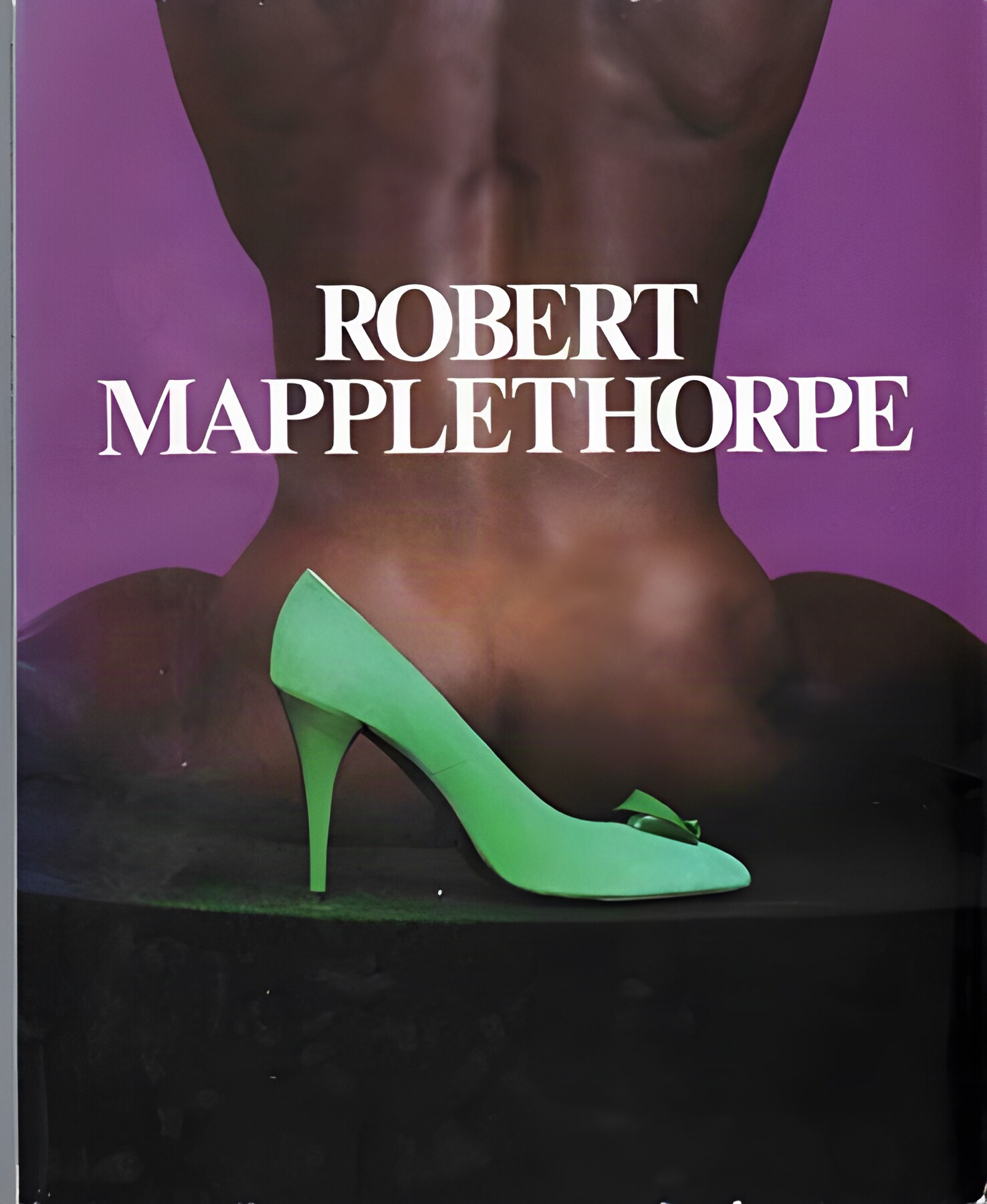
Softcover. Tokyo, Parco Publishing, 1st, 1987, Book: Very Good, Dust Jacket: None, Softcover, wrapped in a clear acetate cover with no printing. Unpaginated. 72 photographs including several color prints that were among the first ever collected in book form. Many portraits, including Patti Smith, Ken Moody. Text in English and Japanese. Clean copy.
Hardcover. London, Ashgate, reprint, 2010, Book: Very Good, Dust Jacket: Very Good, 248 pages. Hardcover with dust jacket. Clean, unmarked copy with only minor wear to dust jacket. Silver gilt on spine. 'Like "the ring" itself, this book is viral: it gathers into itself literature and film, disease and survival, cultural studies and aesthetics, Japan and America, technology and the family. We won't read Suzuki's novels or watch the films in the same way again. A thoroughly readable and teachable text!' Steven Bruhm, Robert and Ruth Lumsden Professor of English, The University of Western Ontario, and author of Reflecting Narcissus: A Queer Aesthetic 'Taking as its point of departure the phenomenon of The Ring in all its manifestations"the Japanese novel, the Japanese film, the American film, and the various sequels"The Scary Screen offers an in-depth and sustained speculation about the anxiety created by the development of communication technologies. The collection introduces startling insights into the relationship between changes in media forms and widespread fears of contagion, while also identifying a new universal form of horror that has emerged in recent decades as the status of reproduction"both technological and biological"has undergone a profound transformation. The essays included here represent a powerful theoretical response to this transformation.' Todd McGowan, University of Vermont, and author of The Impossible David Lynch and The Real Gaze '... The Scary Screen is a useful contribution to studies of The Ring, horror film, and cultural anxieties evoked by technology.' Journal of the Fantastic in the Arts.
Softcover. Tokyo, Shinbaku Books, 1st, 2014, Book: Very Good, Dust Jacket: None, Softcover, 112 pages, illustrated in color. The modern era of underground doll-making in Japan began in the late 1960s, with the experiments of Simon Yotsuya and Nori Doi. Directly inspired by the Surrealist Doll constructed by Hans Bellmer in 1932, Simon Yotsuya created a series of ball-jointed, life-sized dolls which featured in his ground-breaking "Eve In The Past And The Future" exhibition in Tokyo, in 1973. Simon Yotsuya's work inspired a new wave of avant-garde Japanese doll-making, headed by artists such as Ryo Yoshida and Katan Amano, which has continued to flourish to the present day. SECRET DOLLeEUR^UNDERGROUND, presented by Yuichi Konno, features dolls by fifteen artists, from Simon Yotsuya onwards, with over 80 full-sized colour photographs never before published outside Japan. It also includes Konno's introductory history of the underground doll in Japan.
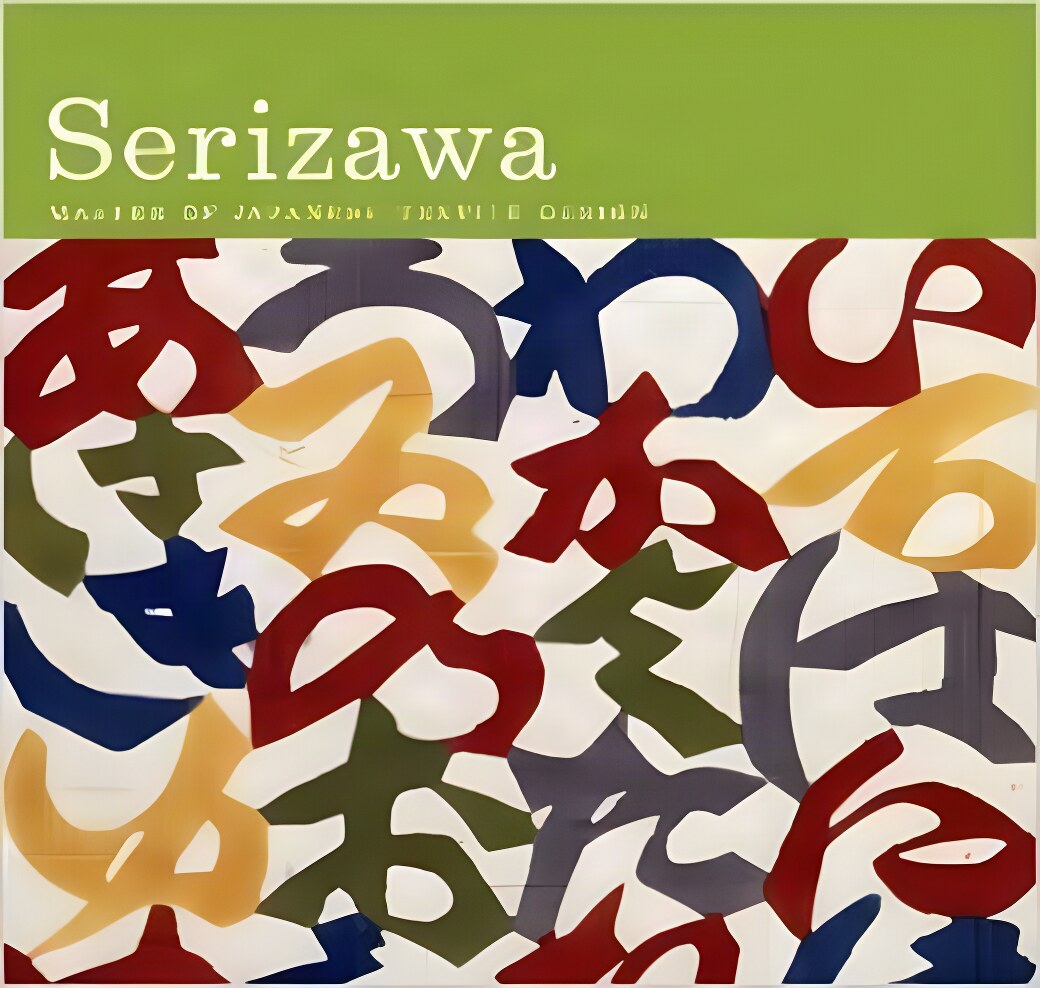
Softcover. New Haven CT, Yale University Press, 2009, Book: Very Good, Dust Jacket: None, Softcover, 144 pages. Like new in publisher's shrink-wrap. Designated a Living National Treasure in 1956, Serizawa Keisuke (1895-1984) was one of the greatest artists of 20th-century Japan. This is the first book in English to trace Serizawa's artistic biography in detail using the finest examples of his work from leading Japanese collections. A major exponent of the mingei (people's crafts) movement, Serizawa achieved fame as a textile designer using traditional stencil-dyeing techniques and often working in large-scale formats such as folding screens or kimonos. The stunning works in this catalogue are important not only for the originality of their conception, but also for the variety of their materials: cotton, silk, hemp and a range of other fibers, and paper decorated with the brilliant yet warm hues of vegetable dyes. Dramatic in design, Serizawa's textiles have an expressive power that far transcends expectations of a "craft" medium.
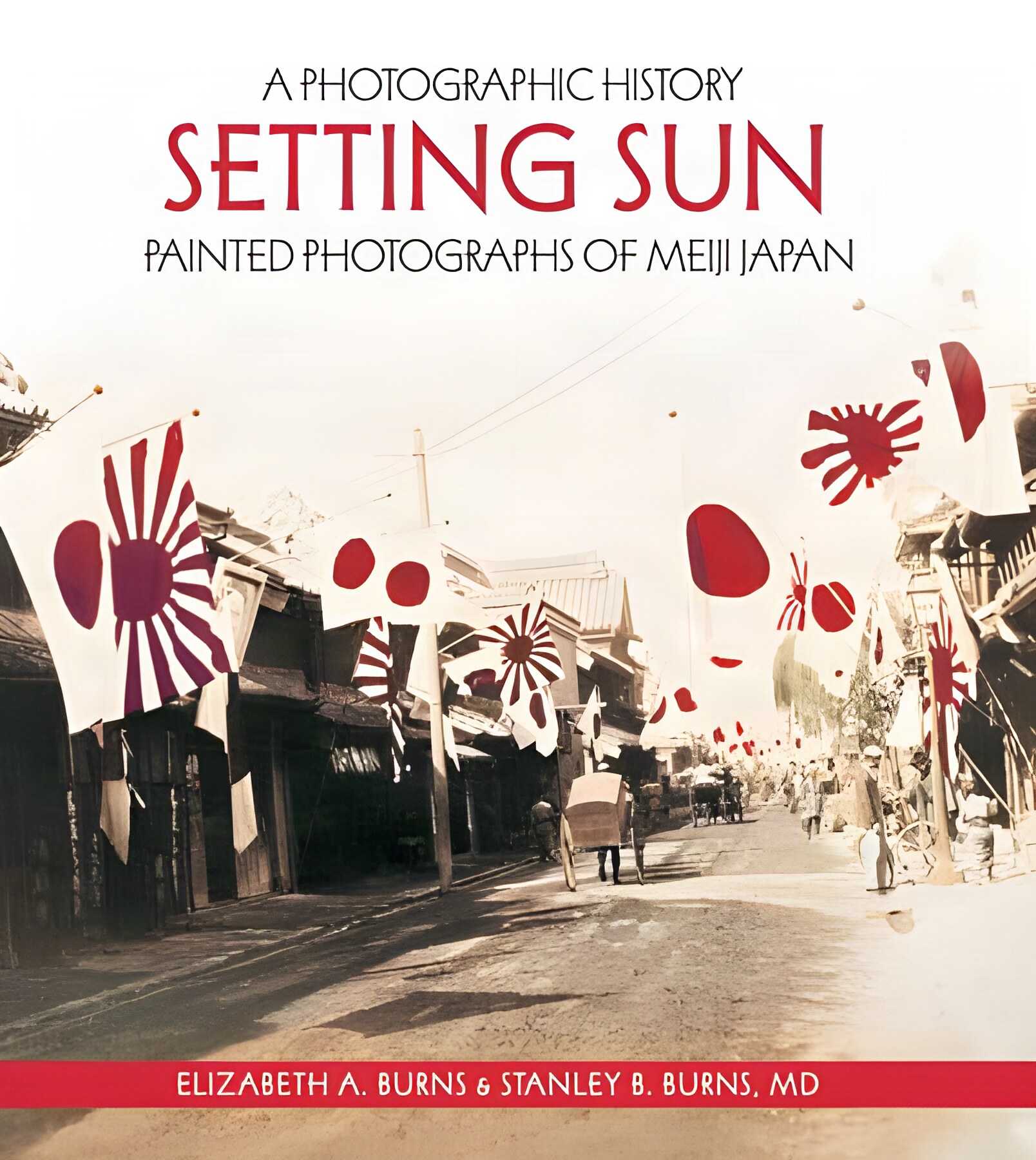
Softcover. NY, Burns Archive Press, 1st, 2017, Book: Very Good, Dust Jacket: None, Softcover, 106 pages, color plates throughout. SIGNED/INSCRIBED BY STANLEY BURNS on the title page. Japan, an island nation isolated until the mid-nineteenth century, opened its doors to foreign photographers in the 1860s. These photographers presented a visual cultural kaleidoscope of Japanese life to an eager outside world. The 160 photographs in this volume are curated from tourist albums and presented in the typical sequence. The modern reader will experience Meiji Japan in the way of a nineteenth century armchair traveler. While photographers in other countries were marketing sepia-toned prints, photographers in Japan took advantage of local artists and had their prints exquisitely painted. As with all hand-rendered artworks, quality varied; many photographs were executed so well as to challenge modern color photography. Photographers were limited by government restrictions and many scenes were set in studios rather than in real life. Despite the limitations, tourists visiting the country could purchase albums filled with colorful renditions of Japan's peoples and places. The carefully staged and approved photographs promoted an idealized and romanticized vision of Meiji Japan. Modernization and industrialization changed the country dramatically and the last vestiges of the disappearing feudal culture are captured by the camera. These intriguing photographs are beautiful multi-media artworks representing a vanished world. Clean copy.
Hardcover. NY, W. W. Norton, 1st, 1992, Book: Very Good, Dust Jacket: Very Good, Hardcover in a bright, unclipped dust jacket. This stimulating and comprehensive collection of original essays on twentieth-century Japan's history and culture provides a unique mix of American and Japanese perspectives on Showa. With an important, substantial Introduction by Carol Gluck, the volume explores the strengths of the Japanese economy, the issue of democracy and Japan's political culture, Japan's achievements in technology and the arts, and its relations with other Asian nations and the United States. Name on front fly leaf, otherwise clean.
Hardcover. Tokyo, International House of Japan, 1st English Ed., 2006, Book: Very Good, Dust Jacket: Very Good, Hardcover in a bright dust jacket, 201 pages. Many of the world's major economies face shrinking populations this century. Everyone from Japan and Italy to China will have older and then shrinking populations in the foreseeable future. Japan is the first major economy to head down this path and there is a great deal to learn from their experience. Professor Masutani's book is the best text available in English. Some quick lessons - automation is not a solution, economies will shrink. The sometimes desperate acts that companies and governments take to prevent this shrinkage (like running deficits and over investment in automation and infrastructure) will make things worse, not better. Shrinking populations can lead to a healthier and happier population if the right policy steps are taken. Companies need to shift focus from growing the top-line (sales) to a focus on value generation and the bottom line. Clean copy.
Hardcover. NY, Knopf, 1st, 2012, Book: Very Good, Dust Jacket: Very Good, Hardcover in a bright, unclipped dust jacket. 418 pages, b&w illustrations. From the author of the best-selling One Minute to Midnight, a riveting account of the pivotal six-month period spanning the end of World War II, the dawn of the nuclear age, and the beginning of the Cold War. When Roosevelt, Stalin, and Churchill met in Yalta in February 1945, Hitler's armies were on the run and victory was imminent. The Big Three wanted to draft a blueprint for a lasting peace--but instead set the stage for a forty-four-year division of Europe into Soviet and western spheres of influence. After fighting side by side for nearly four years, their political alliance was rapidly fracturing. By the time the leaders met again in Potsdam in July 1945, Russians and Americans were squabbling over the future of Germany and Churchill was warning about an "iron curtain" being drawn down over the Continent. These six months witnessed some of the most dramatic moments of the twentieth century: the cataclysmic battle for Berlin, the death of Franklin Roosevelt, the discovery of the Nazi concentration camps, Churchill's electoral defeat, and the dropping of atomic bombs on Japan. While their armies linked up in the heart of Europe, the political leaders maneuvered for leverage: Stalin using his nation's wartime sacrifices to claim spoils, Churchill doing his best to halt Britain's waning influence, FDR trying to charm Stalin, Truman determined to stand up to an increasingly assertive Soviet superpower.
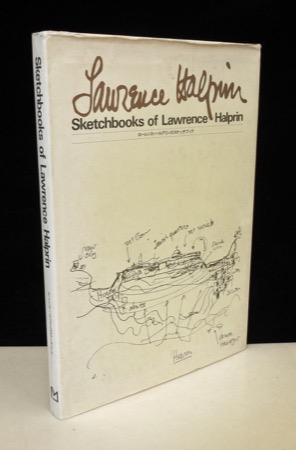
Hardcover. Tokyo, Process Architecture Company, 1st, 1981, Book: Very Good, Dust Jacket: Good, Hardcover, large folio in dust jacket that has fading to spine and edges. First Edition In English and Japanese. Large (folio-size) compilation of the architectural drawings of prominent landscape architect Lawrence Halprin, who was associated with the 1962 Seattle World's Fair, UC Berkeley, the city of Jerusalem, Ghirardelli Square in San Francisco, Nicollet Mall in Minneapolis, the Franklin Delano Roosevelt Memorial in Washington and many other famous sites. DOMESTIC SHIPPING ONLY.
Softcover. Tokyo, Bijutsu Shuppan-Sha, 1st, 1989, Book: Very Good, Dust Jacket: None, Softcover, 111 pages. Japanese photographer on the road from Xi'an to Kashi and back again. Color throughout.
Hardcover. Chapel Hill, N.C., Algonquin Books, 1st, 1984, Book: Very Good, Dust Jacket: Very Good, Hardcover, 295 pages, b&w photos. INSCRIBED BY AUTHOR on half title page with old photo of author taken just after WW2 mounted on front end paper. Light edgewear to dust jacket and faint foxing to top edge, else a clean, tight copy.
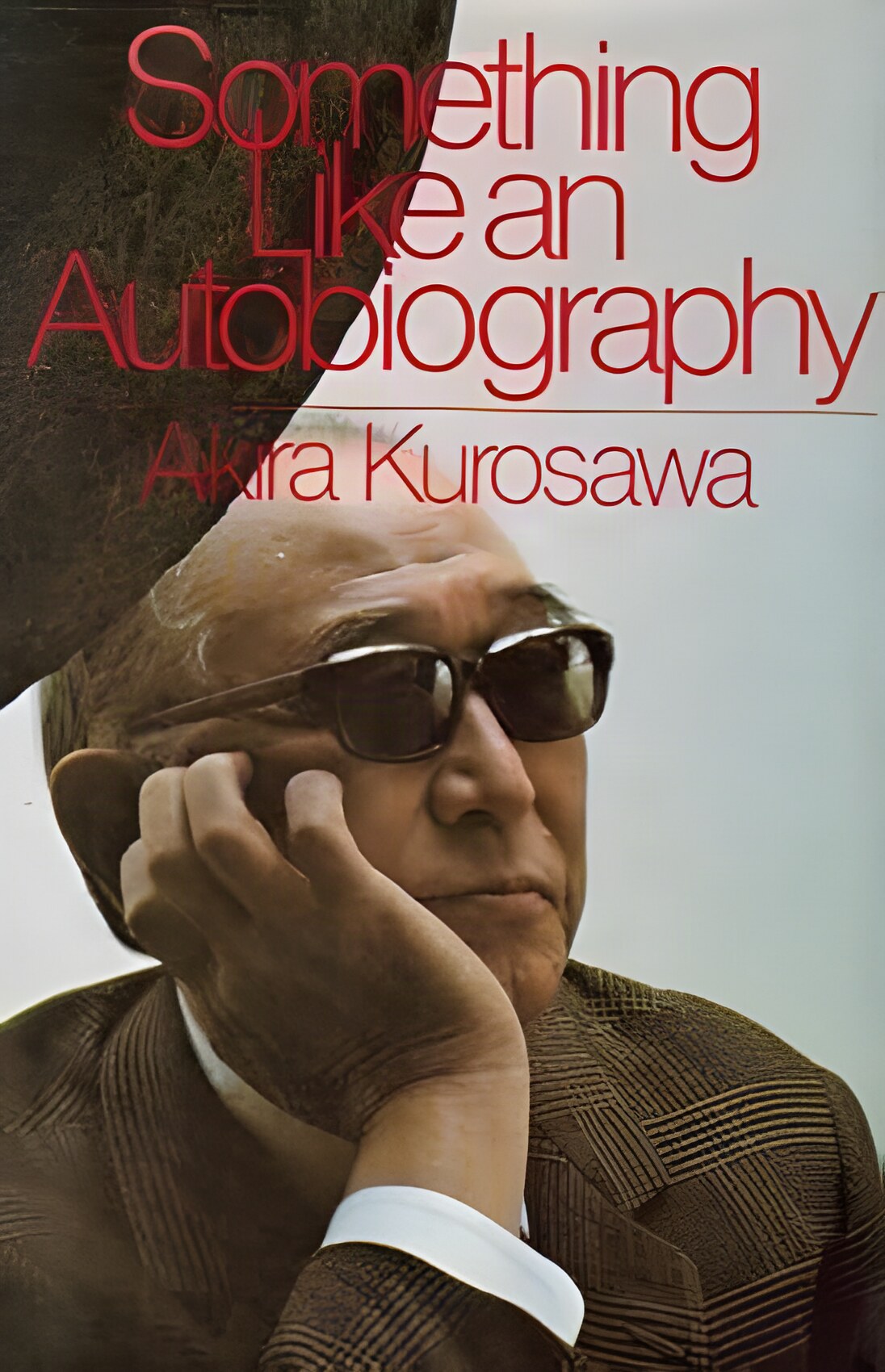
Hardcover. NY, Knopf, 1st, 1982, Book: Very Good, Dust Jacket: Very Good, Hardcover in a bright, unclipped dust jacket, 205 pages, b&w illustrations. The distinguished filmmaker chronicles his life from his birth in 1910 to the worldwide success in 1951 of his film "Rashomon" and provides a provocative account of the Japanese film industry. Much of the book focuses on his early life, and the reader empathizes greatly with the young Kurosawa. There was much tragedy in his young life, both within his family, but also with the nation of Japan during the years leading up to and including the war. Much of his early career was spent trying to work on and create good films while appeasing the Japanese censors. Remainder dot on top edge otherwise a clean copy.
Softcover. Santa Monica, The Lapis Press, First Edition, 1987, Book: Very Good, Dust Jacket: None, Non-paginated. Softcover with french flaps & light wear to edges. Previous owner's signature to front flyleaf. Pen marking to several pages in commentary sections. Poetry is clean & unmarked throughout. Black printed illustrations.
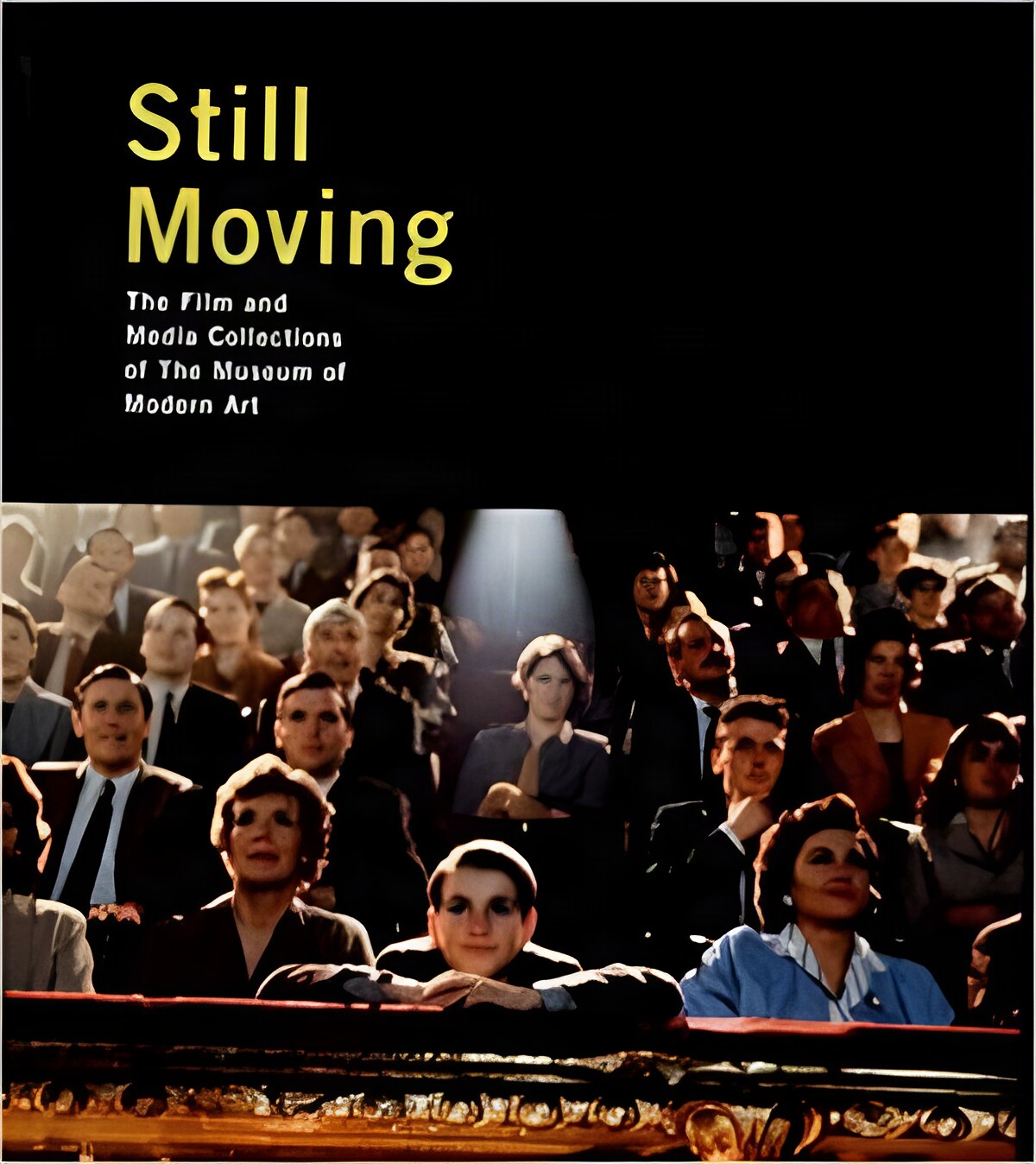
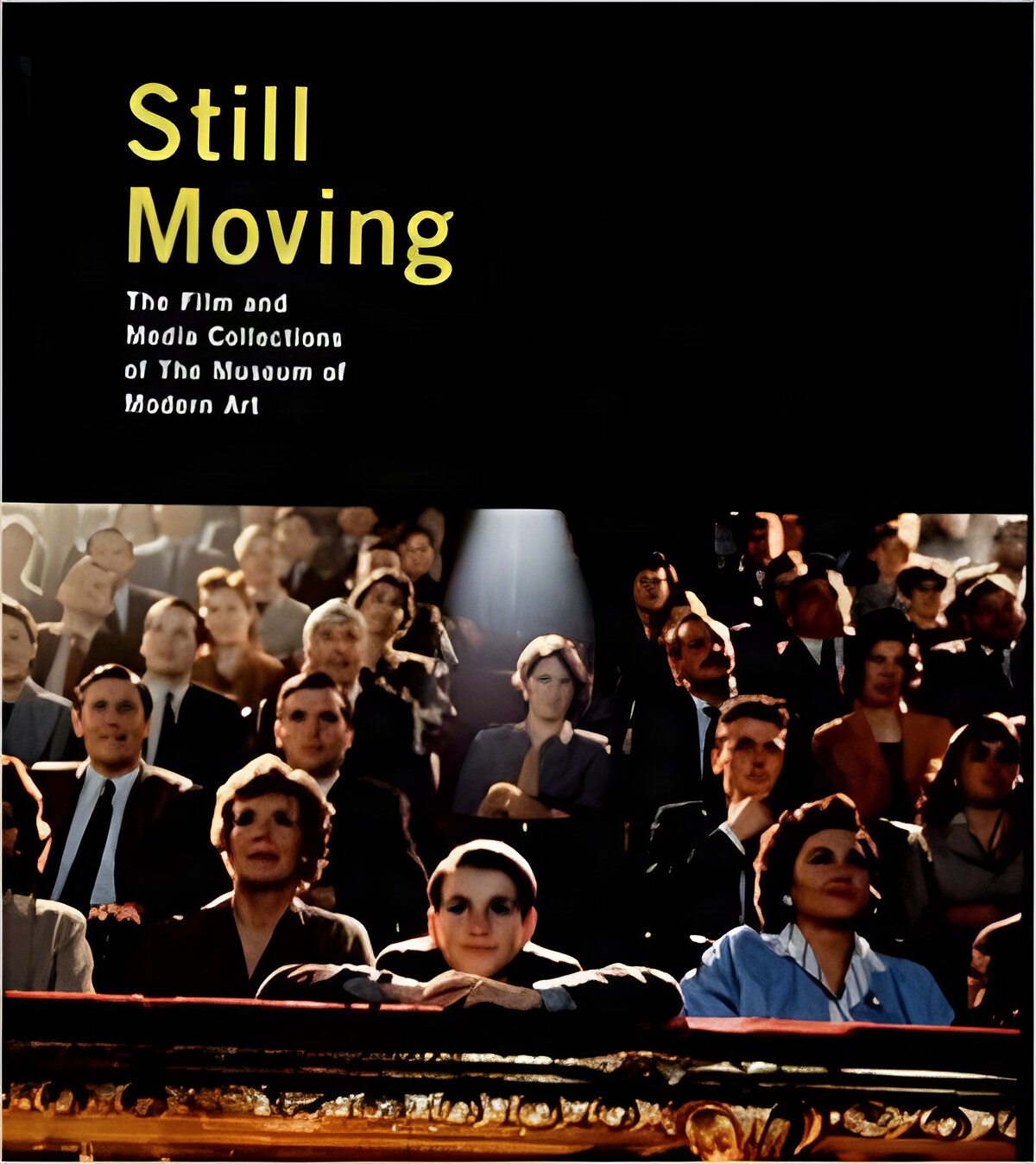
Hardcover. New York, The Museum of Modern Art, 1st, 2006, Book: Very Good, Dust Jacket: None, Hardcover, 375 pages, illustrated throughout in color and b&w. Clean, unmarked copy in excellent condition. 507 illustrations (108 in color, 399 in duotone). Founded in 1935, The Museum of Modern Art's Department of Film and Media is home to one of the most important moving-image archives in the world. Still Moving: The Film and Media Collections of The Museum of Modern Art marks the first time that MoMA has published a volume dedicated exclusively to these holdings. Drawn primarily from the Museum's vast library of film stills, the nearly 500 images in this book represent just a fraction of the department's renowned archive, including one of the world's most important collections of international silent cinema; classic early sound films from the United States, Great Britain, France, Germany, Italy, Russia, and Japan; extensive holdings of documentary and animation shorts and feature films; significant examples of Hollywood filmmaking from studios such as Warner Brothers, RKO, MGM, Twentieth Century-Fox, and Paramount; and more recent works by leading independent and avant-garde film and media artists.
Hardcover. New York, The Museum of Modern Art, New York, 1st, 2006, Book: Very Good, Dust Jacket: None, Hardcover, 375 pages, illustrated throughout in color and b&w. Clean, unmarked copy in excellent condition. 507 illustrations (108 in color, 399 in duotone). Founded in 1935, The Museum of Modern Art's Department of Film and Media is home to one of the most important moving-image archives in the world. Still Moving: The Film and Media Collections of The Museum of Modern Art marks the first time that MoMA has published a volume dedicated exclusively to these holdings. Drawn primarily from the Museum's vast library of film stills, the nearly 500 images in this book represent just a fraction of the department's renowned archive, including one of the world's most important collections of international silent cinema; classic early sound films from the United States, Great Britain, France, Germany, Italy, Russia, and Japan; extensive holdings of documentary and animation shorts and feature films; significant examples of Hollywood filmmaking from studios such as Warner Brothers, RKO, MGM, Twentieth Century-Fox, and Paramount; and more recent works by leading independent and avant-garde film and media artists.
Hardcover. NY, Dial Books, 1st, Book: Very Good, Dust Jacket: Very Good, Hardcover in a bright, price-clipped dust jacket, 300 pages, b&w illustrations. The children's book author has won the Newberry Medal and National Book Award. Now in these fascinating stories from her life, she reveal the origins of her book characters from events in her life; from China with missionary parents to single life in Japan to life in Maryland with four children. Filled with personal photos and letters. Clean copy.
Hardcover. Urbana IL, University of Illinois Press, 1st, 1999, Book: Very Good, Dust Jacket: Very Good, Hardcover in a bright, unclipped dust jacket. 162 pages, b&w illustrations. In the wake of Kristallnacht, November 9, 1938, Sigmund Tobias and his parents fled their home in Germany and relocated to one of the few cities in the world that offered shelter without requiring a visa: the notorious pleasure capital, Shanghai. Seventeen thousand Jewish refugees flocked to Hongkew, a section of Shanghai ruled by the Japanese, and they created an active community that continued to exist through the end of the war. Tobias's coming-of-age story unfolds within his descriptions of Jewish life in the exotic sanctuary of Shanghai. Depleted by disease and hunger, constantly struggling with primitive and crowded conditions, the refugees faced shortages of food, clothing, and medicine. Tobias also observes the underlife of Shanghai: the prostitution and black market profiteering, the brutal lives of the Chinese workers, the tensions between Chinese and Japanese during the war, and the paralyzing inflation and the approach of the communist "liberators" afterward. Richly detailed, Strange Haven opens a little-documented chapter of the Holocaust and provides a fascinating glimpse of life for these foreigners in a foreign land. An epilogue describes the changes Tobias observed when he returned to Shanghai forty years later as a visiting professor.
Hardcover. New York, Houghton Mifflin, 1st, 1995, Book: Very Good, Dust Jacket: Very Good, Hardcover in a bright, unclipped dust jacket. 32 pages. Color illustrations by Say. Minor edgewear to dust jacket. Clean, attractive copy. One morning eight-year-old Martin looks in the mirror and sees a stranger. Overnight, he has changed. His parents take him to one doctor after another, only to be told that there is nothing wrong with their son. At school his teacher asks, "What have we here, trick or treat?" His classmates will not play with him. At home his family tries to treat him as if he were the same child. But things now are different. Martin has grown very old in the space of one day. His world will never be the same again.
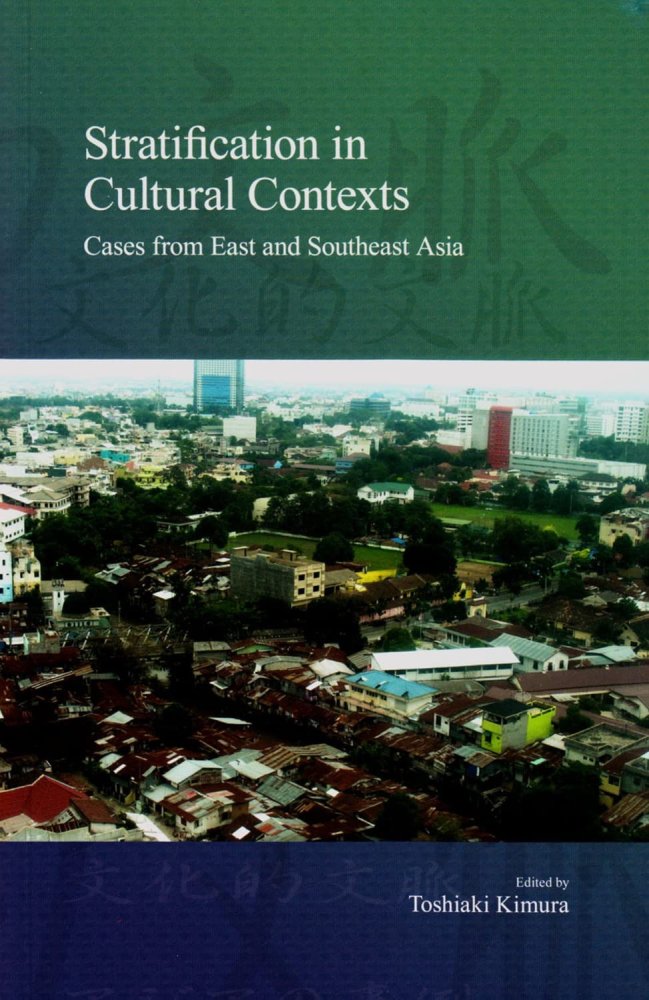
Hardcover. Trans Pacific Press, 1st, 2013, Book: Very Good, Dust Jacket: None, Hardcover in glossy boards, 170 pages. Stratification in Cultural Contexts is a collection drawn from research results of the East Asian Division of the Center for the Study of Social Stratification and Inequality at Tohoku University. In this book, scholars who specialize in areas of East and Southeast Asia examine how the problem of stratification manifests itself in different cultural and historical contexts, discussing when and in what circumstances the problem of stratification has become more serious, and suggesting how the tension could be eased. The topics dealt with are diversified, from religion to economic concerns. The local wisdom of traditional societies is used to analyze inequality and stratification in cases such as the phenomenon of 'religious revival' following democratization in Mongolian society, the lives of 'slaves' under the Choson dynasty in Korea, and the role of warrior-class women in early-modern Japan. Clean, bright copy.
Hardcover. New York, Monacelli Press, Inc., 1st US, 2003, Book: Very Good, Dust Jacket: Good, 276 pages. Hardcover. Illustrated with full color photographs. Dust jacket with fading along spine and edges. Light wear. Clean, tight copy.
New York, Harcourt, Brace, and Company, 1st, 1958, Book: Very Good, Dust Jacket: Very Good, 127 pages, including glossary of Japanese terms. B&w drawings by William Hutchinson. Ex-library copy. Blue dust jacket with faded spine; small tear to top left front cover. Otherwise very good.

 "Remote Control: Power Cultures and the World of Appearancesby: Kruger, Barbara")
 "Richard Long: Mountains and Watersby: Long, Richard")
 "Scary Screen, The: Media Anxiety in The Ringby: Lacefield (Ed.), Kristin")
 "Secret Doll Underground: Japanese Surrealist Dolls From The Yaso Collection, Tokyo (Japanese Art Perspectives)by: Yuichi Konno (Editor)")

 "Shrinking-Population Economics: Lessons From Japanby: Akihiko, Matsutani")
 "Six Months in 1945: FDR, Stalin, Churchill, and Truman--from World War to Cold Warby: Michael Dobbs")


 "Sketches of the Silk Road: Rugged Roads of Tjanshan-Nanlu, China's Western Frontier by: Naoki Mukoda")
 "Stelesby: Segalen, Victor")

 "Strange Haven: A Jewish Childhood in Wartime Shanghai by: Tobias, Sigmund")
 "Stranger in the Mirrorby: Say, Allen")
 "Tadao Ando - Light and Waterby: Frampton, Kenneth/Tadao Ando")
 "Takao and Grandfather's Swordby: Uchida, Yoshiko")