Hardcover. Cambridge MA, Harvard University Press, 1st, 2000, Book: Very Good, Dust Jacket: Very Good, hardcover in a bright, unclipped dust jacket. The Supreme Court under Chief Justice Earl Warren was the most revolutionary and controversial Supreme Court in American history. But in what sense? Challenging the reigning consensus that the Warren Court, fundamentally, was protecting minorities, Lucas Powe revives the valuable tradition of looking at the Supreme Court in the wide political environment to find the Warren Court a functioning partner in Kennedy-Johnson liberalism. Thus the Court helped to impose national liberal-elite values on groups that were outliers to that tradition--the white South, rural America, and areas of Roman Catholic dominance. In a learned and lively narrative, Powe discusses over 200 significant rulings: the explosive Brown decision, which fundamentally challenged the Southern way of life; reapportionment (one person, one vote), which changed the political balance of American legislatures; the gradual elimination of anti-Communist domestic security programs; the reform of criminal procedures (Mapp, Gideon, Miranda); the ban on school-sponsored prayer; and a new law on pornography. Most of these decisions date from 1962, when those who shaped the dominant ideology of the Warren Court of storied fame gained a fifth secure liberal vote. The Justices of the majority were prominent individuals, brimming with confidence, willing to help shape a revolution and see if it would last. Clean copy.
Softcover. NY, Vintage Crime/Black Lizard, reprint, 2007, Book: Very Good, Dust Jacket: None, Softcover, 245 pages. In a rundown house in Santa Monica, Mrs. Samuel Lawrence presses fifty crumpled bills into Lew Archer's hand and asks him to find her wandering daughter, Galatea. Described as 'crazy for men' and without discrimination, she was last seen driving off with small-time gangster Joe Tarantine, a hophead hood with a rep for violence. Archer traces the hidden trail from San Francisco slum alleys to the luxury of Palm Springs, traveling through an urban wilderness of drugs and viciousness. As the bodies begin to pile up, he finds that even angel faces can mask the blackest of hearts.Filled with dope, delinquents and murder, this is classic Macdonald and one of his very best in the Lew Archer series. Clean copy.
Softcover. NY, Prentice Hall, 1st pbk, 1970, Book: Very Good, Dust Jacket: None, Softcover, 184 pages. Revealing and disturbing study of the racist ideas and fantasies of southern whites after the Civil War and examines their racial fantasies and the social and psychological roots of those fantasies. He reveals how a complex set of anxieties and repressions in Southern life led whites to need "Negro" Inferiority." Name on title page otherwise clean.
Softcover. Woodstok VT, The Woodstock Foundation, 1st, 1982, Book: Very Good, Dust Jacket: None, Softcover, 123 pages, b&w illustrations. SIGNED BY JANE AND WILL CURTIS on the front fly leaf. This work was published in observance of the 100th anniversary of Marsh's death in 1882. It graphically portrays the many-faceted career of this extraordinarily versatile Vermonter. Marsh is best known for his pioneering environmental study, Man and Nature, which was first published in 1864. Marsh was a lawyer, linguist, businessman, farmer, designer, Congressman, and diplomat (he was Minister to Turkey and to the newly-united Kingdom of Italy, where he spent the last twenty-one years of his life, a tour of duty unprecedented in American diplomacy). In Congress he supported creating of the Smithsonian Institution.
Hardcover. NY, Walker & Company, 1st, 1988, Book: Very Good, Dust Jacket: Very Good, Hardcover in a bright, unclipped dust jacket. 118 pages illustrated in b&w by Patricia Lynn. Details the early years in the life of the "frontier President," describing how the fatherless boy became a landowner at age three, a rebel scout at thirteen, and a lawyer at twenty. Clean copy.
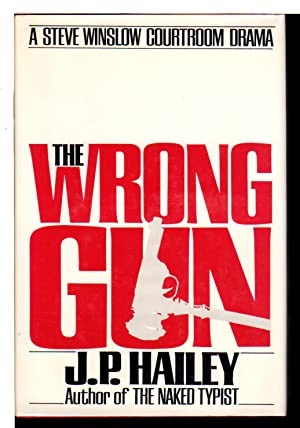
Hardcover. NY, Donald I. Fine, 1st, 1992, Book: Very Good, Dust Jacket: Very Good, Hardcover in a bright, unclipped dust jacket. The fifth mystery featuring maverick lawyer Steve Winslow. Clean, like new.
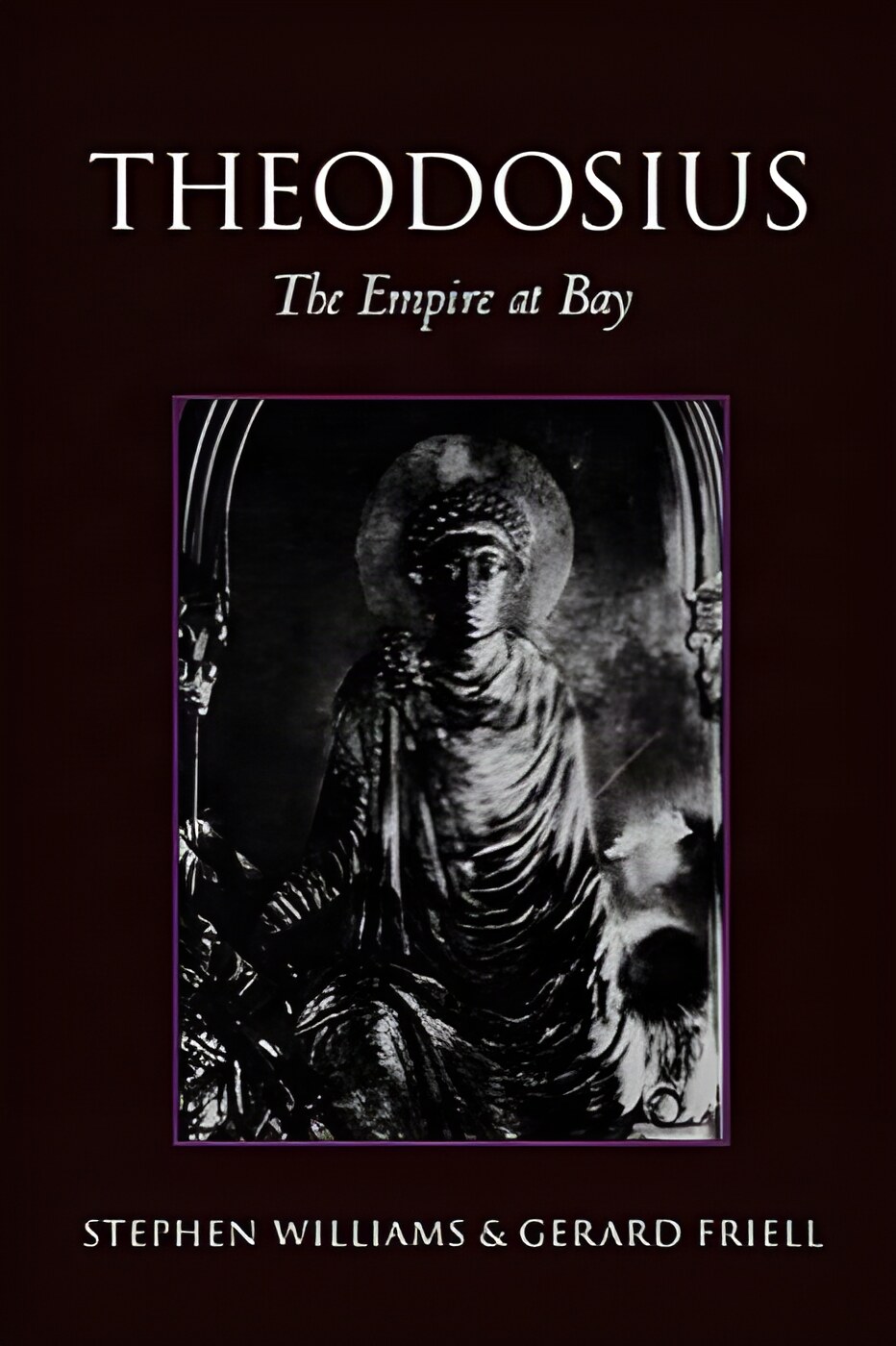
Hardcover. New Haven CT, Yale University Press, 1st, 1994, Book: Very Good, Dust Jacket: Very Good, Hardcover in a bright dust jacket, 238 pages. Theodosius I was the last Roman emperor to rule over both East and West. After the military disaster of Adrianople he had to rebuild the state by adopting a new policy of cooperation with the barbarians. He also suppressed paganism and established a unified Catholic Church by law. His reign was a turning point in the history of the late Roman Empire. The authors describe the military, political, and religious struggles of this turbulent period and analyze the far-reaching effects of his policies in the fourth and fifth centuries. Clean copy.
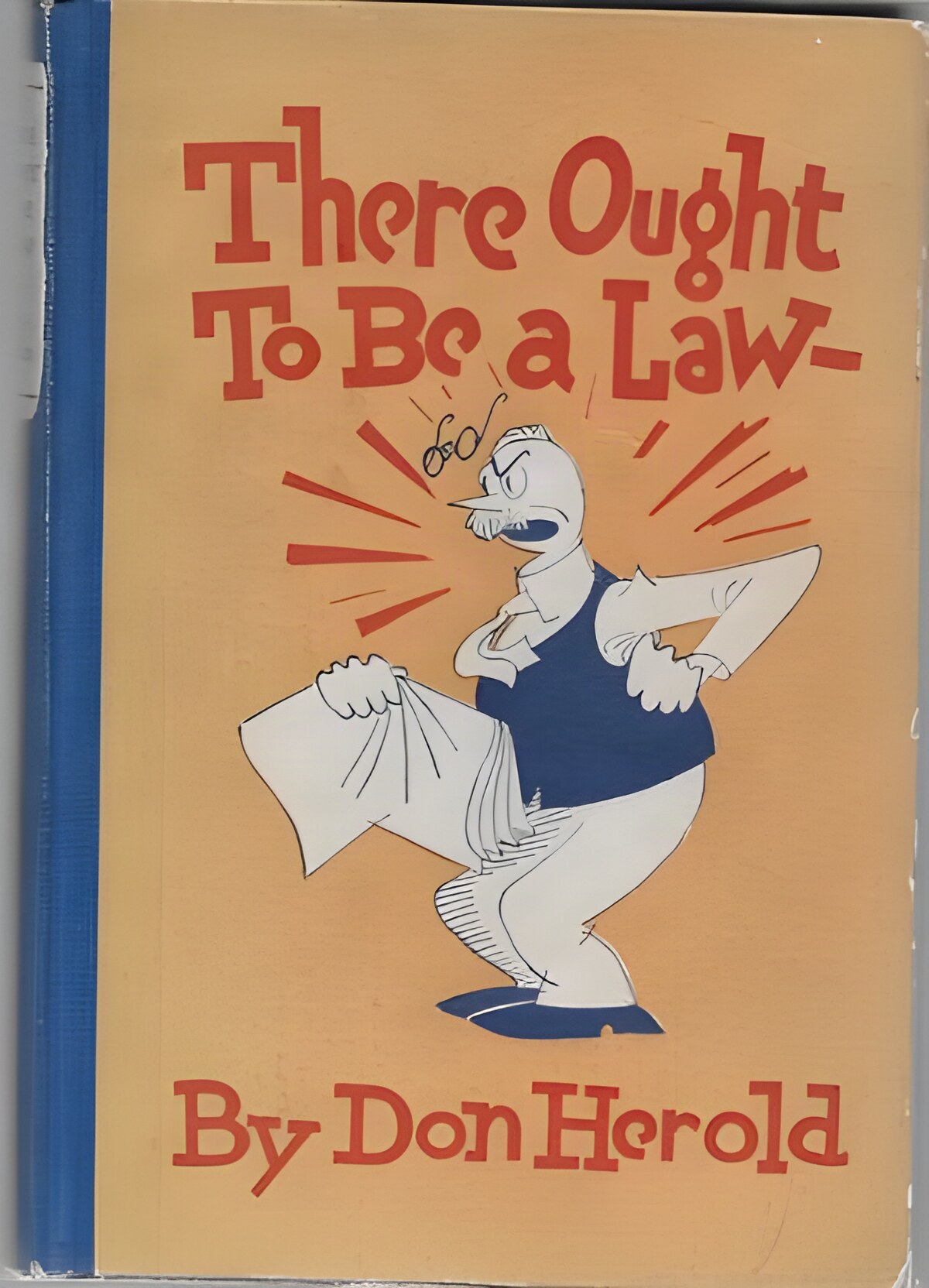
Hardcover. New York, Dutton, 1st, 1926, Book: Very Good, Dust Jacket: Very Good, Hardcover, 203 pages. Illustrated with black & white drawings by Don Herold. Light wear to covers. Clean, tight copy.
Hardcover. NY, Otto Penzler, 1st hardcover, 1994, Book: Very Good, Dust Jacket: Very Good, 1st hardcover edition of book, first published as paperback in 1966. Black boards with gilt titles to spine, color illustrated dust jacket.
Hardcover. Southbury CT, self-published, 1st, 1971, Book: Very Good, Dust Jacket: None, Hardcover, printed paper over pictorial boards. 75 pages with many b&w illustrations. SIGNED BY AUTHOR on half-title page. Clean, bright copy.
Hardcover. St. Ann's Press, 1st, 2002, Book: Very Good, Dust Jacket: Very Good, Hardcover, 172 pages. On May 25, 1961, Bruce Davison joined a group of Freedom Riders traveling by bus from Montgomery, Alabama to Jackson, Mississippi. The actions of these youths challenged and disobeyed federal laws allowing for integrated interstate bus travel. These historic episodes, which ended in violence and arrests, marked the beginning of Davidson's exploration into the heart and soul of the civil rights movement in the United States during the years 1961-1965. In 1962, Davidson received a Guggenheim Fellowship and continued documenting the era, including an early Malcolm X rally in Harlem, steel workers in Chicago, a Ku Klux Klan cross burning near Atlanta, farm migrant camps in South Carolina, cotton picking in Mississippi, protest demonstrations in Birmingham, and the heroic Selma March that led to the Voting Rights Act of 1965, which was instrumental in changing the political power base in the segregated Southern states. In the 140 photographs collected here, many of which have never before been published, we see intimate and revealing portraits of Dr. Martin Luther King Jr., John Lewis, and other leaders made by Davidson during those turbulent times. These images describe the mood that prevailed during the civil rights movement with a lyrical imagery that is both poignant and profound. As Davidson bears witness to these historical events, and documents the degradation and segregation that were endured, he gives testimony to the struggle for freedom, equality, justice, and human dignity.
Hardcover. NY, Funk and Wagnalls , 1st, 1903, Book: Good, Hardcover, gray cloth stamped in green and black, 464 pages, b&w illustrations by Will Crawford. A version of Samuel Warren's 1839 novel, Ten Thousand a Year, which has been abridged by American author, Cyrus Townsend Brady (1861 - 1920). Warren (1807 - 1877), was a British barrister, novelist and MP with an in-depth knowledge of British common law and the original novel was based on a famous forgery case from the 1830s, where a claim was made to a vacant earldom using fake documents. Rear hinge cracked, shelf wear, name stamp on inside front cover.
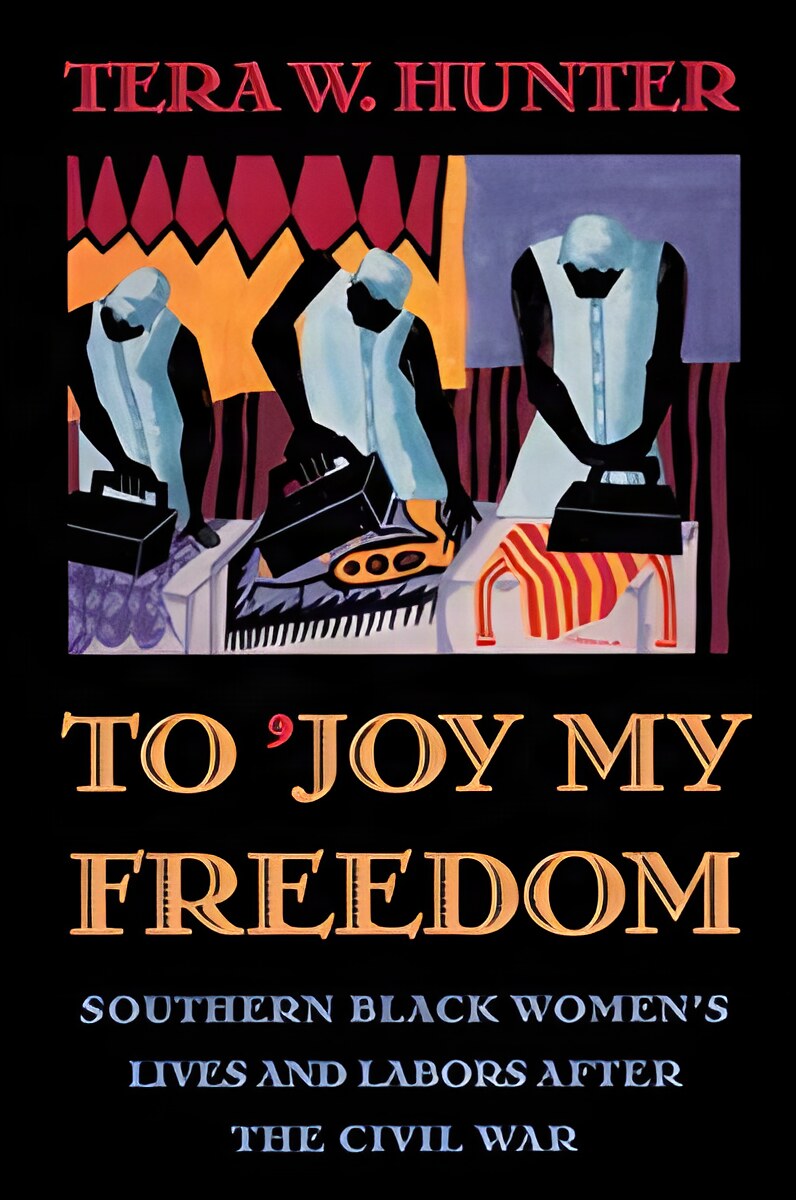
Softcover. Cambridge MA, Harvard University Press, reprint, 1998, Book: Very Good, Dust Jacket: None, Softcover, 311 pages. As the Civil War drew to a close, newly emancipated black women workers made their way to Atlanta-the economic hub of the newly emerging urban and industrial south-in order to build an independent and free life on the rubble of their enslaved past. In an original and dramatic work of scholarship, Tera Hunter traces their lives in the postbellum era and reveals the centrality of their labors to the African-American struggle for freedom and justice. Household laborers and washerwomen were constrained by their employers' domestic worlds but constructed their own world of work, play, negotiation, resistance, and community organization. Hunter follows African-American working women from their newfound optimism and hope at the end of the Civil War to their struggles as free domestic laborers in the homes of their former masters. We witness their drive as they build neighborhoods and networks and their energy as they enjoy leisure hours in dance halls and clubs. We learn of their militance and the way they resisted efforts to keep them economically depressed and medically victimized. Finally, we understand the despair and defeat provoked by Jim Crow laws and segregation and how they spurred large numbers of black laboring women to migrate north. Clean copy.
Hardcover. NY, Oxford University Press, 4th pr., 2000, Hardcover in a bright dust jacket. 670 pages, b&w illustrations. Written by the most prominent of the new generation of historians, this superb volume offers the most up-to-date and authoritative account available of African-American history, ranging from the first Africans brought as slaves into the Americas, to today's black filmmakers and politicians. Here is a panoramic view of African American life, rich in gripping first-person accounts and short character sketches that invite readers to relive history as African Americans experienced it. We begin in Africa, with the growth of the slave trade, and follow the forced migration of what is estimated to be between ten and twenty million people, witnessing the terrible human cost of slavery in the colonies of England and Spain. We read of the Haitian Revolution, which ended victoriously in 1804 with the birth of the first independent black nation in the New World, and of slave rebellions and resistance in the United States in the years leading up to the Civil War. There are vivid accounts of the Civil War and Reconstruction years, the backlash of notorious "Jim Crow" laws and mob lynchings, and the founding of key black educational institutions. The contributors also trace the migration of blacks to the major cities, the birth of the Harlem Renaissance, the hardships of the Great Depression and the service of African Americans in World War II, the struggle for Civil Rights in the 1950s and '60s, and the emergence of today's black middle class. From Harriet Tubman and Frederick Douglass to Martin Luther King, Jr., and Louis Farrakhan, To Make Our World Anew is an unforgettable portrait of a people. Clean copy.
Hardcover. South Windsor, CT, Barney E. Daley, 1st, 1998, Book: Very Good, Dust Jacket: None, 300+ pages. Hardcover. INSCRIBED BY AUTHOR. Bound in green cloth; gilt lettering & design on spine and front cover. From the introduction (Evan Lawn): "Whether one reads straight through or reads here and there in a checkered fashion, every reader will enjoy meeting Barney. ...And if the reader happens to be an historian, these memoirs will be prized as a treasure trove of living information about rural, daily life before electricity and indoor plumbing."
Hardcover. Oxford UK, Oxford University Press, 1st, 2016, Book: Very Good, Dust Jacket: Very Good, Hardcover in a bright dust jacket, 175 pages. Despite recent advances in Locke scholarship, philosophers and political theorists have paid little attention to the relations among his three greatest works: An Essay Concerning Human Understanding, Two Treatises of Government, and Epistola de Tolerantia. As a result our picture of Locke's thought is a curiously fragmented one. Toleration and Understanding in Locke argues that these works are unified by a concern to promote the cause of religious toleration. Making extensive use of Locke's neglected replies to Proast, Nicholas Jolley shows how Locke draws on his epistemological principles to criticize religious persecution - for Locke, since revelation is an object of belief, not knowledge, coercion by the state in religious matters is not morally justified. In this volume Jolley also seeks to show how the Two Treatises of Government and the letters for toleration adopt the same contractualist approach to political theory; Locke argues for toleration from the function of the state where this is determined by the decisions of rational contracting parties. Throughout, attention is paid to demonstrating the range of Locke's arguments for toleration and to defending them, where possible, against recent criticisms. The book includes an account of the development of Locke's views about religious toleration from the beginning to the end of his career; it also includes discussions of his individualism about knowledge and belief, his critique of religious enthusiasm, his commitment to the minimal creed, and his teachings about natural law. Locke emerges as a rather systematic thinker whose arguments are highly relevant to modern debates about religious toleration. Light pencil marking to some pages.
Hardcover. Bologna, Italy, Damiani Editore, 1st, 2010, Book: Very Good, Dust Jacket: Very Good, Hardcover, 240 pages. Like new in publisher's shrink-wrap. One of today's foremost fashion and celebrity photographers, Tom Munro has been making defining images since the mid-1990s. Munro achieves his results by encouraging his subjects to reinterpret their personalities for his lens, reveling in seductive roleplay or darkly-lit melodrama. The subjects gathered here include some of the biggest names in pop culture today-Ashton Kutcher, Brooke Shields, Charlotte Gainsbourg, Christina Ricci, Courtney Love, Daniel Craig, Dustin Hoffman, Ewan McGregor, Isabella Rossellini, Jake Gyllenhaal, Jennifer Aniston, Johnny Depp, Jude Law, Julianne Moore, Justin Timberlake, Lauren Hutton, Leonardo DiCaprio, Linda Evangelista, Madonna, Marion Cotillard, Matt Dillon, Matthew McConaughey, Naomi Campbell, Patrick Dempsey, Rob Lowe, Scarlett Johansson, Stephanie Seymour and Tom Cruise, to name only a few. This volume-Munro's first monograph-affirms his status as a portraitist of the first rank.English by birth, Tom Munro moved to New York in 1990, embarking on his own career as a photographer in 1997, and achieving overnight success with his early editorial shoots for British Vogue and Harper's Bazaar. Over the last ten years, Munro has contributed to some of the world's most prestigious magazine publications including Vogue, Italian Vogue, L'Uomo Vogue, Russian Vogue, China Vogue and Details. Munro's dedication to his craft has attracted some of the fashion and beauty industries' most prestigious names, including Armani, Banana Republic, Burberry, Calvin Klein, Converse, Gap, Givenchy, Hugo Boss, Lacoste, L'Oreal, Moschino, as well as music icons such as Beyonce, Justin Timberlake and Madonna.
Hardcover. Bologna, Italy, Damiani Editore, 1st, 2010, Book: Very Good, Dust Jacket: Very Good, Hardcover, 240 pages. Like new in publisher's shrink-wrap. One of today's foremost fashion and celebrity photographers, Tom Munro has been making defining images since the mid-1990s. Munro achieves his results by encouraging his subjects to reinterpret their personalities for his lens, reveling in seductive roleplay or darkly-lit melodrama. The subjects gathered here include some of the biggest names in pop culture today-Ashton Kutcher, Brooke Shields, Charlotte Gainsbourg, Christina Ricci, Courtney Love, Daniel Craig, Dustin Hoffman, Ewan McGregor, Isabella Rossellini, Jake Gyllenhaal, Jennifer Aniston, Johnny Depp, Jude Law, Julianne Moore, Justin Timberlake, Lauren Hutton, Leonardo DiCaprio, Linda Evangelista, Madonna, Marion Cotillard, Matt Dillon, Matthew McConaughey, Naomi Campbell, Patrick Dempsey, Rob Lowe, Scarlett Johansson, Stephanie Seymour and Tom Cruise, to name only a few. This volume-Munro's first monograph-affirms his status as a portraitist of the first rank.English by birth, Tom Munro moved to New York in 1990, embarking on his own career as a photographer in 1997, and achieving overnight success with his early editorial shoots for British Vogue and Harper's Bazaar. Over the last ten years, Munro has contributed to some of the world's most prestigious magazine publications including Vogue, Italian Vogue, L'Uomo Vogue, Russian Vogue, China Vogue and Details. Munro's dedication to his craft has attracted some of the fashion and beauty industries' most prestigious names, including Armani, Banana Republic, Burberry, Calvin Klein, Converse, Gap, Givenchy, Hugo Boss, Lacoste, L'Oreal, Moschino, as well as music icons such as Beyonce, Justin Timberlake and Madonna.
Softcover. London, T. Plummer, Printer, Seething Lane, reprint, 1801, Book: Very Good, Dust Jacket: None, Disbound stab-stitched pamphlet. 4 pages in small typeface. Presumably reduced from the 8 page 1798 printing. Moore, a Scottish cartographer, chart seller and educator with a somewhat controversial reputation, was accused of copying a chart of the coasts of France, Spain and Portugal drawn up by William Heather. The case was heard before Lord Kenyon with the prosecution led by Erskine; the jury quickly found for the defendant despite Kenyon's balanced instruction.
Hardcover. Baton Rouge LA, Louisiana State University, 1st, 1972, Book: Very Good, Dust Jacket: Very Good, Hardcover in a lightly worn dust jacket, 294 pages. Name on front fly leaf otherwise clean.
Hardcover. Birmingham AL, The Legal Classics Library, reprint, 1988, Book: Very Good, Dust Jacket: None, Hardcover, full red leather covers with gilt decorations, spine has raised bands; marbled endpapers; satin ribbon marker; all edges gilt; binding tight; cover, edges, and interior intact and clean. First published in England in 1935. Introduction by Lord Atkin. Albert Haddock, the hero of countless lawsuits in A.P. Herbert's misleading cases, made his first public appearance in Punch about 1924. This collection of Misleading Cases contains many more sly jests at the absurdities of English law and will teach the reader more about the legal processes than lawyers know themselves.
Hardcover. NY, Doubleday, 1st, 1990, Book: Very Good, Dust Jacket: Very Good, Hardcover, 212 pages. SIGNED BY AUTHOR on half title page. Light shelf-wear to dust jacket, else a clean, tight copy.




 "Thief Who Couldn't Sleep, Theby: Block, Lawrence")


 "Tobacco Parish: A Collection of South Windsor's Memories (INSCRIBED BY AUTHOR)by: Daley, Barney E.")
 "Toleration and Understanding in Locke by: Jolley, Nicholas")
 "Tom Munroby: Munro, Tom/Madonna (Introduction)")
 "Tom Munroby: Munro, Tom")
 "Treatise on the Law of Corporations , A - In Two Volumesby: Kyd, Stewart")