Hardcover. Athens OH, Ohio University Press, 2nd pr., 1996, Book: Very Good, Dust Jacket: Very Good, Hardcover in a bright dust jacket, 373 pages. Editors Groth and Castronovo have chosen from Wilson's previously uncollected works to present materials illuminating his growth as a literary critic and writer. The works are arranged chronologically, beginning with essays published in the High School Record in 1911 proceeding to works penned for the Nation, New Republic, and the New Yorker in the Thirties, Forties, and Fifties, and winding up with an acceptance speech delivered by Wilson in 1966. Among the subjects of the essays are underrated pleasures (including Edith Wharton, satin breeches, and the human body), overrated experiences (such as afternoon tea, youth, summer, and weddings), and literary critiques, both admiring and scathing. Many libraries already own the source periodicals, but this collection includes a few items that would be difficult to obtain.
Hardcover. NY, Da Capo Press, 1st, 2011, Book: Very Good, Dust Jacket: Very Good, Hardcover in a bright, unclipped dust jacket. Fug You is Ed Sanders's unapologetic and often hilarious account of eight key years of "total assault on the culture," to quote his novelist friend William S. Burroughs. Fug You traces the flowering years of New York's downtown bohemia in the sixties, starting with the marketing problems presented by publishing Fuck You / A Magazine of the Arts, as it faced the aboveground's scrutiny, and leading to Sanders's arrest after a raid on his Peace Eye Bookstore. The memoir also traces the career of the Fugs -- formed in 1964 by Sanders and his neighbor, the legendary Tuli Kupferberg (called "the world's oldest living hippie" by Allen Ginsberg) -- as Sanders strives to find a home for this famous postmodern, innovative anarcho-folk-rock band in the world of record labels.
Hardcover. Nashville TN, Vanderbilt University Press, 1st, 1959, Book: Very Good, Dust Jacket: None, Hardcover, light gray cloth with black and gilt title block on spine. 224 pages, Introduction by Louis D. Rubin Jr. B&w frontis portrait of participants: Allen Tate, Robert Penn Warren,Merrill Moore, and others. The Fugitive was a poetry magazine published in the 1920s and this is a record of their gathering some 30 years later with their commentaries. Small name on front fly leaf, otherwise clean.
Hardcover. Cambridge MA, Zoland Books, 1st, 1997, Book: Very Good, Dust Jacket: Very Good, Hardcover in a bright, unclipped dust jacket. INSCRIBED BY CORBETT on the dedication page. A memoir by poet William Corbett recounts the story of his relationship with his father whose sudden and peculiar abandonment of his family in 1965 left numerous unanswered questions. Clean copy.
Hardcover. NY, Alfred A. Knopf, 1st, 2013, Book: Very Good, Dust Jacket: Very Good, 589 pages. Hardcover with dust jacket. Remainder mark on bottom text block. Tight copy. Light rubbing to dust jacket.
Hardcover. South Bend IN, St. Augustine's Press, reprint, 1998, Book: Very Good, Dust Jacket: None, Hardcover, glossy pictorial boards, 225 pages. Widely recognized as a classic account of the circumstances, issues, and consequences of Galileo's tragic confrontation with the theologians. Langford's book is cited in much of the Galileo literature of the past three decades, and it has been in print continuously since 1971. The present text is the third edition, updated and expanded with a survey of the most important advances in recent Galileo studies. In it, Langford assesses the validity of his own account while making the modifications dictated by recent scholarship.
Hardcover. New York, Beaufort Books, 1st, 2016, Book: Very Good, Dust Jacket: Very Good, 375 pages. Hardcover with dust jacket. Clean, unmarked copy with only minor wear to dust jacket. Black and white pictures throughout.
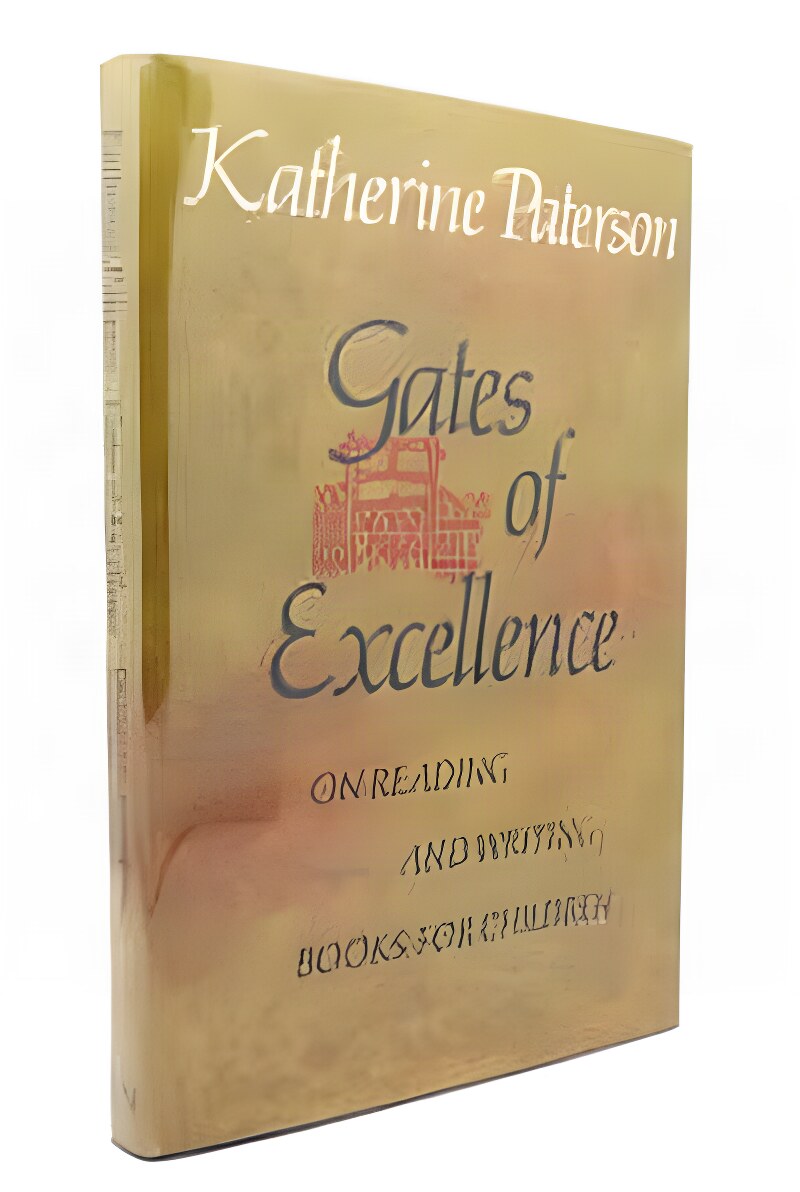
Hardcover. NY, Elsevier/Nelson, 2nd pr., 1981, Book: Very Good, Dust Jacket: Very Good, Hardcover in an unclipped dust jacket, 127 pages. Newbery Medalist Katherine Paterson describes what it means to be a writer & reader struggling through the "gates of excellence". Spine with light fading.
Softcover. Bloomington IN, Indiana University Press, 1st, 2003, Book: Very Good, Dust Jacket: None, Softcover, 209 pages. This groundbreaking study explores the Harlem Renaissance as a literary phenomenon fundamentally shaped by same-sex-interested men. Christa Schwarz focuses on Countee Cullen, Langston Hughes, Claude McKay, and Richard Bruce Nugent and explores these writers' sexually dissident or gay literary voices. The portrayals of men-loving men in these writers' works vary significantly. Schwarz locates in the poetry of Cullen, Hughes, and McKay the employment of contemporary gay code words, deriving from the Greek discourse of homosexuality and from Walt Whitman. By contrast, Nugent-the only "out" gay Harlem Renaissance artist-portrayed men-loving men without reference to racial concepts or Whitmanesque codes. Schwarz argues for contemporary readings attuned to the complex relation between race, gender, and sexual orientation in Harlem Renaissance writing. Clean copy.
Hardcover. Peacham VT, The Perpetua Press, 1st, 2002, Hardcover in the publisher's cream-colored linen over boards with spine and upper board gilt-stamped black leather labels. No dust jacket, as issued. 88 pages, only 500 copies printed. A collection of interviews done with Shaw from 1924 - 1945. Bright and clean copy.
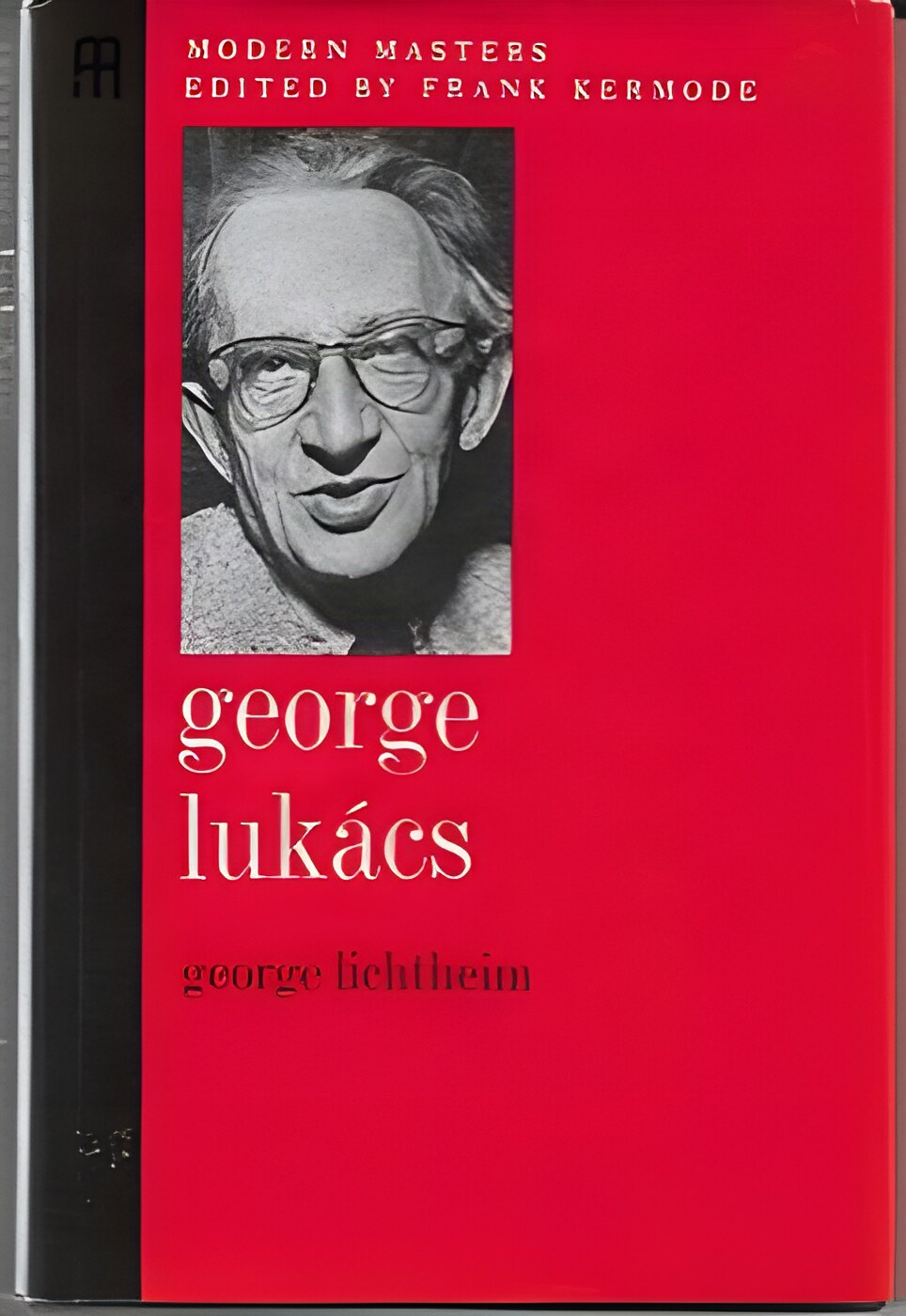
Hardcover. NY, Viking Press, 1st, 1970, Book: Very Good, Dust Jacket: Very Good, Hardcover in a bright dust jacket, 146 pages. Lukacs was a Hungarian Marxist philosopher, aesthetician, literary historian, and critic. He was one of the founders of Western Marxism, an interpretive tradition that departed from the Marxist ideological orthodoxy of the Soviet Union. He developed the theory of reification, and contributed to Marxist theory with developments of Karl Marx's theory of class consciousness. He was also a philosopher of Leninism. Clean copy.
Hardcover. London, W. H. Allen & Co., 1st, 1883, Book: Very Good, Dust Jacket: None, Hardcover, dark green cloth-covered boards with gilt titles to spine and gilt titles and gilt rules to front board. Prefatory note by Bertha Thomas plus 247 pages plus four-page publisher's advertisements for titles in the Eminent Women Series to the rear. Previous owner's name on front fly leaf, otherwise clean.
Hardcover. NY, Simon and Schuster, 1st, 1984, Book: Very Good, Dust Jacket: Very Good, Hardcover, 249 pages. Light edgewear and tanning to dust jacket, else a clean, tight copy.
Hardcover. NY, Doubleday, 1st, 2005, Book: Very Good, Dust Jacket: Very Good, Hardcover in a bright, unclipped dust jacket, 270 pages. In the early eighties, Jennie Erdal was hired by a flamboyant British publisher she calls Tiger to be his specialist editor for Russian books. By degrees he co-opted her time and loyalty, to the point where she ended up becoming his ghostwriter for a huge nonfiction book on women, two glossy novels, and hundreds of newspaper columns, all published under his own name. She also wrote any number of his love letters. With often ironic directness and quiet comedy, Erdal relates how she became seduced into this peculiar job. On the way she makes fascinating excursions into her own private history, from vivid evocations of her Scottish Presbyterian childhood to moving observations on being an abandoned wife and lone parent to piercing insights into the very nature of literary creation. One of the smartest books about writing in years, Ghosting is a tour de force in which the author renders both Tiger and herself as compelling characters, connected to each other by a strange symbiosis. Their interaction is bizarre and also quite spooky; in the end this is a book about the very nature of identity, literary and otherwise. Clean copy.
Softcover. Oakland CA, PM Press;, 1st, 2017, Book: Very Good, Dust Jacket: None, Softcover, 336 pages. The first comprehensive account of how the rise of postwar youth culture was depicted in mass-market pulp fiction. As the young created new styles in music, fashion, and culture, pulp fiction shadowed their every move, hyping and exploiting their behavior, dress, and language for mass consumption and cheap thrills. With their lurid covers and wild, action-packed plots, these books reveal as much about society's deepest desires and fears as they do about the subcultures themselves. Featuring approximately 400 full-color covers, many of them never before reprinted, along with 70 in-depth author interviews, illustrated biographies, and previously unpublished articles, the book goes behind the scenes to look at the authors and publishers, how they worked, where they drew their inspiration and--often overlooked--the actual words they wrote. It is a must read for anyone interested in pulp fiction, lost literary history, retro and subcultural style, and the history of postwar youth culture.
Hardcover. Washington DC, Shoemaker & Hoard, 1st, 2004, Book: Very Good, Dust Jacket: None, Hardcover, gray boards with blue cloth spine, 150 pages, b&w illustrations. A singular life often circles around a singular moment, an occasion when one's life in the world is defined forever and the emotional vocabulary set. For the extraordinary writer James Salter, this moment was contained in the fighter planes over Korea where, during his young manhood, he flew more than one hundred missions. James Salter is considered one of America's greatest prose stylists. The Arm of Flesh (later revised and retitled Cassada ) and his first novel, The Hunters, are legendary in military circles for their descriptions of flying and aerial combat. A former Air Force pilot who flew F-86 fighters in Korea, Salter writes with matchless insight about the terror and exhilaration of the pilot's life. This book collects passages from two other books he wrote about his military flight career and entries from his personal journal kept during his tours of military flying duty through flight training in late WWII, into combat duty in Korea in 1952, and through his post war flying up into the early 1960s. Masterfully edited by Jessica and William Benton, it has been organized chronologically and simply is wonderful. You can read from the journal entry, and then it is followed by fiction he created using that experience. No dust jacket, clean, bright copy.
Hardcover. NY, G.P. Putnam's Sons, 1st US, 1959, Book: Very Good, Dust Jacket: Good, Hardcover, 226 pages, illustrated in b&w by Edward Ardizzone. Blue cloth with an edgeworn, chipped dust jacket. The book is a very good, clean, tight copy. White's account of life on the west coast of Ireland. The author comments on the front flap: "God knows what this book is about. I suppose it's a bit of autobiography really. But it's about living on the West Coast of Ireland, in 'the parish nearest to America' -- they all are, I mean the parishes -- and it is about the people and things there, more than about me."
Hardcover. New York, Ammo, 1st, 2007, Book: Very Good, Dust Jacket: None, 240 pages, many b&w and color photographs. A visual biography accompanied by excerpts from Thompson's work. Introduction by Johnny Depp, edited by Steve Crist and Paul Norton. Illustrated boards, no dust jacket issued.
Hardcover. NY/Oxford UK, Routledge, 1st, 2023, Book: Very Good, Dust Jacket: None, Hardcover in pictorial boards, 190 pages. This book examines Gore Vidal's lifelong engagement with the ancient world. Incorporating material from his novels, essays, screenplays and plays, it argues that his interaction with antiquity was central to the way in which he viewed himself, his writing, and his world. Divided between the three primary subjects of his writing - sex, politics, and religion - this book traces the lengthy dialogue between Vidal and antiquity over the course of his sixty-year career. Broughall analyses Vidal's portrayals of the ancient past in novels such as Julian (1964), Creation (1981) and Live from Golgotha (1992). He also shows how classical literature inspired Vidal's other fiction, such as The City and the Pillar (1948), Myra Breckinridge (1968), and his Narratives of Empire (1967-2000) novels. Beyond his fiction, Broughall examines the ways in which antiquity influenced Vidal's careers as a playwright, an essayist and a satirist, and evaluates the influence of classical authors and their works upon him. Clean copy.
NY, Grove Press, 1st US, 2002, Book: Very Good, Dust Jacket: Very Good, Hardcover in a bright dust jacket, 404 pages. Acclaimed novel based on the life of botanic artist William Buelow Gould (1801-53). In this account, Gould is a white convict condemned to the most feared penal colony in the British Empire, Port Arthur, Tasmania, in 1828 and there ordered to paint a book of fish. Gould, invader of Australia, liar, murderer and forger, falls in love with a black woman and discovers too late that to love is not safe. The book's design features colour reproductions of Gould's original art work, and each chapter is printed in a different colour ink. The book has been awarded the 2002 Commonwealth Writers Prize and Australian Literature Society's Gold Medal, and the Australian Publisher's Association 2002 Joyce Thorpe Nicholson Best Designed Book of the Year. Clean copy
Hardcover. San Marino CA, The Huntington Library, 1st, 2015, Book: Very Good, Dust Jacket: Very Good, Hardcover in a bright dust jacket, 326 pages, b&w illustrations. Early modern European governments and their subjects had difficulty agreeing to laws governing behavior on the sea - an environment that featured watery borders, rampant piracy, the threat of free trade, and the large-scale transportation of human cargo. The essays in this volume explore how the exploitation of the oceans changed the institution of slavery, long-distance trade, property crime, the environment, literature, and memory from medieval times to the nineteenth century. Clean copy.
Hardcover. NY, Oxford University Press, 1st, 2005, Book: Very Good, Dust Jacket: None, Hardcover, glazed boards, 205 pages. Much has been written about Graham Greene's relationship to his Catholic faith and its privileged place within his texts. His early books are usually described as "Catholic Novels" - understood as a genre that not only uses Catholic belief to frame the issues of modernity, but also offers Catholicism's vision and doctrine as a remedy to the present crisis in Western civilization. Greene's later work, by contrast, is generally regarded as falling into political and detective genres. In this book, Mark Bosco argues that this is a false dichotomy created by a narrowly prescriptive understanding of the Catholic genre and obscures the impact of Greene's developing religious imagination on his literary art. Clean copy.
Hardcover. NY, Harper, 1st, 2012, Book: Very Good, Dust Jacket: Very Good, Hardcover, 376 pages. Light scratch top rear cover, else a clean, unmarked copy with only minor wear to dust jacket.
Softcover. San Francisco, Pomegranate, Revised Ed., 2001, Book: Very Good, Dust Jacket: None, Softcover, 168 pages. Many cans of tuna have been opened and emptied since the collection's first mostly black-and-white edition, in 1981; the revised edition adds more color art as well as coverage of classics including The Cat in the Hat, Bill the Cat, and pets penned by B. Kliban and Edward Gorey. The volume covers cartoon depictions of the cat dating back to 1100 B.C., though the bulk of the images date to the 20th century. Brief essays about printing, literature, contemporary society, and other historical facts are interspersed with the goods selections from the comics themselves. Editor Whyte is a publisher who founded the Cartoon Art Museum in San Francisco.

 "From the Uncollected Edmund Wilson by: Edmund Wilson /Janet Groth (Editor), David Castronovo (Contributor)")

 "Fugitives' Reunion; Conversations at Vanderbilt: May 3-5, 1956 by: Purdy, Rob Roy (Ed.)")
 "Furthering My Education: A Memoir (SIGNED COPY)by: Corbett, William")


 "Garth Williams, American Illustrator: A Lifeby: Wallace, Elizabeth K.")
 "Gay Voices of the Harlem Renaissance by: Schwarz, A.B. Christa")
 "George Bernard Shaw: Eight Interviews By Hayden Churchby: Bernard Shaw, Editor: Edward Connery Lathem")

 "Getting to Know the General: The Story of an Involvementby: Greene, Graham")

 "Girl Gangs, Biker Boys, and Real Cool Cats: Pulp Fiction and Youth Culture, 1950 to 1980by: Iain McIntyre, Andrew Nette , et al.")



 "Godstone and the Blackymor, Theby: White/Edward Ardizzone, T.H.")
 "Gonzo: Hunter S. Thompsonby: Thompson, Hunter S,")




 "Grand Tour, The : Around the World with the Queen of Mysteryby: Christie, Agatha/Edited By Mathew Prichard")
 "Great Comic Catsby: Malcolm Whyte")