Hardcover. Hatje Cantz, 1st, 2013, Book: Very Good, Dust Jacket: None, Hardcover with illustrated boards, 212 pages. Since the late 1970s, as a pioneer of Southern California underground culture, Raymond Pettibon has blurred the boundaries of "high" and "low," from the deviations of marginal youth to art history, literature, sports, religion, politics and sexuality. Rich in detail, his obsessively worked drawings pull freely from myriad sources spanning the cultural spectrum. The resulting, highly poetic constructions function as acute reflections of contemporary society. Throughout the years, his subjects have included political figures and historical events, with particular intensity since the events of September 11, 2001. Seen here are images of Ronald and Nancy Reagan, J. Edgar Hoover, both Bush presidents, the Kennedys, Hitler, scenes from the Vietnam War and protest movements, wars in Iraq and Afghanistan, the prisoner abuse of Abu Ghraib, President Obama and Osama bin Laden. Raymond Pettibon (born 1957) studied economics at UCLA around the same time he joined his brother in the punk band Black Flag. He soon began to contribute artwork to album covers, flyers and t-shirts, for the band and its label, SST Records, and exhibited his work in group shows in galleries in the 1980s. Since the 1990s his work has been the subject of numerous major solo exhibitions.
Hardcover. Surrey UK, Ashgate Publishing, 1st, 2014, Book: Very Good, Dust Jacket: Very Good, Hardcover in a bright dust jacket, 165 pages. Author Leah Knight explores the physical and figurative potentials of green as they were understood in Renaissance England, including some that foreshadow our paradoxical dependence on and sacrifice of the green world. Ranging across contexts from early modern optics and olfaction to horticulture and herbal health care, this study explores a host of human encounters with the green world: both the impressions we make upon it and those it leaves with us. B&w, color illustrations.
Hardcover. NY, St. Martin's Press, 1st, 1995, Book: Very Good, Dust Jacket: Very Good, Hardcover in a violet dust jacket with light fading to spine, 232 pages. A collection of essays exploring all aspects on a controversial English poet, the 17th century libertine, The Earl of Rochester. Different sections focus on sexual politics, on the poetry of intellect, and on Rochester and his contemporaries. Name, date and light pencil notations on front fly leaf, otherwise clean.
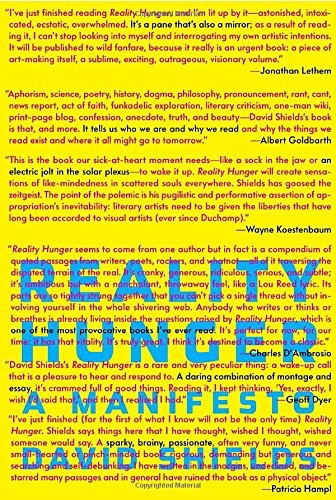
Hardcover. New York, Knopf, 1st, 2010, Book: Very Good, Dust Jacket: Very Good, Hardcover, 219 pages. Clean, bright copy. "I doubt very much that I'm the only person who's finding it more and more difficult to want to read or write novels," David Shields acknowledges in Reality Hunger, then seeks to understand how the conventional literary novel has become as lifeless a form as the mass market bodice-ripper. Shields provides an ars poetica for writers and other artists who, exhausted by the artificiality of our culture, "obsessed by real events because we experience hardly any," are taking larger and larger pieces of the real world and using them in their work. Reality Hunger is made of 600-odd numbered fragments, many of them quotations from other sources, some from Shields's own books, but none properly sourced--the project being not a treasure hunt or a con but a good-faith presentation of what literature might look like if it caught up to contemporary strategies and devices used in the other arts, and allowed for samples (that is, quotation from art and from the world) to revivify existing forms. Shields challenges the perceived superiority of the imagination and exposes conventional literary pieties as imitation writing, the textual equivalent of artificial flavoring, sleepwalking, and small talk. I can't name a more necessary or a more thrilling book.
Hardcover. UK, Cambridge University Press, 1st, 1991, Book: Very Good, Dust Jacket: Very Good, Hardcover in a bright dust jacket, 277 pages. Rivers examines the rise of Anglican moral religion during the period 1660-1780, and the reactions against it. Series Editor(s): Erskine-Hill, Howard; Richetti, John. Series: Cambridge Studies in Eighteenth-Century English Literature & Thought. Volume 1 ONLY. Name, date on front fly leaf.
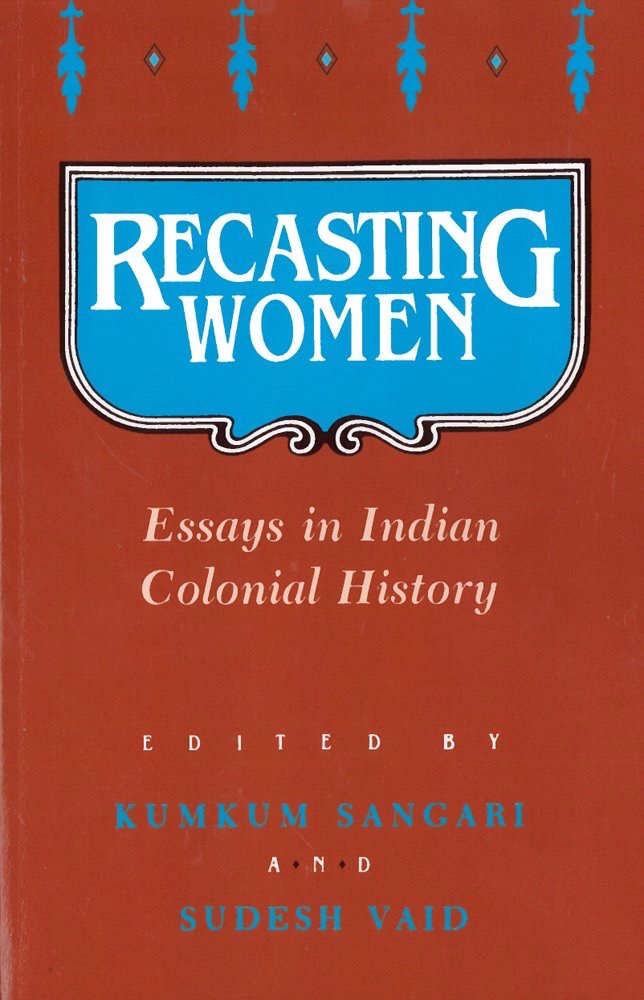
Softcover. New Brunswick NJ, Rutgers University Press, 1st pbk., 1990, Book: Very Good, Dust Jacket: None, Softcover, 372 pages. The first set of essays seeks to analyze the patriarchal discourses of a colonial society and includes an analysis of the shaping of Hindu-Aryan identity, the parameters of the discourse on widow-immolation, the "defeminization" of popular culture in nineteenth-century urban Calcutta, the nature of the reforms proposed by early women's journals in Hindi, and the implications of the nationalist movement and of Indo-Anglian literature on middle-class patriarchal norms. The second set of articles relates to women of the productive classes--the reconstitution of patriarchies in the agrarian transition in Haryana, in the Oudh peasant movement, in the armed peasant struggle in Telangana, and among the working class in Bengal. The contributors explore the interrelation of patriarchies with political economy, law, religion, and culture, and suggest a different history of "reform" movements, and of class and gender relations. Clean copy.
Hardcover. NY, W. W. Norton & Company, 1st, 2005, Book: Very Good, Dust Jacket: Very Good, Hardcover in a bright dust jacket, 371 pages, b&w photos. Irving Howe?s 1964 description of Roth?s Call It Sleep as "one of the few genuinely distinguished novels written by a 20th-century American" catapulted Roth to fame. Yet the author?s decades-long silence became legendary. In following Roth's tortured life from his childhood on the Jewish Lower East Side to his twilight years in New Mexico, literary critic Steven Kellman has uncovered FBI files, spoken with family members and friends, and gained access to the tape in which Roth discussed the long-buried incest of his youth. Redemption is the Shakespearean saga of a great writer doomed to a life of psychological torment, but saved in the end by his search for deliverance. Clean copy.
Hardcover. NY, Harper and Row, 1st US, 1970, Book: Very Good, Dust Jacket: Very Good, Hardcover in a bright dust jacket, 269 pages. 'Weber's famous study of the 'affinity' between the rise of rational bourgeois capitalism in England and Calvinist-Puritanism has for almost a century stirred up a cloud of dust and misunderstanding. Toward the end of settling some of the dust no one has previously made such an acute analysis of pre-revolutionary England as has David Little. On the one hand, he has applied and extended Weber's method, especially in the sphere of the law-monopoly and corporation law-thus filling a gap in these studies. He has also delineated the sharply conflicting conceptions of social order and of legitimation. On the the other hand, Little has given an invaluable critical survey of the extensive literature of Weber's thesis. This is a landmark in the study of the complex and varying relations between religion and society.' -James Luther Adams, Harvard Divinity School. Clean copy.
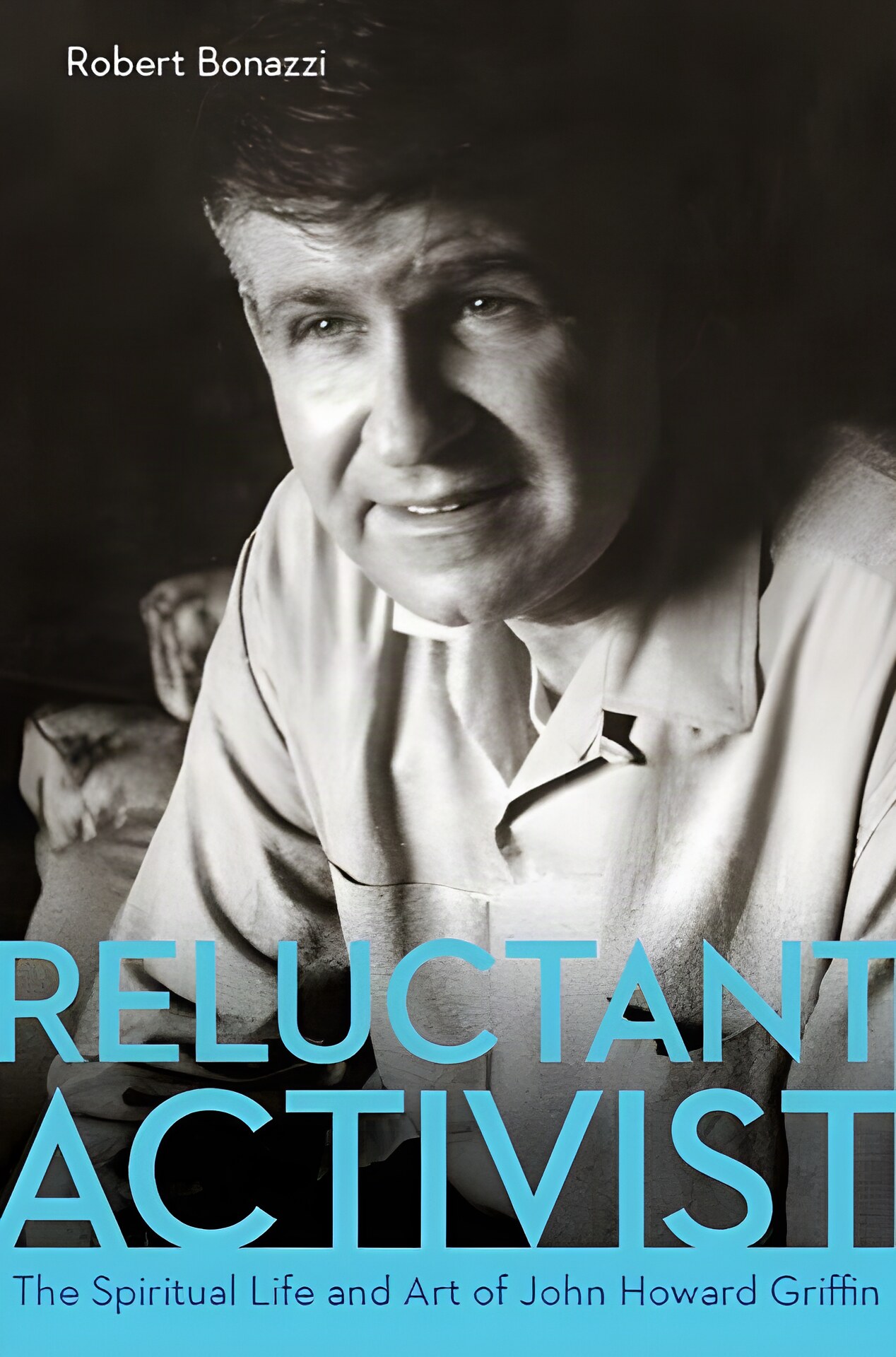
Softcover. Ft., Texas Christian University, 1st, 2018, Book: Very Good, Dust Jacket: None, Softcover, 435 pages. INSCRIBED BY BONAZZI on the title page. This authorized biography by Robert Bonazzi, is based on John Howard Griffin's Journals from 1950-1980. Griffin was blinded in the South Seas during WWII, but regained sight in 1957, after which he wrote the classic Black Like Me. Bonazzi follows Griffin year by year after 1961, when Griffin toured the globe as a lecturer on human rights.
Softcover. Los Angeles, The Augustan Reprint Society , reprint, 1985, Book: Very Good, Dust Jacket: None, Softcover, 12 page introduction by Peter Sabor plus a 56 page facsimile reprint of Sarah Fielding's (Henry"s sister) criticism of Samuel Richardson's novel. Clean copy.
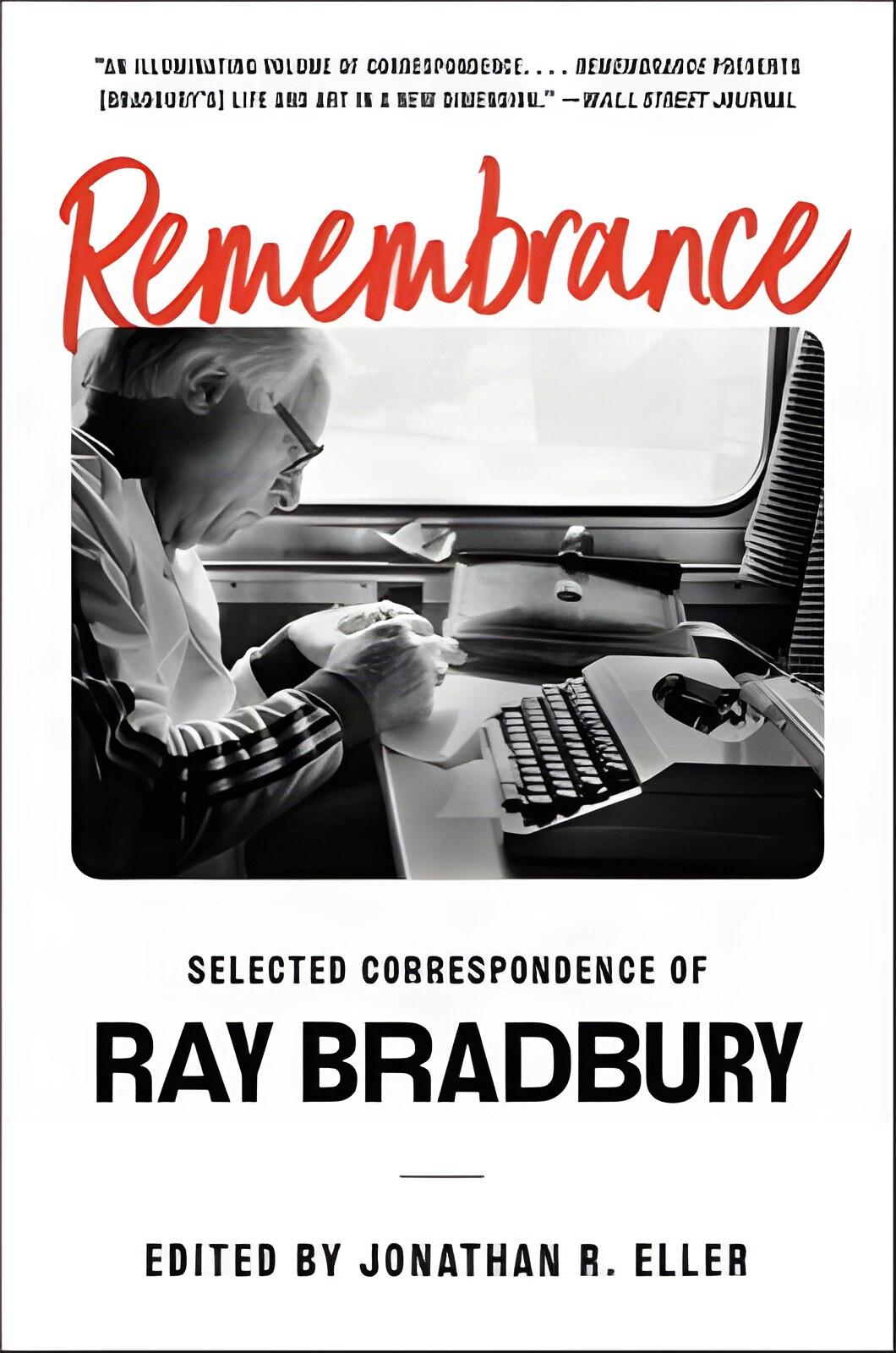
Hardcover. NY, Simon & Schuster , 1st, 2023, Book: Very Good, Dust Jacket: Very Good, Hardcover in a bright, unclipped dust jacket, 509 pages. Remembrance offers the first sustained look at the author's life in letters from his late teens to his ninth decade. Bradbury's correspondence was far-reaching--he interacted with a rich cross-section of 20th-Century cultural figures, writers, film directors, editors, and others who simply wanted insights or encouragement from a writer who had enriched their lives through his stories and novels. Bradbury scholar and biographer, Jonathan R. Eller, organized this volume into categories of correspondents, showing Bradbury's progression through life as he knew it, and not necessarily as the public perceived him. Letters to and from mentors and other writers are followed by correspondence with such film directors as John Huston, Francois Truffaut, and Federico Fellini. Letters with publishers and agents are followed by letters that capture moments of national and international recognition, the shadows of war and family members who shared the memories of his life. Among the writers whose letters illuminate Remembrance are Theodore Sturgeon, Sir Arthur C. Clarke, Twilight Zone writers Charles Beaumont and Richard Matheson, Dan Chaon, Bernard Berenson, Nobel Laureate Bertrand Russell, Graham Greene, Anais Nin, Gore Vidal, Carl Sandburg, and Jessamyn West. Clean copy.
Hardcover. Madison WI, University of Wisconsin Press, 1st, 1989, Book: Very Good, Dust Jacket: Good, Hardcover in a lightly worn dust jacket with fading to the spine. "Cary Nelson performs an invaluable service to the reader by recovering the work of dozens of forgotten poets, especially women, blacks, and writers on the left, while making it clear that the texts we recover inevitably gain new meaning from their positioning within contemporary culture." Nicely illustrated in b&w and some color, mostly book jackets and title pages of books discussed. Some light pencil marking in margins.
Hardcover. New Haven, Yale University Press, 1st, 1993, Book: Very Good, Dust Jacket: Very Good, Hardcover in a bright, unclipped dust jacket. INSCRIBED BY AUTHOR on the title page. What motivates us to reread literary works? How is our pleasure, interpretation, involvement, and evaluation different when we read a literary work and when we reread it? This fascinating book by Matei Calinescu is the first to focus on the implications of rereading for critical understanding. Drawing on literary theory, cultural anthropology, psychology, philosophy, and previous theories of reading, Calinescu describes the dynamics of rereading and explores the sometimes complementary, sometimes sharply conflicting relationships between reading and rereading. Calinescu analyzes fictional works by Borges, Nabokov, Proust, Robbe-Grillet, and Henry James, among others, explaining how reading texts is related both to symbolic play or make-believe and to games with rules. He reviews the history of reading in modern times, discussing, for example, how the Reformation led to rereadings of Scripture and how the proliferation of books during the Enlightenment led to a shift from "intensive reading" to "extensive reading." Calinescu looks at the distinctions between reading and rereading from the perspectives of the age, situation, and gender of the individual reader. He discusses the problems raised by secret or oblique languages and codes - devised to evade censors, communicate with a select audience of "secret sharers," or play games of hide-and-seek with the reader - and shows that they naturally lead to rereading a text. Calinescu argues persuasively that an understanding of rereading is useful in formulating both analytic strategies of practical criticism and a poetics of reading. Clean, bright copy.
Softcover. Chicago, University Of Chicago Press, 1st pbk, 2005, Book: Very Good, Dust Jacket: None, Softcover, 123 pages, SIGNED BY AUTHOR on title page. Very clean and tight copy.
Hardcover. NY, Knopf, 1st, 1980, Book: Very Good, Dust Jacket: Very Good, Hardcover in a bright dust jacket. 227 pages. Previous owner's signature on front fly leaf, else a clean, tight copy. Naipaul presents here four essays about the "half-made" societies, those still suffering from the profound deprivations of colonialism and prey to corruption." He examines the role of Eva Peron as the catalyst for violence in Argentina, with its yearning for a European culture and the physical, historical, cultural reality of the land in which the native Indians were wiped out and the colonialists took over. He writes of the infamous Michael X in Trinidad whose pretensions to power and destiny led to the man's insanity and execution following two pointless murders. Shorter essays address nihilism in the Congo and Naipaul's take on Joseph Conrad and the Heart of Darkness.
Hardcover. Ann Arbor MI, The University of Michigan Press, 1st, 1999, Book: Very Good, Dust Jacket: Very Good, Hardcover in a bright dust jacket, 354 pages. INSCRIBED BY THE AUTHOR on title page. Light pencil marking to 5 pages, otherwise clean.
Hardcover. Lexington Books , 1st, 2017, Book: Very Good, Dust Jacket: None, Hardcover in glazed boards, 299 pages. John McWilliams has written the first, much needed account of the ways the promise and threat of political revolution have informed masterpieces of the historical novel. McWilliams provides close readings of some twenty historical novels, from Scott and Cooper through Tolstoy, Zola and Hugo, to Pasternak and Lampedusa, and ultimately to Marquez and Hilary Mantel, but with continuing regard to historical contexts past and present. He traces the transformation of the literary conventions established by Scott's Waverley novels, showing both the continuities and the changes needed to meet contemporary times and perspectives. Although the progressive hopes imbedded in Scott's narrative form proved no longer adaptable to twentieth century carnage and the rise of totalitarianism, the meaning of any single novel emerges through comparison to the tradition of its predecessors. A foreword and epilogue explore the indebtedness of McWilliams's perspective to the Marxist scholarly tradition of Georg Lukacs and Frederic Jameson, while defining his differences from them. This is a scholarly work of no small ambition and achievement. Clean copy.
Hardcover. London, Faber & Faber, 1st, 1937, Book: Very Good, Dust Jacket: None, Hardcover, green cloth lettered in gilt at the spine. Illustrated with eight photographic plates. 422 pages. Extended passages from Jefferies' work, with a general introduction in two parts: 'The English Genius' and 'To the Two Types of Jefferies Readers', introductions to each section, notes on the text, and the Epigraph. No dust jacket, clean copy.
Hardcover. NY, Twayne Publishers, 1st, 1996, Book: Very Good, Dust Jacket: Very Good, Hardcover in a bright dust jacket, 162 pages. The first full-length critical treatment of this significant and neglected figure in American realism. Arguing that raw naturalism and subtle craftsmanship - seemingly incompatible qualities join to make Yates one of the most accomplished writers of the post - World War II period, the authors provide a comprehensive survey of his life and work. An introductory chapter outlines the historical, literary, and social contexts important to Yates's writings, comparing him, for example, with his contemporaries Philip Roth and Mary McCarthy and articulating strong lines of continuity between his themes and the ideas of the French historian Alexis de Tocqueville, the Marxist-oriented socialist C. Wright Mills, and the social theoretician Erving Goffman. Next a thorough biographical portrait illuminates Yates's obsession with the American middle class and its dislocated, disordered, and psychologically stifled populace, followed by sharp readings of the novels and story collections, including unfinished and minor works. Clean copy.
Hardcover. Milwaukee WI, Amadeus, 1st, 2016, Book: Very Good, Dust Jacket: Very Good, Hardcover in a bright dust jacket, 406 pages, illustrations. INSCRIBED by co-editor Malcolm Crocker. A rare, revealing look at the composer, written by his granddaughter Tatiana. Featuring a wealth of correspondence and photographs from his family's archives, this book provides new, fascinating details about the composer's life, work, and relations with close friends and colleagues, including Borodin, Mussorgsky, and Tchaikovsky. It also sheds new light on his wife, Nadezhda Purgold, an accomplished composer and pianist who helped her husband with his own compositions. Many letters involve Rimsky-Korsakov's other family members and important figures in art, history, literature, and music of the late 19th and early 20th centuries. Clean copy.
Hardcover. NY, Thomas Y. Crowell, 1st, 1972, Book: Very Good, Dust Jacket: Very Good, Hardcover in a bright dust jacket. 166 pages. Lardner was one of the most remarkable satirists in American literature and one of the sharpest cultural historians of his time but is better known to many people as a successful journalist and popular entertainer. Geismar examines the development of this distinguished writer, a biographical and critical account. Clean copy.
Hardcover. Boston, Houghton Mifflin, 1st, 1894, Book: Very Good, Dust Jacket: None, 310 pages. Gilt top edge. Light edge wear, rubbing to covers. Pencil marking to several pages and inside front cover. Else a clean, tight copy.
Hardcover. teNeues, 1st, 2017, Book: Very Good, Dust Jacket: Very Good, Hardcover, 216 pages. Photographer Edward Quinn chronicles the sweet life of the French Riviera in the 1950s and 60s in this homage to the stylish celebrities who lived and loved on this chic coastline. Born in Dublin in 1920, Edward Quinn played Hawaiian guitar in Belfast, then went into the Royal Air Force. He eventually made his way to the Cote d'Azur, where he photographed world leaders, glamour girls and playboys, as well as figures from the worlds of art, music and literature. His most memorable work included images of an unknown Audrey Hepburn, Grace Kelly's first meeting with Prince Rainier, and a precocious Brigitte Bardot. His exacting eye showcased Picasso, T.S. Eliot, and Gary Cooper. With a polished technique and great patience and charm, Quinn caught some of the post-war Riviera's most memorable moments.
Hardcover. NY, Alfred A. Knopf, 1st, 1964, Book: Good, Dust Jacket: Very Good, Hardcover in a lightly worn, chipped dust jacket. A young English novelist's journey through the Soviet Union in the early sixties (author also wrote "The Loneliness of the Long-Distance Runner', "The General", and others. Name on front fly leaf otherwise clean copy.

 "Raymond Pettibon: Here's Your Irony Back: Political Works 1975-2013by: Raymond Pettibon/Benjamin Buchloh")





 "Redemption: The Life of Henry Rothby: Steven G. Kellman")

![Remarks on Clarissa (1749)by: [Fielding, Sarah]](https://www.browsingisarousing.com/shop/images/Remarks-on-Clarissa-1749_by_Fielding-Sarah386961-441314.jpg "Remarks on Clarissa (1749)by: [Fielding, Sarah]")
 "Repression And Recovery: Modern American Poetry & Politics Of Cultural Memory 1910-1945by: Cary Nelson")
 "Rereading (INSCRIBED COPY)by: Calinescu, Matei")
 "Resistance to Poetry, The (SIGNED COPY)by: Longenbach, James")





 "Rimsky-Korsakov: Letters to His Family and Friends by: Tatiana Rimsky-Korsakov")

 "Riverbyby: Burroughs, John")