Hardcover. US, Acc Art Books, 1st, 2018, Book: Very Good, Dust Jacket: None, 224 pages. Hardcover with laminated boards. Like new in publisher's shrinkwrap. One of the largest archives of film-set photography and editorial magazine shots from the '70s and '80s. Introduction by Jacqueline Bisset and Charlotte Rampling. Archive contains almost 100 unseen pictures, all narrated by Eva Sereny herself: a top professional photographer, working in a male-dominated fieldo Includes shots from the sets of several great classical films ('The Great Gatsby', 'The Night Porter', and 'Indiana Jones and the Temple of Doom', and more)Stories and photography intermingle on the pages of this gorgeous homage to '70s and '80s cinema and celebrity. Including rare and never-before-seen images. Through Her Lens is a wonderful collection of images and memoires that capture the spirit of the age. From unexpected late-night calls from Romy Schneider, to a stay at Paul Newman's home in Connecticut; from working on set with Bernardo Bertolucci, Werner Herzog, Steven Spielberg and Sydney Pollack, to lounging poolside with Raquel Welch; Sereny reveals her favorite moments from working behind the lens. This is the first photographic retrospective of Sereny's star-studded career, including nearly 100 never-before-seen images complemented by Eva's own stories.
Hardcover. NY, Parents Magazine Press, 1st, 1967, Book: Very Good, Dust Jacket: Very Good, Hardcover in a bright dust jacket. Wonderful introduction to different styles of architecture. Illustrated in color by Devlin. Related notes & articles to various landmark houses laid-in. Dust jacket price clipped. Clean copy.
Softcover. London, Faber & Gwyer, 1st, 1928, Book: Good, Dust Jacket: None, Pictorial blue paper wrappers with narrow flap folds, 4 pages,stabbed & tied, edges slightly faded and rubbed. Cover separated at spine. Series: Ariel Poems ; No. 14. This poem was first printed, with slightly different text, in Flame, an Independent Labour Party magazine, in December 1925, under the title To An Inconspicuous Friend.
Hardcover. Bologna, Italy, Damiani Editore, 1st, 2010, Book: Very Good, Dust Jacket: Very Good, Hardcover, 240 pages. Like new in publisher's shrink-wrap. One of today's foremost fashion and celebrity photographers, Tom Munro has been making defining images since the mid-1990s. Munro achieves his results by encouraging his subjects to reinterpret their personalities for his lens, reveling in seductive roleplay or darkly-lit melodrama. The subjects gathered here include some of the biggest names in pop culture today-Ashton Kutcher, Brooke Shields, Charlotte Gainsbourg, Christina Ricci, Courtney Love, Daniel Craig, Dustin Hoffman, Ewan McGregor, Isabella Rossellini, Jake Gyllenhaal, Jennifer Aniston, Johnny Depp, Jude Law, Julianne Moore, Justin Timberlake, Lauren Hutton, Leonardo DiCaprio, Linda Evangelista, Madonna, Marion Cotillard, Matt Dillon, Matthew McConaughey, Naomi Campbell, Patrick Dempsey, Rob Lowe, Scarlett Johansson, Stephanie Seymour and Tom Cruise, to name only a few. This volume-Munro's first monograph-affirms his status as a portraitist of the first rank.English by birth, Tom Munro moved to New York in 1990, embarking on his own career as a photographer in 1997, and achieving overnight success with his early editorial shoots for British Vogue and Harper's Bazaar. Over the last ten years, Munro has contributed to some of the world's most prestigious magazine publications including Vogue, Italian Vogue, L'Uomo Vogue, Russian Vogue, China Vogue and Details. Munro's dedication to his craft has attracted some of the fashion and beauty industries' most prestigious names, including Armani, Banana Republic, Burberry, Calvin Klein, Converse, Gap, Givenchy, Hugo Boss, Lacoste, L'Oreal, Moschino, as well as music icons such as Beyonce, Justin Timberlake and Madonna.
Hardcover. Bologna, Italy, Damiani Editore, 1st, 2010, Book: Very Good, Dust Jacket: Very Good, Hardcover, 240 pages. Like new in publisher's shrink-wrap. One of today's foremost fashion and celebrity photographers, Tom Munro has been making defining images since the mid-1990s. Munro achieves his results by encouraging his subjects to reinterpret their personalities for his lens, reveling in seductive roleplay or darkly-lit melodrama. The subjects gathered here include some of the biggest names in pop culture today-Ashton Kutcher, Brooke Shields, Charlotte Gainsbourg, Christina Ricci, Courtney Love, Daniel Craig, Dustin Hoffman, Ewan McGregor, Isabella Rossellini, Jake Gyllenhaal, Jennifer Aniston, Johnny Depp, Jude Law, Julianne Moore, Justin Timberlake, Lauren Hutton, Leonardo DiCaprio, Linda Evangelista, Madonna, Marion Cotillard, Matt Dillon, Matthew McConaughey, Naomi Campbell, Patrick Dempsey, Rob Lowe, Scarlett Johansson, Stephanie Seymour and Tom Cruise, to name only a few. This volume-Munro's first monograph-affirms his status as a portraitist of the first rank.English by birth, Tom Munro moved to New York in 1990, embarking on his own career as a photographer in 1997, and achieving overnight success with his early editorial shoots for British Vogue and Harper's Bazaar. Over the last ten years, Munro has contributed to some of the world's most prestigious magazine publications including Vogue, Italian Vogue, L'Uomo Vogue, Russian Vogue, China Vogue and Details. Munro's dedication to his craft has attracted some of the fashion and beauty industries' most prestigious names, including Armani, Banana Republic, Burberry, Calvin Klein, Converse, Gap, Givenchy, Hugo Boss, Lacoste, L'Oreal, Moschino, as well as music icons such as Beyonce, Justin Timberlake and Madonna.
Hardcover. NY, PowerHouse Book, 1st, 2018, Book: Very Good, Dust Jacket: Very Good, 240 pages. Hardcover with dust jacket. Still in publishers shrinkwrap. During the 1950s and 60s, Tom Palumbo was part of an influential group of young photographers working for the best fashion magazines in America -Harper's BazaarandVogue. Tom perfected his craft under the guidance of legends like Alexey Brodovitch, Carmel Snow, Diana Vreeland, and Alex Liberman. Tom's serene style contrasted with Richard Avedon's jazzed-up images and Lillian Bassman's soft blurred effects. Often Tom's particular layouts provided the balance in an issue. His pictures invariably enhanced the fashions of the 50s, where women were thought of as objects of worship, and beauty was thought of as an ideal. Tom photographed every day, producing unique images like jazz legend Miles Davis laughing. He loved taking pictures of artists like next-door neighbors Comden and Green; the young Mia Farrow and Jane Fonda; novelist Jack Kerouac. Late in life, Tom worked in theatre. But to him there was never much difference in the photographs he took or the plays he directed since both contained drama. Paradox and revelation-these two elements energized Tom Palumbo's life. These rediscovered photographs, celebrated in their time but not seen in decades, are presented here in book form for the first time ever, by award-winning author and Palumbo's widow, Patricia Bosworth.
Hardcover. Seattle, Fantagraphics, 1st, 2022, Book: Very Good, Dust Jacket: None, Hardcover, large format pictorial boards, 200 pages. In 1949, the ambitious Charles Biro - who had previously co-created the realistically brutal comic Crime Does Not Pay - edited and wrote an oversized comic aimed at adults, called Tops. Like several other radical adult comics projects that would follow, it proved to be a commercial failure and lasted only two Life magazine-sized issues. The original comics have since become a legendary holy grail among comics fans and historians, fetching as much as $6,000 on the collector's market: written about but rarely seen and never reprinted. Until now.Fantagraphics' Tops collects both issues of these oversized experimental comics in their entirety. Some of the best craftsmen working in comics at that time drew these pulpy, sexy, and melodramatic stories: Dan Barry, George Tuska, and others. It includes two stunning pre-EC crime tales illustrated by Reed Crandall, reminiscent of his Crime SuspenStories work. Actor Melvyn Douglas (believe it or not) takes the reader on a tour of utopia, entitled "How Would You Live Under A World Government?" - a positive spin on global Socialism! A treasure trove of fascinating and revelatory comics history for scholars and fans, this compilation includes an introduction by the editor, the historian and cartoonist Michael T. Gilbert, as well as several other essays providing background on the creation of the series and the publisher, editors, and cartoonists who realized it. It includes a chronicle in essay form of experimental, adult comics endeavors throughout the first half of the 20th century. Tops is a landmark work of historical importance and a mind-boggling reading experience from a bygone era meticulously restored and reproduced in a deluxe hardcover in its originally published dimensions. Full-color illustrations throughout.
Hardcover. NY, Alfred A. Knopf, 1st, 1966, Book: Very Good, Dust Jacket: Good, Hardcover in an unclipped, lightly soiled dust jacket. Yellow cloth stamped in purple and black; 370 pages, illustrated with drawings by Leslie Saalburg. Here Gingrich, the publisher of Esquire, shares his feelings on food, automobiles, smoking pipes, violins, haberdashery and a litany of other esoteric subjects.
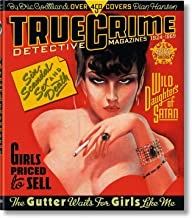
Hardcover. Taschen, 1st, 1013, Book: Very Good, Dust Jacket: Very Good, hardcover, 336 pages. At the height of the Jazz Age, when Prohibition was turning ordinary citizens into criminals and ordinary criminals into celebrities, America's true crime detective magazines were born. True Detective came first in 1924, and by 1934, when the Great Depression had produced colorful outlaws like Machine Gun Kelly, Bonnie and Clyde, Baby Face Nelson, and John Dillinger, the magazines were so popular cops and robbers alike vied to see themselves on the pages. Even FBI boss J. Edgar Hoover wrote regularly for what came to be called the "Dickbooks," referring to a popular slang term for a detective. As the decades rolled on, the magazines went through a curious metamorphosis, however. When liquor was once more legal, the Depression over and all the flashy criminals dead or imprisoned, the "detectives" turned to sin to make sales. Sexy bad girls in tight sweaters, slit skirts, and stiletto heels adorned every cover. Cover lines shouted "I Was a Girl Burglar-For Kicks," "Sex Habits of Women Killers," "Bride of Sin!," "She Played Me for a Sucker," and most succinctly, "Bad Woman."True Crime Detective Magazines follows the evolution and devolution of this distinctly American genre from 1924 to 1969. Hundreds of covers and interior images from dozens of magazine titles tell the story, not just of the "detectives," but also of America's attitudes towards sex, sin, crime, and punishment over five decades. With texts by magazine collector Eric Godtland, George Hagenauer, and True Detective editor Marc Gerald, True Crime Detective Magazines is an informative and entertaining look at one of the strangest publishing niches of all time.
Hardcover. NY, Simon & Schuster, 1st, 2002, Book: Very Good, Dust Jacket: Very Good, Hardcover in a bright dust jacket, 352 pages. Alfred Lee Loomis (1887-1975) made his fortune in the 1920s by investing in public utilities, but science was his first love. In 1928, he established a premier research facility in Tuxedo Park, N.Y., that attracted such brilliant minds as Einstein, Bohr and Fermi and became instrumental in the Allies' WWII victory. Conant, a magazine writer, draws on studies, family papers and interviews with Loomis's friends, family and colleagues (she's a relative of two scientists who worked with Loomis) to trace the story of the tycoon's professional and social life (the latter fairly racy). At the Tuxedo Park lab, Loomis attracted top-flight scientists who experimented with sound, time measurement and brain waves. During WWII, he established a laboratory at MIT (the "rad lab") where radar was developed. He also served as a conduit between civilian scientists and Roosevelt's military establishment. Although he lost some of his top people to the Manhattan Project, the "rad lab" was a major contributor to the allies' defense. In his well-publicized personal life, Loomis angered family members by trying to have his emotionally unstable wife institutionalized while he pursued an affair with another woman. Through Conant's spare, unobtrusive prose and well-paced storytelling, Loomis emerges as a contradictory man who craved scientific accomplishment and influence, but rarely took credit for himself.
Hardcover. US, teNeues, 1st, 2006, Book: Very Good, Dust Jacket: Very Good, Hardcover with dust jacket. 240 pages. Clean, tight copy. Like new in pubisher's shrinkwrap. In an increasingly mobile society, it's common to cross the globe many times in a single month. Journeys that might once have taken weeks, now take hours. All of this travel is a suitable metaphor for Andrew Macpherson's rise to the pinnacle of celebrity photography. He has literally traveled the world to profile the best-known people of our age; Charlize Theron, Reese Witherspoon, and George Clooney to name a few. As he's done so, he's also embarked on an artistic journey to bring something fresh and inviting to each of his images. In this quest, he employs a multitude of varied techniques, playing with form, context and color. A note of poignancy overshadows this work. Many of the original negatives were lost in a warehouse fire. It is a testament to the strength of Macpherson's work that even scanned from magazine pages - as some of these images are - the results still radiate vitality and power.
Hardcover. NY, Knopf, 1st US, 1992, Book: Very Good, Dust Jacket: Very Good, Hardcover, 287 pages, b&w illustrations. From the construction of the Berlin Wall through every major conflict of his adult lifetime up to the Syrian Civil War, photographer Don McCullin has left a trail of iconic images. Unreasonable Behavior traces the life and career of one of the top photojournalists of the twentieth century and beyond. Born in London in 1935, McCullin worked as a photographer's assistant in the RAF during the Suez Crisis. His early association with a North London gang led to the first publication of his pictures. As an overseas correspondent for the Sunday Times Magazine beginning in 1966, McCullin soon became a new kind of hero, taking a generation of readers beyond the insularity of post-war domestic life through the lens of his Nikon camera. He captured the realities of war in Biafra, the Congo, Vietnam, Cambodia, and the human tragedy of famine and cholera on the Bangladesh border and later, the AIDs epidemic in Sub-Saharan Africa. McCullin now spends his days in a Somerset village, where he photographs the landscape and arranges still-lifes. Harrowing and poignant, Unreasonable Behavior is an extraordinary account of a witness who triumphed over the memories that could have destroyed him.
Softcover. New York, Doubleday, 3rd pr., 1986, Book: Very Good, Dust Jacket: None, 128 pages. Softcover with Light edgewear to wrappers. Cartoons by Roz Chast. Cartoons use puns and the author's offbeat sense of humor to poke fun at human nature and modern life in the United States. Originally appeared 1978-1981 mostly in The New Yorker magazine.
NY, Simon & Schuster, 1st, 2001, Book: Very Good, Dust Jacket: Very Good, Hardcover in a bright, unclipped dust jacket. Uphill with Archie is a beautifully written and deeply involving look at the life and the world of the great literary icon, poet Archibald MacLeish, by his youngest son. Partly an homage, partly an attempt to come to terms with the man (and the legend), Uphill with Archie speaks to all sons and daughters who have never completely resolved their feelings about powerful parents. Young William MacLeish grew up both captivated and cowed by the fame of a father who won Pulitzer Prizes for his poetry and comparable honors for his work as a lawyer, playwright, teacher, and government official. William's mother, Ada, began her marriage as a successful concert singer in Paris but later felt compelled to give up her art for her family. When Archie was working for Henry Luce and Fortune magazine, his younger children, watched over by a governess, stayed with their grandfather in Connecticut. But it is of the time spent with his family at Uphill Farm, a beautiful old house above a Massachusetts hilltown, that MacLeish has his fondest and most telling memories: "Archie and Ada gave me great gifts: music, the sound of the language beautifully spoken, the draw of knowledge, the arts of humor," William writes. "I learned to perform for them, and in time found myself addicted to getting a nice tan from Archie's sun. And the more I bathed in his light, the harder I found it to go looking for my own."
Hardcover. NY, Doubleday Publishing, 1st, 2024, Book: Very Good, Dust Jacket: Very Good, Hardcover in a bright, unclipped dust jacket. Javier Perez is a hustler from a family of hustlers. He learns from an early age how to play the game to his own advantage, how his background--murdered drug dealer dad, single cash-strapped mom, best friend serving time for gang activity--can be a key to doors he didn't even know existed. This kind of story, molded in the right way, is just what college admissions committees are looking for, and a full academic scholarship to a prestigious university brings Javi one step closer to his dream of becoming a famous writer. As a college student, Javi embellishes his life story until there's not even a kernel of truth left. The only real connection to his past is the occasional letter he trades with his childhood best friend, Gio, who doesn't seem to care about Javi's newfound awareness of white privilege or the school-to-prison pipeline. Soon after Javi graduates, a viral essay transforms him from a writer on the rise to a journalist at a legendary magazine where the editors applaud his "unique perspective." But Gio more than anyone knows who Javi really is, and sees through his game. Once Gio's released from prison and Javi offers to cut him in on the deal, will he play along with Javi's charade, or will it all come crumbling down? Clean copy.
Softcover. Durham NC, Duke University Press, 1st, 2017, Book: Very Good, Dust Jacket: None, Softcover. pages. From scouring flea markets and eBay to maxing out their credit cards, record collectors will do just about anything to score a long-sought-after album. In Vinyl Freak, music writer, curator, and collector John Corbett burrows deep inside the record fiend's mind, documenting and reflecting on his decades-long love affair with vinyl. Discussing more than 200 rare and out-of-print LPs, Vinyl Freak is composed in part of Corbett's long-running DownBeat magazine column of the same name, which was devoted to records that had not appeared on CD. In other essays where he combines memoir and criticism, Corbett considers the current vinyl boom, explains why vinyl is his preferred medium, profiles collector subcultures, and recounts his adventures assembling the Alton Abraham Sun Ra Archive, an event so all-consuming that he claims it cured his record-collecting addiction. Like new in publisher's shrinkwrap.
Hardcover. Seattle, Fantagraphics, 1st, 2013, Book: Very Good, Dust Jacket: None, Hardcover, 240 pages. Only a few months after the devastating attack on Pearl Harbor and the same year that Albert Camus offered the world his bleak vision of man's existence by introducing his philosophical dictum of The Absurd, Virgil Partch burst onto the scene with his own twist on the phrase. Partch was a cartoonist who offered comic counterpoint to the grim headlines and a unique perspective on human nature in the pages of the nation's most popular magazines. Known to millions by his jazzy signature, VIP, this comic genius ushered in a new era of the gag cartoon-zany, sometimes surreal, always hilarious-that inspired a generation of fellow cartoonists starting in the 1940s and '50s. His madcap style of humor was reflected in the cutting-edge comedic sensibilities of Burns & Allen, Jack Benny, Ernie Kovacs, Bob & Ray, Stan Freberg, and Jean Shepherd, and would position Partch as one of the most prolific "gag-men" of his day. VIP contributed to an astonishing array of magazines, wrote gags for other cartoonists, illustrated books, album covers, and advertisements, and adorned merchandise including, appropriately, cocktail glasses.VIP: The Mad World of Virgil Partch is the first time Partch's life and career has been treated in full, collecting amazing artwork from the entire range of his inspired career and featuring his own writings.
Softcover. Los Angeles, Society for Visual Anthropology, 1st, 1994, Book: Very Good, Dust Jacket: None, Softcover, magazine format, 108 pages. illustrated collection of provocative essays, occasional pieces, and dialogues with contributions from anthropologists, from cultural, literary and film critics and from image makers themselves. Includes: Narrative in a Papua New Guinean Swamp; Opportunities for 'Double Voicing' in Ethnographic Film; Images of Woman in Current Chinese Television Advertising; Interview with Filmaker Bob Connolly, other essays and reviews. Clean.
Softcover. Los Angeles, Society for Visual Anthropology, 1st, 1995, Book: Very Good, Dust Jacket: None, Softcover, magazine format, 144 pages. illustrated collection of provocative essays, occasional pieces, and dialogues with contributions from anthropologists, from cultural, literary and film critics and from image makers themselves. Includes: Articles on the cinema of Tim Asch, Paradise by James Clifford (on Papua New Guinea), Subtitling Ethnographic Films, other essays and reviews. Clean.
Softcover. Los Angeles, Society for Visual Anthropology, 1st, 1992, Book: Good, Dust Jacket: None, Softcover, magazine format, 144 pages. illustrated collection of provocative essays, occasional pieces, and dialogues with contributions from anthropologists, from cultural, literary and film critics and from image makers themselves. Includes: Shoot for the Contents, Films of Memory, Encounter with a Road Siren, other essays and reviews. Light rubbing to covers. Clean.
Softcover. Los Angeles, Society for Visual Anthropology, 1st, 1992, Book: Very Good, Dust Jacket: None, Softcover, magazine format, 120 pages. illustrated collection of provocative essays, occasional pieces, and dialogues with contributions from anthropologists, from cultural, literary and film critics and from image makers themselves. Includes: Reading Trash, Artaud, Rouch, & the Cinema of Cruelty; Remembering the Revolution, Forgetting the Empire; 'Thirty Centuries, the Splendors of Mexico'; What Is Real About Virtual Reality?; Marketing Alterity, other essays and reviews. Clean.
Softcover. Los Angeles, Society for Visual Anthropology, 1st, 1993, Book: Very Good, Dust Jacket: None, Softcover, magazine format, 180 pages. illustrated collection of provocative essays, occasional pieces, and dialogues with contributions from anthropologists, from cultural, literary and film critics and from image makers themselves. Special Issue on feminist approaches to the visualization of culture, other essays and reviews. Clean.
Softcover. Los Angeles, Society for Visual Anthropology, 1st, 1993, Book: Very Good, Dust Jacket: None, Softcover, magazine format, 180 pages. illustrated collection of provocative essays, occasional pieces, and dialogues with contributions from anthropologists, from cultural, literary and film critics and from image makers themselves. Special Issue on feminist approaches to the visualization of culture, other essays and reviews. Clean.
Softcover. Los Angeles, Society for Visual Anthropology, 1st, 1991, Book: Very Good, Dust Jacket: None, Softcover, magazine format, 124 pages. illustrated collection of provocative essays, occasional pieces, and dialogues with contributions from anthropologists, from cultural, literary and film critics and from image makers themselves. Includes: Post-Bourgeois Tattoo, The Ethnographer's Tale, Who's Story Is It?, other essays and reviews. Clean.

 "Through Her Lens: The Stories Behind the Photography of Eva Serenyby: Sereny, Eva")
 "To Grandfather's House We Go - A Roadside Tour of American Homesby: Harry Devlin")
 "To My Mother by: Sassoon, Siegfried/Tennant, Stephen")
 "Tom Munroby: Munro, Tom/Madonna (Introduction)")
 "Tom Munroby: Munro, Tom")
 "Tom Palumbo: Dreamer with a Thousand Thrills: The Redicovered Photographsby: Bosworth, Patricia")
 "Tops: The Complete Collection of Charles Biro's Visionary 1949 Comic Book Seriesby: Charles Biro / Michael T. Gilbert")


 "Two Million Miles by: Macpherson, Andrew")
 "Unreasonable Behaviour: An Autobiographyby: McCullin with Lewis Chester, Don")
 "Unscientific Americansby: Chast, Roz")
 "Uphill with Archie: A Son's Journey by: William H. MacLeish")


 "VIP: The Mad World of Virgil Partchby: Virgil Partch and Jonathan Barli")
 "Visual Anthropology Review: Volume 10 Number 2/Fall 1994by: N/A")
 "Visual Anthropology Review: Volume 11 Number 1/Spring 1995by: N/A")
 "Visual Anthropology Review: Volume 8 Number 1/Spring 1992by: N/A")
 "Visual Anthropology Review: Volume 8 Number 2/Fall 1992by: N/A")
 "Visual Anthropology Review: Volume 9 Number 1/Spring 1993by: N/A")
 "Visual Anthropology Review: Volume 9 Number 1/Spring 1993by: N/A")
 "Visual Anthropology Review: Volume7 Number 2/Fall 1991by: N/A")