Hardcover. NY, Harcourt, Brace and Company, 1st, 1951, Book: Very Good, Dust Jacket: Good, Hardcover in a price-clipped dust with mild tanning. Decorative endpapers, clean interior. Stated first edition. The book tells the story of flower now known as the poinsettia, which has its basis in Mexican legend. Woodcuts by Tom Lea. Inscription opposite title page, otherwise clean.
Softcover. Dallas TX, Southern Methodist University, reprint, 2001, Book: Very Good, Dust Jacket: None, Softcover, 221 pages, 202 b&w plates, 20 in color. Historical and cultural history of religious, popular and folk architecture of colonial New Spain. Clean copy.
Softcover. London, Pimlico, 1st pbk., 1994, Book: Very Good, Dust Jacket: None, Softcover, 812 pages, b&w illustrations. Light wear to covers and edges of spine. Old UK price sticker on rear cover. Neat, tight copy.
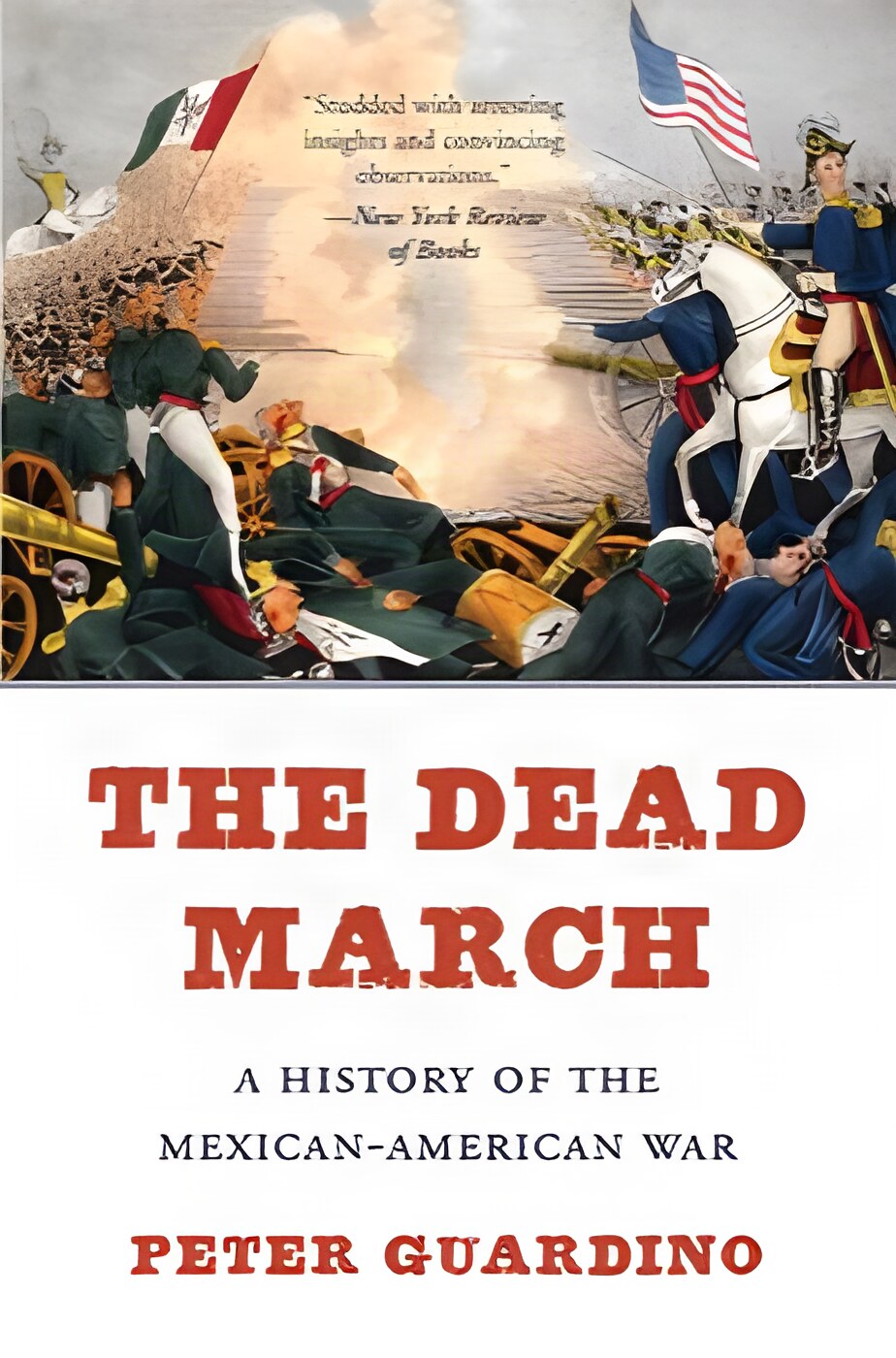
Hardcover. Cambridge MA, Harvard University Press, 2nd pr., 2017, Book: Very Good, Dust Jacket: Very Good, Hardcover in a bright dust jacket, 502 pages, b&w illustrations. "Superb...A remarkable achievement, by far the best general account of the war now available. It is critical, insightful, and rooted in a wealth of archival sources; it brings far more of the Mexican experience than any other work...and it clearly demonstrates the social and cultural dynamics that shaped Mexican and American politics and military force." -Journal of American History It has long been held that the United States emerged victorious from the Mexican-American War because its democratic system was more stable and its citizens more loyal. But this award-winning history shows that Americans dramatically underestimated the strength of Mexican patriotism and failed to see how bitterly Mexicans resented their claims to national and racial superiority. Their fierce resistance surprised US leaders, who had expected a quick victory with few casualties. By focusing on how ordinary soldiers and civilians in both countries understood and experienced the conflict, The Dead March offers a clearer picture of the brief, bloody war that redrew the map of North America. Clean copy.
Hardcover. NY, NBM, 1st, 2007, Book: Very Good, Dust Jacket: Very Good, Hardcover, 192 pages. Early b&w comic strips. Mutt and Jeff was the first successful daily comic strip; before it, the funnies were Sunday features. It debuted in 1907, however, as A. Mutt, limning the follies of lanky racetrack gambler Augustus Mutt. Diminutive sidekick Jeff appeared the following year to form a partnership that lasted until the strip's overdue demise in 1983. Mutt and Jeff was the first strip to essay weeks-long story lines, such as a trip to Mexico to join Pancho Villa's revolution. Compared to better-remembered strips of the era, Mutt and Jeff was crudely drawn, yet it captured the nation's fancy. Despite its significance in comics history, Mutt and Jeff is scantly regarded today. By the mid-1920s, Fisher handed creative duties over to ghosts to free up time for the playboy lifestyle that the strip's sizable revenues allowed him. Clean copy.
Hardcover. NY, Simon and Schuster, 1st, 1979, Book: Very Good, Dust Jacket: Very Good, Hardcover in a bright, unclipped dust jacket, 319 pages. SIGNED BY THOMAS on the title page. Minor Jackson is broke when he meets Ploscaru, a dwarf, who tells Jackson that Kurt Oppenheimer's relatives would pay highly to have him found. What Ploscaru doesn't tell Jackson is that Oppenheimer is a professional killer who is being sought by the British, the Americans, and the Russians. Set in 1946, this intricately woven espionage thriller traverses four major settings beginning with Beverly Hills, California and continuing with Mexico, Germany and Washington, D.C. Clean copy.
Hardcover. NY, Harper & Row, 1st, 1984, Book: Very Good, Dust Jacket: Very Good, Hardcover, 230 pages. Translated from Spanish by Toby Talbot. Unclipped dust jacket with small crease on front flap, rubbing. Otherwise, clean and tight copy. A small gem of a novel, THE GODS, THE LITTLE GUYS AND THE POLICE won the Premio Casa de las Americas, the most prestigious literary prize offered for Latin American fiction, when it was originally published in Mexico. In this funny yet mordant satire of political terrorism in Argentina in the mid-1970s, a paramilitary death squad places the members of a poetry circle under surveillance. They include a bank clerk, a businessman and a pretty schoolteacher, as well as a cripple, a blind man and a former police informer, people as innocuous and apolitical as their verse. But having been denounced by a jealous wife of one of their members and betrayed by the informer, they have fallen prey to the violence and repression of Buenos Aires.
Hardcover. NY, McGraw Hill, 1st, 1966, Book: Very Good, Dust Jacket: Very Good, Hardcover in a bright, unclipped dust jacket. The American Trails Series, edited by A.B. Guthrie, Jr. 383 pages, includes a two-page map. This book offers an account of the route between Siberia and Alaska that continues southward along the Rockies all the way to Mexico and beyond. Cushman details the stories of the many groups who have traversed parts of the route from prehistoric peoples to Native Americans, Spanish explorers, fur traders, cowboys, and whiskey runners of the Prohibition era. A clean and pristine copy of the first printing,
Hardcover. Coral Gables FL, University of Miami Press, 1st, 1970, Hardcover, terra-cotta cloth with gilt lettering on spine, 381 pages with index. No dust jacket. "Professor Liebman has researched and translated many Inqusition documents, and through these and other sources has defined, described, and analyzed the personalities, lives and customs of representative Hispanic Jews. Two outstanding families, those of Luis de Carvajal and Tomas Trevino de Sobremonte, are treated in full in separate chapters. Other chapters trace the colonists from their departure from Spain through their centuries of faith and flame in the New World." Clean copy.
Softcover. Santa Fe, Museum of New Mexico Press, 1st revised, 2003, Book: Very Good, Dust Jacket: None, Softcover, pages. Maria, the potter of San Ildefonso (1887-1981), is not only the most famous of Pueblo Indian potters but ranks among the best of international potters. Her work Is collected and exhibited around the world, and more than any other artist, Maria Martinez brought "signatures" to Indian art. She and other members of her family revived a dying art form and kindled a renaissance in pottery for all the Pueblos. She raised this regional art to one of international acclaim. This lavishly illustrated book draws from Spivey's 1979 classic work. Featuring entirely new photography and 120 added pots as well as a significantly expanded text, this volume considers the entirety of this artist's immense oeuvre and important works and developments in her collaboration with Julian, and after his death, with her daughter-in-law Santana, son Popovi Da, and grandson Tony Da, bringing the legacy of Maria into the bright future of Pueblo ceramics.
Hardcover. Milwaukee, Bruce Publishing, 1st, 1956, Book: Good, Dust Jacket: None, Pictorial boards. Color illustrations by Evans. Cardboard edges worn. The story of Mexican wood carver who creates a wooden Christ Child for the village church. Minor wear to spine.
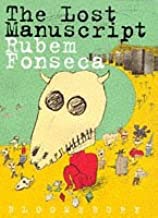
Softcover. London, Bloomsbury, 1st UK, 1997, Book: Very Good, Dust Jacket: None, Softcover, illustrated card wrappers. What better place to hide a collection of priceless jewels than among the glitter and ostrich feathers of Rio's Carnival parade? The film-director narrator suddenly finds himself the custodian of such a valuable horde after the nocturnal visit of a young dancer who is soon found murdered. First published in 1988, the novel was a bestseller in Fonseca's home country of Brazil, as well as in Italy and Mexico. The English edition I read was published in 1997 in Britain, translated by Clifford Sanders.
Softcover. GR, Steidl, 1st, 2010, Book: Very Good, Dust Jacket: None, Two softcover volumes in a card slipcase. 750 total pages. Lost since 1939, the Mexican suitcase contains nearly 4,500 negatives documenting the Spanish Civil War by Robert Capa, Chim (David Seymour), and Gerda Taro. These films had traveled from Paris via the south of France to Mexico City, where, almost seventy years later, they were rediscovered and now reside in the collection of the International Center of Photography.
Softcover. GR, Steidl, 1st, 2010, Book: Very Good, Dust Jacket: None, Two softcover volumes in a card slipcase. 750 total pages. Lost since 1939, the Mexican suitcase contains nearly 4,500 negatives documenting the Spanish Civil War by Robert Capa, Chim (David Seymour), and Gerda Taro. These films had traveled from Paris via the south of France to Mexico City, where, almost seventy years later, they were rediscovered and now reside in the collection of the International Center of Photography.
Softcover. NY, National Railway Publication Company, 1939, Book: Very Good, Dust Jacket: None, Softcover, original printed paper wrappers, 1536 pages. Thick handbook for the railroad steamboat trade, with detailed schedules, maps, advertisements, all pertaining to the shipment of goods. Printed on thin, cheap stock that's tanning. Still very good wth clear tape reinforcement to spine.
Hardcover. NY, Doubleday, 1st trade, 1974, Book: Very Good, Dust Jacket: None, Hardcover in a lightly worn slipcase. First trade edition limited to 3000 copies. 278 pages with 58 color plates plus many drawings by Karl Karalus, text by Allan Eckert. Clean copy.
Hardcover. NY, Oxford University Press, 1st, 1997, Book: Very Good, Dust Jacket: Very Good, Hardcover in a bright, unclipped dust jacket. 94 pages, color illustrations by Peggy Turley. In this delightful children's tale, an American boy, Kenny Strange, moves to the quiet Mexican town of Taxco with his parents and strikes up a friendship with young Juanito Perez, a Taxco native. The two boys are brought together by an enchanting toy, the pasteboard bandit Tito. Chosen by Juanito at a town fair from among the other pasteboard toys, Tito, with his colorful clothes and bright eyes, becomes Juanito's and Kenny's constant companion, and the threesome share many adventures in and around the town's rolling green hills. The boys' growing friendship, Kenny's introduction to a culture unlike his own, and Tito's witty reflections on being a toy will be recognized instantly by anyone young or old who has ever made a friend or imagined that a toy might be real. Originally written in 1935, but never before published, The Pasteboard Bandit grew out of several trips Langston Hughes made to Mexico during his lifetime. Hughes first went to the town of Toluca at age 5 to visit his father, and again when he was older. During these visits, Hughes met many writers and artists, and it is their influence that informs the story of The Pasteboard Bandit--a story of two cultures meeting. When Hughes left Mexico for the last time, at age 32, he was carrying the first draft for The Pasteboard Bandit. Clean copy.
Softcover. University of Pittsburgh Press, 1st pbk., 1980, Book: Very Good, Dust Jacket: None, Softcover, 283 pages. George Grayson examines the influence of oil and the oil sector both within Mexican society and in its relations with other nations, as he traces the development of the oil industry from its beginnings in 1901 up until the 1980s. Clean copy.
Hardcover. US, University of New Mexico Press, 1st, 1987, Book: Very Good, Dust Jacket: Very Good, Hardcover, 307 pages, b&w photos. Foxing to all edges. Nineteen essays on various issues in photography; includes essays about Photographers at War, Robert Doisneau, Helen Levitt, William Klein, Atget, and more.
Softcover. Albuquerque, University Of New Mexico Press, 1st pbk, 1987, Book: Very Good, Dust Jacket: None, Softcover, 285 pages, b&w and color illustrations. Nineteen essays on various issues in photography; includes essays about Photographers at War, Robert Doisneau, Helen Levitt, William Klein, Atget, and more. Clean copy.
Hardcover. NY, The Crime Club/ Doubleday, Doran & Co.,, 1st, 1937, Book: Very Good, Dust Jacket: Fair, Hardcover, black cloth covers stamped in red. Dust jacket cover panel tipped onto inside front cover with flap copy opposite on front fly leaf. Attractively done. A Hildegarde Withers mystery. Classic crime tale from the 1930s set south of the border in old Mexico. 293 pages.
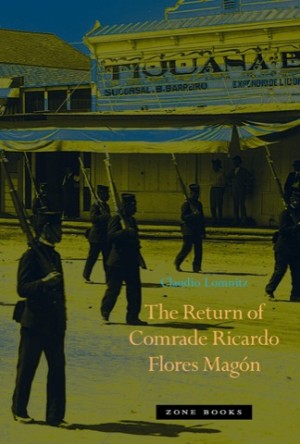
Hardcover. Brooklyn NY, Zone Books, 1st, 2014, Book: Very Good, Dust Jacket: Very Good, Hardcover in a bright dust jacket, 594 pages, b&w illustrations. INSCRIBED BY AUTHOR on the title page. In this long-awaited study, Claudio Lomnitz tells an unprecedented story about the experience and ideology of American and Mexican revolutionary collaborators of the Mexican anarchist Ricardo Flores Magon. Based on extensive research in American and Mexican archives, Lomnitz explores the rich, complicated, and virtually unknown lives of Magon and his comrades devoted to the "Mexican Cause." This anthropological history of anarchy, cooperation, and betrayal seeks to capture the experience and meaning of these dedicated militants who themselves struggled to understand their role and place at the margins of the Mexican Revolution. For them, the revolution was untranslatable, a pure but deaf subversion: "La revolucion es la revolucion." For Lomnitz, their experiences reveal the meaning of this phrase.
Hardcover. NY, Viking, 1st US, 1991, Book: Very Good, Dust Jacket: Very Good, Hardcover in a bright, unclipped dust jacket. Translated by William I. Neuman. Novel set in 1922 in post-revolutionary Mexico, described as "a blending of roman noir with magic realism, a cross between Raymond Chandler and Gabriel Garcia Marquez."









 "The Old Lady Who Ate People - Frightening Storiesby: Hinojosa, Francisco")



 "The Privileged Eye: Essays on Photographyby: Kozloff, Max")


 "The Shadow of the Shadowby: Taibo II, Paco Ignacio")