Hardcover. Santa Monica CA, RoseGallery/DAP, 1st, 2007, Book: Very Good, Dust Jacket: None, Red and burgundy cloth boards with yellow stamped lettering. 144 pages. Color and b&w illustrations, portraits. Eyes in His Eyes reintroduces some of the artist's overlooked masterpieces, and reveals, for the first time, a broad selection of never-before-seen images from his private archives. In his 80-year career, Alvarez Bravo printed, published and exhibited only a thousand images. This portfolio, culled with the help of the artist himself, and completed after his death, is full of unfamiliar abstractions, portraits, landscapes and street photography.
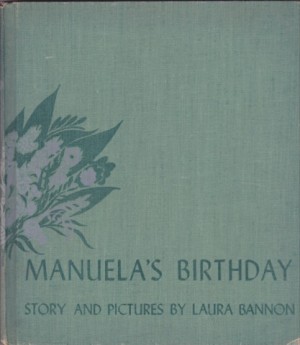
Hardcover. NY, Jr. Literary Guild/ Albert Whitman, BC Ed., 1939, Book: Very Good, Dust Jacket: None, Color illustrations by Bannon, 48 pages. Green cloth covers decorated in 2-colors. Tight, clean condition with a slight nick to front cover at bottom corner. Miss Bannon and her friend, Katherine Evans, also a children's book illustrator, were living in a small Mexican village. While painting, the two friends were beguiled by a little girl. When they found she wanted a special doll, they combined their talents to make a very unusual gift. Light pencil inscription on prelim page, otherwise clean.
Hardcover. NY, Albert Whitman & Company, 1st, 1937, Book: Very Good, Dust Jacket: None, 80 pages. Hardcover with no dust jacket. Black & white and color illustrations by Berta and Elmer Hader. Shows some wear on edges. Tight copy.
Hardcover. Chicago, Albert Whitman & Company, 4th pr., 1942, Book: Very Good, Dust Jacket: Good, Hardcover, orange cloth with colr pastedown on cover. Black & white and color illustrations by Berta and Elmer Hader. Shows some wear but mostly clean and nice. No dust jacket.Some chipping to cover labe;, mostly on title.
Hardcover. NY, Albert Whitman & Company, 1st, 1937, Book: Very Good, Dust Jacket: None, Black & white and color illustrations by Berta and Elmer Hader. Shows some wear but mostly clean and nice. Hardbound, no dust jacket.
Hardcover. New York, Aperture/SADEV, 1st, 1986, Book: Very Good, Dust Jacket: Very Good, Hardcover, 104 pages, b&w photographs, small format catalogue with extensive notes. A fine copy in the illustrated dust jacket. Bridges made aerial photographs of the earthworks in Peru, Yucatan and Chiapas, and in the U.S. in California, Arizona, New Mexico, Mississippi, South Dakota, as well as France and England. Preface by Haven O'More. Essays by Maria Reiche, Charles Gallenkamp, Lucy Lippard, Keith Critchlow. Clean, bright in an unclipped dust jacket.
Hardcover. New Haven CT, Yale University Press, 2007, Book: Very Good, Dust Jacket: Very Good, Hardcover, 208 pages, color plates. Considered to be among the greatest early American modernists, the painter Marsden Hartley (1877-1943) traveled the United States and Europe in his search for a distinctive American aesthetic. His stay in New Mexico resulted in an extraordinary series of landscape paintings--created in New Mexico, New York, and Europe between 1918 and 1924--that show an evolution in style and thinking that is important for understanding both Hartley's oeuvre and American modernism in the postwar years. Marsden Hartley and the West examines this pivotal stage of the painter's career, drawing upon his writings and providing illustrations of rarely seen and previously unpublished works. The author considers Hartley's involvement with the Stieglitz circle and its "soil-and-spirit" philosophy, the Taos art colony, New York Dada, and the impact of historical events such as World War I. Within this setting she analyzes the pastels and oil paintings that suggest Hartley's increasingly ambivalent response to the land. Beginning with optimistic, naturalistic views, the New Mexico works grew progressively darker and more tumultuous, increasingly reflecting a sense of loss brought on by war. The paintings become a site where the landscapes of memory, self, and nation merge, while reflecting broader modernist debates about "American-ness" and a usable past.
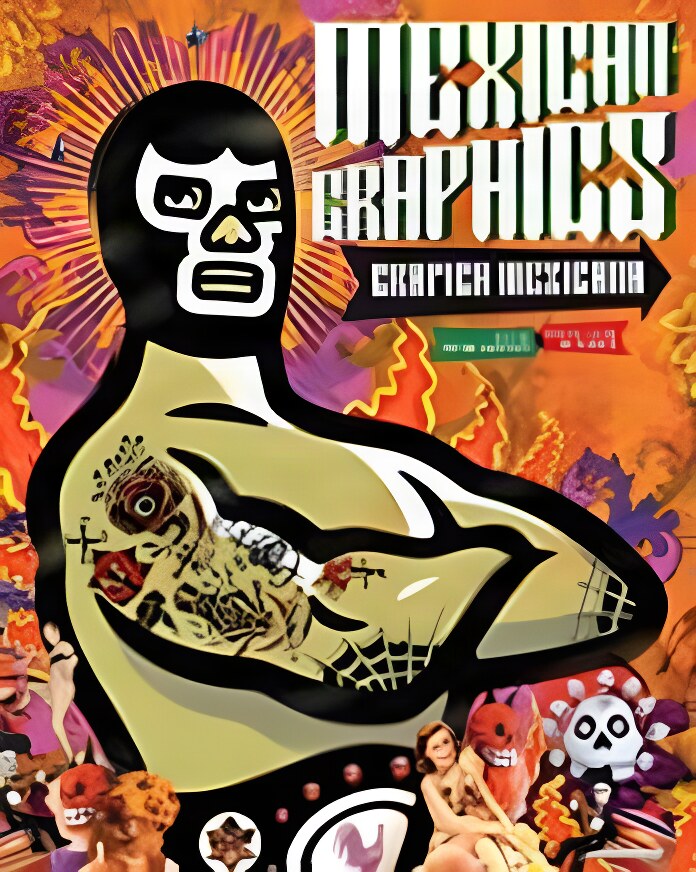
Softcover. San Francisco, Chronicle Books, 1st, 2007, Book: Very Good, Dust Jacket: None, Softcover, 132 pages, color illustrations. Culling more than 150 of the most colorful and sometimes unbelievable posters from 1957-1990. Includes an illuminating bilingual essay discussing the posters' creation, the role of cinema in Mexican popular culture, and the ups and downs of its film industry.
Softcover. San Francisco, Chronicle Books, 1st, 2007, Book: Very Good, Dust Jacket: None, Softcover, 132 pages, color illustrations. Culling more than 150 of the most colorful and sometimes unbelievable posters from 1957-1990. Includes an illuminating bilingual essay discussing the posters' creation, the role of cinema in Mexican popular culture, and the ups and downs of its film industry.
Softcover. NY, Seven Stories Press, reprint, 2012, Book: Very Good, Dust Jacket: None, Softcover, 431 pages. A fascinating document of an extraordinary life, Memoirs of A Breton Peasant reads with the liveliness of a novel and bristles with the vigor of an opinionated autodidact from the very lowest level of peasant society. Brittany during the nineteenth century was a place seemingly frozen in the Middle Ages, backwards by most French standards; formal education among rural society was either unavailable or dismissed as unnecessary, while the church and local myth defined most people's reasoning and motivation. Jean-Marie Deguignet is unique not only as a literate Breton peasant, but in his skepticism for the church, his interest in science, astronomy and languages, and for his keen--often caustic--observations of the world and people around him. Born into rural poverty in 1834, Deguignet escapes Brittany by joining the French Army in 1854, and over the next fourteen years he fights in the Crimean war, attends Napoleon III's coronation ceremonies, supports Italy's liberation struggle, and defends the hapless French puppet emperor Maximilian in Mexico. He teaches himself Latin, French, Italian and Spanish and reads extensively on history, philosophy, politics, and literature. He returns home to live as a farmer and tobacco-seller, eventually falling back into dire poverty. Throughout the tale, Deguignet's freethinking, almost anarchic views put him ahead of his time and often (sadly, for him) out of step with his contemporaries. Deguignet's voluminous journals (nearly 4,000 pages in total) were discovered in a farmhouse in Brittany a century after they were written. This narrative was drawn from them and became a surprise bestseller when published in France in 1998. Clean copy.
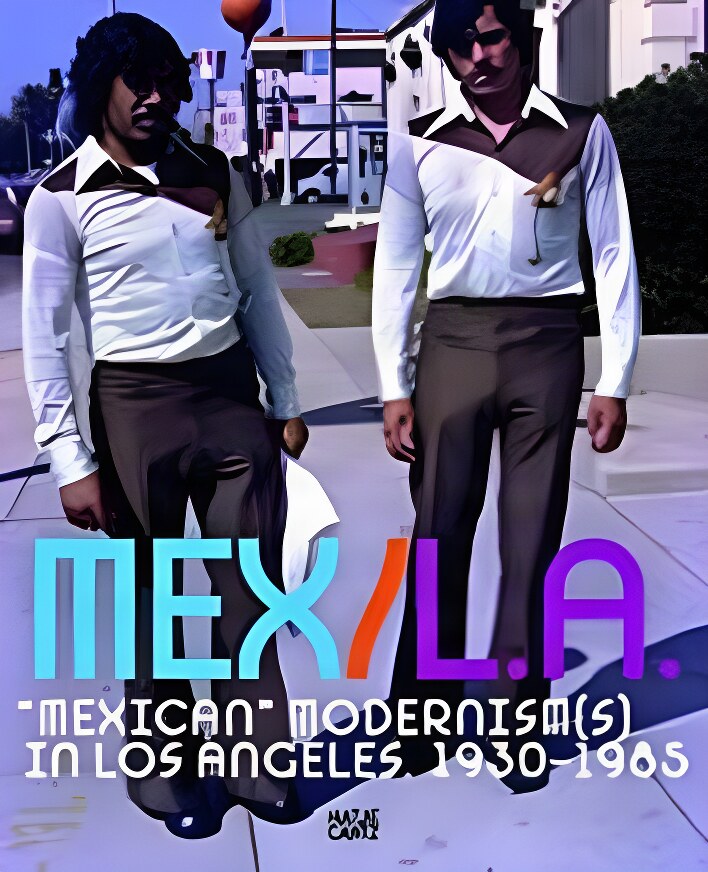
Hardcover. Hatje Cantz, 1st, 2011, Book: Very Good, Dust Jacket: Very Good, Hardcover, 224 pages. The years from 1945 to 1985 are often identified as the moment in which Los Angeles established itself as a leading cultural center in America. However, this conception of its history entirely excludes the very controversial presence of the Mexican muralists, as well as the work of other artists who were influenced by them and responded to their ideas. It is likewise often thought that Los Angeles' Mexican culture arrived full formed from outside it, when in fact that culture originated within the city--it was in Los Angeles and Southern California that Jose Vasconcelos, Ricardo Flores Magon, Octavio Paz and other intellectuals developed the iconography of modern Mexico, while Anglos and Chicanos were developing their own. David Alfaro Siqueiros, Clemente Orozco, Alfredo Ramos Martinez and Jean Charlot made some of their earliest murals in Los Angeles, influencing the Mexican, Mexican-American and Chicano artists of the 1970s and 80s. MEX/LA: Mexican Modernism(s) in Los Angeles 1930-1985 focuses on the construction of different notions of "Mexicanidad" within modernist and contemporary art created in Los Angeles. From the Olvera Street mural by Siqueiros, to the Golden Age of Mexican cinema and the Disney silver-screen productions, to the revitalization of the street mural, up to the performance art of Guillermo Gomez-Pena, MEX/LA explores the bi-national and hybrid forms of artistic practices, popular culture and mass-media arts that have so uniquely shaped Los Angeles' cultural panorama.
Hardcover. Chapel Hill NC, University of North Carolina , 1st, 1938, Book: Very Good, Dust Jacket: None, Hardcover, decorated yellow cloth covers with light soil, 227 pages. Illustrated with 7 b&w photos. These five one-act plays, originally produced by the Carolina Playmakers at Chapel Hill and on various tours, offer an unusual combination of brilliant local color and truth about human nature everywhere. Well written, with skillful stage directions and notes on Mexican costume and Spanish pronunciation, they are highly practical for production. Internally clean, no dust jacket.
Hardcover. London , Korero Books , 1st, 2011, Book: Very Good, Dust Jacket: Very Good, 253 pages, hardcover. Extensive b&w and color illustrations throughout. Illustrated end papers and fly leafs. Gilt decoration on spine. Clean, unmarked copy with only minor wear to dust jacket.
Hardcover. UK, Cambridge University Press, 1st, 2001, Book: Very Good, Dust Jacket: Very Good, 444 pages. Hardcover with dust jacket. Light fading to dust jacket front. Light edgewear to dj. Black and white pictures throughout. Clean, tight copy. In 1999 Pope John Paul II proclaimed Our Lady of Guadalupe a patron saint of the Americas. According to oral tradition and historical documents, in 1531 Mary appeared as a beautiful Aztec princess to Juan Diego, a poor Indian. Speaking to him in his own language, she asked him to tell the bishop her name was La Virgen de Guadalupe and that she wanted a church built on the mountain. During a second visit, the image of the Virgin miraculously appeared on his cape. Through the centuries, the enigmatic power of this image has aroused such fervent devotion in Mexico that it has served as the banner of the rebellion against Spanish rule and, despite skepticism and anticlericalism, still remains a potent symbol of the modern nation. In Mexican Phoenix, David Brading traces the intellectual origins, the sudden efflorescence, and the theology that has sustained the tradition of Our Lady of Guadalupe. Brading also documents the interaction of religion and patriotism, and describes how the image has served as a banner both for independence and for the Church in its struggle against the Liberal and revolutionary state.
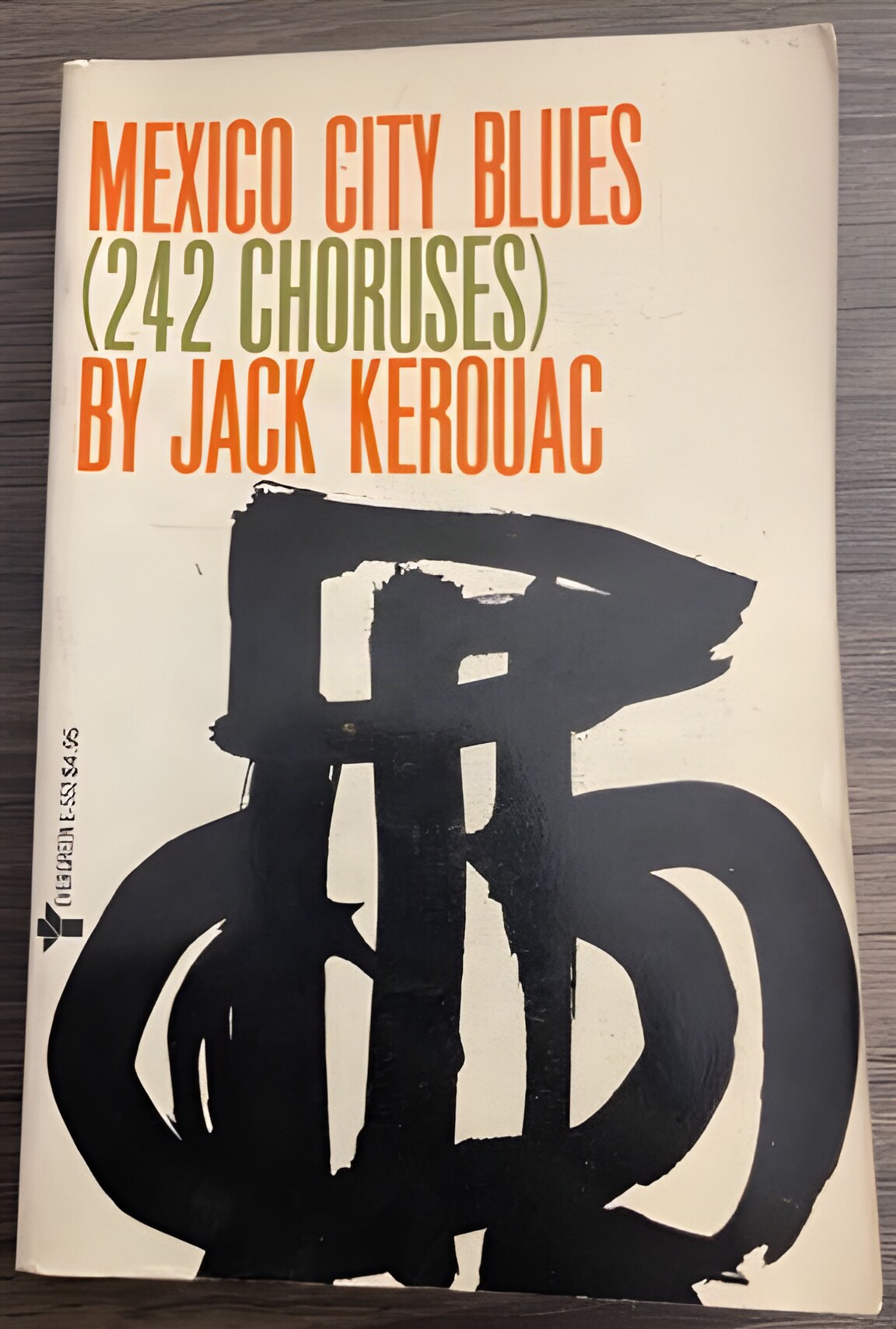
Softcover. NY, Grove Press , 3rd pr., Book: Very Good, Dust Jacket: None, Softcover, 214 pages. Cover price of $2.45, E-552, ISBN number on rear cover so post 1970. Clean copy. This is the 3rd printing of the original Mexico City Blues (242 Choruses) by Jack Kerouac, a long poem composed of 242 "choruses" or stanzas, which was first published in 1959. It has been the inspiration for multiple films and novels, and serves as a pillar of Kerouac's oeuvre.
Hardcover. NY, Charles J. Folsom, 1st, 1842, Book: Very Good, Dust Jacket: None, Hardcover, publisher's brown cloth, stamped in blind, spine gilt. 256 pages including index with a color folded map laid in. Map was tipped-in and removed leaving a sliver or the map still attached at title page (see photos), map itself is clean, no wear to folds. First edition of this important work. The section on Texas and the Santa Fe expedition is attributed to Franklin Coombs, a veteran of the latter ill-fated debacle, and his account of the expedition and his captivity (which first appeared in NILES WEEKLY REGISTER) is reprinted herein, along with another account (Wagner-Camp 86) of a trip to Santa Fe appearing here for the first time in book form. The map shows Texas, Mexico, and the southwest region as far north as the Arkansas River, south to Yucatan, west to the Pacific, and east to New Orleans. Light chipping to spine cloth at top, penciled notation on front fly leaf, mild foxing to several pages, otherwise a clean, bright copy.
Hardcover. Norman OK, University of Oklahoma Press, 1st, 2001, Book: Very Good, Dust Jacket: Very Good, Hardcover in a bright dust jacket, 348 pages, b&w illustrations. This handsomely illustrated book offers a panoramic view of ancient Mexico, beginning more than thirty thousand years ago and ending with European occupation in the sixteenth century. Drawing on archaeological and ethnohistorical sources, the book is one of the first to offer a unified vision of Mexico's precolonial past. Typical histories of Mexico focus on the prosperity and accomplishments of Mesoamerica, located in the southern half of Mexico, due to the wealth of records about the glorious past of this region. Mesoamerica was only one of three cultural superareas of ancient Mexico, however, all interlinked by complex economic and social relationships. Tracing the large social transformations that took place from the earliest hunter-gatherer times to the Postclassic states, the authors describe the ties between the three superareas of ancient Mexico, which stretched from present-day Costa Rica to what is now the southwestern United States. According to the authors, these superareas-Mesoamerica, Aridamerica, and Oasisamerica - cannot be viewed as independent entities. Instead, they must be considered as a whole to understand the complex reality of Mexico's past.
Hardcover. Norman OK, University of Oklahoma Press, 1st, 1996, Book: Very Good, Dust Jacket: Very Good, Hardcover, 212 pages, b&w photos. Clean, unmarked copy with only minor wear to dust jacket. Today, roughly fifty thousand Tarahumara continue living in ways similar to those of their ancestors, retaining many customs from their pre-Columbian past. Striking sepia-toned monochrome photographs and a historical narrative document the lives and past of people in mountainous southwestern Chihuahua, Mexico.
Hardcover. New York, Aperture, 1st, 2003, Book: Near Fine, Dust Jacket: Near Fine, 220 pages, 155 b&w photographs by Casasola. Edited by Pablo Ortiz Monasterio, essay by Pete Hamill. Agustin Victor Casasola photographed everyone of consequence in Mexico at the time of the revolution, from Francisco (Pancho) Villa, Emiliano Zapata and the exiled Russian leader Leon Trotsky to artists Diego Rivera and Frida Kahlo. For this splendid collection of Casasola's work, the noted American author Pete Hamill has written a rich essay on the photographer and the Mexico he pictured so well.
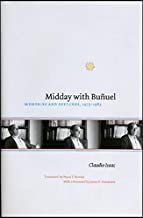
Hardcover. Swan Isle Press, 1st, 2008, Book: Very Good, Dust Jacket: Very Good, Hardcover, 180 pages. Spanish filmmaker Luis Bunuel (1900-83), known for his surrealist themes and unflinching social criticism, was an artist defined by intellectual ambition and controversy. An exile who produced some of his most famous work in Mexico and France during Franco's dictatorship, he left a complicated imprint on the creative landscape of the twentieth century and on generations of younger filmmakers--including his Mexican friend Claudio Isaac. Drawn from Isaac's personal papers, Midday with Bunuel: Memories and Sketches, 1973-1983 is an intimate and unconventional portrait of this cinematic icon--and memoir of Isaac's own artistic development.The text includes sketches, vignettes, and anecdotes from Isaac's notebooks, revealing his perspective first as a precocious boy and then as a young man. Isaac reflects on Bunuel's presence among a community of exiles, artists, actors, writers, and intellectuals in Mexico City. These are at once touching, perceptive, and critical glimpses into Bunuel's roles as husband and father, friend and colleague, surrealist, philosopher, and iconoclast during his last years. Throughout, Isaac's words reveal his deep admiration and affection for an older friend full of contradictions. Intimate photographs from the Isaac family archive complement the writing, and Bryan Thomas Scoular's careful translation makes this text available for the first time in English.
Softcover. New York, Macmillan Company, Reprint, 1938, Book: Very Good, Dust Jacket: Good, 92 pages. Hardcover. Previous owners names at top of front endpaper. Price clipped dust jacket with foxing, wear along darkened edges. Book is clean, unmarked.
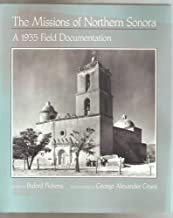
Softcover. Tucson, AZ, Arizona University Press , 1st paperback, 1993, Book: Very Good, Dust Jacket: None, Softcover. Black & white photos by George Alexander Grant. Some color fade to edges of cover. The Spanish missions founded by Padre Eusebio Kino in Sonora, Mexico, during the 1690s and early 1700s are historical as well as architectural marvels. Once self-supporting villages with central churches, the missions stand today as monuments to perseverance in the face of a hostile New World. These "Kino Missions" were surveyed in 1935 by the National Park Service to prepare for the restoration of the mission at Tumacacori, Arizona, then a National Historic Monument. That report, which was never published, provided insights into the missions' history and architecture that remain of lasting relevance. Perhaps more important, it documented these structures in photographs and drawings--the latter including floor plans and sketches of architectural detail--that today are of historic as well as aesthetic interest. This volume reproduces that 1935 report in its entirety, focusing on sixteen missions and including two maps, 52 drawings, and 76 photographs. With a new introduction and appendixes that place the original study in context,
Hardcover. Albuquerque, NM, University of New Mexico Press, 1st, 1984, Book: Very Good, Dust Jacket: Very Good, Hardcover, 238 pages, illustrated throughout in color and b&w. Blue cloth, pictorial blue dust jacket. Light bumps to corners, else a beautiful copy. Like new.
Hardcover. Editorial Gustavo Gili, SA, 1st, 1999, Book: Very Good, Dust Jacket: Very Good, 191 pages. Hardcover. Color and b/w illustrations throughout. Previous owners initials on upper right endpapers. front dust cover has former bookstore price tag residue. Very clean inside and out. In excellent condition. A collection of houses in which the 'residents-cum-creators' have devoted all of their ingenuity, energy and determination into constructing what they perceive to be the ideal domestic universe. They include Ludwig II of Bavaria's Linderhof, the Cesar Manrique Villa in Lanzarote, Salvador Dali's villa in Spain, Edward James' villa in Mexico, Grandma Prisbrey's Bottle Village, Ian Hamilton Finlay's Little Sparta, Alex Jordan's house on the rock and William Randolph Hearst's Xanadu.




 "Marcos - A Mountain Boy of Mexicoby: Lee, Melicent Humason")


 "Mas! Cine Mexicano: Sensational Mexican Movie Posters 1957 - 1990by: Rogelio, Jr, Agrasanchez")
 "Memoirs of a Breton Peasant, 1834-1905by: Jean-Marie D?©guignet")
 "Mexican Folk Plays by: Josephina Niggli Frederick H. Koch edited with an Introduction by")
 "Mexican Phoenix: Our Lady of Guadalupe: Image and Tradition Across Five Centuriesby: Brading, D.A.")



 "Mexico's Sierra Tarahumara: A Photohistory of the People of the Edgeby: Raat, W. Dirk and Janecek, George R.")
 "Mexico: The Revolution and Beyond - Photographs by Agustin Victor Casasola 1900-1940by: Casasola, Agustin Victor")

 "Modernist Painting in New Mexico, 1913-1935by: Udall, Sharyn Rohlfsen")