Hardcover. Boston, Houghton Mifflin, reprint, Book: Good, Dust Jacket: None, Hardcover, yellow cloth with black stamping. 32 pages illustrated with bold colors by the author. A young Indian boy gives timely warning of a forest fire, saving both the wild animals and his people. Tape residue on covers where dj was taped to book, light stamp to front endpaper. Ex-lib. Interior clean.
Hardcover. NY, Farrar, Straus and Giroux, 1st, 1971, Hardcover in a bright dust jacket, 378 pages. From dust jacket notes: "For most Americans, the Second World War started on December 7, 1941, and much of the fighting took place in strange, faraway places. For the British, the war started on September 3, 1939, and much of the action took place in the skies over England. In the spring of 1940, after months of uneasy calm, Germany invaded the Lowlands and conquered France within a few days, leaving England without her only meaningful ally on the Continent. A year would pass before the Soviet Union was drawn into the war, and eighteen months before the Japanese attacked Pearl Harbor. The United Kingdom, with a land area about the size of Wyoming, was alone, all alone, with only the Straits of Dover separating the island from Hitler's war machine. For six years Mollie Panter-Downes covered the war for The New Yorker magazine from her native England. Even at the height of the air war over London, when 'all that is best in the good life of civilized effort appears to be slowly and painfully keeling over,' she continued to file her fortnightly reports in an understated but dramatic fashion that reflected the fortitude of her fellow countrymen: 'The announcements of the first air-raid deaths are beginning to appear in the obituary columns of the morning papers. No mention is made of the cause of death, but the conventional phrase "very suddenly" is always used.' William Shawn, editor of The New Yorker, has assembled Miss Panter-Downes' 'Letter from London' columns into a consecutive, on-the-spot chronicle of the war in England."
Hardcover. Scarsdale NY, Bradbury Press, 2nd pr., 1973, Book: Very Good, Dust Jacket: Very Good, Hardcover in a lightly worn, unclipped dust jacket. Color illustrations by Paul Goble. Two young Sioux join in a raiding party to capture horses from some neighboring Crows. Front endpapers with stamp inside front cover, otherwise clean.
Hardcover. Baton Rouge, Louisiana State University Press, 1st, 2011, Book: Very Good, Dust Jacket: Very Good, Hardcover in a bright dust jacket, 175 pages, b&w illustrations. Vermont-native Twitchell sets out from his current home in Florida on the inauguration day of America's first black president to find the "real" South and to try to understand the truth about his illustrious ancestor. He travels in an RV from Georgia's Okefenokee Swamp across Alabama and Mississippi to Coushatta, Louisiana. As he drives through the heart of Dixie, Twitchell sorts through the prejudices he learned from his northern rearing. In searching for the culture he had held at arm's length for so long, he tours small-town southern life -- in campgrounds, cotton gins, churches, country fairs, and squirrel dog kennels -- and uncovers some fundamental truths along the way. Notably, he discovers that prejudices of race, class, and ideology are not limited by geography. As one man from Georgia mockingly summed up North versus South stereotypes, "Y'all are rude and we're stupid." Unexpectedly, Twitchell also uncovers facts about his great-grandfather and sheds new light on his family's past. An enlightening, humorous, and refreshingly honest search, Look Away, Dixieland reveals some of the differences and similarities that ultimately define us as a nation. Clean copy.
Hardcover. New York, William Morrow & Co, 1st, 1992, Book: Very Good, Dust Jacket: Very Good, Hardcover, 250 pages, spotless and tight copy with dust jacket. Pulitzer Prize winner's debut collection of short stories, set in his native Washington, D.C.
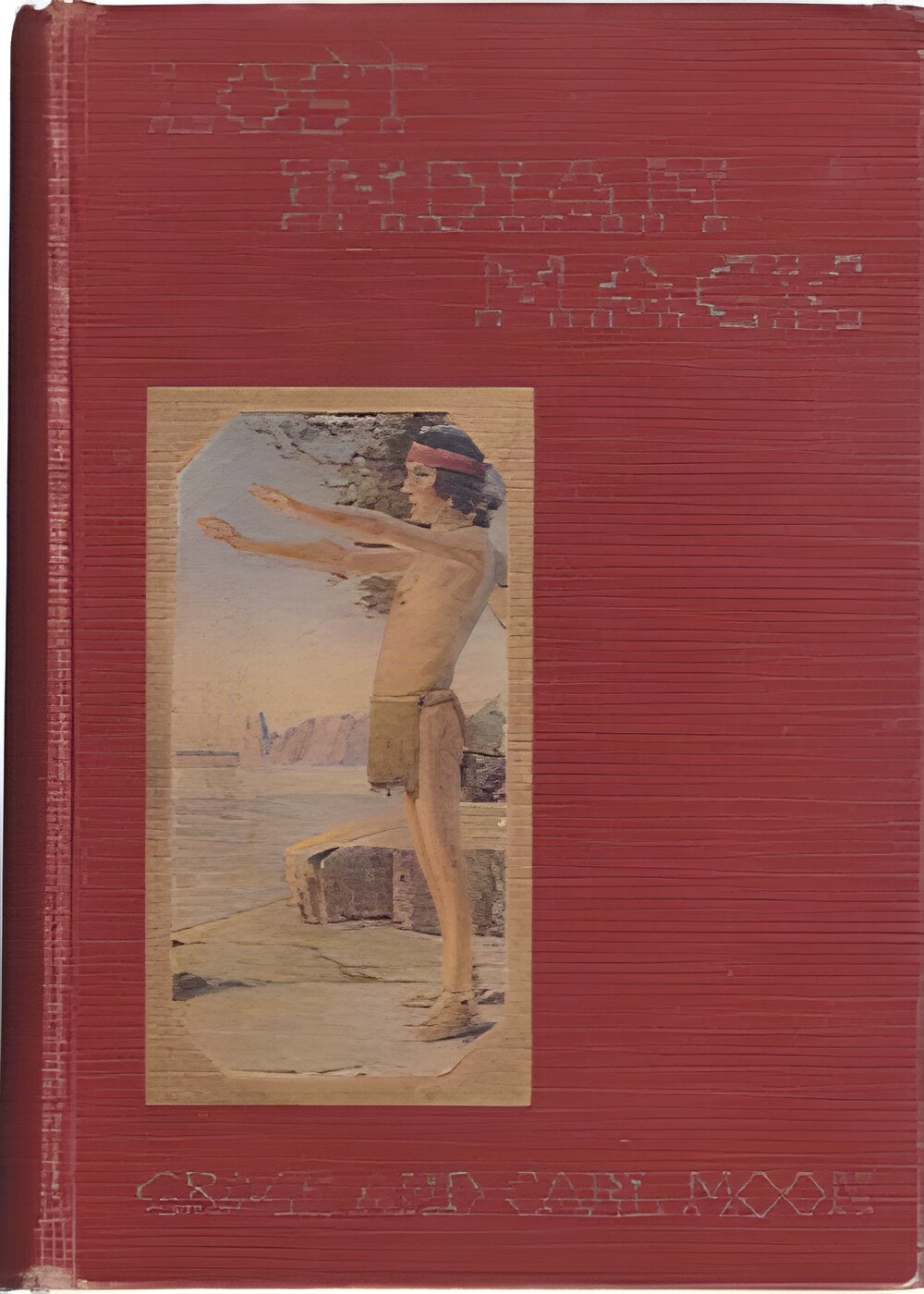
Hardcover. NY, Frederick A. Stokes, 1st, 1918, Book: Fair, Dust Jacket: None, Hardcover, brick-red cloth with cover label, gilt lettering and design faded. This is a American Indian legend called Lost Indian Magic, a mystery story of the Red Man as he lived before the White Man came, Eight color plates by Carl Moon, the one opposite page 70 is loose and laid in. Covers worn, hinges cracked, no markings.
Hardcover. NY, W W Norton & Co , 1st, 1995, Book: Very Good, Dust Jacket: Very Good, Hardcover in a bright, unclipped dust jacket. In this compelling new study of one of the century's most memorable poets, Jon Stallworthy has produced an outstanding full-scale biography of Louis MacNeice, drawing on the testimony of family, friends, lovers, and MacNeice's extensive unpublished correspondence and papers. Stallworthy, whose Wilfred Owen was described by Graham Greene as "one of the finest biographies of our time," has produced another no less remarkable life of an equally haunting figure. MacNeice's mother died when he was seven and Stallworthy shows how his imagination transmuted her ghostly presence, and the powerful presence of his father, into an elemental opposition structuring most of what he would write - from anguished indictments of his native Ireland to poignant love poems.
Hardcover. NY, Bradbury Press, 1st , 1992, Book: Very Good, Dust Jacket: Very Good, Hardcover. Color illustrations by Goble. Clean, unmarked copy with only minor wear to dust jacket.
Hardcover. London, Methuen and Co., 1st, 1960, Book: Very Good, Dust Jacket: Fair, Hardcover in a worn, soiled dust jacket, 296 pages. Russet cloth lettered in silver on spine. Illustrated with 2-color line frontispiece, 16 half-tone photographsic plates and 5 line illustrations in the text. An important and early anthropoliogical study of a little known phenomenon. The title is taken from the given name of a native New Guinean who started the cargo cult, circa 1935. Similar to other messianic movements, Burridge's first hand account is a scholarly examination of the religious, political, and economic aspects which make up the cult.
Hardcover. NY, Abrams, 1st, 2008, Book: N, Hardcover, 168 pages. Nelson Mandela, an icon of the international struggle for freedom and equality, whose importance rivals that of Martin Luther King and Mahatma Gandhi, turns ninety in July 2008. Mandela spent twenty-seven years in prison for his opposition to the apartheid regime of his native South Africa. Released in 1990, he pursued a policy of reconciliation, steering his nation into the ranks of the world's multi-racial democracies. He was elected president of South Africa in 1994. Photographer David Turnley covered Mandela and South Africa for the world's press, beginning in the 1980s. He witnessed the turbulence of the last violent years of apartheid, was there when Mandela was released from prison, campaigned with him during the presidential election, and sought out the significant people and places of his life. In Mandela: Struggle and Triumph, he tells in words and photographs the dramatic and emotional story of the most powerful movement for civil rights since the American civil rights movement, through the eyes of its legendary leader.
Hardcover. New York, Abrams, 1st, 2008, Book: Very Good, Dust Jacket: Very Good, Hardcover, 168 pages. Nelson Mandela, an icon of the international struggle for freedom and equality, whose importance rivals that of Martin Luther King and Mahatma Gandhi, turns ninety in July 2008. Mandela spent twenty-seven years in prison for his opposition to the apartheid regime of his native South Africa. Released in 1990, he pursued a policy of reconciliation, steering his nation into the ranks of the world's multi-racial democracies. He was elected president of South Africa in 1994. Photographer David Turnley covered Mandela and South Africa for the world's press, beginning in the 1980s. He witnessed the turbulence of the last violent years of apartheid, was there when Mandela was released from prison, campaigned with him during the presidential election, and sought out the significant people and places of his life. In Mandela: Struggle and Triumph, he tells in words and photographs the dramatic and emotional story of the most powerful movement for civil rights since the American civil rights movement, through the eyes of its legendary leader.
Hardcover. West Chester PA, Schiffer Publishing, 1st, 1986, Book: Very Good, Dust Jacket: Very Good, Hardcover in a bright dust jacket, 199 pages. SIGNED BY THE ARTIST/POTTER MARGARET TAFOYA on the title page. Foreword by Rick Dillingham. Illustrated throughout with black & white and color photography. Bibliography. Index. This beautiful book presented in large format tells the story of Margaret Tafoya and her contributions to Tewa Pueblo pottery. The book explores her life, pottery making techniques, the Tafoya family and descendants, and the history of the Pueblo people. clean copy.
Hardcover. Cambridge MA, Harvard University Press, 1st, 1980, Book: Very Good, Dust Jacket: Good, Hardcover in a dust jacket with sunning to spine, 237 pages. INSCRIBED BY AUTHOR on front fly leaf. Herbert offers a fresh perspective on Melville's Typee by considering it in the context of his encounters with the natives (including being held captive for a time) in the Marquesan Islands. Clean copy.
Hardcover. NY, Henry Holt, 1st, 1997, Book: Very Good, Dust Jacket: Very Good, Hardcover in a bright, unclipped dust jacket. Charles Mason (1728-1786) and Jeremiah Dixon (1733-1779) were the British surveyors best remembered for running the boundary between Pennsylvania and Maryland that we know today as the Mason-Dixon Line. Here is their story as reimagined by Thomas Pynchon, in an updated 18th-century novel featuring Native Americans and frontier folk, ripped bodices, naval warfare, conspiracies erotic and political, and major caffeine abuse. Clean copy.
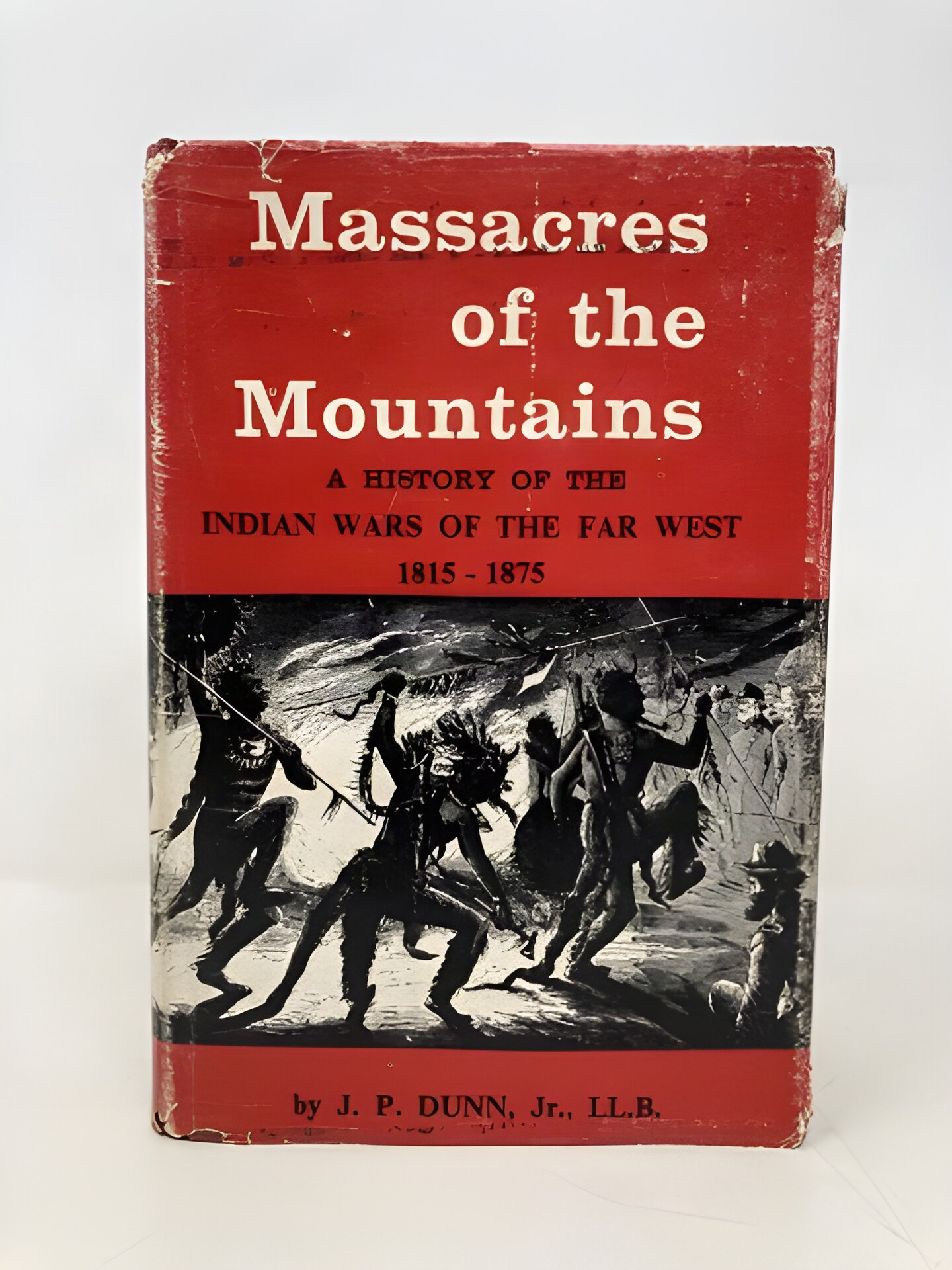
Hardcover. NY, Archer House, reprint, 1958, Book: Very Good, Dust Jacket: Good, Hardcover in a lightly worn dust jacket, 110 b/w illustrations. 669 pages. This is a facsimile reprint of edition first published in 1886. Covering 60 years of merciless bloody conflict, it documents in detail every major Indian battle between 1815 and 1876. Dust jacket spine faded, otherwise a clean, very good copy.
Hardcover. San Francisco, CA, California Academy of Sciences, 1st, 1981, Book: Very Good, Dust Jacket: None, Hardcover, 96 pages. b&w and color illustrations throughout. Cream cloth with blind stamp of Dixon's thunderbird logo, original cream slipcase with foxing to cloth. No dust jacket. A clean, tight copy.
Hardcover. Auburn, WA, Brigham Young University, 1st, 1974, Book: Very Good, Dust Jacket: Good, 237 pages. Hardcover. Illustrated with full color and black & white examples of paintings by Maynard Dixon. Faint damp smell. Small areas of abrasion to front cover of dust jacket, minor staining along bottom edge of jacket - jacket now protected with clear plastic cover. Clean, unmarked pages.
Hardcover. Washington DC, Smithsonian Institution , 1st, 1961, Book: Very Good, Dust Jacket: None, Hardcover, green cloth with gilt lettering on spine, 586 pages. (Smithsonian Institution, Bureau of American Ethnology Bulletin 175). 10 b&w plates. Clean copy. Due to size and weight, DOMESTIC SHIPPING ONLY.
Hardcover. New York , Willa Perlman Books, 1st, 1993, Book: Very Good, Dust Jacket: Very Good, Non-paginated. Hardcover with dust jacket. Illustrated in color by the author. In very good condition.
Hardcover. NY, Time Life, reprint, 1982, Book: Very Good, Dust Jacket: None, 389 pages. Hardcover with no dust jacket. Dark blue leather bound with gilt titles to front cover and spine. Embossed decoration on front cover. Gilt text block edges, red ribbon marker. Clean, tight copy. The commander of a Georgia regiment through much of the Civil War mused later in his memoirs that the heaviest burden fell not upon the man at the front, but upon the woman who waited and prayed for victory: "While the men were carried away with the drunkenness of the war, she dwelt in the stillness of her desolate home." Sallie Brock Putnam spoke for Southern womanhood. She was a native of Madison County, Virginia, and seems to have come from a family of good social standing. The book contains an unexpectedly full history of the Civil War; the author exhibits a strong grasp of strategy and tactics. But at its heart is an incisive eyewitness account of life in a capital that was swollen to four times its normal population by the exigencies of war. Brock's descriptions of Jefferson Davis' inauguration and the Richmond Bread Riot of 1863 are dramatic, but no more so than her accounts of nameless refugees, race relations, opportunistic merchants and blockade runners. Confederate prisons and family matters. In contrast to other female Southern writers of the period, she was more sober and factual, less gossipy and speculative. She wrote with shrewdness and maturity, and with a remarkable lack of self-pity and exaggeration. Yet the reader cannot miss her courage, sacrifice and suffering. Sallie Brock Putnam died in 1911.
Hardcover. NY, Pegasus Books, 1st, 2020, Hardcover in a bright dust jacket, 242 pages. A finely wrought coming-of-age memoir about the author's relationship with her beloved grandfather Joe Simon, cartoonist and co-creator of Captain America. In the 1990s, Megan Margulies's Upper West Side neighborhood was marked by addicts shooting up in subway stations, frequent burglaries, and the "Wild Man of 96th Street," who set fires under cars and heaved rocks through stained glass church windows. The world inside her parents' tiny one-bedroom apartment was hardly a respite, with a family of five-including some loud personalities-eventually occupying the 550-square-foot space. Salvation arrived in the form of her spirited grandfather, Daddy Joe, whose midtown studio became a second home to Megan. There, he listened to her woes, fed her Hungry Man frozen dinners, and simply let her be. His living room may have been dominated by the drawing table, notes, and doodles that marked him as Joe Simon the cartoonist. But for Megan, he was always Daddy Joe: an escape from her increasingly hectic home, a nonjudgmental voice whose sense of humor was as dry as his farfel, and a steady presence in a world that felt off balance. Evoking New York City both in the 1980s and '90s and during the Golden Age of comics in the 1930s and '40s, My Captain America flashes back from Megan's story to chart the life and career of Rochester-native Joe Simon, from his early days retouching publicity photos and doing spot art for magazines, to his partnership with Jack Kirby at Timely Comics (the forerunner of Marvel Comics), which resulted in the creation of beloved characters like Captain America, the Boy Commandos, and Fighting American. My Captain America offers a tender and sharply observed account of Megan's life with Daddy Joe-and an intimate portrait of the creative genius who gave us one of the most enduring superheroes of all time.
Hardcover. University Press of Mississippi, 1st, 2000, Book: Very Good, Dust Jacket: Very Good, Hardcover in a bright dust jacket, text by Morris, color photos by David Rae Morris. The author's last book, written in his characteristically limpid, lyrical prose, offers a heartfelt appreciation of his home state, a place often dismissed as poor and backward by "outlanders," Morris' term for non-Mississippians. This is not a defensive recitation of Mississippi's virtues nor is it a whitewash of its less-than-attractive features. First, Morris wants the reader to understand the state's beauty--"physically beautiful in the most fundamental and indwelling way, [in that] it never leaves you." Then, with both pride and understanding, he brings into sharp focus Mississippi's peculiar tensions and ambivalence and also its passions--"we are a singular people," he says of his native folk. The second half of the book is an album of full-color photographs taken by Morris' son, a professional photojournalist. These shots informally capture ordinary moments in the lives of Mississippians, from a young couple standing next to their truck with their new baby in their arms to a group of local citizens hanging out in front of the main store in a small town. Together, the text and the photographs showcase Mississippians doing what they do best--being themselves completely without artifice. Clean copy.
Softcover. San Francisco, Mercury House , 1st, 2001, Book: Good, Dust Jacket: None, Softcover, pictorial wraps, 289 pages. An extraordinary story of a woman's experience among the Athabaskan Indians where she learns to see the visible and invisible world around her. Bump to top outside corner created a light wave to pages. Otherwise clean.
Hardcover. Washington, D.C., Government Printing Office, 1st, 1903, Book: Very Good, Dust Jacket: None, 347 pages. Includes Natick to English, and English to Natick dictionaries. Dark green cloth covers, introduction by Edward Everett Hale, section of abbreviations. Rubbing and light edgewear to covers, pages crisp and unmarked, stiff binding; overall, a very clean, tight copy in great condition.




 "London War Notes 1939-1945by: Mollie Panter Downes")
 "Lone Bull's Horse Raidby: Paul and Dorothy Goble")


 "Louis MacNeice by: Stallworthy, Jon")
 "Love Fluteby: Goble, Paul")
 "Mambu: A Melanesian Millenniumby: Burridge, K.O.L. (Kenelm Oswald Lancelot)")
 "Mandela : Struggle and Triumphby: Turnley, David")
 "Mandela! : Struggle and Triumphby: Turnley, David")

 "Marquesan Encounters: Melville and the Meaning of Civilization (SIGNED COPY)by: Herbert Jr, T. Walter")

 "Maynard Dixon: Images of the Native Americanby: Haggerty, Donald J.")
 "Maynard Dixon; Artist of the Westby: Burnside, Wesley M.")

 "Moon Motherby: Young, Ed")
 "Mosby's Rangers (Collector's Library of the Civil War)by: Williamson, James J.")
 "My Captain America: A Granddaughter's Memoir of a Legendary Comic Book Artistby: Megan Margulies")

 "Narrow Road to the Deep North: A Journey into the Interior of Alaska by: Katherine McNamara")
 "Natick Dictionaryby: Trumbull, James Hammond")