Softcover. Wellesley MA, Branden Books, 1st, 2014, Book: Very Good, Dust Jacket: None, Softcover, 276 pages, several b&w illustrations. SIGNED BY POTVIN on title page. Clean copy.
Softcover. Toronto CA, McClelland and Stewart, 1st, 1987, Book: Very Good, Dust Jacket: None, Softcover, 264 pages, 125 color, 135 black & white. Published in conjunction with an exhibition. "A major study of the artistic traditions of Canada's Native peoples and of their place in the cultures and belief systems in which they originated. Here, for the first time, is Native Canadian work from museums and private collections around the world. The works, and the essays that describe their contexts, bring to life the spiritual and aesthetic identity of the craftspeople and their societies. From richly ornamented costumes displaying the wealth of their owners to practical techologies that enabled the peoples to thrive in their environments, these treasures reflect Native life at the time of contact with Europeans." Clean copy.
Softcover. Urbana, University of Illinois Press , 1st, 1993, Book: Very Good, Dust Jacket: None, Softcover, 361 pages, b&w illustrations. The Stonemans is an eye-opening slice of Americana---a trip through nearly twenty years of country music history following a single family from their native Blue Ridge Mountains to the slums of Washington, D.C., and the glitter of Nashville. As early as 1924 Ernest V. "Pop" Stoneman realized the potential of what is now known as country music, and he tried to carve a career from it. Successful as a recording artist from 1925 through 1929, Stoneman foundered during the Great Depression. He, his wife, and their nine children went to Washington in 1932, struggling through a decade of hardship and working to revive the musical career Pop still believed in. The Stoneman Family won the Country Music Association's Vocal Group of the Year Award in 1967. After Pop's death a year later, some of the children scattered to pursue their own careers. Ivan Tribe relies on extensive interviews with the Stonemans and their friends in this chronicle of a family whose members have clung to their musical heritage through good times and bad.
Hardcover. NY, Atlantic Monthly Press , 1st, 2000, Book: Very Good, Dust Jacket: Very Good, Hardcover in a bright dust jacket. 238 pages. Gilt titles on spine. Clean, unmarked copy with only minor wear to dust jacket. With the sticker on cover stating" "Selected By The New Yorker As one of the best American fiction writers under 40". A collection of stories about young Native Americans introduces a surprising cast of characters who live and love in two worlds, balancing their Indian heritage and traditions against the realities of the modern world. Clean copy.
Hardcover. NY, Alfred A. Knopf, 1st, 1940, Book: Very Good, Dust Jacket: None, Hardcover, light blue cloth with red and dark blue lettering on the spine and cover, 302 pages. A moving novel of the beginning of the American trek to the west. Toward the close of the eighteenth century, the land west of the Alleghenies and north of the Ohio River was an unbroken sea of trees. Beneath them the forest trails were dark, silent, and lonely, brightened only by a few lost beams of sunlight. Here, in the first novel of Conrad Richter's Awakening Land trilogy, the Lucketts, a wild, woods-faring family, lived their roaming life, pushing ever westward as the frontier advanced and as new settlements threatened their isolation. This novel gives an excellent feel for America's lost woods culture, which was created when most of the eastern midwest was a vast hardwood forest---virtually a jungle. The Trees conveys settler life, including conflicts with Native Americans, illness, hunting, family dynamics, and marriage. INSCRIBED BY RICHTER on the front fly leaf. A bright, sharp copy missing the dust jacket. Related ephemera laid in.
Hardcover. Chicago, Childrens Press, revised ed., 1970, Book: Very Good, Dust Jacket: None, Hardcover, pictorial cloth, 48 pages illustrated in b&w and color. Describes in simple text how the Indians of the sea coast, plains, deserts, swamps, and woodlands lived and how their way of life was influenced by the environment. Clean copy.
Hardcover. NY, Grove Press , 1st, 2019 , Book: Very Good, Dust Jacket: Very Good, Hardcover in a bright, unclipped dust jacket, 376 pages. A book of great ambition, Sarah M. Broom's The Yellow House tells a hundred years of her family and their relationship to home in a neglected area of one of America's most mythologized cities. This is the story of a mother's struggle against a house's entropy, and that of a prodigal daughter who left home only to reckon with the pull that home exerts, even after the Yellow House was wiped off the map after Hurricane Katrina. The Yellow House expands the map of New Orleans to include the stories of its lesser known natives, guided deftly by one of its native daughters, to demonstrate how enduring drives of clan, pride, and familial love resist and defy erasure. Located in the gap between the "Big Easy" of tourist guides and the New Orleans in which Broom was raised, The Yellow House is a brilliant memoir of place, class, race, the seeping rot of inequality, and the internalized shame that often follows. It is a transformative, deeply moving story from an unparalleled new voice of startling clarity, authority, and power. A first printing of the winner of the 2019 National Book Award in nonfiction. Clean copy.
Softcover. Montpelier VT, Craftsbury Common Books, 1st, 2009, Book: Very Good, Dust Jacket: None, Softcover, 222 pages. In 1964 Ethan Hubbard began photographing and tape-recording the most unique and intriguing rural Vermonters he could find, believing that they were a vanishing race. B&w photos.
Hardcover. NY, Oxford University Press, 1st, 2011, Book: Very Good, Dust Jacket: Very Good, Hardcover in a bright, unclipped dust jacket. 336 pages, b&w illustrations. Author Larry Hamberlin guides us through this large but oft-forgotten repertoire of operatic novelties, and brings to life the rich humor and keen social criticism of the era. In the early twentieth-century, when new social forces were undermining the view that our European heritage was intrinsically superior to our native vernacular culture, opera-that great inheritance from our European forebearers-functioned in popular discourse as a signifier for elite culture. Tin Pan Opera shows that these operatic novelty songs availed this connection to a humorous and critical end. Combining traditional, European operatic melodies with the new and American rhythmic verve of ragtime, these songs painted vivid images of immigrant Americans, liberated women, and upwardly striving African Americans, striking emblems of the profound transformations that shook the United States at the beginning of the American century. Clean copy.
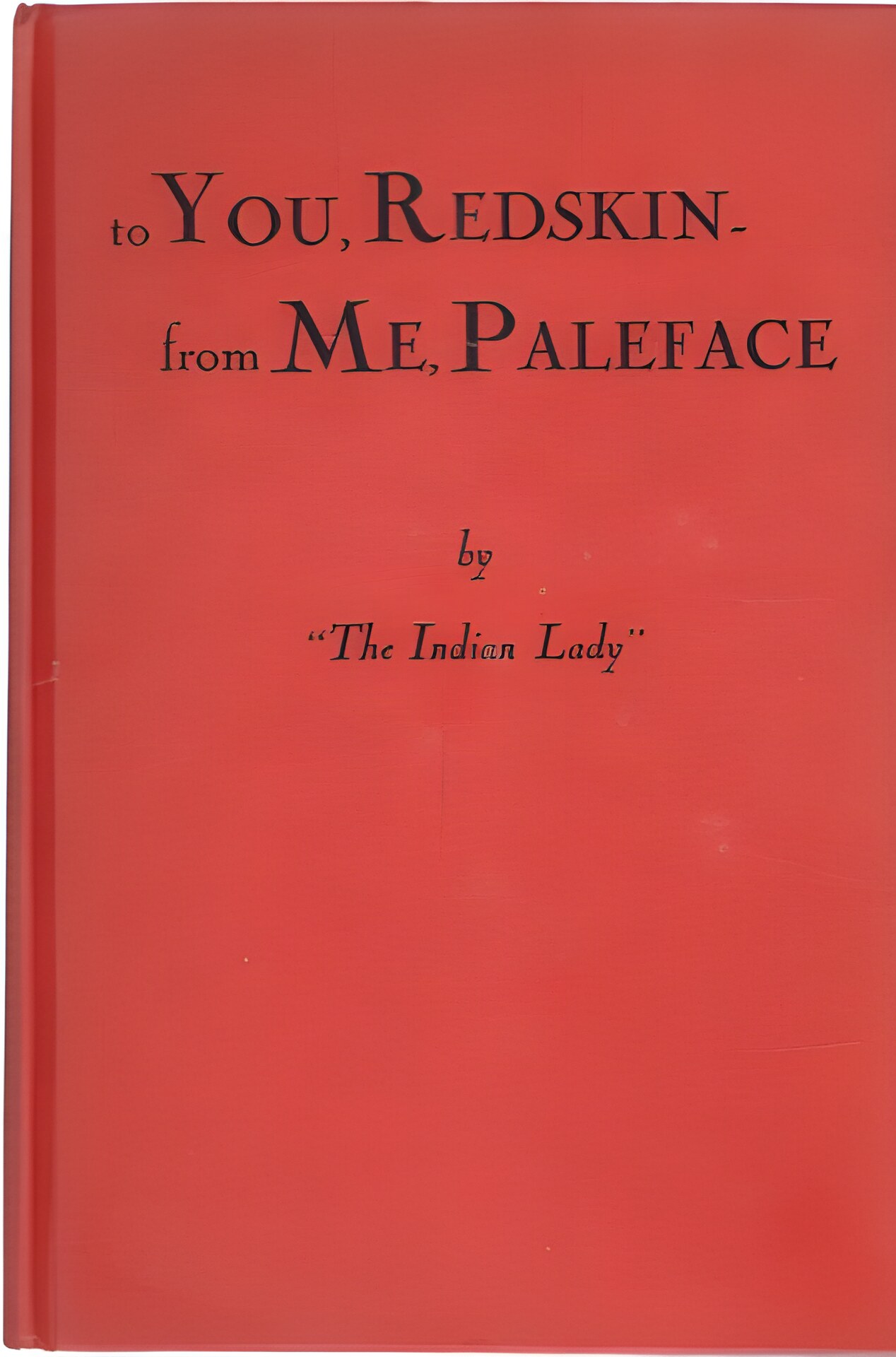
Hardcover. Northampton MA, Kraushar Press, 1st, 1943, Book: Very Good, Dust Jacket: None, Hardcover, orange cloth covers with black lettering, 163 pages, b&w photos. Inspired by a visit to Stoney Reservation in Alberta, Canada, the author spent 15 years visiting & living among 47 tribes, and developed a touring show of pictures, songs, dances, stories & sign language. Clean, bright copy.
Softcover. NJ, Rutgers University Press, 1st, 2003, Book: Very Good, Dust Jacket: None, Softcover, 244 pages. The story of westering Americans in the late nineteenth and early twentieth centuries has been told most notably through photographs of American Indians. Unlike this vast archive, produced primarily by male photographers, which depicted American Indians as either vanishing or domesticated, the lesser-known images by the women featured in Trading Gazes provide new ways of seeing the intersecting histories of colonial expansion and indigenous resistance. Four unconventional women-Jane Gay, who documented land allotment to the Nez Perces; Kate Cory, an artist who lived for years in a Hopi community; Grace Nicholson, who purchased cultural items from the Karuk and other northern California tribes; and Mary Schaffer, who traveled among the Stoney and Metis of Alberta, Canada-used cameras to document their cross-cultural encounters. Trading Gazes reconstructs the rich biographical and historical contexts explaining these women's presence in different Native communities of the North American West. Their photographs not only record the unprecedented opportunities available for Euro-American women eager to shed gender restrictions, but also reveal how women's newfound mobility depended on the increasing restrictions placed on Native Americans in this era.
Hardcover. Paterson NJ, St. Anthony Guild Press, 1st, 1956, Book: Very Good, Dust Jacket: None, Hardcover in light tan cloth stamped in brown, 113 pages. Illustrated in 2-colors by Robert Bradbury. A tale of an orphaned American Indian girl who was worthy of sainthood in the eyes of her admirers. Remnants of color dust jacket and related article laid in. Clean copy.
Softcover. Lincoln NE, Bison Books, reprint, 2004, Book: Very Good, Dust Jacket: None, Softcover, 368 pages. Documents the generations of Native peoples who for twelve millennia have moved through and eventually settled along the rocky coast, rivers, lakes, valleys, and mountains of a region now known as Maine. Arriving first to this area were Paleo-Indian peoples, followed by maritime hunters, more immigrants, then a revival of maritime cultures. Beginning in the sixteenth century, Native peoples in northern New England became tangled in the far-reaching affairs of European explorers and colonists. Twelve Thousand Years reveals how Penobscots, Abenakis, Passamaquoddies, Maliseets, Micmacs, and other Native communities both strategically accommodated and overtly resisted European and American encroachments. Clean copy.
Hardcover. Waterbury VT, Vermont People Project, 1st, 1991, Book: Very Good, Dust Jacket: Very Good, Hardcover in a bright dust jacket. SIGNED BY MILLER on the title page. Photographs and text about native Vermonters discussing their life and the change they have seen in Vermont during the latter part of the 20th Century as the state turns from a rural, agriculture society. They are a disappearing culture. Clean copy.
Hardcover. Center for American Places, 1st, 2010, Book: Very Good, Dust Jacket: Very Good, Hardcover, 184 pages. Professor and photographer John Willis is well aware of the exploitation that sometimes occurs when photographers enter impoverished communities for a project. So, in 1992, when he first traveled to the Pine Ridge Indian Reservation in the southwest corner of South Dakota, he assured the elders of the Oglala Lakota Sioux that he would not be exhibiting any of the images he took while there. Over time, however, Willis earned the respect and trust of the community, and the elders--hoping that the photographs might bring aid to their community--urged him to show his work. The product of several visits to the Pine Ridge Indian Reservation, Views from the Reservation is meant to open our eyes, minds, and hearts to the life, culture, and conditions of the Oglala Lakota people.
Hardcover. Chicago, IL, Center for American Places, 1st, 2010, Book: Very Good, Dust Jacket: Very Good, 184 pages. Hardcover with dust jacket. A very clean, unmarked copy with only minor wear to dust jacket edges. Includes CD. The product of several visits to the Pine Ridge Indian Reservation, Views from the Reservation is meant to open our eyes, minds, and hearts to the life, culture, and conditions of the Oglala Lakota people. With his insightful and complex images Willis enlists several other voices to offer a more complete story: writer Kent Nerburn, who contributes an original essay; Lakota elders and Pine Ridge High School students, who offer poems; Emil Her Many Horses, the associate curator of the National Museum of the American Indian, Kevin Gover, the Assistant Secretary of the Interior for Indian Affairs, and Oglala Lakota artist Dwayne Wilcox. Accompanying the book is Heartbeat of the Rez, a compact disc collecting traditional songs compiled by the author, the elders, and KILI, the radio station of the reservation.
Hardcover. NY, Atria Books, 1st, 2021, Book: Very Good, Dust Jacket: Very Good, Hardcover in a bright, unclipped dust jacket, 368 pages, illustrated in color and b&w. The definitive biography that unlocks the remarkable story of Vivian Maier, the nanny who lived secretly as a world-class photographer, featuring nearly 400 of her images, many never seen before, placed for the first time in the context of her life. Vivian Maier, the photographer nanny whose work was famously discovered in a Chicago storage locker, captured the imagination of the world with her masterful images and mysterious life. Before posthumously skyrocketing to global fame, she had so deeply buried her past that even the families she lived with knew little about her. No one could relay where she was born or raised, if she had parents or siblings, if she enjoyed personal relationships, why she took photographs and why she didn't share them with others. Now, in this definitive biography, Ann Marks uses her complete access to Vivian's personal records and archive of 140,000 photographs to reveal the full story of her extraordinary life. Based on meticulous investigative research, Vivian Maier Developed reveals the story of a woman who fled from a family with a hidden history of illegitimacy, bigamy, parental rejection, substance abuse, violence, and mental illness to live life on her own terms. Left with a limited ability to disclose feelings and form relationships, she expressed herself through photography, creating a secret portfolio of pictures teeming with emotion, authenticity, and humanity. With limitless resilience she knocked down every obstacle in her way, determined to improve her lot in life and that of others by tirelessly advocating for the rights of workers, women, African Americans, and Native Americans. No one knew that behind the detached veneer was a profoundly intelligent, empathetic, and inspired woman--a woman so creatively gifted that her body of work would become one of the greatest photographic discoveries of the century.
Hardcover. Honolulu, University of Hawaii, 1st, 1969, Book: Very Good, Dust Jacket: Very Good, Hardcover in a lightly worn dust jacket. Yellow cloth back & white cloth boards with arrangement of shells on front cover. 161 pages, index, b&w illustrations. Double-page map of voyages, portrait of La Perouise, 13 illustrations (many double-page). This translation includes a supplement of notes from the ship surgeon's journal regarding natives of Easter Island and Maui, and an appendix describing to efforts made to solve the mysterious disappearance of the expedition.
Hardcover. NY, Knopf, 1st, 2024, Book: Very Good, Dust Jacket: Very Good, Hardcover in a bright, unclipped dust jacket. Tommy Orange traces the legacies of the Sand Creek Massacre of 1864 and the Carlisle Indian Industrial School through three generations of a family in a story that is by turns shattering and wondrous. Star, a young survivor of the Sand Creek Massacre, is brought to the Fort Marion prison castle, where he is forced to learn English and practice Christianity by Richard Henry Pratt, an evangelical prison guard who will go on to found the Carlisle Indian Industrial School, an institution dedicated to the eradication of Native history, culture, and identity. A generation later, Stars son, Charles, is sent to the school, where he is brutalized by the man who was once his fathers jailer. Clean copy.
Hardcover. Gretna LA, Pelican Publishing, 1st, 2003, Book: Very Good, Dust Jacket: Very Good, Hardcover in a bright dust jacket. In June 1892, a thirty-year-old shoemaker named Homer Plessy bought a first-class railway ticket from his native New Orleans to Covington, north of Lake Pontchartrain. The two-hour trip had hardly begun when Plessy was arrested and removed from the train. Though Homer Plessy was born a free man of color and enjoyed relative equality while growing up in Reconstruction-era New Orleans, by 1890 he could no longer ride in the same carriage with white passengers. Plessy's act of civil disobedience was designed to test the constitutionality of the Separate Car Act, one of the many Jim Crow laws that threatened the freedoms gained by blacks after the Civil War. This largely forgotten case mandated separate-but-equal treatment and established segregation as the law of the land. It would be fifty-eight years before this ruling was reversed by Brown v. Board of Education. Keith Weldon Medley brings to life the players in this landmark trial, from the crusading black columnist Rodolphe Desdunes and the other members of the Comite des Citoyens to Albion W. Tourgee, the outspoken writer who represented Plessy, to John Ferguson, a reformist carpetbagger who nonetheless felt that he had to judge Plessy guilty. Clean copy.
Hardcover. Indianapolis IN, Eiteljorg Museum of American Indian and Western Art, 1st, 1993, Book: Very Good, Dust Jacket: Very Good, Hardcover in a bright dust jacket, 212 pages with 129 color plates. Foreword by James K. Ballinger. Wonderful work by the Arizona artist who started his career as an illustrator in New York for magazines like the Saturday Evening Post. The subject is primarily the American Indian. Clean copy.
Hardcover. New York, William Morrow and Company, 1st, 1963, Book: Very Good, Dust Jacket: Good, Hardcover, 208 pages, illustrated with 50 early photographs and sketches. Minor dust jacket edge wear and rubbing, otherwise, very clean and tight copy.

 "The Scalp Hunters: Abenaki Ambush at Lovewell Pond 1725by: Kayworth Alfred E; Potvin Raymond G")
 "The Spirit Sings Artistic Traditions of Canada's First Peoplesby: Glenbow Museum")
 "The Stonemans: An Appalachian Family and the Music That Shaped Their Livesby: Tribe, Ivan M.")






 "Thirty Below Zero. In Praise of Native Vermontersby: Ethan Hubbard")
 "Tin Pan Opera: Operatic Novelty Songs in the Ragtime Eraby: Larry Hamberlin")
 "To Image and to See: Crow Indian Photographs by Edward S. Curtis and Richard Throssel 1905-1910 by: Northern Tamara; Brown Wendi Starr")


 "Twelve Thousand Years: American Indians in Maine by: Bruce J. Bourque")

![Vestiges of a Proud Nation the Ogden B. Read Northern Plains Indian Collectionby: Markoe, Glenn J. [Ed.]](javascript:largeIMTop('https://www.browsingisarousing.com/shop/images/Vestiges-of-a-Proud-Nation-the-Ogden-B.-Read-Northern-Plains-Indian-Collection_by_Markoe-Glenn-J.-Ed378701-411947.jpg','https://www.browsingisarousing.com/shop/images/Vestiges-of-a-Proud-Nation-the-Ogden-B.-Read-Northern-Plains-Indian-Collection_by_Markoe-Glenn-J.-Ed378701-411947.jpg',0,'378701',0,'') "Vestiges of a Proud Nation the Ogden B. Read Northern Plains Indian Collectionby: Markoe, Glenn J. [Ed.]")

 "Views from the Reservation - Center Books on American Placesby: Willis, John")
 "Vivian Maier Developed: The Untold Story of the Photographer Nanny by: Ann Marks")
 "Voyages and Adventures of la Perouse. From the Fourteenth Edition of the F. Valentin Abridgement, Tours, 1875by: Gassner Julius S. /translated by")
 "Wandering Stars by: Orange, Tommy")
 "We As Freemen: Plessy v. Fergusonby: Keith Weldon Medley")

 "West on the 49th Parallel: Red River to the Rockies, 1872-1876by: Parsons, John E.")