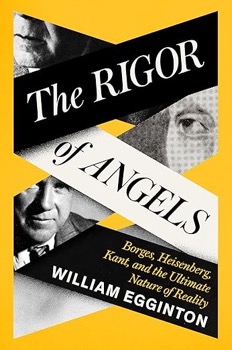
Hardcover. NY, Pantheon, 6th pr., 2023, Book: Very Good, Dust Jacket: Very Good, Hardcover in a bright dust jacket, 338 pages. Argentine poet Jorge Luis Borges was madly in love when his life was shattered by painful heartbreak. But the breakdown that followed illuminated an incontrovertible truth-that love is necessarily imbued with loss, that the one doesn't exist without the other. German physicist Werner Heisenberg was fighting with the scientific establishment on the meaning of the quantum realm's absurdity when he had his own epiphany-that there is no such thing as a complete, perfect description of reality. Prussian philosopher Immanuel Kant pushed the assumptions of human reason to their mind-bending conclusions, but emerged with an idea that crowned a towering philosophical system-that the human mind has fundamental limits, and those limits undergird both our greatest achievements as well as our missteps. Through fiction, science, and philosophy, the work of these three thinkers coalesced around the powerful, haunting fact that there is an irreconcilable difference between reality "out there" and reality as we experience it. Clean copy.
Hardcover. NY, Random House , 2nd pr., 2005, Book: Very Good, Dust Jacket: Very Good, Hardcover in a bright, unclipped dust jacket, 421 pages. Taylor offers a vivid account of the fledgling days of the National Basketball Association and the intense competition between two of its biggest early stars: Bill Russell (of the Boston Celtics) and Wilt Chamberlain (of the Philadelphia 76ers). While both players were dominant men who anchored their respective teams, their personalities differed greatly. The quiet, reflective Russell turned a serendipitous showing in front of a scout into a legendary career largely through willpower and hard work, while the outgoing Chamberlain was a much more naturally gifted athlete whose skills drew attention and offers while he was barely a teenager. Taylor highlights this distinction, asking, "[C]ould determination trump talent?" Along with examining the physical and psychological battles between the two, Taylor depicts the NBA's raucous nature in the 1950s and '60s, when fights between players were frequent, and the brash Celtics coach Red Auerbach was routinely pelted with rotten tomatoes, lit cigars and eggs. Looking at everything, from each player's private demons to the racially charged era in which they competed, Taylor's book is by turns an intimate profile and a spirited look at the foundation of modern professional basketball. Mild soiling to text block, no markings.
Hardcover. Ithaca NY, Cornell University Press, 2nd pr., 2005, Book: Very Good, Dust Jacket: Very Good, Hardcover in a bright dust jacket, 261 pages, previous owner's signature on front fly leaf. "Evil is the most serious of our moral problems. All over the world cruelty, greed, prejudice, and fanaticism ruin the lives of countless victims. Outrage provokes outrage. Millions nurture seething hatred of real or imagined enemies, revealing savage and destructive tendencies in human nature. Understanding this challenges our optimistic illusions about the effectiveness of reason and morality in bettering human lives. But abandoning these illusions is vitally important because they are obstacles to countering the threat of evil. The aim of this book is to explain why people act in these ways and what can be done about it." The first part of this book is a detailed discussion of six horrible cases of evil: the Albigensian Crusade of about 1210; Robespierre's Terror of 1793?94; Franz Stangl, who commanded a Nazi death camp in 1943?44; the 1969 murders committed by Charles Manson and his "family"; the "dirty war" conducted by the Argentinean military dictatorship of the late 1970s; and the activities of a psychopath named John Allen, who recorded reminiscences in 1975. John Kekes includes these examples not out of sensationalism, but rather to underline the need to hold vividly in our minds just what evil is. The second part shows why, in Kekes's view, explanations of evil inspired by Christianity and the Enlightenment fail to account for these cases and then provides an original explanation of evil in general and of these instances of it in particular.
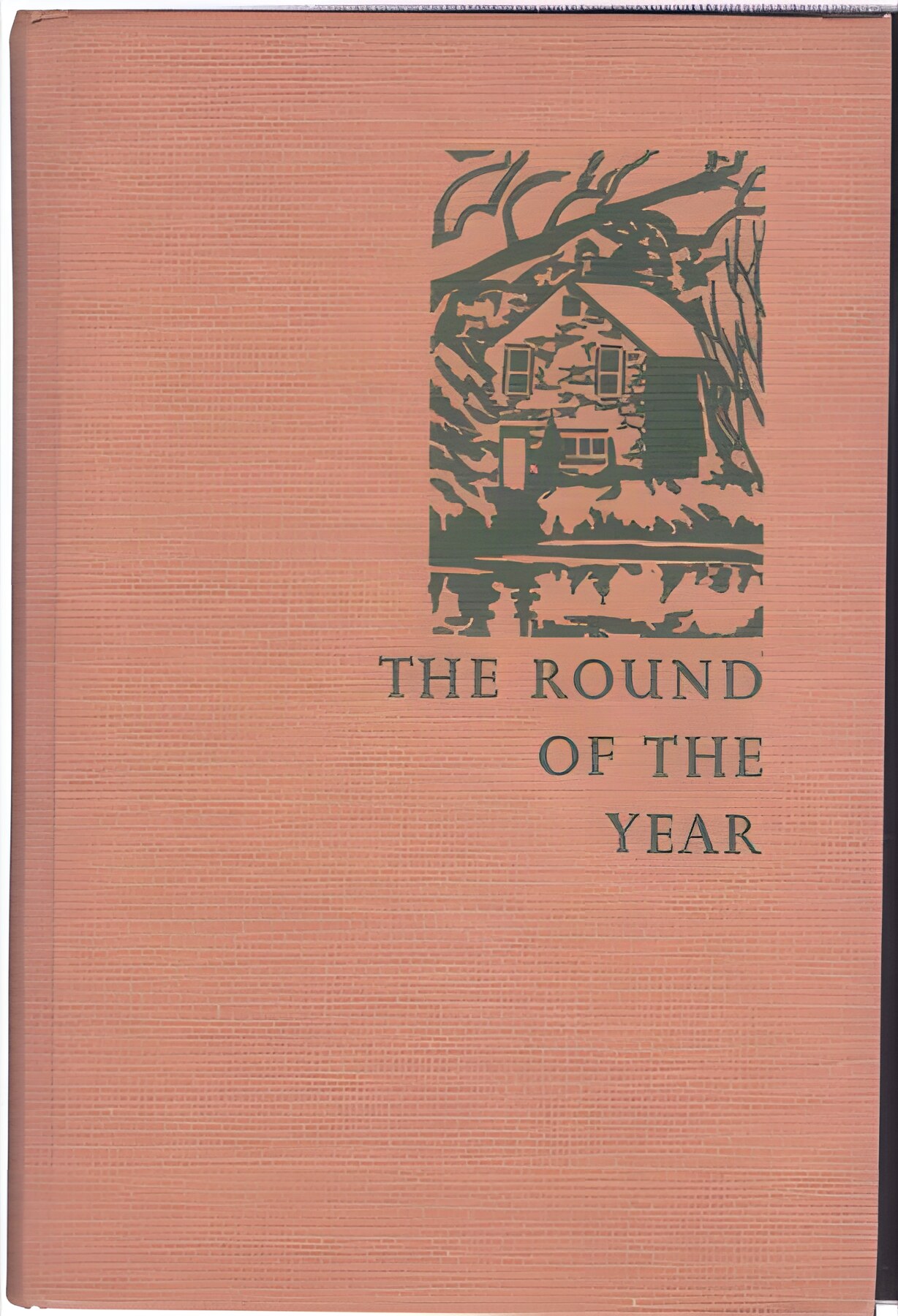
Hardcover. NY, Macmillan, 1st, 1963, Book: Very Good, Dust Jacket: None, Hardcover, light tan cloth with green lettering and decoration. No dust jacket. INSCRIBED BY AUTHOR on title page. A memoir of a year in rural Pennsylvania. Clean copy.
Hardcover. Lanham MD, Lexington Books, 1st, 2022, Book: Very Good, Dust Jacket: None, Hardcover, pictorial boards, 143 pages. American nature writing characteristically embodies an appreciative, lyrical evocation of the natural world. But often, too, green-disposed authors have been moved to dramatize diverse, anthropogenic perils to environmental health. John Gatta freshly reveals how this dark yet graced and hopeful strain of environmental literature enlarges upon a jeremiad tradition of prophecy inherited from Puritan New England. Across successive historical periods, such expression has assumed a rich variety of American form--as creative nonfiction, poetry, fiction, or film documentary. In the spirit of ancient Hebrew prophecy, jeremiads--unlike diatribes--reach beyond effusions of doom and gloom toward the prospect of change through a conversion of heart. Accordingly, the new climate fiction and much other writing steeped in what Gatta terms this "Green Jeremiad" tradition not only warn of material threats to life's flourishing, but may also look to stir spiritual understanding and renewal. Clean copy.
Softcover. New Haven CT, Yale University Press, 1st, 1992, Book: Very Good, Dust Jacket: None, Softcover, 375 pages. In this pathbreaking and richly illustrated book, Martin Kemp examines the major optically oriented examples of artistic theory and practice from Brunelleschi's invention of perspective and its exploitation by Leonardo and Durer to the beginnings of photography. In a discussion of color theory, Kemp traces two main traditions of color science: the Aristotelian tradition of primary colors and Newton's prismatic theory that influenced Runge, Turner, and Seurat. His monumental book not only adds to our understanding of a large group of individual works of art but also provides valuable information for all those interested in the interaction between science and art. "This beautifully made volume . . . shows us the unity of the visual study of nature-the exalted mutual task of Renaissance science and art."-Scientific American. Clean copy. NOTE: Due to weight, DOMESTIC SHIPPING ONLY.
Softcover. Kenosha WI, privately printed, 1998, Book: Very Good, Dust Jacket: None, Softcover, 30 pages, almost 300 color photos of shells with a description underneath. Clean copy.
Hardcover. Princeton NJ, Princeton University Press, 1st, 2006, Book: Very Good, Dust Jacket: Very Good, Hardcover in a unclipped dust jacket with fading to spine, 260 pages. This fascinating and unusual book tells the story of an arguably catastrophic German habit - that of valuing cultural achievement above all else and envisioning it as a noble substitute for politics. Lepenies examines how this tendency has affected German history from the late eighteenth century to today. He argues that the German preference for art over politics is essential to understanding the peculiar nature of Nazism, including its aesthetic appeal to many Germans (and others) and the fact that Hitler and many in his circle were failed artists and intellectuals who seem to have practiced their politics as a substitute form of art. Clean copy.
Hardcover. Cambridge MA, Harvard University Press, 1st, 2005, Book: Very Good, Dust Jacket: Very Good, Hardcover, pages. Dr. Piotr (Peter) Naskrecki is a Polish-born entomologist, photographer and author, currently at the Museum of Comparative Zoology, Harvard University (Cambridge, MA, USA.) His research focuses on the evolution of sound-producing insects, and the theory and practice of nature conservation. As a writer, Piotr strives to promote appreciation and conservation of invertebrate animals - insects, arachnids, and their kin - by capturing both their beauty and roles as vital, often critically important members of the Earth's ecosystems. Piotr Naskrecki is a master photographer and an enormously knowledgeable biologist and ecologist. In this beautifully printed book, he captures the finer details of the some of the unusual animal life and adaptations that you find in tropical rain forests, savannas, and deserts. He also provides well written, informative supporting text.
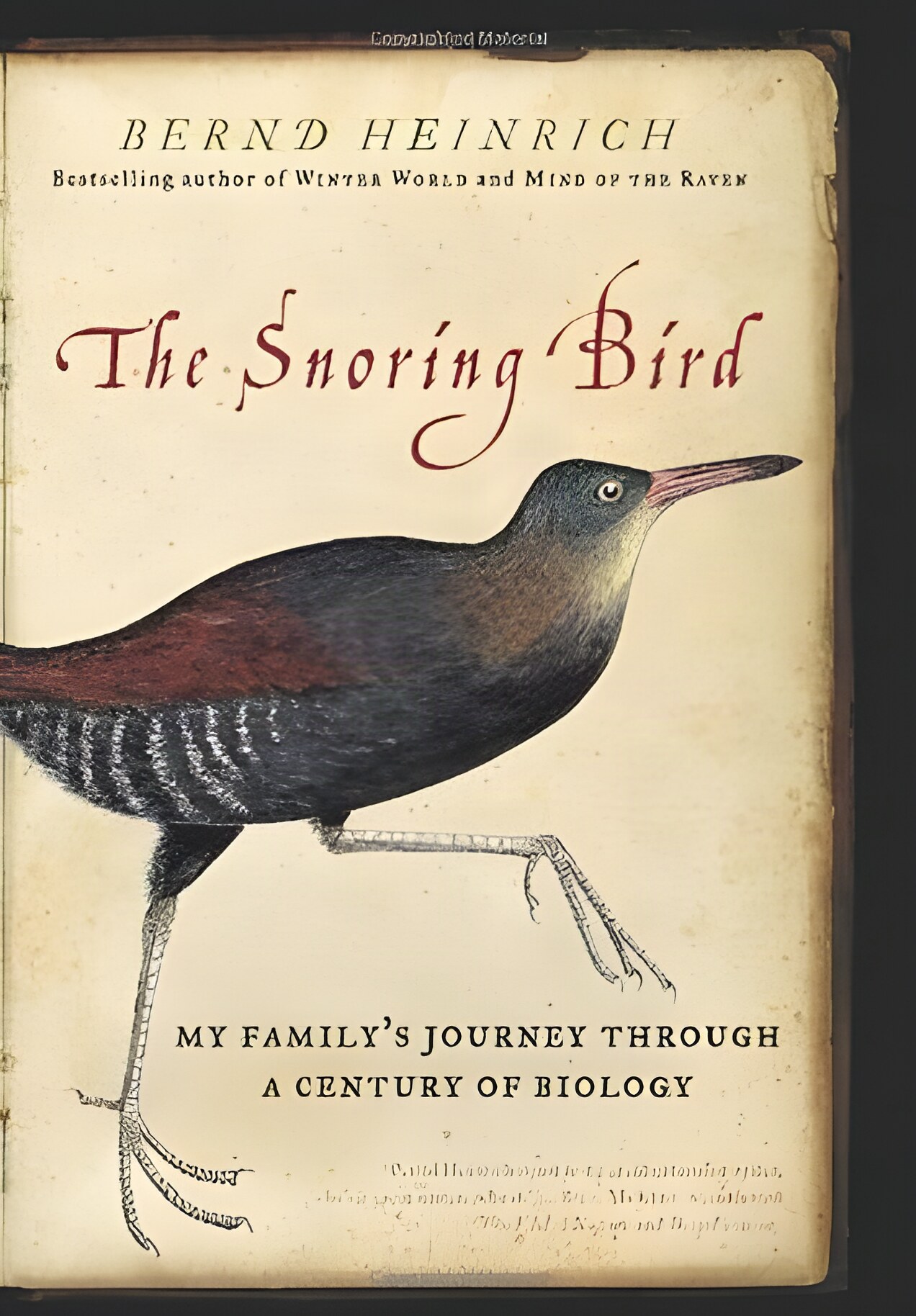
Hardcover. NY, Ecco, 1st, 2007, Book: Very Good, Dust Jacket: Very Good, Hardcover in a bright dust jacket, 461 pages, b&w illustrations. In this remarkable memoir, the award-winning author shares the ways in which his relationship with his father, combined with his unique childhood, molded him into the scientist, and man, he is today. From Gerd's days as a soldier in Europe to the family's daring escape from the Red Army in 1945 to the rustic Maine farm they came to call home, Heinrich relates it all in his trademark style, making science accessible and awe-inspiring. Remainder line to bottom edge otherwise clean.
Hardcover. NY, Ecco, 1st, 2007, Book: Very Good, Dust Jacket: Very Good, Hardcover in a bright, unclipped dust jacket. From Bernd Heinrich, the bestselling author of Winter World, comes the remarkable story of his father's life, his family's past, and how the forces of history and nature have shaped his own life. Although Bernd Heinrich's father, Gerd, a devoted naturalist, specialized in wasps, Bernd tried to distance himself from his "old-fashioned" father, becoming a hybrid: a modern, experimental biologist with a naturalist's sensibilities. In this remarkable memoir, the award-winning author shares the ways in which his relationship with his father, combined with his unique childhood, molded him into the scientist, and man, he is today. From Gerd's days as a soldier in Europe to the family's daring escape from the Red Army in 1945 to the rustic Maine farm they came to call home, Heinrich relates it all in his trademark style, making science accessible and awe-inspiring. Clean copy.
Hardcover. London, Faber and Faber, 1st, 1933, Book: Very Good, Dust Jacket: None, Hardcover, green cloth with gilt lettering on spine, 235 pages, top edge gilt. A novel from English author Henry Williamson in which he uses the concept of the stars - a regular feature in his work - to explore the nature of good and evil, with the author describing it as a celestial fantasy. With full plate and vignette wood engravings from Charles Frederick Tunnicliffe, an internationally renowned naturalistic painter of British birds and other wildlife. Clean copy.
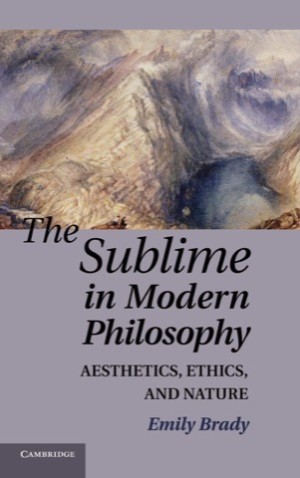
Hardcover. NY, Cambridge University Press, 1st, 2013, Book: Very Good, Dust Jacket: Very Good, Hardcover in a bright dust jacket, 227 pages. Emily Brady takes a fresh look at the sublime and shows why it endures as a meaningful concept in contemporary philosophy. In a reassessment of historical approaches, the first part of the book identifies the scope and value of the sublime in eighteenth-century philosophy (with a focus on Kant), nineteenth-century philosophy and Romanticism, and early wilderness aesthetics. The second part examines the sublime's contemporary significance through its relationship to the arts; its position with respect to other aesthetic categories involving mixed or negative emotions, such as tragedy; and its place in environmental aesthetics and ethics. Far from being an outmoded concept, Brady argues that the sublime is a distinctive aesthetic category which reveals an important, if sometimes challenging, aesthetic-moral relationship with the natural world. Clean, bright copy.
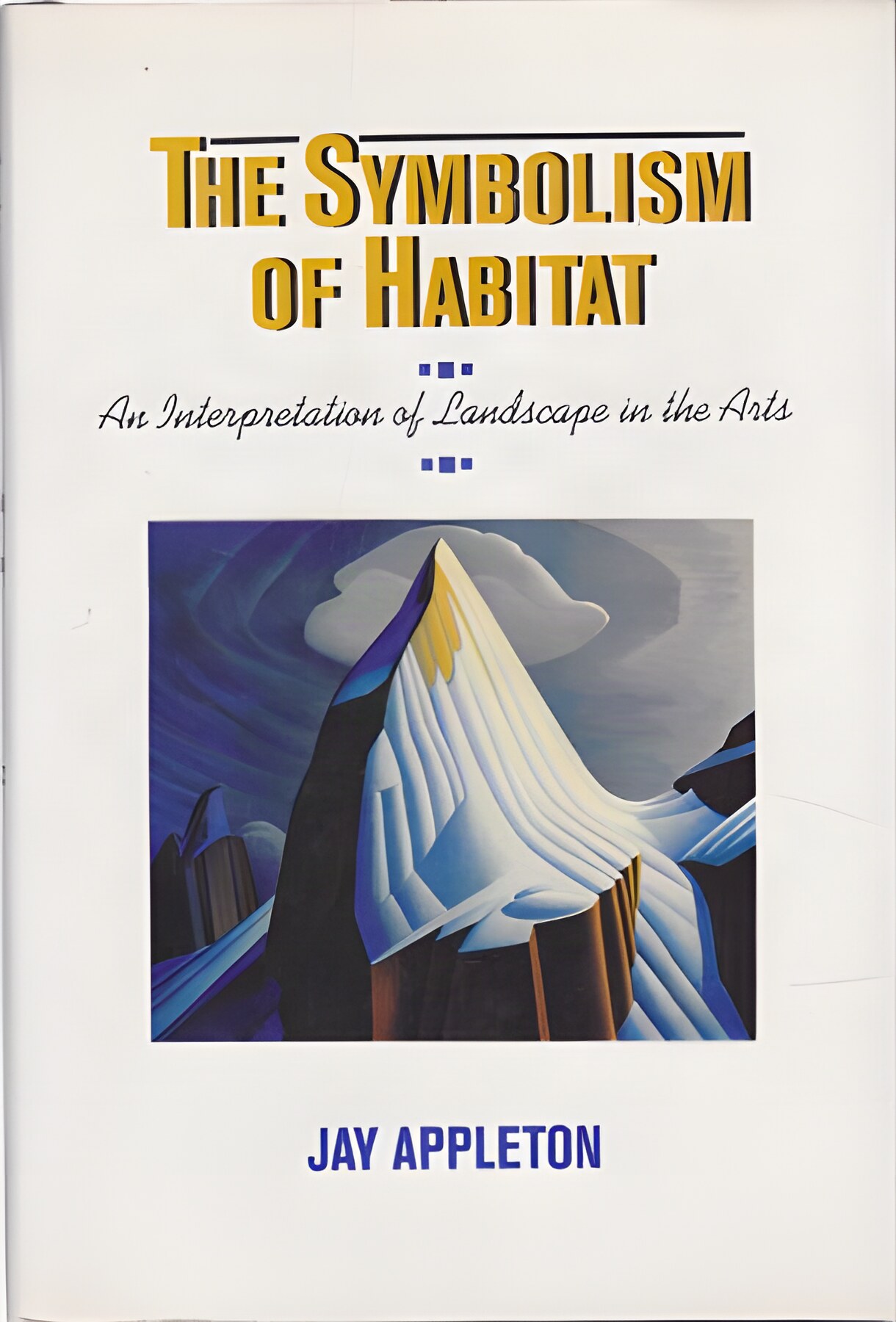
Hardcover. Seattle, University of Washington Press, 1st, 1990, Book: Very Good, Dust Jacket: Very Good, Hardcover in a bright dust jacket, 113 pages, b&w illustrations. When architects create a landscape or building, when artists depict a landscape, and when poets write of nature, they recreate certain aesthetic elements observed in nature. Jay Appleton asserts in an insightful analysis that these aesthetic values in landscape are not found in an elevated philosophy of aesthetics or in a culturally bound artistic symbolism but in the biological and behavioral needs that we share with other animals. Thus, the aesthetics of landscape may be approached through other areas of human experience and science, especially the natural and behavioral sciences. They are expressed in symbolism drawn from a primal habitat in which all animals seek survival. Clean copy.
Hardcover. Philadelphia, David McKay, reprint, 1889, Book: Very Good, Dust Jacket: None, Hardcover, terra cotta cloth stamped in black and gilt, 362 pages including index. Originally published in 1878, this is the 1889 New Edition with final corrections and additions. A Victorian era study of male sexuality. Clean copy.
NY, Harpercollins/Cliff Street , 2nd pr., 1998, Book: Very Good, Dust Jacket: Very Good, Hardcover in a bright, unclipped dust jacket. 239 pages, bibliography, appendices, maps on end-papers, illustrated with wonderful b&w line and color drawings by the author. A highly readable account of the author's 300-acre woodland in Maine, which he uses as a camp and outdoor laboratory.
Hardcover. Bristol UK, Thoemmes Press, reprint, 1995, Book: Very Good, Dust Jacket: None, Three hardcover volumes, uniform blue cloth covers with gilt lettering on spines. 638, 662 and 700 pages. Cudworth's magisterial work is a sweeping philosophical and religious treatise, tackling some of the biggest questions in the history of thought. He examines the nature of the universe, the concept of God, and the foundations of morality, weaving together insights from ancient philosophy, Christian theology, and contemporary science. This work is a monument to the intellectual ambition and erudition of one of Britain's greatest philosophers. A reprint of the 1845 edition published in London. Pencil marking to about 50 pages combined in volumes 1 and 3, name on front fly leaf of Volume 3. DUE TO WEIGHT, DOMESTIC SHIPPING ONLY.
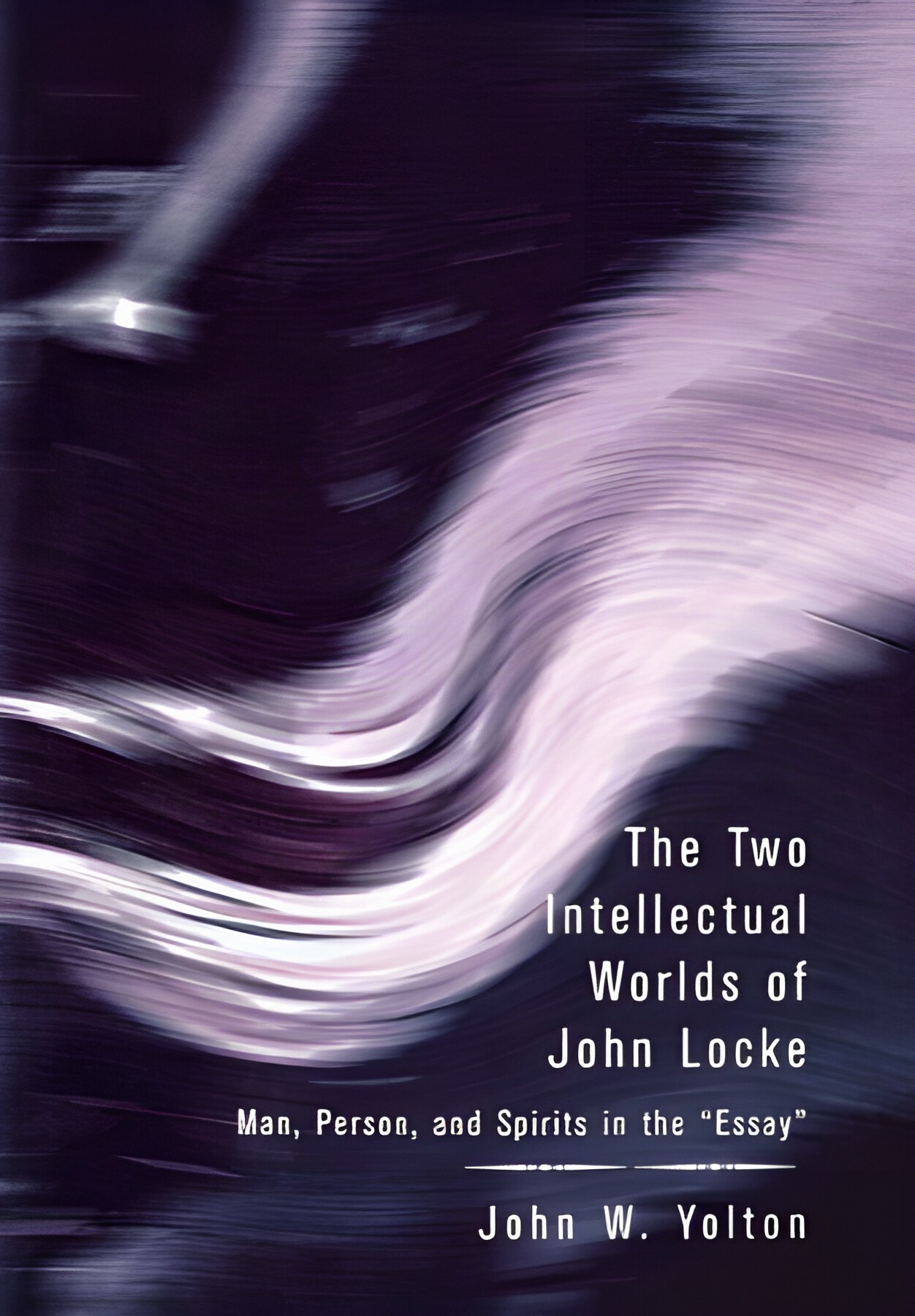
Hardcover. Ithaca NY, Cornell University Press, 1st, 2004, Book: Very Good, Dust Jacket: Very Good, Hardcover in a bright dust jacket, 180 pages. Using his intimate knowledge of John Locke's writings, John W. Yolton shows that Locke comprehends "human understanding" as a subset of a larger understanding of other intelligent Beings-angels, spirits, and an omniscient God. Locke's books on Christianity (The Reasonableness of Christianity and Paraphrases of St. Paul's Epistles) have received extensive analysis and commentary, but little attention has been given to the place of his Essay Concerning Human Understanding in his religious and theological beliefs. Yolton shows that Locke's account of what it is to be human in that work is profoundly religious. Yolton's book opens with an attempt to sort out several important terms basic to Locke's account of identity: man, self, person, and soul. A number of rarely examined components of Locke's thought emerge: the nature of man, the nature of a human being, and the place of man in the universe among the other creatures. Some will be surprised to learn that the domain of God, angels, and spirits is a part of Locke's universe, where it is considered the hoped-for destination of the just. Name, date on front fly leaf, otherwise clean.
Hardcover. NY, Norton, 1st, 1982, Book: Very Good, Dust Jacket: Very Good, Hardcover in a bright, unclipped dust jacket, 192 pages. Through the distillation of a lifetime of experiences, John Hay describes in The Undiscovered Country his quiet, profound search for our place in the natural world. In considering snails, alewives, terns, woodland moths, and other forms of natural life, Hay shares with his readers a discovery that few have experienced and no one has written about so eloquently. Clean copy.
Hardcover. Boston, Houghton Mifflin , 1st, 1970, Book: Very Good, Dust Jacket: Good, Hardcover, 286 pages, endpaper maps, 60 b&w and color illustrations by Eric Hosking. Dust jacket has edgewear and chipping. Book is very good, tight, clean.
Hardcover. Bologna IT, Damiani, 1st, 2006, Book: Very Good, Dust Jacket: None, Hardcover, 100 pages. Original publisher's illustrated laminated boards. Issued without dust jacket. Copiously illustrated in color and black and white throughout. Beatrice Haverich believes that "trees embody life. They show us the seasons in a city landscape, and they provide us with wood, food and shelter. Their silence demands our respect." Her subjects, for whom she has the utmost sympathy, are survivors, stalwarts: for example, the Yew trees in Kingsley Vale, UK, are 4,000 years old. Among these portraits, she observes branches molded by the wind into lopsided hairstyles, and roots exposed by the rain. Some trees survive in cement planters or remain in the bounds of their sidewalk squares, but others reclaim their habitat, taking over old greenhouses and popping the glass panes one by one as they grow. Up from sand and boulders and cliffs and pavement, Haverich's trees are shaped by their landscape, but they persist in shaping it as well.
Hardcover. NY, Dodd Mead, 3rd pr., 1943, Book: Very Good, Dust Jacket: None, Hardcover, bright red cloth stamped in black. Endpapers map, b&w photographs. 410 pages. The widow of Carl Akeley, naturalist, tells the story back of the exhibits for which he was responsible in the Natural History Museum in New York. This is virtually a biography, with that as a focus; it is a record of the uphill struggle to get the chance to do the thing for which he was gifted and trained; the experiences securing his speciments, adventures in the wilderness, African jungles, the Belgian Congo, the Uganda frontier -- and the immense concentration on details to get the exhibits together and to present them with complete fidelity. Clean copy.
Softcover. Cambridge UK, Cambridge University Press, reprint, 1983, Book: Good, Dust Jacket: None, Two softcover volumes, Parts 1 and 2, 259 and 368 pages. A philosophical study of the nature of bodily action and the will - and the responsibility we have for our own active bodily movements, which is distinct from though closely related to both causal and moral responsibility. Name on front fly leaf and light pencil notations to 20 pages in volume 1, light stain in volume 2 on copy block, not affecting text.
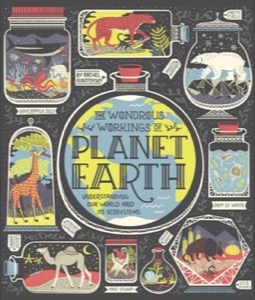
Hardcover. Berkeley CA, Ten Speed Press, 1st, 2018, Book: Very Good, Dust Jacket: None, Hardcover, pictorial boards. An illustrated tour of the planet exploring ecosystems large and small, from reefs, deserts, and rainforests to a single drop of water. Making earth science accessible and entertaining through art, maps, and infographics, The Wondrous Workings of Planet Earth explains how our planet works-and how we can protect it-from its diverse ecosystems and their inhabitants, to the levels of ecology, the importance of biodiversity, the cycles of nature, and more. Clean copy.

 "The Rivalry: Bill Russell, Wilt Chamberlain, and the Golden Age of Basketball by: John Taylor")

 "The Saving Grace of America's Green Jeremiad by: John Gatta")
 "The Science of Art: Optical Themes in Western Art from Brunelleschi to Seuratby: Kemp, Martin.")

 "The Seduction of Culture in German Historyby: Lepenies, Wolf")
 "The Smaller Majorityby: Piotr Naskrecki")
 "The Snoring Bird: My Family's Journey Through a Century of Biologyby: Bernd Heinrich")




 "The Trees in My Forestby: Bernd Heinrich")
 "The True Intellectual System Of The Universe: Wherein All The Reason And Philosophy Of Atheism Is Confuted, And Its Impossibility Demonstrated: With A Treatise Concerning Eternal And Immutable Morality - Three Volumes")
 "The Undiscovered Country by: Hay, John")

 "The Whisper of a Million Leaves by: HAVERICH, Beatrice.")
 "The Wilderness Lives Again: Carl Akeley and the Great Adventure by: Akeley, Mary L. Jobe with (F. Trubee Davison")