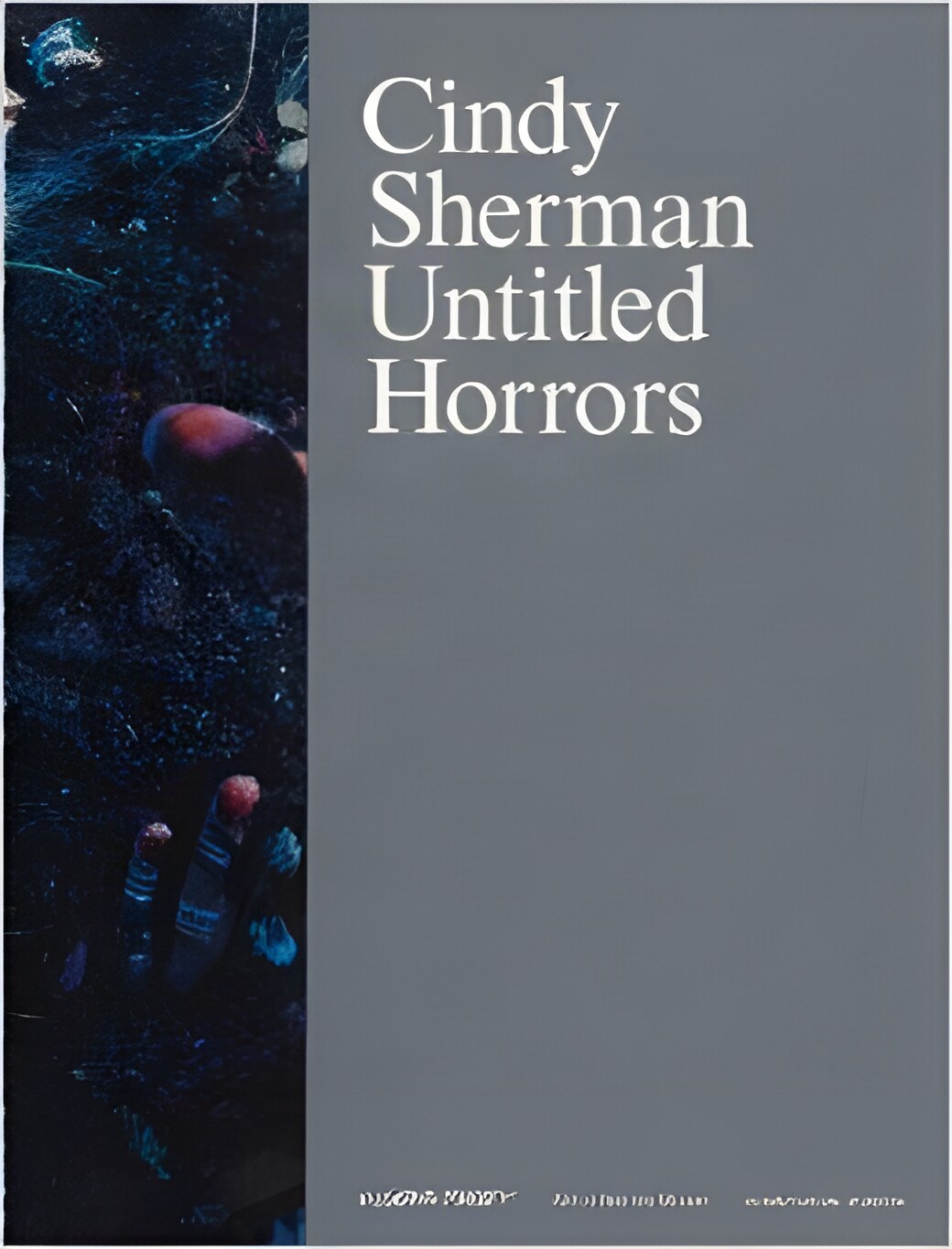
Softcover. Hatje Cantz, 1st, 2013, Book: Very Good, Dust Jacket: None, Like new in publisher's shrink-wrap. Softcover, 220 pages. Throughout her career, Cindy Sherman (born 1954) has been interested in exposing the darker sides of human nature, noticeable both in her selection of subject matter (fairytales, disasters, sex, horror, surrealism) and in her disquieting interpretations of well-established photographic genres, such as film stills, fashion photography and society portraiture. Delving relentlessly into the more grotesque extremes of delusion, vanity and self-image, Sherman probes deeply into the masks and distractions we all employ to set apart our public and our private personae, and challenges us to consider how bizarre and unconvincing our attempts at projecting a semblance of normality can be. Attracting a certain degree of notoriety, intense and ongoing public interest as well as extensive critical acclaim, Sherman's works continue to challenge and intrigue in equal measure. This richly illustrated publication deploys a selection of works from across her career to highlight and acknowledge these particular aspects of her art. These images are accompanied by more recent work, as well as essays from well-known authors, filmmakers and artists who likewise deal with the grotesque, the uncanny and the extraordinary in their practice.
Softcover. NY, The Museum of Modern Art, 1st, 2012, Book: Very Good, Dust Jacket: None, Softcover, 264 pages. 153 color illustrations and 102 duotone. Published to accompany the first major survey of Cindy Sherman's work in the United States in nearly 15 years, this publication presents a stunning range of work from the groundbreaking artist's 35-year career. Showcasing approximately 180 photographs from the mid-1970s to the present, including new works made for the exhibition and never before published, the volume is a vivid exploration of Sherman's sustained investigation into the construction of contemporary identity and the nature of representation. The book highlights major bodies of work including her seminal Untitled Film Stills (1977-80); centerfolds (1981); history portraits (1989-90); head shots (2000-2002); and two recent series on the experience and representation of aging in the context of contemporary obsessions with youth and status. An essay by curator Eva Respini provides an overview of Sherman's career, weaving together art historical analysis and discussions of the artist's working methods, and a contribution by art historian Johanna Burton offers a critical re-examination of Sherman's work in light of her recent series. A conversation between Cindy Sherman and filmmaker John Waters provides an enlightening view into the creative process.
Softcover. NY, The Museum of Modern Art, 1st, 2012, Book: Very Good, Dust Jacket: None, Softcover, 264 pages. 153 color illustrations and 102 duotone. Published to accompany the first major survey of Cindy Sherman's work in the United States in nearly 15 years, this publication presents a stunning range of work from the groundbreaking artist's 35-year career. Showcasing approximately 180 photographs from the mid-1970s to the present, including new works made for the exhibition and never before published, the volume is a vivid exploration of Sherman's sustained investigation into the construction of contemporary identity and the nature of representation. The book highlights major bodies of work including her seminal Untitled Film Stills (1977-80); centerfolds (1981); history portraits (1989-90); head shots (2000-2002); and two recent series on the experience and representation of aging in the context of contemporary obsessions with youth and status. An essay by curator Eva Respini provides an overview of Sherman's career, weaving together art historical analysis and discussions of the artist's working methods, and a contribution by art historian Johanna Burton offers a critical re-examination of Sherman's work in light of her recent series. A conversation between Cindy Sherman and filmmaker John Waters provides an enlightening view into the creative process.
Hardcover. Boston, David R. Godine, 1st, 1987, Book: Very Good, Dust Jacket: Very Good, Hardcover in a bright, unclipped dust jacket. A book length series of poems, looking at life in all its imperfections through the viewpoint of an inextinguishable character whose spirit triumphs through humor. Clayfeld, a comic everyman, is the center of these poems about the nature of beauty, sorrow, and art, as well as the potential for happiness. Thwarted continually by ordinary defeats, Clayfeld endures and laughs, loves and remembers. Critic Harold Bloom called poet Robert Pack an heir to Robert Frost and Edwin Arlington Robinson.
Hardcover. NY, Viking Press, 1st, 1961, Book: Very Good, Dust Jacket: Good, 280 pages. Hardcover. Illustrated with black & white photographs. Dust jacket with rubbing, short tears along edges - jacket now protected with clear plastic cover. Clean, tight copy.
Hardcover. NY, Funny Garbage Press, 1st, 2001, Hardcover, 212 pages. Legendary underground cartoonist Panter's comics are typically anarchic and fun, but they also delve deeper. First produced in 1983, Cola Madness is published here in book form for the first time. The work stars Jimbo, Panter's enduring punk everyman, sharing billing with a cast of idiosyncratic characters including Bob War; his calamitous brother, Uncle Garcia, a smart-talking dinosaur and beleaguered guardian in a bathrobe; and Kokomo, a native in an unspecified tropical land colonized by oil companies. Posited as the hallucinatory fever dream of Kokomo, Panter's farce follows Jimbo's misadventures as he tries to get a Moka Cola at the local Jack-in-the-McTacos, the whole zany affair culminating in an absurd, scatological climax at an automated fast food restaurant. Panter delivers a visionary response to contemporary American life viewed through the wrong end of some cosmic telescope. This delightfully inane story offers a selection of Panter's themes: humanity's troubled relationship with nature and technology; the tension between restraint and the uncontrollable urge; family relationships; and Jimbo's endearing, comical self-doubt. Panter's black and white "ratty line" drawing style offers great economy while suggesting a broad range of graphic style from art brut to bathroom graffiti, and calls to mind the works of legendary cartoonists Jack Kirby and Osamu Tezuka.
Softcover. Cambridge MA, Harvard University Press, 4th pr., 2001, Book: Very Good, Dust Jacket: None, Softcover, 656 pages. John Rawls's work on justice has drawn more commentary and aroused wider attention than any other work in moral or political philosophy in the twentieth century. Rawls is the author of two major treatises, A Theory of Justice (1971) and Political Liberalism (1993); it is said that A Theory of Justice revived political philosophy in the English-speaking world. But before and after writing his great treatises Rawls produced a steady stream of essays. Some of these essays articulate views of justice and liberalism distinct from those found in the two books. They are important in and of themselves because of the deep issues about the nature of justice, moral reasoning, and liberalism they raise as well as for the light they shed on the evolution of Rawls's views. Some of the articles tackle issues not addressed in either book. They help identify some of the paths open to liberal theorists of justice and some of the knotty problems which liberal theorists must seek to resolve. A complete collection of John Rawls's essays. Owner's name on front fly leaf otherwise clean.
Hardcover. Philadelphia, David McKay Co., 1st US, 1931, Book: Very Good, Dust Jacket: Good, 224 pages. Hardcover. Previous owners bookplate with inscription on inside front cover. Black & white illustrations and full color plates by Arthur Rackham. Light wear to Green cloth covers. Titles and decoration in gilt. Foxing to preliminary pages. Dust jacket with chunks of paper missing at top of spine, light chipping along edges, moderate rubbing to back cover. Clean, tight copy.
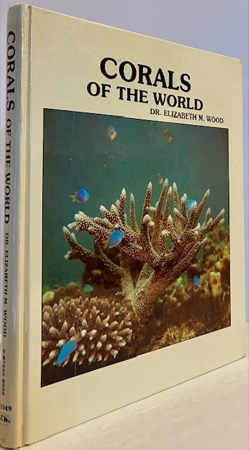
Hardcover. Neptune City, NJ, T.F.H. Publications, 1st USA, 1983, Book: Very Good, Dust Jacket: None, 256 pages. Hardcover. Photographs by author. Color and b/w illustrations throughout. Decorated cover boards, glossy. Some tanning to cover boards, pages and very light foxing to front and back pages. Doesn't affect illustrations or text. Reef Corals of the World: Biology and Field Guide.
Hardcover. Leipzig, E.A. Seemann, 1st, 1976, Book: Very Good, Dust Jacket: Very Good, Hardcover in a bright dust jacket. 132 pages of German text followed by 264 b&w plates. A catalog of nature studies by the artist, mostly botanical. Cclean copy.
Hardcover. NY, Oxford University Press, 1st, 1994, Book: Very Good, Dust Jacket: Very Good, Hardcover in a bright dust jacket, 206 pages. Marian David defends the correspondence theory of truth against the disquotational theory of truth, its current major rival. The correspondence theory asserts that truth is a philosophically rich and profound notion in need of serious explanation. Disquotationalists offer a radically deflationary account inspired by Tarski and propagated by Quine and others. They reject the correspondence theory, insist truth is anemic, and advance an "anti-theory" of truth that is essentially a collection of platitudes: "Snow is white" is true if and only if snow is white; "Grass is green" is true if and only if grass is green. According to disquotationalists the only profound insight about truth is that it lacks profundity. David contrasts the correspondence theory with disquotationalism and then develops the latter position in rich detail--more than has been available in previous literature--to show its faults. He demonstrates that disquotationalism is not a tenable theory of truth, as it has too many absurd consequences.
Hardcover. New York, Macmillan Company, 1st, 1937, Book: Very Good, Dust Jacket: None, 160 pages. Hardcover. More than seventy b/w engravings by the author. Some tanning to pages due to age. Red cloth cover boards, gilt title on spine. Some foxing at gutters and endpapers. Binding good. Spine straight. Here is a record of English village life. Several stories out of Leighton's imagination accompanied by her detailed engravings.
Hardcover. Silver City NM, High-Lonesome Books, 1st, 2015, Book: Very Good, Dust Jacket: None, Hardcover, pictorial boards, 270 pages, b&w illustrations. Features essays of outdoor sport that range well beyond the usual "where-to-go" and "how-to-do-it" of the Hook & Bullet press. Sporting sharp opinion, insight, and the skills of a natural-born raconteur, the author trails his teen-aged son on a wilderness hunt to a quarter-mile shot at a mule deer buck; and, on a hunt for snowshoe hare, is saved from a killer blizzard by a clairvoyant Bassett. Clean copy.
Hardcover. Pound Press, 1st, 2009, Book: Very Good, Dust Jacket: Very Good, Hardcover in a bright dust jacket. Photographing the intersection between culture and nature for over 25 years, Virginia Beahan creates luminous and finely detailed images with an 8x10 view camera that describe the complexities of this relationship in diverse geographic settings. Her eight-year project in the waning years of Fidel Castro's revolutionary Cuba resulted in a major 2009 monograph entitled CUBA singing with bright tears. The images depict a country both tragic and beautiful, struggling beneath the weight of history. Larger-than-life images of revolutionary heroes Che Guevara and Jose Marti populate the island. The Bay of Pigs is sublime and treacherous; an atmospheric body of water rimmed with jagged black coral is the same unwelcoming shore that greeted invading CIA-trained Cuban exiles over forty-seven years ago. On a billboard, Fidel Castro reminds us that the US might invade again, and if so, he "will die fighting." Virginia Beahan's work falls within the tradition of great American photographers such as Walker Evans and Robert Adams. Her luminous and detailed large-format photographs reveal a landscape imbued with nuanced stories of culture shaped by geography and human action. Cuba's long and complicated relationship with the United States is part of this unfolding drama. Clean, bright copy.
Softcover. Wyoming RI, Bio-Dynamic , 1st, 1979, Book: Good, Dust Jacket: None, Softcover, 435 pages, b&w illustrations. Explores the profound connection between human culture and the practice of gardening. Storl delves into the historical, spiritual, and ecological aspects of gardening, highlighting how various cultures have shaped their gardens as reflections of their beliefs and values. The book presents gardening as not only a practical endeavor but also a means of connecting with the natural world and understanding our place in it. Storl's work encourages readers to see gardening as a dynamic and meaningful cultural expression that bridges the gap between humanity and the environment. Light coffee cup rings to wraps, internally clean.
Hardcover. London, Richard Bentley, 4th Ed., 1859, Book: Good, Dust Jacket: None, Hardcover, brown cloth with gilt border design on covers, raised bands on spine with gilt decorations. 319 pages, all edges gilt. The contents are as follows: A Hunt in a Horse-Pond; Rats; The Cobra Di Capello; Fish and Fishing; My Monkey Jacko. Three b&w plates. There is a water stain to the first five pages including the frontis and title page, mostly on the edges. The rest of the pages are bright and clean. A bookplate has been removed fro the inside front cover, leaving tan residue.
Hardcover. Boston, Bulfinch, 1st, 1999, Book: Very Good, Dust Jacket: Very Good, Hardcover in a bright dust jacket. Illustrated with 382 photographs and sketches, 152 in color. 9 3/4 x 10 5/8 inches. 224 pages. Dan Kiley has influenced generations of landscape designers, and his work has heightened our awareness of our surroundings through his lifelong tenet that the actions of people are integral to nature and its course. Despite his international renown, no comprehensive monograph has ever been published on Dan Kiley. Produced in close collaboration with the architect, this is the definitive book on the man and his oeuvre, from early projects to his most recent works. Remainder line to bottom edge, otherwise clean.
Hardcover. Chicago, University of Chicago, 1st, 1987, Book: Very Good, Dust Jacket: Very Good, Hardcover in a bright dust jacket, 700 pages, b&w illustrations. With insight and wit, Robert J. Richards focuses on the development of evolutionary theories of mind and behavior from their first distinct appearance in the eighteenth century to their controversial state today. Particularly important in the nineteenth century were Charles Darwin's ideas about instinct, reason, and morality, which Richards considers against the background of Darwin's personality, training, scientific and cultural concerns, and intellectual community. Many critics have argued that the Darwinian revolution stripped nature of moral purpose and ethically neutered the human animal. Richards contends, however, that Darwin, Herbert Spencer, and their disciples attempted to reanimate moral life, believing that the evolutionary process gave heart to unselfish, altruistic behavior. Name on front fly leaf, otherwise clean.
Softcover. New York, Pantheon, 1st, 2000, Book: Very Good, Dust Jacket: None, 136 pages. Softcover. Black and white comic. Light edgewear to wrappers. Meet David Boring: a nineteen-year-old security guard with a tortured inner life and an obsessive nature. When he meets the girl of his dreams, things begin to go awry: what seems too good to be true apparently is. And what seems truest in Boring's life is that, given the right set of circumstances (in this case, an orgiastic cascade of vengeance, humiliation and murder) the primal nature of humankind will come inexorably to the fore.
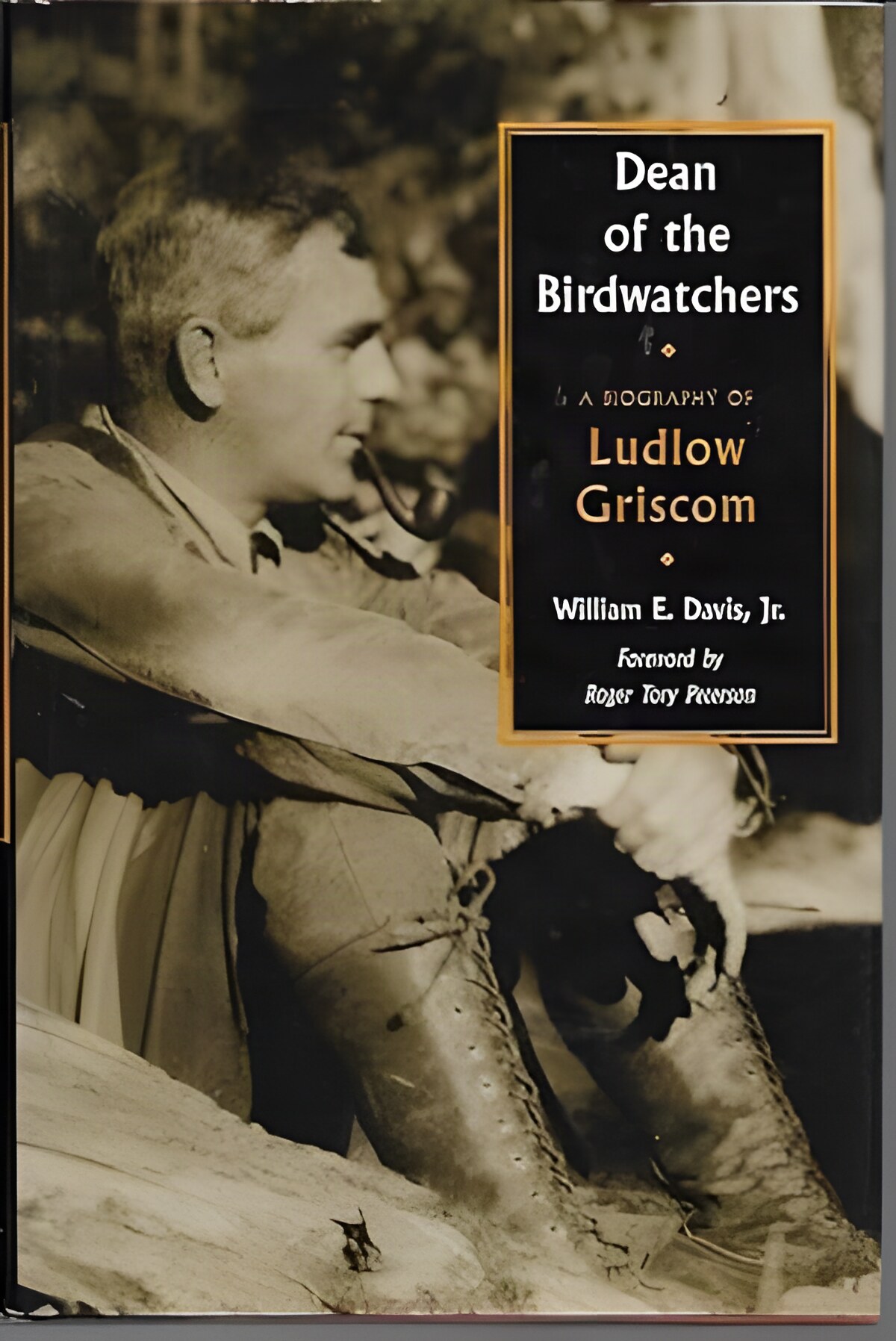
Hardcover. Washington DC, Smithsonian Books, 1st, 1994, Book: Very Good, Dust Jacket: Very Good, Hardcover in a bright dust jacket, 250 pages, photos, notes, bibliography. An influential ornithologist, curator of birds at the American Museum of Natural History; expert on the birds of Central and South America, New York City and Massachusetts, Griscom was influential in the shift to modern "binocular" birding and mentored a generation of notable ornithologists. Draws on Griscom's writings and those of his contemporaries. Clean copy.
Hardcover. NY, Harry N Abrams, 1st, 2001, Book: Very Good, Dust Jacket: Very Good, Hardcover in a bright, unclipped dust jacket. A groundbreaking presentation of rarely seen photographs, history, social observation, and pictorial analysis provides an entirely new perspective on male friendship in the nineteenth century and suggests a surprisingly broad-minded attitude toward physical intimacy between men. The book collects more than 100 portraits -from daguerreotypes to cartes des visites and early photographic postcards--depicting affectionate male friendships whose precise nature, whether platonic or sexual, will never be known. Editor David Deitcher, who teaches art and critical theory at the Cooper Union, reflects on the history of these images and their possible significance. Clean copy.
Hardcover. New York, Lothrop Lee & Shepard, 1st, 1992, Book: Very Good, Dust Jacket: Very Good, 171 pages. Hardcover with dust jacket. Clean, tight copy in a bright, unclipped dust jacket.
Hardcover. Chapel Hill NC, University of North Carolina, 1st, 2021, Book: Very Good, Dust Jacket: Very Good, Hardcover in a bright, unclipped dust jacket. 329 pages, color and b&w illustrations. Clean copy.



 "Clayfeld Rejoices, Clayfeld Laments: A Sequence of Poemsby: Robert Pack")
 "Cloud Forest - A Chronicle of the South American Wilderness, Theby: Matthiessen, Peter")


 "Compleat Angler, Theby: Walton, Izaak and Arthur Rackham")


 "Corpus der Goethezeichnungen. Band VB. Nr. 1-264. Die naturwissenschaftlichen Zeichnungen mit Ausnahme der Farbenlehre. by: Goethe -- Femmel, Gerhard; Kuhn, Dorothea;")




 "Country Sports II: More Rabid Pursuits of a Redneck Environmentalist by: Salmon, M.H.")
 "Country Sports: The Rabid Pursuits of a Redneck Environmentalist by: Salmon, M.H.")
 "CUBA: singing with bright tearsby: Virginia Beahan; Contributor Jon Lee Anderson/Pico Iyer")




 "David Boringby: Clowes, Daniel")
 "Dear Friends: American Photographs of Men Together, 1840-1918 by: David Deitcher")
 "Deer Stand, Theby: Monson, Ann M.")
 "Defending the Arctic Refugeby: Dunaway, Finis")