Hardcover. US, The Monacelli Press, 1st, 2009, Book: Very Good, Dust Jacket: None, Hardcover, 128 pages. Lynn Davis, known for surveys of natural and man-made wonders, has long been fascinated with the objects and venues of space exploration. Her photographs of the architectural icons, cornerstones, and abandoned sites of the space race reflect the many facets of a historically complex industry: the beginnings of space exploration; the changing nature of technology; and a fascination with otherworldly ruins. She emphasizes the bold modernism of these sites while evoking the presence of obsolete technologies. Davis traveled to historic sites in Kazakhstan, Russia, Germany, French Guiana, and the United States. She received special permission to visit Baikonur in Kazakhstan, a leading launch site shrouded in secrecy since the 1950s, and her photographs offer one of the first inside glimpses of launches, transmission towers, fuel lines, and satellites.
Hardcover. New York, The Monacelli Press, 1st, 2009, Book: Very Good, Dust Jacket: None, Hardcover, 127 pages, color plates. Like new in publishers shrink-wrap. Lynn Davis, known for surveys of natural and man-made wonders, has long been fascinated with the objects and venues of space exploration. Her photographs of the architectural icons, cornerstones, and abandoned sites of the space race reflect the many facets of a historically complex industry: the beginnings of space exploration; the changing nature of technology; and a fascination with otherworldly ruins. She emphasizes the bold modernism of these sites while evoking the presence of obsolete technologies. Davis traveled to historic sites in Kazakhstan, Russia, Germany, French Guiana, and the United States. She received special permission to visit Baikonur in Kazakhstan, a leading launch site shrouded in secrecy since the 1950s, and her photographs offer one of the first inside glimpses of launches, transmission towers, fuel lines, and satellites.
Hardcover. NY, Abrams, 1st, 2014, Book: Very Good, Dust Jacket: Very Good, Hardcover in a bright dust jacket. This collection of more than 250 remarkable images is the result of seven years of painstaking fieldwork across the Pacific Ocean, using photographic techniques that Middleton developed to capture these extremely fragile creatures on camera, creatures who are astonishingly diverse in their shapes, patterns, textures, and colors--in nature's fashion show, they are the haute couture of marine life. Middleton also provides short essays that examine the place these invertebrates occupy on the tree of life, their vast array of forms, and their lives in the ocean. Scientist Bernadette Holthuis contributes profiles describing each species, many of them for the first time. Middleton's book is a stunning view of nature that harmoniously combines art and science. 255 pages in color. Clean copy. PLEASE NOTE: DUE TO SIZE & WEIGHT, DOMESTIC SHIPPING ONLY.
Hardcover. Oxford UK, Oxford University Press, 1st, 2015, Book: Very Good, Dust Jacket: Very Good, Hardcover in a bright dust jacket, 184 pages. Alexander X. Douglas offers a new understanding of Spinoza's philosophy by situating it in its immediate historical context. He defends a thesis about Spinoza's philosophical motivations and then bases an interpretation of his major works upon it. The thesis is that much of Spinoza's philosophy was conceived with the express purpose of rebutting a claim about the limitations of philosophy made by some of his contemporaries. They held that philosophy is intrinsically incapable of revealing anything of any relevance to theology, or in fact to any study of direct practical relevance to human life. Spinoza did not. He believed that philosophy reveals the true nature of God, and that God is nothing like what the majority of theologians, or indeed of religious believers in general, think he is. The practical implications of this change in the concept of God were profound and radical. As Douglas shows, many of Spinoza's theories were directed towards showing how the separation his opponents endeavored to maintain between philosophical and non-philosophical (particularly theological) thought was logically untenable.
Softcover. Indianapolis, Liberty Fund, reprint, 2001, Book: Very Good, Dust Jacket: None, Softcover, 325 pages. John Adams and Benjamin Rush were two remarkably different men who shared a devotion to liberty. Their dialogues on the implications of fame for their generation prove remarkably timely--even for the twenty-first century. Adams and Rush championed very different views on the nature of the American Revolution and of the republic established with the United States Constitution; yet they shared one of the most important correspondences of their time. John Adams and Benjamin Rush met in 1774 as members of the Continental Congress--Adams from Massachusetts, Rush from Pennsylvania. In 1805, after Adams was defeated in his quest of a second term as the new republic's second President, the two men self-consciously commenced an exchange of letters. Their recurring subject was fame. This emphasis on fame was crucial, Adams and Rush believed, because on the fame attached to individual leaders of the Revolutionary generation would depend the view of the Revolution and of the Constitution and republican government that would be embraced by generations to come, including our own. The Liberty Fund edition of The Spur of Fame reproduces a text originally published by the Huntington Library.
Hardcover. NY, David McKay, 2nd pr., 1971, Book: Very Good, Dust Jacket: Very Good, Hardcover in a bright, unclipped dust jacket, 247 pages. For Gibbons the good life is sharing & enjoying nature & maintaining an environment where natural thing can flourish. Camping without polluting or plundering. Memorable journeys into the wild. Creative specific solutions to ecological poblems. Clean copy.
Hardcover. Albany, Weed Parsons and Co., 1st, 1874, Book: Good, Dust Jacket: None, Hardcover, 305 pages, 9 folding maps, b&w plates. Rust color cloth with soil, spotting. Light scuffing to some parts of cloth edges. The top 1/2" of spine cloth is missing. Previous owner's signature on front fly leaf. Interior is very good, sound with all maps present and in very good condition.
Grand Rapids MI, Eerdmans, 1st, 2002, Book: Very Good, Dust Jacket: Very Good, Hardcover in a bright dust jacket. Color illustrations by Hall. A native Alaskan folktale tells about a raven who punishes humans for destroying nature by blocking out the sun to make Earth cold and dark, but a woman finds a feather from the bird that may have the secret to saving the planet.
Hardcover. NY, Viking, 1st, 1989, Book: Very Good, Dust Jacket: Very Good, Hardcover in a bright dust jacket, 212 pages. A chronicle of Jerome's year spent building a stone wall on his property in the Massachusetts Berkshires - a task which leaves his mind "as free as a colt turned out to pasture" as he muses on the "grace and beauty found within nature and the possibilities inherent in stillness." Clean copy.
Hardcover. Salisbury, Keewaydin Camp, 1st Thus, 2005, Book: Very Good, Dust Jacket: Good, Hardcover, 67 pages plus section of black & white group camp photographs from 1912 to 1958. Hardcover. SIGNED BY ABBOTT FENN ON DEDICATION PAGE. Updated and corrected edition of the original 1959 'The Story of Keewaydin'. Dust jacket with wear to edges, tape repaired closed tears - jacket now protected with clear plastic cover. Clean, tight copy.
Softcover. Zach Feuer Gallery, 1st, 2006, Book: Very Good, Dust Jacket: None, Softcover, 70 pages. Priya Bhatnagar in Flash Art has written "Threatening to unravel pop culture's abstractions, Hawkins's images call into question the socially coded nature of its identities, icons, meanings and values while contesting its homogenization of beauty and fashion. Joel Sternfeld's foreword calls this survey of recent work "an achievement of the first magnitude." Inviting friends and strangers in Nepal to pose for the camera, Blue Eyes includes three photographic series and three video projects that reveal the ubiquity of American media culture while underscoring certain behaviors as they pertain to global capitalism and race. Each image investigates the experience of cultural imperialism as seen through the eyes of those living in the developing world. Hawkins highlights the visual dialogue that comprises consumer and popular culture and asks the viewer to consider a world of differences increasingly veiled by surface similarities.
Softcover. Zach Feuer Gallery, 1st, 2006, Book: Very Good, Dust Jacket: None, Softcover, 70 pages. Priya Bhatnagar in Flash Art has written "Threatening to unravel pop culture's abstractions, Hawkins's images call into question the socially coded nature of its identities, icons, meanings and values while contesting its homogenization of beauty and fashion. Joel Sternfeld's foreword calls this survey of recent work "an achievement of the first magnitude." Inviting friends and strangers in Nepal to pose for the camera, Blue Eyes includes three photographic series and three video projects that reveal the ubiquity of American media culture while underscoring certain behaviors as they pertain to global capitalism and race. Each image investigates the experience of cultural imperialism as seen through the eyes of those living in the developing world. Hawkins highlights the visual dialogue that comprises consumer and popular culture and asks the viewer to consider a world of differences increasingly veiled by surface similarities.
Softcover. Yosemite National Park CA, Yosemite Association, 1st, 1999, Book: Very Good, Dust Jacket: None, Softcover, 122 pages. A well-researched compilation of Brewer's documentation of his explorations in the High Sierra, with gripping photographs of the areas he visited. Additional contributions from his contemporaries enhance the experience for the reader. Introductory material from photographer William Alsup gives a good overall narrative of the action as well as an account of the significance of the survey. Clean copy.
Hardcover. Seattle WA, Fantagraphics Books, 1st, 2014, Book: Very Good, Dust Jacket: None, 201 pages, illustrated throughout in b&w. Light edgewear to covers, else a clean, tight copy. Even 60 years after their original release, in an era of explicit horror, EC Comics superstar Graham Ingels's grisly pages retain the power to shock. His loving depictions of the endless corruption of flesh and nature made him the go-to guy for stories involving swamps, maniacs, and dismemberment aEUR" and all three combined to best effect in one of the standouts of this collection of his stories.
Hardcover. New York, Abrams, 1st, 1990, Book: Very Good, Dust Jacket: Very Good, Hardcover, 144 pages. Photographs & text by James Balog. Beautifully illustrated with color photographs, taken in surreal and unnatural studio environments. Clean, bright copy in an unclipped dust jacket.
Hardcover. London, Longman, Brown, Green and Longmans, reprint, 1849, Book: Good, Dust Jacket: None, Hardcover, 284 pages, illustrated with 24 brilliant color plates including the frontispiece. Original green cloth with gilt decorated front cover, gilt design on spine, top edge gilt. Covers with light edge wear, chipping to top of spine. Title page states New Edition, so assumed a reprint. The plates do not appear to be hand-colored but chromolithographs, all brilliantly colored and except for the frontispiece (which has a touch of foxing) all are clean and unblemished. Previous owner's signature on front fly leaf.
Hardcover. Chicago, University of Chicago Press;, 1st, 2002, Book: Very Good, Dust Jacket: None, Hardcover, 272 pages. One of Chicago's great cultural achievements, the Institute of Design was among the most important schools of photography in twentieth-century America. It began as an outpost of experimental Bauhaus education and was home to an astonishing group of influential teachers and students, including Lazlo Moholy-Nagy, Harry Callahan, and Aaron Siskind. To date, however, the ID's enormous contributions to the art and practice of photography have gone largely unexplored. Taken by Design is the first publication to examine thoroughly this remarkable institution and its lasting impact. With nearly 300 illustrations, including many never-before published photographs, Taken by Design examines the changing nature of photography over this critical period in America's midcentury. It starts by documenting the experimental nature of Moholy's Bauhaus approach and photography's new and enhanced role in training the "complete designer." Next it traces the formal and abstract camera experiments under Harry Callahan and Aaron Siskind, which aimed at achieving a new kind of photographic subjectivity. Finally, it highlights the ID's focus on conscious references to the processes of the photographic medium itself. In addition to photographs by Moholy, Callahan, and Siskind, the book showcases works by Barbara Crane, Yasuhiro Ishimoto, Joseph Jachna, Kenneth Josephson, Gyorgy Kepes, Nathan Lerner, Ray K. Metzker, Richard Nickel, Arthur Siegel, Art Sinsabaugh, and many others. Major essays from experts in the field, biographies, a chronology, and reprints of critical essays are also included, making Taken by Design an essential work for anyone interested in the history of American photography.
Hardcover. NY, Random House , 1st, 1937, Book: Very Good, Dust Jacket: None, 79 pages. Hardcover with no dust jacket. Laid-in illustration on front cover of mam puma and her kittens. The story of a mother puma and her 2 kittens. Wonderful 2-color animal drawings by Paul Branson. Covers show moderate edgewear and rubbing, but overall good, clean, tight copy.
Hardcover. Boston, L.C. Page, 1st, 1907, Book: Very Good, Dust Jacket: None, First impression. Hardcover, 8vo. in ruled green pictorial cloth with gilt letters. 210 pages. illustrated by Louis Rhead with color plates. Clean, tight copy.
Hardcover. London, Quercus, 1st, 2006, Book: Very Good, Dust Jacket: Very Good, Hardcover, 440 pages, SIGNED by Penney. When her teenage son disappears in the aftermath of a brutal murder, a determined mother sets out from her snow-covered nineteenth-century settlement to find him, an effort that is hampered by vigilante groups and the harrowing forces of nature.
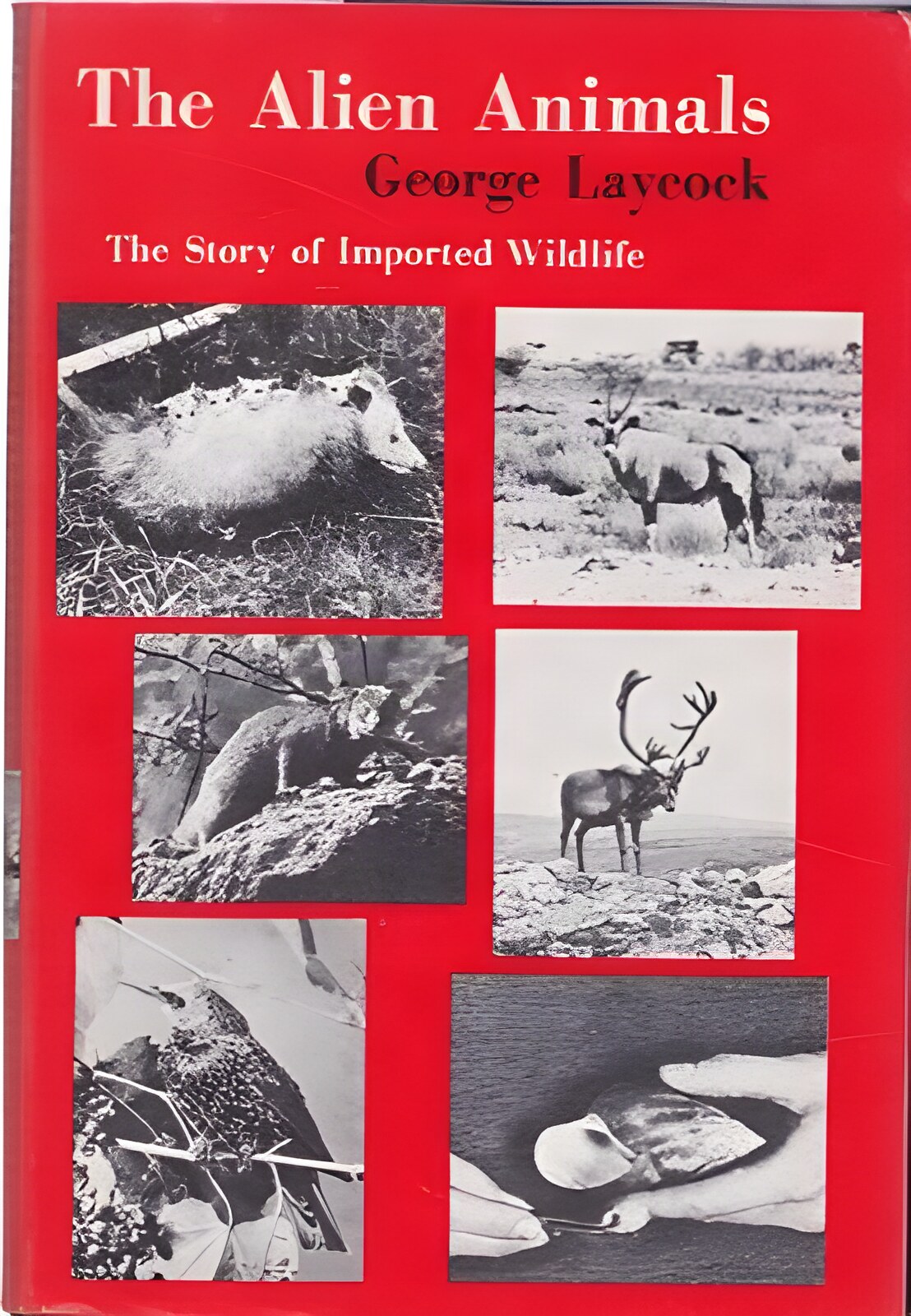
Hardcover. Garden City NY, Natural History Press, 1st, 1966, Book: Very Good, Dust Jacket: Very Good, Hardcover in an unclipped dust jacket with light fading to spine. 240 pages, b&w photos. Deals with the problems of imported wildlife, the pitfalls and successes and how the pitfalls seem to outweight the successes. Clean copy.

 "Space Projectby: Davis, Lynn (Photographer)")
 "Space Projectby: Davis, Lynn")

 "Spinoza and Dutch Cartesianism: Philosophy and Theology by: Douglas, Alexander X.")


 "State of New York Report on the Topographical Survey of the Adirondack Wilderness of New York for the Year 1873by: Colvin, Vanplanck")


 "Stolen Sun, The - A Story of Native Alaskaby: Hall, Amanda")

 "Story of Keewaydin, The: 50 Years at Dunmore 1910-1959by: Fenn, Abbott T.")
 "Stuart Hawkins: Blue Eyesby: Hawkins Stuart and Joel Sternfeld")
 "Stuart Hawkins: Blue Eyesby: Hawkins Stuart and Joel Sternfeld")
 "Such a Landscape!: A Narrative of the 1864 California Geological Survey Exploration of Yosemite, Sequoia & Kings Canyon from the Diary, Field Notes, Letters & Reports of William Henry Brewerby:")



 "Survivors: A New Vision of Endangered Wildlifeby: Balog, James")
 "Sylvan Musings or The Spirit of the Woodsby: Hey, Mrs.")

 "Tawny Goes Huntingby: Chaffee/Paul Bransom, Allen")
 "Tenants of an Old Farm: Leaves From the Note-Book of a Naturalistby: McCook, Henry C.")
 "Tenants of the Treesby: Hawkea, Clarence")
 "Tenderness of Wolves, The (SIGNED COPY)by: Penney, Stef")
 "Thailand's Vanishing Flora and Faunaby: Graham, Mark and Philip Round")