Hardcover. New York, Abaris Books, 1st Thus, 1979, Book: Very Good, Dust Jacket: None, 221 pages. Hardcover. Previous owner's signature on front endpaper. Text in German and English. Translation by Mary J. Gregor. No dust jacket. Light foxing to top edge. Otherwise, tight clean copy.
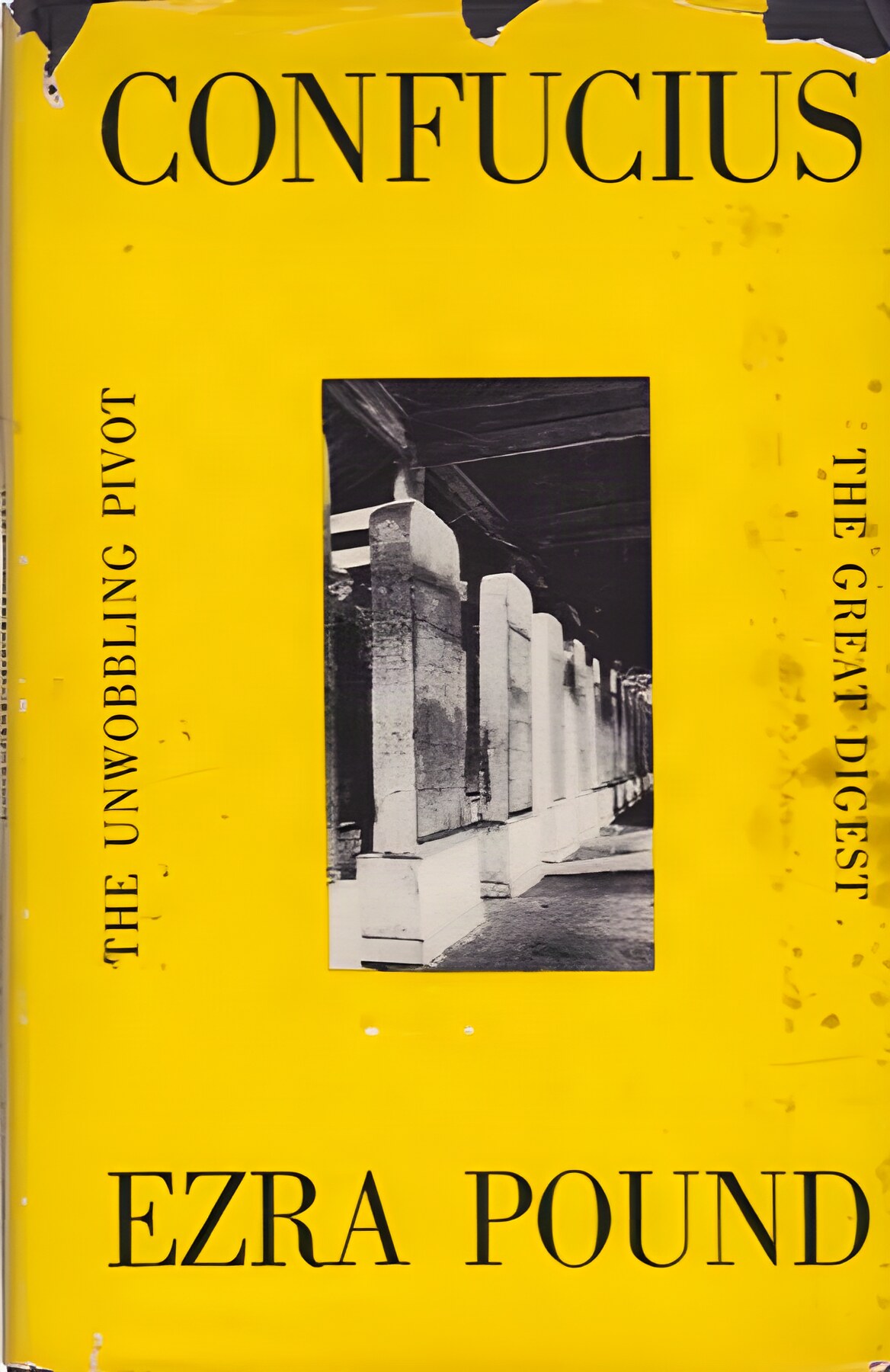
Hardcover. NY, New Directions, 1st, 1951, Book: Very Good, Dust Jacket: Fair, Hardcover in a yellow dust jacket with chipping, soiling. 187 pages. Black cloth binding with titling on the spine in gilt; with Chinese ideogram on the front cover. Illustrated with rubbings by William Hawley; and a Note on the Stone Classics by Achilles Fang. Previous owner's name and address on front fly leaf, otherwise clean.
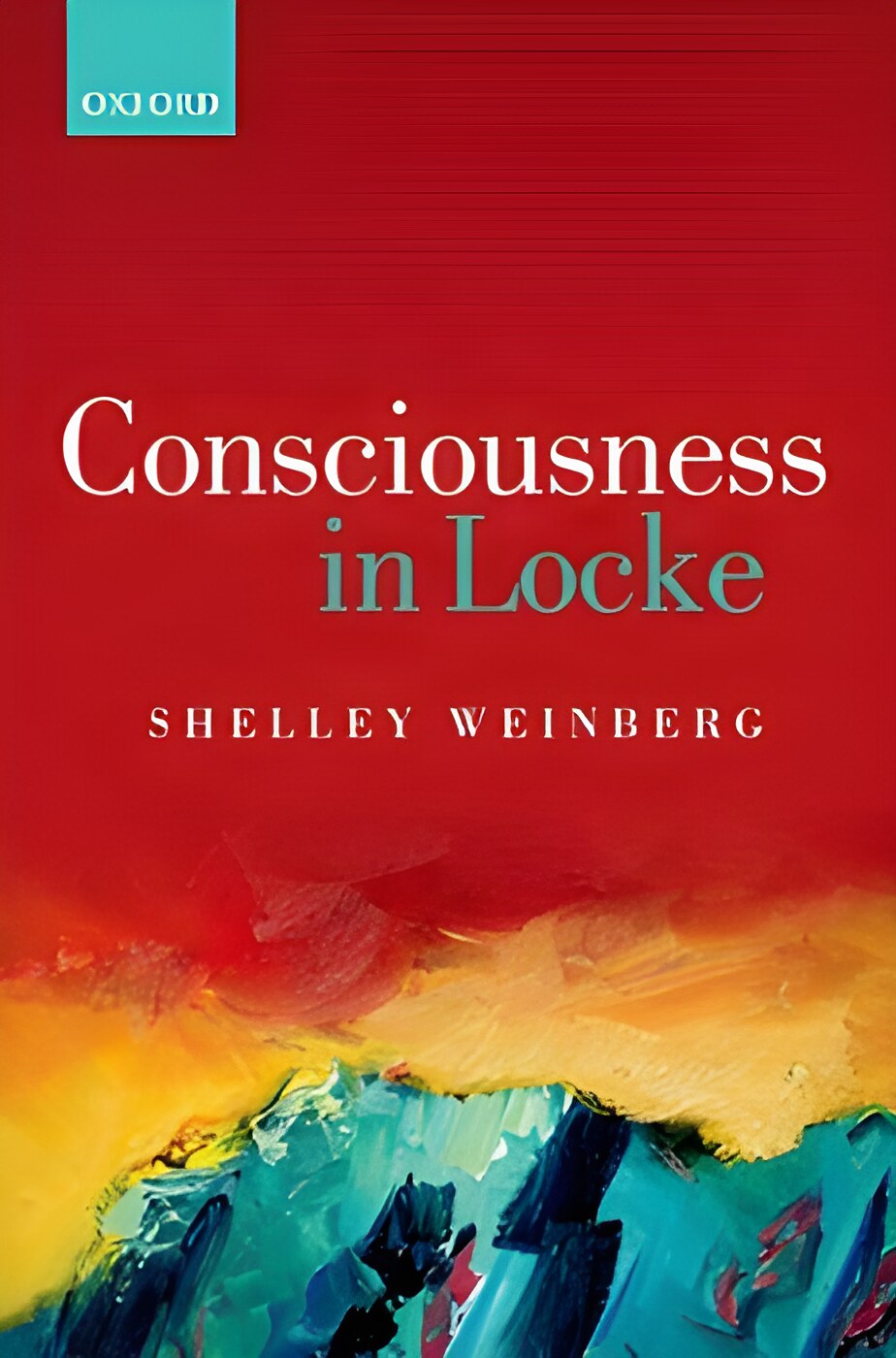
Hardcover. Oxford UK, Oxford University Press , 1st, 2016, Book: Very Good, Dust Jacket: Very Good, Hardcover in a bright dust jacket, 240 pages. Shelley Weinberg argues that the idea of consciousness as a form of non-evaluative self-awareness runs through and helps to solve some of the thorniest issues in Locke's philosophy: in his philosophical psychology and in his theories of knowledge, personal identity, and moral agency. Central to her account is that perceptions of ideas are complex mental states wherein consciousness is a constituent. Such an interpretation answers charges of inconsistency in Locke's model of the mind and lends coherence to a puzzling aspect of Locke's theory of knowledge: how we know individual things (particular ideas, ourselves, and external objects) when knowledge is defined as the perception of an agreement, or relation, of ideas. In each case, consciousness helps to forge the relation, resulting in a structurally integrated account of our knowledge of particulars fully consistent with the general definition. This model also explains how we achieve the unity of consciousness with past and future selves necessary for Locke's accounts of moral responsibility and moral motivation. And with help from other of his metaphysical commitments, consciousness so interpreted allows Locke's theory of personal identity to resist well-known accusations of circularity, failure of transitivity, and insufficiency for his theological and moral concerns. Although virtually every Locke scholar writes on at least some of these topics, the model of consciousness set forth here provides for an analysis all of these issues as bound together by a common thread. Clean copy.
Hardcover. NY, Oxford University Press, 1st, 1994, Book: Very Good, Dust Jacket: Very Good, Hardcover in a bright dust jacket, 206 pages. Marian David defends the correspondence theory of truth against the disquotational theory of truth, its current major rival. The correspondence theory asserts that truth is a philosophically rich and profound notion in need of serious explanation. Disquotationalists offer a radically deflationary account inspired by Tarski and propagated by Quine and others. They reject the correspondence theory, insist truth is anemic, and advance an "anti-theory" of truth that is essentially a collection of platitudes: "Snow is white" is true if and only if snow is white; "Grass is green" is true if and only if grass is green. According to disquotationalists the only profound insight about truth is that it lacks profundity. David contrasts the correspondence theory with disquotationalism and then develops the latter position in rich detail--more than has been available in previous literature--to show its faults. He demonstrates that disquotationalism is not a tenable theory of truth, as it has too many absurd consequences.
Hardcover. New York, Garland Publishing, reprint, 1976, Book: Very Good, Dust Jacket: None, Hardcover, maroon cloth with gilt titles on spine, 347 pages. A reprint of the 1912 London edition. Previous owner's signature on front fly leaf. Otherwise, tight clean copy.
Hardcover. Clark NJ, The Lawbook Exchange,, 2005, Hardcover, blue cloth stamped in green with gilt lettering, 752 pages. No dust jacket. Reprint of the standard critical Latin edition of Grotius's magnum opus of 1625, which established the framework of modern international law. Grotius describes the situations in which war is a valid tool of law enforcement and outlines the principles of armed combat. Though based on Christian natural law, Grotius advanced the novel argument that his system would still be valid if it lacked a divine basis. In this regard he pointed to the future by moving international law in a secular direction. A work of painstaking philological research, this edition is based on the final version edited by the author, which issued posthumously in 1646. Name on front fly leaf, otherwise clean.
Hardcover. Buffalo NY, William S. Hein, reprint, 1995, Book: Very Good, Dust Jacket: None, Hardcover, tan buckram with black spine lettering. This is a reprint of the first English translation from the Latin, originally published in 1925 by The Clarendon Press. 946 pages. Name on front fly leaf, otherwise clean. PLEASE NOTE: DUE TO WEIGHT DOMESTIC SHIPPING ONLY.
Hardcover. UK, Gregg International Publishing, 1st thus., 1969, Book: Very Good, Dust Jacket: None, Hardcover, blue textured cloth, gilt title on spine, 364 pages plus index. A facsimile reprint of the 1687 volume in Latin. The text of Limborch's debate with Isaac Orobio de Castro, (1620-1687). At the end Uriel Da Costa's {Exemplar humanae vitae}. To this, Limborch added his {Brevis refutatio}. Name, pencil notations on front fly leaf, otherwise clean.
Hardcover. Cambridge, Mass., Harvard University Press, 1st thus, 1951, Book: Very Good, Dust Jacket: None, 4 volume set of Geldner's German translation from the original Sanskrit, GERMAN TEXT, Volumes 33-36 of the Harvard Oriental Series edited by Charles Rockwell Lanman. Volume 4 has publication date of 1957. Previous owner's signature on front fly leaf, otherwise, unmarked, bright, and crisp copies. The Rigveda or Rig Veda is an ancient Indian collection of Vedic Sanskrit hymns (suktas). It is one of the four sacred canonical Hindu texts (sruti) known as the Vedas. DOMESTIC SHIPPING ONLY.
Softcover. NY, Routledge, reprint, 2016, Book: Very Good, Dust Jacket: None, Softcover, pictorial wrappers, 265 pages. Dialogue between characters is an important feature of South Asian religious literature: entire narratives are often presented as a dialogue between two or more individuals, or the narrative or discourse is presented as a series of embedded conversations from different times and places. Including some of the most established scholars of South Asian religious texts, this book examines the use of dialogue in early South Asian texts with an interdisciplinary approach that crosses traditional boundaries between religious traditions. The contributors shed new light on the cultural ideas and practices within religious traditions, as well as presenting an understanding of a range of dynamics - from hostile and competitive to engaged and collaborative. This book is the first to explore the literary dimensions of dialogue in South Asian religious sources, helping to reframe the study of other literary traditions around the world. Clean, bight copy.
Hardcover. UK/Tokyo, Thoemmes /Kinokuniya Co. Ltd, reprint, 1991, Book: Very Good, Dust Jacket: None, Hardcover, gilt lettered blue cloth, 239 pages. Facsimile reprint of the 1828 edition. Name on front fly leaf, otherwise clean, bright copy.
Hardcover. NY, Macmillan, reprint, 1929, Book: Very Good, Dust Jacket: None, Hardcover, blue cloth with gilt letterng on spine and front cover, 242 pages. Does Civilization Need Religion? sets out from the fact that religion's inability to make its ethical and social resources available for the solution of the moral problems of modern civilization is one, and the neglected one, of the two chief causes responsible for its debilitated condition. It is convinced that if Christian idealists are to make religion socially effective they will be forced to detach themselves from the dominant secular desires of the nations as well as from the greed of economic groups. It aims to show that though neither the orthodox nor the modern wing of the Christian Church seems capable of initiating a genuine revival which will evolve a morality capable of challenging and maintaining itself against the dominant desires of modern civilization's needs, there are resources in the Christian religion which make it the inevitable basis of any spiritual regeneration of Western civilization. Does Civilization Need Religion? maintains that the task of redeeming Western society rests in a peculiar sense upon Christianity, which has reduced the eternal conflict between self-assertion and self-denial to the paradox of self-assertion through self-denial and made the Cross the symbol of life's highest achievement. It is persuaded that the idea of a potent but yet suffering divine ideal which is defeated by the world but gains its victory in the defeat must continue to remain basic in any morally creative worldview. Names on front fly leaf otherwise a clean copy.
Hardcover. NY, Harper & Row, 1st, 1984, Book: Very Good, Dust Jacket: Very Good, Hardcover in a bright, price-clipped dust jacket, 394 pages. Gives insight into the evolution of Schumacher's philosophy and character while providing the necessary historical details and context. The author is his daughter and while Ms.Wood's love for her Dad is evident throughout, she does not appear to treat him with kid gloves. Her report of Fritz's struggles to understand his family's tacit support for Hitler and the Nazi's was an interesting revelation. According to Ms. Wood, Fritz progressed from atheism early on to membership in the Roman Catholic Church toward the end of his life. Small sticker on dj spine otherwise clean and tight.
Hardcover. Oxford UK, Oxford University Press, 1st, 2016, Book: Very Good, Dust Jacket: Very Good, Hardcover in a bright dust jacket, 382 pages. This study addresses the need for a more current understanding of Cartesian philosophy by considering the different constructions of Descartes's thought that emerged in the Calvinist United Provinces (Netherlands) and Catholic France, the two main centers for early modern Cartesianism, during the period dating from the last decades of his life to the century or so following his death in 1650. It turns out that we must speak not of a single early modern Cartesianism rigidly defined in terms of Descartes's own authorial intentions, but rather of a loose collection of early modern Cartesianisms that involve a range of different positions on various sets of issues. Though more or less rooted in Descartes's somewhat open-ended views, these Cartesianisms evolved in different ways over time in response to different intellectual and social pressures. Chapters of this study are devoted to: the early modern Catholic and Calvinist condemnations of Descartes and the incompatible Cartesian responses to these; conflicting attitudes among early modern Cartesians toward ancient thought and modernity; competing early modern attempts to combine Descartes's views with those of Augustine; the different occasionalist accounts of causation within early modern Cartesianism; and the impact of various forms of early modern Cartesianism on both Dutch medicine and French physics. Name on front fly leaf, otherwise clean.
Hardcover. Durham UK, Acumen, 1st, 2009, Book: Very Good, Dust Jacket: None, Hardcover in blue cloth, with red title block, gilt lettering, 348 pages. The early modern period in philosophy - encompassing the 16th to the 18th centuries - reflects a time of social and intellectual turmoil. The Protestant Reformation, the Catholic Counter-Reformation, and the birth of the Enlightenment all contributed to the re-evaluation of reason and faith. The revolution in science and in natural philosophy swept away two millennia of Aristotelian certainty in a human-centered universe. Covering some of the most important figures in the history of Western thought - notably Descartes, Locke, Hume and Kant - "Early Modern Philosophy of Religion" charts the philosophical understanding of religion at a time of intellectual and spiritual revolution. "Early Modern Philosophy of Religion" will be of interest to historians and philosophers of religion, while also serving as an indispensable reference for teachers, students and others who would like to learn more about this formative period in the history of ideas. Lacks dust jacket. Clean copy.
Softcover. NY, Columbia University Press, 1st, 1990, Book: Very Good, Dust Jacket: None, Softcover, 395 pages. The essays gathered here, in addition to those by editors Wm. Theodore de Bary and Irene Bloob, are written by leading scholars of Asian cultures--among them Donald Keene, Peter Awn, Barbara Stoler Miller, Ainslie Embree, Burton Watson, C.T. Hsia, Paul Anderer, and others. They introduce classics from the Islamic, Indian, Chinese, and Japanese traditions, providing entree to texts which have emerged as monuments of Asian thought and literature. Among the works discussed are the Qu'ran, the philosophy of history of Ibn Khaldun, the Upanishads, the epic Mahabarata, the philosopher Mencius, the Lotus Sutra, T'and Poetry, the Tale of Genji, and the poet Basho.
Hardcover. Salem MA, Cushing and Carlton, 1st US, 1795, Book: Very Good, Dust Jacket: None, 144 pages, 2 parts bound in one volume, bound in leather. Front cover hinge partially cracked, loose. Light pencil writing on last blank page, otherwise clean, tight copy.
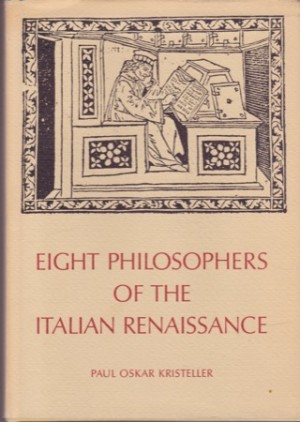
Hardcover. Stanford CA, Stanford University Press, 1st, 1964, Book: Very Good, Dust Jacket: Very Good, Hardcover in a bright dust jacket, 194 pages. Based upon the 1961 Arensberg Lectures, given at Stanford University, this collection of essays offers a genuinely unified interpretation of Italian Renaissance thought by describing and evaluating the philosophies of eight pivotal figures: 1). Francesco Petrarch. 2). Lorenzo Valla. 3). Marsilio Ficino. 4). Giovanni Pico della Mirandola. 5). Pietro Pomponazzi. 6). Bernardino Telesio. 7). Francesco Patrizi. 8). Giordano Bruno. With appendix: The medieval antecedents of Renaisssance Humanism, notes, bibliographical survey and index. Name on front fly leaf, otherwise clean.
Hardcover. Bristol UK, Thoemmes Press, reprint, 1997, Book: Very Good, Dust Jacket: None, Hardcover, blue cloth with gilt lettering on spine, 403 pages plus a 27 page addenda. A facsimile printing of the 1671 edition. Some 100 illustrations to text showing physical or geometrical calculations. Henry More (1614-1687), was an influential Jesuit, Neoplatonist, and philosopher. This work on metaphysics profoundly influenced the development of Newton's thought, "It seems undeniable that Newton read and was influenced by More's views on space and time, as presented in the Enchiridion metaphysicum. Like More, Newton also believed that for something to exist it must exist in space, and he identified the immensity of infinite space with the extension of God the similarities between their views of space and time, and their relationship to God, guarantees More's place in the history of science." Name on front fly leaf, otherwise clean and bright.
Hardcover. Bristol UK, Thoemmes Press, reprint, 1997, Book: Very Good, Dust Jacket: None, Hardcover, blue cloth with gilt lettering on spine, 319 pages. A facsimile reprint of the 1656 edition. One of 9 volumes in More's collected works. Name, light pencil marking to front fly leaf otherwise a clean, bright copy.
Softcover. Holland/Boston, D. Reidel Publishing Company, reprint, 1977, Book: Very Good, Softcover, 205 pages. Hermann von Helmholtz (1821-1894), was a prominent German physicist and physician who comtributed to the philosophy of science. The Paul Hertz/Moritz Schlick Centenary Edition of 1921, with notes and commentary by the editors. Name on front fly leaf otherwise a clean, bright copy.
Paris, Honore Champion, 1st thus, Book: Very Good, Dust Jacket: None, Hardcover, pale blue boards stamped in black and blue, 1086 pages. Translated to French by Pierre Coste, edited by Georges Moyal. Name on front fly leaf, otherwise clean.
Hardcover. London, Longmans, Green, Reader, and Dyer, 2nd, 1874, Book: Very Good, Dust Jacket: None, 164 pages, plus 24 pages of new works from publishers. Green cloth covers, gilt titles to spine, blind stamped titles and border to front cover. Light edgewear and rubbing to covers, spine cracked at inside of front hinge, previous owner's inscription to front endpaper, Edinburgh Medical Society stamp to title page, short pencil notations to rear endpaper; otherwise a very neat, tight copy.
Hardcover. UK, Oxford University Press, 1st, 2014, Book: Very Good, Dust Jacket: Very Good, Hardcover in a bright dust jacket, 284 pages. Thirteen original essays by leading scholars explore aspects of Spinoza's ethical theory and, in doing so, deepen our understanding of the richly rewarding core of his system. Given its importance to his philosophical ambitions, it is surprising that his ethics has, until recently, received relatively little scholarly attention. Anglophone philosophy has tended to focus on Spinoza's contribution to metaphysics and epistemology, while philosophy in continental Europe has tended to show greater interest in his political philosophy. This tendency is problematic not only because it overlooks a central part of Spinoza's project, but also because it threatens to present a distorted picture of his philosophy. Moreover, Spinoza's ethics, like other branches of his philosophy, is complex, difficult, and, at times, paradoxical. The essays in this volume advance our understanding of his ethics and also help us to appreciate it as the centerpiece of his system. Clean copy.

 "Conflict of the Faculties - Der Streit der Fakultaten, The by: Kant, Immanuel")

 "Crowning Phase of the Critical Philosophy: A Study in Kant's Critique of Judgementby: Macmillan, R. A. C.")
 "De Iure Belli ac Pacis Libri Tres In Quibus Ius Naturae et Gentium..by: Grotius Hugo/PC. Molhuysen (editor )")
 "De Jure Belli Ac Pacis Libri Tres. Volume Two: The Translation, Book 1 (English Edition)by: Grotius, Hugo/Francis W. Kelsey (Transl.)")
 "De veritate religionis christianae amica collatio cum erudito Judaeo. Gouda 1687by: Van Limborch, Phillipi")




 "DISCOURSES: Translated from Nicole s Essays, by . with Important Variations from the Original French. 1. On the Existence of a God. 2. On the Weakness of Man. 3. On the Way of Preserving Peaceby:")

 "E.F. Schumacher: His Life and Thought by: Barbara Wood")

 "Early Modern Philosophy of Religion (The History of Western Philosophy of Religion, Volume 3) by: Oppy, G.raham & Trakakis, Nick N. (eds)")
 "Eastern Canonsby: Wm. Theodore De Bary, Irene Bloom (Editors)")
 "Economy of Human Life, The: Translated from An Indian Manuscript written by A Braminby: N/A")
 "Enchiridion Metaphysicumby: Henry More")
 "Enthusiasmus Triumphatus: Or, A Discourse of the Nature, Causes, Kinds, and Cure, of Enthusiasmeby: Henry More/ G.A.J. Rogers (Intro.)")
 "Epistemological Writings by: von Helmholtz H.; Cohen Robert S. Editor; Elkana Y. Editor; Lowe Malcolm F. Translator;")
 "Essays on Some Unsettled Questions of Political Economyby: Mill, John Stuart")
