Hardcover. NY/London, Oxford University Press, 1st, 2011, Book: Very Good, Dust Jacket: Very Good, Hardcover in a bright, unclipped dust jacket, 470 pages. This central volume in the Collected Essays brings together John Finnis's wide-ranging contribution to central issues in political philosophy. The volume begins by examining the general theory of political community and social justice. It includes the powerful and well-known Maccabaean Lecture on Bills of Rights -- a searching critique of Ronald Dworkin's moral-political arguments and conclusions, of the European Court of Human Rights' approach to fundamental rights, and of judicial review as a constitutional institution. It is followed by an equally searching analysis of Kant's thought on the intersection of law, right, and ethics. Other papers in the book's opening section include an early assessment of Rawls's A Theory of Justice, a radical re-interpretation of Aquinas on limited government and the significance of the private/public distinction, and a challenging paper on virtue and the constitution. The volume then focuses on central problems in modern political communities, including the achievement of justice in work and distribution; the practice of punishment; war and justice; the public control of euthanasia and abortion; and the nature of marriage and the common good. There are careful and vigorous critiques of Nietzsche on morality, Hart on punishment, Dworkin on the enforcement of morality and on euthanasia, Rawls on justice and law, Thomson on the woman's right to choose, Habermas on abortion, Nussbaum and Koppelman on same-sex relations, and Dummett and Weithman on open borders. The volume's previously unpublished papers include a foundational consideration of labor unions, a fresh statement of a new grounding for the morality of sex, a surprising reading of C.S. Lewis's Abolition of Man on contraception, and an introduction reviewing some of the remarkable changes in private and public morality over the past half-century.
Softcover. Urbana IL, University of Illinois Press, 1st pbk, 2006, Book: Very Good, Dust Jacket: None, Softcover, 83 pages. In Humanism of the Other, Emmanuel Levinas argues that it is not only possible but of the highest exigency to understand one's humanity through the humanity of others. In paperback for the first time, Levinas's work here is based in a new appreciation for ethics and takes new distances from phenomenology, idealism, and skepticism to rehabilitate humanism and restore its promises. Painfully aware of the long history of dehumanization that reached its apotheosis in Hitler and Nazism, Levinas does not underestimate the difficulty of reconciling oneself with another. The humanity of the human, Levinas argues, is not discoverable through mathematics, rational metaphysics, or introspection. Rather, it is found in the recognition that the other person comes first, that the suffering and mortality of others are the obligations and morality of the self. Clean copy.
Hardcover. Cambridge MA, Harvard University Press, 1st, 1963, Book: Very Good, Dust Jacket: Very Good, Hardcover, 184 pages, maroon cloth with a lightly worn dust jacket. Previous owner's signature, pencil notes on front end paper. Otherwise clean. These studies concern the development in the Renaissance of a new perspective on the past, a new method for interpreting the meaning of the documents of the past, and a reformulation of traditional doctrine that history was philosophy teaching by example.
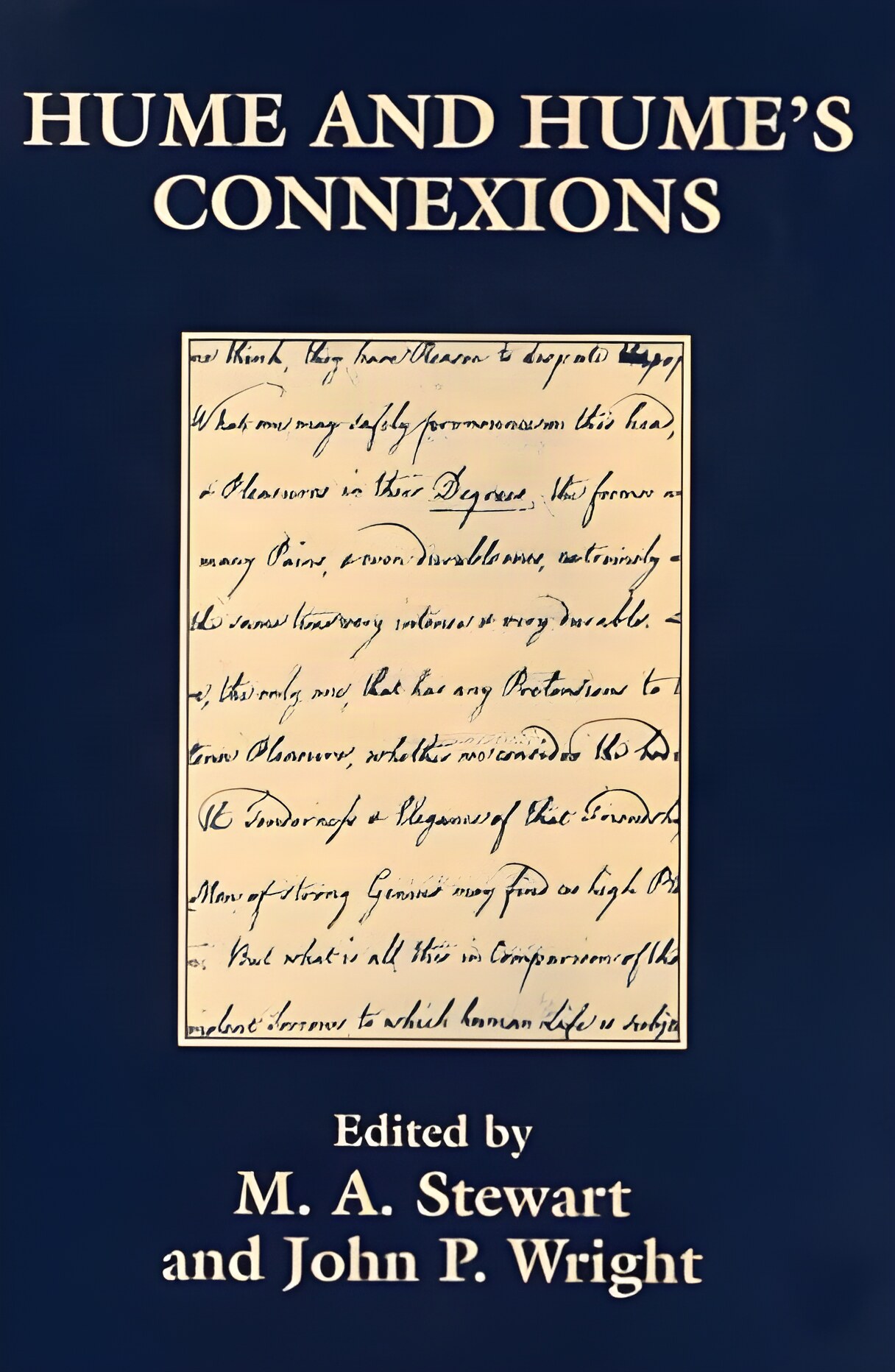
Hardcover. Edinburgh, Edinburgh University Press, 1st, 1994, Book: Very Good, Dust Jacket: Very Good, Hardcover in a bright dust jacket, 266 pages. Presenting new research on the moral and religious philosophy of David Hume, this volume tries to illustrate the importance of intellectual context in understanding the work and career of one of the most important thinkers of the 18th Century. The essays fall into three broad groups. The first looks at Hume's work as a moral philosopher, re-evaluating his place in the sceptical, utilitarian, and natural-law traditions. The second reassesses his work in moral psychology and the science of hte mind in the light of new research on 17th and 18th century sources. A final group, which examines Hume's critique of religion in its literary, historical, and philosophical aspects, includes an edited transcription of a new manuscript on the problem of evil. Clean copy.
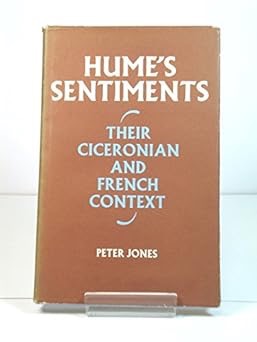
Hardcover. Edinburgh, Edinburgh University Press, 1st, 1982, Book: Very Good, Dust Jacket: Very Good, Hardcover in a dust jacket with fading to spine, 230 pages. The author substantially revises the view that Hume's main intellectual debts are to Newton and Hutcheson. The book traces the deep and pervasive influence of Cicero on Hume's thought and the impact of French philosophers such as Malebranche. Name on front fly leaf, otherwise clean.
Softcover. Los Angeles, Wilshire Book Company, reprint, 1971, Book: Very Good, Dust Jacket: None, Softcover, 167 pages. Author name spelled Wynn on cover and Winn on title page. Has 1939 and 1956 dates on the copyright page. Clean, tight copy.
Softcover. Oxford UK, Oneworld, 1st, 2005, Book: Very Good, Dust Jacket: None, Softcover, 152 pages. Renowned expert William Chittick covers the life and works of this legendary Sufi writer. The importance of Muhyi al-Din Ibn al-Arabi (1165-1240) for Islamic mysticism lies in the fact that he was a speculative thinker of the highest order, albeit diffuse and difficult to understand. His central doctrine is the unity of all existence. In this text, William Chittick explores how, through the work of Ibn Al-Arabi, Sufism moves away from anguished and ascetic searchings of the heart also conscience and becomes a matter of speculative philosophy and theosophy. Ex-lib with stamping and stickers on front endpapers, cover, otherwise clean.
Hardcover. Leiden, Netherlands, E. J. Brill, 1st, 1976, Book: Very Good, Dust Jacket: None, Hardcover, 377 pages. Blue cloth, gilt lettering to front and spine, no dust jacket. Light wear and smudges to covers. Clean, tight copy in excellent condition.
Hardcover. DeKalb IL, Northern Illinois University Press, 1st, 1972, Book: Very Good, Dust Jacket: Very Good, Hardcover in a bright dust jacket, 554 pages. Text in Italian, English and French. Clean, like-new copy.
Hardcover. UK, Oxford University Press , 1st, 2017, Book: Very Good, Dust Jacket: Very Good, Hardcover in a bright dust jacket, 163 pages. INSCRIBED BY THE AUTHOR on the front fly leaf. We subject others and are ourselves subjected to risk all the time - risk permeates life. Despite the ubiquity of risk and its imposition, philosophers and legal scholars have devoted little of their attention to the difficult questions stimulated by the pervasiveness of risk. When we impose risk upon others, what is it that we are doing? What is risking's moral significance? What moral standards govern the imposition of risk? And how should the law respond to it? This book highlights these important but neglected questions and offers novel answers to them in a systematic way, constructing a normative framework of risk imposition that draws upon a wide range of insights from diverse sources within philosophy and legal theory. Clean copy.
Hardcover. NY, Oxford University Press, 1st, 1998, Book: Very Good, Dust Jacket: Very Good, Hardcover in a bright dust jacket, 279 pages. John Barrow is increasingly recognized as one of our most elegant and accomplished science writers, a brilliant commentator on cosmology, mathematics, and modern physics. Barrow now tackles the heady topic of impossibility, in perhaps his strongest book yet. Writing with grace and insight, Barrow argues convincingly that there are limits to human discovery, that there are things that are ultimately unknowable, undoable, or unreachable. He first examines the limits on scientific inquiry imposed by the deficiencies of the human mind: our brain evolved to meet the demands of our immediate environment, Barrow notes, and much that lies outside this small circle may also lie outside our understanding. Barrow investigates practical impossibilities, such as those imposed by complexity, uncomputability, or the finiteness of time, space, and resources. Clean copy.
Hardcover. New Haven CT, Yale University Press, 1st, 2012, Book: Very Good, Dust Jacket: Very Good, Hardcover in a bright dust jacket, 232 pages. Political theorist Michael Walzer reports his findings after decades of thinking about the politics of the Hebrew Bible. Attentive to nuance while engagingly straightforward, Walzer examines the laws, the histories, the prophecies, and the wisdom of the ancient biblical writers and discusses their views on such central political questions as justice, hierarchy, war, the authority of kings and priests, and the experience of exile. Because there are many biblical writers with differing views, pluralism is a central feature of biblical politics. Yet pluralism, Walzer observes, is never explicitly defended in the Bible; indeed, it couldn't be defended since God's word had to be as singular as God himself. Yet different political regimes are described in the biblical texts, and there are conflicting political arguments--and also a recurrent anti-political argument: if you have faith in God, you have no need for strong institutions, prudent leaders, or reformist policies. At the same time, however, in the books of law and prophecy, the people of Israel are called upon to overcome oppression and "let justice well up like water, righteousness like an unfailing stream." Name on front fly leaf, light pencil marking to pages.
Hardcover. NY, Metropolitan Museum of Art, 1st, 2019, Book: Very Good, Dust Jacket: None, Hardcover, pictorial boards with a wraparound title band. This handsome volume explores the modern discipline of fashion collecting, presenting remarkable works from one of the greatest private collection of 20th-century costume. This group of clothing and accessories, assembled over several decades by Sandy Schreier, includes many rare and historically significant pieces that define key moments in fashion. Her collection features not only iconic garments by established designers but also looks by pioneering couturiers rarely represented in museum collections. Outstanding works, by designers that include Gilbert Adrian, Cristobal Balenciaga, Boue Soeurs, Gabrielle Chanel, Christian Dior, Mariano Fortuny, Karl Lagerfeld, Paul Poiret, and Valentina, are illustrated with new photography by fashion photographer Nicholas Cope. An informative introduction traces the progress of her collecting from its roots in Detroit to the present day. The book also includes descriptions of over 80 works, including garments, accessories, and rare designer drawings, in addition to a lively interview with Schreier by Andrew Bolton that reveals her collecting philosophy.
Hardcover. NY, W. W. Norton & Company, 1st, 2015, Book: Very Good, Dust Jacket: Very Good, 352 pages. Hardcover with dust jacket. A very clean, unmarked copy with only minor wear to dust jacket edges. A tight copy.
Softcover. Boston, Brill Academic, 1st, 2003, Book: Very Good, Dust Jacket: None, Softcover, 562 pages. This monograph demonstrates why humanism began in Italy in the mid-thirteenth century. It considers Petrarch a third generation humanist, who christianized a secular movement. The analysis traces the beginning of humanism in poetry and its gradual penetration of other Latin literary genres, and, through stylistic analyses of texts, the extent to which imitation of the ancients produced changes in cognition and visual perception. The volume traces the link between vernacular translations and the emergence of Florence as the leader of Latin humanism by 1400 and why, limited to an elite in the fourteenth century, humanism became a major educational movement in the first decades of the fifteenth. It revises our conception of the relationship of Italian humanism to French twelfth-century humanism and of the character of early Italian humanism itself. Clean, bright copy.
Softcover. Albany NY, State University of New York Press, reprint, 1987, Book: Very Good, Dust Jacket: None, Softcover, 157 pages. Introduction: Sharpe, Eric, Translation from the Swedish by Birgitta Sharpe. Here are the early Sufis: their ascetic practices, their attitudes toward women and marriage, toward food and drink and toward music and poetry. First published in 1947. Clean copy.
Hardcover. New York, Abingdon Press, 1st , 1918, Book: Very Good, Dust Jacket: None, 224 pages. Hardcover. Green cloth with gilt titles. NOT a reprint or print on demand edition. Light wear. Clean, tight copy.
Hardcover. Phillipsburg NJ, P & R Publishing, 1st, 1994, Book: Very Good, Dust Jacket: Very Good, Hardcover in a bright dust jacket, 724 pages. Vol. 2 only. Francis Turretin (1623-87) has been called "the best expounder of the doctrine of the Reformed Church" (Samuel Alexander), "a marvelous synthesizer" (Roger Nicole), and "a towering figure among the Genevan Reformers (Leon Morris). His Institutio Theologiae Elencticae, first published In 1679-85, was the fruit of some thirty years' teaching at the Academy of Geneva. A very insightful work for those seeking clarification on several theological issues such as free will, sanctification and good works, the person of Christ, and sin.Clean copy.
Softcover. Paris, Librairie Philosophique J. Vrin, 1st, 1960, Book: Very Good, Dust Jacket: None, Softcover, 498 pages, FRENCH TEXT. Cover and spine tanning, tape enforced at spine top and bottom. small name on title page. Interior clean and bright.
Hardcover. Honolulu, HI, East-West Press, reprint, 1966, Book: Very Good, Dust Jacket: Very Good, Hardcover, 251 pages. Translated with an introduction by Robert Schinzinger. Previous owner's signature on front fly leaf. Light wear to dust jacket with slight scratch to rear cover and small tear to upper edge of spine. Clean, tight copy.

 "Horae Lyricae. Poems Chiefly of the Lyric Kind in Three Books Sacred to the Devotation and Piety, to Virtue, Honour and Friendship to the Memory of the Deadby: Watts")



 "Hypnotism Made Easyby: Ralph Wynn")




 "Il Seicento e Descartes. Dibattiti Cartesianiby: Del Prete, Antonella")


 "In God's Shadow: Politics in the Hebrew Bibleby: Walzer, Michael")



 "In the Garden of Myrtles: Studies in Early Islamic Mysticism by: Andrae, Tor")




 "Intelligibility and the Philosophy of Nothingnessby: Nishida, Kitaro")