Hardcover. Boston, Little, Brown and Company, 1st, 1929, Book: Very Good, Dust Jacket: None, Hardcover, bright green cloth with gilt and black stamping, 548 pages. Illustrated from photographs, facsimiles, plates. Study of Jefferson's mind based on contributions of "French thinkers" on his political philosophy. Inscription on inside front cover, otherwise a clean, tight copy.
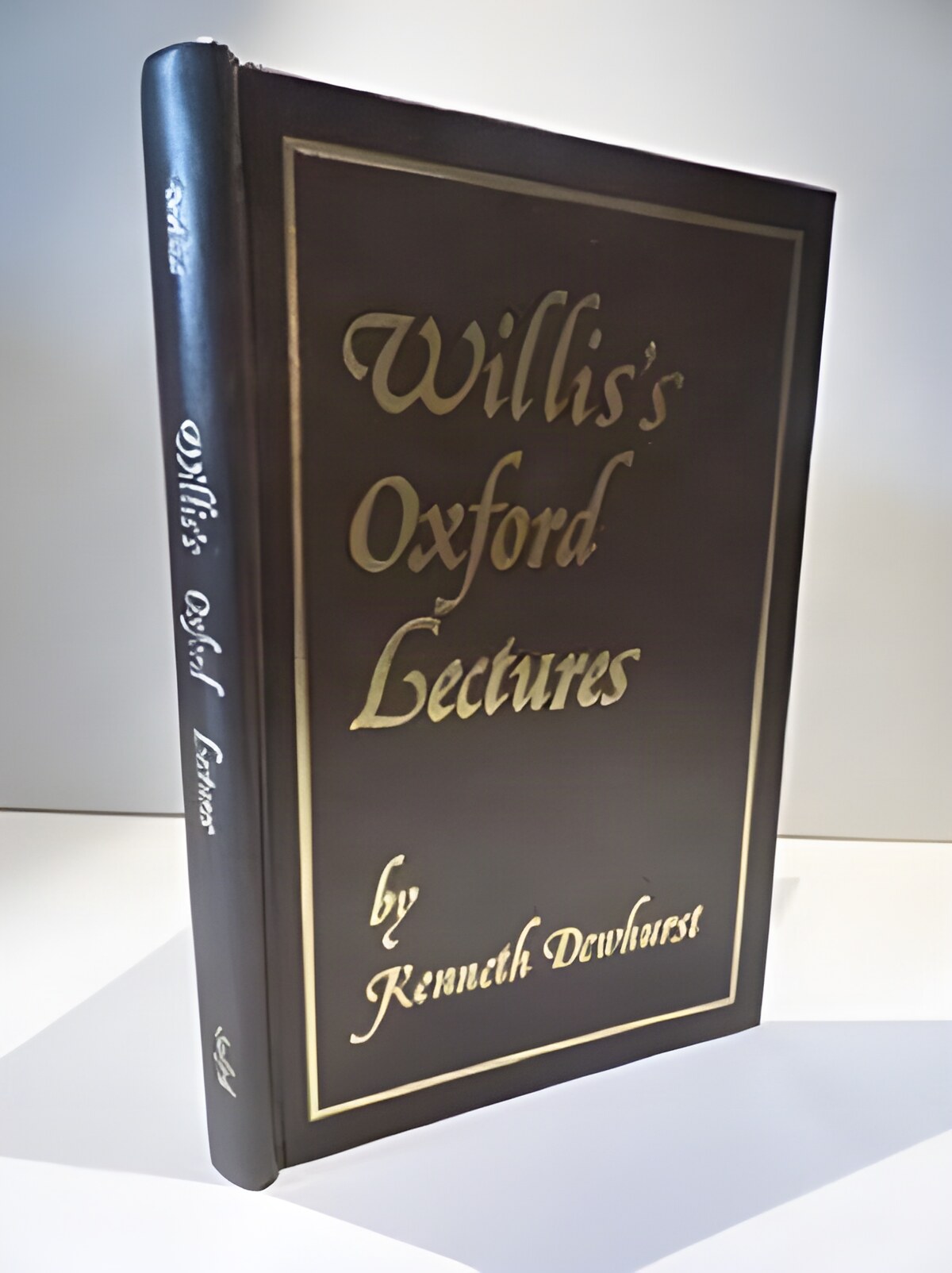
Hardcover. Oxford UK, Sandford Publications, 1st, 1980, Book: Very Good, Dust Jacket: None, Hardcover, limited to 750 copies, 182 pages, b&w illustrations, INSCRIBED BY DEWHURST on inside front cover, brown faux-leather. Thomas Willis (1621-1675) was an English doctor who played an important part in the history of anatomy, neurology and psychiatry, and was a founding member of the Royal Society.
Softcover. Princeton, Princeton University Press, 1st Edition, 2000, Book: Very Good, Dust Jacket: None, 382 pages. Softcover in very good condition with full color photo of Isaiah Berlin to cover. Tight copy. Clean & unmarked text.
Softcover. Louisville KY, Fons Vitae , Revised Ed., 2009, Book: Very Good, Dust Jacket: None, Softcover, 197 pages. Some of the earliest, most rare, formative, and concise examples of Sufi methodology to appear in translation, these works examine the inherently defective nature of the soul, the roles it must assume, the path it must travel towards purification, and how to best manage that itinerary while avoiding the pitfalls and obstacles of the journey. Clean copy.
Hardcover. NY, Abrams, 1st, 2023, Book: Very Good, Dust Jacket: Very Good, Hardcover in a bright dust jacket, 265 pages illustrated in b&w. From Bill Griffith, creator of Zippy the Pinhead and Nobody's Fool, comes Three Rocks, a biography of cartoonist Ernie Bushmiller, creator of the iconic comic strip Nancy. But this graphic novel is about more than a single comic book artist. It is the story of this American art form, tracing its inception to 1895 with the Yellow Kid, the creation of Nancy in 1933, and all the strips that followed, including Peanuts and The Far Side. When Bushmiller died in 1982, Nancy was running in almost 900 daily newspapers--a number few syndicated cartoonists ever achieve. Nancy is hailed as the "perfect" comic strip by fans and cartoonists alike. The title Three Rocks refers to the trope of three hemispherical rocks often seen in a Bushmiller landscape--just enough to communicate environment to the reader. This distillation is exemplary of the iconic, diagrammatic look of Nancy, a comic strip about the nature of what it means to be a comic strip--the perfect avatar for Griffith to expand upon his philosophy of creating comics. Clean, bright copy.
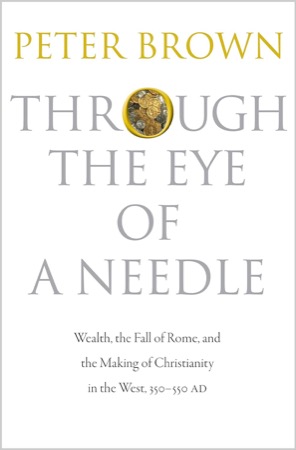
Hardcover. Princeton NJ, Princeton University Press, 1st, 2012, Book: Very Good, Dust Jacket: Very Good, Hardcover in a bright dust jacket, 759 pages, b&w illustrations. A sweeping intellectual history of the role of wealth in the church in the last days of the Roman Empire Jesus taught his followers that it is easier for a camel to go through the eye of a needle than for a rich man to enter heaven. Yet by the fall of Rome, the church was becoming rich beyond measure. Through the Eye of a Needle is a sweeping intellectual and social history of the vexing problem of wealth in Christianity in the waning days of the Roman Empire, written by the world's foremost scholar of late antiquity. Peter Brown examines the rise of the church through the lens of money and the challenges it posed to an institution that espoused the virtue of poverty and called avarice the root of all evil. Drawing on the writings of major Christian thinkers such as Augustine, Ambrose, and Jerome, Brown examines the controversies and changing attitudes toward money caused by the influx of new wealth into church coffers, and describes the spectacular acts of divestment by rich donors and their growing influence in an empire beset with crisis. He shows how the use of wealth for the care of the poor competed with older forms of philanthropy deeply rooted in the Roman world, and sheds light on the ordinary people who gave away their money in hopes of treasure in heaven. Clean copy.
Hardcover. NY, Oxford University Press, 1st, 2008, Book: Very Good, Dust Jacket: Very Good, Hardcover in a bright dust jacket, 323 pages. Although Buddhism is often depicted as a religion of meditators and philosophers, some of the earliest writings extant in India offer a very different portrait of the Buddhist practitioner. In Indian Buddhist narratives from the early centuries of the Common Era, most lay religious practice consists not of reading, praying, or meditating, but of visually engaging with certain kinds of objects. These visual practices, moreover, are represented as the primary means of cultivating faith, a necessary precondition for proceeding along the Buddhist spiritual path. In Thus Have I Seen: Visualizing Faith in Early Indian Buddhism, Andy Rotman examines these visual practices and how they function as a kind of skeleton key for opening up Buddhist conceptualizations about the world and the ways it should be navigated. Clean copy.
Hardcover. Oxford UK, Clarendon Press, 1st, 1957, Book: Very Good, Dust Jacket: None, Hardcover, blue cloth with gilt lettering on spine, 148 pages, paper with light tanning. The relationship between formal logic and general philosophy is discussed under headings such as A Re-examination of Our Tense-Logical Postulates, Modal Logic in the Style of Frege, and Intentional Logic and Indeterminism. The relationship between formal logic and general philosophy is discussed under headings such as A Re-examination of Our Tense-Logical Postulates, Modal Logic in the Style of Frege, and Intentional Logic and Indeterminism. Name on front fly leaf, otherwise clean.
Hardcover. Oxford UK, Oxford University Press, 1st, 2016, Book: Very Good, Dust Jacket: Very Good, Hardcover in a bright dust jacket, 175 pages. Despite recent advances in Locke scholarship, philosophers and political theorists have paid little attention to the relations among his three greatest works: An Essay Concerning Human Understanding, Two Treatises of Government, and Epistola de Tolerantia. As a result our picture of Locke's thought is a curiously fragmented one. Toleration and Understanding in Locke argues that these works are unified by a concern to promote the cause of religious toleration. Making extensive use of Locke's neglected replies to Proast, Nicholas Jolley shows how Locke draws on his epistemological principles to criticize religious persecution - for Locke, since revelation is an object of belief, not knowledge, coercion by the state in religious matters is not morally justified. In this volume Jolley also seeks to show how the Two Treatises of Government and the letters for toleration adopt the same contractualist approach to political theory; Locke argues for toleration from the function of the state where this is determined by the decisions of rational contracting parties. Throughout, attention is paid to demonstrating the range of Locke's arguments for toleration and to defending them, where possible, against recent criticisms. The book includes an account of the development of Locke's views about religious toleration from the beginning to the end of his career; it also includes discussions of his individualism about knowledge and belief, his critique of religious enthusiasm, his commitment to the minimal creed, and his teachings about natural law. Locke emerges as a rather systematic thinker whose arguments are highly relevant to modern debates about religious toleration. Light pencil marking to some pages.
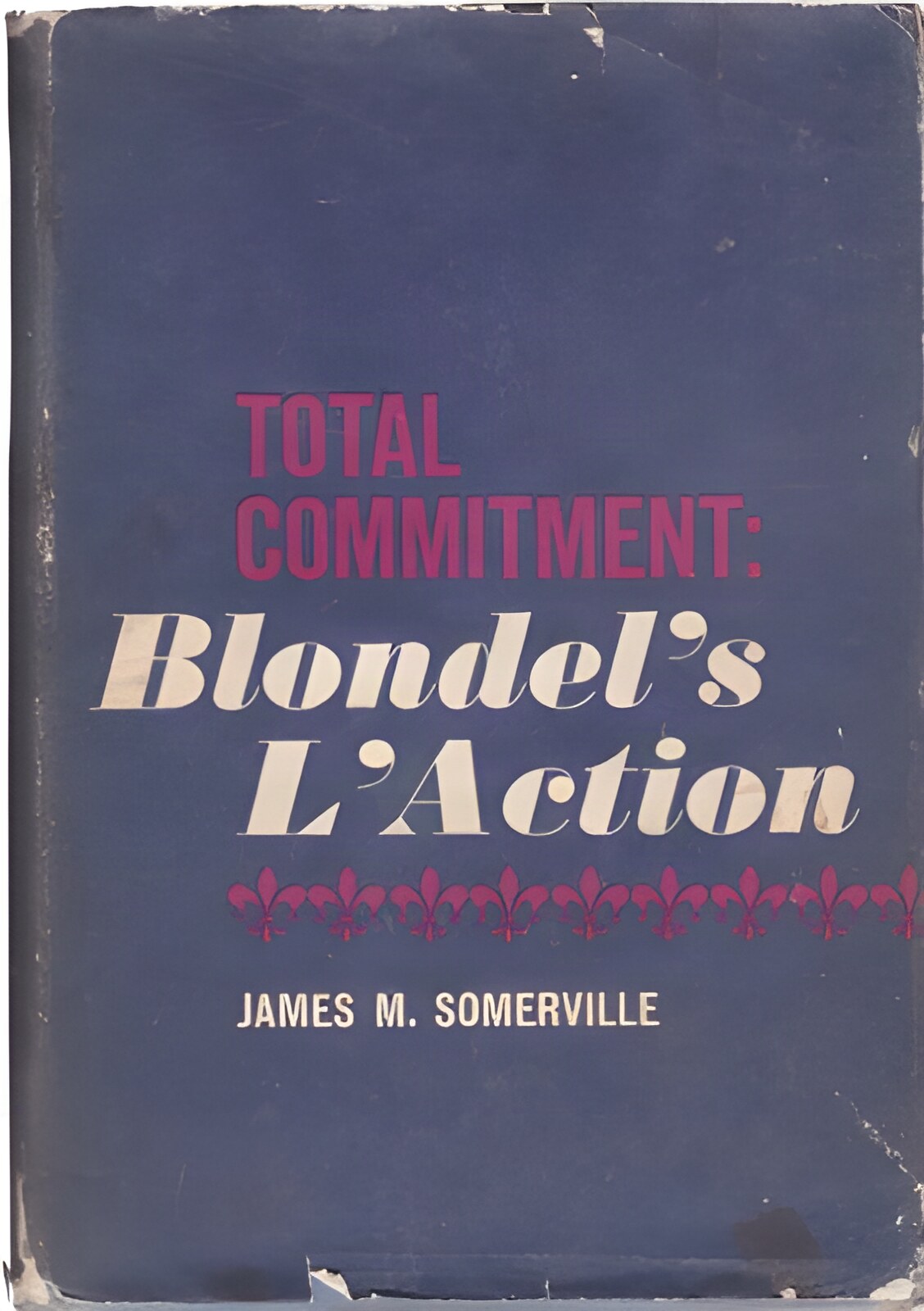
Hardcover. Washington DC, Corpus Books, 1st, 1968, Book: Good, Dust Jacket: Fair, Hardcover in a worn, chipped dust jacket, Light blue cloth covers with dark blue lettering to spine. 390 pages. Maurice Blondel was a phenomenologist long before the term was used to describe an identifiable movement. His monumental work, L'Action (1893). set the stage for an intellectual revolution that is still in progress. It remains a classic effort to demonstrate the integral unity of science, metaphysics, and the moral life in the light of man's religious aspirations. Name on front fly leaf, otherwise clean.
Hardcover. Berkeley CA, University of California Press, 1st, 1966, Book: Very Good, Dust Jacket: Very Good, Hardcover in a bright, unclipped dust jacket. Reissue of Burke's long out-of-print experimental novel, originally published in 1931. With a new Foreword by Burke for this edition. Clean copy.
Hardcover. Washington D. C., Island Press, First Edition, 1996, 235 pages. Hardcover. Off white cloth boards with orange titles to spine. Bright dust jacket with only light marginal wear. Very clean & unmarked. Crisp, tight copy.
Hardcover. London, Routledge & Kegan Paul, reprint, 1969, Book: Very Good, Dust Jacket: Good, Hardcover in a lightly worn and chipped dust jacket, 166 pages. (German and English Translation): The German text with the translation by D. F. Pears & B. F. McGuinness, and with the Introduction by Bertrand Russell. Clean copy.
Softcover. Boston, Reidel Publishing, 1st, 1979, Book: Very Good, Dust Jacket: None, Softcover, 314 pages. The goal of the present volume is to discuss the notion of a 'conceptual framework' or 'conceptual scheme', which has been dominating much work in the analysis and justification of knowledge in recent years. More specifi- cally, this volume is designed to clarify the contrast between two competing approaches in the area of problems indicated by this notion: On the one hand, we have the conviction, underlying much present-day work in the philosophy of science, that the best we can hope for in the justifi- cation of empirical knowledge is to reconstruct the conceptual means actually employed by science, and to develop suitable models for analyzing conceptual change involved in the progress of science. This view involves the assumption that we should stop taking foundational questions of epistemology seriously and discard once and for all the quest for uncontrovertible truth. The result- ing program of justifying epistemic claims by subsequently describing patterns of inferentially connected concepts as they are at work in actual science is closely connected with the idea of naturalizing epistemology, with concep- tual relativism, and with a pragmatic interpretation of knowledge. On the other hand, recent epistemology tends to claim that no subsequent reconstruction of actually employed conceptual frameworks is sufficient for providing epistemic justification for our beliefs about the world. This second claim tries to resist the naturalistic and pragmatic approach to epistemology and insists on taking the epistemological sceptic seriously. Name on front fly leaf, otherwise clean.
Hardcover. NY, Farrar, Straus & Giroux, 1st US, 2012, Book: Very Good, Dust Jacket: Very Good, Hardcover in a bright, unclipped dust jacket. Full number line down to and including 1. In grey boards with blue type to spine. Searching for an inn, the enigmatic traveler Hans stops in a small city on the border between Saxony and Prussia. The next morning, Hans meets an old organ-grinder in the market square and immediately finds himself enmeshed in an intense debate-on identity and what it is that defines us-from which he cannot break free. Indefinitely stuck in Wandernburg until his debate with the organ-grinder is concluded, he begins to meet the various characters who populate the town, including a young freethinker named Sophie. Though she is engaged to be married, Sophie and Hans begin a relationship that defies contemporary mores about female sexuality and what can and cannot be said about it. Traveler of the Century is a deeply intellectual novel, chock-full of discussions about philosophy, history, literature, love, and translation. It is a book that looks to the past in order to have us reconsider the conflicts of our present. The winner of Spain's prestigious Alfaguara Prize and the National Critics Prize, Traveler of the Century marks the English-language debut of Andres Neuman, a writer described by Roberto Bolano as being "touched by grace." Clean copy.
Hardcover. NY, Simon & Schuster, 1st, 2001, Book: Very Good, Dust Jacket: Very Good, Hardcover in a bright dust jacket with light sticker residue, 203 pages. The travel author and historian journeys to the beguiling city of Trieste, Italy, which has enchanted her for more than fifty years, to explore issues of patriotism, decency, wildness, and sex. In this love letter to Trieste a city she has grown to love over the years and never got tired of exploring Morris looks back on her life. She recalls first coming to Trieste as a soldier [male] in World War II and discusses the impact the city's way of life has had on her own philosophy of life. Each chapter begins with a philosophical quote stating its theme and setting the atmosphere. Morris is not only skilled at vividly describing townspeople and buildings in a way that brings Trieste to life, but she also successfully balances the personal with the historical by providing references to both history and literature. Clean copy.
Hardcover. New York, John Wiley & Sons, reprint, 1888, Book: Very Good, Dust Jacket: None, Hardcover, 452 pages. Blue cloth covers with gilt titles and black embossed illustration, b&w tissue-protected frontispiece of Ruskin's portrait, brown decorated endpapers, top edge gilt. Slight edgewear and rubbing to covers, previous owner's inscription on blank preview page, a few brown markings to right edge of page block, pages crisp and otherwise unmarked, stiff binding; overall, a very clean, tight copy.
Hardcover. Boston, Benjamin H. Greene, 1st, 1837, Book: Good, Scarce. 168 pages. Dark brown cloth covers w/ gilt lettering. Light edge wear, soiling to covers. Foxing to edges, end papers and pages. Pages slightly warped. Else in good condition.
Hardcover. Bristol UK, Thoemmes Press, reprint, 1997, Book: Very Good, Dust Jacket: None, Hardcover, blue cloth with gilt lettering on spine, 195 plus 276 pages. A facsimile reprint of the 1682 edition. One of 9 volumes in More's collected works. Name on front fly leaf otherwise a clean, bright copy.
Hardcover. NY, Garland Publishing, reprint, 1978, Book: Very Good, Dust Jacket: None, Hardcover, orange cloth with black lettering on spine, 195+ 276 pages. Facsimile of the original 1682 edition. From the 'British Philosophers and Theologians of the 17th and 18th Century' series, edited by Rene Wellek. Name on front fly leaf otherwise clean.
Hardcover. Boston, Houghton Mifflin, 1st, 1978, Book: Very Good, Dust Jacket: Very Good, Hardcover in a bright, unclipped dust jacket. 126 pages illustrated in color. In this intimate and profound portrait, the former Metropolitan Museum director elicits extended and revealing dialogue from the artist, revealing the philosophy and spirit of his art.
Hardcover. NY, Simon & Schuster, 1st, 2015, Book: Very Good, Dust Jacket: Very Good, Hardcover in a bright, unclipped dust jacket. 449 pages, b&w illustrations. Ty Cobb is baseball royalty, maybe even the greatest player who ever lived. His lifetime batting average is still the highest of all time, and when he retired in 1928, after twenty-one years with the Detroit Tigers and two with the Philadelphia Athletics, he held more than ninety records. But the numbers don't tell half of Cobb's tale. The Georgia Peach was by far the most thrilling player of the era: "Ty Cobb could cause more excitement with a base on balls than Babe Ruth could with a grand slam," one columnist wrote. When the Hall of Fame began in 1936, he was the first player voted in. But Cobb was also one of the game's most controversial characters. He got in a lot of fights, on and off the field, and was often accused of being overly aggressive. In his day, even his supporters acknowledged that he was a fierce and fiery competitor. Because his philosophy was to "create a mental hazard for the other man," he had his enemies, but he was also widely admired. After his death in 1961, however, something strange happened: his reputation morphed into that of a monster--a virulent racist who also hated children and women, and was in turn hated by his peers. Clean copy.
Softcover. UK, Cambridge University Press, 8th pr., 2008, Book: Very Good, Dust Jacket: None, Softcover, 751 pages. -In this wide-ranging book, based on her Gifford Lectures, philosopher Nussbaum draws on philosophy, psychology, anthropology, music and literature to illuminate the role emotions play in thoughts about important goals. Clean, bright copy.



 "Three Early Sufi Texts: A Treatise on the Heart, Stations of the Righteous, The Stumblings of Those Aspiringby: Al-Naysaburi, Abu 'Abd Al-Rahman Al-Sulami, and Honerk")







 "Toleration and Understanding in Locke by: Jolley, Nicholas")
 "Towards a Better Life: Being a Series of Epistles, or Declamations by: Kenneth Burke")


 "True and the Beautiful, Theby: Ruskin, John")
 "True Believer's Defence Against Charges Preferred by Trinitarians, for Not Believing in the Divinity of Christ, the Deity of Christ, the Trinity, etc., Theby: Morgrid")
 "TWO CHOICE AND USEFUL TREATISES ; The One LUX ORIENTALIS ; or An Enquiry into the Opinion of the Eastern Sages Concerning the Praeexistence of Souls. Being a Key to Unlock the Grand Mysteries of Providence. In Relation to Mans Sin an")
![Two Choice and Useful Treatises. [British Philosophers and Theologians of the 17th and 18th Centuries] by: Joseph Glanvill](javascript:largeIMTop('https://www.browsingisarousing.com/shop/images/Two-Choice-and-Useful-Treatises.-British-Philosophers-and-Theologians-of-the-17th-and-18th-Centuries386834-440941.jpg','https://www.browsingisarousing.com/shop/images/Two-Choice-and-Useful-Treatises.-British-Philosophers-and-Theologians-of-the-17th-and-18th-Centuries386834-440941.jpg',0,'386834',0,'') "Two Choice and Useful Treatises. [British Philosophers and Theologians of the 17th and 18th Centuries] by: Joseph Glanvill")

 "Ty Cobb: A Terrible Beautyby: Leerhsen, Charles")

