Hardcover. NY/London, Oxford University Press, 1st, 2011, Book: Very Good, Dust Jacket: Very Good, Hardcover in a bright, unclipped dust jacket, 350 pages. The essays in Intention and Identity explore themes in Finnis' work touched on only lightly, if at all, in Natural Law and Natural Rights, developing profound accounts of personal identity and existence; group identity and common good; and intention and choice as action- and self-shaping. In his many-faceted study of what it is to be a human person, and a human community, Finnis not only engages with contemporary philosophers and bioethicists such as Peter Singer, Michael Lockwood and John Harris, with thinkers from other traditions such as Karol Wojtyla (John Paul II), and with judges in the highest courts. He also offers illuminating and deeply considered readings of Shakespeare and Aquinas, and debates with Roger Scruton, Joseph Raz, Hans Kelsen, John Rawls, Glanville Williams, Richard Posner, Ronald Dworkin and others. The role of intention in the criminal law and the law of civil wrongs is searchingly explored through case-law, as are judicial attempts to understand conditional and preparatory intentions. Moral or bioethical issues discussed include in vitro fertilization, cloning, abortion, euthanasia, and 'brain death', patriotism, multi-culturalism and immigration.
Hardcover. Cambridge ; New York, Cambridge University Press, reprint, 1994, Book: Very Good, Dust Jacket: None, Hardcover, 234 pages. Laminated boards. No dust jacket issue. Clean, unmarked copy with only minor wear to covers.
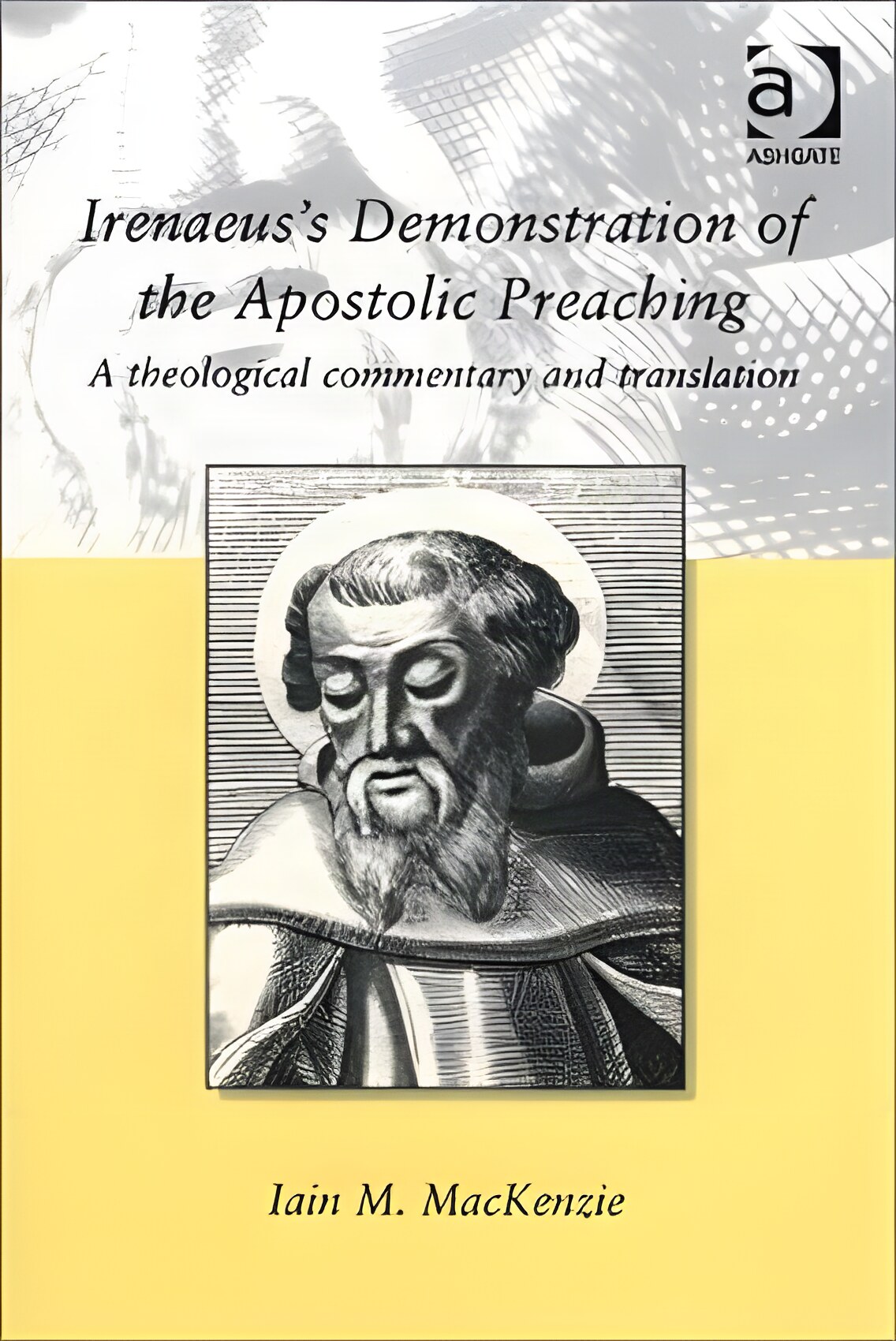
Softcover. Burlington VY, Ashgate Publishing , 1st, 2002, Book: Very Good, Dust Jacket: None, Softcover, 241 pages. The theology of Irenaeus, and the Demonstration of the Apostolic Preaching in particular, is pivotal in showing the way in which the fathers of the church interpreted scripture and distilled doctrine. The Demonstration is an important hinge showing how the doctrine of the fourth century with its definitive councils and definitions of faith, opens out from the new testament apostolic and evangelical witness. Presenting the full translation of the Demonstration of Irenaeus by Dean Armitage Robinson, this book offers a detailed theological commentary by Canon Iain MacKenzie on this foundational doctrinal text. MacKenzie sets out the main theological themes throughout Irenaeus' work, and explores his method of systematic theology, Athanasius's dependence on Irenaeus, and Irenaeus' influence on doctrine in the fourth century - particularly the works of Athanasius, Basil of Caesarea, Gregory of Nazianzus and Gregory of Nyssa. Highlighting the importance of this second century theologian for theology today, this commentary and theological interpretation offers an incentive to study Irenaeus in the wider development of Christian doctrine as a cardinal figure in the appreciation of systematic theology. Name on front fly leaf otherwise clean.
Softcover. Cambridge UK, Cambridge University Press, 1st pbk, 2004, Book: Very Good, Dust Jacket: None, Softcover, 148 pages. Andrew Janiak examines Newton's philosophical positions and his relations to canonical figures in early modern philosophy through Newton's principal philosophical writings. Janiak's study includes excerpts from the Principia and the Opticks, Newton's famous correspondence with Boyle and with Bentley, and his equally significant correspondence with Leibniz, often ignored in favor of Leibniz's later debate with Samuel Clarke. (Newton's exchanges with Leibniz place their different understandings of natural philosophy in sharp relief.) Clean copy.
Hardcover. US, University Of Chicago Press, 1st, 1991, Book: Very Good, Dust Jacket: Very Good, 229 pages. Light edgewear to dust jacket, else a clean, tight copy. Isaiah Berlin: A Celebration gathers tributes, reflections, and commentaries on the great thinker and his philosophy, politics, and life-including contributions from Michael Ignatieff, Leon Wieseltier, Ronald Dworkin, Stephen Spender, and many others.
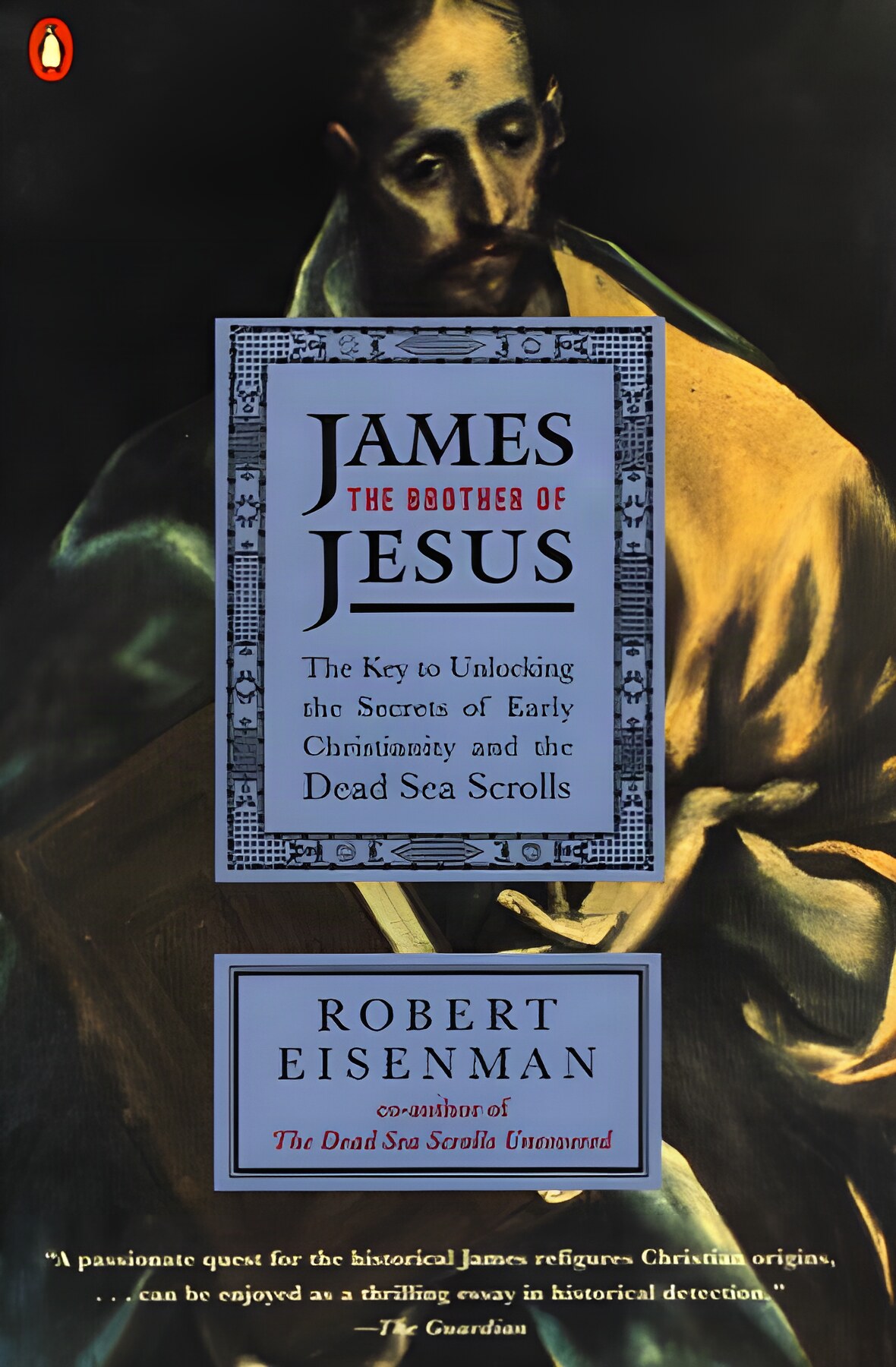
Softcover. NY, Penguin Books, reprint, 1998, Book: Very Good, Dust Jacket: None, Softcover, 1074 pages. James was a vegetarian, wore only linen clothing, bathed daily at dawn in cold water, and was a life-long Nazirite. In this profound and provocative work of scholarly detection, eminent biblical scholar Robert Eisenman introduces a startling theory about the identity of James--the brother of Jesus, who was almost entirely marginalized in the New Testament.Drawing on long-overlooked early Church texts and the Dead Sea Scrolls, Eisenman reveals in this groundbreaking exploration that James, not Peter, was the real successor to the movement we now call "Christianity." In an argument with enormous implications, Eisenman identifies Paul as deeply compromised by Roman contacts. James is presented as not simply the leader of Christianity of his day, but the popular Jewish leader of his time, whose death triggered the Uprising against Rome--a fact that creative rewriting of early Church documents has obscured. Clean copy.
Hardcover. Tokyo, Toyo Bunko, Reprint, 1969, Book: Very Good, Dust Jacket: Very Good, 377 pages. Hardcover. Volume II only. Illustrated with black & white photographs. Light wear. Clean, tight copy.
Softcover. Stanford CA, Stanford University Press, 1988, Book: Very Good, Dust Jacket: None, Softcover, 230 pages. Jean Baudrillard is one of the most topical and controversial theorists in France today. He has played a major role in the development of critical social theory and cultural sociology, and his writings are currently at the center of the 'post-modernism' debate. This volume makes his most important work widely available in English for the first time. It includes selections from the entire range of his writings, from his early work on advertising and commodity culture to his most recent writings on simulation and desire. Throughout the selections Baudrillard stresses the ways in which our lives are embedded in a world if images which have no clear reference and which are reproduced by the new mechanisms of cultural production in contemporary societies. Clean copy.
Softcover. Amherst MA, Warring States Project, 1st, 2017, Book: Very Good, Dust Jacket: None, Softcover, 191 pages. This book is an overview of the history of Early Christianity. Each chapter is based on one selection from Jewish texts or from those produced by the Jesus sect of Judaism. It gives a sense of how things happened, from the words of certain ancient prophets, to Jesus' effort to bring about those prophecies, to the efforts of his followers to reshape their expectations after his death. It follows the movement as it came to regard Jesus himself as divine, a process which eventually led to the separation of the sect from the parent religion. It ends with a glimpse of a surviving early Christian church on the shores of the Black Sea, and how it appeared to the Roman administrator who was in charge of executing those who, like the Early Christians, refused Emperor worship. From the evidence of two deaconesses whom he tortured, which Pliny reported to Emperor Trajan, we too learn what were the regular practices of that church. Clean copy.
Hardcover. Edinburgh, T and T Clark, 1st, 1998, Book: Very Good, Dust Jacket: Very Good, Hardcover in a bright dust jacket, 342 pages. Jewish-Christian contact and controversy were central to early Christian experience. An understanding of this contact and controversy and its continuation over the centuries is also central to any true understanding of the history of Christianity and of the history of Judaism. The twelve chapters of this book deal especially with the interconnected subjects of polemic and biblical interpretation. Nine are concerned with the ancient world, beginning with post-exilic Jewish writing and the New Testament and going on to later pagan, Jewish and Christian controversies. Three concentrate on medieval and early modern Jewish controversies. Clean copy.
Softcover. UK, Sutton, Revised Ed., 1999, Book: Very Good, Dust Jacket: None, Softcover, 216 pages. Joachim of Fiore has been described as the most singular and fascinating figure of mediaeval Christendom. This title explores his unique understanding of history and looks at the powerful influence of his ideas.
Hardcover. Washington DC, Dumbarton Oaks Research Library, 1st, 1998, Book: Very Good, Dust Jacket: Very Good, Hardcover in a bright dust jacket, 310 pages. John Evelyn (1620-1706), an English virtuoso and writer, was a pivotal figure in seventeenth-century intellectual life in England. He left an immensely rich literary heritage, which is of great significance for scholars interested in garden history and the histories of intellectual life and architecture. Evelyn is perhaps best known for Sylva, a compilation of thoughts on practical estate management, gardening, and philosophy, and the first book published by the Royal Society in London. As one of the group of learned men who founded the Royal Society in 1660 to promote scientific research, discussion, and publications, John Evelyn was at the center of many of the vital intellectual currents of the time. "Elysium Britannicum," Evelyn's unpublished manuscript of almost a thousand pages of densely packed drafts, rewrites, and projects, was perhaps something of an enigma to his contemporaries, who nevertheless urged its publication. It remains for scholars today a treasure-trove of fascinating insights on Evelyn and his milieu. Clean copy.
Hardcover. Thoemmes Press, 1st, 1997, Book: Very Good, Dust Jacket: None, Hardcover, black cloth with gilt lettering on spine. 284 pages. the first scholarly edition of John Locke's A Vindication (1695) and A Second Vindication of the Reasonableness of Christianity (1697), in which Locke defends the New Testament and the Christian Religion against charges of heterodoxy. The texts are accompanied by a wealth of critical and contextual apparatus. Clean copy.
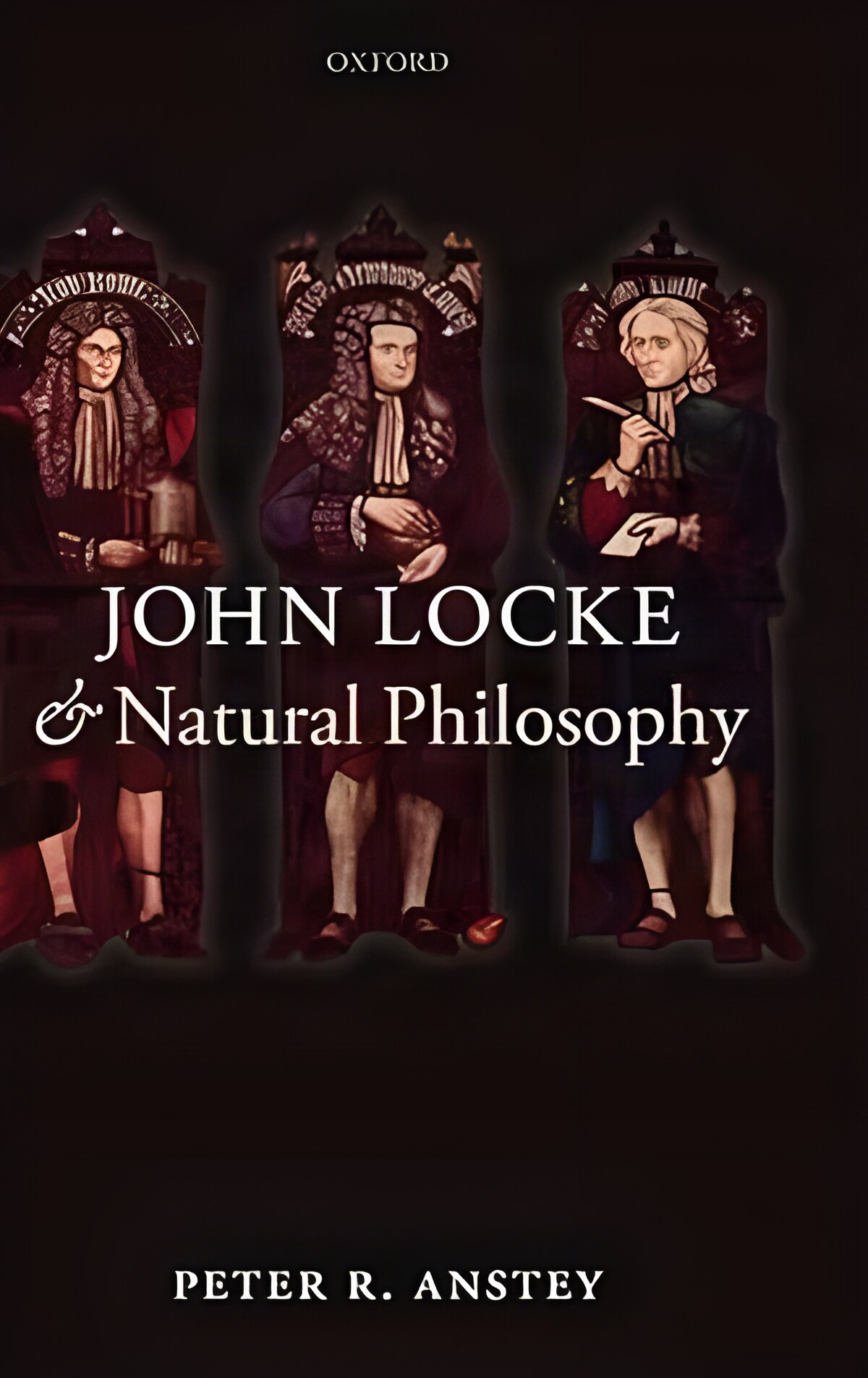
Hardcover. Oxford UK, Oxford University Press, 1st, 2011, Book: Very Good, Dust Jacket: Very Good, Hardcover in a bright dust jacket, 252 pages. Peter Anstey presents an innovative study of John Locke's views on the method and content of natural philosophy--the study of the natural world. He argues that Locke was an advocate of the Experimental Philosophy: the new approach to natural philosophy championed by the scientists of the Royal Society who were opposed to speculative philosophy. Clean, bright copy.
Hardcover. Cambridge UK, Cambridge University Press, 1st, 2006, Book: Very Good, Dust Jacket: Very Good, Hardcover in a bright dust jacket, 767 pages. 'This book is a major new intellectual and cultural history of intolerance and toleration in early modern and early Enlightenment Europe. John Marshall offers an extensive study of late seventeenth-century practices of religious intolerance and toleration in England, Ireland, France, Piedmont and the Netherlands and of the arguments which John Locke and his associates made in defence of 'universal religious toleration'. He analyses early modern and early Enlightenment discussions of toleration; debates over toleration for Jews and Muslims as well as for Christians; the limits of toleration for the intolerant, atheists, 'libertines' and 'sodomites'; and the complex relationships between intolerance and resistance theories including Locke's own Treatises. This study is a significant contribution to the history of the 'republic of letters' of the 1680s and the development of early Enlightenment culture and will be essential reading for scholars of early modern European history, religion, political science, and philosophy.' Clean copy.
Hardcover. UK, Oxford University Press, 1st, 2019, Book: Very Good, Dust Jacket: Very Good, Hardcover in a bright dust jacket, 409 pages. This is the first critical edition of the literary and historical writings of John Locke (1632-1704): poems, orations, a plan for a play, a guide to compiling a commonplace book, rules for societies, writings on the liberty of the press, and a memoir of Locke. Vol. 23 of The Clarendon Edition of the Works of John Locke. Clean copy.
Hardcover. Chapel Hill, University of North Carolina Press, 1st, 1981, Book: Very Good, Dust Jacket: Very Good, Hardcover in a bright dust jacket, 391 pages. The problems of moral philosophy were a central preoccupation of literate people in eighteenth-century America and Britain. It is not surprising, then, that Jonathan Edwards was drawn into a colloquy with some of the major ethicists of the age. Moral philosophy in this era was so all-encompassing in its claims that it encroached seriously on traditional religion. In response, Edwards presented a detailed analysis and criticism of secular moral philosophy in order to demonstrate its inadequacy, and he formulated a system that he believed was demonstrably superior to the existing secular systems. In this comprehensive study, Norman Fiering skillfully integrates Edwards's work on ethics into seventeenth- and eighteenth-century British and Continental philosophy and isolates Edwards's particular contributions to the ethical thought of his time. In addition, Fiering traces the chronological development of Edwards's thought, showing the relationship between his wide reading and his writing. Clean copy.
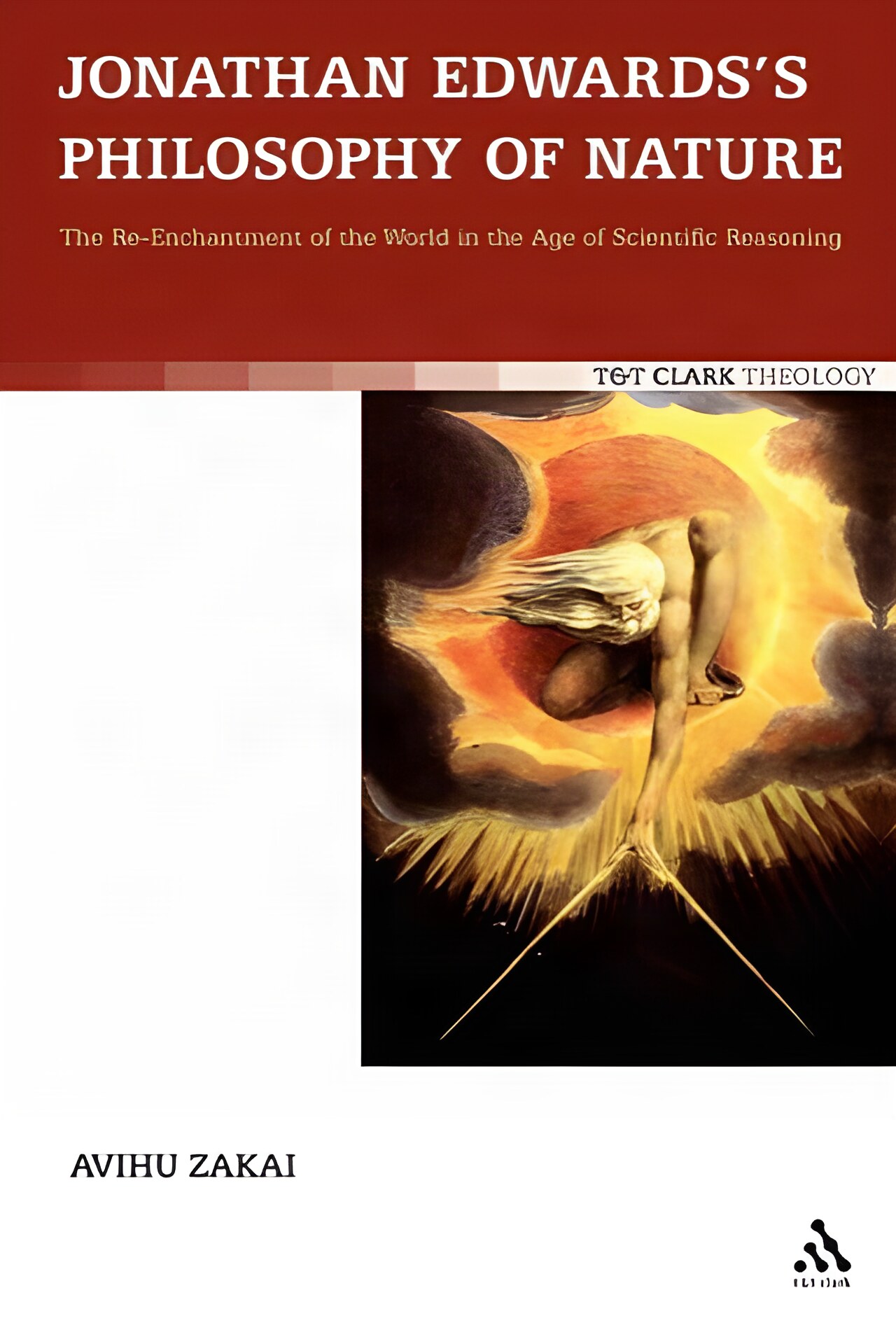
Softcover. London, T&T Clark, reprint, 2012, Book: Very Good, Dust Jacket: None, Softcover, 331 pages, INSCRIBED BU AUTHOR on the half-title page. Analyses the works of Jonathan Edwards (1703-1758) on natural philosophy in a series of contexts within which they may best be explored and understood. Its aim is to place Edwards's writings on natural philosophy in the broad historical, theological and scientific context of a wide variety of religious responses to the rise of modern science in the early modern period - John Donne's reaction to the new astronomical philosophy of Copernicus, Kepler and Galileo, as well as to Francis Bacon's new natural philosophy; Blaise Pascal's response to Descartes' mechanical philosophy; the reactions to Newtonian science and finally Jonathan Edwards's response to the scientific culture and imagination of his time. Clean, bright copy.
Hardcover. New York, Collins Brother & Co, 1st, 1845, Book: Fair, Dust Jacket: None, 309 pages. Hardcover, full leather with black band on spine. Heavy wear to tan leather edges. Water staining throughout bottom half pages, heavy foxing and tanning. bottom corners bumped. Previous owner's name on front fly leaf and end paper. Front end paper has previous owner's name pasted on small piece of paper bottom corner. Binding tight for age of copy.
Softcover. San Rafael CA, Coracle Press, reprint, 2007, Book: Very Good, Dust Jacket: None, Softcover, 330 pages, b&w frontis. A new printing of the journal and letters of Stephen Mackenna (1872-1934), a vivid and representative thinker whose life intersected with many of the leading figures of his day, and especially those of the Irish literary renaissance. The editor, E. R. Dodds, writes: Stephen MacKenna's working life was divided among three countries, and was further broken by two complete changes of occupation and by continual changes of residence. When he died, he left behind him no wife, child or lifelong friend; . . . and with the exception of the 1907-9 Journal no papers of any considerable biographical value. He left instead a legend. In the Memoir which follows I have endeavored to recover and present the facts underlying the legend. Best known for what AE (George William Russell) called his 'noble translation of Plotinus', MacKenna nonetheless harbored views that collided with those of Plotinus, and so speaks to us as an authentic forerunner of the 'modern' human being, by which is meant those who, once their individual inner light is lit-and no matter how it may gutter in the wind of uncertain freedoms-must, even while hallowing earlier and magisterial records of paths of spiritual ascent, accept the need for a complete 'descent' (without which the whole engine of creation will have had no final purpose), with all the provisional darkness this may entail, so that the final ascent may be made in personal love and freedom. Clean, bright copy.
Hardcover. Israel, Yeshivat Kol Yehuda, Reprint, 1970, Book: Very Good, Dust Jacket: Very Good, 264 pages. Hardcover. Black & white illustrations. Dust jacket with light wear along edges. Clean, unmarked pages.
Softcover. Cambridge UK, Cambridge University Press, 1st, 1987, Book: Very Good, Dust Jacket: None, Softcover, 482 pages. Previous owner's signature on front end paper, else a clean, unmarked copy with only minor wear to wrappers.



 "Invention of the Modern Republic, The by: Fontana, Biancamaria (Editor)")
 "Isaiah Berlin: A Celebrationby: Ullmann-Margalit, Edna")





 "John Locke and Christianity: Contemporary Responses to the Reasonableness of Christianity (Key Issues Series)by: Nuovo, Victor {edited and introduced by )")
 "John Locke, Toleration and Early Enlightenment Culture (Cambridge Studies in Early Modern British History)by: Marshall, John")




 "Kant and the Claims of Knowledgeby: Guyer, Paul")