Hardcover. Tarrytown, N.Y., Sleepy Hollow Press, 1st, 1981, Book: Very Good, Dust Jacket: Very Good, Hardcover, 202 pages, black & white photographs throughout. Minor dust jacket edge wear and fade, otherwise, very clean and tight copy.
Softcover. NY, Fotofolio, 1st, 1999, Book: Very Good, Dust Jacket: None, Softcover, 64 pages. Selected portrait studies of infants of both sexes, and in various attitudes, taken between 1994 and 1999; with the photographer's short introduction and acknowledgments.
Softcover. NY, Fotofolio, 1st, 1999, Book: Very Good, Dust Jacket: None, Softcover, 64 pages. Selected portrait studies of infants of both sexes, and in various attitudes, taken between 1994 and 1999; with the photographer's short introduction and acknowledgments.
Hardcover. NY, powerHouse, 1st, 2009, Book: Very Good, Dust Jacket: Very Good, Hardcover, 112 pages. Established in 1866, the Ku Klux Klan still remains one of America's most secretive organizations. New York photojournalist Anthony Karen first transcended that secrecy several years ago when he got the opportunity to photograph a KKK cross-lighting ceremony. Since then, Karen has been documenting Klan organizations throughout the country. In The Invisible Empire: Ku Klux Klan, those photographs are compiled to form an absorbing document of one of the most notorious groups in history. Taken with unrestricted access, Karen's images bring us deep inside America's most private white nationalist organizations. Beginning with a brief introduction into the history of the Klan, the book provides detailed visual accounts of modern-day Klan life, including candid shots of rallies, individual portraits of Klansmen and women, as well as a look at the naturalization process for new members. Presented in intimate profiles are: a functioning Klan ministry, a group that has merged National Socialism with Klan ideologies, and a 58-year-old seamstress who makes custom Klan robes, among others. Accompanied by quotations from the late Dale Fox, Imperial Wizard of The Brotherhood of the Klans, The Invisible Empire: Ku Klux Klan offers an unprecedented glimpse into the shadowy society and its mysterious inner workings.
Hardcover. NY, Harper, 1st, 1999, Book: Very Good, Dust Jacket: Very Good, Hardcover, 80 pages. In this unique collaboration Arturo Patten, one of the most important portrait photographers of our time, and acclaimed writer Russell Banks visit the hardscrabble north country of Patten, Maine, to study its inhabitants. Patten's haunting portraits of the town's residents evoke characters who exist in Russell Banks's fiction. Banks, the author of Cloudsplitter, The Sweet Hereafter, and Affliction, observes Patten's "characters" from his remote cabin in the Adirondack hills of upstate New York, where he surrounds himself with the thirty-seven portraits and contemplates what they tell us about Patten, Maine, about portraiture, and ultimately about ourselves.
Hardcover. NY, HarperCollins, 1st, 1999, Book: Very Good, Dust Jacket: Very Good, Hardcover, 80 pages. In this unique collaboration Arturo Patten, one of the most important portrait photographers of our time, and acclaimed writer Russell Banks visit the hardscrabble north country of Patten, Maine, to study its inhabitants. Patten's haunting portraits of the town's residents evoke characters who exist in Russell Banks's fiction. Banks, the author of Cloudsplitter, The Sweet Hereafter, and Affliction, observes Patten's "characters" from his remote cabin in the Adirondack hills of upstate New York, where he surrounds himself with the thirty-seven portraits and contemplates what they tell us about Patten, Maine, about portraiture, and ultimately about ourselves.
Hardcover. NY, Henry Holt & Co., 1st, 1998, Book: Very Good, Dust Jacket: Very Good, Hardcover, 150 pages. The noted photojournalist draws on her archive of photographs of the most important Jewish writers of the twentieth century to present an album of ninety pictures accompanied by an assessment of their significance
Hardcover. NY, Henry Holt & Co, 1s, 1998, Book: Very Good, Dust Jacket: Very Good, Hardcover, 150 pages. B&w portraits. Jill Krementz has made a career of photographing writers. The Jewish Writer features her portraits of 78 "people of the book," among them Saul Bellow, Hannah Arendt, Maurice Sendak, and David Mamet. Some of these portraits are contemplative; others are joyous. What distinguishes them is Krementz's ability to capture the essence of a moment that is at once exquisite and mundane, be it playwright Wendy Wasserstein rolling up her sleeves at her computer or an elfin Stanley Kunitz half-hiding in the blooms of his Provincetown garden. A mischievous Bruce Jay Friedman dashes around Southampton in a spiffy convertible; a bearded, bandana'd, and bespectacled Allen Ginsberg appears at the 1972 Democratic National Convention. (Though some of these photographs date from the early '70s, most are much more recent.) Each portrait is accompanied by a description of the author's life and work, and the relationship of each to Judaism, or, more accurately, Jewishness. The Jewish Writer is a spirited testament to the enormous and diverse contributions Jewish writers have made to our literary landscape.
Hardcover. New York, Harper Design, 1st, 2007, Book: Very Good, Dust Jacket: Very Good, Hardcover, 128 pages. Illustrated with 75 gorgeous b&w photographs of John F. Kennedy, Jacqueline and their children by Richard Avedon. Foreword by Robert Dallek. Text by Shannon Thomas Perich.
Hardcover. NY, Harper Design, 1st, 2007, Book: Very Good, Dust Jacket: Very Good, Hardcover, 128 pages. In the early 1960s, Richard Avedon was commissioned by Harper's Bazaar to create Observations, a column that consisted of a series of nine photographic essays. The subject of the first essay was John F. Kennedy and his young family, who sat for formal black-and-white portraits just three weeks prior to Kennedy's presidential inauguration. Six images appeared in the magazine's February 1961 issue. That same day, Avedon created more informal color portraits of Kennedy and his family at the Kennedy compound in Palm Beach. One of these images ran as the cover of LOOK magazine's February 28 issue, with photographs by Avedon inside. Just before the magazine hit the newsstands and was delivered to over 6.5 million people, a set of photographs, comprised mostly of the LOOK images, was released by the White House and appeared in newspapers across the country. During his lifetime, Richard Avedon donated more than two hundred images to the Smithsonian Institution, including all of the photographs of the Kennedy family sitting for Harper's Bazaar. Smithsonian curator Shannon Thomas Perich has culled more than seventy-five images from that donation for The Kennedys: Portrait of a Family, making these stunning photographs available for view for the first time. Perich's introductory essay--accompanied by a wealth of archival photographs of both Avedon and the Kennedy family--provides historical background on the two sittings within a political and cultural context and critically examines the work of one of the finest photographers of the twentieth century. A foreword by Robert Dallek, distinguished historian and author of the bet-selling An Unfinished Life: John F. Kennedy, 1917-1963, provides authoritative and compelling insight to one of the most fascinating presidents in American history.
Hardcover. Greenwich CT, New York Graphic Society, 1st, 1960, Book: Very Good, Dust Jacket: None, Hardcover, pebbles white cloth stamped in gilt. 170 pages. 83 tipped in color plates throughout. This enormous volume features full-color photography of art rarely seen in the West. From one of the most extensive - yet hidden - collections in Europe comes this treasury of works of art, statuary, tapestry, jewelry, and much, much more. Comprehensively annotated by one of the foremost art historians specializing in Russian artworks. Hairline crack to cover at spine, overall clean with tight binding. No dust jacket.
Hardcover. Center for American Places, 1st, 2005, Book: Very Good, Dust Jacket: Very Good, Hardcover, 232 pages. The Mississippi River flows through American history and culture as a mythic waterway brimming with tragedy and hope, and awash in passionate ambitions and harsh realities. In 1953, a young Charles Dee Sharp traveled twice down the Mississippi (first by towboat and then by car along the renowned river road Highway 61) to make a documentary film of it, taking black-and-white photographs of the river, its communities, and its people. While Sharp's documentary never came to fruition, the striking images he captured survived as moving and evocative historical testaments to a lost era, now collected in his new book The Mississippi in 1953. These images create a vivid portrait of America's heartland a half century ago, and they are enriched with excerpts from Sharp's original trip journal, intriguing anecdotes from the people he encountered along his journey, and an engaging environmental history of the river by historian John O. Anfinson. The Mississippi in 1953 offers an original and poignant look at the living artery of the American landscape and how it molded the United States into the nation it is today.
Hardcover. Daab Publishing, 1st, 2006, Book: Very Good, Dust Jacket: Very Good, Hardcover, 240 pages. David Bradford is a photographer and New York City taxi driver, who epitomizes the concept of carrying a camera during regular day-to-day activities. Bradford mainly shoots while he's working, capturing the essence of New York City in all its human, architectural and climatic diversity. In his second book, he presents a selection of his passengers, which sat down at his backseat. The result is a collection that captures the breadth of humanity - the whole world of people - that can pass through the back seat of a New York City taxi.
Hardcover. NY, Quadrangle Books, 1st US, 1976, Book: Very Good, Dust Jacket: Very Good, Hardcover in a bright, unclipped dust jacket. 288 pages, over 300 photos in b&w of the performer. Clean copy.
Hardcover. Santa Fe NM, Twin Palms Publishers, 1st, 2005, Book: Very Good, Dust Jacket: Very Good, Hardcover, 188 pages with color plates. Like new in publishers shrink-wrap. This book is the first comprehensive selection of Jeff Burton's work in pornography which began in the 1980s with his portraits and stills for pornographic video boxes. This oversize volume captures the lush atmosphere and isolation of the men and women working in the California pornographic industry through the eyes of one of its most brilliant observers.
Hardcover. NY, Abrams, 1st, 2008, Book: Very Good, Dust Jacket: Very Good, Hardcover, 300 pages. In this lavishly produced volume, journalist Gaudriault accompanies photographer Rancinan to Africa, Asia, Europe and the United States to interview 23 masters of contemporary photography, paying homage to fashion photographers and photojournalists, traditional chroniclers of their times and conceptual artists. Rancinan's photographs record each encounter in portraits that encapsulate each subject's relationship with his shared discipline. Readers follow paparazzo Ron Galella fending off the camera; Martin Parr, the sardonic chronicler of middle-class British life, having tea in a cafe; Rankin, the creator of the hip magazine Dazed and Confused, hopping into a trashcan filled with his own cast-off images. Gaudriault's short essays quote liberally from her interviews and provide both biographical information and incisive commentary. Several of the older photographers strike an elegiac tone and confess to finding themselves at the end of the eras that gave birth to their visions, but optimism reigns among younger practitioners: David LaChapelle is reinventing himself in Hawaii; Rankin is bearing witness to an age that is still young; and Oliviero Toscani, the radical combination of journalist and marketer behind the Benetton campaigns, describes billboards as the church frescoes of today.
Hardcover. London, Clearview, 1st, 2019, Book: Very Good, Dust Jacket: None, Hardcover, pictorial boards with a paste-down label, 160 pages, illustrated in color and b&w. Foreword by Elton John and David Furnish. A polaroid is the physical and organic reminder of a particular moment, enabling the creative team to step back and fully consider the technical and artistic direction of a photoshoot. The excitement of watching the image slowly developing and seeing the final result makes the polaroid a tiny artwork all of its own.In this book, uber-stylist and storyteller Jo Hambro showcases some of her vast personal records of polaroids taken from the fashionshoots she has worked on over the last two decades. Combined with her extraordinary notebooks, scribbles and sketches formulating the stories that each shoot is based on, (in which polaroids are an indispensable part), we are taken into the hidden world of fashion's creative process. Clean copy.
Hardcover. Boston, Bulfinch, 1st, 1991, Book: Very Good, Dust Jacket: Very Good, Hardcover, 135 pages, Color photos by Schiffman that originally appeared in Rolling Stone magazine. Brief profiles accompany portraits of Robin Williams, Steve Martin, Lilly Tomlin, Jerry Lewis, Jonathan Winters, Whoopi Goldberg, and other comedians.
Hardcover. NY, Random House, 1st, 1999, Book: Very Good, Dust Jacket: Very Good, Hardcover, 240 pages. The Sixties is the product of a 30-year collaboration between photographer Richard Avedon and writer Doon Arbus, whose images and words combine in this volume to create a compelling portrait of one of the 20th century's most tumultuous decades. Avedon, the celebrated photographer whose portraits of some of the best-known personalities of our age have graced the pages of Harper's Bazaar, Vogue, and The New Yorker magazines since the early 1950s, was prolific during the '60s. Looked at together, his images from those years create a visual time capsule. This large book is filled with a cacophony of Yippies, Black Panthers, Weathermen, Hare Krishnas, Andy Warhol Factory Superstars, pop artists, rock musicians, astronauts, pacifists, politicians, electroshock therapists, media correspondents, civil rights lawyers, antiwar activists, and more--all shot against his signature white background. Arbus, a novelist and writer for magazines including Rolling Stone and The Nation (and the daughter of photographer Diane Arbus), conducted interviews with many of the subjects. Snippets of those conversations provide an intimate and unforgettable document of the tension, vulnerability, anger, recklessness, hope, and empowerment many people experienced during that era. Brief biographies of the portrait sitters, as well as a chronology that spans the first signs of the war in Vietnam in 1960 to its final conclusion in 1973, provide excellent context for the images.
Hardcover. NY, Random House, 1st, 1999, Book: Very Good, Dust Jacket: Very Good, Hardcover, 240 pages. The Sixties is the product of a 30-year collaboration between photographer Richard Avedon and writer Doon Arbus, whose images and words combine in this volume to create a compelling portrait of one of the 20th century's most tumultuous decades. Avedon, the celebrated photographer whose portraits of some of the best-known personalities of our age have graced the pages of Harper's Bazaar, Vogue, and The New Yorker magazines since the early 1950s, was prolific during the '60s. Looked at together, his images from those years create a visual time capsule. This large book is filled with a cacophony of Yippies, Black Panthers, Weathermen, Hare Krishnas, Andy Warhol Factory Superstars, pop artists, rock musicians, astronauts, pacifists, politicians, electroshock therapists, media correspondents, civil rights lawyers, antiwar activists, and more--all shot against his signature white background. Arbus, a novelist and writer for magazines including Rolling Stone and The Nation (and the daughter of photographer Diane Arbus), conducted interviews with many of the subjects. Snippets of those conversations provide an intimate and unforgettable document of the tension, vulnerability, anger, recklessness, hope, and empowerment many people experienced during that era. Brief biographies of the portrait sitters, as well as a chronology that spans the first signs of the war in Vietnam in 1960 to its final conclusion in 1973, provide excellent context for the images.
Softcover. Atlanta GA, Institute for Southern Studies, 1st, 1975, Book: Very Good, Dust Jacket: None, Softcover, 85 pages. A collection of b&w photos, printed in duotone. Locales, portraits and local events that exhibit the lifestyle of the American South. Clean copy.
Hardcover. London, Merrell, 1st, 2003, Book: Very Good, Dust Jacket: Very Good, Hardcover, 351 pages, color and b&w plates. This book collects Willoughby's candid photographs from the sets of various great films since the 1950s. Also included are filmographies of the directors with whom he has worked. As the subtitle indicates, he really has collaborated with many of the great cinema luminaries. Beginning with Vincente Minnelli, they include Orson Welles, William Wellman, George Stevens, Mike Nichols, William Wyler, Alfred Hitchcock, and others. The most interesting aspect of this book is indisputably the photos (most of them black and white), many of which were shot in informal settings, showing directors and actors in seemingly unguarded moments. He made himself seem invisible, Willoughby said, by blending in with the movie crew, once he realized they were invisible to the actors.
Hardcover. Boston, David Godine, 1st, 2009, Book: Very Good, Dust Jacket: Very Good, Hardcover, 192 pages. The photography of Angus McBean encompasses more than three decades of the history of British theater. His work includes most of the memorable productions of the Old Vic Company and of what is now the Royal Shakespeare Company; opera productions at Glyndebourne and the Royal Opera House, Covent Garden; ballet and operetta at Sadler's Wells; and West End productions of plays and musicals both old and new-hundreds of productions in all. McBean was the favorite photographer of Vivien Leigh, Laurence Olivier, and Edith Evans, and he photographed countless plays starring John Gielgud, Ralph Richardson, and Alec Guinness, not to mention younger stars such as Audrey Hepburn, Richard Burton, and Elizabeth Taylor. In fact, McBean photographed virtually every great actor of his era, perhaps the most brilliant years in the annals of British theater.

 "The Hudson River: 1850-1918: A Photographic Portraitby: Simpson, Jeffrey")
 "The Inconvenience Of Being Bornby: Amy Arbus")
 "The Inconvenience Of Being Bornby: Amy Arbus")
 "The Invisible Empire: Ku Klux Klanby: Anthony S. Karen")
 "The Invisible Stranger: The Patten, Maine, Photographs of Arturo Pattenby: Russell Banks and Arturo Patten")

 "The Jewish Writerby: Jill Krementz")
 "The Jewish Writerby: Krementz, Jill")
 "The Kennedys: Portrait Of A Familyby: Avedon, Richard")




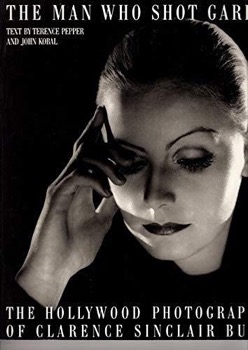
 "The Mississippi River in 1953: A Photographic Journey from the Headwaters to the Deltaby: Sharp, Charles Dee")
 "The New York Taxi Back Seat Bookby: Bradford, David/Barry Wells")
 "The Nureyev Image by: Bland, Alexander")


 "The Other Placeby: Burton, Jeff")
 "The Photographer by: Gerard Rancinan and Caroline Gaudriault")



 "The Rolling Stone Book of Comedyby: Bonnie Schiffman and Bill Zehme")
 "The Sixtiesby: Avedon, Richard and Doon Arbus")
 "The Sixtiesby: Avedon, Richard and Doon Arbus")
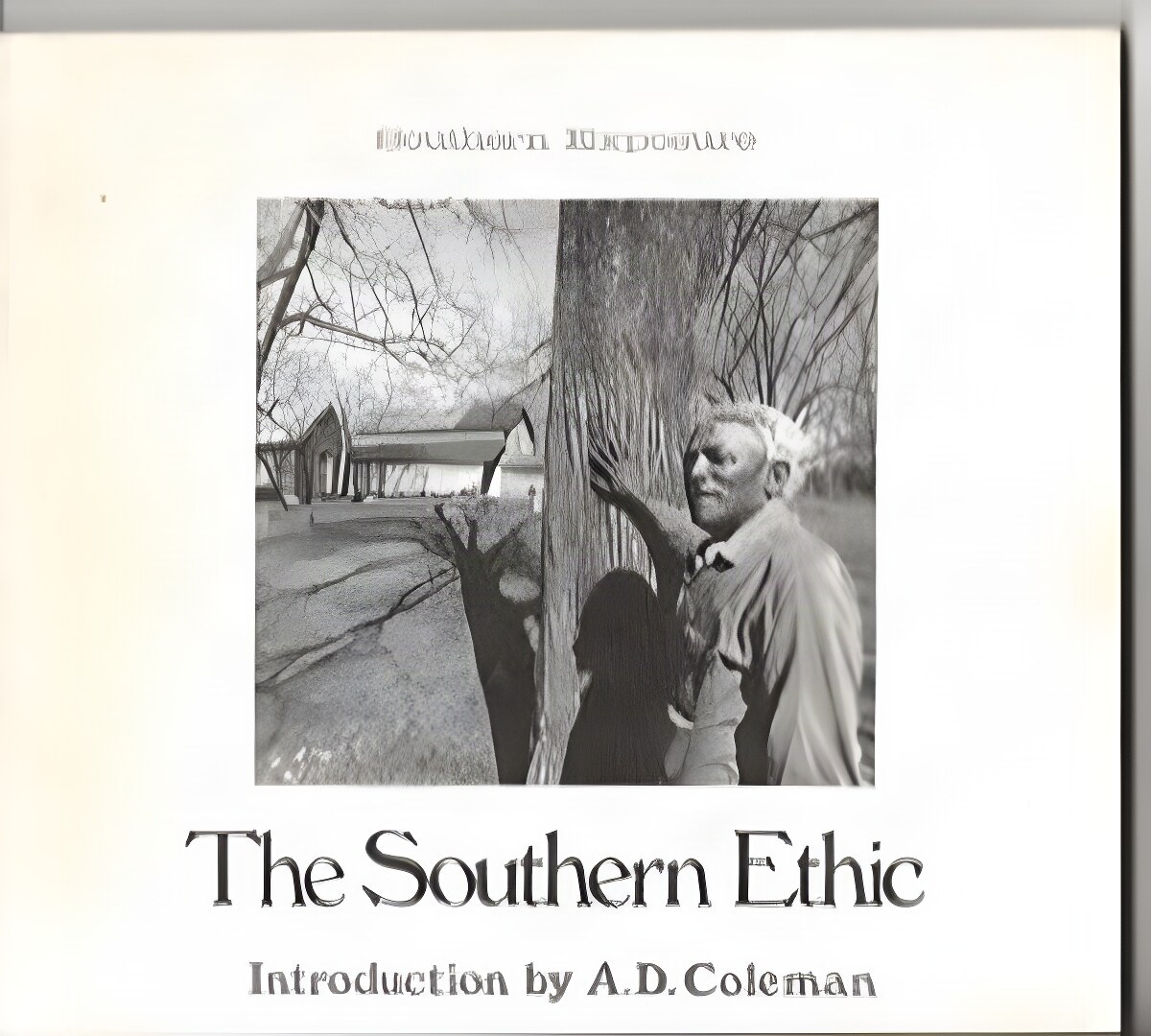
 "The Star Makers: On Set with Hollywood's Greatest Directorsby: Willoughby, Bob/ Sydney Pollack (Intro.)")
 "The Theatrical World of Angus McBean: Photographs from the Harvard University Theatre Collectionby: Fredric Woodbridge Wilson and Richard Traubner")