Hardcover. NY, W. W. Norton , 1st, 2007, Book: Very Good, Dust Jacket: Very Good, Hardcover, 176 pages, 120 b&w images. Once locked away in European archives, these early modernist photographs of America rival those of Steichen and Evans. Emil Otto Hoppe was born in Munich in 1878 but lived in London from 1900 until his death in 1972. He was an early and important modernist whose seminal views of the United States in the 1920s rival those of his peers: Paul Strand, Edward Steichen, Alfred Stieglitz, and Walker Evans. His work shows us an America as only an outsider could: brave, new, and grand in scale but with a hint of trouble brewing in the gaps between its multicultural and economic diversities.
Hardcover. NY, W. W. Norton , 1st, 2008, Book: Very Good, Dust Jacket: Very Good, Hardcover, 208 pages, b&w illustrations. Photographer E. O. Hoppe journeyed to Australia in the 1930s with the goal of capturing "the true spirit" of the nation. Enthralled by the country and its people, he traveled for a year tirelessly capturing images of life in bustling cities as well as the remote interior. No other photographer had presented such a comprehensive national portrait at the time; his iconic images captured a land both wild and refined. Very good in a bright dust jacket.
Hardcover. Gottingen GR, Steidl, 1st, 2015, Book: Very Good, Dust Jacket: Very Good, Hardcover, 237 pages, b&w plates throughout. Hoppe traveled throughout Germany between 1925 and 1938, photographing movie stars, workers and peasants, the birth of the Autobahn, and the explosion of industrial building. This collection includes parts of his 1930 book "Deutsche Arbeit" and many photos never previously seen. Clean copy in a dust jacket.
Hardcover. Boston/NY, Bulfinch/Little Brown, 1st, 2002, Book: Very Good, Dust Jacket: Very Good, Hardcover, 96 pages. Essay by Maria Morris Hambourg. Includes 54 tritones, 10 text illustrations and 4 gatefolds. A clean and tight near fine copy. Published in conjunction with a traveling show that ran January 14 through April 21, 2002 at The Metropolitan Museum of Art
Hardcover. NY, Scribner, 1st, 2012, Book: Very Good, Dust Jacket: Very Good, Hardcover in a bright, unclipped dust jacket. SIGNED BY OTTO on the title page. This captivating novel opens in 1917 as Cymbeline Kelley surveys the charred remains of her photography studio, destroyed in a fire started by a woman hired to help take care of the house while Cymbeline pursued her photography career. This tension-- between wanting and needing to be two places at once; between domestic duty and ambition; between public and private life; between what's seen and what's hidden from view--echoes in the stories of the other seven women in the book. Among them: Amadora Allesbury, who creates a world of color and whimsy in an attempt to recapture the joy lost to WWI; Clara Argento, who finds her voice working alongside socialist revolutionaries in Mexico; Lenny Van Pelt, a gorgeous model who feels more comfortable photographing the deserted towns of the French countryside after WWII than she does at a couture fashion shoot; and Miri Marx, who has traveled the world taking pictures, but also loves her quiet life as a wife and mother in her New York apartment. Crisscrossing the world and a century, Eight Girls Taking Pictures is an affecting meditation on the conflicts women face and the choices they make. These memorable characters seek extraordinary lives through their work, yet they also find meaning and reward in the ordinary tasks of motherhood, marriage, and domesticity. Most of all, this novel is a vivid portrait of women in love--in love with men, other women, children, their careers, beauty, and freedom.
Hardcover. NY, Thames & Hudson, 1st, 2007, Book: Very Good, Dust Jacket: Very Good, Hardcover, 208 pages, color illustrations. Introduction by Paul Theroux. This album of over 200 century-old postcards takes the reader on a magical journey across the world in five travelogues, depicting the Orient, the Arab lands, Africa, the Americas and Oceania. These haunting postcards and the people they depict strike us with a special force today, vividly expressing a deep-seated connection with the land and customs that gave them their identities. Clean, bright copy in a dust jacket.
Hardcover. Paris, Editions Place de Victoires, 1st, 2010, Book: Very Good, Dust Jacket: Very Good, Hardcover, 599 pages. Like new in publishers shrink-wrap. This vivid photo-essay on the great adventure of discovery and exploration 1860-1930 is drawn from the collection of The Royal Geographical Society in London. It begins with Stanley and Livingstone in Africa and proceeds through Asia and Oceania, the Americas, and the Middle East. The work of twenty-three intrepid photographers are included.
Hardcover. New York, Aperture, reprint, 1998 , Book: Very Good, Dust Jacket: Very Good, Hardcover, 162 pages, many B&W & sepia period photographs of China, its people and culture. Very richly illustrated, captions, chronology, list pioneer photographers, sources, general bibliography, acknowledgments. Photographs from the archives of Arnold Arboretum - Harvard University.
New York, Aperture, Rep., 1998 , Book: Very Good, Dust Jacket: Very Good, Hardcover, 162 pages, many B&W & sepia period photographs of China, its people and culture. Very richly illustrated, captions, chronology, list pioneer phiotographers, sources, general bibliography, acknowledgements. Photographs from the archives of Arnold Arboretum - Harvard University.
Hardcover. NY, Viking, 1st , 1993, Book: Very Good, Dust Jacket: Very Good, 160 pages. Hardcover with dust jacket. Ed. by David King and Francis Wyndham. Color travel photos by Chatwin. Light edge wear to covers, otherwise clean, tight copy.
Hardcover. New York , Viking Adult, 1st US, 1993, Book: Very Good, Dust Jacket: Very Good, 160 pages, illustrated throughout in color. Remainder mark to bottom edge, light shelf-wear to dust jacket, else a clean, tight copy.
Hardcover. London, Dewi Lewis Publishing, 1st, 2007, Book: Very Good, Dust Jacket: Very Good, 156 pages. Hardcover with dust jacket. Brand new copy still in wrapper. Book in near fine condition. Very clean, unmarked copy. Color and black & white images throughout. Tight copy.
Hardcover. New York, Dahesh Museum of Art, July 2002, Book: Near Fine, Dust Jacket: Near Fine, Hardcover in a dust jacket. Never opened, still in original shrink wrap. Spotless copy. Frederic Church (1826-1900), who gained international renown for paintings such as Niagara (1857), Heart of the Andes (1859), Twilight in the Wilderness (1860), and The Icebergs (1861), was inspired by his extensive travel and study. His work was also informed by his appreciation of a new visual medium. Fire & Ice, a selection from the several thousand photographs and daguerreotypes Church collected at Olana, his Orientalist home on the Hudson River, provides insight into the interests and taste of one of nineteenth-century America's greatest painters.
Hardcover. NY, Crown, 1st, 1999-12-08, Book: Very Good, Dust Jacket: Very Good, 132 pages, illustrated throughout in b&w. Light edgewear and rubbing to dust jacket, else a clean, tight copy. SIGNED BY MILLER.
Hardcover. New York , Umbrage Editions, 1st, 2006, Book: Very Good, Dust Jacket: Very Good, Hardcover in a bright dust jacket.217 pages, b&w photos documenting Edinger's travels, some color. Essays by Simonetta Persichetti and Nan Richardson.
Hardcover. New Haven, CT, Yale University Press, 1st, 2015, Book: Very Good, Dust Jacket: Very Good, 224 pages. Hardcover with dust jacket. Very clean, like new copy still in publishers shrink wrap. Over 200 duotone images throughout. Tight copy. Born in Cork, Ireland, Frank Browne (1880-1960) was both a distinguished Jesuit and an accomplished photographer. At age 17, before commencing his studies for the priesthood, he embarked on a tour of Europe armed with a camera. Browne quickly discovered a strong affinity for photography, and continued to take photographs throughout his life. It was not until 1985, however-when Father Edward O'Donnell SJ discovered a large trunk in the Irish Jesuit Provincial's House and found it packed with negatives and photographs-that Browne was catapulted to international fame. Father Browne's remarkable life is recorded in the superb selection of images presented in this book. With wit and a sharp eye, he observed 20th-century Ireland; life as a Jesuit priest; his experience as a passenger on the first leg of the voyage of the Titanic in 1912; and his later travels throughout Europe, Egypt, Yemen, Ceylon, and Australia. This handsome, copiously illustrated volume offers a complete survey of the photographic work of an exceptional man.
Hardcover. NY, Scalo/DAP, 1st, 1996, Book: Very Good, Dust Jacket: Very Good, Hardcover, 572 pages, b&w photos. As a photographer for Life magazine from 1936 to 1959, John Phillips witnessed his share of troubles. His discerning and unflinching eye captured images as horrific as concentration camps and battlefield remnants with a kind of detachment that seemed to share his audience's senses of shock and outrage. He also found himself in the company of such illustrious leaders as FDR, Churchill, Stalin, and Tito during his prodigious travels across the world. Phillips, who died in 1996, was with the magazine from its inception, and his work helped to cement the publication's reputation for capturing unforgettable moments and images. Though plenty of lighter moments grace these pages, many of the included photographs are devoted to exposing one of the most turbulent periods of the 20th century, giving the book a historic sense of tragedy that can still be felt 50 years later.
Hardcover. Reading, Garnet, 1st UK, 1994, Book: Very Good, Dust Jacket: Very Good, 118 pages. Illustrated with black & white photographs by Freya Stark. 1/2" deep closed tear at top right corner of first 4 pages - appears to be publishers error. Clean, bright copy.
Softcover. San Francisco, Sierra Club Books, 1st pbk., 1995, Book: Very Good, Dust Jacket: None, Softcover, 288 pages illustrated in color. In sixty practical yet inspirational essays drawn from his Outdoor Photographer column, and in 145 stunning color photographs, world-renowned photographer Galen Rowell explains and demonstrates the techniques he uses to transform light and color into vivid, uniquely expressive art. The illuminating essays in Galen Rowell's Vision are grouped into four chapters covering the fundamental aspects of the art of adventure photography as practiced by one of its masters: "Goals," transforming dreams into realities through personal vision; "Preparations," pushing the limits of equipment, film, and technique; "Journeys," merging visions with realities; and "Realizations," communicating one's worldview through photography. Throughout, Rowell includes examples of some of his most memorable images and relates fascinating anecdotes from his extraordinary photographic career. Clean copy.
Hardcover. NY, powerHouse Books, 1st, 2006, Book: Very Good, Dust Jacket: Very Good, Hardcover in a bright dust jacket, 119 pages. SIGNED AND INSCRIBED BY STANLEY BURNS on the title page. Japanese geisha and courtesans intrigue and fascinate Westerners. During the mid-nineteenth century, Japan opened its doors to the world and became an essential destination for travelers. Tourists desired images of landscapes and traditional Japanese culture, which Japanese photographers provided. They created souvenir albums consisting of hand-colored photographs individually chosen by the tourist. Many are so beautifully painted that they challenge modern sensibilities familiar with color photography. The photographic conventions were inspired by the aesthetics of the noted colored woodblock print medium of ukiyo-e and the privately published surimono. These works depicted the "floating world"--courtesans, geisha, and entertainments--which also were intriguing subject matter for tourists. The beautiful, large photos in this volume give a special insight into the old world of geisha. Clean copy.
Hardcover. NY, Farrar, Straus and Giroux, 1st, 2017, Book: Very Good, Dust Jacket: Very Good, Hardcover in a bright dust jacket, 206 pages. Famously unabashed, W. Eugene Smith was photography's most celebrated humanist. As a photo essayist at Life magazine in the 1940s and '50s, he established himself as an intimate chronicler of human culture. His photographs of war and disaster, villages and metropolises, doctors and midwives, revolutionized the role of images in journalism, transforming photography for decades to come. When Smith died in 1978, he left behind eighteen dollars in the bank and forty-four thousand pounds of archives. He was only fifty-nine, but he was flat worn-out. His death certificate read "stroke," but, as was said of the immortal jazzman Charlie Parker, Smith died of "everything," from drug and alcohol benders to weeklong work sessions with no sleep. Lured by the intoxicating trail of people that emerged from Smith's stupefying archive, Sam Stephenson began a quest to trace his footsteps. In Gene Smith's Sink, Stephenson merges traditional biography with rhythmic digressions to revive Smith's life and legacy. Traveling across twenty-nine states, Japan, and the Pacific, Stephenson profiles a lively cast of characters, including the playwright Tennessee Williams, to whom Smith likened himself; the avant-garde filmmaker Stan Brakhage, with whom he once shared a Swiss chalet; the artist Mary Frank, who was married to his friend Robert Frank; the jazz pianists Thelonious Monk and Sonny Clark, whose music was taped by Smith in his loft; and a series of obscure caregivers who helped keep Smith on his feet. The distillation of twenty years of research, Gene Smith's Sink is an unprecedented look into the photographer's potent legacy and the subjects around him. Clean, bright copy.
Hardcover. Taschen, 1st, 2013, Book: Very Good, Dust Jacket: Very Good, Hardcover, 520 pages. Over 30 trips-traveled by foot, light aircraft, seagoing vessels, canoes, and even balloons, through extreme heat and cold and in sometimes dangerous conditions-Salgado created a collection of images showing us nature, animals, and indigenous peoples in breathtaking beauty. Mastering the monochrome with an extreme deftness to rival the virtuoso Ansel Adams, Salgado brings black-and-white photography to a new dimension; the tonal variations in his works, the contrasts of light and dark, recall the works of Old Masters such as Rembrandt and Georges de La Tour. What does one discover in GENESIS? The animal species and volcanoes of the Galapagos; penguins, sea lions, cormorants, and whales of the Antarctic and South Atlantic; Brazilian alligators and jaguars; African lions, leopards, and elephants; the isolated Zo'e tribe deep in the Amazon jungle; the Stone Age Korowai people of West Papua; nomadic Dinka cattle farmers in Sudan; Nenet nomads and their reindeer herds in the Arctic Circle; Mentawai jungle communities on islands west of Sumatra; the icebergs of the Antarctic; the volcanoes of Central Africa and the Kamchatka Peninsula; Saharan deserts; the Negro and Jurua rivers in the Amazon; the ravines of the Grand Canyon; the glaciers of Alaska... and beyond. Having dedicated so much time, energy, and passion to the making of this work, Salgado calls GENESIS "my love letter to the planet."Due to size and weight, DOMESTIC SHIPPING ONLY.
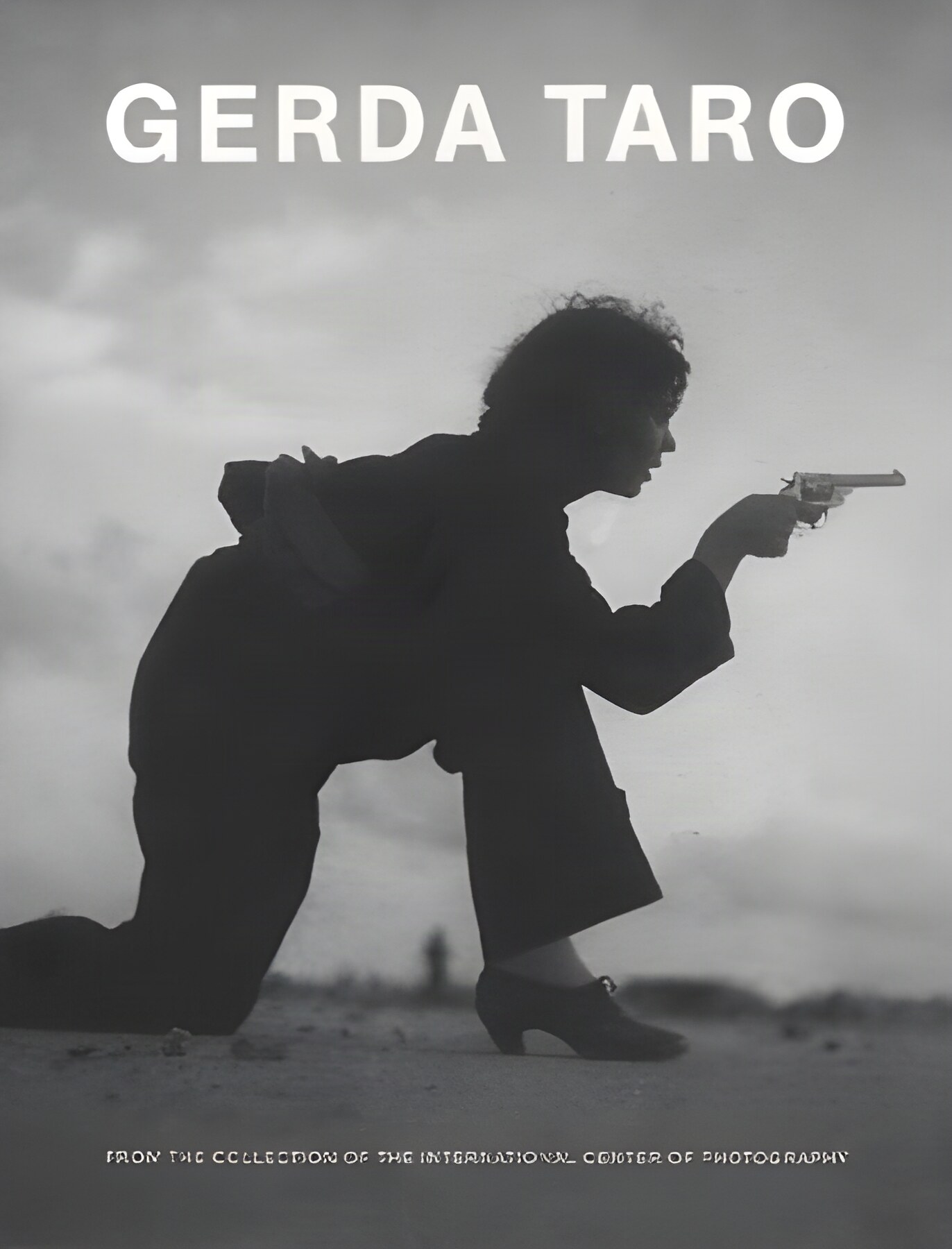
Hardcover. Gottingen, Steidl/ICP , 1st, 2007, Book: Very Good, Dust Jacket: None, Hardcover, pictorial boards, 175 pages. In 1934, after reading John Dos Passos' 1919, Gerda Taro left her home in Stuttgart for Paris. There she met the now legendary photographer Robert Capa, with whom she traveled to Spain at the start of the Civil War. As his lover and photographic partner--and as his manager--she is often credited with launching his career. She was also the first woman photojournalist to enter the heat of battle. The couple worked together until Taro was killed while photographing a crucial clash near Madrid in July 1937, just six days shy of her twenty-sixth birthday. The International Center of Photography holds by far the world's largest collection of Taro's work, including approximately 200 prints as well as original negatives. This selective survey of the ICP's holdings is organized chronologically, and set in context with the inclusion of magazine layouts; it is the first major collection of Gerda Taro's photographs ever published. Clean, bright copy.
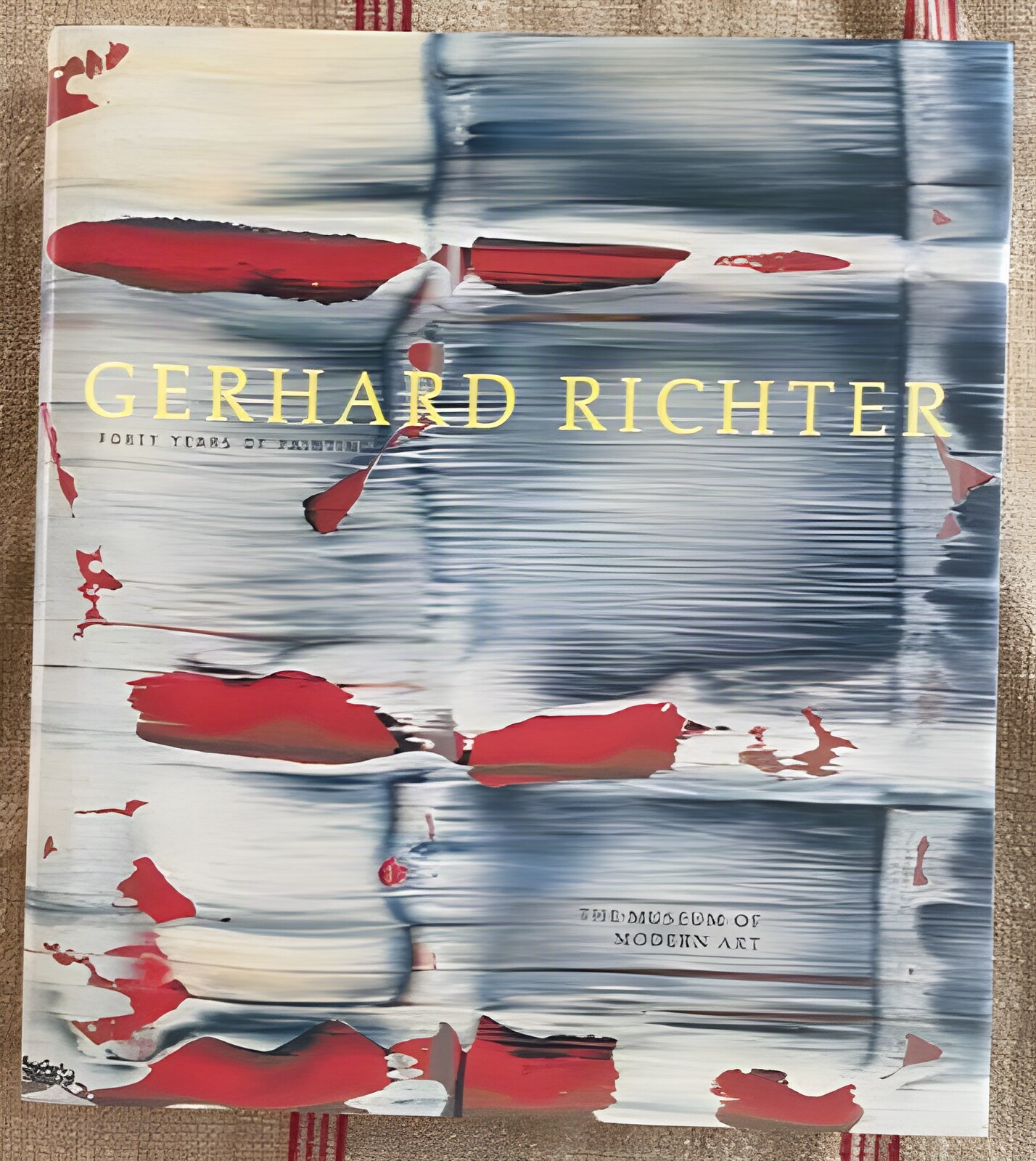
Softcover. NY, Museum of Modern Art , 1st, 2002, Book: Very Good, Dust Jacket: None, Softcover, 340 pages illustrated in color and b&w. A survey of works by German artist Gerhard Richter (born 1932), one of the most influential painters working today from every phase of Richter's career. ranging from photography-based pictures to gestural abstraction, and includes a rare interview with the artist. This was the catalog for the traveling exhibit 2002-2003 at The Museum of Modern Art, NY, the Art Institute of Chicago, the San Francisco Museum of Modern Art and the Hirshhorn Museum in Washington DC. Clean copy. DOMESTIC SHIPPING ONLY.

 "E. O. Hopp")
 "E. O. Hopp")
 "E.O. Hoppe: The German Work: 1925-1938by: Phillip, Prodger")
 "Earthly Bodies: Irving Penn's Nudes, 1949-50by: Penn/Maria Morris Hambourg, Irving")


 "Eight Girls Taking Pictures: A Novelby: Whitney Otto")
 "Exotic Postcards: The Lure of Distant Landsby: Beukers, Alan")
 "Explorations: 1860 - 1930by: Mongibeaux, Jean-Francois")
 "Face of China, The: As Seen by Photographers & Travelers 1860-1912by: Goodrich, L. Carrington & Nigel Cameron")
 "Face of China, The: As Seen by Photographers & Travelers 1860-1912by: Goodrich, L. Carrington & Nigel Cameron")
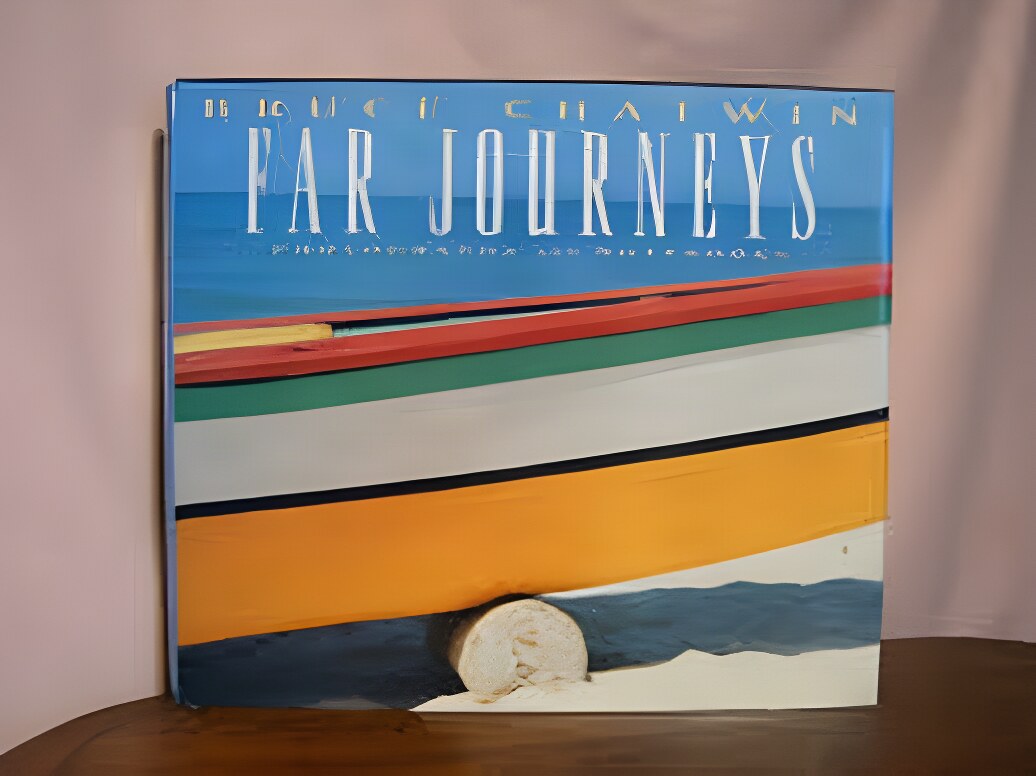
 "Far Journeysby: Chatwin, Bruce")
 "Few Streets, A Few People, A: Photographs from the Havana Neighborhood of Cayo Huesoby: Comino-James, John")
 "Fire & Ice: Treasures from the Photographic Collection of Frederic Church at Olanaby: Fels, Thomas")
 "First Time I Saw Paris, The : Photographs and Memories from the City of Light (SIGNED COPY)by: Miller, Peter")
 "Flesh and Spiritby: Edinger, Claudio")
 "Frank Browne: A Life through the Lensby: Davison, Edwin (Editor)")
 "Free Spirit in a Troubled Worldby: John Phillips and Walter Keller")
 "Freya Stark in Persiaby: Ruthven, Malise")