Hardcover. New York , El Leon Literary Arts, 1st Bilingual, 2003, Book: Very Good, Dust Jacket: Very Good, Hardcover. Preface By Julia Alvarez. 95 pages, illustrated throughout in b&w. Beautiful, unmarked copy with only minor wear to dust jacket.
Softcover. Washington CT, Craftsbury Common, 1st, 1980, Book: Very Good, Dust Jacket: None, Softcover, 88 pages. Illustrated with b&w photographs by Hubbard, taken while traveling throughout America, reminiscent of the Farm Security Administration photographers of the 1930s. INSCRIBED BY PHOTOGRAPHER on the inside front cover. Clean copy.
Hardcover. Spain, La Fabrica, 1st, 2011, Book: Near Fine, Dust Jacket: None, Hardcover, 63 pages. Like new in publishers shrink-wrap. Reveals the Mexican photographer`s extended explorations in (mostly) cities in the north of India--Varanasi, Delhi and Calcutta, as well as Bombay--over the past 13 years. Iturbide`s black-and-white images are strikingly at ease with their subject matter, able to locate arrangements of objects, architectural outline and urban signage without ever lapsing into visual tourism. Text in English and Spanish.
Hardcover. Spain, La Fabrica, 1st, 2011, Book: Near Fine, Dust Jacket: None, Hardcover, 63 pages. Like new in publishers shrink-wrap. Reveals the Mexican photographer's extended explorations in (mostly) cities in the north of India--Varanasi, Delhi and Calcutta, as well as Bombay--over the past 13 years. Iturbide`s black-and-white images are strikingly at ease with their subject matter, able to locate arrangements of objects, architectural outline and urban signage without ever lapsing into visual tourism. Text in English and Spanish.
Hardcover. Damiani, 1st, 2015, Hardcover in a bright dust jacket, still sealed in publisher's shrinkwrap, 156 pages. Outside the Studio is photographer Greg Gorman's tenth monograph. This book takes Gorman (born 1949) outside the reaches of his studio portrait and figure-study work, for which he is best known, and onto the streets of Southeast Asia-uncharted territory for the artist. Traveling initially on behalf of Epson, giving symposiums on fine art digital printing throughout Singapore, Malaysia, China and India, Gorman got a firsthand look at these very different cultures at the very beginning of the digital revolution. The transition from analogue to digital cameras was another new experience for Gorman, who had shot film for more than 30 years. For Gorman, being in the studio with the likes of Marlon Brando or Robert De Niro was second nature, but being thrust in front of strangers in China, Kuala Lampur, India, Thailand, Cambodia and Vietnam was a new adventure.
Hardcover. NY, Skira, 1t, 2010, Book: Very Good, Dust Jacket: Very Good, Hardcover, 216 pages. The never-before-published wardrobe of a timeless star, for lovers of fashion, photography and film history. Greta Garbo's influence over fashion has transcended time. Her dresses, suits, impeccably-tailored coats with a slightly masculine look and the indispensable accessories (shoes, bags, glasses, foulards) has created a style emulated, imitated, even occasionally reviled, but never fully examined. For the first time a catalogue of great glamour and a travelling exhibition detail this extraordinary wardrobe whose minimalism fits so well with current fashion trends. Edited by Stefania Ricci, the Director of Museo Salvatore Ferragamo in Florence, as the Divine Greta Garbo was a Ferragamo client from the 1920s until her death, and the founder of the Italian maison designed hundreds of original, classical, futuristic, hand-made shoes and sandals exclusively for her, most of them shown here for the first time. A stunning selection of black and white Garbo portraits by celebrated photographers completes the volume.
Hardcover. Los Angeles, J. Paul Getty Museum, 1st, 2002, Book: Very Good, Dust Jacket: Very Good, 416 pages, profusely illustrated. After years of research, this complete retrospective offers, as no volume before it, an assessment of Le Gray's important place in the history of photography. His work had remained largely unknown by the general public until he was rediscovered in the 1960s and was deemed by connoisseurs to be the Monet of photography. Gustave Le Gray began as a young painter in Rome, then became a fashionable portrait photographer in Paris. He received commissions from Napoleon Ill, and astonished viewers with his painterly landscapes and ravishing seascapes. Facing bankruptcy, he feld Paris with Alexandre Dumas to Palermo, travelled to the Middle East, and finally settled in Egypt, where he became drawing master to the ruler's children and continued to make photographs until his death in 1884. Le Gray's work had remained largely unknown by the general public until he was rediscovered in the 1960s.
Hardcover. NY, Bloomsbury, 1st, 2004, Book: Very Good, Dust Jacket: None, Hardcover, 200 pages with gray paper boards in a black slipcase, unpaginated. Illustrated with full page color plates. A gorgeous collection from one of the world's legendary photographers- capturing human hands in all their vitality. At the end of a session, photographer Eve Arnold always took a parting shot of the hands -and sometimes the feet- of her sitters, for luck and for her personal records. "Handbook with Footnotes brings together two hundred of these superb pictures. A photojournalist who traveled around the world, Eve Arnold also worked on the sets of more than 40 Hollywood movies. These photographs, therefore, which span her career, include such luminaries as Isabella Rossellini, Orson Welles, Marilyn Monroe, and Jimmy Stewart.
Hardcover. Bologna, Damiani , 1st, 2016, Book: Very Good, Dust Jacket: None, Hardcover, brown cloth with gilt lettering, cover label on front cover, 160 pages. Diary of a Set Designer is a book of Polaroids taken over 25 years by Happy Massee while traveling the world as a production designer. The photographic journal is a journey through time, with a collection of images taken with the now-defunct Polaroid camera--which, at the time, was essential to the art of designing for film. One of the industry's top production designers, Massee has enjoyed a career spanning the realms of theater, film, commercials and fashion. He has worked with established directors such as Wes Anderson, David Lynch, David Fincher, Michel Gondry and more, while in the world of fashion he has collaborated with the likes of Inez and Vinoodh, Peter Lindbergh and Craig McDean, and worked for brands such as Gucci, Valentino, Armani, Bulgari and Swarovski. His film credits include, among others, Broken English, directed by Zoe Cassavetes, and Two Lovers, directed by James Gray, and he has designed sets for music videos such as Jay Z's "99 Problems" and Madonna's "Take a Bow." In this volume, "the images of personalities, sets, locations and encounters," Massee explains, "all tell a story related to my work and travels, and the people I met while on them. The images, raw and unretouched, are candid, and capture my art as well as my life as I like to travel through it." Still in publisher's shrinkwrap.
Hardcover. NY, Prestel, 1st, 1999, Book: Very Good, Dust Jacket: Very Good, Hardcover, 104 pages. Ever since Fidel Castro came to power as the leader of Cuba's communist regime in 1959, Havana has remained all but impenetrable to the outside world. The revolution cut Cuba off from the West, but at the same time preserved a century of built substance and style through the accident of fmancial stagnation. Without capital investment, time stood still, and five epochs of architectural style have survived to the present day. From the majesty of colonial city palaces to the half-hearted hope of heroic modernism, Engels' photographs show a city in silent transition, a microcosm of architecture through the ages. All of the structures picttired here were built in the twentieth century, but for the most part they have suffered from neglect in the form of peeling paint and stucco, &M grime, and abandonment. Yet there is utter beauty and dignity here-a sense of being trapped in time-that is no longer evident in America's everchanging cities. Like the structures he photographs, Engels uses a timeless approach to the artistic and technical aspect of his work. He uses a Sinar catnera with a 4 x 5 inch format, standing under a darkening cloth, just as photographers did a century ago. Using a Polaroid image to feel and see the light, Engels takes a single shot of each building. Most of these images were taken during die month of February, in 1997 and 1999 respectively. These photographs of apartment dwellings, office buildings, private residences, and places of worship tell a story on their own. Their haunting images seem to speak about more than just the men who made them or the materials they are made of. The buildings and streetscapes depicted in Havana speak to us of yesterday, today, and tomorrow.
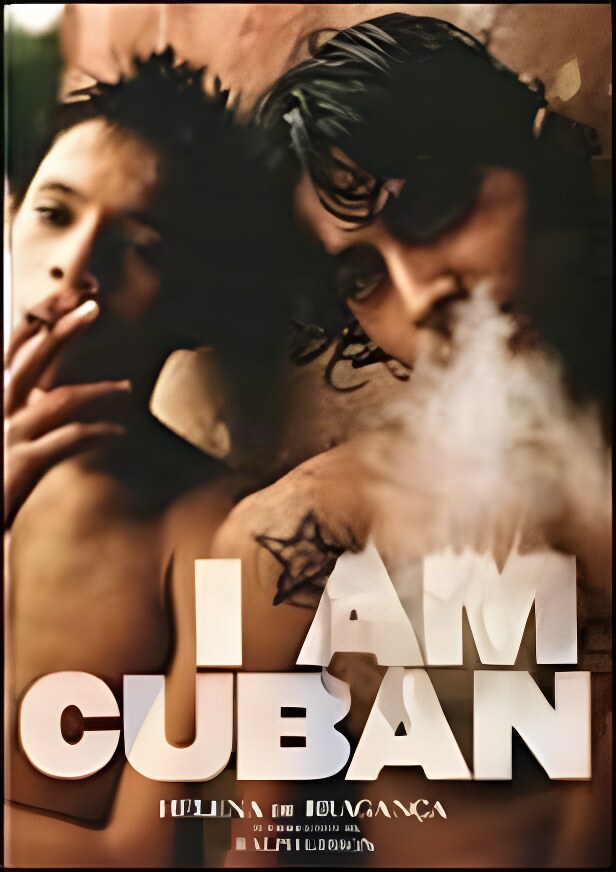
Hardcover. Damiani, 1st, 2011, Book: Very Good, Dust Jacket: Very Good, Hardcover, 168 pages. Traveling extensively in Cuba between 2007 and 2009, photographer Helena de Braganca (born 1978) sought to capture the nation's undocumented lives, from prostitutes and transvestites to punk rockers and swingers. De Braganca's lens temporarily transforms the alleyways, bedrooms and rooftops before her camera into both safe havens and stages.
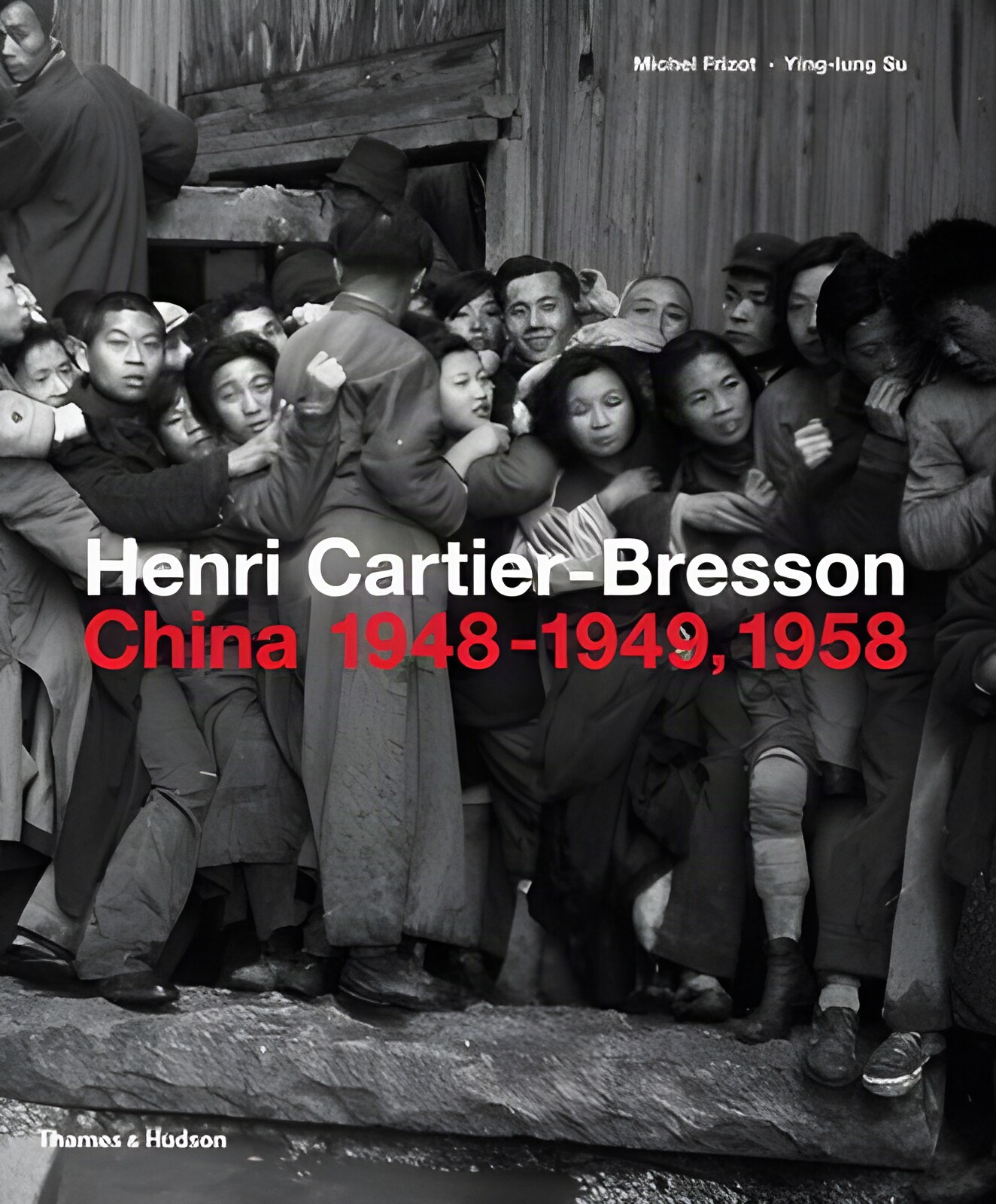
Hardcover. London/NY, Thames & Hudson, 1st, 2019, Book: Very Good, Dust Jacket: Very Good, Hardcover in a bright dust jacket The first visual chronicle of a little-known chapter in the career of Henri Cartier-Bresson--one of the great photographers of the twentieth century. In December 1948, Henri Cartier-Bresson traveled to China at the request of Life magazine. He wound up staying for ten months and captured some of the most spectacular moments in China's history: he photographed Beijing in "the last days of the Kuomintang," and then headed back to Shanghai, where he bore witness to the new regime's takeover. Moreover, in 1958, Henri Cartier-Bresson was one of the first Western photographers to go back to China to explore the changes that had occurred over the preceding decade. The "picture stories" he sent to Magnum and Life on a regular basis played a key role in Westerners' understanding of Chinese political events. Many of these images are among the best-known and most significant photographs in Cartier-Bresson's oeuvre; his empathy with the populace and sense of responsibility as a witness making them an important part of his legacy. This volume allows these photographs to be reexamined along with all of the documents that were preserved: the photographer's captions and comments, contact sheets, and abundant correspondence, as well as the published versions that appeared in both American and European magazines. Clean copy. DOMESTIC SHIPPING ONLY.
Hardcover. London, Thames & Hudson, 1st, 2007, Book: Very Good, Dust Jacket: None, 256 pages. Oversize hardcover with no dust jacket. Very clean, like new copy still in publishers shrink wrap. Large black and white & color photographs throughout. Tight copy. Henri Cartier-Bresson was taken prisoner by the Germans in 1940. After two unsuccessful attempts, he managed to escape in 1943. During this period, the Museum of Modern Art in New York, assuming that the photographer had died in the war, started preparing what they thought would be a posthumous exhibition of his work. When he reappeared, Cartier-Bresson was delighted to learn of the exhibition and decided to review his entire oeuvre and curate it himself. In 1946 Cartier-Bresson traveled to New York with about 300 prints in his suitcase, bought a scrapbook, glued in the photos, and brought that album to MoMA's curators. His exhibition there, a celebration of his survival, opened on February 4, 1947. In the 1990s, Cartier-Bresson once again turned his attention to this scrapbook. Following his death in 2004, the Fondation Henri Cartier-Bresson, the present owner of the prints, finished the job of restoring them, making it possible to bring a large body of his extraordinary work to the public, images that have now become a memorial collection after all.
Hardcover. New York, Rizzoli, 1st, 2010, Book: Very Good, Dust Jacket: Very Good, Hardcover, 320 pages in color and b&w. Like new in publisher's shrink-wrap. From the late '70s, Herb Ritts gained a reputation as a master of art and commercial photography. In addition to his portrait and fashion work for Vogue, Vanity Fair, and Rolling Stone, he created campaigns for Calvin Klein, Coco Chanel, Gianni Versace, and Valentino Garavani. Churchward interviews Klein, Cindy Crawford, Elton John, Anna Wintour, Madonna, and Christopher Buckley and has many behind-the-scenes shots from photo shoots, parties, travels, intimate portraits, and moments with friends.
Hardcover. NY, Harper & Row, 1st, 1974, Book: Very Good, Dust Jacket: Very Good, Hardcover in a bright dust jacket, 200 plus pages, photo illustrations throughout by Pratt. The story of life on "The Island" in the state of Maine. Although never named, it is thought to be Isle Au Haut, a small island seven miles off the coast of Maine, in Knox County. Rich with both black & white and color photographic illustrations of people, scenery, and town life. Clean copy.
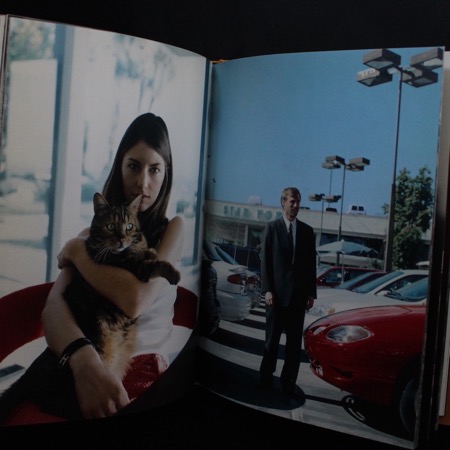
Hardcover. Santa Fe NM, Arena Editions, 1st, 2002, Book: Very Good, Dust Jacket: Very Good, Hardcover in a bright dust jacket. Paul Jasmin?s photographs are dreamy tableaux that underscore a fascination with youthful play and innocence. Included in this long-awaited collection are playful nudes, portraits of friends and colleagues from the entertainment and art worlds, fashion shoots, and restful travel images that recall 19th-century romanticism. An influence on numerous artists, Jasmin?s photographs are both rarefied and accessible; his photos regularly appear in leading fashion magazines such as L?Uomo Vogue, W, Arena, and Nylon. Preface by Sofia Coppola. Clean copy.
Hardcover. New Haven CT, Yale University Press, 1st, 2014, Book: Very Good, Dust Jacket: Very Good, Hardcover, 160 pages. Photographer Laura McPhee, noted for her stunning large-scale landscapes and portraits of the people who live and work in them, has been traveling to eastern India for over a decade. This book features a selection of McPhee's works in and around India's former capital.
Hardcover. New Haven, CT, Yale University Press, 1st, 2014, Book: Very Good, Dust Jacket: Very Good, Hardcover in publisher's shrink-wrap. 160 pages, illustrated with 110 color images. Photographer Laura McPhee, noted for her stunning large-scale landscapes and portraits of the people who live and work in them, has been traveling to eastern India for over a decade. There she has devoted her perceptive vision to picturing layers of history, culture, religion, and class as they appear in private heritage homes and public markets, in lively street festivals, and in the faces of city dwellers in Calcutta (also known as Kolkata). This exquisitely produced book features a selection of McPhee's works made in and around India's former capital.
Softcover. London, Tate Publishing, 1st, 2007, Book: Very Good, Dust Jacket: None, Softcover, 240 pages illustrated in color and b&w. One page(128) creased in production. This is the first book to tell the story of British photography as a coherent whole, from the pioneers of the early 19th century to photographers today who display their images on websites, on computer screens?even iPods. The authors have traveled the length and breadth of the UK, researching both well-known and forgotten bodies of work. Many famous names are here: Henry Fox Talbot, Lewis Carroll, Julia Margaret Cameron, Bill Brandt, Madame Yeronde, Angus McBean, Susan Lipper, and Tom Hunter are just a few. Among the works shown are postcards, family albums, photographic illustrations in books, medical photographs, wartime propaganda, and social documents. Through their exhaustive research the authors demonstrate the extraordinary range and diversity of roles that photography has played in British cultural life over the past 150 years.
Hardcover. London, Phaidon Press, 1st, 1994, Book: Very Good, Dust Jacket: Very Good, Hardcover, 320 pages. George Rodger began his photographic career with the BBC as a stills photographer. His baptism as a photo reporter came with his appointment as a 'stringer' for Life magazine during the Blitz on London in the most threatening days of 1940. Many of his images from that time are still in constant use, because his instinct has always been to concentrate on the humanity of his subjects, even in the face of terrible adversity.It was for Life that George Rodger embarked on a series of adventures that were to take him to almost every theatre of the Second World War in Africa, the Middle East and Asia. The fulcrum of his career came with the liberation of Belsen. As for the first few days he was the only photographer present, the images he captured became crucially important in making known the depravity of the camps. 1948 he embarked on a campaign of photography rediscovering humanity, starting with an expedition from Cape Town to Cairo by road. He found in Africa tribes almost untouched by European influence and was able to create images of enormous power that quickly became world-famous.This book presents the pictures that define George Rodger's long career and a commentary on his extraordinary journey. With a Foreword by Henri Cartier-Bresson and over 260 powerful images, it represents a fitting tribute to George Rodger and a celebration of his life's work.
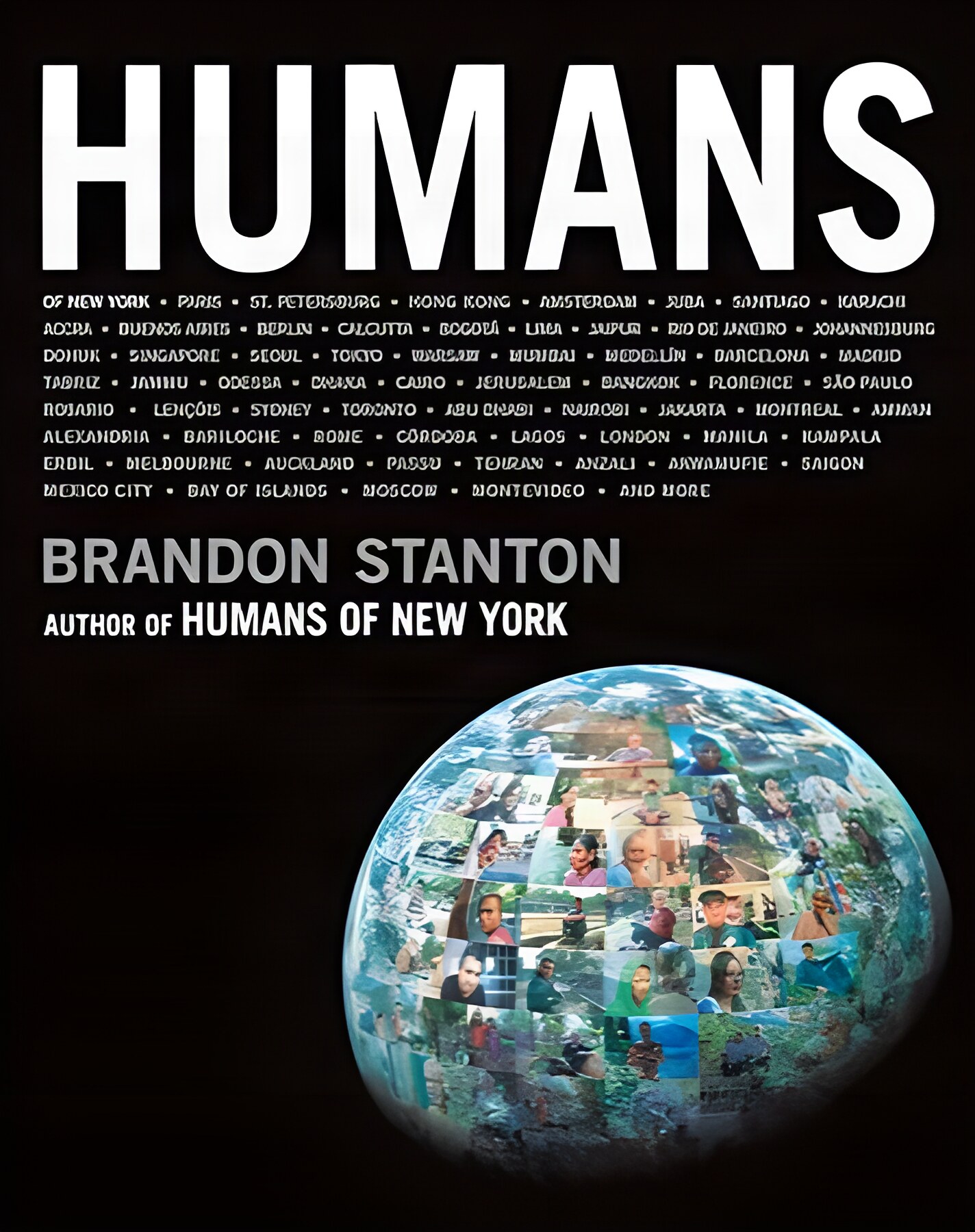
Hardcover. NY, St. Martin's Press, 1st, 2020, Book: Very Good, Dust Jacket: Very Good, Hardcover in a bright, unclipped dust jacket. Brandon Stanton created Humans of New York in 2010. What began as a photographic census of life in New York City, soon evolved into a storytelling phenomenon. A global audience of millions began following HONY daily. Over the next several years, Stanton broadened his lens to include people from across the world. Traveling to more than forty countries, he conducted interviews across continents, borders, and language barriers. Humans is the definitive catalogue of these travels. The faces and locations will vary from page to page, but the stories will feel deeply familiar. Clean copy.
Hardcover. Santa Fe NM, Twin Palms Publishers, 1st, 2007, Book: Very Good, Dust Jacket: None, Folio, 60 pages, VG+ in pictorial boards, as issued, without dust jacket. Lavishly illustrated in b&w. Bill Burke's seminal book originally published by Nexus Press in 1987. In the early 1980's Burke traveled to Thailand and Viet Nam, as well as Cambodia where he documented the aftermath of the Khmer Rouge regime. The book was produced using the original plates, and features the same layout and scale as the first edition.
Hardcover. Santa Fe NM, Twin Palms Publishers, 1st, 2007, Book: Very Good, Dust Jacket: None, Folio, 60 pages, VG+ in pictorial boards, as issued, without dust jacket. Lavishly illustrated in b&w. Bill Burke's seminal book originally published by Nexus Press in 1987. In the early 1980's Burke traveled to Thailand and Viet Nam, as well as Cambodia where he documented the aftermath of the Khmer Rouge regime. The book was produced using the original plates, and features the same layout and scale as the first edition.
Hardcover. Portfolio, 1st, 2012, Book: Very Good, Dust Jacket: Very Good, Hardcover in a bright, unclipped dust jacket, 194 pages. A great book by the bestseller author Sigurgeir Sigurjonsson. In this breathtaking new book about Icelandic landscape Sigurgeir entwines nature and culture in a dramatic, vivid and unforgettable moments. You can really feel the energy and flow of all that Iceland has to offer while going through the pages. This is the large edition 25x25 cm. The book comes in a beautiful bag.

 "Glimpses of La Yaguita: Street Scenes and Portraits from the Dominican Republicby: Orozco-Lang, Isaias")
 "Good Folks, Good Country.by: Ethan Hubbard")


 "Graciela Iturbide: No Hay Nadie, There is No-Oneby: Iturbide, Graciela")
 "Graciela Iturbide: No Hay Nadie, There is No-Oneby: Iturbide, Graciela")
 "Greg Gorman: Outside the Studioby: Greg Gorman (Introduction), James Nachtwey (Foreword)")
 "Greta Garbo: The Mystery of Styleby: Stefania Ricci")
 "Gustave Le Gray, 1820-1884by: Aubenas, Sylvie")
 "Handbook (with Footnotes)by: Arnold, Eve")
 "Happy Massee: Diary of a Set Designerby: Happy Massee")


 "Havana: The Photography of Hans Engelsby: Engels/ Beth Dunlop, et al., Hans")
 "Henri Cartier-Bresson: Scrapbookby: Cartier-Bresson, Henri (Photographer)")
 "Herb Ritts: The Golden Hour: A Photographer's Life and His Worldby: Churchward, Charles")


 "Home and the World : A View of Calcuttaby: McPhee, Laura")
 "Home and the World, The: A View of Calcuttaby: McPhee, Laura")
 "How We Are: Photographing Britain from the 1840s to the Presentby: Williams, Val and Susan Bright")
 "Humanity and Inhumanity: The Photographic Journey of George Rodger by: BERNARD, Bruce and George Rodger")
 "I Want To Take Pictureby: Burke, Bill")


 "I Want To Take Pictureby: Burke, Bill")


 "Iceland Small Worldby: Sigurgeir Sigurjonsson")

