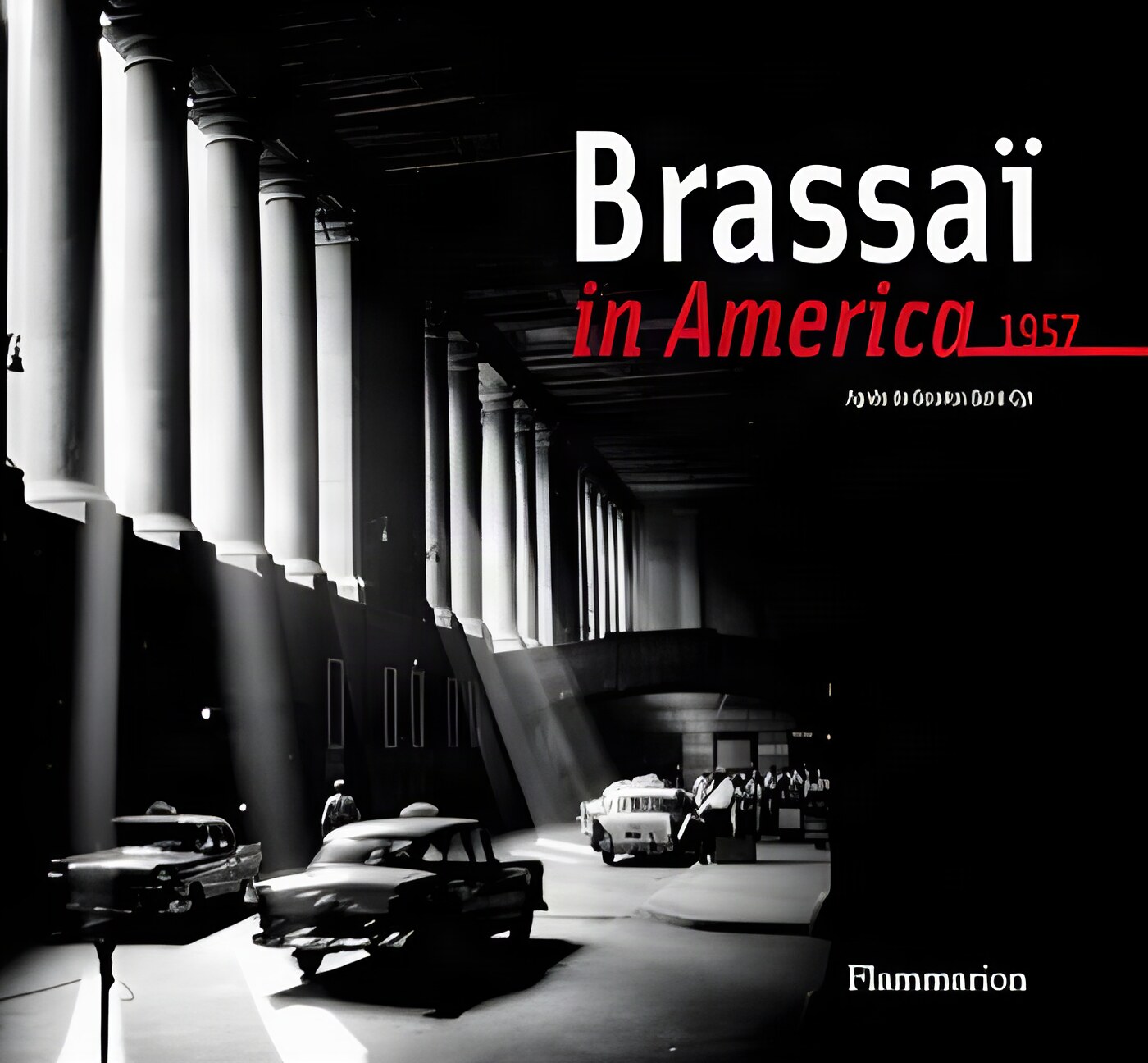
Hardcover. Paris, Flammarion, 1st, 2011, Book: Very Good, Dust Jacket: Very Good, Hardcover in a lightly worn dust jacket, 167 pages, illustrated in color and b&w. A rare discovery of more than 150 previously unpublished photographs in black and white and in color, from a legendary photographer. Despite strong personal and professional ties in the U.S.--Henry Miller, Harper's Bazaar's Carmel Snow, and Edward Steichen, who featured Brassai's work in many MoMA exhibitions--Brassai remained reticent about travel to the U.S. until 1957 when Holiday magazine offered generous compensation (and artistic freedom) to photograph New York and Louisiana. From the first symbolic image of this voyage--the Statue of Liberty appearing over the ship's prow--Brassai came under the spell of America and his photographs innately captured his new perspective. In New York, he was captivated by the graphic skyscrapers and the rhythmic to-ing and fro-ing of the crowds. Unlike his static photographs of Paris--posing prostitutes, embracing lovers, sleeping street people--here he captured sequences of movement--children playing, fashionable women parading by, or the effects of light filtering through the urban architecture. In Louisiana, he continued to photograph more languorous sequences, but here he reveled in color--the copper skin of sunbathers, the pastel tones of prom dresses, the vibrant neon of amusement park attractions. The New Orleans music halls, nightlife, women, and exotic vegetation recall scenes from 1930s Paris. This exuberant study of 1950s America offers the reader unprecedented access to Brassai's work, including previously unpublished color photography. Front dj flap with mild wear otherwise a clean, bright copy.
Hardcover. Gottingen, Steidl, 1st, 2015, Book: Very Good, Dust Jacket: Very Good, Hardcover with dust jacket. Like new in publisher's shrink-wrap. This volume presents Bruce Davidson's personal selections from his lesser-known color archive, from a period of nearly 60 years. Assignments from various magazines including Vogue, National Geographic and Life, as well as commercial projects led Davidson to photograph subjects as diverse as fashion (in the early 1960s), the Shah of Iran with his family (1964), keepers of French monuments (1988), the supermodel Kylie Bax (1997) and college cheerleaders (1989). He photographed in India and China, but also at home in New York, in Chicago and along the Pacific Coast Highway. In 1968, Michelangelo Antonioni invited Davidson to document the making of his film Zabriskie Point. Davidson also continued to pursue personal projects, such as photographing the Yiddish writer and Nobel Prize laureate Isaac Bashevis Singer (1972-75), the New York City subway (1980) and Katz's Delicatessen (2004). Often staying on in a country after an official assignment, Davidson documented Welsh coalfields, family holidays in Martha's Vineyard and travelled through Patagonia and Mexico.
Hardcover. Scotland, Kiscadale Pub, 1st, 1995, Book: Very Good, Dust Jacket: Very Good, 104 pages. Hardcover with dust jacket. Clean, unmarked copy with only minor wear to dust jacket. Color and black and white pictures throughout. A well illustrated account of the author's collection of early photographs and post cards depicting Burma.
Hardcover. Melbourne AUS, Macmillan Art Publishing, 1st, 2009, Book: Near Fine, Dust Jacket: Near Fine, Like new in publisher's shrink-wrap. Hardcover, 256 pages. This book, offering more than three hundred beautiful photographic studies, spans the years 1986-2006. Each image captures a special moment at a certain place in Australasia, Asia, Europe and the Middle East. Each image is unique and can never be re-captured. Christine Wu Ramsay's excursion into photography began when she established Raya Gallery in Melbourne one of the first to exhibit the works of modern artists from the Asian region. With an eye for detail and atmosphere, she brings a unique sensibility to her captured moments, producing photographs that stir memories in anyone who has travelled the world.
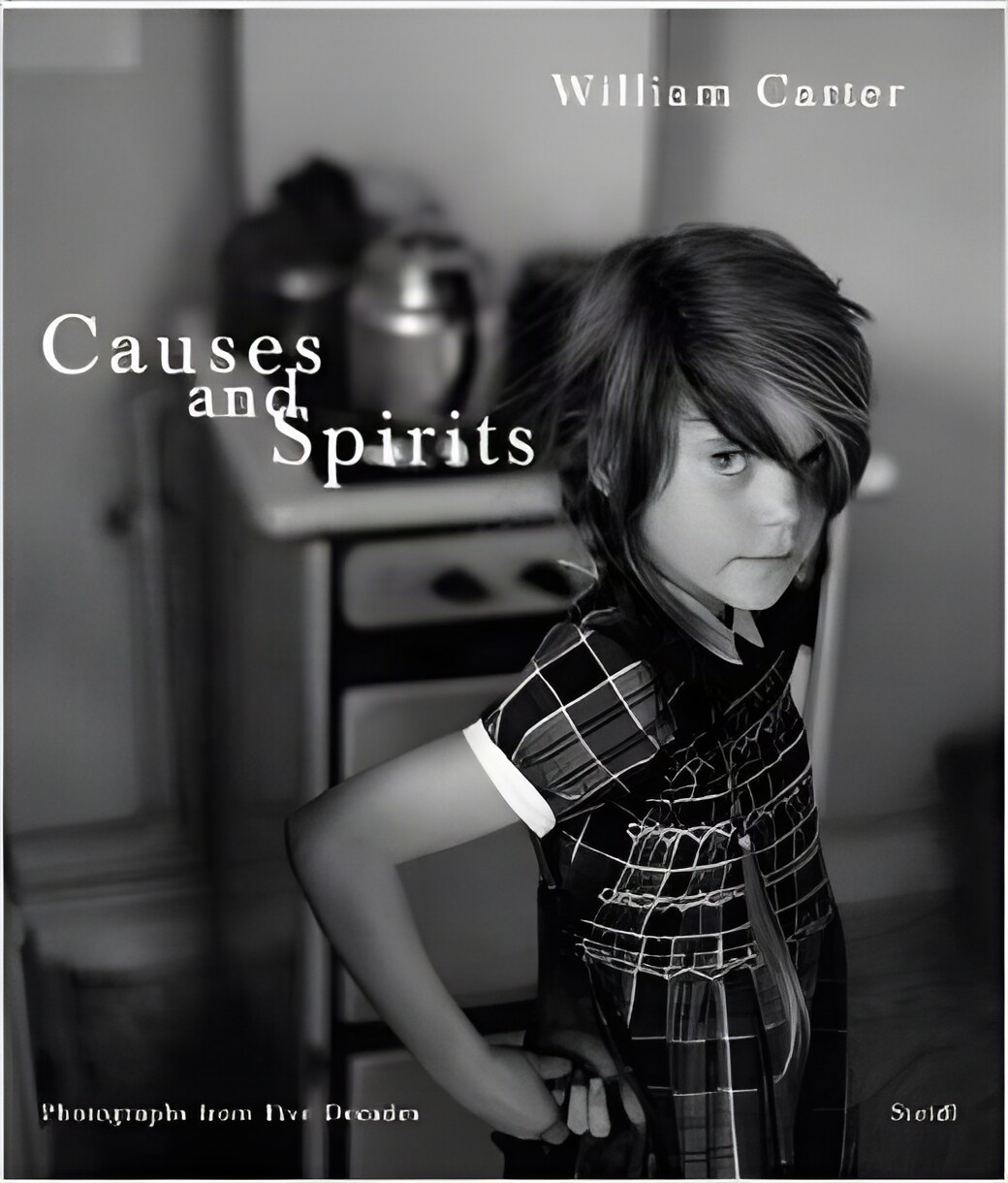
Hardcover. Steidl, 1st, 2011-08-01, Book: Very Good, Dust Jacket: Very Good, Like new in publisher's shrink-wrap. Hardcover, 286 pages. This book is both an autobiography of William Carter and a study of people. Carter's photographs, beginning in 1960, take the viewer on his travels throughout the world, from home to New York and Kurdistan, from Dublin to Gaza. Whether working as a photojournalist or purely for himself, Carter focuses on the gestures and expressions of people (sometimes charming, sometimes unsettling), and on streets and landscapes that often long for human presence. The subtitle "Photographs from Five Decades" might seem misleading as it implies a "typical" photobook where the sequence of images is primary. For Carter, however, it is the interplay between his photographs and writings that allows him to see into himself and his subjects: indeed he calls himself a "photographer-writer". In Carter's words, his work aims to capture the "hidden implications, eye-blink compositions, odd ironies and happy accidents" of the world.
Hardcover. NY, Random House, 1st, 2013, Book: Very Good, Dust Jacket: Very Good, Hardcover, 228 pages. At the beginning of World War II Cecil Beaton was commissioned by the British government to photograph the home front. He set to work recording both the destruction of the city, and the heroism of Londoners under attack. He conducted a survey of Bomber and Fighter Commands for the RAF, which was published with his own astute commentary. Beaton was an effective propagandist, but his voice, like his photographs, was touchingly elegant. Beaton's wartime work amounted to 7,000 photographs. He traveled through the Western Desert and on to Iraq, Palestine, Transjordan, Syria, and India, where he photographed the final days of the Raj in New Delhi and Calcutta before joining the Burma campaign. He ended the war deep in Chinese territory where he witnessed the Nationalist resistance to the Japanese. This collection of Beaton's masterful WWII photography captures the home front, the Middle East, arms and vehicle manufacturing in Britain, India, the Burma Campaign, and the war in China. It also includes a chronology placing events in Beaton's life alongside developments in photography, journalism, and the arts; war photography; and world events. His original photographs are reproduced large on the page, alongside his diary extracts, allowing for deep scrutiny and appreciation of the images and their artist.
Hardcover. Lunenburg VT, privately printed, 1st, 2004, Book: Very Good, Dust Jacket: None, Hardcover, gray cloth, 158 pages, b&w duotone photographs throughout accompanied by verse from various writers. A fine production printed by The Stinehour Press. The author war a pilot who witnessed the atomic destruction at Nagasaki and later became a research professor who studied nuclear fallout. He traveled extensively in the 1970s and was an avid and talented photographer. This was his fourth book published, all limited to 100 copies and shows a exceptional eye in the style of well-known street photographers. No dj issued.
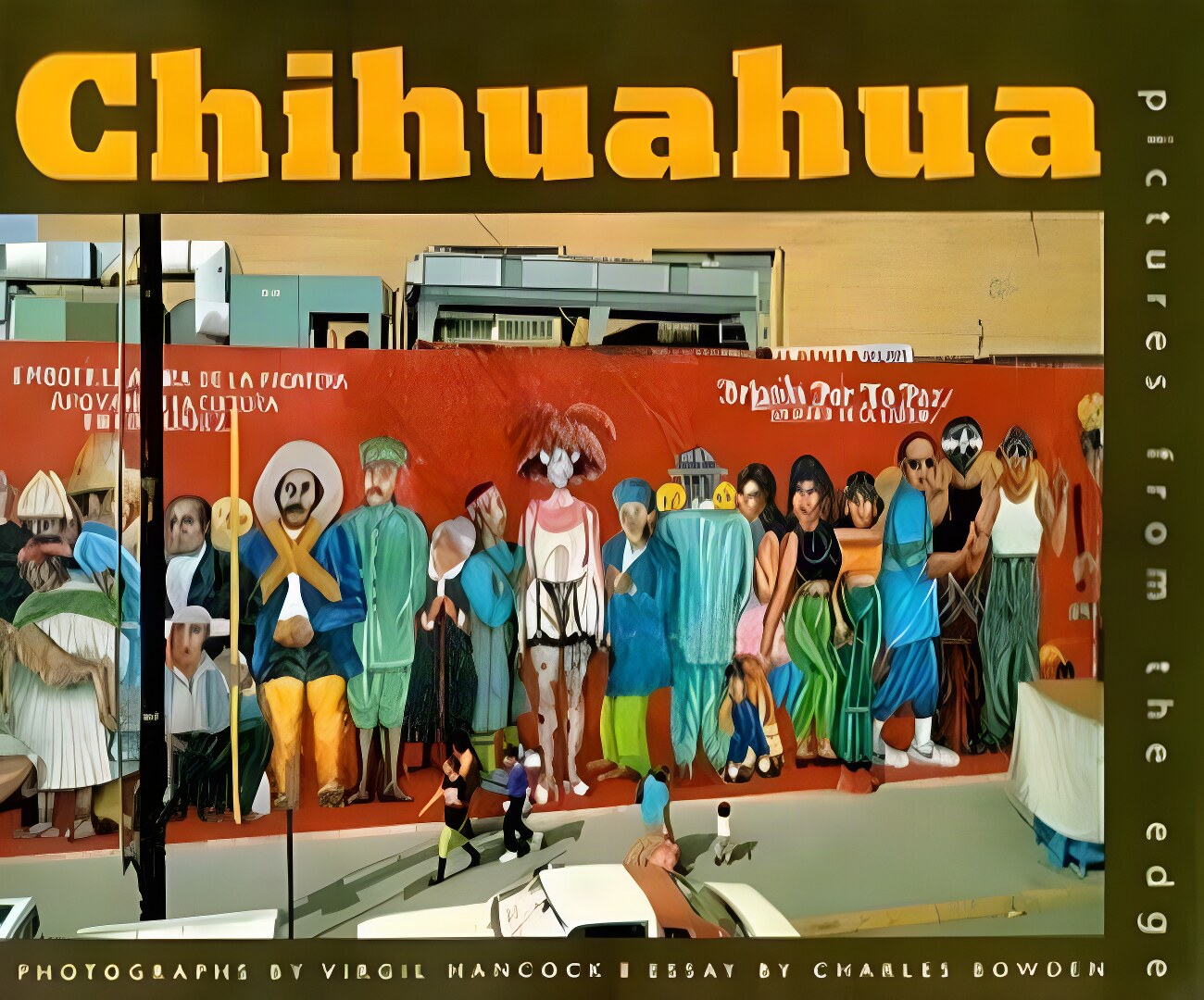
Softcover. Albuquerque, University of New Mexico Press, 1st, 1996, Book: Very Good, Dust Jacket: None, Softcover, 67 pages. A collection of 40 color photographs depicting the building facades and ruins of modern day Chihuahua, Mexico. The culminating effect of the brilliantly colored photos is nearly hallucinatory, taking in both the paintings of Bugs Bunny affixed to store facades, and political graffiti with a postmodern inclusiveness which says volumes about the spirit and poverty of this community. An accompanying text essayed by Charles Bowden, author of Blood Orchid , complements the images with a kind of poetic, meandering, and intimate meditation on the physical and existential state of Chihuahua. Lacks an index and bibliography. Clean copy.
Hardcover. Cambridge MA, Wexner Center and MIT Press, 1sr, 2007, Book: Very Good, Dust Jacket: None, Hardcover, oblong pictorial boards, Any new film and any new book by French filmmaker Chris Marker is an event. Marker gave film lovers one of their most memorable experiences with La Jetee (1962)-a time-travel montage set after a nuclear war that inspired Terry Gilliam's Twelve Monkeys (1995). His still camerawork is not as well known, but Marker has been taking photographs as long as he has been making films. Staring Back presents 200 black-and-white photographs from Marker's personal archives, taken from 1952 to 2006. Some of the photographs are related to his classic films (which include Le Jetee, Sans Soleil, Cuba Si!, and The Case of the Grinning Cat), others are portraits of famous faces (Simone Signoret, Akira Kurosawa), but most are pictures of people Marker has encountered as he has traveled the world (an extra who appeared in Kurosawa's Ran, a woman seen on a street in Siberia). The central section of the book contains a series of photographs documenting political protests Marker has witnessed, including the march on the Pentagon in 1967, the events of May 1968 in Paris, and the tumultuous 2006 demonstrations protesting the French government's proposed employment policies. Still in publisher's shrinkwrap.
Softcover. Jackson MS, University Press of Mississippi, 1st, 1996, Book: Very Good, Dust Jacket: None, 208 pages, illustrated throughout in color and b&w. Light shelf-wear and rubbing to wrappers, otherwise a clean, tight copy. Essays by Trudy Wilner Stack and Allen Tullos was published in conjunction with a traveling exhibition of the same name. Christenberry's paintings, photography, sculpture and instal lations address the Southern identity. They describe and examine the social and material culture of the deep South.
Hardcover. New Haven, CT, Yale University Press, 1st, 2015, Book: Very Good, Dust Jacket: None, 304 pages. Hardcover with no dust jacket. Very clean, unmarked copy with still in publishers shrink wrap. Visions of an American Dreamland highlights more than 200 images from Coney Island's history, including paintings, drawings, photographs, prints, posters, film stills, architectural artifacts, and carousel animals.
Hardcover. Tielt BE, Lannoo, 1st, 2010, Book: Very Good, Dust Jacket: None, Hardcover, 224 pages. The most recent project of Magnum photographer Carl De Keyzer; a sharp image of Congo as it is today. Dutch, French & English text. Stunning photo collection in high quality reproduction.
Hardcover. Stichting Kunstboak , 1st, 2015, Book: Very Good, Dust Jacket: Very Good, 240 pages. Hardcover with dust jacket. Clean, unmarked copy with only minor wear to dust jacket. Like new in publisher's shrink-wrap. Duel language French-English. Angelo Turconi, traveler and photographer in Africa, shares his remarkable images of everyday life in Congo. Congo on the Road is the result of many journeys in this multifaceted country and documents his encounters along the road: the Yaka chief in ceremonial dress, the chief of the Pende and Chokwe in prestigious attire, the Emperor of the Lunda on his throne, a family photo of the Kitawala sect. Turconi's photographs testify of a deep respect for the ones captured by the lens. We experience daily life as it is, with its deprivation and many struggles, nonetheless Angelo Turconi highlights the courage and joy of people and their endless ingenuity and creativity in overcoming obstacles. The beautiful and diverse scenery is as evocative as poetry. It opens the heart and fills it with admiration, memories and - for those that had the chance to experience life in deep central Africa - even nostalgia.
Softcover. US, ILR Press, 1st, 2009-08-06, Book: Very Good, Dust Jacket: None, Softcover, 142 pages, illustrated throughout in color. Clean, unmarked copy with only minor wear to wrappers. Since 2001, Candacy A. Taylor (a former waitress herself) has traveled more than 26,000 miles throughout the United States collecting stories of these "lifers," as many waitresses aged fifty or over playfully call themselves. She interviewed fifty-seven waitresses in thirty-eight towns and cities. Their compelling stories are complemented and enhanced by Taylor's striking color photographs of the waitresses at work.Taylor expected that the waitresses she'd meet would feel overworked and underappreciated, but was surprised and delighted to find that the opposite was true. The proud, capable waitresses Taylor interviewed loved their jobs and, even if given the opportunity, "wouldn't do anything else." Nearly all the waitresses said that the physical labor of waitressing helped them to age more gracefully and that the daily contact with customers and coworkers kept them socially engaged. Lifers generally make more money from serving regular customers with whom they forge bonds over decades and their seniority earns them respect from their coworkers and managers. Taylor's sensitive and respectful portrayal of career waitresses who have turned their jobs into a rewarding lifetime pursuit turns Counter Culture into an invaluable portrait of the continued importance of community in our changing society.
Hardcover. New York, Powerhouse Books, 1st, 2005, Book: Very Good, Dust Jacket: None, 128 pages, b&w photographs of rodeo performers. In publisher's shrinkwrap. After reading a front-page article in The New York Times about the Cheyenne Frontier Days Rodeo, Arthur Frank took a week off from work to travel around Wyoming, photographing whatever rodeos he could find. Once there, he found the culture of the American cowboy very much alive and kicking. Although their practical skills remain essential to modern ranching, it is the rodeo where their trade is praised, perpetuating the myth and mystique of America?s rough and rugged icon?the cowboy. Cowboy Up, Frank?s first monograph, presents photographs taken at more than fifty rodeos?including high school, college, and women?s competitions in addition to professional rodeos?in Wyoming, Colorado, South Dakota, Nevada,Arizona, Calgary, Alberta, even Binghamton, New York. As a former football and rugby player from New York City, Frank approached the roundup with an athlete?s understanding, while his profession provided distance from the cliches associated with the sport. With photographs that capture the vigorous physicality of one of the world?s most erratic and dangerous sports, Cowboy Up delves deeply into the modern cowboy?s life, capturing riders during the jittery wait before the roundup, and back at the ranch, engaging in work that tamed the Wild West. Frank?s outsider perspective and insider access combine to provide a humanistic yet dynamic and inspiring view into a lifestyle that has become an American legend.
Hardcover. Washington, D. C., Smithsonian, 1st, 1998, Book: Very Good, Dust Jacket: Very Good, Hardcover, 58 pages. Illustrated with full color photographs. Clean, bright copy.
Hardcover. Bew Haven CT, Yale/Fine Arts Museums of San Francisco, 1st, 2016, Book: Very Good, Dust Jacket: Very Good, Hardcover in a bright dust jacket. Coming of age in the 1960s, the photographer Danny Lyon (b. 1942) distinguished himself with work that emphasized intimate social engagement. In 1962 Lyon traveled to the segregated South to photograph the civil rights movement. Subsequent projects on biker culture, the demolition and redevelopment of lower Manhattan, and the Texas prison system, and more recently on the Occupy movement and the vanishing culture in China's booming Shanxi Province, share Lyon's signature immersive approach and his commitment to social and political issues that concern those on the margins of society. Lyon's photography is paralleled by his work as a filmmaker and a writer. Danny Lyon: Message to the Future is the first in-depth examination of this leading figure in American photography and film, and the first publication to present his influential bodies of work in all media in their full context. Lead essayists Julian Cox and Elisabeth Sussman provide an account of Lyon's five-decade career. Alexander Nemerov writes about Lyon's work in Knoxville, Tennessee; Ed Halter assesses the artist's films; Danica Willard Sachs evaluates his photomontages; and Julian Cox interviews Alan Rinzler about his role in publishing Lyon's earliest works. With extensive back matter and illustrations, this publication will be the most comprehensive account of this influential artist's work. Clean copy. Still in publisher's shrinkwrap.
Hardcover. Bew Haven CT, Yale/Fine Arts Museums of San Francisco, 1st, 2016, Book: Very Good, Dust Jacket: Very Good, Hardcover in a bright dust jacket. Coming of age in the 1960s, the photographer Danny Lyon (b. 1942) distinguished himself with work that emphasized intimate social engagement. In 1962 Lyon traveled to the segregated South to photograph the civil rights movement. Subsequent projects on biker culture, the demolition and redevelopment of lower Manhattan, and the Texas prison system, and more recently on the Occupy movement and the vanishing culture in China's booming Shanxi Province, share Lyon's signature immersive approach and his commitment to social and political issues that concern those on the margins of society. Lyon's photography is paralleled by his work as a filmmaker and a writer. Danny Lyon: Message to the Future is the first in-depth examination of this leading figure in American photography and film, and the first publication to present his influential bodies of work in all media in their full context. Lead essayists Julian Cox and Elisabeth Sussman provide an account of Lyon's five-decade career. Alexander Nemerov writes about Lyon's work in Knoxville, Tennessee; Ed Halter assesses the artist's films; Danica Willard Sachs evaluates his photomontages; and Julian Cox interviews Alan Rinzler about his role in publishing Lyon's earliest works. With extensive back matter and illustrations, this publication will be the most comprehensive account of this influential artist's work. Clean copy. Still in publisher's shrinkwrap.
Hardcover. Hatje Cantz, 1st, 2007, Book: Very Good, Dust Jacket: None, Hardcover, 84 pages. When David Goldblatt received the world-renowned Hasselblad Award in 2006, he had been making photographs of the South African landscape and culture for more than 50 years. Born in 1930 in a gold-mining town near Johannesburg, his parents were Jewish refugees from Lithuania, and they raised him with an emphasis on tolerance and antiracism. In 1975, at the height of apartheid, Goldblatt explored white nationalist culture in Some Afrikaners Photographed, and in the 80s he observed workers on the Kwandebele-Pretoria bus, many of whom traveled eight hours every day to work and back. His late-90s solo show at New York's Museum of Modern Art focused on architectural work, and showed off Goldblatt's uncanny ability to discover a society through its buildings and landscapes. His photographs of architectural structures revealed the ways that ideology had defined his home country's landscape. No dj issued.
Hardcover. Benteli Verlags , 1st, 2017, Book: Very Good, Dust Jacket: None, Oblong hardcover with a pictorial label, 192 pages. The faded remnants of a glorious past are captured in all their morbid beauty, in images that manifest the ephemeral and go beyond all conventional associations and conceptions of the American South: Days Gone By combines carefully crafted photographs from the past ten years with a cultural history of the region's social and structural changes. With an unflinching gaze, Jorg Rubbert presents the demise of countless small towns between Georgia, Mississippi and Texas, their suffering particularly tangible following the financial crisis. Rural towns, idyllic at first glance, are soon revealed as forgotten relics of times long past.
Hardcover. New York, A. Wittemann, 1st, 1894, Book: Good, Dust Jacket: None, Hardcover, brown boards stamped in gilt. 29 plates with photos of Detroit landmarks in the late 1800s. Top half inch of spine cover gone, title page with a tan corner stain. Plates all clean. Front endpapers with previous owner's signature, address. Binding shaken, but holding.
Hardcover. New York, Aperture, 1st, 1998, Book: Very Good, Dust Jacket: Very Good, Hardcover in a bright, unclipped dust jacket. 96 pages, color photographs, Like new in publisher's shrinkwrap. Doors of the Kingdom is a unique collection of photographs depicting the ancient and disappearing craft of doormaking in Arabia. The Islamic concept of hurma, or sanctity of a place of dwelling or worship, is recurrent throughout Arabic poetry and literature. The door (bab), preserver of sanctity, becomes symbolic of the boundary between public and private space, and between the profane and the sacred. In 1995, Haajar Gouverneur traveled throughout the Arabian Peninsula photographing each region's distinctive doorways and the remaining artisans who make them. The doors of Arabia, painstakingly hand-carved from the wood of the Al-Athel trees, last in their exquisite variety for hundreds of years. This ancient craft, passed down from generation to generation in the central and northern regions of Saudi Arabia, is now nearly extinct. Modern materials, technology, and changing priorities threaten the continuity of the sacred and artisanal tradition of doormaking.
Hardcover. NY, Farrar, Straus And Giroux, 1st, 2024, Book: Very Good, Dust Jacket: Very Good, Hardcover in a bright dust jacket, 464 pages. A personal exploration of the American West and the work of one of America's greatest photographers. Timothy O'Sullivan is America's most famous war photographer. You know his work even if you don't know his name: A Harvest of Death, taken at Gettysburg, is an icon of the Civil War. He was also among the first photographers to elevate what was then a trade to the status of fine art. The images of the American West he made after the war, while traveling with the surveys led by Clarence King and George Wheeler, display a prescient awareness of what photography would become; years later, Ansel Adams would declare his work 'surrealistic and disturbing.' At the same time, we know very little about O'Sullivan himself. Nor do we know-really know-much more about the landscapes he captured. Robert Sullivan's Double Exposure sets off in pursuit of these two enigmas. This book documents the author's own road trip across the West in search of the places, many long forgotten or paved over, that O'Sullivan pictured. It also stages a reckoning with how the changes wrought on the land were already under way in the 1860s and '70s, and how these changes were a continuation of the Civil War by other means.
Softcover. Manchester, England, Manchester University Press, 1st Paperback Edition, 1994, Book: Very Good, Dust Jacket: None, 300 pages. Softcover. Color and b/w illustrations throughout. Wrapper very good, has a crease at the top right corner of front cover. Pages clean and unmarked, edges have some light foxing/tanning. Binding tight. In great shape. This superbly-illustrated new book explores English society and its relationship to the landscape, as seen through photography and tourism over the last hundred years.



 "Burmah: A Photographic Journey, 1855-1925by: Singer, Noel F.")
 "Captured in Time: Journeys With My Cameraby: Ramsay, Christine Wu")
 "Cecil Beaton: Theatre of Warby: Beaton, Cecil")
 "Chaptersby: Emmert, Fred H.")

 "Christenberry: Reconstruction: The Art of William Christenberryby: Stack, Trudy Wilner")
 "Coney Island: Visions of an American Dreamland, 1861-2008by: Frank, Robin Jaffee")
 "Congo (Belge)by: De Keyzer, Cark")
 "Congo on the Roadby: Turconi, Angelo")
 "Counter Culture: The American Coffee Shop Waitressby: Taylor, Candacy A.")
 "Cowboy Upby: Frank/ Dirk Johnson (Introduction) , Arthur")
 "Cuba y Cubaby: Burri, Rene")






 "David Goldblatt: Photographs: Hasselblad Award 2006by: Michael Godby, David Goldblatt, et al.")
 "Days Gone By: Roadside Photographs of the American South by: Jorg Rubbert")


 "Doors of the Kingdomby: Gouverneur/Khaled Azzam (Author), Mohamed Zakariya , Haajar")
 "Double Exposure: Resurveying the West with Timothy O'Sullivan America's Most Mysterious War Photographer by: Robert Sullivan")
 "Dream of England, A: Landscape, Photography and the Tourist's Imaginationby: Taylor, john")

