Hardcover. NY, The New Press, 1st, 1999, Book: Very Good, Dust Jacket: Very Good, Hardcover in a bright, unclipped dust jacket, 182 pages, b&w illustrations. Lucy R. Lippard weaves together cultural criticism, anthropology, and community activism for an in-depth look at how tourism sites are conceived and represented, and how they affect the places they transform. Critic Andrew Ross calls Lippard "the most surefooted tour guide you could hope for" in her exploration of being a tourist in one's own home, of how advertising and photography define place, of how antique shops function as populist museums, and of the commodification of indigenous cultures. With her characteristic breadth and critical eye, Lippard discusses the political economies of leisure spaces, the tourist's fascination with tragic destinations (such as the sites of massacres and nuclear weapons tests, or Holocaust memorials), and our willingness to let national parks and heritage sites define nature and history. Clae copy.
Hardcover. Flammarion, 1st, 2009, Book: Very Good, Dust Jacket: Very Good, Hardcover, 204 pages. The century that spanned from the 1850-1950 witnessed the golden age of travel and the exposure of an increasing number of Westerners to foreign cultures. The Maghreb became a source of exotic fascination and people grew particularly enchanted by the landscapes, peoples, and cultures of countries such as Morocco, Tunisia, and Algeria. Orientalist Photographs pays homage to the ultimate travel dream of that era. This collection of over 100 autochrome, sepia, and black and white photographs captures delicate, lost details: the dusty, labyrinthine walls of the casbah; the dappled sunlight on the market stall of a souk; the intricate metal work of traditional jewelry. Each image is accompanied by an informative text that situates the photograph in its historical reality, revealing how, for example, the richness of Algerian embroidery is not the product of hermetic tradition, as once perceived, but rather that of an innovative fusion of Spanish, Turkish, and native cultures. This book's haunting photographs and incisive texts vividly render all the mystery, the beauty, and the naivete of the West's encounter with a culture it found so radically different from its own.
Hardcover. Paris, Flammarion, 1st, 2009, Book: Very Good, Dust Jacket: Very Good, Hardcover, 202 pages. Like new in publisher's shrink-wrap. Pays homage to the ultimate travel dream of that era. This collection of over 100 autochrome, sepia, and black and white photographs captures delicate, lost details: the dusty, labyrinthine walls of the casbah; the dappled sunlight on the market stall of a souk; the intricate metal work of traditional jewelry. Each image is accompanied by an informative text that situates the photograph in its historical reality.
Hardcover. London, The Colonizer, reprint, 1924, Book: Good, Dust Jacket: None, Hardcover, 224 pages, b&w photos. SIGNED BY HARRIS under his frontispiece photography in blue ink. Green covers with wear, spotting. Internally good.
Softcover. New York , Lustrum Press, 1st, 1976, Book: Good, Dust Jacket: None, 58 pages, illustrated throughout in b&w. Light edgewear and rubbing to wrappers with moderate foxing and creasing. Mark's first book.
Hardcover. New York, Aperture Foundation and Fundacion Televisa, 1st, 2010, Book: Very Good, Dust Jacket: None, Hardcover issued without a dust jacket. This publication tells the story of the photographer's journeys through Mexico in the early 1930s. In search of a fresh start, Strand traveled to Mexico City in late 1932 at the invitation of Carlos Chavez, the eminent Mexican composer and conductor. The culmination of Strand's time in Mexico was his collaboration with Emilio Gomez Muriel and Academy Award-winning director Fred Zinnemann on the groundbreaking film, Redes (The Wave) (1936). A remastered DVD version of the film is included in this volume. Illus., 100 color/89 tritone/240 b&w. 356 pages.
Hardcover. New York, Aperture, 1st, 2004, Book: Very Good, Dust Jacket: Very Good, 144 pages. Hardcover with dust jacket. A very clean, unmarked copy with only minor wear to dust jacket. Black and white photographs throughout. A tight copy.
Hardcover. NY, Aperture, 1st, 1994, Book: Very Good, Dust Jacket: Very Good, Hardcover, 143 pages. Illustrated with 113 black & white photographs. Clean, bright copy. An Intimate Portrait by Catherine Duncan. Critical Essay by Ute Eskildsen. From 1950 to 1976 Paul Strand embarked on a series of photographic journeys through France, Italy, the Hebrides, Egypt, Morocco, Romania, and Ghana. This volume is devoted to those photographs, made by Strand in the last twenty-six years of his career.
Hardcover. New Jersey, Mark Batty Publisher, 1st, 2005, Book: Very Good, Dust Jacket: None, Flexible pictorial boards. 190 pages. This extraordinary and innovative marketing campaign was the brainchild of Abbott Pharmaceutical Company. Over 170 different postcards from about 80 different countries were sent over the course of 14 years.
Hardcover. New Jersey, Mark Batty Publisher, 1st, 2005-02-01, Book: Very Good, Dust Jacket: None, Flexible pictorial boards. 190 pages. This extraordinary and innovative marketing campaign was the brainchild of Abbott Pharmaceutical Company. Over 170 different postcards from about 80 different countries were sent over the course of 14 years.
Hardcover. Syracuse NY, Syracuse University, 1st, 1997, Book: Very Good, Dust Jacket: Very Good, Hardcover, 64 pages, b&w photos by Oppersdorff taken in County Kerry. Depicts the people living along country lanes in tents and barrel-top wagons, travellers - or tinkers, as they often are called. He took most of the images in the late 1960s at Puck Fair. Unread in a bright dust jacket.
London, Hutchinson, 1st UK, 1969, Book: Very Good, Dust Jacket: Very Good, Hardcover with dust jacket. Black & white photos. Very small closed tear on spine of dust jacket. An account of his life and work. Ponting became the official photographer of Scott's second expedition to the South Pole. With 77 black and white photographs taken on his travels.
Hardcover. Baltimore, privately printed, 1st, 2016, Book: Very Good, Dust Jacket: None, Hardcover, Bound in black paper boards with titling in white and a photo reproduction on front cover. Photographs are reproduced on glossy white paper. SIGNED BY YOUNG on title page. Barbara Young is a psychiatrist and psychoanalyst who has been practicing in Baltimore for 65 years. Her second career as an art photographer began in 1979 and continues to this day. She is acknowledged as one of the earliest pioneers of color art photography. This book has come into being out of an intermingling of her two professions. The photographs are from her travels, Baltimore. friends and strangers, and more. Clean copy.
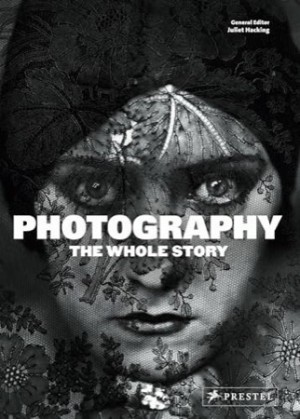
Hardcover. Prestel Publishing, 1st, Book: Very Good, Dust Jacket: Very Good, Hardcover in a bright dust jacket, 576 pages. Unlike many other artistic media, photographys origins are well documented, as are its ever-changing technologies and applications. Written by an international team of experts, this definitive history of photography looks at every step of the fields dynamic evolution, period by period and movement by movement. Each key genre is chronologically presented within its social, economic, and political context, along with close analysis of specially selected works that best exemplify the characteristics of the period. With more than 500 gorgeous examples in black and white and color, the book explores in-depth virtually every aspect of the medium since its first public demonstration in 1839 to the latest innovations: from early portraits and the birth of photojournalism to travel photography and the mapping of the world; from the Pictorialists to the avant-garde; from celebrity and fashion to documentary and landscape. Along the way readers will learn why some photographs are considered iconic, and why the medium as an art form continues to challenge and enthrall us. DUE TO WEIGHT, DOMESTIC SHIPPING ONLY.
Hardcover. New York, Flammarion, 1st English, 1997, Book: Very Good, Dust Jacket: Very Good, 263 pages, hardcover with dust jacket. Catalog of a traveling exhibition first held at the Museum of Fine Arts, Houston, Texas, subsequently held at various European museums. Translated from the French by Deke Dusinberre. Minor rubbing and fading to dust jacket, mostly to top edge. Slight bumping to corners. Unmarked. A clean and tight copy.
Hardcover. NY, Rizzoli, 1st, 1996, Book: Very Good, Dust Jacket: Very Good, Hardcover, 208 pages. Pictorial photography is noted for its artistic expressiveness, careful design and composition, and muted focus. In 1914 Clarence White (1871-1925) left Alfred Stieglitz's Photo-Secession group, abandoned his ambitions to be a photographic illustrator, and opened the Manhatten-based Clarence H. White School of Photography. Lecturers at his school included Stieglitz, Paul Strand, and Edward Steichen. White's unique teaching skills, especially his encouragement of women students, nurtured the careers of such talented photographers as Margaret Bourke-White, Laura Gilpin, and Dorothea Lange. Presented by the Detroit Institute of Arts and the George Eastman House, this companion volume for a traveling exhibition contains the elegant photographic imagery of White and his students. The clear text by two photography curators imparts how the revered teacher's romantic pictorialism became the foundation for the student's avant-garde modernism. By far the most substantial review of White's work and influence in print.
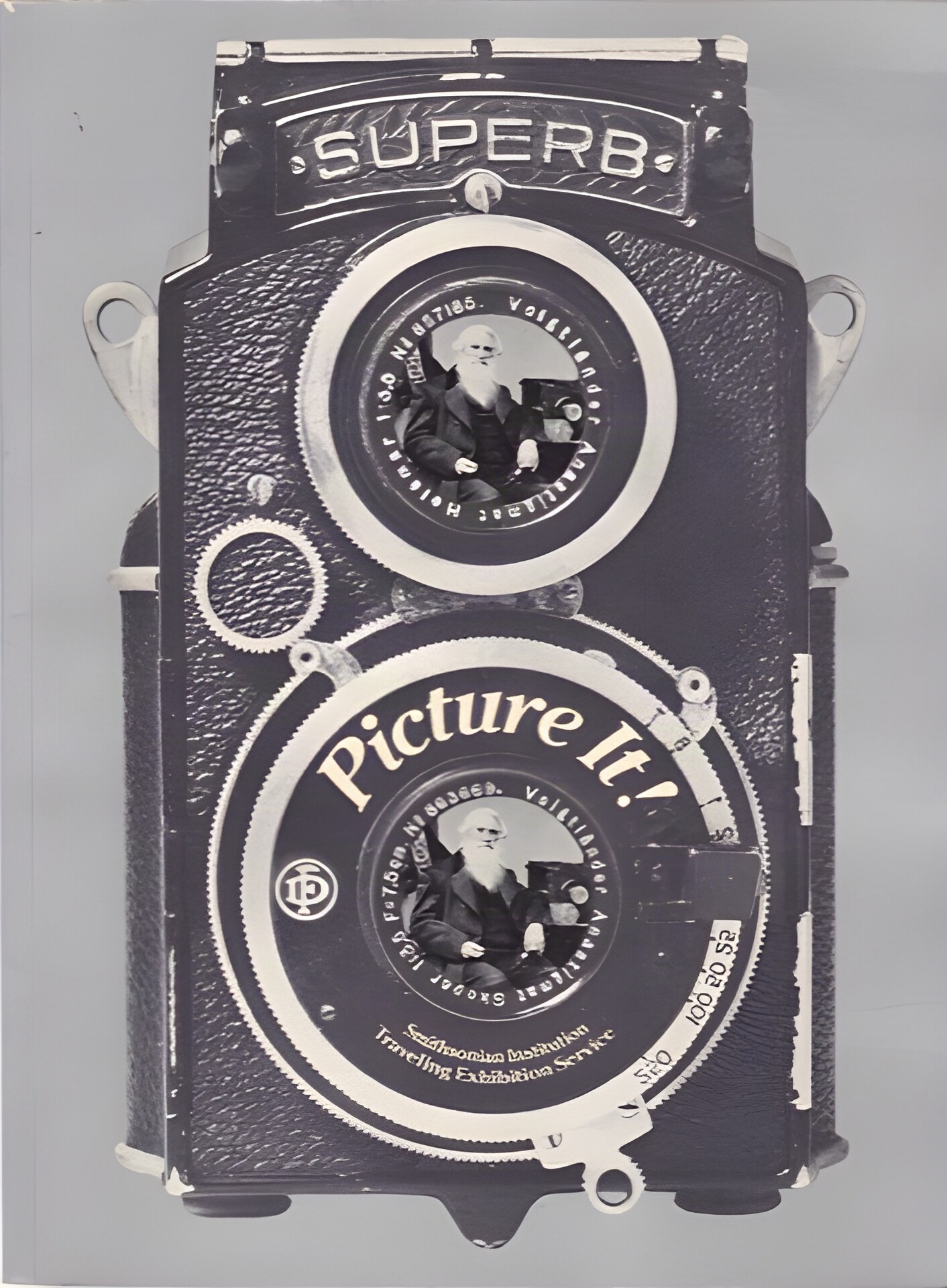
Softcover. Washington DC, Smithsonian Institute, 1st, 1981, Book: Very Good, Dust Jacket: None, Softcover, 95 pages, b&w illustrations. Originally conceived to accompany the exhibition, Photographs from the National Portrait Gallery. Presents the development of photography accompanied by portraits illustrating various photographic techniques. Includes suggestions for organizing and maintaining a collection of prints. Clean copy.
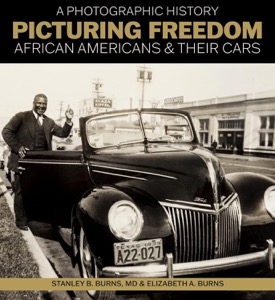
Softcover. NY, Burns Archive Press, 1st, 2022, Book: Very Good, Dust Jacket: None, Softcover, 272 pages. SIGNED BY STANLEY BURNS on title page. Picturing Freedom chronicles and celebrates the photographic history of African Americans and their cars by focusing on personal images of the pride and joy of car ownership (1900-1980+). Owning a car was a significant life-changing achievement. It offered special freedoms--the freedom to travel, the freedom to work further from home, the freedom to visit family and friends, the freedom to avoid Jim Crow laws, and the freedom to migrate. The car was unequivocal evidence of Black success and an important symbol of status in a country that had long fought their advancement in every area. Car ownership was purposely and proudly photographed. All of the photographs were taken in Black communities by a family member or a friend and reveal how African Americans represented themselves. This 2022 IPPY award-winning compilation of over 450 unique photographs is an inspiring visual narrative of American life. Clean, bright copy.
Softcover. Princeton Architectural Press, 1st, 2005, Book: Very Good, Dust Jacket: None, Softcover, 160 pages. The blue plate special, meatloaf, a cheeseburger deluxe, a milkshake in a frosty mixing canister, a hot cup of joe--all served by a friendly face in a well-lighted aluminum tube. Such are the special joys of the American diner. And it was just these pleasures that photographer Stephan Schacher set out to document when he left New York on a journey through North America that would test both his stomach and his resolve. Schacher's mission: to feed his hunger only at diners, and to photograph both his meal and his server every time. The result is a unique and deeply human story--quirky and nostalgic and generous--of one man's quest to discover North America's diner culture and his own place in it. Traveling from a Jersey diner to the Canadian Rockies to a shoreside clambake shack on the Pacific Ocean, Schacher's culinary adventure is documented here with a wealth of visual materials. The author's arresting photographs of succulent steaks and greasy fries, of smiling waitresses in uniforms or jeans, and brightly colored plastic dishes and table mats are supplemented by maps showing the photographer's route across the continent.
Softcover. New York, Princeton Architectural Press, 1st, 2005, Book: Very Good, Dust Jacket: None, 160 pages, color plates throughout. The blue plate special, meatloaf, a cheeseburger deluxe, a milkshake in a frosty mixing canister, a hot cup of joe--all served by a friendly face in a well-lighted aluminum tube. Such are the special joys of the American diner. And it was just these pleasures that photographer Stephan Schacher set out to document when he left New York on a journey through North America that would test both his stomach and his resolve. Schacher's mission: to feed his hunger only at diners, and to photograph both his meal and his server every time. The result is a unique and deeply human story--quirky and nostalgic and generous--of one man's quest to discover North America's diner culture and his own place in it. Traveling from a Jersey diner to the Canadian Rockies to a shoreside clambake shack on the Pacific Ocean, Schacher's culinary adventure is documented here with a wealth of visual materials. The author's arresting photographs of succulent steaks and greasy fries, of smiling waitresses in uniforms or jeans, and brightly colored plastic dishes and table mats are supplemented by maps showing the photographer's route across the continent.
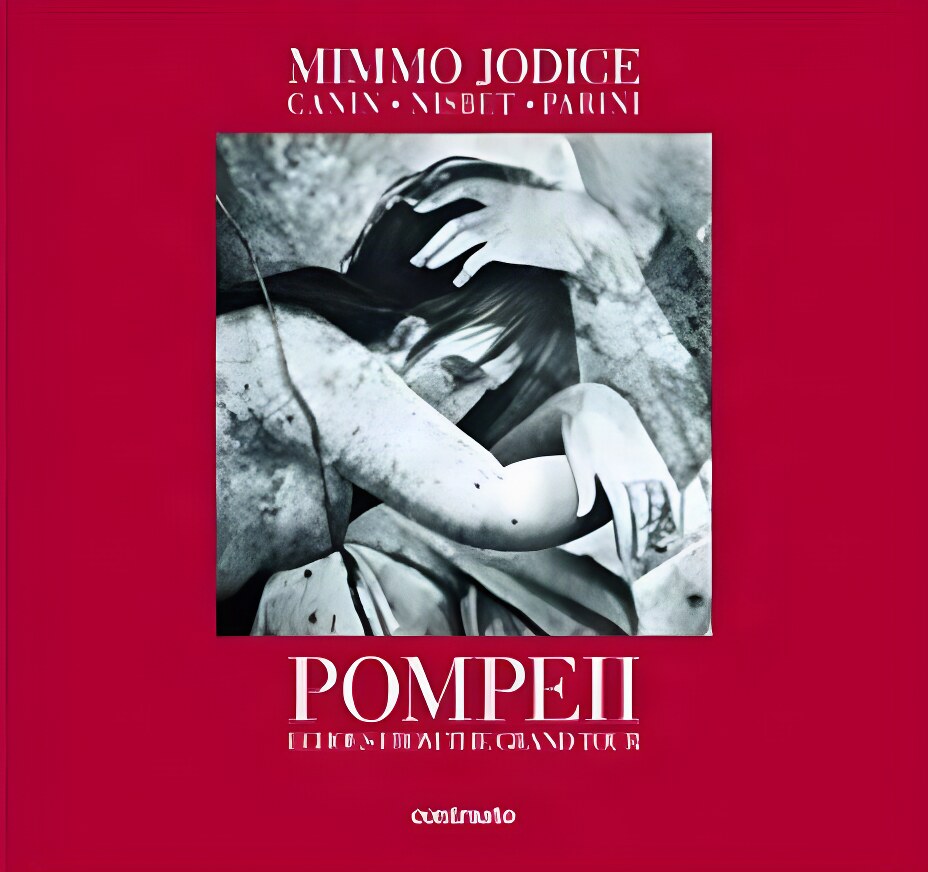
Hardcover. Rome, Contrasto, Reprint , 2010, Book: Very Good, Dust Jacket: None, Hardcover, 134 pages. Extensive b&w photography throughout. A collection of 53 photographs of Pompeii, never published before, shot by the master photographer Mimmo Jodice. Unique images, visions conjuring up a long-lost past tradition, coupled with texts by Ethan Canin, Jim Nisbet and Jay Parini. No dj issued.
Rome, Contrasto, 1st, 2010, Book: Very Good, Dust Jacket: None, Hardcover, 136 pages, 53 b&w plates. A collection of 53 photographs of Pompeii, never published before, shot by the master photographer Mimmo Jodice. Unique images, visions conjuring up a long-lost past tradition, coupled with texts by Ethan Canin, Jim Nisbet and Jay Parini. No dj issued.
Hardcover. New Haven CT, Yale University Press , 1st, 2002, Book: Very Good, Dust Jacket: Very Good, Hardcover, 184 pages. ARTnews, the oldest art magazine in America and the most widely circulated art magazine in the world, is celebrating its one-hundredth anniversary in 2002. This attractive book celebrates and commemorates this milestone event, presenting one hundred of the best photographic portraits commissioned by and reproduced in the magazine since its origin. These fascinating photographs chronicle the history of the magazine and present a "who's who" of people who have shaped the art world over the last century. Portrait of the Art World includes photographs of many of the great European and American artists of the twentieth century, including George Bellows, Francis Bacon, Pablo Picasso, Piet Mondrian, Jackson Pollock, Alexander Calder, and Alice Neel. The photographers-often as fascinating as their subjects-range from Zaida Ben-Yusuf, Alice Boughton (early members of Alfred Stieglitz's circle), and Jessie Tarbox Beals (perhaps the first woman photojournalist) to Stieglitz himself, Man Ray, and Cecil Beaton. Contemporary photographers featured in the book include Timothy Greenfield-Sanders, Arnold Newman, Richard Avedon, and Robert Mapplethorpe. The book also presents an essay by William F. Stapp exploring the historical context of portrait photography in ARTnews; an essay on the history of ARTnews by Pete Hamill; and an essay by Milton Esterow, the current editor and publisher of ARTnews, discussing his personal view of the magazine. This handsomely illustrated book is the catalogue for an exhibition at the New-York Historical Society from September 27, 2002, to January 5, 2003, which will then travel to Washington, Chicago, and San Francisco
Hardcover. Boston, Museum of Fine Arts, 1st, 2018, Book: Very Good, Dust Jacket: Very Good, Hardcover in a bright dust jacket. , 144 pages illustrated in color and b&w. During the global postcard craze that peaked around 1900 and continued for several decades thereafter, photographers in Africa grasped the opportunity to serve a lucrative market for images of the continent, both locally and worldwide. Their picture postcards now contribute to understanding political and cultural changes in Africa at the time, as the rise of the new medium coincided with the expansion and consolidation of colonial rule. They also provide a way to reconstruct the life and work of the photographers of European, African and other backgrounds who created these images-which often survive only in postcard form-and in some cases published them as well. The cards were produced for residents and travelers in Africa, as well as for buyers and collectors who had never set foot on the continent. Their depictions of colonial administrations and the exploitation of resources and peoples, as well as images inscribing tribal identities and racial classifications, often reflect the colonizers' worldview. Yet it is also possible to recover the authorship of some of the African women and men who participated in these photographic encounters. For instance, some cards show that members of Africa's elites recognized the power of photographic images to enhance their standing and present their own narratives.



 "Orientalist Photographs: 1870-1950by: Milet, Eric")
 "Outback in Australia or Three Australian Overlanders (SIGNED COPY)by: Harris, Captain Kilroy")


 "Passportby: Mark, Mary Ellen")
 "Paul Strand in Mexico by: Krippner, James")
 "Paul Strand: The World On My Doorstep 1950 - 1976by: Strand, Paul")
 "Paul Strand: The World On My Doorstepby: Strand, Paul")
 "Pentothal Postcardsby: Lal, David C.")
 "Pentothal Postcardsby: Lal, David C.")
 "People of the Road : The Irish Travellersby: Oppersdorff, Mathias")
 "Photographer of the World: A Biography of Herbert Pontingby: Arnold, H. J. P.")
 "Photographs Are Memories (SIGNED COPY)by: Young, Barbara")


 "Picasso and Photography: The Dark Mirrorby: Baldassari, Anne")
 "Pictorialism into Modernism: The Clarence H. White School of Photographyby: Marianne Fulton")



 "Plates and Dishes: The Food and Faces of the Roadside Dinerby: Schacher, Stephan")
 "Pompeii: Echoes from the Grand Tourby: Jay Parini, Ethan Canin, Jim Nisbet, Angelo Cannavacciuolo (Creator), Mimmo Jodice (Photographer), Marcello Fiori (Introduction")
 "Portrait of the Art World: A Century of ARTnews Photographsby: William F. Stapp")


