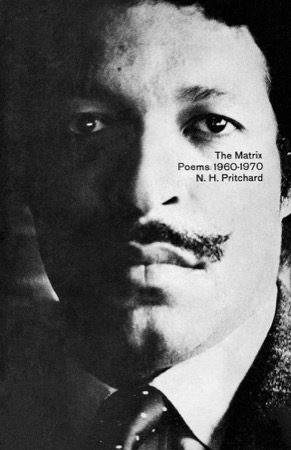
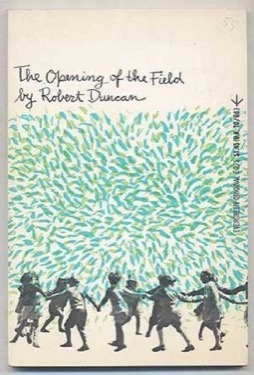
Softcover. NY, Doubleday, 1st, 1970, Book: Very Good, Dust Jacket: None, Softcover, 203 pages. A bold, pioneering, "free-souled" and long-rare classic of concrete poetry published by Doubleday and Company in 1970. One of a tiny handful of books of concrete poetry published in America by a major publishing house. Sadly, the book was given little support and was not promoted, and it has long been out of print. However, it remains a cherished item for fans of poetry due to its unique composition, and difficult but rewarding poetics. Forcing the reader to straddle the line between reading and viewing, the book features visual poems that predate the experiments of the Language poets, including words that are exploded into their individual letters, and columns of text that ride the edge of the page. Clean, bright copy of the paperback edition.
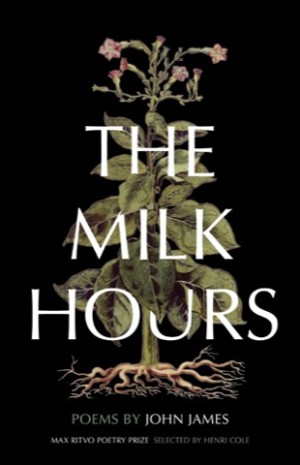
Hardcover. Minneapolis MN, Milkweed Editions , 1st, 2019, Book: Very Good, Dust Jacket: Very Good, Hardcover in a bright, unclipped dust jacket. INSCRIBED BY JAMES on the title page. Winner of the Max Ritvo Poetry Prize, The Milk Hours is an elegant debut that searches widely to ask what it means to exist in a state of loss. Clean copy.
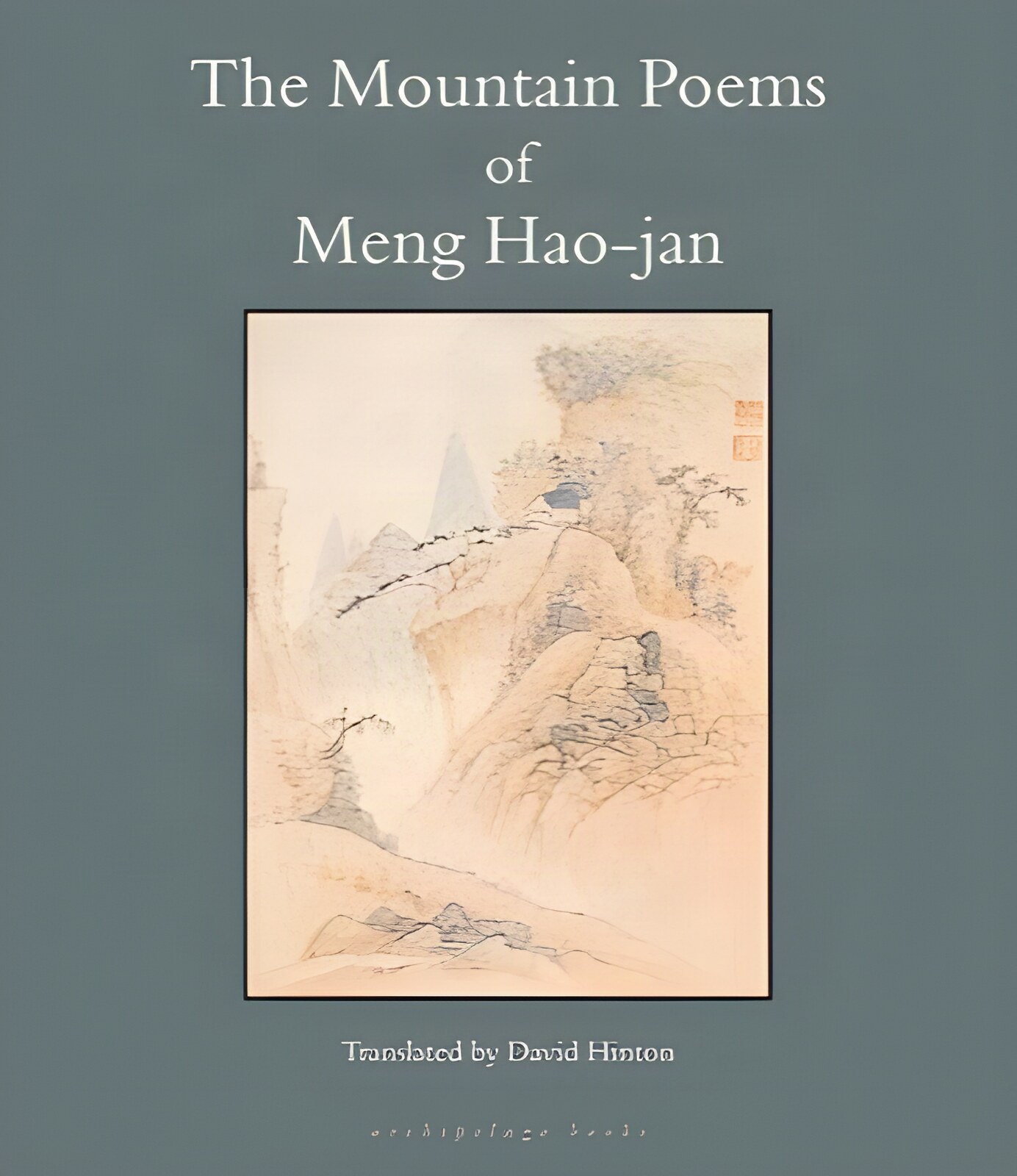
Softcover. NY, Archipelago Books, 1st, 2004, Book: Very Good, Dust Jacket: None, Softcover in pictorial wrappers, 79 pages. The first full flowering of Chinese poetry occurred in the illustrious T'ang Dynasty, and at the beginning of this renaissance stands Meng Hao-jan (689-740 c.e.), esteemed elder to a long line of China's greatest poets. Deeply influenced by Ch'an (Zen) Buddhism, Meng was the first to make poetry from the Ch'an insight that deep understanding lies beyond words. The result was a strikingly distilled language that opened new inner depths, non-verbal insights, and outright enigma. This made Meng Hao-jan China's first master of the short imagistic landscape poem that came to typify ancient Chinese poetry. And as a lifelong intimacy with mountains dominates Meng's work, such innovative poetics made him a preeminent figure in the wilderness (literally rivers-and-mountains) tradition, and that tradition is the very heart of Chinese poetry. This is the first English translation devoted to the work of Meng Hao-jan. Meng's poetic descendents revered the wisdom he cultivated as a mountain recluse, and now we too can witness the sagacity they considered almost indistinguishable from that of rivers and mountains themselves. Clean, bright copy.
Softcover. NY, Grove Press , 1st pbk., 1960, Book: Very Good, Dust Jacket: None, Softcover, 96 pages. Originally published in 1960 by Grove Press, this is a subsequent edition, issued as a paperbound original. Wrappers lightly toned, clean copy.
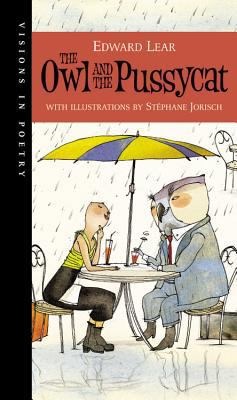
Hardcover. Tonawonda NY, KCP Poetry, 1st, 2007, Book: Very Good, Dust Jacket: None, Hardcover, pictorial boards with black cloth spine, 44 pages illustrated in color by Jorisch. Visions in Poetry is an innovative and award-winning series of classic poems re-interpreted for today's readers by outstanding contemporary artists in distinctively beautiful editions. The sixth Visions in Poetry book is The Owl and the Pussycat, a nonsense poem by Edward Lear, brilliantly illustrated by Stephane Jorisch. The artist's vision begins in a segregated world where different species never mix and everyone hides behind a mask. Against this backdrop an aristocratic owl from Owl Heights and a bohemian pussycat from the other side of the tracks find each other. Clean copy.
Softcover. NY , Atheneum, 1st, 1973, Book: Very Good, Dust Jacket: None, Softcover, 141 pages. A Spanish/English bilingual edition of this influential poet. Name on front fly leaf, otherwise clean.
Hardcover. NY, Lee & Low Books, 1st, 1996, Book: Very Good, Dust Jacket: Very Good, Hardcover in a bright, unclipped dust jacket. This dazzling collection of poetry celebrates the beauty of African-American culture. Written by 20 inner-city children, these moving and powerful poems represent little-heard and often overlooked voices. Color illustrations by Gregory Christie. Bookplate on inside front cover otherwise clean copy.
Softcover. NY, Delta, reprint, 1968, Book: Very Good, Dust Jacket: None, Softcover, 108 pages, selected poetry by the author, 1957-1968. Published as "Writing 20"; original price $1.95 on front wrap; cover photo by Edmund Shea (black-and-white photo of a barefoot woman sitting amid some rubble). Inscription on front fly leaf, otherwise clean.
Softcover. NY, Stone Street Press, 1st , 1984, Book: Very Good, Dust Jacket: None, Softcover, green paper wrappers with illustrated label on front. SIGNED BY MCCORMICK on (C) page Lino cut Illustrations, calligraphy & translation by McCormick. Clean, bright copy.
Softcover. Toronto, University of Toronto Press, 1st, 2001, Book: Very Good, Dust Jacket: None, Softcover, 334 pages. This revised edition of The Poem of Empedocles (1992) integrates substantial new material from a recently discovered papyrus and published by A. Martin and O. Primavesi. The papyrus contains evidence of over seventy lines or part lines of poetry, of which more than fifty are both new and usable. The integration of this material into the previously known fragments has significant impact on our understanding of Empedocles, one of the most influential philosophers and poets of antiquity. Name on front fly leaf otherwise a clean, tight copy.
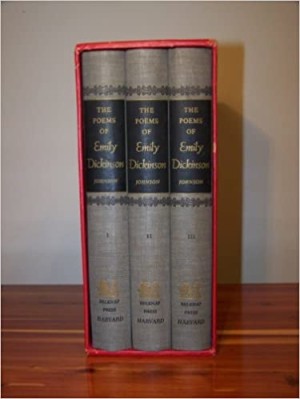
Hardcover. Cambridge MA, The Belknap Press of Harvard University, 7th pr., 1979, Book: Very Good, Dust Jacket: None, Three uniform volumes in original red slipcase, 1266 pages. Gray cloth covers with black and gilt stamping to titles on spines. Interest in Emily Dickinson has grown throughout the years until, now, in this three-volume edition Thomas Johnson presents the entire body of poems she is known to have written, 1775 in all. Here are the familiar "I never saw a Moor" and "Because I could not stop for Death," along with other less well-known poems, including forty-three never before published. Casual notes to friends and relatives which frequently accompany scraps of verse help to reveal the poet's enigmatic character. After keen analysis of the manuscripts, Johnson has arranged the poems in what is believed to be their chronological order, with variations and rejected versions of each poem following .No dust jackets. Ink notations to about 15 pages in the 3 volumes, Otherwise clean and tight.
Hardcover. NY, E.P. Dutton, 1891, Book: Very Good, Dust Jacket: None, Hardcover, blue cloth covers with gilt decoration and lettering, 352 pages. Frontispiece portrait of poet, other b&w illustrations. Previous owner's notation on blank prelim page otherwise clean.
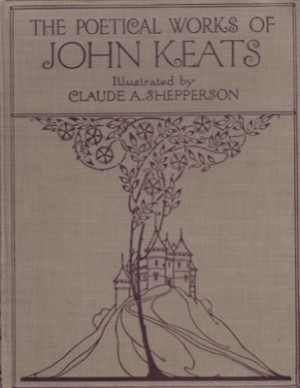
Hardcover. London, Hodder & Stoughton, 1st thus, 1916, Book: Very Good, Dust Jacket: None, Hardcover, original black lettered grey cloth, 179 pages, illustrated with 10 color plates by Claude Allin Shepperson tipped-in to tan pages. Light foxing to text pages. Edge-block foxed. Bringing together the best of Keats' poetry, this beautifully illustrated volume includes a critical essay by Robert Bridges, Poet Laureate.
Hardcover. London, Macmillan and Co., 1878, Book: Very Good, Dust Jacket: None, Hardcover, bound in 3/4 leather over marbled boards, spine with raised bands and ornate gilt design, title in gilt on red leather label. All edges with marble design, marbled endpapers, 625 pages. The Globe Edition of this work. With an introduction by David Masson. Illustrated with a couple of in-text engravings. A collection of the poetry of John Milton, including his best known 'Paradise Lost'.
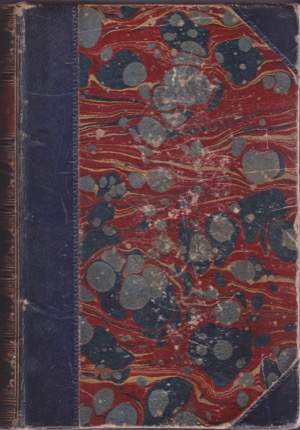
Hardcover. NY, Frederick A. Stokes Company, 1st thus, 1890, Book: Very Good, Dust Jacket: None, Four hardcover volumes. All volumes have marbled bindings with maroon leather spines and corners and gold lettering on spines. All have gilded top page edgings. 292, 319, 326, 287 pages. Volume I contains a black and white frontispiece bearing a portrait of Robert Browning. Six pages in Vol 3 have some rough edges otherwise a clean, bright set.
Softcover. Seattle, Wave Books, 1st, 2023, Book: Very Good, Dust Jacket: None, Softcover, 219 pages. A collection of essay/talks that the poet Rachel Zucker, expanded from lectures presented for the Bagley Wright Lecture Series in 2016. Devastating in their revelations, yet hopeful in their endurance, these are lectures of protest and reckoning. Zucker declares 'I write against. My poetics is a poetics of opposition and provocation that I never outgrew. Against the status quo or the powers that be, writing out of and into wrongness.' Thus, Zucker deftly dismantles the outdated paradigms of motherhood, aesthetics, feminism, poetics, and politics. Bringing Bernadette Mayer, Marina Abramovic, Alice Notley, Adrienne Rich, Audre Lorde-among many others-into the conversation, Zucker questions the categories that have been imposed on poetry, as well as a poet's need to speak, and the resulting responsibilities. Clean copy.
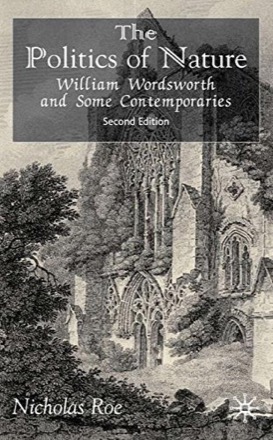
Softcover. NY/London, Palgrave , 2nd Ed., 2002, Book: Very Good, Dust Jacket: None, Softcover, 244 pages. Taking into account recent developments in historical and ecological criticism, and incorporating fresh research into poetry and politics in the 1790s, the second edition of The Politics of Nature enlarges and updates Nicholas Roe's acclaimed study of Romanticism. Hitherto marginal figures are restored to prominence, and there is new material on William Wordsworth's radical years.
Softcover. Berkeley CA, University of California Press, 1st, 1951, Book: Very Good, Dust Jacket: None, Softcover, 165 pages. Examining 20 poets and their poetry of the 1940s with relation to the prose of that period. Clean copy. University of California Publication Vol. 19 No. 3.
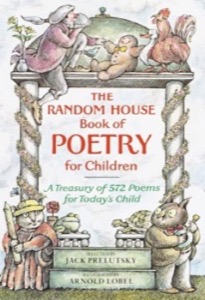
Hardcover. NY, Random House, reprint, Book: Very Good, Dust Jacket: Very Good, Hardcover in a bright dust jacket, 245 pages illustrated in color and b&w by Arnold Lobel. The Random House Book of Poetry for Children offers both funny and illuminating poems for kids personally selected by the nation's first Children's Poet Laureate, Jack Prelutsky. Featuring a wealth of beloved classic poems from the past and modern glittering gems, every child who opens this treasury will finda world of surprises and delights which will instill a lifelong love of poetry. Featuring 572 unforgettable poems, and over 400 one-of-a-kind illustrations from the Caldecott-winning illustrator of the Frog and Toad series, Arnold Lobel, this collection is, quite simply, the perfect way to introduce children to the world of poetry. Clean copy.
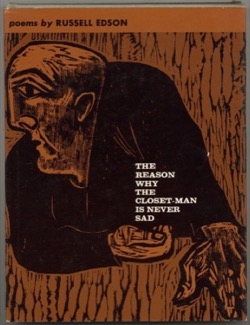
Softcover. Middletown CT, Wesleyan University Press, 1st, 1977, Book: Very Good, Dust Jacket: None, Softcover, 72 pages. A lovely copy of this vintage book of Edson's landmark prose poetry. The author's 7th collection. Clean copy.
Softcover. Chicago, University of Chicago Press;, reprint, 2009, Book: Very Good, Dust Jacket: None, Softcover, pictorial wrappers, 123 pages. SIGNED BY AUTHOR on title page and INSCRIBED by him on front fly leaf. Poems inspire our trust, argues James Longenbach in this bracing work, because they don't necessarily ask to be trusted. Theirs is the language of self-questioning--metaphors that turn against themselves, syntax that moves one way because it threatens to move another. Poems resist themselves more strenuously than they are resisted by the cultures receiving them. But the resistance to poetry is quite specifically the wonder of poetry. Considering a wide array of poets, from Virgil and Milton to Dickinson and Gluck, Longenbach suggests that poems convey knowledge only inasmuch as they refuse to be vehicles for the efficient transmission of knowledge. In fact, this self-resistance is the source of the reader's pleasure: we read poetry not to escape difficulty but to embrace it. An astute writer and critic of poems, Longenbach makes his case through a sustained engagement with the language of poetry. Each chapter brings a fresh perspective to a crucial aspect of poetry (line, syntax, figurative language, voice, disjunction) and shows that the power of poetry depends less on meaning than on the way in which it means--on the temporal process we negotiate in the act of reading or writing a poem. Readers and writers who embrace that process, Longenbach asserts, inevitably recoil from the exaggeration of the cultural power of poetry in full awareness that to inflate a poem's claim on our attention is to weaken it.
Hardcover. Lanham MD, Lexington Books, 1st, 2022, Book: Very Good, Dust Jacket: None, Hardcover, pictorial boards, 143 pages. American nature writing characteristically embodies an appreciative, lyrical evocation of the natural world. But often, too, green-disposed authors have been moved to dramatize diverse, anthropogenic perils to environmental health. John Gatta freshly reveals how this dark yet graced and hopeful strain of environmental literature enlarges upon a jeremiad tradition of prophecy inherited from Puritan New England. Across successive historical periods, such expression has assumed a rich variety of American form--as creative nonfiction, poetry, fiction, or film documentary. In the spirit of ancient Hebrew prophecy, jeremiads--unlike diatribes--reach beyond effusions of doom and gloom toward the prospect of change through a conversion of heart. Accordingly, the new climate fiction and much other writing steeped in what Gatta terms this "Green Jeremiad" tradition not only warn of material threats to life's flourishing, but may also look to stir spiritual understanding and renewal. Clean copy.



 "The Never Wife by: Cynthia Hogue")




 "The Poetical Works of Frances Ridley Havergalby: Frances Ridley Havergal")


 "The Poetical Works of Robert Browning (Four Volumes)by: Browning, Robert")
 "The Poetics of Wrongnessby: Rachel Zucker")
 "The Primary Language of Poetry in the 1940'sby: Josephine Miles")