Hardcover. NY, WW Norton & Co,, 1st, 2018, Book: Very Good, Dust Jacket: Very Good, Hardcover in a bright, unclipped dust jacket. As World War II came to an end, General George Marshall was renowned as the architect of Allied victory. Set to retire, he instead accepted what he thought was a final mission-this time not to win a war, but to stop one. Across the Pacific, conflict between Chinese Nationalists and Communists threatened to suck in the United States and escalate into revolution. His assignment was to broker a peace, build a Chinese democracy, and prevent a Communist takeover, all while staving off World War III. In his thirteen months in China, Marshall journeyed across battle-scarred landscapes, grappled with Mao Zedong and Zhou Enlai, and plotted and argued with Generalissimo Chiang Kai-shek and his brilliant wife, often over card games or cocktails. The results at first seemed miraculous. But as they started to come apart, Marshall was faced with a wrenching choice. Its consequences would define the rest of his career, as the secretary of state who launched the Marshall Plan and set the standard for American leadership, and the shape of the Cold War and the US-China relationship for decades to come. It would also help spark one of the darkest turns in American civic life, as Marshall and the mission became a first prominent target of McCarthyism, and the question of "who lost China" roiled American politics. Remainder dot to top edge, otherwise like new.
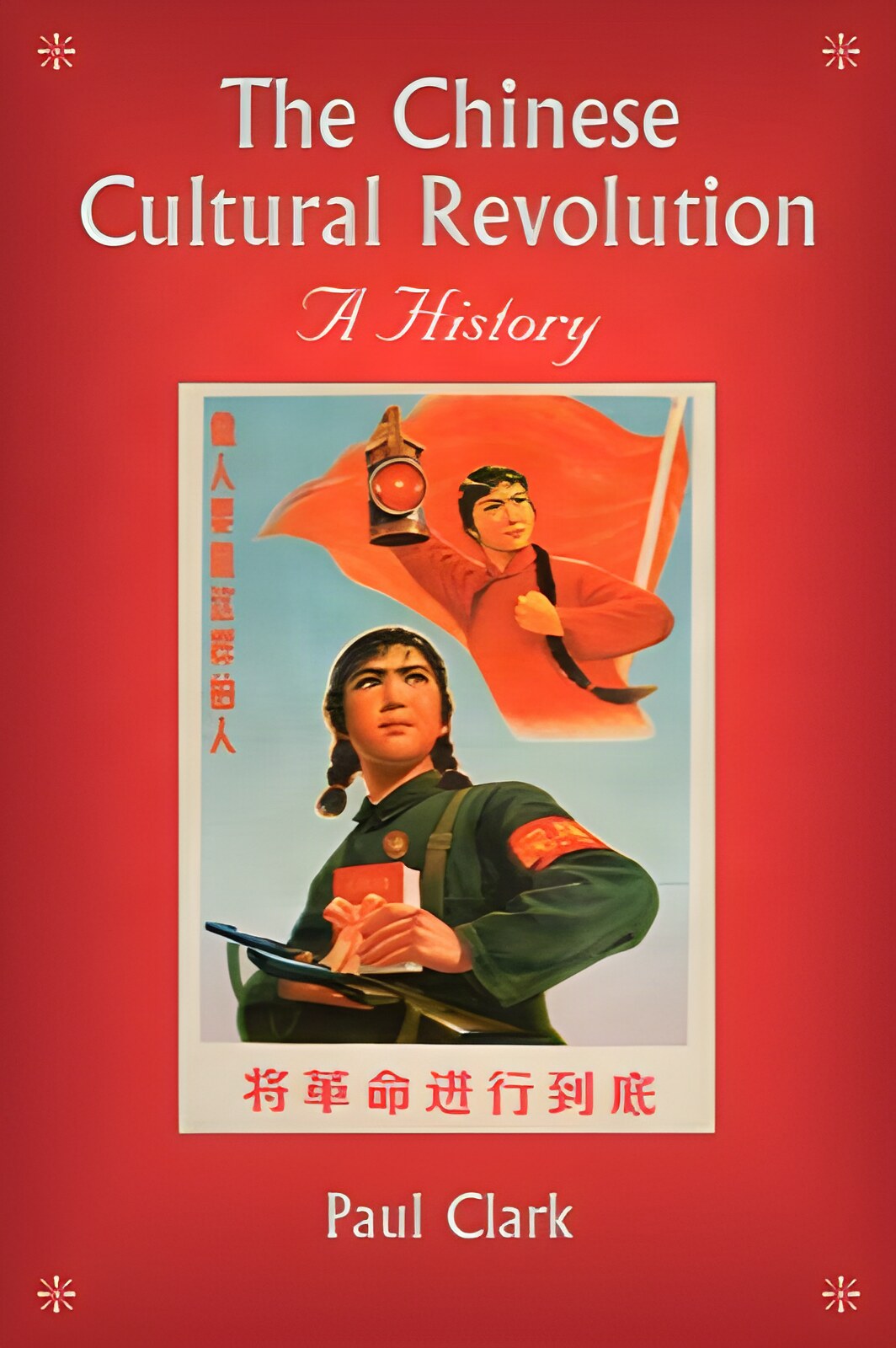
Softcover. UK, Cambridge University Press, 1st pbk, 2008, Book: Very Good, Dust Jacket: None, Softcover in pictorial wrappers, 352 pages. A groundbreaking study of cultural life during a turbulent and formative decade in contemporary China, this book seeks to explode several myths about the Cultural Revolution (officially 1966-1976). Through national and local examination of the full range of cultural forms (film, operas, dance, other stage arts, music, fine arts, literature, and even architecture), Clark argues against characterizing this decade as one of chaos and destruction. Rather, he finds that innovation and creativity, promotion of participation in cultural production, and a vigorous promotion of the modern were all typical of the Cultural Revolution. Using a range of previously little-used materials, Clark forces us to fundamentally reassess our understanding of the Cultural Revolution, a period which he sees as the product of innovation in conflict with the effort by political leaders to enforce a top-down modernity. Clean copy.
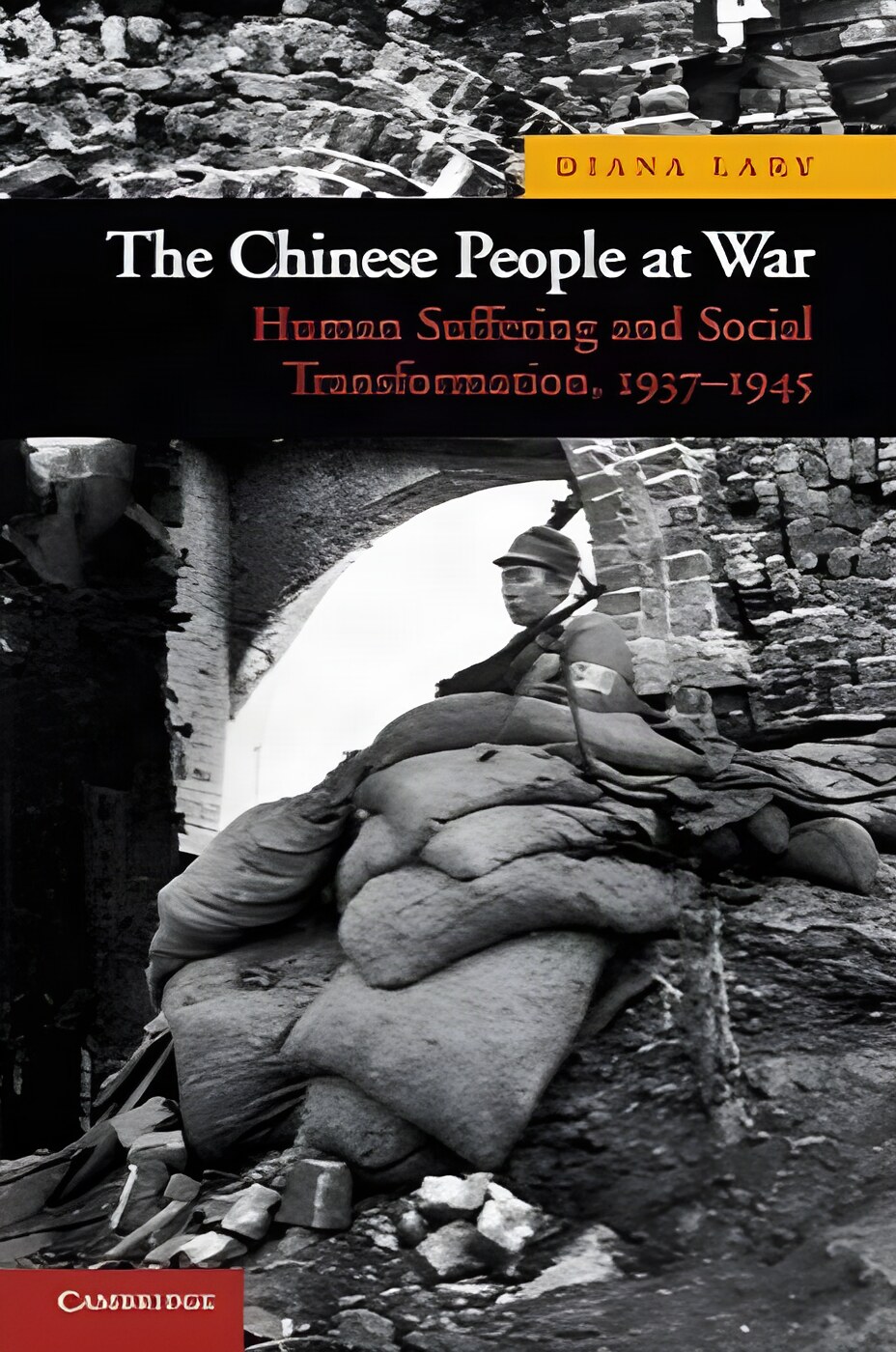
Softcover. UK, Cambridge University Press, reprint, 2011, Book: Very Good, Dust Jacket: None, Softcover, 231 pages, b&w illustrations. The Chinese peoples' experience of war during the Second World War, as it is known in the West, was one of suffering and stoicism in the face of dreadful conditions. China's War of Resistance began in 1937 with the Japanese invasion and ended in 1945 after eight long years. Diana Lary, one of the foremost historians of the period, tells the tragic history of China's war and its consequences from the perspective of those who went through it. Using archival evidence only recently made available, interviews with survivors, and extracts from literature, she creates a vivid and highly disturbing picture of the havoc created by the war, the destruction of towns and villages, the displacement of peoples, and the accompanying economic and social disintegration. Her focus is on families torn apart, men, women, and children left homeless and struck down by disease and famine. It is also a story of courage and survival. By 1945, the fabric of China's society had been utterly transformed, and entirely new social categories had emerged. As the author suggests in a new interpretation of modern Chinese history, far from stemming the spread of communism from the USSR, which was the Japanese pretext for invasion, the horrors of the war, and the damage it created, nurtured the Chinese Communist Party and helped it to win power in 1949. Clean copy.
Hardcover. NY, Basic Books, 4th pr., 2017, Book: Very Good, Dust Jacket: Very Good, Hardcover in a bright dust jacket, 710 pages. We think of the Cold War as a clash of two superpowers, the United States and the Soviet Union. But in The Cold War, award-winning historian Odd Arne Westad argues that the war must be understood as a global confrontation, with roots in the Industrial Revolution and ongoing repercussions around the world. The Cold War may have begun on the perimeters of Europe, but it had its deepest reverberations in Asia, Africa, and the Middle East. Stunning in its breadth and revelatory in its perspective, The Cold War expands our understanding of the Cold War both geographically and chronologically, and offers a new history of how today's world was creased. Clean copy.
Hardcover. New Haven CT, Yale University Press, 1st, 1938, Book: Very Good, Dust Jacket: Very Good, Hardcover in a lightly worn, price-clipped dust jacket, 477 pages. Original edition of this major study of British policies toward its North American colonies by a premiere early 20th century historian of Colonial America, Charles M. Andrews. Name on front fly leaf, otherwise a clean, tight copy.
Softcover. Northhampton, MA, Kitchen Sink Press, 2nd printing, 1994, Book: Very Good, Dust Jacket: None, 56 pages. Softcover. Wrapper very good, glossy, vibrant. Wrapper has a touch of rubbing to the back. Color illustrations throughout. Pages clean and unmarked. Binding tight. In great condition. The first complete collection of the legendary work of one of comics' all-time greatest cartoonists.
Hardcover. NY, Columbia University Press, 1st, 1976, Book: Very Good, Dust Jacket: Very Good, Hardcover in a bright, price-clipped dust jacket, 371 pages. Looks into the origins and activities of a foreign-policy interest group which emerged after the Korean War and exerted pressure on the federal government not to recognize the People's Republic of China. Name on front fly leaf, otherwise clean.
Softcover. Ithaca NY, Cornell University Press, 1st pbk, 1973, Book: Very Good, Dust Jacket: None, Softcover, 180 pages. The spirit of an event consecrated in anarchist legend is captured in these documents. Eyewitness reports, accounts of participants, and archival documents are used by Dr Edwards to illustrate the many facets of the seventy-three-day Paris Commune of 1871, the largest urban insurrection in modern history. Each section of the book is preceded by an explanatory note, and footnotes clarify contemporary references The introduction to the documents provides a general survey of the origins and events of the Commune. Bright, clean copy.
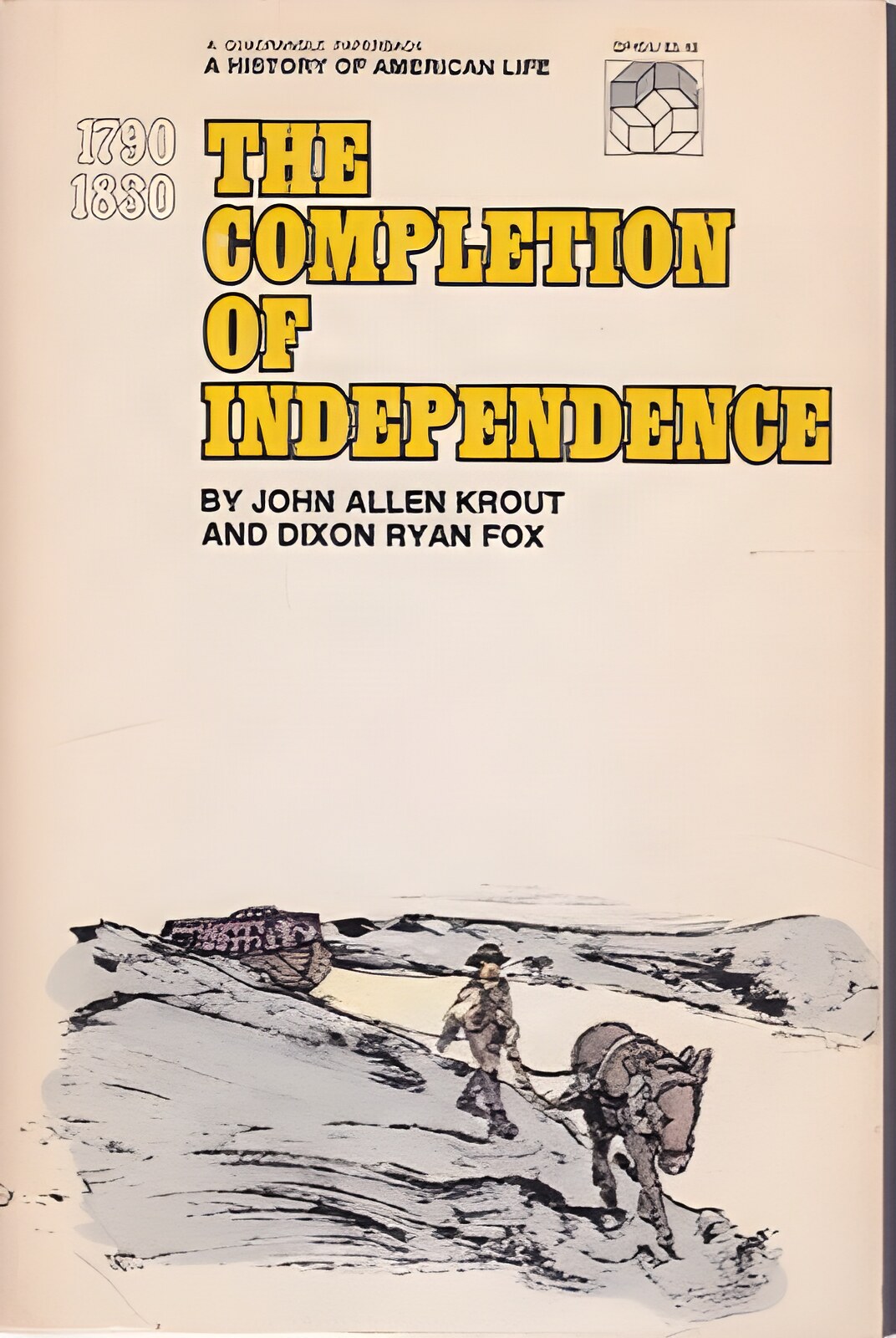
Softcover. Chicago, Quadrangle, reprint, 1971, Book: Very Good, Dust Jacket: None, Softcover, 487 pages. This "Early National" period, one of yearning adolescence in the life of the nation, is the subject of this study which shows how the United States went about winning economic and cultural independence from Europe to match the political emancipation gained by the Revolution.
Hardcover. Washington DC, Brookings Institution Press, 1st, 2021, Book: Very Good, Dust Jacket: Very Good, Hardcover in a bright dust jacket, 305 pages. Disinformation. Trolling. Conspiracies. Social media pile-ons. Campus intolerance. On the surface, these recent additions to our daily vocabulary appear to have little in common. But together, they are driving an epistemic crisis: a multi-front challenge to America's ability to distinguish fact from fiction and elevate truth above falsehood. In this path-breaking book, Jonathan Rauch reaches back to the parallel eighteenth-century developments of liberal democracy and science to explain what he calls the "The Constitution of Knowledge" our social system for turning disagreement into truth. By explicating the Constitution of Knowledge and probing the war on reality, Rauch arms defenders of truth with a clearer understanding of what they must protect, why they must do it, and how they can do it. His book is a sweeping and readable description of how every American can help defend objective truth and free inquiry from threats as far away as Russia and as close as the cellphone. Clean copy.
Hardcover. Princeton NJ, Princeton University Press, 1st, 2009, Hardcover in a bright dust jacket, 157 pages. Was George W. Bush the true heir of Woodrow Wilson, the architect of liberal internationalism? Was the Iraq War a result of liberal ideas about America's right to promote democracy abroad? In this timely book, four distinguished scholars of American foreign policy discuss the relationship between the ideals of Woodrow Wilson and those of George W. Bush. The Crisis of American Foreign Policy exposes the challenges resulting from Bush's foreign policy and ponders America's place in the international arena. Led by John Ikenberry, one of today's foremost foreign policy thinkers, this provocative collection examines the traditions of liberal internationalism that have dominated American foreign policy since the end of World War II. Clean copy.
Softcover. Hanover NH, Brandeis University Press , reprint, 1997, Book: Very Good, Dust Jacket: None, Softcover, pictorial wraps, 228 pages. INSCRIBED BY AUTHOR on title page. The Dead Sea is unlike any other place on earth. Situated a quarter mile below sea level, so saline it can't support life, surrounded by a desolate landscape, it is not just a geologic feature but a source of mystery connected to religious faith. In elegant and vivid prose, Barbara Kreiger re-creates and analyzes the myths and legends surrounding the site and examines both its natural history and its gradual and difficult exploration. But The Dead Sea (first published as Living Waters in 1988) is more than a detailed and delightful travelogue. It is also an inquiry into the human and political drama that has swirled around this mysterious place for more than 12,000 years. In an afterword to the new edition, Kreiger shows how the sea in the post-Peace Accord era may come to take on a new symbolism: with perpetual need for water and a thriving mineral industry as common bonds, Israel and Jordan, two traditional antagonists whose border bisects the sea, may find themselves joining forces to preserve its fragile ecosystem against the threats of technology and tourism. Tan stain to top corner of text b;ock, otherwise clean.
Hardcover. NY, Library of America, 8th pr., Book: Very Good, Dust Jacket: Very Good, Hardcover in a bright dust jacket, 1175 pages. Part Two of a two-volume set. Assembled here in chronological order are hundreds of newspaper articles, pamphlets, speeches, and private letters written or delivered in the aftermath of the Constitutional Convention. Along with familiar figures like Franklin, Madison, Patrick Henry, Jefferson, and Washington, scores of less famous citizens are represented, all speaking clearly and passionately about government. The most famous writings of the ratification struggle - the Federalist essays of Hamilton and Madison - are placed in their original context, alongside the arguments of able antagonists, such as "Brutus" and the "Federal Farmer." Part Two gathers collected press polemics and private commentaries from January to August 1788, including all the amendments proposed by state ratifying conventions as well as dozens of speeches from the South Carolina, Virginia, New York, and North Carolina conventions. Included are dramatic confrontations from Virginia, where Patrick Henry pitted his legendary oratorical skills against the persuasive logic of Madison, and from New York, where Alexander Hamilton faced the brilliant Antifederalist Melancton Smith. Like new.
Hardcover. Princeton NJ, Princeton University Press, 1st, 1958, Book: Very Good, Dust Jacket: Very Good, Hardcover in a lightly worn, price-clipped dust jacket, 513 pages, b&w illustrations. In 1918 the U.S. government decided to involve itself with the Russian Revolution by sending troops to Siberia. This book re-creates that unhappily memorable story: the arrival of British marines at Murmansk, the diplomatic maneuvering, the growing Russian hostility, the uprising of Czechoslovak troops in central Siberia which threatened to overturn the Bolsheviks, the acquisitive ambitions of the Japanese in Manchuria, and finally the decision by President Wilson to intervene with American troops. Of this period Kennan writes, "Never, surely, in the history of American diplomacy, has so much been paid for so little." Name on front fly leaf, otherwise clean.
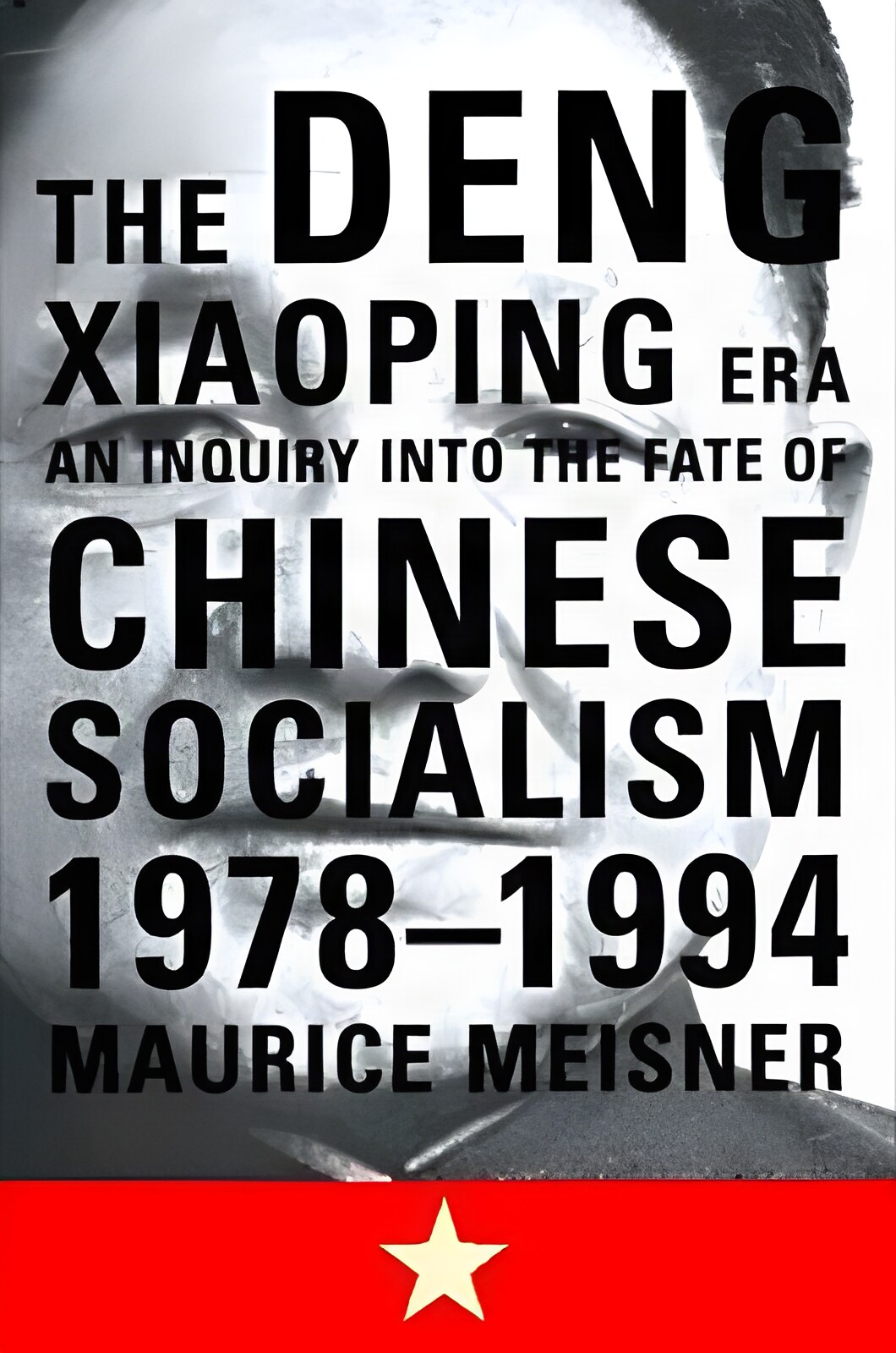
Hardcover. NY, Hill & Wang, 1st, 1996, Book: Very Good, Dust Jacket: Very Good, Hardcover in a bright, unclipped dust jacket, 544 pages. A bold new history of the Deng years by a leading China scholar. Unlike the former Soviet Union and the once "socialist" countries of Eastern Europe, China's current economy is now the world's second largest and most rapidly growing. Remarkably, today's problems in China are spiritual in nature-"a crisis of faith"-stemming from the clash between capitalist realities and lingering socialist values and ideas. "The Deng Xiaoping Era "is the story of that crisis and of Deng Xiaoping's promise of socialist democracy that has degenerated into bureaucratic capitalism. Maurice Meisner shows how the social contract between the Chinese Communist Party and the people was grossly violated by the Deng regime, and why capitalism has emerged as the dynamic force in today's socioeconomic and cultural life. Now, after more than a decade of capitalist reforms, he argues that Chinese spiritual malaise is deepening with the brutal suppression of the 1989 Democracy Movement and its politically repressive aftermath. This is an indispensable study of contemporary Chinese history-from the Chinese Revolution and the founding of the Maoist state to the establishment of the Deng regime and the social consequences of Deng's reforms-as well as a formidable analysis of the failure of the world's greatest socialist experiment. Clean copy.
Hardcover. Evanston IL, Northwestern University Press, 1959-1963, Book: Very Good, Dust Jacket: None, Four hardcover volumes: Vol. 1, East Africa November 1889 to December 1890, 432 pages. Vol. 2, East Africa December 1890 to December 1891, 481 pages. Vol. 3, East Africa January 1892 to August 1892, 454 pages. Vol. 4, Nigeria 1894-5 and 1898, 444 pages. Black-and-white illustrations and maps; Bindings vary: Vols. 1, 3 and 4 are matching green cloth with gilt lettering on spine. Vol. 2 is terra-cotta cloth with a black clorh spine. Previous owner'e signature in 1 and #. Otherwise clean and tight set.
Hardcover. Bloomington, Indiana University Press, 1st, 1983, Book: Very Good, Dust Jacket: Very Good, Hardcover in an dust jacket with mild fading to spine. A valuable record of the first Presidency of the TV age. Hagerty was President Eisenhower's only press secretary. Clean copy.
Hardcover. NY, Alfred A. Knopf, 1st, 1935, Book: Very Good, Dust Jacket: None, Hardcover, maroon cloth with gilt lettering on spine, pages 415-797, plus index. Volume 2 ONLY. No dust jacket. Name on front fly leaf otherwise a clean, bright copy.
Hardcover. NY, Alfred A. Knopf, 1st, 1935, Book: Very Good, Dust Jacket: None, Hardcover, maroon cloth with gilt lettering on spine, 414 pages. Volume 1 ONLY. No dust jacket. Name on front fly leaf otherwise a clean, bright copy.
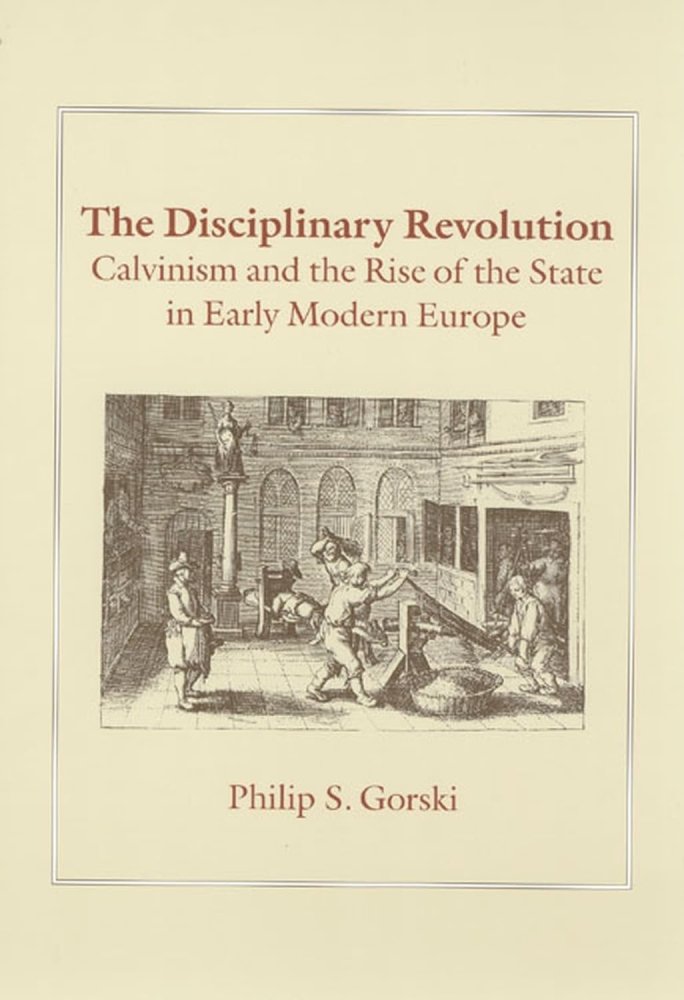
Softcover. University of Chicago Press, reprint, 2010, Book: Very Good, Dust Jacket: None, Softcover, 249 pages. What explains the rapid growth of state power in early modern Europe? While most scholars have pointed to the impact of military or capitalist revolutions, Philip S. Gorski argues instead for the importance of a disciplinary revolution unleashed by the Reformation. By refining and diffusing a variety of disciplinary techniques and strategies, such as communal surveillance, control through incarceration, and bureaucratic office-holding, Calvin and his followers created an infrastructure of religious governance and social control that served as a model for the rest of Europe--and the world. Clean, bright copy.
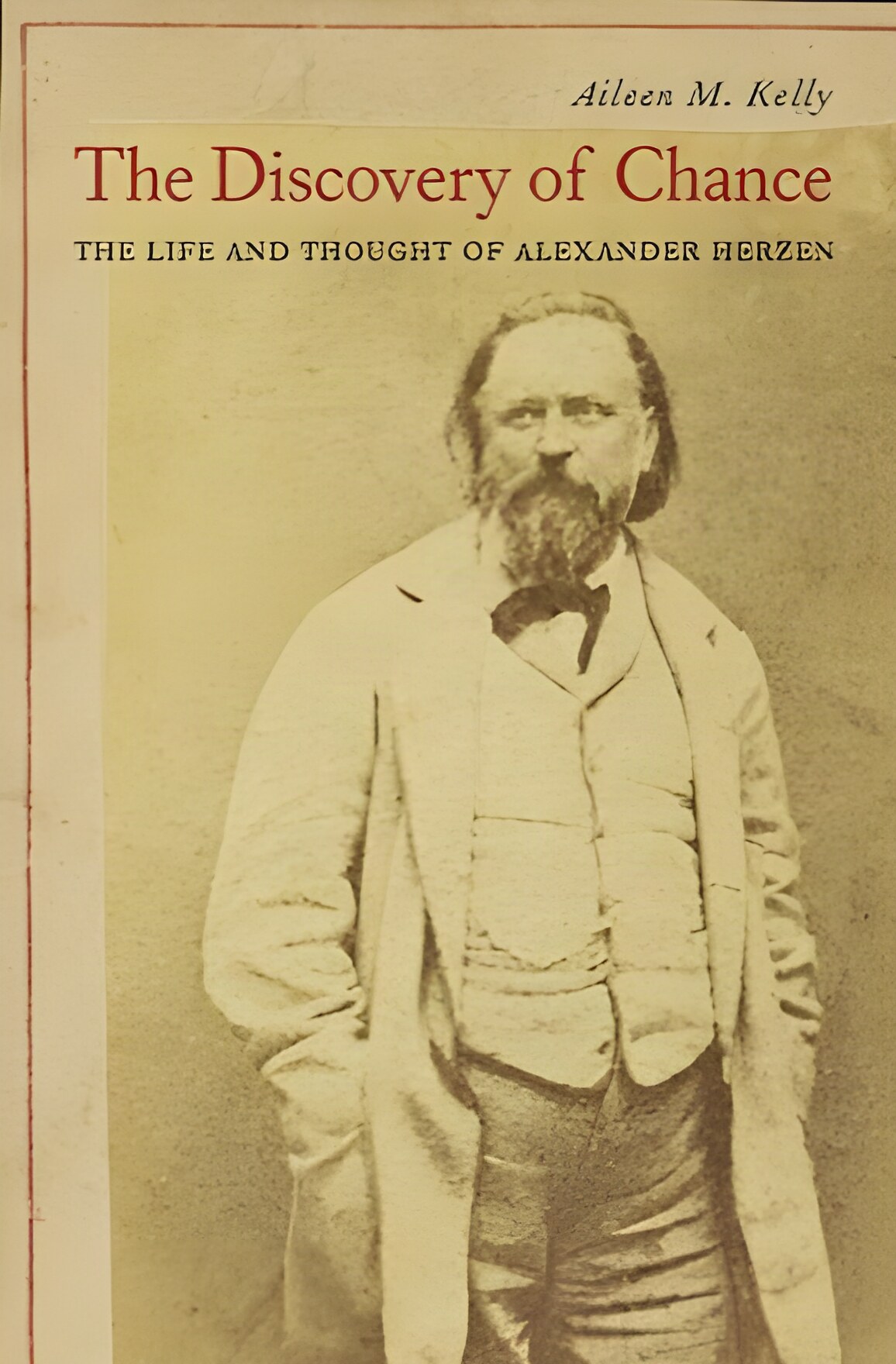
Hardcover. Cambridge MA, Harvard University Press, 1st, 2016, Book: Very Good, Dust Jacket: Very Good, Hardcover in a bright dust jacket, 592 pages. Alexander Herzen-philosopher, novelist, essayist, political agitator, and one of the leading Russian intellectuals of the nineteenth century-was as famous in his day as Tolstoy and Dostoevsky. While he is remembered for his masterpiece My Past and Thoughts and as the father of Russian socialism, his contributions to the history of ideas defy easy categorization because they are so numerous. Aileen Kelly presents the first fully rounded study of the farsighted genius whom Isaiah Berlin called "the forerunner of much twentieth-century thought." In an era dominated by ideologies of human progress, Herzen resisted them because they conflicted with his sense of reality, a sense honed by his unusually comprehensive understanding of history, philosophy, and the natural sciences. Following his unconventional decision to study science at university, he came to recognize the implications of early evolutionary theory, not just for the natural world but for human history. In this respect, he was a Darwinian even before Darwin. Clean, bright copy.
Hardcover. Baltimore, Johns Hopkins University, 1st, 1978, Book: Very Good, Dust Jacket: Very Good, Hardcover in a bright dust jacket with light edgewear, 460 pages. Translated by Lawrence Lipson. A vivid historical narrative of the US military intervention in Central America. Uncommon. Name on front fly leaf otherwise clean.
Hardcover. Cambridge MA, Harvard University Press, 1st, 1972, Book: Very Good, Dust Jacket: Very Good, Hardcover in a bright, unclipped dust jacket, 246 pages. Preface, Introduction, Chapters on: The United States and the Dominican Republic to 1965: Background to Intervention; The Origins of the 1965 Dominican Crisis: Setting the Stage; The Decision to Intervene; Deploying the Troops; and Explaining the Dominican Intervention. Drawing on nearly 150 personal interviews with individuals in the Dominican Republic and the United States, on rare access to classified U.S. government documents, and on his own first-hand experiences during the crisis, Abraham F. Lowenthal rejects official, liberal, and radical accounts of the intervention. Instead, he explains it as the product of fundamental premises, of decision-making procedures, and of bureaucratic politics. Name on front fly leaf, otherwise clean.


 "The Comic Strip Art of Lyonel Feininger: The Kinder-Kids: Wee Willie Winkie's Worldby: Lyonel Feininger, Bill Blackbeard (Editor/Introduction)")



 "The Constitution of Knowledge: A Defense of Truthby: Jonathan Rauch")
 "The Crisis of American Foreign Policy: Wilsonianism in the Twenty-first Century by: Ikenberry, G. John; Knock, Thomas; Slaughter, Anne-Marie; Smith, Tony")
 "The Dead Sea: Myth, History, and Politics (SIGNED COPY)by: Barbara Kreiger")
 "The Debate on the Constitution: Federalist and Antifederalist Speeches Articles and Letters During the Struggle over Ratification Part Two: January to August 1788 by:")
 "The Debate on the Constitution: Federalist and Antifederalist Speeches Articles and Letters During the Struggle over Ratification: Part One September 1787 - February 1788 by:")

 "The Diaries of Lord Lugard, 4 Volume Set by: Lord Lugard/Margery Perham and Mary Bull (edited by)")
 "The Diary of James C. Hagerty: Eisenhower in Mid-Course 1954 1955 by: Hagerty, James C/Robert Ferrell(Ed.)")