Hardcover. Ann Arbor MI, The University of Michigan Press, 1st, 1999, Book: Very Good, Dust Jacket: Very Good, Hardcover in a bright dust jacket, 354 pages. INSCRIBED BY THE AUTHOR on title page. Light pencil marking to 5 pages, otherwise clean.
Hardcover. La Salle, Illinois, Open Court, 1st, 1974, Book: Good, Dust Jacket: Fair, Hardcover, 151 pages. No. 14 of the Paul Carus Lecture Series. Tears on dust jacket and some foxing on rear of dust jacket. Dust jacket rubbing on front. Previous owner's signature on front flyleaf. Small notes and markings in pencil on about 20 pages. Light creasing on top edge. Nice reading copy.
Hardcover. NY, Knopf, 1st, 2004, Book: Very Good, Dust Jacket: Very Good, Hardcover in a bright dust jacket with light wear to top of dj spine, 429 pages. The fledgling science of psychoanalysis permanently altered the nineteenth-century worldview with its remarkable new insights into human behavior and motivation. It quickly became a benchmark for modernity in the twentieth century--though its durability in the twenty-first may now be in doubt. More than a hundred years after the publication of Freud's The Interpretation of Dreams, we're no longer in thrall, says cultural historian Eli Zaretsky, to the "romance" of psychotherapy and the authority of the analyst. Only now do we have enough perspective to assess the successes and shortcomings of psychoanalysis, from its late-Victorian Era beginnings to today's age of psycho-pharmacology. In Secrets of the Soul, Zaretsky charts the divergent schools in the psychoanalytic community and how they evolved-sometimes under pressure-from sexism to feminism, from homophobia to acceptance of diversity, from social control to personal emancipation. From Freud to Zoloft, Zaretsky tells the story of what may be the most intimate science of all. Clean copy.
Hardcover. Phildelphia, W.B. Saunders Company, 1st, 1953, Book: Very Good, Dust Jacket: None, Hardcover, red cloth binding with spine labeling in black and gilt. Clean text; 842 pages, indexed; with bibliography and appendices. Title page with 1953 and no other printings indicated so assumed first printing. Based on data collected from 8,000 females, this book covers all aspects of sexuality as it relates to the human female. Owner's small embossed stamp on front fly leaf, otherwise clean. No dust jacket.
Hardcover. Phildelphia, W.B. Saunders Company, 1st, 1948, Book: Very Good, Dust Jacket: None, Hardcover, red cloth binding with spine labeling in black and gilt. Clean text; 804 pages, indexed; with bibliography and appendices. Title page with 1948 and no other printings indicated so assumed first printing. Pioneering study -- influential and highly controversial, followed five years later by the companion "Sexual Behavior in the Human Female." Owner's small embossed stamp on front fly leaf, otherwise clean. No dust jacket.
Hardcover. NY, Julian Press, 1st, 1958, Book: Very Good, Dust Jacket: None, Hardcover, 207 pages. Black cloth with gilt lettering on spine, decorative device on front cover. According to his biographers, Freud was not comfortable in making hand passes and touching the subject, which were the (limited) techniques available at the end of the 19th century. Freud studied with Charcot and Bernheim (the two schools of thought which conflicted with each other), but later gave hypnosis up in favor of his free association technique. This book begins by discussing the reasons Freud did that. It states that Freud at the end of life regretting not using hypnosis more. His followers balked at hypnosis, erroneously believing the cures were temporary since the ego was being bypassed (and their theoretical beliefs required the ego to be the agent). But this book reveals that Freud did not abandon hypnosis for the reasons commonly thought, and so it is essential reading for all students of Freud. The second part of the book goes into commentary on hypnosis in theory and practice. Small ink doodle to front fly leaf, otherwise clean.
Hardcover. Chicago, University of Chicago Press, 1st, 1941, Book: Very Good, Dust Jacket: Very Good, Hardcovrt in a lightly worn dust jacket, 141 pages. Frontis photo of Pinero. Sir Arthur Wing Pinero (24 May 1855 - 23 November 1934) was an English actor and later an important dramatist and stage director. He became a prolific and successful playwright, authoring fifty-nine plays. These include serious social dramas, some dealing with social hypocrisy surrounding attitudes to women in second marriages. 'Pinero's talent was stagecraft. He knew how to organize material for effective presentation on the stage. He understood the mass psychology, the emotional reaction of the group in the theater, and thought little of the individual reader. As a result, the dialogue in his plays is right for the actor and the audience, but disconcerting to the readers. But in particular, Pinero was the master of suspense, motivating the turns in his plot sequence with unerring skill. For he understood stage business, the timinng of motion and sound, and, above all, the reactions of an audience to the physical properties on the stage itself. ' Clean copy.
Softcover. New Lebanon NY, Omega Publications, 1st, 2007, Book: Very Good, Dust Jacket: None, Softcover, 234 pages, b&w photos. Everything about Noor Inayat Khan was extraordinary. A great-great-great granddaughter of Tipu Sultan, the Tiger of Mysore, she was born in Moscow to an American mother and an Indian Sufi Muslim father. Due to the unrest in Russia the family moved to London and from there to France where she spent the happiest years of her life studying music, child psychology and writing children's books. In 1940, her father having deserted the family and died in India years before, the family moved once again to England where Noor was trained as a wireless operator with the aim of sending her to German-occupied France to join up with the resistance. Noor was small and delicate, emotional, imaginative, shy, easily flustered and distracted. On the other hand there was her steely determination to serve her country, the desperate need for wireless operators and her perfect French. She was sent on her mission in June 1943. Her biography contains all the elements of an exciting spy novel but it was horrific and deadly reality. Clean copy.
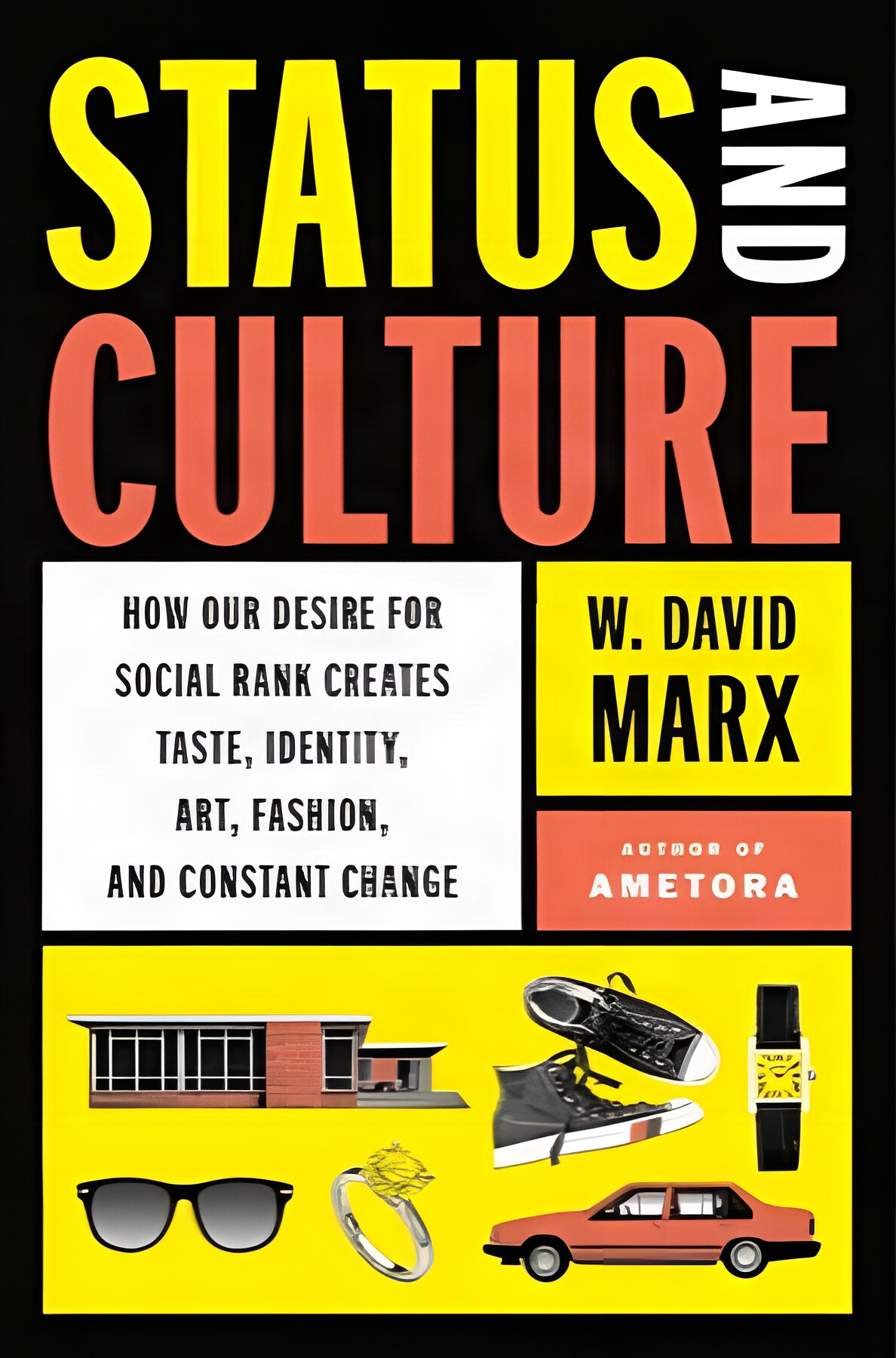
Hardcover. NY, Viking, 1st, 2022, Book: Very Good, Dust Jacket: Very Good, Hardcover in a bright dust jacket, 346 pages. In Status and Culture, W. David Marx weaves together the wisdom from history, psychology, sociology, anthropology, economics, philosophy, linguistics, semiotics, cultural theory, literary theory, art history, media studies, and neuroscience to demonstrate exactly how individual status seeking creates our cultural ecosystem. Marx examines three fundamental questions: Why do individuals cluster around arbitrary behaviors and take deep meaning from them? How do distinct styles, conventions, and sensibilities emerge? Why do we change behaviors over time and why do some behaviors stick around? The answers then provide new perspectives for understanding the seeming "weightlessness" of internet culture. Clean copy.
Hardcover. Bologna, Italy, Damiani, 1st, 2012, Book: Very Good, Dust Jacket: None, Hardcover. Includes decorative slip case. Like new in publisher's shrink-wrap. Shoebox Studio records a moment in a fashion model's career that is rarely seen by a wider public: the model's first "getting-acquainted" photoshoot, in which no attempt is made to beautify or exaggerate her face, pose or expression. Having produced photo campaigns for some of the world's premier beauty clients (Lancome, L'Oreal, Revlon), French photographer and painter Stephane Coutelle is ideally placed to make these portraits of vulnerability and aspiration: his Shoebox Studio sees an unending parade of young women, newly arrived from all over the world and pursuing their first career. His first meeting with a model aims to establish their character and psychology, before professional reflexes take hold, and before complicity is established between photographer and model. Shoebox Studio gathers portraits of aspiring models taken between 2006 and 2010.
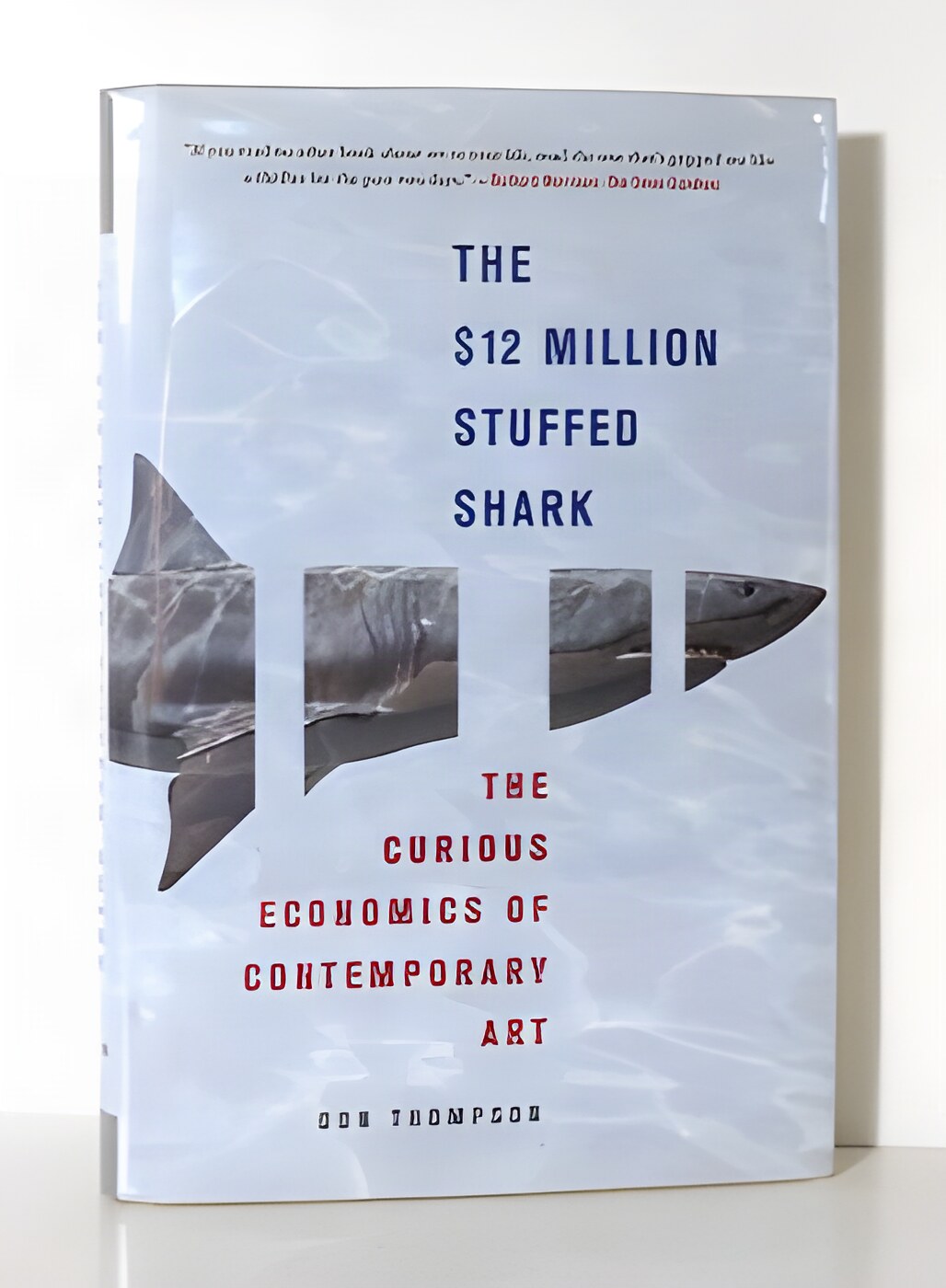
Hardcover. NY, Palgrave Macmillan , 6thpr., 2008, Book: Very Good, Dust Jacket: Very Good, Hardcover in a bright, unclipped dust jacket, 268 pages, color illustrations. Why would a smart New York investment banker pay $12 million for the decaying, stuffed carcass of a shark? By what alchemy does Jackson Pollock's drip painting No. 5, 1948 sell for $140 million? Intriguing and entertaining, The $12 Million Stuffed Shark is a Freakonomics approach to the economics and psychology of the contemporary art world. Why were record prices achieved at auction for works by 131 contemporary artists in 2006 alone, with astonishing new heights reached in 2007? Don Thompson explores the money, lust, and self-aggrandizement of the art world in an attempt to determine what makes a particular work valuable while others are ignored.
Hardcover. Pittsburgh PA, GoodKnight Books, 1st, 2017, Book: Very Good, Dust Jacket: Very Good, Hardcover in a bright, unclipped dust jacket. The Art of Selling Movies presents the first-ever look at 60 years of newspaper advertising for motion pictures great and small. These ads created by Hollywood and adapted by local and regional exhibitors motivated patrons to leave their homes, part with precious income, and spend time in the dark. Because of the high stakes involved, theater operators used wildly creative means to make that happen. They made movie advertising equal parts art and psychology, appealing to every human instinct (especially sex) in an effort to push product and keep their theatres in business. From the pen-and-ink masterpieces of the 1920s and 30s to location-specific folk art to ad space jam-packed with enticements for every member of the family, The Art of Selling Movies dissects the psyche of the American movie-going public ... and the advertisers seeking to push just the right buttons.
Hardcover. Pittsburgh PA, GoodKnight Books, 1st, 2017, Book: Very Good, Dust Jacket: Very Good, Hardcover in a bright, unclipped dust jacket. The Art of Selling Movies presents the first-ever look at 60 years of newspaper advertising for motion pictures great and small. These ads created by Hollywood and adapted by local and regional exhibitors motivated patrons to leave their homes, part with precious income, and spend time in the dark. Because of the high stakes involved, theater operators used wildly creative means to make that happen. They made movie advertising equal parts art and psychology, appealing to every human instinct (especially sex) in an effort to push product and keep their theatres in business. From the pen-and-ink masterpieces of the 1920s and 30s to location-specific folk art to ad space jam-packed with enticements for every member of the family, The Art of Selling Movies dissects the psyche of the American movie-going public ... and the advertisers seeking to push just the right buttons.
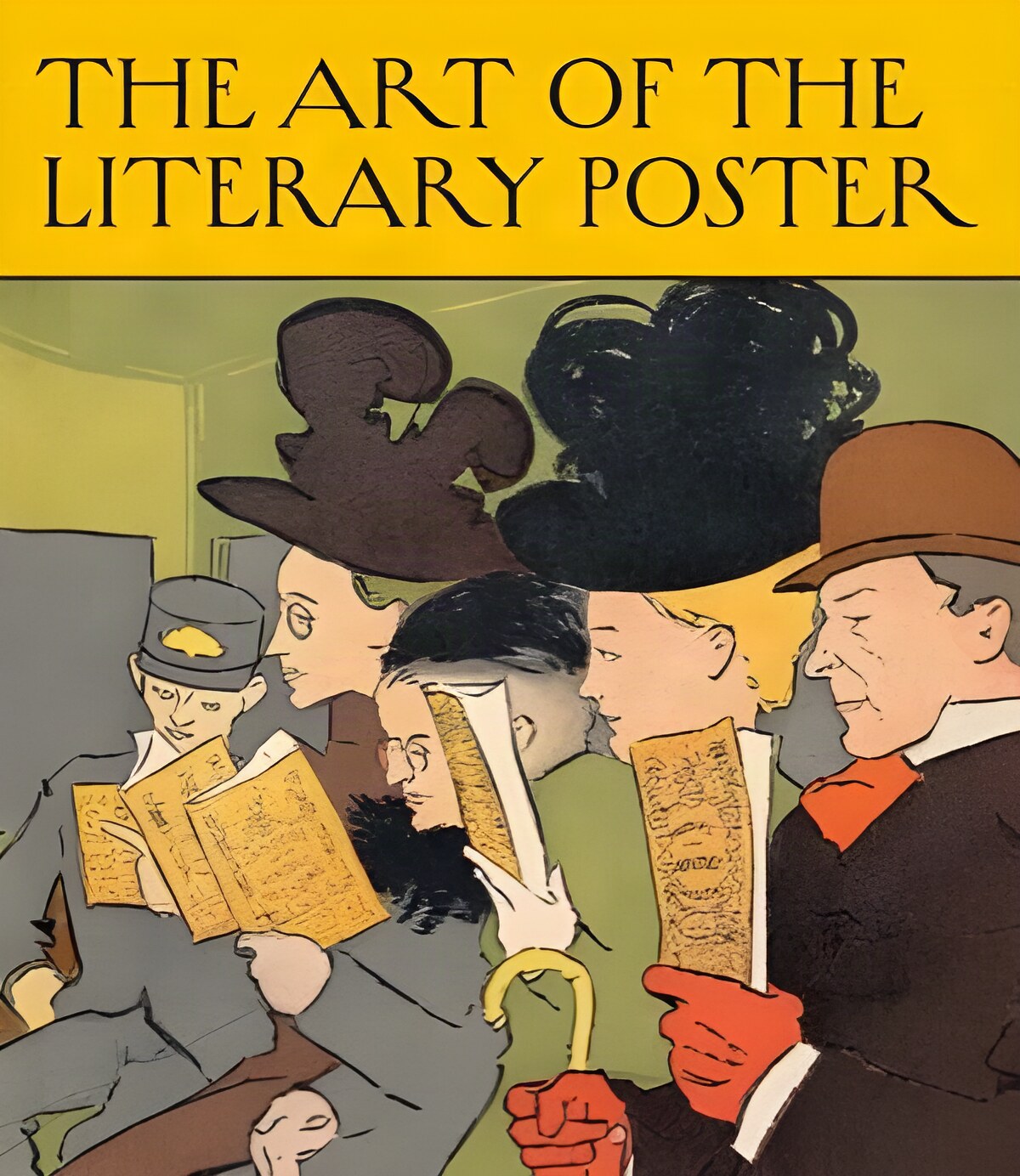
Hardcover. NY, Metropolitan Museum of Art, 1st, 2024, Hardcover in a bright dust jacket, 256 pages illustrated in color. An exploration of late nineteenth-century American literary posters. a vibrant genre at the vanguard of modern commercial art and graphic design spurred by innovations in printing technology, the modern poster emerged in the 1890s as a popular form of visual culture in the United States. Created by some of the best-known illustrators and graphic designers of the period including Will H. Bradley, Florence Lundborg, Edward Penfield, and Ethel Reed these advertisements for books and high-tone periodicals such as Harper's and Lippincott's went beyond the realm of commercial art, incorporating bold, stylized imagery and striking typography. This book, based on the renowned Leonard A. Lauder Collection, explores the craze for literary posters, which became sought after collectibles even in their day. It offers new scholarly perspectives that address the aesthetic sophistication and modernity of the literary poster; the impact of early experiments in the field of advertising psychology; the expanded opportunities for women artists, who played an important role in advancing the so-called poster style; and the printmaking techniques that artists employed in this novel art form. A lively survey of a little-known but highly influential period in graphic design,
Hardcover. New Haven CT, Yale University Press, 1st, 2007, Book: Very Good, Dust Jacket: Very Good, Hardcover, 224 pages. How does the artist's self-conception change in old age? How does old age affect artistic practice? In this intriguing study, art historian Philip Sohm considers some of the greatest artists of Renaissance and Baroque Italy and their experiences of aging. Sohm investigates how art critics, collectors, biographers, and fellow artists dealt with old painters, what mental landscapes preconditioned responses to art by the elderly, and how biology and psychology were co-opted to explain the imprint that artists left on their art. He also looks carefully at the impact of prejudices, stereotypes, and other imaginary truths about old age. For some artists, the problems of old age were related to physical decline-Poussin's hands became shaky, Titian's eyesight dimmed. For others, psychological symptoms emerged. The book's cast of characters includes Michelangelo, the hypochondriac young fogy; Titian, the shrewd marketer of old age; the multiphobic Pontormo; and others. With sensitivity and insight, Sohm uncovers what it meant to be an old artist and how successive generations have looked at the art of an old master.
Hardcover. NY, Knopf, 1st, 2002, Book: Very Good, Dust Jacket: Very Good, Hardcover in a bright dust jacket, 253 pages. Carol Gilligan, breaking through imprisoning tradition, writes about love and the forces that stand in the way of pleasure. She shows us why love between a man and a woman is so often burdened by a history of loss and how it can be freed and opened to the pursuit of happiness. Tracing a lineage from Greek mythology to our own most intimate relationships, she asks why we relive tragic stories of loss and betrayal; drawing on her own research, she offers a radical new map of love. Clean copy.
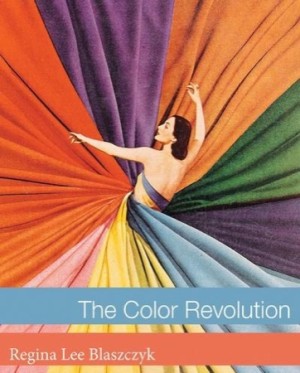
Hardcover. Cambridge MA, The MIT Press, 1st, 2012, Book: Very Good, Dust Jacket: Very Good, Hardcover in a bright dust jacket In this book, 380 pages, illustrated in color. The award-winning historian Regina Lee Blaszczyk traces the relationship of color and commerce, from haute couture to automobile showrooms to interior design, describing the often unrecognized role of the color profession in consumer culture. Blaszczyk examines the evolution of the color progression from 1850 to 1970, telling the stories of innovators who managed the color cornucopia that modern artificial dyes and pigments made possible. These color stylists, color forecasters, and color engineers helped corporations understand the art of illusion and the psychology of color. Clean copy.
Hardcover. Washington DC, Brookings Institution Press, 1st, 2021, Book: Very Good, Dust Jacket: Very Good, Hardcover in a bright dust jacket, 305 pages. Disinformation. Trolling. Conspiracies. Social media pile-ons. Campus intolerance. On the surface, these recent additions to our daily vocabulary appear to have little in common. But together, they are driving an epistemic crisis: a multi-front challenge to America's ability to distinguish fact from fiction and elevate truth above falsehood. In this path-breaking book, Jonathan Rauch reaches back to the parallel eighteenth-century developments of liberal democracy and science to explain what he calls the "The Constitution of Knowledge" our social system for turning disagreement into truth. By explicating the Constitution of Knowledge and probing the war on reality, Rauch arms defenders of truth with a clearer understanding of what they must protect, why they must do it, and how they can do it. His book is a sweeping and readable description of how every American can help defend objective truth and free inquiry from threats as far away as Russia and as close as the cellphone. Clean copy.
Hardcover. Cambridge MA, The MIT Press, 1st, 2011, Book: Very Good, Dust Jacket: Very Good, Hardcover in a bright blue dust jacket, 344 pages. Santayana's Life of Reason, published in five books from 1905 to 1906, ranks as one of the greatest works in modern philosophical naturalism. Acknowledging the natural material bases of human life, Santayana traces the development of the human capacity for appreciating and cultivating the ideal. It is a capacity he exhibits as he articulates a continuity running through animal impulse, practical intelligence, and ideal harmony in reason, society, art, religion, and science. The work is an exquisitely rendered vision of human life lived sanely.In this first book of the work, Santayana provides an account of how the human animal develops instinct, passion, and chaotic experience into rationality and ideal life. Inspired by Aristotle's De Anima, Darwin's evolutionary theory, and William James's The Principles of Psychology, Santayana contends that the requirements of action in a hazardous and uncertain environment are the sources of the development of mind. More specifically, instinct and imagination are crucial to the emergence of reason from chaos. Separating himself from the typical thought of the time by his recognition of the imagination, Santayana in this volume offers extensive critiques of various philosophies of mind, including those of Kant and the British empiricists. Clean copy.
Softcover. Cambridge University Press, 1st, 2006, Book: Very Good, Dust Jacket: None, Softcover, 485 pages, b&w illustrations. By analytically de-coupling war and violence, this book explores the causes and dynamics of violence in civil war. Against the prevailing view that such violence is an instance of impenetrable madness, the book demonstrates that there is logic to it and that it has much less to do with collective emotions, ideologies, and cultures than currently believed. Kalyvas specifies a novel theory of selective violence: it is jointly produced by political actors seeking information and individual civilians trying to avoid the worst but also grabbing what opportunities their predicament affords them. Violence, he finds, is never a simple reflection of the optimal strategy of its users; its profoundly interactive character defeats simple maximization logics while producing surprising outcomes, such as relative nonviolence in the 'frontlines' of civil war. Clean copy.
Hardcover. NY, Charles Scribner's Sons, reprint, 1967, Book: Very Good, Dust Jacket: None, Hardcover, blue cloth with black and gilt stamping, 305 pages. A guide for parents who wish to understand the physical and psychological problems of early childhood. A pioneering work on early childhood development that is as relevant today as when it was first published in 1950. Covers with some discoloration to blue color, interior of book is clean, tight.
Hardcover. London, William Heinemann , 1st, 2000, Book: Very Good, Dust Jacket: Very Good, Hardcover in a bright, unclipped dust jacket. Many aspects of how and why the human mind evolved remain mysterious. While Darwinian natural selection has successfully explained the evolution of much of life on earth, it has never seemed fully adequate to explain the aspects of our minds that seem most uniquely and profoundly human--art, morality, consciousness, creativity, and language. Nor has natural selection offered solutions to how the human brain evolved so quickly--in less than 2 million years--and why such a large brain remains unique to our species. Now, in The Mating Mind, a pioneering work of evolutionary science, these aspects of human nature are at last explored and explained. Until fairly recently most biologists have ignored or rejected Darwin's claims for his other great theory of evolution--sexual selection through mate choice, which favors traits simply because they prove attractive to the opposite sex. But over the last two decades, biologists have taken up Darwin's insights into how the reproduction of the sexiest is as much a focus of evolution as the survival of the fittest. Clean copy.
Softcover. The Hague, Martinus Nijhoff, 2nd Ed., 1965, Book: Very Good, Dust Jacket: None, Two matching softcover volumes, 765 total pages, b&w illustrations. Clean copies.




 "Sexual Behavior in the Human Femaleby: Kinsey, Alfred C., Wardell B. Pomeroy, Paul Gerhard& Clyde E. Martin")




 "Spy Princess: The Life of Noor Inayat Khanby: Basu, Shrabani")
 "Stephane Coutelle: Shoebox Studioby: Saint-Jacques, Camille (Introduction)")
 "The Art of Selling Moviesby: John McElwee")


 "The Constitution of Knowledge: A Defense of Truthby: Jonathan Rauch")




 "The Phenomenological Movement: A Historical Introduction (2 volumes). by: Spiegelberg, Herbert")