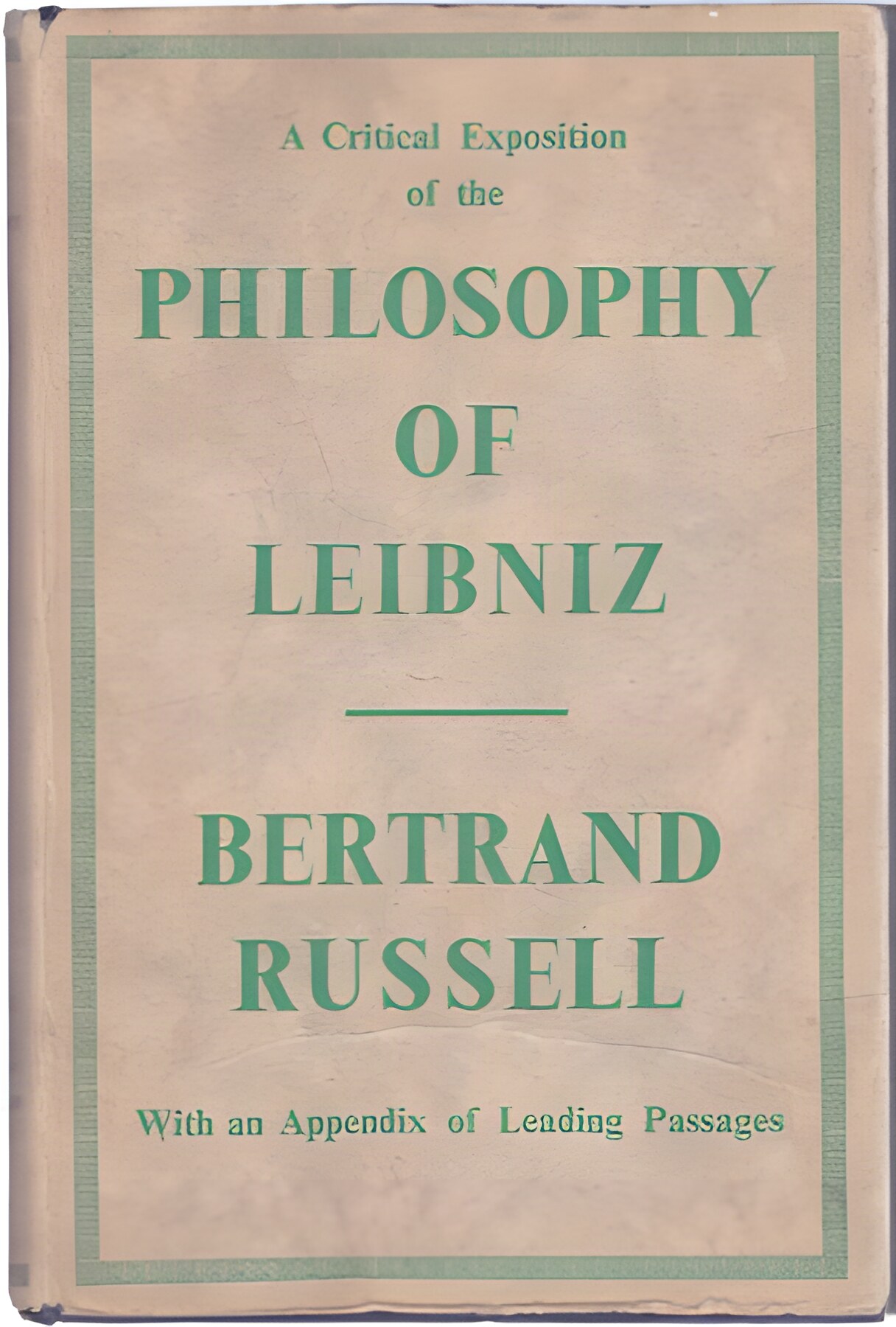
Hardcover. London, George Allen & Unwin, reprint, 1949, Book: Very Good, Dust Jacket: Very Good, Hardcover in a lightly worn dust jacket, 311 pages. The writings of German mathematician and philosopher GOTTFRIED WILHELM LEIBNIZ (1646-1716) have had an incalculable impact on modern science and technology, from physics and computers to law and psychology. But not everyone is a fervent fan. At the turn of the 20th century, the great British thinker Bertrand Russell uncovered what he believed was the hypocritical secret to Leibniz's philosophy: a hidden devotion to a logic he did not reveal in his writings. Here, Russell explores Leibniz's work from this perspective, examining the premises of Leibniz's work, the questions raised by his arguments, the validity of Leibniz's proofs, problems with his "philosophy of matter," and much more. First published in 1900, this is a replica of the 1937 second edition, and is complete with the original, extensive appendix of relevant extracts from Leibniz's work, essential for understanding Russell's critique. Clean copy.
Softcover. Berkeley CA, University of California Press, 1st, 1995, Book: Very Good, Dust Jacket: None, Softcover, 381 pages, b&w illustrations. Filled with insight, provocative in its conclusions, A'aisa's Gifts is a groundbreaking ethnography of the Mekeo of Papua New Guinea and a valuable contribution to anthropological theory. Based on twenty years' fieldwork, this richly detailed study of Mekeo esoteric knowledge, cosmology, and self-conceptualizations recasts accepted notions about magic and selfhood. Drawing on accounts by Mekeo ritual experts and laypersons, this is the first book to demonstrate magic's profound role in creating the self. It also argues convincingly that dream reporting provides a natural context for self-reflection. In presenting its data, the book develops the concept of "autonomous imagination" into a new theoretical framework for exploring subjective imagery processes across cultures.
Hardcover. NY, Viking, 1st, 2005, Book: Very Good, Dust Jacket: Very Good, Hardcover in a bright dust jacket, pages. The best-selling author of Listening to Prozac examines depression from a historical and scientific perspective, challenging cultural beliefs that depression is a noble or romantic disorder linked to soulful or creative achievements, and calling for a greater awareness of depression's devastating impact, as well as renewed efforts to provide curative treatments.
Hardcover. NY, Pegasus , 2nd pr., 2022, Book: Very Good, Dust Jacket: Very Good, Hardcover in a bright, unclipped dust jacket, 415 pages. Why did Agatha Christie spend her career pretending that she was 'just' an ordinary housewife, when clearly she wasn't? As Lucy Worsley says, 'She was thrillingly, scintillatingly modern'. She went surfing in Hawaii, she loved fast cars, and she was intrigued by the new science of psychology, which helped her through devastating mental illness. So why - despite all the evidence to the contrary - did Agatha present herself as a retiring Edwardian lady of leisure? She was born in 1890 into a world which had its own rules about what women could and couldn't do. With access to personal letters and papers that have rarely been seen, Lucy Worsley's biography is both authoritative and riveting. Clean copy.
Hardcover. NY, HarperCollins, 1st, 2003, Book: Very Good, Dust Jacket: Very Good, Hardcover in a bright, unclipped dust jacket. SIGNED BY CHOI on the title page. On the lam for an act of violence against the American government, 25-year-old Jenny Shimada agrees to care for three younger fugitives whom a shadowy figure from her former radical life has spirited out of California. One of them, the kidnapped granddaughter of a wealthy newspaper magnate in San Francisco, has become a national celebrity for embracing her captors' ideology and joining their revolutionary cell. American Woman draws its plot from the Patty Hearst Kidnapping in 1974. It is more than a simple retelling of known facts. The author opens up her characters - their psychology, their background. She gives a sense of the times and of real people in those times. Clean copy.
Hardcover. Princeton NJ, Princeton University Press, 1st, 1995, Book: Very Good, Dust Jacket: Very Good, Hardcover in a bright dust jacket. 327 pages, clean copy. Few diseases have exercised the Western imagination as chronically as hysteria--from the wandering womb of ancient Greek medicine, to the demonically possessed witch of the Renaissance; from the "vaporous" salon women of Enlightenment Paris, through to the celebrated patients of Sigmund Freud, with their extravagant, erotically charged symptoms. In this fascinating and authoritative book, Mark Micale surveys the range of past and present readings of hysteria by intellectual historians; historians of science and medicine; scholars in gender studies, art history, and literature; and psychoanalysts, psychiatrists, clinical psychologists, and neurologists. In so doing, he explores numerous questions raised by this ever-growing body of literature: Why, in recent years, has the history of hysterical disorders carried such resonance for commentators in the sciences and humanities? What can we learn from the textual traditions of hysteria about writing the history of disease in general? What is the broader cultural meaning of the new hysteria studies? In the second half of the book, Micale discusses the many historical "cultures of hysteria." He reconstructs in detail the past usages of the hysteria concept as a powerful, descriptive trope in various nonmedical domains, including poetry, fiction, theater, social thought, political criticism, and the arts. His book is a pioneering attempt to write the historical phenomenology of disease in an age preoccupied with health, and a prescriptive remedy for writing histories of disease in the future.
Hardcover. Chicago, University of Chicago Press , 1st, 1987, Book: Very Good, Dust Jacket: Very Good, Hardcover in a bright dust jacket, 249 pages. A study of "Aristotle's psychology, or philosophy of mind." Name on front fly leaf, otherwise clean, tight copy.
Hardcover. NY, W. W. Norton & Company, 1st, 1925, Book: Very Good, Dust Jacket: None, Hardcover, in black cloth with pasted on "Lectures in Print, Behaviorism, John B.Watson " on spine and cover. Twelve lectures delivered by Watson at the People's Institute, whose publishing arm would soon become the legendary W.W. Norton. First appearing as 12 separate pamphlets, each published after Watson delivered a lecture for the adult education program at The People's Institute from 1924 to 1925, BEHAVIORISM gathers these important lectures in book form for the first time.
Hardcover. NY, Free Press, 1st, 1969, Book: Very Good, Dust Jacket: Very Good, Hardcover in a bright, lightly worn dust jacket. A collection of 15 essays. No markings.
Hardcover. Ithaca NY, Cornell University Press, 1st, 1990, Book: Very Good, Dust Jacket: Very Good, Hardcover in a bright dust jacket, 249 pages. Berkeley's Essay towards a New Theory of Vision (1709), his first substantial publication, revolutionized the theory of vision. His approach provided the framework for subsequent work in the psychology of vision and remains influential to this day. Among philosophers, however, the New Theory has not always been read as a landmark in the history of scientific thought, but instead as a halfway house to Berkeley's later metaphysics. In this book, Margaret Atherton seeks to redress the balance through a commentary on and a reinterpretation of Berkeley's New Theory. Clean copy.
Hardcover. Boston, Little, Brown, 1st, 1947, Book: Good, Hardcover, green cloth with black lettering. Frontis portrait. This text is an expansion of the author's 1937 article Black Hamlet : the mind of an African Negro revealed by psychoanalysis. "This is the true story of John Chavafambira. It is a unique, never-before-written account of a native African medicine man, his life experiences and inner conflicts, etched against the background of two worlds-- white and black -- in collision. It is an amazing study of seemingly irreconcilable elements, laid in South Africa where the clash of color is most violent". Clean copy but mild musty odor.
Hardcover. Boston, Little, Brown and Co,, reprint, 1947, Book: Very Good, Dust Jacket: Good, Hardcover in a worn, chipped dust jacket. The true story of an African medicine man as he leaves his home to practice his medicine in the city. Wulf Sachs was born in Russia and trained at the Psychoneurological Institute in St. Petersburg. A citizen of South Africa who resided in Johannesburg, he was a practicing psychoanalyst and the author of many books on psychiatry and literary criticism. Classic account of a two and half year psychoanalysis of a South African witch doctor. This book was earlier published with the title Black Anger. Derived from a review posted on-line: Black Hamlet is at the same time a case study in psychoanalytic therapy, the report of a scientific investigation, a political polemic, a collection of ethnographic observations, and the biography of a common man whose remarkable features would otherwise have been overlooked. Clean copy.
Hardcover. Berkeley CA, University of California Press, 1st, 2009, Book: Very Good, Dust Jacket: Very Good, Hardcover, 320 pages. In the voluminous scholarship that's been written on Paul Cezanne, little has been said about the twenty-four portraits in oil that Cezanne made of his wife, Hortense Fiquet Cezanne, over an extended twenty-year period. In Cezanne's Other: The Portraits of Hortense, Susan Sidlauskas breaks new ground, focusing on these paintings as a group and looking particularly at the differences that render many of them unrecognizable as the same person. She argues that Cezanne sidestepped the conventional goals of portraiture-he avoids representing a consistent, identifiable physiognomy or conventional feminine postures and does not portray the subject's inner life-making lack of fixedness itself his subject, which leads him ultimately to a radical reformulation of modern portraiture. Sidlauskas also upends the notion of Mme Cezanne as the irrelevant and absent spouse. Instead she reveals Hortense Fiquet Cezanne as a presence so crucial to the artist that she became the essential "other" to his ever-evolving "self." Coupling historical texts from philosophy, psychology, and physiology with more recent writings from women's and gender studies, cognitive psychology, and visual culture, Sidlauskas demonstrates that Mme Cezanne offered intimacy at arm's length for the painter who has been dubbed "the lone wolf of Aix."
Hardcover. New York, University Books, 1st, 1961, Book: Very Good, Dust Jacket: Good, 312 pages. Hardcover. B/w illustrations. Marble cover boards, red quarter cloth, gilt title on spine. Red endpapers. Top edge dyed. Previous owner's inscription on title page. Some slight tanning to a few pages from age. Dust jacket unclipped, has some chipping and agewear (see images). Binding good. Spine straight. Pages unmarked. The biography of the European eighteenth century occultist and Mason, Count Allesandro di Cagliostro.
Hardcover. NY, HarperCollins, 1st, 2007, Book: Very Good, Dust Jacket: Very Good, Hardcover in a bright dust jacket, 311 pages. Why can't you remember where you put your keys? Or the title of the movie you saw last week? Anyone older than forty knows that forgetfulness can be unnerving, frustrating, and sometimes terrifying. With compassion and humor, acclaimed journalist Cathryn Jakobson Ramin explores the factors that determine how well or poorly one's brain will age. She takes readers along on her lively journey--consulting with experts in the fields of sleep, stress, traumatic brain injury, hormones, genetics, and dementia, as well as specialists in nutrition, cognitive psychology, and the burgeoning field of drug-based cognitive enhancement. Along the way, she turns up fresh scientific findings, explores the dark regions of the human brain, and hears the intimate confessions of high-functioning midlife adults who--like so many of us--are desperate to understand exactly what's going on upstairs. Clean copy.
Hardcover. NY, Jonathan Cape & Harrison Smith, 2nd pr., 1930, Book: Very Good, Dust Jacket: None, Hardcover, bound in publisher's black cloth ruled in blind with faded gilt title on the spine. Top edge stained black. Stated second printing, October 1930 on the copyright page. Translated by Alice Riviere. Ownership signature in pencil by Gertrude Franchot Tone, women's rights activist with her pencil marking in text. Owner's small embossed stamp on front fly leaf.
Hardcover. unknown publisher, circa 1830s, Book: Fair, Dust Jacket: None, Hardcover, 3/4 leather over marbled boards, Cover detached. Title page missing. First page states CLASS IV, next page lists diseases of the nervous function under NEUROTICA. 432 pages of scholarly, detailed descriptions follow. All pages of text are present. Appears to be a volume published in the first part of the 1800s, from a Rochester NY library. Sold as is.
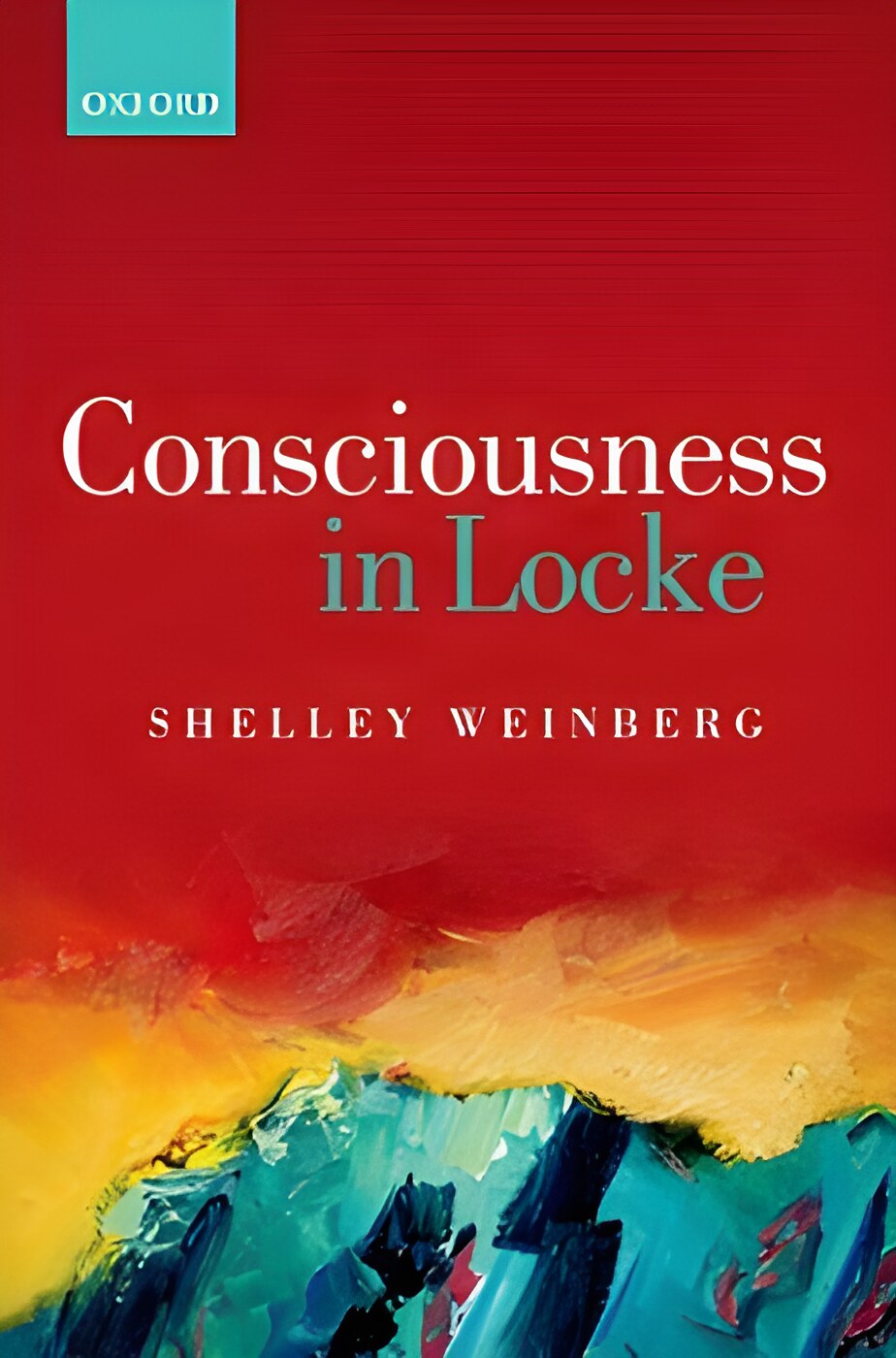
Hardcover. Oxford UK, Oxford University Press , 1st, 2016, Book: Very Good, Dust Jacket: Very Good, Hardcover in a bright dust jacket, 240 pages. Shelley Weinberg argues that the idea of consciousness as a form of non-evaluative self-awareness runs through and helps to solve some of the thorniest issues in Locke's philosophy: in his philosophical psychology and in his theories of knowledge, personal identity, and moral agency. Central to her account is that perceptions of ideas are complex mental states wherein consciousness is a constituent. Such an interpretation answers charges of inconsistency in Locke's model of the mind and lends coherence to a puzzling aspect of Locke's theory of knowledge: how we know individual things (particular ideas, ourselves, and external objects) when knowledge is defined as the perception of an agreement, or relation, of ideas. In each case, consciousness helps to forge the relation, resulting in a structurally integrated account of our knowledge of particulars fully consistent with the general definition. This model also explains how we achieve the unity of consciousness with past and future selves necessary for Locke's accounts of moral responsibility and moral motivation. And with help from other of his metaphysical commitments, consciousness so interpreted allows Locke's theory of personal identity to resist well-known accusations of circularity, failure of transitivity, and insufficiency for his theological and moral concerns. Although virtually every Locke scholar writes on at least some of these topics, the model of consciousness set forth here provides for an analysis all of these issues as bound together by a common thread. Clean copy.
Hardcover. New York, Zone Books, 1st, 1996, Book: Very Good, Dust Jacket: Very Good, 565 pages. Hardcover. B/w illustrations throughout. Dust jacket unclipped, excellent, in protective brodart. Boards bound in black cloth, gilt title on spine. Binding tight. Some light pencil underlining throughout. Boards have a touch of rubbing, but in very good shape. A little light foxing to edges (shelfwear). A stunning, innovative blend of microsociology, cultural history, and philosophical reflection that will fascinate anyone concerned with problems of authenticity, identity, and originality.
Hardcover. NY, Oxford University Press, 1st, 1993, Book: Very Good, Dust Jacket: Very Good, Hardcover in a bright dust jacket, 365 pages. A fascinating and poignant exploration of wartime America and of one generation's odyssey from childhood to middle age. The author views the experiences of ordinary children through the lens of developmental psychology and argues that WW II left an indelible imprint on the dreams and nightmares of an American generation, not only in childhood, but in adulthood as well. Clean copy.
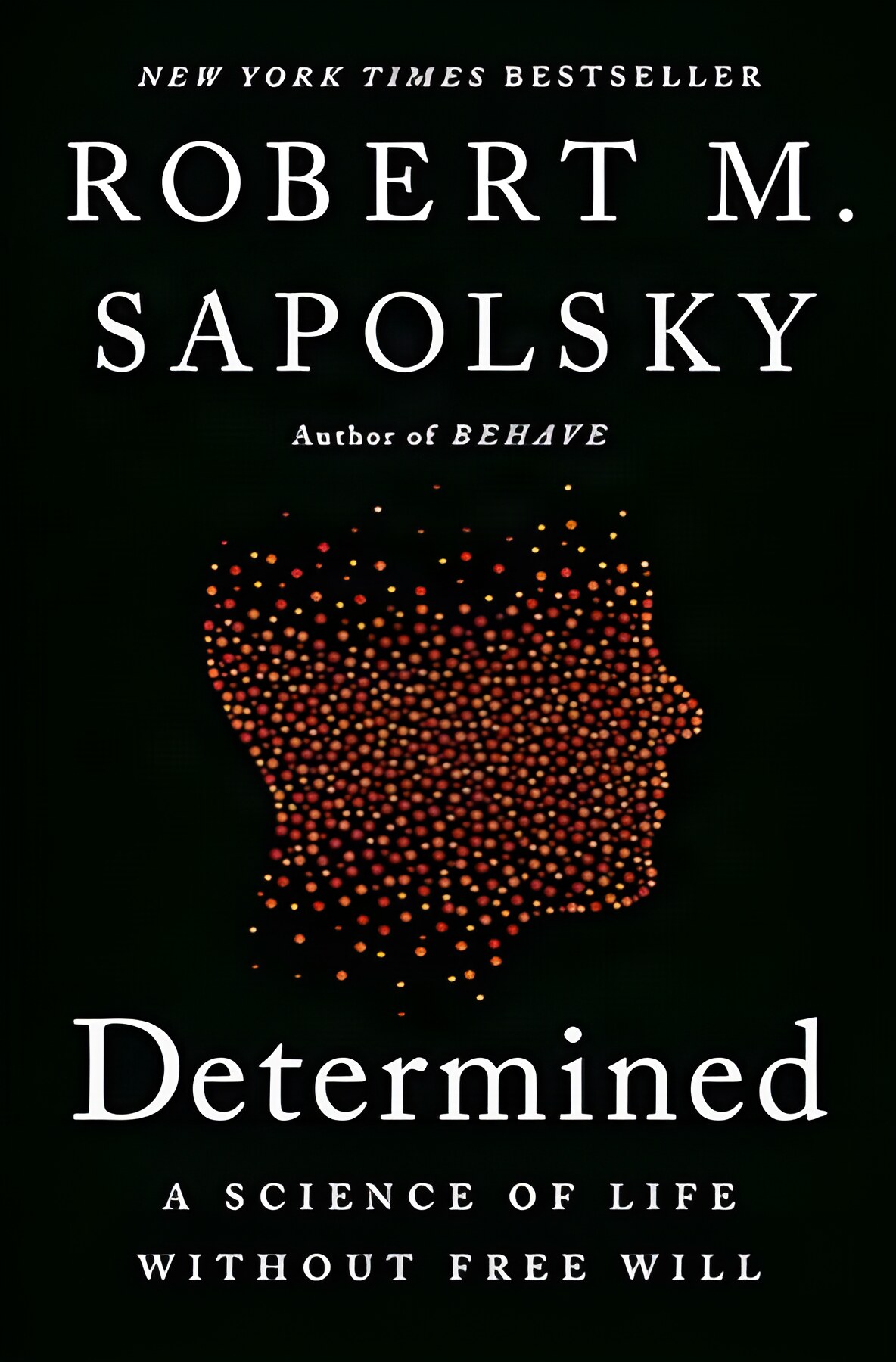
Hardcover. NY, Penguin Press, 1st, 2023, Book: Very Good, Dust Jacket: Very Good, Hardcover in a bright dust jacket, 511 pages. Determined offers a marvelous synthesis of what we know about consciousness--the tight weave between reason and emotion and between stimulus and response in the moment and over a life. One by one, Sapolsky takes out all the major arguments for free will, cutting a path through the thickets of chaos theory and quantum physics. But as Sapolsky acknowledges, it's sometimes impossible to uncouple from our zeal to judge people, including ourselves. Determined applies this new understanding to some of our most essential questions around punishment, morality, and living well together. Most of all, Sapolsky argues that while accepting the reality about free will is monumentally difficult, it will make for a much more humane world. Clean copy.
Softcover. Cambridge UK, Cambridge University Press, 1st pbk, 2016, Book: Very Good, Dust Jacket: None, Softcover, 325 pages. How do dictators stay in power? When, and how, do they use repression to do so? Dictators and their Secret Police explores the role of the coercive apparatus under authoritarian rule in Asia - how these secret organizations originated, how they operated, and how their violence affected ordinary citizens. Greitens argues that autocrats face a coercive dilemma: whether to create internal security forces designed to manage popular mobilization, or defend against potential coup. Violence against civilians, she suggests, is a byproduct of their attempt to resolve this dilemma. Drawing on a wealth of new historical evidence, this book challenges conventional wisdom on dictatorship: what autocrats are threatened by, how they respond, and how this affects the lives and security of the millions under their rule. It offers an unprecedented view into the use of surveillance, coercion, and violence, and sheds new light on the institutional and social foundations of authoritarian power. ^ pages with dog earred crease, otherwise clean.
Hardcover. London, William Pickering, 1st, 1853, Book: Good, Dust Jacket: None, 309 pages. Hardcover. Brown cloth covers w/ faded gilt lettering on spine. Light soiling to covers, rubbing to corners. Water stains to end papers. Rear hinge starting to crack. Spine slightly cocked. Else pages clean and tight.
Hardcover. Duke University Press, 1st, 1998, Book: Very Good, Dust Jacket: Very Good, Hardcover, 352 pages, b/w illustrations throughout. Dust jacket unclipped, excellent. Black cover boards, gilt title on spine. Binding tight. Spine straight. In great shape. Claiming that our culture has yet to come to terms with the bungled legacy of Victorian sexuality, Kincaid examines how children and images of youth are idealized, fetishized, and eroticized in everyday culture.













 "Carved in Sand: When Attention Fails and Memory Fades in Midlifeby: Cathryn Jakobson Ramin")
 "Civilization and its Discontentsby: Freud, Sigmund")





 "Elements of Psychology, Part 1by: Morell, J. D.")
