Hardcover. Ithaca NY, Cornell University Press, 2nd pr., 2005, Book: Very Good, Dust Jacket: Very Good, Hardcover in a bright dust jacket, 261 pages, previous owner's signature on front fly leaf. "Evil is the most serious of our moral problems. All over the world cruelty, greed, prejudice, and fanaticism ruin the lives of countless victims. Outrage provokes outrage. Millions nurture seething hatred of real or imagined enemies, revealing savage and destructive tendencies in human nature. Understanding this challenges our optimistic illusions about the effectiveness of reason and morality in bettering human lives. But abandoning these illusions is vitally important because they are obstacles to countering the threat of evil. The aim of this book is to explain why people act in these ways and what can be done about it." The first part of this book is a detailed discussion of six horrible cases of evil: the Albigensian Crusade of about 1210; Robespierre's Terror of 1793?94; Franz Stangl, who commanded a Nazi death camp in 1943?44; the 1969 murders committed by Charles Manson and his "family"; the "dirty war" conducted by the Argentinean military dictatorship of the late 1970s; and the activities of a psychopath named John Allen, who recorded reminiscences in 1975. John Kekes includes these examples not out of sensationalism, but rather to underline the need to hold vividly in our minds just what evil is. The second part shows why, in Kekes's view, explanations of evil inspired by Christianity and the Enlightenment fail to account for these cases and then provides an original explanation of evil in general and of these instances of it in particular.
Softcover. Tema Ghana, Ghana Publishing Corp. , 1st, 1971, Book: Very Good, Dust Jacket: None, Softcover, 83 pages, b&w illustrations. Part of a doctoral thesis accepted by the University of St. Thomas Aquinas in Rome. A study of the wooden stools and their religious meaning in the culture of the Akan people of Ghana. Clean copy.
Hardcover. Lanham MD, Lexington Books, 1st, 2022, Book: Very Good, Dust Jacket: None, Hardcover, pictorial boards, 143 pages. American nature writing characteristically embodies an appreciative, lyrical evocation of the natural world. But often, too, green-disposed authors have been moved to dramatize diverse, anthropogenic perils to environmental health. John Gatta freshly reveals how this dark yet graced and hopeful strain of environmental literature enlarges upon a jeremiad tradition of prophecy inherited from Puritan New England. Across successive historical periods, such expression has assumed a rich variety of American form--as creative nonfiction, poetry, fiction, or film documentary. In the spirit of ancient Hebrew prophecy, jeremiads--unlike diatribes--reach beyond effusions of doom and gloom toward the prospect of change through a conversion of heart. Accordingly, the new climate fiction and much other writing steeped in what Gatta terms this "Green Jeremiad" tradition not only warn of material threats to life's flourishing, but may also look to stir spiritual understanding and renewal. Clean copy.
Softcover. Padova Italy, Editrice Antenore, 1st, 1961, Book: Very Good, Dust Jacket: None, Softcover, cream color wrappers with black and blue type, 141 pages with index. Foreword by author. English text. Name on front fly leaf, light pencil marking to 10 pages.
Softcover. UK, Clarendon Press, reprint, 1992, Book: Very Good, Dust Jacket: None, Softcover, 291 pages. It is widely supposed that Hume (1711-1776) invented and espoused the `regularity' theory of causation, holding that causal relations are nothing but a matter of one type of thing being regularly followed by another. It is also widely supposed that he was quite right about this, and that it was one of his greatest contributions to philosophy. Galen Strawson argues in this book that the regularity theory of causation is indefensible, and that Hume never adopted it in any case. Name on front fly leaf, otherwise clean.
Hardcover. Astra House, 1st, 2022, Book: Very Good, Dust Jacket: Very Good, Hardcover in a bright, unclipped dust jacket. 288 pages. In these confessional pages, women control their own bodies and desires, work toward healing their painful pasts, and learn to assert their sexual power. Weaving a rich tapestry of experiences with a sex positive outlook, The Sex Lives of African Women is an empowering, subversive book that celebrates the liberation, individuality, and joy of African women's multifaceted sexuality. From a queer community in Egypt, to polyamorous life in Senegal, and a reflection on the intersection of religion and pleasure in Cameroon, feminist author Nana Darkoa Sekyiamah explores the many layers of love and desire, its expression, and how it defines who we are.
Hardcover. Cambridge MA, Belknap Press: An Imprint of Harvard University Press, 1st, 2022, Book: Very Good, Dust Jacket: Very Good, Hardcover in a bright dust jacket, 406 pages. A bold and beautifully written exploration of the "afterlife" of God, showing how apparently secular habits of mind in fact retain the structure of religious thought. Once in the West, our lives were bounded by religion. Then we were guided out of the darkness of faith, we are often told, by the cold light of science and reason. To be modern was to reject the religious for the secular and rational. In a bold retelling of philosophical history, Michael Rosen explains the limits of this story, showing that many modern and apparently secular ways of seeing the world were in fact profoundly shaped by religion. Clean copy.
Hardcover. Minneapolis, University of Minnesota Press, 1st, 1983, Book: Very Good, Dust Jacket: None, Hardcover, maroon cloth with gilt lettering, 269 pages. Name on front fly leaf, otherwise a clean copy.
Hardcover. Syracuse NY, Syracuse University Press, 1st, 1950, Book: Very Good, Dust Jacket: Good, Hardcover in a lightly worn dust jacket, 220 pages. Bookplate on inside front cover. Otherwise clean.
Hardcover. London, Thomas Nelson & Sons, 1st, 1961, Book: Very Good, Dust Jacket: Good, Hardcover in a lightly worn dust jacket, 344 pages. Edited by Raymond Klibansky and Elizabeth Anscombe.
Hardcover. Chicago, University Of Chicago Press, reprint, 1990, Book: Very Good, Dust Jacket: None, Softcover, 334 pages. The Spirit of Modern Republicanism sets forth a radical reinterpretation of the foundations on which the American regime was constructed. Thomas L. Pangle argues that the Founders had a dramatically new vision of civic virtue, religious faith, and intellectual life, rooted in an unprecedented commitment to private and economic liberties. It is in the thought of John Locke that Pangle finds the fullest elaboration of the principles supporting the Founders' moral vision. Clean copy.
Softcover. New Haven CT, Yale University Press, reprint, 1992, Book: Very Good, Dust Jacket: None, Softcover, 654 pages, b&w illustrations. This major revisionist account of the pre-Reformation Church recreates lay people's experience of religion in 15th-century England. Eamon Duffy shows that late mediaeval Catholicism was neither decadent nor decayed, but was a strong and vigorous tradition, and that the Reformation represented a violent rupture from a popular and theologically respectable religious system. Clean copy.
Hardcover. Cambridge MA, The MIT Press, 1st, 2014, Book: Very Good, Dust Jacket: Very Good, Hardcover in a bright dust jacket, 294 pages. An examination of the powerful social and psychological factors that hold the belief in moral responsibility firmly in place. The philosophical commitment to moral responsibility seems unshakable. But, argues Bruce Waller, the philosophical belief in moral responsibility is much stronger than the philosophical arguments in favor of it. Philosophers have tried to make sense of moral responsibility for centuries, with mixed results. Most contemporary philosophers insist that even conclusive proof of determinism would not and should not result in doubts about moral responsibility. Many embrace compatibilist views, and propose an amazing variety of competing compatibilist arguments for saving moral responsibility. In this provocative book, Waller examines the stubborn philosophical belief in moral responsibility, surveying the philosophical arguments for it but focusing on the system that supports these arguments: powerful social and psychological factors that hold the belief in moral responsibility firmly in place. Clean copy.
Hardcover. NY, Cambridge University Press, 1st, 2013, Book: Very Good, Dust Jacket: Very Good, Hardcover in a bright dust jacket, 227 pages. Emily Brady takes a fresh look at the sublime and shows why it endures as a meaningful concept in contemporary philosophy. In a reassessment of historical approaches, the first part of the book identifies the scope and value of the sublime in eighteenth-century philosophy (with a focus on Kant), nineteenth-century philosophy and Romanticism, and early wilderness aesthetics. The second part examines the sublime's contemporary significance through its relationship to the arts; its position with respect to other aesthetic categories involving mixed or negative emotions, such as tragedy; and its place in environmental aesthetics and ethics. Far from being an outmoded concept, Brady argues that the sublime is a distinctive aesthetic category which reveals an important, if sometimes challenging, aesthetic-moral relationship with the natural world. Clean, bright copy.
Hardcover. Princeton NJ, Princeton University Press, 1st, 1974, Book: Very Good, Dust Jacket: None, Hardcover, brick-red cloth covers, 448 pages with index. The attempted modernization of Central Asia by the central Soviet government in the 1920's was a dramatic confrontation between radical, determined, authoritarian communists and a cluster of traditional Moslem societies based on kinship, custom, and religion. The Soviet authorities were determined to undermine the traditional social order through the destruction of existing family structures and worked to achieve this aspect of revolution through the mobilization of women. Gregory J. Massell's study of the interaction between central power and local traditions concentrates on the development of female roles in revolutionary modernization. Women in Moslem societies were segregated, exploited, and degraded; they were, therefore, a structural weak point in the traditional order-a surrogate proletariat. Through this potentially subversive group, it was believed, intense conflicts could be generated within society which would lead to its disintegration and subsequent reconstitution. Marginal notes to about 15 pages, otherwise clean, solid copy.
Softcover. Cambridge MA, Harvard University Press, reprint, 2011, Book: Very Good, Dust Jacket: None, Softcover, 997 pages, color and b&w illustrations. A deadly continental struggle, the Thirty Years War devastated seventeenth-century Europe, killing nearly a quarter of all Germans and laying waste to towns and countryside alike. Peter Wilson offers the first new history in a generation of a horrifying conflict that transformed the map of the modern world. When defiant Bohemians tossed the Habsburg emperor's envoys from the castle windows in Prague in 1618, the Holy Roman Empire struck back with a vengeance. Bohemia was ravaged by mercenary troops in the first battle of a conflagration that would engulf Europe from Spain to Sweden. The sweeping narrative encompasses dramatic events and unforgettable individuals-the sack of Magdeburg; the Dutch revolt; the Swedish militant king Gustavus Adolphus; the imperial generals, opportunistic Wallenstein and pious Tilly; and crafty diplomat Cardinal Richelieu. In a major reassessment, Wilson argues that religion was not the catalyst, but one element in a lethal stew of political, social, and dynastic forces that fed the conflict. By war's end a recognizably modern Europe had been created, but at what price? The Thirty Years War condemned the Germans to two centuries of internal division and international impotence and became a benchmark of brutality for centuries. As late as the 1960s, Germans placed it ahead of both world wars and the Black Death as their country's greatest disaster. Clean, bright copy.
Hardcover. Bristol UK, Thoemmes Press, reprint, 1995, Book: Very Good, Dust Jacket: None, Three hardcover volumes, uniform blue cloth covers with gilt lettering on spines. 638, 662 and 700 pages. Cudworth's magisterial work is a sweeping philosophical and religious treatise, tackling some of the biggest questions in the history of thought. He examines the nature of the universe, the concept of God, and the foundations of morality, weaving together insights from ancient philosophy, Christian theology, and contemporary science. This work is a monument to the intellectual ambition and erudition of one of Britain's greatest philosophers. A reprint of the 1845 edition published in London. Pencil marking to about 50 pages combined in volumes 1 and 3, name on front fly leaf of Volume 3. DUE TO WEIGHT, DOMESTIC SHIPPING ONLY.
Hardcover. Ithaca NY, Cornell University Press, 1st, 2004, Book: Very Good, Dust Jacket: Very Good, Hardcover in a bright dust jacket, 180 pages. Using his intimate knowledge of John Locke's writings, John W. Yolton shows that Locke comprehends "human understanding" as a subset of a larger understanding of other intelligent Beings-angels, spirits, and an omniscient God. Locke's books on Christianity (The Reasonableness of Christianity and Paraphrases of St. Paul's Epistles) have received extensive analysis and commentary, but little attention has been given to the place of his Essay Concerning Human Understanding in his religious and theological beliefs. Yolton shows that Locke's account of what it is to be human in that work is profoundly religious. Yolton's book opens with an attempt to sort out several important terms basic to Locke's account of identity: man, self, person, and soul. A number of rarely examined components of Locke's thought emerge: the nature of man, the nature of a human being, and the place of man in the universe among the other creatures. Some will be surprised to learn that the domain of God, angels, and spirits is a part of Locke's universe, where it is considered the hoped-for destination of the just. Name, date on front fly leaf, otherwise clean.
Hardcover. UK, Cambridge University Press, 1st, 1999, Book: Very Good, Dust Jacket: Very Good, Hardcover in a bright dust jacket, 346 pages. Dr. Notomi presents a new interpretation of one of Plato's most important dialogues, the Sophist, addressing both historical context and philosophical content. He shows how important the issues concerning the sophist (professional teacher and rhetorician in ancient Greece) are to the possibility of philosophy. His new approach to the whole dialogue reveals that Plato struggles with difficult philosophical issues in a single line of inquiry; and that Plato shows, in defining the sophist, his conception of the authentic philosopher. Name, date on front fly leaf, otherwise clean.
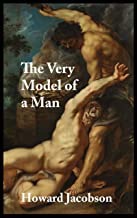
Hardcover. London, Viking, 1st, 1992, Book: Very Good, Dust Jacket: Very Good, Hardcover in a bright, unclipped dust jacket. A dark comedy recreates the biblical books of Genesis and Exodus from Cain's point of view, depicting a capricious God who resents Eve's flirting with an angel, an envious and sullen Adam, and Abel, Cain's irreconcilable opposite. Clean copy.
Hardcover. NY, Jewish Publication Society, 1st, 1984, Book: Very Good, Dust Jacket: None, Hardcover in black cloth, lacks dust jacket, 256 pages. A major treatise of Levi ben Gershom of Provence (1288-1344), one of the most creative and daring minds of the medieval world. It is devoted to a demonstration that the Torah, properly understood, is identical to true philosophy. Volume 1 ONLY. Clean copy.
Hardcover. NY, Jewish Publication Society, 1st, 1987, Book: Very Good, Dust Jacket: Very Good, Hardcover in a bright dust jacket, 278 pages. A major treatise of Levi ben Gershom of Provence (1288-1344), one of the most creative and daring minds of the medieval world. It is devoted to a demonstration that the Torah, properly understood, is identical to true philosophy. Volume 2 ONLY. Clean copy.









 "The Skeptical Realism of David Humeby: Wright, John P.")

 "The Sophist and the Statesmanby: Plato (A.E. Taylor/ transl.)")

 "The Stripping of the Altars: Traditional Religion in England, 1400-1580 by: Duffy, Eamon")
 "The Surrogate Proletariat: Moslem Women and Revolutionary Strategies in Soviet Central Asia, 1919-1929by: Gregory J. Massell")

 "The True Intellectual System Of The Universe: Wherein All The Reason And Philosophy Of Atheism Is Confuted, And Its Impossibility Demonstrated: With A Treatise Concerning Eternal And Immutable Morality - Three Volumes")

 "The Use of Sacrificial Ideas in Greek Christian Writers from the FNew Testament to John Chrysostom: Patristic Monograph Series by: Young, Frances")